Onde comprar
Precisa de aconselhamento? Os nossos distribuidores altamente treinados têm todo o gosto em ajudar com qualquer questão, grande ou pequena.
Encontre um revendedor perto de si
Users stories

Justin Tyers • 02 October 2026
Twenty-four hour maternity power
Four health facilities in the Northern Region of Cameroon have received new hybrid solar power systems designed to keep essential healthcare services running when the electricity grid fails. It’s not uncommon for the ENEO electricity grid to break down for a twelve-hour period. Needless to say, such outages can be disastrous for the provision of care in local hospital maternity wards – without power they cannot provide incubators, replenish oxygen, illuminate medical procedures – or wards – nor maintain the standards of clinical outcomes for the new mothers and babies who depend on them. Thanks to a UNICEF Cameroon program to invest in uninterrupted power, and the The Cameroonian solar company Solarly SARL who designed and installed the power systems which now serve health facilities at Pitoa, Ngong, Touboro and Tcholliré, that has all changed These installations form part of a wider UNICEF initiative – supported by the Islamic Development Bank (IsDB), bringing reliable energy to hospitals in northern Cameroon. New era of confidence Hospitals in the North and Far North of Cameroon experience frequent power cuts which their generators haven’t always been able to cover. With limited power and fluctuating voltage they’re not capable of meeting spikes in demand or providing the clean power required to keep medical equipment online. New solar-powered back-up energy is changing all that. With between 7 and 17 kWp rooftop PV solar arrays at each location. The solar harvest is regulated by SmartSolar MPPT solar charge controllers to maximise energy storage into ZYC Simpo 5000 48V Lithium battery bank. The systems are programmed via a Cerbo GX which provides data communication between Victron Energy and third-party components – allowing for seamless whole-system compatibility. Most solar based energy systems have the goal of reducing grid energy costs by prioritising solar energy use – but the systems at these hospitals and clinics are programmed to ensure the batteries are maintained at 100% State of Charge – guaranteeing an uninterruptible 24hr power supply. Programming of the Cerbo GX prioritises energy storage from the PV panels to the batteries. When the batteries are full, PV energy is used to run loads. At night – or during poor weather and high demand – the system chooses grid energy as the primary energy source. When the power grid fails, the Quattro or MultiPlus-II inverter/chargers automatically take over the hospital’s energy supply – within 20 milliseconds of the grid outage. The switch is made so quickly that even sensitive medical equipment does not flicker. True sine wave power from the inverters will run the most sensitive medical equipment. Stress free – better outcomes It’s not possible to overstate the difference reliable power has made for patients and staff alike. In the past, during a power cut, staff have had to bring a motorbike onto the ward in order to use its headlight whilst assisting with child birth. The danger posed to life as a result of power outages – limited oxygen supply, loss of incubators, intensive care, refrigeration and surgical procedures – can only be imagined. Recently, an expectant mother arrived at the facility at two o clock in the morning at the same time as the electricity grid failed. The hospital’s solar power system took over the power supply and the baby was able to be cared for – as was required – in an incubator. “ It was 2 a.m. and there was no electricity in Yagoua. I don’t know what happiness would have escaped me if it wasn’t for this solar system. We mothers are reassured to know that health personnel can intervene, even when the Eneo power is cut off elsewhere. ” she said. Midwives, like Patchada, were faced with perilous births, sometimes in complete darkness. “ It was difficult ,” she said. “ Some deliveries required cesarean sections, while many newborns needed vital care, including oxygen. Exhausted and anxious mothers were immersed in a climate of fear and uncertainty .” Knowing what’s happening The Cerbo GX also provides local and remote system monitoring for the dedicated management team. The VictronConnect app provides access to all system data – live and historic – together with programmable options and firmware updates regardless of whether the system manager – or installing engineer – is on site or on the other side of the world. In practical terms at-a-glance data is made available to the four-man monitoring team – two men and two women in fact – via a GX Touch UI. The teams receive basic system-maintenance training and are provided with a toolkit – promoting on site autonomous control. They check daily performance, read any system alerts, and interview staff to make sure that the power installation is meeting their needs. Remote off-site monitoring is available straight from the VictronConnect app allowing system performance to be interrogated by Solarly SERL engineers without leaving their office. Remote programming functionality means they won’t even need to send an engineer to visit the hospital site to make significant programming changes or to update firmware. Automated push-notifications will warn Solarly of any significant system event – allowing them to take remedial action to prevent a situation from impacting the smooth running of the hospital’s maternity ward. Healthcare can’t wait UNICEF this year celebrate 80 years of providing support to disadvantaged children around the world. Today they operate in 190 countries. Solarly SARL estimates that more than 10,000 patients a year will benefit from the stable electricity these four installations provide. Energy resilience changes lives. High levels of infant mortality – particularly among those needing oxygen – are being greatly reduced and the morale of the healthcare team has been much improved.
Justin Tyers • 15 September 2026
In the wake of the first explorers…
Circumnavigator Alec Hughes is on a mission to re-connect us with our seafaring past. Speaking at schools and yacht clubs as he sails around the world, he teaches the young and old, alike, about the earliest days of exploration and trading under sail. On the foredeck of his 51ft sloop Manu , he carries a balsa wood raft – a replica of the craft in which navigators would have crossed oceans thousands of years before him …sailing by the stars, the direction of ocean swell, the behaviour of clouds, and by observing birds in flight. The raft is a symbol of Peru’s ancient Inca maritime heritage, and the cultural debt we all owe to early maritime communities who explored the world, their incredible feats of navigation and seamanship, and his message is that it is still possible, today, to travel the world without damaging the planet. Alec’s vessel is equipped with the latest technology: electronic charts; weather information; a B&G autopilot with associated compass and computer control; a Starlink Mini internet router; plus all the domestic appliances – fridge/freezer, pumps, lighting, and audio entertainment – you would expect on board a blue water cruiser …together with the labour-saving luxury of an electric windlass. His aim is that all his equipment will be powered by the sun. His yacht is fitted with an engine, of course, which has an alternator – but Alec’s relationship to both is that they will only used in emergencies. In fact, during his latest circumnavigation he only started the engine twice. Alec and his crew passed East to West on their passage around Cape Horn. Manu’s electric power system was built with devices imported by Tienda Solar – Peru’s leading Photovoltaic distributor and Victron Energy’s only service partner in the region. It was installed by Alec himself in collaboration with university students helping each other learn about battery based power systems. Alec has a number of flexible solar panels offering up to 1000W. There is also a rigid panel of 500W mounted on davits at the stern, away from the shadows cast by the sails. Solar energy from all of them is harvested by two BlueSolar MPPT 75/15 solar charge controllers to be stored in two 25.6V lithium batteries with a capacity of 150Ah. When needed, power generated by the Yanmar 120A alternator can charge three battery banks at the same time – the engine starting battery, the ‘house’ bank, and a battery dedicated to operating the anchor windlass. Two Orion-Tr Smart 12/24-10A chargers protect the alternator from overload whilst maximising the charge current to house and starter batteries. A further Orion-Tr 24/24-12A isolated DC-DC converter provides power to a battery which is dedicated to the 900W anchor windlass up forward. A Cerbo GX MK2 data communication device ensures that all components of the power system are able to talk to each other allowing proper charge/discharge control. System status – together with programming and firmware updates are available via the GX Touch 50 display UI. Access to the system can also be made from a smart phone using the VictronConnect app which provides management in Bluetooth range – or from the other side of the world using its remote management feature. Alec Hughes has been sailing since he was six and is passionate about bringing the sport – which is underdeveloped along the 3000km coastline – to more Peruvians. In pursuit of that aim he founded – and is President of – the Peruvian Sailing & Ocean Society (Sociedad Peruana de Vela y el Mar). Through it he hopes to introduce and expand the sport and shore facilities along the Peruvian seaboard, through competition and social events. He has dedicated much of his life to exploring the connection between sailing, Peru’s maritime heritage, and the ocean which connects it to the world. The experience he has more recently gained in solar energy is allowing him to help other yachtsmen install reliable, sustainable, PV based energy systems on board their boats – increasing safety at sea, and providing them with the confidence to spend more time on the water. At the same time Tienda Solar is investing time and money into extending their online and physical presence – making it easier for Peruvians to find information and devices together with providing the service network which makes reliable solar, battery-based power systems an easy choice – available to everyone in the region. It is a testament to his character, skill and sense of maritime community that when – a few days into his last circumnavigation which began in April 2025 – he rerouted to go to the assistance of British rowers Miriam Payne and Jess Rowe who had broken the rudder of their rowing boat 350 miles into their planned 8,000 mile voyage after being hit by a wave. The navy were willing to rescue the rowers …but not their boat. It was agreed that Alec would rescue rowers-and-boat – a feat which took eight days. Back at Lima the boat was repaired and the pair later successfully completed their record breaking endeavour. You can follow Alec via his Facebook channel. Let’s meet the man:
Justin Tyers • 04 September 2026
Top of Coom gets to the bottom of power problems
Just as the finishing touches were being made to a backup power installation at the famous Irish pub known as Top of Coom , a lightening strike on the other side of the valley caused a power outage on the electricity grid. The lights went out and the kitchen came to a standstill. Slightly sooner than the installers had been expecting, their new power installation was urgently needed. A flick of the switch and it became operational – probably the fastest proof-of-need for a back-up power system! Top of Coom is Ireland’s highest pub and restaurant at over 1000ft above sea level. It’s been home to six generations of the same family – the Creedons – since the 1800’s. Their hospitality attracts visitors from all over the world and musicians from the local community. Flute and fiddle music drifts down the Glanlee valley several nights a week, and in the summer they host the National Sheep Shearing competition; and local Sheepdog trials. At times like those the pub is crammed with visitors and the kitchen is flat-out in to meet high demand. A power cut at times like those are disastrous for the operation, and damaging for the reputation of the business. To remedy the recurrent power outages, servicing electrician, Shane Casey ( SCES ), suggested they install battery stored energy in preference to rushing out to start the generator every time there was blackout. Victron installer EnergyFreedom Systems designed a fully automated system which chooses between four power sources – solar energy, battery storage, cheap rate electricity from the grid and – fail all else – generator backup which can be started automatically. With some PV panels and AC inverters already in place, the existing infrastructure has been integrated alongside the new. By day, AC inverters provide power directly from the solar panels. By night, two Quattro 15kVA inverter chargers provide AC power from the 64kWh PowerLab lithium batteries. The Quattro inverter/chargers have two AC inputs which can recharge the batteries – when required – from the grid or from the generator, automatically switching to the live source. EnergyFreedom Systems are able to monitor the remote site and make changes to the program using Victron Remote Management ( VRM ) – which saves driving into the mountains if ever there’s a problem. VRM provides push notifications whenever pre-programmed thresholds have been reached, so EnergyFreedom will know of any developing situation before staff and customers are even aware of it. As a result, the business keeps running regardless of what is happening on the local energy grid. The power supply is also used on the family’s own sheep farming operation and at their home. Not only does the installation bring energy security, but their businesses benefit from reduced energy costs – notably as a result of recharging the batteries overnight, if needed, using economy-rate electricity grid prices. Stored energy can then be used the following day during peak hours. The main focus of the system, however, is on maximising self-consumption of solar energy. An expansion of the PV array which is planned in future will improve those economics further. The new installation is built around: 2 × Quattro 15kVA inverter/chargers. A Cerbo GX communication centre device ensures all Victron and third party products talk to each other. 4 × PowerLab 16kWh LiFePO₄ batteries – 64kWh total storage. Existing solar PV, adopted and AC-coupled on the backed-up AC output. New standby generator fully integrated with the system. Victron Remote Management allows instant engineering support if needed. The Cerbo GX has a programmable feature known as Dynamic Energy Storage System (Dynamic ESS) which provides intelligent automated switching between power sources and cheap-rate battery charging from the grid. Dynamic ESS knows the system’s storage and output capacities; it knows what the energy price is for the next hour; it knows what tomorrow’s weather will be, and it knows the cost and lifespan of the battery installation. It even learns which are the busiest days of the week. Using all that data it makes real time decisions so that it’s always providing the lowest cost energy. Energyfreedom Systems designed and programmed the system, with the installation being completed jointly with Shaun Casey of SCES. It was whilst Energyfreedom was completing the configuration and programming stage that the unexpected grid failure provided the perfect opportunity to demonstrate need and reliability! The system secures not only the pub and restaurant power, but also the associated sheep-farm and owner accommodation – creating one power source for the entire site. It also ensures that popular annual events such as the national sheep shearing competition can take place without the danger of power failure. Short power interruptions will be handled by the battery/inverter system, with switch over times so short you don’t notice a blink. For longer outages or during periods of very high energy demand, the generator will be auto started to meet the peak loads. All switching is intelligently controlled by the Cerbo GX which has been programmed to choose the energy sources. The Creedon’s, in their remote hospitality business, no longer fear a power cut occurring just at the worst time …they never even have to think about it. Let’s meet the locals: Twelve years ago the pub reopened after a devastating fire. For two years the locals missed the craic – gossip and entertainment – and were interviewed by the Irish Examiner. Here they describe their pleasure at the pub’s reopening though anyone living more than a few miles away struggled to understand the local accent – a factor which helped the video go viral:
Justin Tyers • 26 August 2026
Up the Creek? Not now.
I know, I know – it’s a question you’ve been asking yourself for years: How big is the world’s largest cattle station? Well, it occupies an area of almost 16,000km which, to put it in perspective, is larger than some countries. It’s located in South Australia; and it’s called Anna Creek. Victron installer MyEnergy Engineering recently won the Master Electricians Australia Project of the Year award – for installations over $1M AUS – for their solar based power installations at the Williams Cattle Company’s seven stations, including Anna Creek. The scale of the task, together with the logistics required to keep it all to schedule are baffling. Far beyond the reach of the electricity grid, for decades Anna station has relied on diesel generation for its power. Running a generator hundreds of kilometres away from towns and cities brings headaches of its own …getting fuel supplies, sourcing engine parts for maintenance and servicing – or calling out an engineer if something’s actually gone wrong. Even when the generator goes down with a problem you can solve yourself, there’ll be no power until you’ve put it back together again. Quite apart from that, running a generator as your sole source of power is the most expensive way to produce electricity. The station uses electricity to run agricultural plant, and for the comfort of the farm hands. There’s air conditioning, refrigeration, kitchen equipment and radio communications, together with the station infrastructure of pumps and cutting rooms. Seven cattle stations in the region are owned by Mathew Williams whose family bought their first station in 1967 – acquiring Anna Creek ten years ago. Today all the William’s stations benefit from solar power. Each station has a manager and up to eight hands including a cook . Together they are responsible for rearing approximately 17,000 cattle - Poll Hereford, Angus and Angus-cross. Overseeing the calving and seasonal fattening operations is work they carry out to the highest standards – and for which the station has a number of Organic and husbandry accreditations including: Southern Cross Certified: National Standard for Organic and Biodynamic Produce (DAFF/IOAS) National Organic Program which use the USDA benchmark. Never Ever Beef Program: Through Greenham and Humane Farm Animal Care. Farming where the annual rainfall averages 140mm and summer temperatures can be extreme presents challenges on a daily basis – but one thing they don’t have to worry about these days is electricity. The new solar power installation comprises 70kWp of solar panels. Three Fronius Symo 20kW AC-coupled solar inverter harvests part of the solar energy produced in order to power AC loads directly during the day. A SmartSolar MPPT RS 450/200 solar charge controller sends solar energy to the Pylontech US3000 lithium battery bank which has a capacity of over 150kWh available for use day or night. Six Quattro 48/10000 inverter/chargers configured for three phase provide AC power from the battery bank. The Quattros, running as battery chargers, will also redirect surplus current from the Fronius AC inverters toward the batteries, and are able to control the charge current from the Fronius devices through frequency shifting. A Cerbo GX communication centre provides data communication between all attached devices maximising harvest, controlling power sources and triggering, for example, and automatic start up for the site’s generator which has been retained as emergency backup. An autostart will be triggered whenever a predetermined threshold has been reached – such as low battery state of charge, or voltage; or to meet high levels of power demand. The Cerbo GX also provides local monitoring and control via the touch screen user interface – the GX Touch 70 and also allows the system to be monitored and controlled by MyEnergy Engineering at the touch of a button – in spite of the fact that their office is a ten-hour drive away – via the free-to-use platform Victron Remote Management ( VRM ) VRM is available to all Victron users and is available direct from a smart phone using the VictronConnect app. Lynx Distributors – modular DC busbars with monitored fuses and LED status display – help to keep the installation really tidy. Lead electricians Sam Addis and Nick Battista Ciaram Granger, Managing Director of MyEnergy Engineering says that the greatest challenge was the station’s remote location: “ Everything had to be carefully planned because additional materials, equipment or support could not simply be collected nearby. The system has to cope with high temperatures, dust and the changing loads of an operating cattle station, and we are proud to have delivered, reliable, around-the-clock power at one of Australia’s most iconic and remote pastoral properties. “In an area where the main operational challenges are remoteness – limiting access to services; low and unreliable rainfall, drought, heat and dust; in the event of electrical anomaly remote monitoring and intervention becomes particularly important .” Anna Creek was one of seven remote area power systems MyEnergy delivered for the Williams Cattle Company at a cost of more than AUS$1.5 million. The sun now guarantees twenty four hour uninterrupted power, silently, and a reduction to virtually zero maintenance. Anna Creek and other station images used in this article have been reproduced from the Williams Cattle Company website.
Justin Tyers • 17 August 2026
Exploring Turkey by Motor Home – wherever the road leads
Some motorhome owners like to travel light; others leave nothing behind. When the owner of this Dethleffs Globetrotter decided to explore more of Turkey’s 300,000 square miles of historic landscape, he was determined that his life on the road would include the comforts of home. At the time of purchase it was clear that the van’s existing electrical installation wasn’t going to be up to the job. For the new owner uninterrupted energy security was particularly important and visiting a campsite simply to get an electrical hook-up wasn’t part of the plan. With air conditioning, a washing machine, dishwasher, satellite TV and audio entertainment – plus the everyday electronics we all have – 24-hour power with plenty of reserve capacity in the morning was essential. After calculating the expected energy consumption from all the devices the installer, Tezcan Caravan – in collaboration with Eltesan Mobil who helped both design and commission the system – proposed four Lithium NG (Next Generation) 12.8V/300Ah batteries at its heart. Together the batteries store 15.4kWh of energy …a significant energy reserve for a motorhome. Sophisticated Lithium NG batteries offer a maximum charge and discharge rate of C1 – meaning they can deliver their full rated power in an hour …and be recharged as quickly. They have an integrated shunt which offers readout of voltage and temperature at cell level allowing you to see the battery status, deep down. Victron NG batteries are mandatorily managed by a proprietary BMS NG – in this case the VE.Bus BMS NG which receives data direct from the integrated shunt and manages the battery charge and recharge; and provides automatic shutdowns to avoid a crisis in extreme conditions or in the event of a failure somewhere else in the installation. A large battery bank is useful, but energy storage is only half the story – eventually that energy must be replaced. Three solar panels on the roof are connected to a SmartSolar MPPT 250/100-Tr VE.Can solar charge controller. Whenever there is daylight the batteries will be recharged – great or small, according to the abundance of sunshine. With three seaboards Turkey bridges from Southeastern Europe to Western Asia. Between Turkey’s extremities lies an extraordinary and varied landscape. Inland the Anatolian Plateau becomes increasingly rugged toward the east. The Pontic Mountains rise in the north and the Taurus Mountains in the south. Eastern Anatolia reaches still higher, culminating at 5,137 metres on Mount Ararat, while Lake Van forms the country’s largest lake. That sort of geography explains why the motorhome has been fitted with BF Goodrich all terrain tyres. Between destinations, whilst the engine is running, an Orion XS 12/12-50A DC-DC battery charger takes energy from the vehicle’s alternator to recharge the house and starter battery banks. A Fischer Panda 12000x generator has been integrated to provide an independent source of AC power when required. It has its own 12V/60Ah AGM Super Cycle battery, keeping its operation independent of the main domestic battery bank to provide an absolute guarantee of redundancy. The owner doesn’t even have to check whether it’s time to start the generator as that decision, too, is taken automatically by an Ekrano GX communication centre. The Ekrano provides data communication between all devices – allowing them to speak to each other – and allows the user to monitor status, change parameter settings, analyse history and update firmware. The generator’s auto-start/stop parameters have been configured using the Ekrano GX. Auto-start can be triggered when the batteries cross a state-of-charge threshold; by low voltage; or by high demand – according to the owner’s choices. Automatic generator starting adds another layer of resilience, and allows a high degree of user-customization. A Quattro 12/5000/220-100/100 Inverter/Charger provides AC power to the appliances and can also accept AC grid, or generator power via its two AC inputs – switching automatically to the live source – in order to recharge the batteries, run appliances from an external source, or even add battery inverted AC power to the external AC source to supplement grid power when running heavy loads. This unique feature provides access to power resources well beyond the expectation of the user. It saves money, too, as it obviates the need to buy, install and carry a higher output inverter for situations which only arise occasionally. How does the Quattro know when the on board current-draw exceeds that which is available from the AC power source? Well, his system includes a Digital Multi Control panel which allows him to dial-in the maximum current which can be drawn from the caravan site infrastructure ..and also for his generator. Not so incidentally, this saves stepping out into the rain to reset the fuse which would otherwise be tripped by exceeding the local current restriction. The Quattro also has two AC outlets – hence its name – the second of which will automatically shut down when there is no external AC source. This feature allows the second outlet to be connected to any non-essential devices which consume a large amount of energy – the air conditioning, for example. In the event of grid failure or unexpected generator shutdown, protection is provided for the onboard batteries instead of draining them quickly and unnecessarily. The result of this sophistication provides an experience which offers more energy security than that of most grid-connected houses. There is even a Blue Smart IP22 Charger 12/20 connected via the Quattro’s AC2 output to maintain the vehicle’s starter battery. So there won’t be any surprises whenever he goes to start the engine. Even when the owner is away from the vehicle he can keep an eye on the power system at any time through the internet based Victron Remote Management ( VRM) portal. VRM is an extension of the VictronConnect app which allows monitoring, programming and digital switching of connected devices whether you’re nearby, or the other side of the world. The system comprises: 4 × Lithium NG Battery 12.8V/300Ah 1 × VE.Bus BMS NG 1 × Quattro 12/5000/220-100/100 1 × SmartShunt 2000A 1 × Lynx Power In 1 × Orion XS 12/12-50A DC-DC battery charger 1 × SmartSolar MPPT 250/100-Tr VE.Can 1 × Blue Smart IP22 Charger 12/20 1 × Ekrano GX 1 × Fischer Panda 12000x generator 1 x Digital Multi Control 1 × 12V/60Ah AGM Super Cycle Battery Eftal Tezcan of Tezcan Caravan says: “This system provides sufficient energy capacity to meet the customer’s 24/7 power requirements while being designed with maximum reliability in mind. By considering the highest possible demands for both charging and power delivery, we have created a robust and trouble-free solution – whether the vehicle is being used professionally or creating enjoyable moments for family and friends”. Photo credit : The headline image of Bodrum Castle is the work of Serhio Magpie Photo credit : The image of the ruins of the Temple of Athena in Assos is the work of Herr Bert Weber and was uploaded to Wikimedia Commons by W.W.Thaler
Justin Tyers • 07 August 2026
Choosing the long road
At 15,000km the Big Lap of Australia is the ultimate road trip. It’s a route the Australian adventurer Spida has driven several times. Having fallen in love with road adventure, Spida is ready to take on the world – an expedition which is driven by his love of remote places, long-distance driving, and chance meetings with people along the way. We love driving, meeting new people and experiencing different cultures – especially in the remote parts of a country. I love the preparation, the learning, the challenges it brings; and I love the excitement of the unknown. He says. He and his camera operator have set themselves the challenge of a four-year overland journey which takes in Australia, New Zealand; North and then South America …and after that the historic Silk Road between Europe and China. After completing a tour of the Antipodes, the vehicle – a Mercedes-Benz 2018 X250D fitted with a Wildtop Canopy and Faulkin all-terrain tyres – will be taken by ship to Alaska to begin the famous Pan-American Highway, travelling south through the Americas to Argentina. The final stage of his planned adventure will follow the Silk Road, a 4,000 mile land and sea route which connects Europe with China, and which was established over two thousand years ago. For a journey that will take them far from campsites and mains electricity, exciting modifications to his truck were necessary. Under the canopy a self-contained Victron Energy power system has been installed. Spida shares his journey on social media – to support which, the power system has been designed for everyday living plus his content creation and upload using a Starlink internet connection during his four years on the road. Their overnight Accommodation will vary from sleeping in a swag under the stars, to campsites, cabins, tents or roadside roadhouses – depending on where the journey takes them. The electrical installation was carried out by Red Dog Campers – who are based on Australia’s Gold Coast – using Victron Energy equipment supplied by Outback Marine Australia who also designed the system. At the heart of the installation is a 400Ah lithium battery bank offering 5.1kWh of stored energy. There’s a MultiPlus-II 3000VA inverter/charger which provides 240V AC power. The truck has a 365W rooftop solar array and SmartSolar MPPT 100/30 solar charge controller to harvest solar energy. The dual battery system powers a portable fridge/freezer together with both 12V DC and 240V AC appliances, allowing the team to work and live comfortably however remotely they’re camping …documenting their journey, providing charging for cameras, drones, laptops, tablets and mobile phone and of course the Starlink Mini satellite internet terminal. Solar energy is not the only source of power to recharge the installation’s batteries – there’s an Orion XS 1400 DC-DC charger which safely maximises charge current from the vehicle alternator whilst on the road. Grid power, too, can also be used whenever it’s available. Having multiple charging sources allows the vehicle to remain largely self-sufficient for extended periods, whatever the weather. The battery management system for the Lithium NG Batteries is provided by a Lynx Smart BMS NG 500 – it optimises charge current, monitors cell voltage and temperature and protects the bank with an automatic shutdowns if conditions ever go out of the batteries operational range. Spida can see what what his system is doing at any time by using his GX Touch 50 – a display which provides finger-tip monitoring of the battery state of charge and live system operation, together with programming adjustments, firmware updates and to analyse historical use. At the heart of the system is a Cerbo GX MK2 data communications centre which allows devices to talk to each other. Integrated protection and isolation switches ensure that the electrical system will be reliable during years of continuous travel. Across four continents with differing climates, remote tracks and long distances the ability to generate, store and manage their own electrical power wherever the vehicle happens to be ensures the team can be confident if they choose to remain longer in isolated locations which have caught their imagination. They can produce their content and remain in touch with family and followers around the world. The installation comprises 400Ah Lithium NG battery bank (approximately 5.12kWh usable capacity) MultiPlus-II 3000VA inverter/charger 365W rooftop solar array SmartSolar MPPT 100/30 solar charge controller Orion XS 1400 DC-DC charger Lynx Smart BMS NG 500A Cerbo GX MK2 communication centre GX Touch 50 display 300A fused battery protection with isolation switches VE.Direct communications network Three dual USB charging outlets Dedicated DC supply for Starlink Mini satellite internet For Spida, all this technology supports a bigger ambition – to see the world! The journey to meet the people who live in hidden places, with exotic cultures, has begun. You can follow Spida’s journey on his Facebook channel as he tackles the unexpected events waiting along the way!
Justin Tyers • 22 July 2026
Mobile workshop untethers saddle maker
In spite of starting at 4:30 am every day, renowned saddle maker Cary Schwarz has, until now, found it hard to take a break. Order books are full for a couple of years ahead and the work just keeps coming. He and his wife live in the mountains in Salmon, Idaho, U.S., and for years they’ve struggled to make time for an off-grid cabin they own, three hours drive away, or to visit family and friends. My wife and I had been discussing spending more time at this ranch property that she grew up on, and so I told her, well, honey, we got a few bills to pay, so we need to figure out how I’m going to keep some workflow. That all changed when they came up with a really practical solution that provided two solutions in one. They fitted out an ex toy-hauler as a mobile workshop and provided it with enough go-anywhere solar energy to power the lights, run his craft machinery … and use it as a plug in power plant for their mountain cabin. Cary Schwarz has been a custom western saddle maker for almost 45 years. He’s also a founding member of the Traditional Cowboy Arts Association and uses an online learning platform from his website to share what he’s learned with the next generation of bespoke saddle makers. Hands-on, making beautiful things that are also functional – crafts that are critical, Cary says, to our future as a human race and living an embodied life. ‘ We mustn’t lose sight of that.’ Ninety nine percent of what I do is custom made and so I’ve got a very, very long list of commissions – many years, frankly. A customer came to me with a historical saddle in mind – one that was ridden by the legendary horseman Tom Dorrance, whose saddle was left to a family in California and pictures of it have circulated online …and so this customer said he just had to have something like that – but turned me loose when it came to some of the artistry on it. It has a fairly bold floral design and so we went with big flowers that are four inches across in places, which has been awesome. I’ve really enjoyed that process. His wife’s family’s ranch home is a ‘dry’ cabin – no water, no electricity – but they always wanted to get power into it to install a little refrigerator and have lights. So one thing kind of led to another, and I’ve got a mobile saddle shop with a power outlet so the cabin can just plug in to my mobile power system. And now the whole idea is we can maybe head south for a couple of months in the wintertime. I can see the possibility of having an order from someone on a ranch in Montana, Wyoming or Nevada or California, and loading up the workshop – going to that ranch and building their saddle parked in ‘the orchard over yonder’. They get to check in on progress – which is a big part of what I do with my customers now. How many people – even accomplished horsemen – have seen a saddle made? The power system was designed and built by Jason Pilkerton and the team at Rocky Mountain Electric & Data . Cary’s system includes: MultiPlus II Inverter/Charger SmartSolar MPPT 150/35 solar charge controller Ekrano GX data communication device provides system harmonisation and a touch screen UI allows Cary to check up on his power status. Lynx Distributor 1000 Orion XS 12/12 – 50 to allow Carry to charge the system’s batteries from his truck alternator while driving. 100W solar panel 2 x Pylontech RT 12V batteries which share temperature and voltage data with the rest of the Victron system Jason’s Victron Energy distributor is Intelligent Controls where Aaron Hanson and the team have really enjoyed being a part of Cary’s build. Aaron says: No saddle is the same, and neither is every power system. In a world of all-in-ones where everything feels ‘vanilla’—made for everyone and therefore no one—it’s fun to design a power system for someone like Cary that perfectly fits the need and is something he can ride a long, long way. Rather than always looking to cut corners or trying to fit into a mold, we love that Victron cares a lot about backwards compatibility and making serviceable components. People always want to use more power down the line, and with Victron, there’s no throwing things away the second there’s a problem, or you decide you’d like to add capacity or add a new charging source. Cary’s mobile power system runs large LED light panels and a leather stitching machine in the workshop and has been configured to connect to a generator. It also supplies power to their off-grid ranch cabin, allowing them to power lights and a small refrigerator. This gave us a tremendous amount of mobility and versatility in our lifestyle, not only in the shop, but living out there at the ranch. It’s got a little pigtail on the outside of the building and you just plug in, so you’ve got lights and a little refrigerator in there and stuff. And we’ve also got a generator for backup that can be loaded into the trailer so on a cloudy day when we might need a little extra boost, then we fire up the generator and it charges the batteries. And the truck alternator as you’re going down the road – it’s charging the batteries, too. The workshop is bathed in light for my 65-year-old eyes to be able to do some tedious work. Jason says, you can throw another battery onto the set up, and another panel if you need to. So we could increase capacity by half again by adding another battery …and frankly, that’s probably what we’ll do. It’s so fascinating because you go onto the power screen and realize, wow, there’s a lot of data on here that’s really not only interesting, but it’s useful. And on a partially cloudy day, what is it you’re doing? What is this system doing for us? And going into the evening, how much battery do I need in order to get the Starlink and the little refrigerator through the night? I’ve come to realize that even on a cloudy day, it will generate a surprising amount of power. I just thought if the sun wasn’t visible, we’re done …so that was a pleasant surprise for me. Getting back to that whole thing, if you want a professional job on an important project, you hire a professional like Jason – all I learned in high school electronics class was how to electrocute my friend. Very happy with the decision to go with solar. Now that he’s experienced the freedom of his new workstation, Cary is interested in taking his workshop to a job site (like a customer’s ranch property) or to drive south with his wife and catch a break from Idaho’s long winter months. This year, when Cary’s daughter, who lives in Southern Idaho, had a baby, Cary and his wife drove the mobile saddle shop down to her property for 5 weeks, so his wife was able to help out with the baby while Cary finished work on a saddle. You can meet the man and take a look around his mobile workshop here: Forty five years in and Cary is still fascinated by his craft …and finding new places to do it.
Justin Tyers • 13 July 2026
Chicken farmer in Turkey gets Goose bumps
After years of disappointment a chicken farmer in Turkey is thrilled with the remodelling of his solar power system. What began as a small chicken rearing operation 55 years ago in Arnavutköy, Türkiye has grown into a large farm business housing 110,000 chickens and 100,000 chicks at any one time. It also produces around 3,200 eggs a day. To maintain the health of the livestock, reliable electricity is vital for the farm’s temperature and ventilation control. Reliable electricity, however, is seldom found in rural locations. Business success brings increased power demand – so alternative power sources simply had to be found. Some years ago the farm installed a substantial 412 panel solar array which was connected to budget-priced AC inverters, but the investment didn’t yield the hoped-for solutions. Large array with long term problems The total photovoltaic capacity of 224.5kW was connected to five 50 kW on-grid inverters configured for net-zero power export. The solar installation suffered from persistent faults – especially during wet weather when the inverters would regularly shut down as a result of grounding faults caused by damaged cables, poor connections, and inadequate protection for the power installation. It was by chance that the disillusioned farm owner heard of a three-phase solar power installation nearby – running perfectly and exceeding expectations. After visiting and viewing the professional workmanship and meticulous approach of that installation, he asked his neighbour who the installer was. As a result Victron installer Erman Energy visited the farm installation and found a number of faults with the workmanship and with the devices. In addition to damaged cable insulation, the cable runs were unnecessarily long, and an energy meter – installed in the wrong location – meant that only half the potential power was being delivered. The owner agreed to diverting 98 kW of the PV system to a Victron-based system. The solution they proposed was not at first accepted – partly because of disenchantment with the solar energy concept, but also because it required investment in more reliable – and much more capable – power switching devices which would allow reconfiguration to an Energy Storage System. That way the very significant energy which could be generated, could also be stored for overnight use. Further enhancements would also become possible. Erman Energy reset the original configuration faults, rewired the faulty cabling – shortening runs wherever possible, which allowed the original rooftop solar array to reach its full potential. Construction work was carried out for a properly ventilated technical room. PV module strings were connected to Fronius inverters …along with Solar MD batteries. The system now operates flawlessly and has reduced electricity costs by half. The farm installation now operates from two supplies: the enhanced grid-connected solar installation; and the 90kVA Victron Energy ESS system. The technical room – where the batteries are housed – has been designed to allow future expansion to 180kVA and further storage as the business grows. Node-RED programming The ESS stores surplus solar production during the day and uses it later to support daytime loads and continue supplying the farm after sunset. Through custom Node-RED programming, surplus energy produced by the on-grid inverters is directed into the battery bank – allowing even more of the site’s solar generation to be used by the farm itself. For the owner, the most exciting change has simply been the reliability of his new power system. The intermittent shutdowns which plagued the previous installation have absolutely disappeared, and he’s delighted that the Victron installation maximises the power harvest from the original installation, using it to significantly reduce dependence on ‘paid-for’ grid electricity. With typical loads of 130kW, the savings are huge. Battery storage of energy which cannot be exported is clearly a worthwhile investment. The new installation provides low electricity costs and the system that can be expanded at any time without needing to be redesigned from scratch. System overview The installation combines both AC-coupled and DC-coupled solar generation within a Victron Energy ESS. The system is both AC- and DC-coupled and operates as an ESS and includes: 6 × Quattro 48/15000 Inverter/Chargers 160kWh SolarMD lithium battery storage 1 × SmartSolar MPPT RS 450/200 solar charge controller Cerbo GX communication centre GX Touch 70 local touch screen UI display 2 × Fronius Verto 30.0 inverters Standing with sales manager Bülent, in blue left to right are: Erman Tanyoldas – owner of Erman Enerji, Enes Dik – technician, and Hasan Tendik – project manager. Victron sales manager for the Middle East and Caspian Resat Bülent Aydin says : Systems like these may initially appear expensive to customers. However, with the right engineering approach and empathetic listening to the customer’s perspective, it’s evident that these investments deliver high returns in the long run. We can see from this example that systems built with low-quality solutions typically operate at around 50% efficiency and lead to ongoing maintenance costs. Short term savings become long term costs.
Justin Tyers • 26 June 2026
Narrow boaters upgrade to lithium
After eight years living aboard their narrow boat Welsh Wizard, Dave and Paula Hill reflect on their experience of off-grid power – Lead acid, and Lithium – as they slowly explore Britain’s 4000km of inland waterways. Dave says: As a retired mechanic and former garage owner, I’ve spent most of my working life being sceptical of grand claims about new technology. I’ve seen plenty of products promise the earth and fail to deliver, so when my wife and I moved aboard our narrowboat, we didn’t jump straight into lithium batteries. Instead, we deliberately spent our first year living with a brand-new lead-acid battery bank. Some people thought it was an odd decision, but we wanted to learn. We wanted to understand how much electricity we actually used, develop good habits, and experience the realities of off-grid living before investing in something more advanced. Looking back, it was one of the best decisions we made. Learning the hard way Typical loads include: Washing machine operation, including 60°C cycles Inverter-powered domestic appliances Refrigeration General liveaboard electrical consumption Seasonal air-conditioning support Like most boaters, we soon became aware of every amp-hour we used. Should we put the washing machine on? Should we watch another film tonight? Do we need to run the engine before bed? Lead-acid batteries are excellent teachers because they force you to pay attention. They taught us where our electricity went, how much difference a sunny day made, and how often battery levels influenced our everyday decisions. More importantly, looking back, they have provided a reference against which to compare our new life with Lithium. Discovering lithium During that first year I spent a lot of time researching battery technology and listening to other boaters’ experiences. Jonathan Cecil’s Journey With Jono YouTube channel was one of the things that encouraged me to look more seriously at LiFePO₄ batteries. The more I learned, the more convinced I became that lithium wasn’t just another expensive upgrade—it was a genuinely better way of living off-grid. Eventually we took the plunge. Our system consists of four 100Ah Victron LiFePO₄ batteries, a MultiPlus 3000 inverter charger, around 660W of solar from two Panasonic panels, and VictronConnect for remote monitoring. Over the years I’ve also integrated our tank sensors, GPS tracking, geofencing and temperature monitoring, via our Cerbo GX data communication centre turning it into far more than just a battery system. Nearly nine years later, I can honestly say it’s one of the best investments we’ve made aboard. The biggest difference is that we stopped thinking about batteries. People often expect me to talk about charging speeds or battery capacity. Those things are important, but they’re not what transformed life aboard. The biggest change was psychological. With lead-acid batteries, I’d find myself looking at the battery monitor every evening and immediately starting to do mental calculations. How much power have we used? What’s tomorrow’s weather forecast? Should I run the engine now, just in case? Nowadays, if I look at the batteries and they’re sitting at 40% state of charge, and tomorrow is forecast to be sunny, I simply go to bed. Any boater who has lived with lead-acid batteries will know exactly what I mean. That constant background worry has disappeared. The installation comprises 2 x Solar Panels offering 660wp SmartSolar MPPT 150 /50 solar charge controller 4 x Lithium Battery Smart 12.8 / 100Ah MultiPlus 12 3000 120 Smart BMS 12 200 Battery Management System Lynx Distributor 1000 DC busbar with four monitored fuses Battery Protect ensures starter battery never becomes depleted Smart Shunt 500A battery monitor Cerbo GX communication centre provides system control, digital inputs from tank senders etc.; and UI access via the GX Touch 70 screen locally and via the VictronConnect app from anywhere in the world. Letting the sun do the work Our solar array has become the real workhorse of our system. Throughout the summer we often go for extended periods without needing to run the engine or generator simply to charge the batteries. One of my favourite examples is our air-conditioning unit. On the hottest days, the solar panels are producing their maximum output—often enough to cover much of what the air conditioner is using. There’s something wonderfully satisfying about the sunshine powering the very thing that’s keeping you cool. More than an energy system Over the years, the Cerbo GX has become the information hub for the whole boat. I connected our existing tank sensors using a Victron interface, so I can see fresh water, diesel and black-water levels alongside battery and solar information, all from one screen – or even remotely using the VictronConnect app. Instead of walking around the boat checking different gauges, everything is available in one place. I also installed an Ruuvi temperature sensor on the calorifier. That may sound like a small thing, but it has proved surprisingly useful. Instead of guessing whether there is enough hot water available, I can simply check the actual temperature. This helps avoid unnecessary use of the immersion heater while ensuring there is still enough hot water for washing up and daily tasks. I installed a USB GPS receiver, which lets me monitor the boat’s location remotely, review journeys and set up a geofence around our mooring. If the boat ever moves outside that virtual boundary, I receive an email alert. Fortunately I’ve never needed it for security, but it provides real peace of mind whenever we’re away. Little things matter One of the things I’ve enjoyed most is adding sensors over the years. Paula and Dave Hill I monitor cabin temperature, fridge temperature and inside the calorifier as I mentioned earlier – I can simply check the temperature and decide whether it will need a boost. None of these features is revolutionary on its own. But together they’ve removed countless little uncertainties from everyday life aboard. Has it paid for itself? People often ask whether lithium batteries pay for themselves. The honest answer is that they probably have. Reduced engine running, lower fuel consumption, fewer servicing hours and almost no battery maintenance all add up over time. As a former mechanic, I’ve always thought using a propulsion engine purely to charge batteries was an inefficient way of doing things. Every unnecessary engine hour means more fuel, more wear, more servicing, more noise and more vibration. Over nearly nine years, avoiding many of those charging hours has undoubtedly saved money. But for me, that’s not really the point. The real benefit The real benefit is that we no longer organise our lives around battery charging. We use electricity much as people do in a conventional home. The washing machine—including 60°C washes—runs through the inverter without drama. The batteries quietly get on with their job while we get on with enjoying life afloat. Looking back, what started as a battery upgrade has become a complete onboard management system, bringing together energy, monitoring and information in one place. And after nearly nine years, the greatest compliment I can use to describe our relationship with the power system is that I rarely even think about it …and as any mechanic will tell you, that’s the hallmark of good engineering.
Justin Tyers • 10 June 2026
Community generates four times the energy it consumes
Viewed from the village square, Alte Schmitte appears to be an ordinary residential neighbourhood. PV modules are integrated into roofs and façades rather than added as separate elements, allowing the buildings to exhibit a cohesive architectural appearance. Behind that appearance, however, is an energy system that enables twenty-seven households to live in a community which generates far more electricity than it consumes. More than four times as much, in fact. The community is in the Swiss village of Güttingen which lies on the shores of Lake Constance. A former smithy – Alte Schmitte – was redeveloped into an energy-efficient residential neighbourhood. The development consists of six buildings: four are newly-constructed timber buildings, two are historic houses which have been renovated. Together they provide 27 rental apartments in the centre of the village – new housing which preserves the character of its village location between the church and community centre. The project received both the Norman Foster Solar Award from the Swiss Solar Prize and the European Solar Prize 2025 in the category of Solar Architecture and Sustainable Design. With high levels of energy efficiency the buildings use a Minergie-P building envelope, sheep’s wool insulation, geothermal heat pumps and passive cooling. Minergie-P is a Swiss building certification similar to Passivhaus. The solar based power system was designed, programmed and is maintained by Solar Energy Anstalt . The photovoltaic array measures more than 3000m² and provides 413.7 kWp of generation capacity across roofs, balconies and building façades. The annual electricity production from these panels is 371,000 kWh, yet annual energy demand from the twenty seven occupancies is around 92,400 kWh – most of the surplus energy is exported to the public grid. Six MultiPlus-II 48/15000 inverters configured for three-phase supply provide 90 kVA of power. They’re sized for peak loads, rather than annual kilowatt-hours. In off-grid mode, whenever the grid has failed, this architecture is designed to supply priority loads via a separate emergency power sub-distribution system: that ensures continuity of building services, elevator, ventilation, control systems, lighting, security, and access control. It’s important to note that when the grid fails the MultiPlus-II inverters make the switch to private supply in under 20 milliseconds—faster than a conventional UPS. Charge Control of the extensive solar arrays is provided by numerous Solar Charge Controllers including the SmartSolar MPPT RS 450/200, SmartSolar MPPT 250/70 ‘s, and SmartSolar MPPT 150/20 , models. Groups of charge controllers are daisy-chained to provide synchronised battery charging as the sun-shadow moves around the development. In practice, this configuration allows between 100 to 140 MWh per year to be generated by day yet used in the evening and overnight, allowing a self-consumption percentage of between 55–70%. And in the event of a power outage, the 400kWh Pytes battery bank can easily power the neighbourhood’s prioritised services for a full day and night. The Pytes batteries and Cerbo GX are connected by a VE.Can-to-CAN-bus BMS cable. All battery-side data flows into the Victron system and from there to the Victron Remote Management VRM Porta l for remote access, alerts, and long-term logging. Technical support and system integration were provided by Franz (Solar Energy), the Victron sales partner for the project. Project management was handled by Fabrice from the architectural firm Giuseppe Fent AG . Integration of the Pytes battery system with Victron technology; configuration of battery communications, Fronius PV inverters are controlled by the MultiPlus II’s for charging the Energy Storage System (ESS); and provision for data collection and long-term monitoring has been enabled for the Zurich University of Applied Sciences ZHAW Winterthur have all be commissioned and are running successfully. Timber construction and façades made from Swiss silver fir were chosen as part of the overall design approach. Near Vertical mounted solar panels seem to contribute well to the clean aesthetic without detracting for the timber frame. Both the buildings and their technology fit easily into their historic setting. Images are by Julian Schmelz Inger.
Justin Tyers • 29 May 2026
Irrigating Two-million Acres
Madura Plains is a remote sheep station on Nullarbor, an arid, treeless limestone plain of 200,0000km² in south Australia. Its viability depends on bore holes, tanked-reservoirs, and a pumping system through 1400km of water pipelines to over 200 drinking troughs. Until recently water provision across the property relied on a variety of pumping arrangements which required station staff to visit and check water points in 118 paddocks along 380km of tracks. It’s tough on people, and it’s tough on vehicles. Conditions are harsh, the water is sometimes brackish, and it’s worse during dry seasons. The station was looking for a more efficient way to pump water through their network, and wanted to reduce the need for physical inspections at remote bore and reservoir tank sites. Off-grid energy specialist MyEnergy Engineering knew how to solve both problems. The technology they introduced wasn’t just a massive power upgrade using renewable ‘free’ electricity, but it inaugurated a new era of communication and control – providing remote tank-level information and pump operation. Water is one of the most important jobs on the station. The system had to be designed to handle three-phase pumps with high inrush current reliably while still being practical for a remote site. My Energy Engineering’s CEO Ciaram Granger says: “ That is where the Victron equipment was a strong fit, particularly because of the way the Quattro systems can work with solar, batteries and generator backup.” At the station’s Homestead, Quattro inverter/chargers provide 45kVA three-phase power from a 96kWh Pylontech lithium battery bank supported by a 44.28kW Trina solar array using SmartSolar MPPT RS solar charge controllers which are suitable for large PV arrays charging a 48VDC battery bank. There are also a further three remote bore sites which are powered by three 8kVA Quattros inverters offering 24kVA and configured for three-phase supply; each installation has a 42kWh Pylontech battery bank, and a 29kW Trina solar array, SmartSolar MPPT RS and Cerbo GX communication centres. They also have backup generators for use during low-solar periods or during high-demand. In each system the Cerbo GX communication centre maintains control over all devices. The data it monitors allows for completely automatic generator on/off control, triggered battery state of charge or high current consumption. Using Victron Remote Management ( VRM ) staff can view and control water pumping sites without visiting them. When resources – such as water – are finite, they need to be constantly monitored and decisions made according to abundance or scarcity. The Cerbo GX accepts digital inputs – in this case from water tank senders – allowing them to be monitored remotely via an internet connection, and pumps can be controlled. For Madura Plains, with its huge scale operation, this is a breakthrough in efficiency. Instead of relying on in-person visits for manual checks, the pumps, tank-levels and the installation’s battery status can be monitored remotely, by fingertip. It eliminates unnecessary driving so that staff can concentrate on the areas that need attention, to solve problems which have been spotted sooner than was previously possible. The station owner has found the improved water reliability is a real turning point for his operation. Better access to cleaner, cooler stock water allows the station to operate with far more control – especially during dry spells. A Sense of the scale Madura Plains has around 60,000 sheep and 3,500 Boer-cross goats. There are over a thousand kilometres of fencing which divides the station into 118 paddocks, reached by 376km of track. There’s a 10,000-head feedlot and holding yard; and the whole operation runs successfully amid the heat, dust, and remoteness of its location. The installation challenge Ciaram Granger says: “T he challenge was to design and install a solar system with the reality of the site in mind: long distances, limited access, harsh weather – heat, dust and isolation – and the need for the system to keep doing its job with minimal intervention. Bore pumps can be demanding – especially when starting and running three-phase equipment in a remote location. ” Greg Tonkin is the lead electrician at MyEnergy Engineering, specialising in the design and installation of solar PV systems for off-grid applications. His commitment to safety, adherence to local regulations, and proficiency in preventative maintenance and troubleshooting are key aspects of his role and won him State Level (SA/NT) Master Electrician (Tradie) of the Year through the Master Electricians Australia awards in 2024. He has his own hobby farm, so he’s already good with animals. Just as well because during construction of the remote installations he and his colleagues had to camp in swags on site, sharing floor-space with hundreds of Lizards. Speaking about what My Energy Engineering has achieved here, Ciaram says: We are proud that the system supports the practical day-to-day running of the station – the homestead and the remote bore sites, but more importantly, it helps keep water moving where it is needed. On a property of this scale, reliable power at a bore site is not a convenience, it’s part of the station’s core infrastructure. This is the type of work MyEnergy is built for. A lot of our projects are in remote or demanding locations, including agricultural, commercial, industrial and station applications. The common theme is that the system has to be practical, reliable and matched to how the site actually operates.
Justin Tyers • 20 May 2026
Energy security guarantees town’s water supply
A remote reservoir which provides drinking water to over 35,000 customers is entirely monitored and controlled by an off-grid power installation which must not fail. Electricity energises their control systems, operates the water treatment plant, and opens and closes pump valves. The lead acid batteries which had provided back up power were coming to the end of their life, but also the site operator, McMinnville Water & Light, based in Oregon, U.S., noticed that staff were having to spend much more time at the facility – finding problems, analysing power information and putting mitigations in place. The system was old and difficult to work with. Understanding the problems facing the water engineers enabled power system designer Artek to reimagine their installation; to choose the hardware, and to tailor the software to offer an optimised power installation which meets their needs uniquely. Working alongside Cascade Solar , the challenge was to add provide redundancy, meet highly variable load demands, provide remote data communications, comply with strict seismic requirements, and to make the power system easier for their technicians to read and understand with clear live data information. * Sam Reiser, Lead Engineer: A Victron Energy system tailored with Node-RED flow meets McMinnville Water and Light’s needs precisely. At the heart of the installation is an 80kWh, 48V Lithium NG battery bank which are managed by dual Lynx Smart BMS NG units. The duality of the installed architecture adds an important layer of redundancy and protection—critical in an environment where maintenance access is limited and failure mustn’t be allowed. Power delivery at the site is split across two inverter-charger systems, each designed for a specific role: In the first instance a MultiPlus 48/2000 operates 24 hours per day, providing the power required to monitor and control the site’s equipment. The operators have clear visibility of the system’s status via the GX Touch 70 and can maintain control of water flow infrastructure. * Jordan Burgess, Embedded Systems Engineer & Garmin Support Alongside it, a more powerful split-phase system comprised of dual MultiPlus-II 48/5000 units handle the site’s high-demand loads – powering the nitrogen accumulation pump used to actuate hydraulic valves. They also manage battery charging when a generator is running. The battery system is housed in seismically rated Rittal enclosures, ensuring structural integrity and compliance with local codes. This dual-inverter architecture allows the system to efficiently balance continuous low-load demand, punctuated by intermittent high-power requirements. Node-RED flow provides bespoke automation Rather than running the larger inverter system continuously, Artek implemented a demand-driven control strategy. Using a Cerbo GX as the central communication hub, custom Node-RED logic was developed to deliver inverter operation idealised for real site conditions. The system responds directly to signals from an Allen-Bradley PLC, which indicates when pumps are running—or need to run. When that signal is activated, the split-phase MultiPlus-II system comes online. When it’s not needed, the system remains idle – reducing standby consumption and improving overall efficiency. The same logic also responds to generator activity. The generator has an auto start – triggered by a preset battery state of charge – and the MultiPlus-II’s begin to charge the depleted battery bank at maximum generator efficiency. The implementation includes: Custom Node-RED control logic triggered by generator state and a pump-demand input Automatic/Mode control for the split-phase inverter-charger system Continuous-power architecture preserved through the always-on primary inverter-charger Custom gui-v2 QML overrides for combined AC load visibility across both inverter systems Native Cerbo GX Modbus integration retained for SCADA communications Deployment tooling for GX UI updates, flow deployment, backup, and rollback These enhancements keep the system simple for operators while ensuring power is always available. Solar and redundancy design Battery charging from a 5kW solar array is split into three independent strings, managed by three SmartSolar MPPT 250/70 VE.CAN charge controllers. If one part of the array is offline, the rest continue to operate, offering system resilience. To meet local safety standards, the array also integrates Tigo rapid shutdown which allows module-level de-energisation for maintenance or during emergency situations. Better visibility, better decisions For operators on site, understanding system behaviour quickly is crucial. Artek have extended the Venus OS interface on the Cerbo GX by providing a custom GUI modification which offers a combined view of the total AC load across both inverter systems. This gives technicians a clearer, more intuitive understanding of what the system is doing at any moment, improving troubleshooting and confidence in operation. Unnecessary complexity was avoided by employing the Cerbo GX’s native Modbus capabilities for SCADA integration, focusing customisation only where it delivered real value. Who benefits? This installation supports the entire McMinnville community. Reliable water supply depends on reliable energy, and this system ensures that critical infrastructure continues to operate regardless of grid availability. At the same time, site operators benefit from a system that is robust, efficient and easy to manage. Demand-driven inverter control reduces fuel use and wear on equipment, while improved visibility makes day-to-day operation more straightforward. In McMinnville, the water will keep flowing.
Justin Tyers • 08 May 2026
Passenger elevator powered by acoustic barrier
In Warsaw’s Gocławek district, a stretch of everyday infrastructure has been reimagined. A busy viaduct carrying traffic over the PKP Warszawa-Gocławek railway station which has acoustic barriers are now doing more than simply reducing noise — they’re generating energy. Powering the passenger elevator which connects the flyover to the railway platform below, this first-of-its-kind installation is fully-operational, and in daily-use. The project began when the administration of the City of Warsaw wondered whether the acoustic barriers installed in close proximity to the elevator shaft – which has a constant power demand – can be used to do both jobs. The question resulted is a system where renewable energy generation and infrastructure resilience go hand in hand. The acoustic barriers continue to reduce traffic noise Integrated PV modules generate electricity A Victron-based energy storage system ensures continuous operation of the elevator’s HVAC and safety systems – and during grid outages, the elevator runs on renewable battery power, maintaining safe conditions for passengers. Custom Acoustic-PV Hybrid Panels The upper section of the existing noise barriers has been replaced with custom-engineered acoustic-PV panels developed by Alfa Bond Kohlhauer . Each panel integrates a full-size, high-efficiency 590 Wp solar module into a structure designed to preserve acoustic performance – colour matched to the existing street furniture, and of a slightly raised height to show off the innovation. In total, 8 panels deliver a 4.72 kWp system. The panels are mounted vertically as part of the barrier structure not at the typical 30°–45° tilt. While vertical mounting reduces peak output, it offers some advantages: Better generation during mornings, evenings, and winter months Improved self-cleaning due to rain runoff Lower maintenance requirements Expected annual yield is approximately 4 MWh, with real-world best-daily production reaching around 20 kWh. Live, historic, and accumulated data can be viewed on the installation’s publicly available Victron Remote Management page . DC-Coupled Storage The system was designed and built by ENERP featuring DC-coupled architecture, optimised for efficiency and simplicity: MultiPlus-II 48/5000 SmartSolar MPPT RS 450V solar charger Lynx Distributor & Lynx Power In Cerbo GX with VRM monitoring 15 kWh Pytes battery storage By avoiding a traditional AC-coupled inverter, the system benefits from higher round-trip efficiency; direct battery charging from PV and reliable operation even in passthrough mode. Built for Real-World Conditions All system components are housed in a custom stainless-steel enclosure built by Strabag and designed for roadside conditions, including integrated cabling through the viaduct structure, and the elevator shaft. The electricity grid supplies power to the elevator under normal conditions – the elevator HVAC is powered by the inverter. However, when there is a grid power failure the inverter takes over the elevator operation. A New Use for Urban Space Warsaw’s broader goal is to explore “non-obvious” locations for solar deployment. Rooftops and solar farms are already well utilised but within cities there are many vertical surfaces along highways, ring roads and expressways which use noise barriers and could support more solar panel integration if this pilot scheme proves economically successful. The results are encouraging. If performance continues as expected, the concept can scale across thousands of metres of acoustic barriers throughout cities. It’s an example of how thoughtful system design and integration can take existing infrastructure and add value.
Justin Tyers • 24 April 2026
Automotive diagnostics expert untangles Marine power problems
Jake Archer’s diagnostics experience gained in the automotive industry, working with luxury vehicles, has unexpectedly led to him being in demand on the water. Marine power installations can get complicated – combining AC and DC power distribution; battery charging from multiple sources: generators, alternator, solar; connections to shore power (of variable quality); together with the need to take care of special-case grounding in a way which also prevents galvanic corrosion. Cowboy is a 74 foot steel-hulled luxury motor vessel with a working-boat pedigree. Built for long-range exploration it’s packed with industrial-grade marine equipment including a Cummins 440hp diesel engine, two power generators, electric steering, and nine tanks holding thousands of gallons of fuel, fresh water, black water – all of which need to be fluid balanced to keep the vessel in trim. Jake and his team at Marine Diagnostic Services based in New Bern, North Carolina, were invited on board to take a look at a recent power installation in which the inverters, battery, and generator were not communicating properly. They’d been installed by engineers who wanted to achieve a good result for the owner, but couldn’t. Subsequent interventions had also failed to achieve an automated power system. Instead, top quality devices had been installed with no unified goal, resulting in frequent power dropouts; lots of ‘ if this happens then do that… ‘ manual interventions; together with unexplained power anomalies. Boat owner Jim Price (pictured centre, at the head of this article) also experienced battery storage limitations well below his requirement; and the manual switching was keeping him on his toes running from one end of the boat to the other. In short, the fun went out of boating. New Insight Jake’s analytical approach – checking voltages, strain testing, thermal imaging and simply tugging on cables to see if they were properly crimped – revealed the boats problems one by one. There were quite a few. Rebuilding the system would take a while, but the result would be the difference between night and day. Installation as-built Taking a bird’s eye view, the boat’s power supply had not been designed or installed with an overall unifying vision. Its various parts didn’t work together. Inverter installation was incomplete – there were four 24V 5000VA inverters mounted on the wall, but only two were actually connected, and those hadn’t been correctly configured. Cable lengths were inconsistent, which is a major issue in paralleled inverter systems. *Some of the original wiring in the cabinet as new work began. AC AC wiring in the cabinet was untidy and poorly executed, with incorrect bonding and a shore-based grounding arrangement. The bonding was configured after the inverters – like a house – creating double bonds. While this bonding method can comply with the American Boat and Yacht Council (ABYC) standards – of which MDS is a member – it must be executed with careful attention to the rest of the system. *Checking the quality of the waveform to determine why the Quattro is rejecting power. The shore-power inlet arrangement was a 50A cable with an IsoBoost Transformer whilst a vessel this size could easily make use of a 100 Amp service. The boat system was relying on load balancing and other workarounds to run devices at peak supply because large AC loads were destabilising the system. When the air conditioning started up, for example, peak loading of the generator would cause the power output quality to suffer forcing the Quattro Inverter/Chargers to take over the load instead of operating as a charger for the batteries. It was later discovered that a failed capacitor which should have been providing a soft start to one of the air-conditioning units was faulty, and was contributing to the instability. Also, the yard had ordered 230V European single-phase Quattros which were incorrect for the intended split-phase 240V setup. Generator The generators were failing to autostart/autostop when the batteries dropped or rose through a pre-set State-of-Charge or Voltage parameters with the result that the owner had to continually monitor the batteries himself, and manually start the generator. DC On the DC side some battery cabling and terminations were so insecure that a tug-test was enough to pull the 4/0 cables out of their lugs. There were 100 foot cable runs to the generators, inverters and alternators. Thermal During early testing the team discovered overheating anomalies at terminations suggesting high-resistance, poor distribution, and inadequate switching components. Tank The boat had an archaic voltage-based tank monitoring system and, surprisingly, there was no practical way of monitoring tank levels where the owner actually needed it – in the engine room. Without gauges where fuel transfer is carried out, the owner would have to stop work during tank pumping and visit the bridge to read the gauge levels in order to see how he was getting on! Problem Resolutions Now that the problems have been resolved and all the advanced features are enabled, for owner, Jim, the standout result is that he no longer needs to supervise his power system – it just runs itself. Most noticeably the Air Conditioning system – which consumes a lot of energy – switches in and out seamlessly. There are no power trips, and there is always sufficient power to run the AC service. In fact the whole boat can be run from the battery storage. Over several months Jake and the MDS team, some of whom are individual members of the ABYC, rewired most of the DC and AC circuits. He also: Paralleled all four inverters correctly. Removed the manual selector switches and replaced them with automated operation. Thermal tested to find system’s maximum safe threshold and ensure above system set DVCC programming and fusing (525 Amps Sustained Integrated the generators properly with MDS autostart modules triggered by battery status and max amperage/inverter conditions data. Integrated correct system data communication – based on the Ekrano GX – so that all power devices can be controlled integrally. Rebuilt the tank monitoring using multiple GX Tank 140 modules together with a tablet/iPad display. Existing 12v senders powered by 24/12 -5 amp DC-DC converters. Data sent to a USB hub and supplied to the Ekrano GX. Data sharing between Victron and third-party manufactured devices has been enabled. Jake installed an ARCO Zeus A7000 Alternator and External Regulator. The regulator has been integrated with the Ekrano GX – a datacommunication device which controls the power installation – optimizing alternator output by referencing real-time battery and alternator voltage and temperature. The vessel has a Garmin 8600 navigation system. Integrating the Ekrano GX and Garmin Instruments via NMEA2000 communication protocol allows for power and tank information to be made available on the bridge at the Multi Function Display. Tank sender data is now part of the power system integrating using GX Tank 140 . He can now monitor his tank levels from different locations – in the engine-room fuel management area using Tablet display compatibility; on the bridge Multi Function Display …and on his phone using VictronConnect . For the owner, the ability to read tank levels wherever required is a major operational improvement for fuel monitoring, transfer and replenishment, and allows the work to be carried out more safely. Another feature of the new set up which has changed Jim’s experience of his boat completely is the automatic generator auto start/stop functionality. MDS built a timer module to adapt the Ekarano GX’s Start/Stop Feature to the Cummins Onan Generator’s – Prime – Start – Stop function. Cowboy now has an uninterrupted power supply on board – even if shore power fails. Speaking of which, when he wants to take the vessel to sea, Jim can disconnect the from shore power supply without first having to follow a tedious disconnect procedure in the engine room. And best of all, perhaps, if there’s a power problem looming the Ekrano GX will send a status/alarm report straight to Jim’s phone via email. Marine Diagnostic Services gets the same notification, too, so that wherever Cowboy is in the world the MDS team can fix it remotely by using the Victron Remote Management (VRM) platform via a StarLink web access. In short, the properly designed and programmed power system offers Jim capabilities and benefits he wasn’t even aware were available to him – and the result is an experience far beyond his expectation. The final system upgrade inside Cowboy consists of: ● 4 x 24V-5k Quattro 120V (Two on each phase 120/240VAC) ● An Ekrano GX ● 4x GX Tank 140 ( waste/fuel/day/auxiliary tank/back-up/ freshwater/black) Powered by 24/12-5A DC-DC keychain ● Ruuvi tags all over the boat, monitoring humidity, temperature, and air pressure ● 10x 24V Epoch 230V2 Elite (55.2kW battery storage) ● Class T fuses for AIC protection ● 7kW ARCO Zeus Alternator Regular (direct feed to house, backfeed starter with external charger). ● CAN-Bus integration ● Balmar duo charge solenoid – repurposed for emergency start ● Two Generators routed to triple-pole breakers with sliding lockout for AC2 Input (240V output, 21kw ) ● Starlink Maritime ● DC-DC charging from Generator 1 start battery (24V) to Generator 2 start battery for 12v charging solution. 12/12-18 An Orion DC to DC charger. ● Isolated sensitive DC common ground for autopilot ● Ekrano to Nema2000 Adapter providing info to Garmin 8600’s at helm and around vessel. ● 4 x Lynx Distributors / 3x Power In . ● Lynx Shunt as a backup for Amperage via CAN-Bus monitoring. ● MDS-custom-built Generator autostart timer module for generator 1. Product distribution and advice were provided by Intelligent Controls and associates. Left to Right: Jake Archer, Jason Germann, Logan Thurman Mutinous Autopilot Jim was over the moon and ready to get Cowboy out of the boatyard. Just a few days later, however, Jake got a panicked call from Jim: whilst motoring down the channel toward open water the boat’s electronic steering inexplicably altered course by 90 degrees – almost running the vessel aground. Back on board to check it out, Jake noticed the rudder sensor was twitching randomly. The autopilot itself tested okay, so he checked the power supply and discovered the twitching happened whenever the DC power became “noisy” with too much AC interference. By monitoring the electrical noise over time he could predict exactly when the sensor would fail. Jake believed he could fix the problem with a Victron power converter in front of the autopilot to clean up any ripple voltage. “Another blue box?” Jim asked. “Yes, one more.” “Oh, good!” Jake installed a DC-DC power converter and the problem was solved instantly. “That was a great win,” says Jake, “ being able to draw, once again, from the amazing Victron toolkit to make whatever kind of power we need for the challenge at hand .”
Justin Tyers • 17 April 2026
Iman Verte
Lycée Iman is a school in Nouakchott, Mauritania, with over 500 pupils from nursery age to seniors. The school’s management decided to invest in a multi-faceted educational sustainability initiative which would help its pupils to learn about solar energy, water sustainability and waste management. The most ambitious part of the programme was for the entire school to become self-sufficient in solar energy. Because the city’s electricity grid is unreliable they had for many years relied on a 65 kVA generator to run their air conditioning units, lighting and educational aids during blackouts. Several obstacles to energy independence lay ahead! An initial site survey by the school’s chosen solar installation partner, SEEMA SOLAR , found that the AC electricity distribution already in place – wiring, switches and sockets – was in a dangerous condition such that it was exposing students and staff to risk. Seema Solar’s three month installation project began with re-wiring switches and outlets in order that their new power supply would be safe for use. As part of that renewal, the old air conditioning units and fridges were replaced with more energy-efficient models in order to optimise the school’s overall power consumption. As a result, since December 2025, the school has been self-sufficient in electricity. The new installation is grid-tied so that the electricity grid can provide back-up power if required. The introduction of reliable power has brought forward an evolution in the school’s teaching practices: in the past, lessons were mainly conducted using chalk and blackboard – whereas today, it uses video projectors. There’s been a transition to digital learning too – a major advancement which has improved the quality of education and brought the school up-to-date with today’s educational needs. Regardless of network blackouts in the city outside, the school’s power – including lighting, IT, and educational devices – is now guaranteed. SEEMA designed, supplied, and installed a 72 solar panels. 30 kWh of Lithium storage and an AC output power of 50 kVA. The power installation consists of: 24 kWp of single-phase low-voltage PV modules 3 SmartSolar MPPT 250/100 solar charge controllers 3 MultiPlus-II 48/10000/140-100 panels 1 Fronius SYMO 20 AC Inverter 6 Lith-Tech TBX4000 / 51V-100Ah batteries A Cerbo GX provides data communications between devices, live system data to the GX Touch 70 local user interface, and also remote access allowing Seema to monitor and manage the system instantly via Victron Remote Management VRM . With uninterrupted power supply 24/7 the school is proud to have reached this important milestone of transitioning to clean energy. The “Green Iman” project uses the electrical grid very little and the generator has been removed. Students are made aware of the challenges of future energy and eco-friendly practices, while some teachers integrate these themes into their teaching methods to raise awareness from an early age. Seema Solar undertook the entire project themselves, from technical design and equipment procurement, through to the commissioning of the solar installation. Seema will support Lycée Iman in the longer-term, offering continuous technical partnership to ensure the system’s flawless performance and reliability. Seema also takes the opportunity of this initiative to teach students and staff about renewable energy. Moctar ETHMANE – owner at SEEMA SOLAR – says: “ The main challenge was, above all, the financial aspect. In Mauritania, there are very few support mechanisms for this type of initiative, and the school had to finance the project entirely from its own funds to transition to solar energy .” “ Another major challenge was the initial condition of the electrical installation, which did not meet standards. From our very first contact with the school, this was identified as a critical issue, ” he says. The school is located at the edge of the Sahara desert – unsurprisingly intense heat is often an obstacle to work. Frequent voltage drops on the electricity grid prevented the air conditioning from functioning properly – a situation which directly affected learning and sometimes impacted on students’ health. Moctar says that they are particularly satisfied to have ensured a stable power supply which provides students with a safer, more comfortable, and more suitable learning environment. The project was a major investment for Lycée Iman. The funds used for the sustainable power transition were their own. In tribute to the school’s management team, Moctar says: “ Most importantly, we are proud of the quality of the collaboration with the school’s management, who trusted us from the beginning and fully supported the implementation of this project .” You can contact, connect and follow Seema Solar at their social media sites at LinkedIn and Facebook . Let’s take a look at the school and what has been achieved:
Justin Tyers • 27 March 2026
Four Season RV with Solar Power
“ I ordered my AEV Prospector and Four Wheel Camper in December 2020, took delivery in September 2021, and began full-time overland travel in October 2022. My journey has taken me through virtually all of the 48 contiguous United States. I particularly enjoy traveling Backcountry Discovery Routes (ranging from 150 to 1,500 miles), exploring vast National and State Forests (from 100,000 to 3.5 million acres), grasslands, and other remote wild places.” This week let’s meet Chet Szymecki – who posts on well-known RV community boards as RamblinChet. Data from Chet’s meticulous research and record keeping will be useful to many leisure explorers who are interested in worry-free mobile power, without plugging in. “A key question I had was whether a properly engineered solar power system could sustain daily needs without relying on a generator, shore power, or frequent interventions. The data shows that it can – and reliably so.” On the roof of his RV he has two solar panels rated at 250W each. Chet’s travels take him through Forest and mountain – as well as the plain – so that his panels are often in partially-shaded locations. The biggest power load in his set up is a National Luna 80L refrigerator, which is always on. He also charges his laptop, phone, LED interior lights, a fan, and Bluetooth speaker, among other loads. “To my knowledge, no other full-time overland traveler has publicly documented a continuous six-month period using only solar power across such varied conditions: snow in the Northeast, heavy rain, extended overcast, broken clouds, full sun, dense tree canopy, shadowed backcountry roads, and open routes. I have tracked solar production, energy consumption, battery state-of-charge (SOC), and related metrics month by month, sharing the detailed findings. The average daily consumption over these 182 days was approximately 560 Wh (102 kWh total / 182 days = 0.560 kWh/day). My intent is to provide practical, data-backed information that may assist others in designing or refining their own systems.” Chet’s solar power is harvested by a SmartSolar MPPT 100/30 solar charge controller for storage into 2 x LiTime 12V 100Ah Group 24 LiFePO4 batteries. He has a BlueSmart IP22 battery charger 12V-30A and an Orion XS 12/12-50A DC-DC charger – but neither device was used during this data period. The objective was to evaluate the solar system and battery bank capacity to support off-grid travel demands. After exercising the system for six months, covering 4,752 miles of overland trails, and with temperatures between14°F/-10°C to 88°F/31°C, there were no significant issues through fifteen states: Alabama Connecticut Florida Georgia Maine Maryland Massachusetts New Hampshire New York North Carolina Pennsylvania Tennessee Vermont Virginia West Virginia Daily consumption averages by month: 0.600 kWh/day (18 kWh / 30 days) in September 0.516 kWh/day (16 kWh / 31 days) in October 0.500 kWh/day (15 kWh / 30 days) in November 0.548 kWh/day (17 kWh / 31 days) in December 0.581 kWh/day (18 kWh / 31 days) in January 0.643 kWh/day (18 kWh / 28 days) in February “Initially, this adventure was something for me – a long-held dream to retire early, explore mountains, forests, deserts, swamps, islands, small towns and backcountry roads, and focus on improving myself physically, mentally, and spiritually. Over time it has quietly transformed. While I still deeply enjoy nature’s beauty, the journey has become more about putting others’ needs ahead of my own. We live in challenging times, and I feel truly blessed that I’m occasionally able to help others in small but meaningful ways – often simply by listening without judgement, truly seeing them for who they are, and offering a kind word or the promise of praying the rosary for them that night and just being a friend.” The histogram of maximum daily SOC over the most recent 28 days (February) shows values ranging from 81% to 100%, with 24 days between 90% and 100%. Full charge (100% SOC) was often reached confirming adequate solar capacity under February conditions – one of the lower-yield periods due to shorter days, sun angles, and frequently overcast. Performance should improve in March and April as insolation increases. The system met and exceeded the design objective of providing at least seven days of autonomy using solar alone, sustaining operation for the full 182 days. The best parts of this life are the quiet mornings in wild places, the ever-changing landscapes, and these unexpected human connections. The hardest parts are the loneliness that sometimes appears, and not being able to share these adventures with a wife. With long hair, a beard, and so much time spent alone in the wilderness, the odds aren’t great. If it’s meant to be, it will happen. My travel rhythm has also evolved. In the beginning I was constantly on the move, sleeping somewhere new almost every night. I’ve exercised my self-discipline and I’ve learned to slow down, stay longer in places, and truly savour the local history, culture, and cuisine. For the past month I’ve been exploring the Everglades and islands of the Florida Keys, often staying two or three days on one island before moving just a short distance to the next beach or trail. The histogram of minimum daily SOC for the same period ranges from 70% to 92%, with 18 days between 80% and 90%. Minimums typically occurred just before sunrise. The design target was to keep SOC above 25% under normal use; the lowest recorded value of 70% (with all others higher) indicates strong margin and reliable performance. The screenshot below, captured from the Victron Energy solar charge controller, shows the energy harvest over the past 28 days. The white portion of each column represents the percentage of time spent in Bulk charge mode, while light blue indicates the Absorption phase and medium blue denotes the Float phase. The data shows that the system reached the Float phase most days. The batteries were fully charged 80% of the time. RamblinChet’s electrics are mounted into a Zarges K470 aluminium case. Chet spent a great deal of time researching the power components he would use during his extended journey; and having made those choices, drew up and then rejected twenty or so design layouts until arriving at the optimum installation arrangement in his $900 case. Information displays and power switches are presented on the front panel following the same logic as a flight cockpit – six pack of primary gauges in the center and controls grouped by function, importance, and frequency of use. The top surface of the box houses a Wallas Nordic DT diesel stove whose exhaust is routed through the inside of the box in such a way that the electronic devices were not affected by physical contact, and remain well within their operating temperature range. That’s a pretty tall order – a number of his contacts, who know what they’re talking about, advised against it. But Chet approached this design as an engineering proof of concept, and experience has shown that the arrangement is successful. Working with detailed product information from the manuals and data sheets helped Chet understand the opportunities and limitations which would affect his design. Wiring gauges were calculated with the help of Wiring Unlimited ; all fuses are premium quality – the number one priority of the whole installation being fire safety, urged on by the unfortunate experience of others. Looking back on his working life experiences, Chet says: “After a long career working primarily in mechanical and electrical systems, I spent most of my professional life as a Technical Project Manager with a focus on robotics and automation. I had the privilege of working at companies such as Lord Corporation, Siemens VDO, Swisslog, and NASA Langley Research Center on projects including the Mars Science Laboratory Entry, Descent & Landing Instrument (MEDLI), the Program to Advance Inflatable-Decelerators for Atmospheric Entry (PAIDAE), and the Autonomous Landing Hazard Avoidance Technology (ALHAT).” The first image Chet sent us to illustrate his journey was of a leaf, covered with dew. We wondered why. It’s fitting to close this story with Chet’s words, which resonate with us all. “ I got up early and went for a walk in the forest by myself. My mind was pretty heavy with thoughts about some of the men I served with – their faces kept coming back to me, and how their deaths never felt like heroic sacrifice or anything glorious. To me they just felt futile, wasteful, and tragic. I spent a good while walking and praying for their souls. Then I almost stepped right on this one autumn leaf lying flat on the ground. I stopped, knelt down, and just looked at it for a minute. The raindrops on its veins were catching the light like small rosary beads. It hit me how beautiful it was in its own quiet way – its green days were over, it had done its job feeding the tree and dancing in the wind, and now it was just surrendering, giving itself back to the soil for whatever comes next. For some reason it felt like God was showing me something right there – like there’s this careful, holy beauty even in endings that we usually just walk right past without noticing. I pulled out my phone, snapped one picture, and wrote those words for the picture on the spot. My eyes became heavy while composing my thoughts. When I got back in the truck and started driving along the trail (NEBDR), I rolled the windows down and played Albinoni’s Adagio in G Minor softly. That song always takes me straight back to the end of an old movie Gallipoli from the early 80s – young Mel Gibson is in it. If you ever watch it, you’ll see what I mean. Those young guys running into machine guns – it just breaks your heart because it was all so pointless. That little leaf became a kind of symbol for me of all those lives that end too soon, and how easy it is to miss the sacredness in them unless you slow down and look closer .” You can follow Chet, hear more about his system, follow his journey. and ask questions here on the Victron Community .
Justin Tyers • 20 March 2026
New Dawn for Antarctic Research station
Most Antarctic research stations rely heavily on diesel generators. The fuel has to be transported over vast distances at high cost and with environmental risks – a major logistical and technical challenge. The southern hemisphere Henryk Arctowski Polish Antarctic Station – which has been operational since 1977 – is undergoing a major transformation with the construction of a new research facility offering accommodation, laboratories, and recreational facilities, and supported by a huge investment in sustainable energy. The cutting edge design of the 1500m2 building secures it against the elements typically found in one of the harshest environments on Earth. Salt laden winds above 100mph are common, together with drifting snow – the aerodynamic design of this building experiences downward thrust owing to the propeller-shape of its abrasion resistant, three-arm, elevated plan – all of which is raised 3 metres off the ground. It also benefits from around 350kWp of solar array, together with 1MWh energy storage. Located on the shores of King George Island, at the northern tip of Antarctica, between 15 and 60 scientists from a wide range of disciplines: oceanography, glaciology, meteorology, seismology, geology, and ecology, amongst others, will be able to gather data and work for months at a time in secure and pleasant building which has clean and reliable power when the building becomes fully operational later this year. The original station – now almost fifty years old – was built just a few metres from the sea, but rising sea levels mean it is now just one metre from the sea and its decay is accelerating. The new building has been built 100 metres from the sea. Harvested energy is stored in 72 x 15kWh lithium batteries with a total capacity of > 1 Megawatt hours. The heart of the power system – which was built outside Warsaw, Poland by the team at Microgeneracja – was installed into a climate controlled shipping container for ease of transportation. This allows some simplification of the workload on location in Antarctica – but because of the location, some constraints applied. The maximum lift from ship to shore, for example, is 10 tons so the batteries had to be packed separately and installed in situ. It takes two weeks to unload the supply ship upon arrival. Carrying supplies for this huge and remote construction project the ship is well-laden – and not everything can be unloaded exactly when it’s needed. Working as part of the wider construction team, sharing challenges, Microenercja have installed 400 solar panels – often working during a gale – onto the roofs of sundry storage buildings. Marek Klonowski of Microgeneracja says the greatest challenge is that when you get to Antarctica there are no shops – in order to achieve success you have to arrive with everything you are likely to need. Energy from the solar panels is harvested by a number of Fronius Symo 20kW Solar Inverters. Two SmartSolar MPPT RS solar charge controllers are also installed – these powerful devices are designed for systems with large series connected PV arrays charging 48 V DC battery banks. 12 x Quattro 15kVA Inverter/Chargers provide the facility with AC power which is largely used for heating and in the kitchens. The Quattros are capable of providing a 2,400A charge current to the battery bank from generators, and from surplus energy harvested by the Fronius Symo Solar Inverters which are controlled by the Quattro’s frequency shifting ability. Automatic generator switching ensures that they will only run when necessary, and then at maximum efficiency. The station currently uses two legacy Volvo generators of 180kVA and 160kVA, but these will soon be replaced with two synchronised 250kVA generators. During the winter months when sunlight is weak and of short duration, it will still be necessary to produce energy from the generators. Power transfer at this scale needs robust and heat efficient bus bars. Sustainable energy systems not only reduce emissions but they will improve reliability, eliminating downtime; reducing the need for generator maintenance and the presence of engineers and – most significantly – reducing the need for fuel deliveries and therefore reduce the risk of contamination – one of the greatest operational risks in polar regions. Hydroelectric and wind power generation are under consideration for the future. The Arctowski Station – which is managed by the Institute of Biochemistry and Biophysics of the Polish Academy of Sciences has residents all year-round. Groups of Polish and International scientists conduct research on location in the Antarctic, receiving technical and logistical support to conduct their work. The new facility has been designed to comply with the Antarctic Treaty which places strict obligations on environmental protection. The station’s modernisation which is being built at a cost of over $46mUS, aims to ensure that Poland continues to meet these international commitments while maintaining a strong scientific presence on the continent. The roofs of ancillary storage sheds have been clad in solar panels which offer 350kWp. The new Arctowski Station is a glimpse into the future of polar research infrastructure—combining advanced science, sustainable design, and innovative energy systems. As climate change accelerates, the importance of Antarctic research grows. Arctowski is one of ten research stations in the region providing observation outposts which will help scientists understand processes that affect weather patterns, sea levels, and therefore worldwide ecosystems.
Justin Tyers • 13 March 2026
Thousands watching solo sailor
If you don’t easily get sea sick why not join Norwegian Helga Marie Løvenskiold Kveseth – who goes by the name Mara – on her LIVEstream as she crosses the Atlantic? Already having 25,000 miles under her keel, Mara is sailing her Saltram Saga 36ft double-ender called Showgirl to St Martin in the Caribbean in order to qualify for the Golden Globe Race 2026. The Golden Globe is an epic yacht race – more than twenty participants are expected to cross the start line later this year on September 6th to sail singlehanded around the world using only the equipment which was available to circumnavigators sixty years ago. Using a sextant to make celestial observations, and plotting their position on paper charts, skippers spend nine months at sea crossing world’s remotest oceans in their grandest moods. It’s not for the feint hearted. For her qualifying passage Mara’s boat is equipped with the latest technology in order to bring us closer to the experience of sailing alone. Her 24 hour live stream via Starlink router, together with other domestic conveniences, uses a lot of power, The original electrical system onboard was unable to support the planned loads so she enlisted the help of Sea & Land Yacht Works to do a power audit of all her domestic and navigation devices and provide a system which could support the ambition. Sea & Land Yacht Works is a marine service provider based in Rhode Island U.S. specializing in marine electronics, electrical and marine systems. Interestingly, they offer their technical service all round the world by contracting qualified installers to build systems from their drawings, using specifications which meet ABYC certification standards. Company founder Michael Garretson is an AYBC Master Technician and also a Mechanical Engineer. Working from his drawings installer Electrical Marine Services Gibralter built Showgirl’s power system in Gibralter just before Mara set off on her solo transatlantic passage. Power Assumptions The power audit for Showgirl’s electronic devices suggested a daily power consumption of 492Ah Equipment Load Fridge 60 NAV Instrument 45 Starlink 240 Rasberry pi 28 Camera 47 dgi 16.3 random cameras 7.5 VHF 12 Lighting 15 Phone charging 2 handheld 0 Watermaker 19 Total: 491.8 In order to provide that power three power generation sources were installed: Showgirl’s four solar panels of 100Wp each would typically provide 116Ah per day . The solar harvest is controlled by two MPPT solar charge controllers of 100/30 and 75/10 to charge a 12V lithium battery bank of 960Ah. As the vessel sails a Watt&Sea Hydrogenerator 600 produces power. Assuming an average speed of 4.5knts, that model will produce 157Ah per day There’s a 275A alternator on board controlled by Arco Zeus 275L alternator regulator to maximise the power harvest. Running the engine at 1500rpm for an hour is likely to produce 230Ah . Total daily production from power generation is 503Ah . Power consumption and harvest is monitored by a number of BMV battery monitor across the MPPT solar chargers, alternator output, Watt & Sea hydrogenerator output, and the lithium battery bank loads. There is an Orion DC to DC charger to manage battery charging for Showgirl’s dual battery systems – engine starting and domestic use. A MultiPlus 12/1600/70 Inverter/Charger provides AC power. A Cerbo GX communication centre harmonises all Victron and third-party devices and makes real time data monitoring and programming available from anywhere in the world via the Starlink satellite router. The same information is just a fingertip away on board via the GX Touch 50 user interface. Showgirl is a little more than halfway across the Atlantic at the time of writing. Once she arrives, Sea and Land Yacht Works plan to install more custom solar panels and additional electrical work before she recrosses the Atlantic a few months later – live streaming again – in preparation for her Golden Globe Race participation. You can ask Mara a question via the live chat function of her LIVEstream. She typically makes time to answer questions on camera after sunset each day – her time. She says she’s going to miss all the live chat on her Golden Globe Race! Let’s see how she’s getting on: If you’re already in the Caribbean on board a boat – and particularly if you want to find out more about reliable power or workshop a power problem – take a look at our recent story here.
Justin Tyers • 06 March 2026
Is it safe to step outside?
Long after the guns fall silent, land mines and unexploded ammunition continue to blight the lives and livelihoods of people who live inside conflict zones. Everyday activities – fetching water, walking to school, grazing livestock – come with great risk for villagers living where war has been fought. The risk will not expire at some future date… each dangerous device must be found and made safe. For almost forty years, around the world, the HALO Trust have been training local people to do that extraordinary work. Landmine clearance and the discovery and disposal of unexploded bombs is dangerous but essential work if life is ever to return to normal after conflict. At the same time it’s essential to educate children and local people how to recognise and behave around suspicious devices lying half-buried in the ground. HALO have a team of educators working in schools and meeting places throughout conflict zones, around the world, teaching people how to stay safe. Conflict ends in Somaliland Somaliland is one of more than 40 countries where that work has been taking place. HALO has been working in Somaliland since 1999, clearing areas heavily contaminated with landmines and other explosives remnants of war since a cross-border conflict with Ethiopia which was followed by a decade long civil war. To carry out their program, HALO employ local people. Training local people to carry out this essential work provides much needed income streams in regions afflicted by poverty. More than 98% of staff in Somaliland are from Somaliland, and a quarter of the workforce are women. An important part of HALO’s work is to leave a legacy of change – the empowerment of women changes societies. Female deminers at Daragobyala village HALO works with vision – at the same time as conducting detailed searches for munitions, they take the opportunity to improve the land on which they work for farming and grazing, building water-retaining bunds and soil improvement measures as their work proceeds. HALO’s mission is to save lives and restore the livelihoods of those affected by conflict. Among the many challenges presented by working in remote and often poor regions is the lack of infrastructure. Admed Mohamed, Engineer Only 36% of the population in Somaliland have access to electricity, most of which is generated by diesel generators – which are expensive to run and difficult to maintain and repair. Reliable power is needed for HALO’s operational needs – so the organisation has invested in a number of solar power systems for staff working in rural camps which host up to 100 people for 25 days at a time – and also back at their HQ in Hargeisa. Installed by Solar Land Africa these installations provide power for recharging metal detectors, communication devices, and tablets – which are used for recording operational progress and mapping new minefields. GPS devices are used to demarcate new minefields and to pinpoint the location of explosive weapons which have to be destroyed. Reliable lighting supports staff safety and camp security, as well as providing illumination for living spaces, washrooms and toilets. In the kitchens, food can be prepared at dawn and dusk for the workforce, and staff can attend mosque and worship in comfort. Energy Security The power system in their Hargeisa office comprises: 27 x Solar Panels of 400W offering 10.8kWp There are three 5kVA MultiPlus II inverter/chargers There are two SmartSolar MPPT 250/100 solar charge controllers Five BYD LVS Lithium Batteries offer 20 kWh At the Bali Caabane camp twelve solar panels offer 6.66 kWp There’s a MultiPlus II 5 kVA inverter/charger A SmartSolar 250/100 MPPT solar charge controller Three lithium batteries offer 15.36 kWh of energy storage. And a Cerbo GX communication device allows remote system monitoring via the free to use platform Victron Remote Management (VRM) At the Caro Yaambo camp there are six solar panels offering 3.33 kWp There’s a MultiPlus II 5 kVA inverter/charger A SmartSolar 250/100 MPPT solar charge controller 10.2 kWh of lithium battery storage And a Cerbo GX communication device allows remote system monitoring via the free to use platform Victron Remote Management (VRM) During HALO’s almost forty years of operation they have cleared more than 14.5 million explosive items – including over 2 million landmines. Fourteen million people have benefitted from that work. They’ve conducted 487,000 local community awareness sessions to more than 9.1 million people. The Somaliland programme has cleared the equivalent of 45,739 football pitches of 13,000 explosive devices, including landmines, mortars, grenades and other hazardous items. This has benefitted more than 700,000 people, improving the physical security of the population, supporting local livelihoods through access to land and natural resources, and providing safe land for essential social development. Somaliland. Female deminers at Daragobyala village Funding Crisis Regrettably, the funding for the programme has been declining over the past few years and the continuation of this life-saving work is now under threat. HALO’s goal is to help Somaliland achieve mine-impact-free status within the next few years—an accomplishment reached by only a handful of countries worldwide. Without sufficient funding, the progress will slow and communities will remain exposed to the dangers of landmines for longer than necessary If you’d like to help HALO help local people to deal with the legacy of conflict, you can visit their donations page. Let’s hear from a member of the senior operational staff who was born in the region – Hassan Kossar:
Justin Tyers • 20 February 2026
Poultry farm’s 1.3MWh storage
After months of work: evaluating the farm’s grid power consumption, followed by design then build of the containerised battery based power system – the time finally arrived to demonstrate the resilience of the Puiul Dobrogean poultry farm’s 180kVA private power plant …by disconnecting the electricity grid whilst the power consumption was running at 141kW! Nothing happened. In a good way. The load was transferred to the battery-based energy installation without so much as a flicker! The Romanian poultry farm consumes 1.5MWh of energy per day in the height of summer and had been relying on two back up generators to overcome grid failures; but when one of the generators failed to start – endangering livestock – it was clear that there was a vulnerability which could not be tolerated. Ionel Dobre – the owner of Puiul Dobrogean farm – started his business in 2012 and has expanded it steadily. For him this realisation of energy insecurity brought with it an opportunity – to make a financial investment to drastically reduce energy costs at the same time as guaranteeing energy security. The new installation is projected to supply between 93% and 95% of the farm’s energy consumption. (L) Ionel Dobre (R) Ovidiu Stan Ovidiu Stan is the General Manager at Stoneage Energy – who are based in Cluj-Napoca, Romania – and wanted to implement a technical solution which could charge this huge battery bank efficiently, and through all seasons – not just the summer. Based on the results Stoneage Energy had experienced with their previous large installations, they decided to increase the battery charging capacity by adding 12 MPPT solar chargers to the 12 Quattro Inverter/Chargers – to provide a additional 1200 amps of charging capacity. Storage: Over 1.3 MWh in 48V LiFePO4 batteries (Low Voltage). Low voltage was chosen for safety and because it allowed the use of the most robust inverters available. Inverters: 12 x Quattro Inverter/Charger 15000VA – capable of delivering 180 kVA and managing load peaks – 15000 models can actually handle 25000W peaks. AC/DC Architecture: A hybrid ecosystem using 300 kW of Fronius Tauro 100 inverters (AC-coupled) for direct daytime consumption and 12 SmartSolar MPPT 250/100 solar charge chargers = 1200 Amps (DC-coupled) to efficiently and directly charge the battery bank. PV panels: Over 600 bifacial panels rated at 645W (510 pcs on the 3 Tauros + 96 pcs on the 12 MPPTs) offer a total of ≈ 400 kWp. Monitoring: Cerbo GX & VRM Portal . Safety via Loop: The hall’s electrical grid was designed in an underground loop. If a cable is accidentally severed (e.g., by an excavator), power is supplied via the other arm of the loop, ensuring 100% continuity. AI Automations with Node-RED : Node-RED Temperature de-rating and shutdown code The system features several innovations developed by Stoneage Energy engineers specifically for large projects like this one, including: A huge pre-charge & emergency shutdown system, controlled by in-house software for controlling and monitoring more than 100 parameters of the whole system. Rapid shutdown & pre-pre-charge: For complete system disconnection in the unlikely event of any fault. Dynamic Power Balancing: For large systems when solar production is low and/or the grid is weak or unstable. Battery protection mode: Maintains a useful power reserve for power outages or a low next day power harvest forecast, consumption, and grid energy costs. Ionel says “Energy is monthly business cost. Once you install a system like this, that cost becomes an investment – this equipment is built to last 15-20 years.”
Justin Tyers • 12 February 2026
Fresh water from the sea
Two of Turkey’s most abundant resources – sun and sea – are being combined to create a very precious one: drinking water. In regions like Bodrum, Turkey, tourism’s seasonal population surges and climate-driven drought patterns put intense pressure on freshwater supplies. Water scarcity stresses the local infrastructure and resources which struggle to keep up with demand. Blue Hybrid Solutions Co Founder Muhammet Çoplan – who wrote a thesis exploring the relationship between energy and water – set out to prove that the resources that Bodrum already had in plentiful supply: the sun and the sea, were in fact the solution to their water scarcity …and that they could be transformed into a resilient source of drinking water without harming the environment. In an innovative partnership between Bodrum Municipality and Blue Hybrid Solutions, a Floating Sea Water Treatment Platform which produces potable water at scale, using 100% renewable energy, has been launched and is demonstrating its importance to the community. Coastal regions in sunny locations around the world are attractive to visitors – yet frequently don’t have sufficient natural water resources to cope with fluctuating demand. The water shortage is often exacerbated by climate change bringing extended periods of drought. Blue Hybrid’s desalination platform produces up to 18 tons of fresh water per day. The facility operates using reverse osmosis technology delivering potable water containing approximately 300 total dissolved solids (TDS) parts per million – from a raw water source which in the Eastern Mediterranean contains around 40,000 TDS. The platform is fully autonomous. Energy generation, storage, and water production processes are managed automatically without the need for continuous human intervention. The platform runs on 100% renewable energy, completely independently from the electricity grid or diesel generators. If that same volume of water – approaching 7,000 tons of water per year – were produced by a fossil-fuel powered desalination plant, it would result in 500 tons of carbon emissions per year. Bodrum Municipality Climate Change and Zero Waste Manager Ezgi Acer Çetinkaya said that the project is a concrete proof that technologies compatible with nature are possible beyond being a technical solution. Who wins? Local Communities gain access to clean water for domestic use and for public taps; recreational facilities such as parks can be irrigated; and emergency services have access to water, when required. Local government departments are able to mitigate pressures on their local water resource – sustainably. And visitors are able to enjoy their vacation without overburdening local resources. As Bodrum Mayor Tamer Mandalinci explains, the project is a local solution to a local problem — one that operates efficiently and sustainably without harming nature. The environment benefits from a low-impact, off-grid infrastructure that harmonizes with nature rather than depleting it. How It Works The platform houses a renewable energy system, smart energy storage, and water treatment plant. There are twenty solar panels rated at 595 W – offering a total 12kWp. Two 12 kW Wind Turbines. 84 kWh of energy is stored in a Lithium battery bank, ensuring 24 hour operation. There are three MultiPlus II 48/8000 Inverters together with an SMA 10 kW AC inverter. A SmartShunt 500A monitors power production and use from the wind turbines. The desalination process works by reverse osmosis. Seawater is pumped at high pressure through a semi permeable membrane to produce potable water which is safe for domestic use. The purified water is transferred to a 20-ton reservoir on land along food-grade hoses. Blue Hybrid’s desalination plants achieve an optimal efficiency of 3kWh of energy consumption for every ton of clean water produced. Monitoring over time has demonstrated that about one-third of that energy will be produced by the turbines and two-thirds will be solar harvest. The platform has been tested in some harsh weather conditions – let’s take a look at how it handles a severe gale force 9: The system is fully autonomous: energy generation, storage, and water production are orchestrated by an integrated management system that adjusts operations in real time, with no need for continuous human intervention. From Idea to Real-World Impact This project originated as a master’s thesis exploring the energy–water nexus and evolved into a fully operational platform through collaboration between engineers, marine specialists, and renewable energy experts. From prototype to patent application and, ultimately, to this pilot installation in Bodrum’s Bitez Port. The project demonstrates academic innovation through to real-world application. It was designed, installed, and commissioned by a multidisciplinary team with hands-on field experience in renewable energy systems, marine and floating structures, infrastructure, and business development. With long-term service and maintenance agreements in place the platform will deliver reliable, sustainable water security for years to come.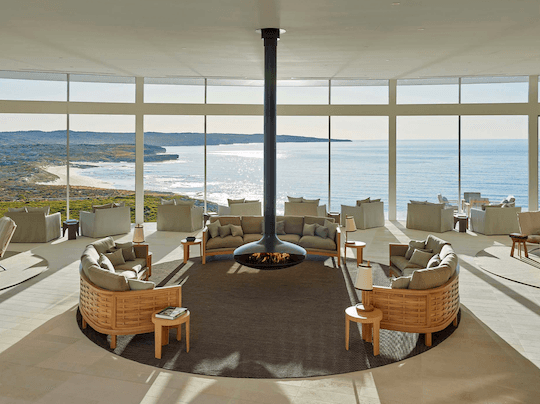
Justin Tyers • 23 January 2026
Southern Ocean Lodge …after the bush fire
In January 2020 the bushfires which swept through Kangaroo Island in Australia – scarring the landscape – completely destroyed the luxury hotel Southern Ocean Lodge . Perched on the cliffs, with dramatic sea views, it had built a reputation as one of Australia’s most iconic luxury retreats for its world-class design, extraordinary views and first-rate hospitality. Today, after one of Australia’s most significant tourism reconstruction projects, Southern Ocean Lodge has risen from the ashes. Its rebuild incorporates clever design with new resilience and an intelligent sustainable-energy system. Twenty-three suites have been reoriented towards the southeast providing uninterrupted views of the Southern Ocean and coastal wilderness. Each suite has a private deck, an EcoSmart fireplace, and a sink-in bathtub. The Remote Power Challenge Kangaroo Island’s remote location and protected parkland status is part of its attraction – but also presents unique challenges for hospitality. The lodge operates entirely off-grid – yet every appliance and utility runs on electricity! Water is produced by the lodge’s own desalination plant; the kitchen uses induction hobs, commercial electric ovens and freezer rooms; there is air conditioning; there are heated pools, spas and saunas – and underfloor heating throughout. The power system was designed and installed by Ciaram Granger and his team at MyEnergy. Ciaram says; “ The site – which includes a commercial laundry – operates across different duty cycles. Power to meet alternating demands from staff operations and residents makes it well-suited to a managed solar, battery, and generator integrated power system. “ From luxury suites, commercial kitchens, spas, water treatment and laundry facilities – reliable twenty-four hour power is a pre-requisite of the Lodge’s hospitality. The climate is rugged with strong winds, changeable weather and heavy power loads in peak seasons —so the system includes built-in redundancy to keep the Lodge running night-and-day, all year round. Key components include: 12 × Quattro 48/15000 Inverter/Chargers — providing robust AC power management and seamless switching between battery and generator energy sources. 25 × SmartSolar MPPT RS 450/200 solar charger controllers 7 × Fronius ECO 25 Inverters supporting a 600 kW ground-mounted solar array — generating clean energy from the abundant sunshine. An 800 kWh Pylontech US5000 battery bank, stores the renewable energy and provides reliable power through the night and during periods of low sunlight. 3 x CAT commercial generator sets add redundancy and are integrated via Victron’s generator interface – coordinated through a central Energy Management System (EMS). This smart hybrid architecture means solar generation handles the daytime load while the battery bank supports evening and overnight demand. During extended periods of limited sunlight or peak seasonal load, backup generators are seamlessly brought online — ensuring that guests never experience a flicker of interruption. Integration, Intelligence & Hospitality What makes the Lodge’s power system remarkable isn’t just its components — it’s how they work together. Full integration with the automation and EMS platform allows centralized, coordinated control. Energy flows are constantly optimised for efficiency, cost-effectiveness and resilience. For a remote luxury lodge where experience, comfort and operational continuity are paramount, it isn’t just about good engineering — without it the business couldn’t offer unforgettable no-compromise vacations, with reduced environmental impact and fossil fuel dependency. Recognition – and the Future of Off-Grid Hospitality In 2025, the Southern Ocean Lodge energy project was honoured as the National Clean Energy Project of the Year by Master Electricians Australia — a testament to what can be achieved when cutting-edge off-grid design meets reliable technology and thoughtful implementation.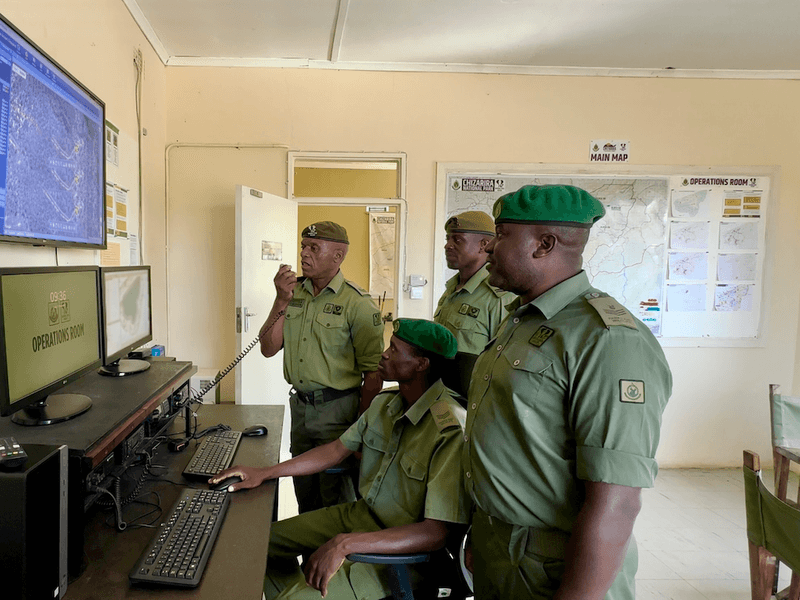
Justin Tyers • 09 January 2026
Restoring wildlife populations in Africa’s most threatened National Parks
Defend is a conservation organisation which partners with governments to give wildlife and wilderness the military-strength defence it deserves. They choose to operate in the toughest wildlife parks – those facing imminent species collapse due to severe poaching, inadequate resources, and failed management. Through a disciplined, military-style approach to conservation, Defend works to rapidly stabilise and restore these vulnerable areas, turning them into safe havens where wildlife can recover. At the core of Defend’s work is the belief that protected areas require an anti-poaching response equal to the threat they face. Defend therefore prioritises the deployment of highly effective law-enforcement operations, with a strong emphasis on anti-corruption, accountability, and field performance. Defend teams operate as a single unit alongside local wildlife authority staff, under one unified chain of command. This integrated model delivers a scalable, efficient, and high-impact solution that significantly reduces costs while maximising conservation outcomes. In parallel with field operations, they combine proven park-management practices with modern technology to transform how protected areas are run. Their in-house electronic park management system, EPARCS, equips park staff with rugged iPads that streamline everything from patrol planning and vehicle management to stock control, incident reporting, and finances. All operational data is shared in real time with government partners, ensuring full transparency and informed decision-making. The EPARCS logging, communication and control system can be operated remotely thanks to autonomous power systems which have been install both at HQ and into a patrol vehicle. The power system design and installation were overseen by Victron’s Zimbabwean distributor One Stop Solar , and by James Davey and his installers of Solar by Design . The systems comprise – for the HQ Command centre: 1 x MultiPlus-II 48/5000/70 Inverter-Charger 1 x SmartSolar MPPT RS 450/100 solar charge controller 12 x 590w solar panels 1 x Ekrano GX communication centre passed data between all installed devices and to GX Touch 70 user interface, from which status, settings, and firmware updates can be managed. 3 x BYD LV5 Batteries – totalling 15kWh of stored energy And for the Quick response vehicle: 1 x SmartShunt 500A/50mV battery monitor 1 x IP65 Blue Smart Charger 12/15 1 x 200Ah 12v Freedom Won LiFePo4 Battery 1 x 460w Solar Panel 1 x SmartSolar MPPT 100/50 solar charge controller 1 x Orion TR-Smart 12/12 – 30A DC/DC charger for dual battery installations 1 x Inverter VE.Direct 250VA The Vehicle can patrol and communicate with HQ for extended periods due to its versatile and autonomous Victron energy system which harvests energy from roof mounted solar panels during sunlight hours and also from the alternator whilst driving. Community engagement For wildlife conservation to work, local communities must benefit. Employment, trade, and education boost wellbeing and significantly reduce the incentive to poach and trade in wildlife. More than 90% Defend’s staff are local people, with priority always given to those living in a protected area’s surrounding communities. Defend acquire food and supplies from local farmers and retailers through their Community Rations Supply scheme. Defend also addresses all the critical infrastructure required for effective operation, degradation of which often cripple heavily poached parks: Roads, vehicles, power, water systems, communications, housing, and office facilities are restored or rebuilt to enable effective patrols and to provide rangers with safe, liveable environments. These improvements are essential to sustaining morale and performance in one of the most demanding and dangerous conservation roles in the world. Snare recovery. The impact of this holistic approach is already visible. In 2016, Zimbabwe’s Chizarira National Park was labelled one of Africa’s most-poached parks. Seven years into Defend’s ongoing rescue mission, patrol coverage was increased, poaching pressure has been reduced, and elephant populations are now rebounding — demonstrating that effective protection, strong partnerships, and the right technology can deliver conservation success. You can support their work by becoming a donor.
Justin Tyers • 19 December 2025
Water for the Buffalo
Water is the life-blood of Intermountain Bison , in Idaho, USA. They rear grass-fed America Bison to produce top quality, low-fat, healthy meat for discerning customers. In the 90s, this fully off-grid ranch relied on a small hydroelectric turbine to power a well pump and used diesel-powered generators to operate three agricultural pivots moved across grazing pastures. But free-flowing water isn’t always guaranteed. Problems stack up when mountain rain dries up in late summer or when hard freezes strike in winter. At those times, the welfare of the livestock depends on pumped water from underground. “ Most of our irrigation systems are pressurized by gravity ,” says Ranch Manager Wes Mackay, who started working on the ranch 20 years ago. “ There’s enough fall in the main line to pressurize the pivots, but some needed a small diesel generator to rotate them. A few of those pivots require pumps, and one pump can burn 750–1,000 gallons of gas per week .” As fuel prices rose, so did the ranch’s operating costs. The team explored connecting to the grid but quickly ruled it out as the cost would exceed a million dollars. Additional generators were added to support the main ranch house, and a small solar system was installed to improve reliability at the well, but it was the winter conditions which really exposed the system’s limitations. “ In winter, sunlight is limited, and our creeks freeze ,” says Wes. “ If the solar system goes down and the generator fails to start, the water pipes can freeze. That’s a serious risk when you’re responsible for livestock .” To make matters worse, it was getting harder to get technical support for the ageing solar equipment. The ranch needed a modern, reliable system—and local expertise to support it. A Modern Off-Grid Power System They contacted Victron Energy installer Jason Pilkerton of Rocky Mountain Electric & Data and asked if he could design a new off-grid power system. The system needed to deliver uninterrupted power for the ranch’s critical infrastructure, reduce fuel dependence, and support future growth and increasing power demand. What began as a system replacement quickly expanded in scope. Recent ranch developments included the addition of a second well and pump – effectively doubling the electrical load. The system Jason proposed was not only capable of providing the energy to run the ranch’s critical operations but it could also cover some other functions elsewhere on the ranch which were generator-dependent. “ The idea wasn’t just to replace what they already had ,” says Jason. “ but to eliminate single points of failure and reduce overall reliance on fuel wherever possible .” Unexpected bonus The new system allowed the ranch to replace the original ranch house with a 8,000 square foot home with freezers, a washing machine, and other modern appliances. “ The expansion of the house wouldn’t have been possible without the new power system, ” says Wes. Having guaranteed reliable power to the house and the ranch’s ability to extract water from the well at any time – two more operations could be powered from the same solar power source: The first was the irrigation pivots – irrigation is usually carried out overnight. The installation of a Lithium based battery bank – which is charged with solar energy during the day – allowed for overnight solar-powered irrigation. There was a huge reduction in diesel costs, and an increase in reliability. The generator starts automatically whenever the batteries fall to a pre-set State of Charge. The generator will then recharge the battery at its most efficient power output. The second operation was the cattle squeeze/crush used during veterinary work. Previously, it was powered by a tractor power take-off which was run continuously – adding noise, fumes, and fuel consumption to the all the excitement. Converting the system to run from a virtually silent electric motor improved working conditions for both ranchers and animals alike. System Design and Components Jason designed a 480V three-phase off-grid system housed in a fully insulated, temperature-controlled shipping container. The system was built to handle high surge loads, provide redundancy for critical systems, and is scaleable to meet future ranch needs. Key system components include: 3 × Quattro 15 kVA inverter/chargers 7 × SmartSolar MPPT 150/85 solar charge controllers 24 × Pylontech Pelio 48 V lithium batteries provide 124kWh of storage Lynx Distribution DC power distributors Cerbo GX with GX Touch 70 display PV panels – 124 kWp from three large ground-mounted arrays plus rooftop panels A 30 kW backup generator can be started automatically triggered by battery status “All devices communicate through the Cerbo GX, ” explains Jason. “ The solar charge controllers, Inverter/Chargers, batteries, and back up generator balance the system based on data from all of them .” Intelligent data-controlled operation allows reduced fuel use By default, solar energy supplies the ranch’s electrical loads and keeps the battery bank topped up. When solar energy availability drops, the Cerbo GX data communication hub – which monitors the state of charge of the lithium batteries – automatically starts the backup generator when the battery bank falls below a preset level. This arrangement – often called a hybrid generator system- prioritises power supply to loads from battery-stored energy. Battery power is replaced as far as possible from solar energy – and the generator is used to make up any shortfall. Generator efficiency is maximised because it runs only when needed, and at its maximum rating. Reliability, Savings, and Peace of Mind Wes estimates the new system saves the ranch approximately $10,000 per year in fuel costs. The increase in power availability has allowed an expansion of the accommodation at the main ranch house – delivering the conveniences of on-grid life without running the generators continuously. Just as important is the time saved in day-to-day management. “ The system doesn’t need much attention ,” says Wes. “ Honestly, I’ve almost stopped checking it because we haven’t had problems .” Victron Remote Management ( VRM ), allows ranch staff and installer Jason to monitor system performance remotely. During winter, Wes checks system status before turning in for the night. Jason can verify battery health, generator runtime, and system behaviour from his office. “ If something’s wrong, we will know ,” says Jason. “…usually before it becomes a problem.” Built for remote off-grid farming operations For Mike King, system engineer at Intelligent Controls , who supplies and supports Jason’s installations, the project reflects a broader trend. “ Many farms and ranches in the western US are too remote for affordable grid access ,” he says. “ High fuel costs and reliability concerns are pushing operations toward hybrid solar systems. Victron’s flexibility, reliability, and remote monitoring make these systems practical—even in very remote locations .” At Intermountain Bison, dependable power is no longer a limiting factor. With critical infrastructure secured and fuel dependence reduced, the ranch can focus on managing land and livestock—confident that the power system is doing its job quietly in the background. Images used in this story are the work of © Dallin Maples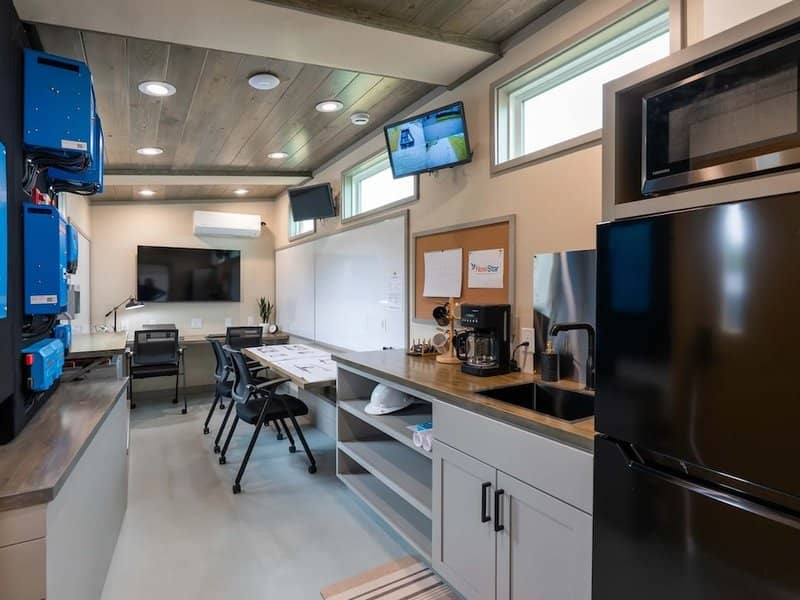
Justin Tyers • 12 December 2025
Giant Caterpillar installs site offices to increase green consumption
Construction and mining equipment giant Caterpillar and its dealer network have commissioned solar-powered site workspaces to reduce operational costs and increase sustainability. The towable, communication-ready, mobile workspaces which include office and kitchenette can be operational within twenty minutes of delivery. Built by NowStar who are based in Columbus Ohio, the solar powered workspaces feature a quiet, climate-controlled area for five to ten occupants. Insulated walls and energy recovery ventilation reduce power consumption during winter and summer alike. Currently two models are available: the 28 foot StarPod28; and 36foot StarPod36. Designer inspired, with engineered function, all units include elevated features that feel more like the creature comforts found in brick-and-mortar offices Caterpillar – in partnership with NowStar – wished to explore practical alternatives to traditional diesel-powered site offices used on construction sites. Conventional units rely heavily on generators which produce noise and fumes. The StarPod28 prototype was intended to demonstrate how a mobile office could function with lower fuel use and reduced environmental impact. It has a 4kWp roof mounted solar array, and a further 1kWp array has been installed on the front elevation of the unit which in this instance is stylised to match Caterpillar branding. 20kWh of energy is stored for 24 hour operation. The power system for these site offices were designed and installed by Victron Energy distributor Off-Grid Power Systems who have offices in Ohio and Montana. OGPS evaluated the electrical loads, space constraints, expected operating conditions. Key to the design was to maximise solar production on a relatively compact trailer whilst maintaining the unit’s visual and structural requirements. The power system includes: 2x Quattro 48/3000 inverter/chargers 1x Autotransformer for load balancing 10x Hyperion roof-mounted solar panels at 400W each 4x Merlin Solar TBS240L vertical panels 2x SmartSolar MPPT charge controllers 250/100 for the roof; and a 150/35 for the front elevation Lynx power distribution 4x Pytes V5° heated lithium batteries providing 20 kWh of storage 1x Cerbo GX with GX Touch 70 display for monitoring and control – both on site and remotely using the free to use Victron Remote Management platform VRM A 9 kW dual fuel generator is included in the power package to guarantee winter operation and during extended overcast conditions. If low battery state-of-charge is detected the generator will start – and stop – automatically, prompted by the Cerbo GX communication centre. Given the unit’s insulation level and the efficiency of the heating and cooling systems, generator run time is expected to be limited, but the backup system ensures continuity whatever the weather. Follow up orders and enquiries from other off-grid construction sites prove that the design is successful.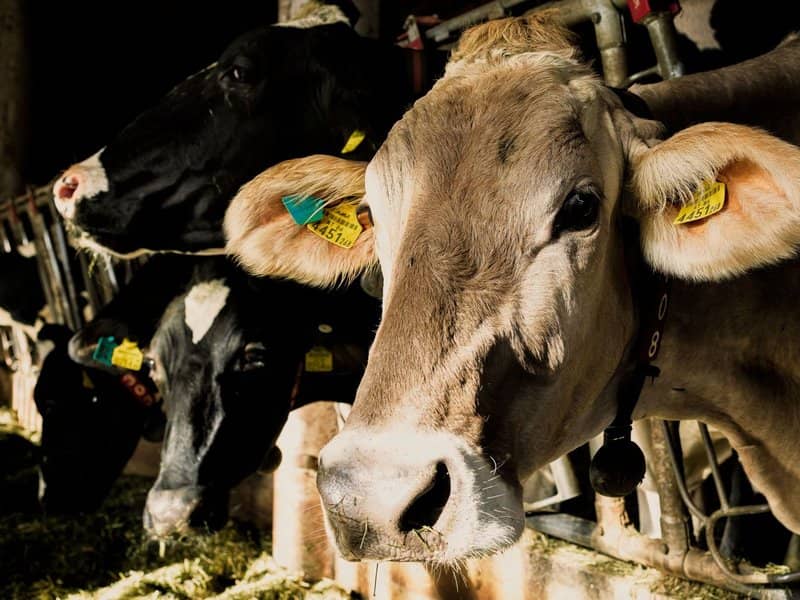
Justin Tyers • 05 December 2025
Dairy over the moon with solar power
This week let’s hear from Franz Sohm about a prestigious solar award for a traditional Austrian dairy: Surrounded by steep alpine pastures, the centuries-old dairy farm Der Mooshof is venturing into the future. Der Mooshof is one of the largest farms in the Bregenzerwald region. Three generations of the Greber family work here full-time, with around 80 dairy cows, young cattle, goats, and pigs. In its ongoing efforts to optimize operations, Der Mooshof wanted to overcome the limitations of its rural power supply and avoid the sometimes serious consequences of power outages. It commissioned solar power installer Greenfuture GmbH to plan and implement a system that would guarantee a reliable supply – and received a system that was awarded the Austrian Solar Prize in the Industry, Trade and Agriculture category in 2025. Dairy farming is energy-intensive. Mooshof’s two robotic milking systems ensure the cows are milked consistently. It’s a process that cannot be interrupted without risking udder infections and potentially losing animals. Automatic feeding machinery prepares rations throughout the day. Milk must be cooled immediately; cheese production requires reliable heating, stirring, and refrigeration. There’s lighting, of course, and power requirement for the background IT infrastructure …not to mention several family homes which add to the load. Until recently, the Mooshof relied on a 50 kWp PV system and grid power, which is limited to 80 kW input/output power at this location. Since power outages can cause enormous costs, the Greber family had to regularly operate an emergency power generator – even short interruptions endanger animals and livelihoods alike. Tobias Sohm, Installer Greenfuture expanded the existing solar system from 50 kWp to 180 kWp and used roofs and facades to achieve maximum yields even in winter. A comprehensive modernization of the storage capacities now delivers 500 kWh from a lithium battery bank with 100 Pytes V5 modules – enough to supply the farm autonomously for up to three days, even in unfavorable weather conditions. To circumvent strict grid limits, the Victron system ensures intelligent peak load coverage and an uninterruptible power supply that automatically takes over in less than 20 milliseconds – fully compatible with existing Fronius, Kostal, and Huawei inverters. The base load is around 15 kW, but can rise to up to 70 kW for seasonal work. On such days, electricity consumption rises to up to 1,000 kWh within 24 hours. “Thanks to a charging capacity of more than 150 kVA, even short periods of sunshine are enough to fully charge the batteries,” explains Tobias Sohm. The Mooshof has two interconnected solar power systems connected by three MultiPlus inverters/chargers, so that energy surpluses and deficits can be balanced between the two systems. This is a decisive step towards total autonomy, which already covers more than 90% of the electricity demand today. The resulting energy cost savings of €30,000 per year will fully amortize the initial investment costs in just a few years. The larger system comprises: 6 × Quattro 48/15000 Inverter/Charger 6 × SmartSolar MPPT RS 450/200 Solar Charge Controller 1 × SmartSolar MPPT RS 450/100 Solar Charge Controller Integration with existing Fronius, Kostal, and Huawei AC inverters 500 kWh lithium battery storage (100 × Pytes V5 modules) The system is controlled by a Cerbo GX data communication centre which provides local access to system status and programming via a GX Touch , and access from anywhere in the world via the free-to-use Victron Remote Management platform VRM . The second, independent PV system supplies the cheese production building and, after the upgrade, comprises 3 × Quattro 48/15000, 250 kWh batteries, and expanded PV capacity. The generator remains connected and starts automatically as soon as the battery charge level becomes too low. Greenfuture GmbH is run by brothers Tobias and Fabian Sohm, who literally grew up with photovoltaics. Their father, Franz Sohm, won the European Solar Prize in 1999 and is still active in the B2B sector with his company Solar Energy Anstalt. For the Mooshof project, Franz was particularly pleased to be working with his sons again – not least because he grew up just 300 meters from the Greber farm and knows the family well. Martin Greber and Franz’s father have always been close friends. The Greber family had initially looked at other systems, but needed the guarantee of immediate load transfer in the event of a power failure – without this criterion, the entire project would have been pointless. Today, they proudly demonstrate how it works to visitors by disconnecting the grid and having the Quattros take over in a fraction of a second – without even a flicker of the lights. Heat for residential buildings, cheese production, and, when needed, hay drying is provided by a 350 kW wood chip heating system fueled by wood from the farm’s own forest—an efficient closed-loop system that fits perfectly with the farm’s sustainable philosophy. From the 300 cowbells that ring every summer when the herd moves up to the high alpine pastures to the state-of-the-art hybrid energy system that powers their work, the Mooshof impressively combines tradition and innovation. It proves that even remote mountain farms can become energy self-sufficient, resilient, and economically stronger. For the Greber family, the Solar Prize is much more than an award—it is an incentive. “Our project is intended to motivate other farms to take the step toward energy self-sufficiency.” The next goal is clear: the entire farm is to become energy self-sufficient. The next goal is clear: the entire farm is to become energy self-sufficient. All images of the family or their livestock shown above are from © Markus Gmeiner.
Justin Tyers • 28 November 2025
Growing greener olives
A hundred years ago on the island of Lefkada, Greece, Andreas’ grandfather planted sixty Asproelia Lefkadas olive trees. For thirty years after his death the plantation was abandoned. Today, Andreas Dimitrakopoulos has taken the farm back in hand and is producing some of the finest olive oil in the world …winning a Silver medal in the New York World Olive Oil Competition ; and another Silver in the London 2025 International Olive Oil Competition . Lefkada Mico Farm believe they have become the first to grow, harvest and extract their premium oil solely by using sustainable energy. Andreas – who says his previous farming experience was limited to once growing a pot of mint for his mojitos – made a decision to revive the grove and turn it into a business when his previous job in corporate management failed to nourish his soul. What followed was a whirlwind of learning, and working with a respect for nature which resulted in international acclaim within four seasons. What sets Lefkada Micro Farm apart is its commitment to chemical-free farming and renewable energy. Producing less than a thousand litres of olive oil each year, the farm focuses on quality: high-phenolic, antioxidant-rich olive oil from an indigenous variety, tested annually for more than 200 chemical residues—and consistently coming up clean. To maintain purity, the farm operates completely off-grid. Every activity on the farm is powered by solar energy: lighting, refrigeration, washing machines, ventilators, and the air-conditioning that protects the heat-sensitive olive oil in the shop— sometimes running for 20–24 hours a day. Even the handheld olive-harvesting machines are solar-powered. This year’s harvest was 100% solar-powered from tree to bottle, making it one of the most environmentally friendly olive oils produced anywhere in the world. Modern harvesting tools, powered by petrol or diesel, emit fumes which risk contaminating the olives. Solar-powered equipment eliminates that possibility entirely, preserving both flavour and purity. The power system consists of : 3 x 550 W bifacial solar panels Solar energy is controlled by a SmartSolar 150/70 MPPT solar charge controller. Energy is stored in a Lithium NG 25.6/200 batteries Battery charge/discharge cycles are controlled by a VE.Bus BMS NG battery management system. Bluetooth provides status information, and allows updates and programming direct from a phone using VictronConnect . The VE.Bus BMS controls Victron’s Next Generation Lithium batteries for systems using VE.Bus communication. AC power is provided by MultiPlus-II 24/3000 inverter/charger The installation was carried out by Andreas’ long-time friend, certified electrician Giorgos Mavroulis, president of the electrical contractors’ association of the island. The farm previously operated on a smaller Victron setup which was sufficient for lighting and charging devices—but the new system has transformed their capabilities. The earlier system serves as a backup during peak summer loads. The farm keeps a petrol generator on hand for rare cloudy periods, and machinery such as the welding machine can be run using the Power Assist function of the Inverter – whereby battery power can be added to the generator output to supply peak loads. Today, hundreds of visitors from around the world come for a tour of the sustainable farm; attend one of the cooking or baking classes, or to enjoy a private dining function using naturally grown ingredients. The farm shop sells bottles of freshly milled, high-phenolic olive oil. Lefada Farm also have an online shop selling their produce to Europe and the world. For Andreas, sustainability is a way to honour his grandfather’s grove and ensure it thrives for another hundred years. “ We think it’s a great example of how renewables can be part of a small business like ours ,” he says. Lefkada Micro Farm shows that innovative small farms can lead the way to better produce by blending traditional and modern methods. Let’s take a look around the farm: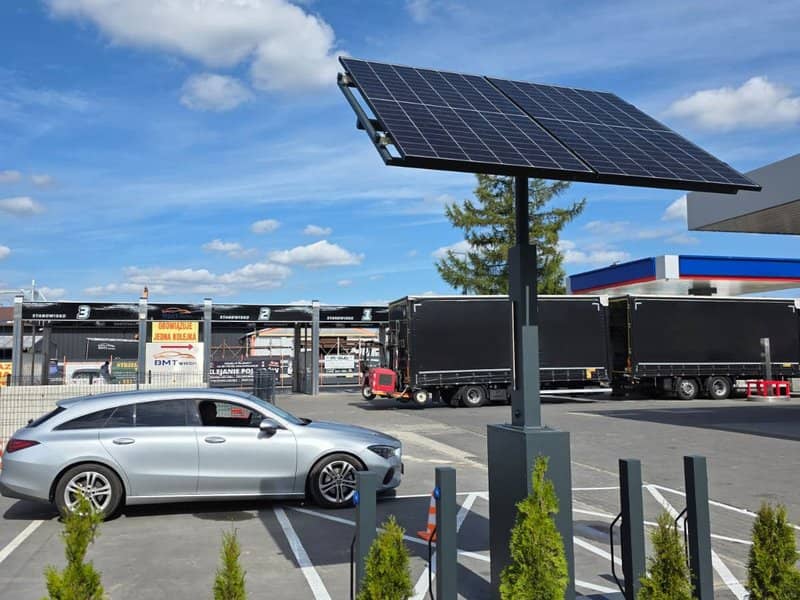
Justin Tyers • 07 November 2025
Fuel Station opens E-Bike pit stop
There’s an unexpected new service on a fuel station forecourt in northern Poland: E-bikers can recharge their batteries – free. On the MOYA forecourt in Bytów, installer EcoAC – working in partnership with Victron Energy distributor Globtechnic Power Systems – has installed a small canopy of solar panels under which E-bike owners can plug in for a free top-up while they wait. The story began with a suggestion by local authorities in northern Poland that this would be a great way to support local tourism and green mobility. The MOYA forecourt franchise made the idea reality – keen to expand their service to customers. EcoAC was offered the job of installing the facility and chose to provide a premium, reliable charging station which was attractive, and which people would enjoy using. Part of the design concept is that the unit is essentially mobile – it is secured immovably to the ground, of course, but can be relocated at will. Up to four e-bikes can be charged simultaneously. The facility features motion-activated LED lighting: USB chargers for personal devices; and a 230VAC outlet: technically speaking even an EV could use the facility – though it would take a while! Solar energy from 2 x PV panels of 490Wp is harvested by a SmartSolar MPPT 100/50 . Power is stored in 2 x 12V 220Ah AGM Deep Cycle Batteries A MultiPlus-II 24/3000/70 Inverter Charger provides AC power and can also charges the battery when connected the electricity grid. A BMV-712 Smart monitors the battery State of Charge, Voltage, Input Output, as well as storing their operational history. On a bright summer’s day, the solar panels provide more than enough energy for casual use. Even on a cloudy day, the batteries alone can fully charge around five E-bikes, depending on the size of each bike’s battery. The unit is designed to operate in hybrid mode when it’s grid-connected, ensuring service continuity 24 hours per day. “ The idea is to use solar energy whenever possible, but never to leave a cyclist waiting; ” says Globtechnic’s Chief Operating Officer Mateusz Wrzeszcz . The unit’s mobility makes it ideal for installation at temporary visitor attractions – and the advantage for hotels or restaurants who wish to offer guests a premium service is clear. EcoAC plans to refine the design to offer more charging outlets – whilst keeping the core configuration. The intention is to offer it as a commercial product which anyone can order — a ready-made amenity for modern hospitality. “ The unit is small enough to fit almost anywhere ,” says Mateusz, “ fuel stations, car parks, workplaces, or recreation areas — wherever people gather, it can offer power from the sun .” The MOYA forecourt offers the facility as a gesture towards customers. The site already includes a restaurant, so e-bikers can sit and relax whilst they wait for the energy which will power their onward journey. EcoAC are proud that their technical expertise rose to the challenge of designing and building this new facility. They hope that the inclusivity of e-bike riders at traditional fuel forecourts will establish a new logic for public installations which meet the needs of those who choose travel sustainably. It’s the future we are all heading for. EcoAC have provided a YouTube short of the installation: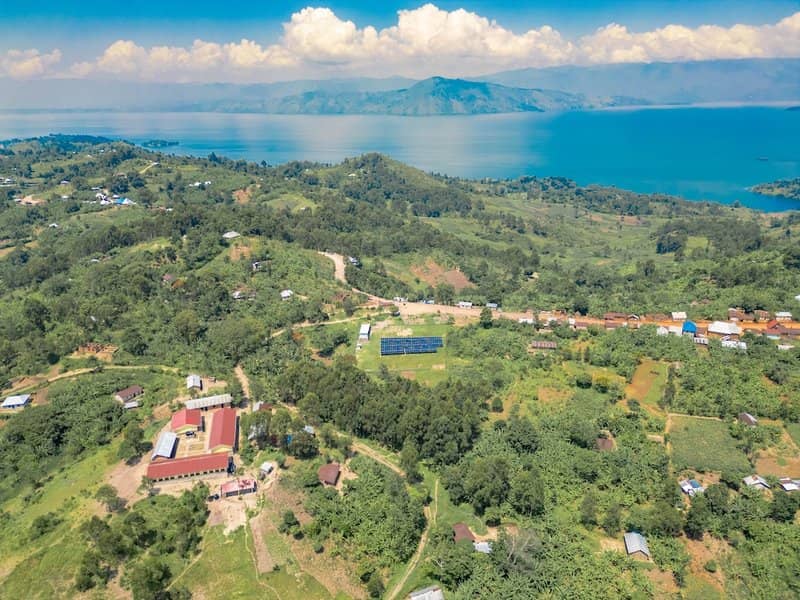
Justin Tyers • 24 October 2025
Rural electrification allows personal enterprise in Africa
A programme to bring electricity to communities in the Democratic Republic of Congo, Africa, has achieved a number of successes recently – most recently on the Island of Idjwi. Over forty miles long Idjwi is the tenth largest lake-island in the world. A few members of the 330,000 population had rudimentary electricity in the 1940’s – most have never had it. This 270kWp solar project alone brings domestic AC electricity to 5% of the island’s residents, for the first time. Importantly, the General Hospital in Dikungu now benefits from a twenty-four hour power supply. Dr Pengelu says that, before the arrival of this installation, night nurses were forced to care for patients by torchlight, or by using the light from their mobile phones – with many patients too frightened to spend the night in the hospital in complete darkness. But with the arrival of overnight lighting on the wards, patients no longer fear to stay – even when there is no overnight nurse. Apodina says that for ordinary residents, this installation brings power to their home, and street lighting in a number of location means that shops and stalls can remain open after dark – allowing people to go shopping. They can now see friends, socialise, and work late into the night. Facilitated by ANSER DRC – a government funded body whose aim is to provide electricity to all rural areas by 2050 – these significant installations were carried out by GoShop Energy , who have considerable expertise in building electricity infrastructure. 2,500 households on the island now enjoy the availability of electricity having been connected to four mini-grids. Solar energy is harvested from 664 solar panels – offering almost 300kWp – by SmartSolar MPPT solar charge controllers. The energy is stored in BYD lithium batteries with a capacity of 525kWh. Seven Fronius Eco 27 solar inverters provide daytime AC power; with surplus energy being directed to storage. Stored AC power is controlled by Quattro inverter/chargers. The Quattro devices also provide AC power from battery storage – ensuring 24 hour electricity provision. A Cerbo GX communication centre device harmonises all installed equipment and make live and historic data available locally on a GX Touch screen, and provides remote engineering access via Victron’s free-to-use internet based platform Victron Remote Management – VRM . Additionally, 1000 homes in Wembonyama, in the Sankuru province, have also been connected to a minigrid. The installation includes some street lighting in what is planned to be a future tourist city. Prior to GoShop Energy ‘s installations, this region had never known electricity and the lack of electrical infrastructure had hampered the areas socio-economic development, severely limiting opportunities for residents. Some households were unaware how to use electricity, with the result that their access to modern devices and services were almost non-existent. ANSER instructed GoShop Energy to build four solar photovoltaic power plants with a total capacity of 270 kWp, and the project was completed last year. The work provided 900 single-phase connections to homes, together with another 100 three-phase connections. Residents are able to purchase energy using a smart meter payment system. These installations also improve the well-being of Wembonyama’s residents, who now feel able to fulfil their goals. Everybody wins with this boost to the local economy having provided the means to allow commercial development. This is a significant development for an area with the ambition to become a tourist hub and the initiative is set to transform the lives of the community now that they are provided with a clean and reliable energy. Let’s take a look at the difference these installations are making to the lives of local people: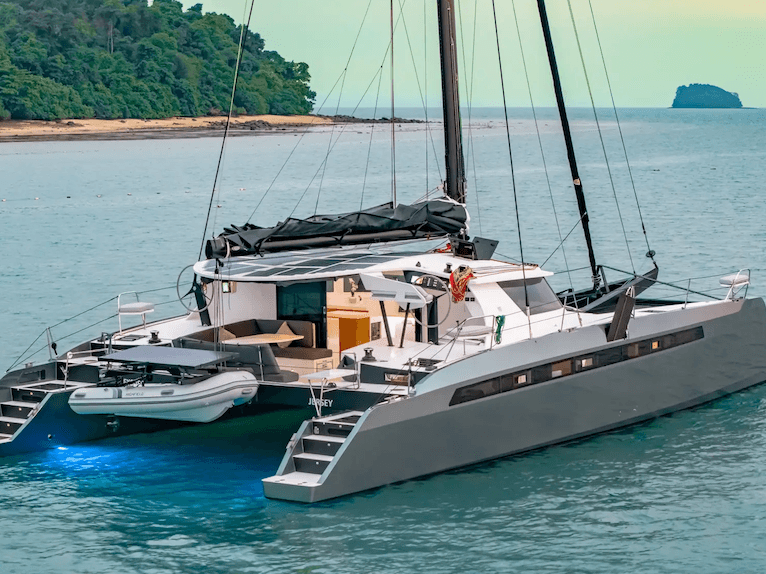
Justin Tyers • 17 October 2025
Catamaran with electrics built into it’s DNA
When Sailectron Services were invited to become involved in the design and installation of an electric power system on board an Adventure Catamaran 55 – whilst it was still a bare hull – the efficiencies achieved were remarkable. As well as allowing device stowage and conduits for the owner-specified utilities to be absorbed discretely into the build – the savings in time, and the production of coherent materials schedules were impressive. Sailectron Services are based in Austria, Europe …the build was taking place in Thailand, SE Asia. Using Rhinoceros CAD enabled Sailectron Services to plan their installation remotely, placing power devices within yet-to-be-built housings, perfectly sized for the bespoke system. Their one-off design included the building out of GRP mounts and casings placed within the bare hull in optimal locations, using the minimum of space. Planning Working in close collaboration with the shipyard team, sharing drawings, the power system was designed and – to a large extent – built remotely. As part of the process, outstanding matters were able to be decided in a single on-site meeting. Details – such as the layout of the custom-made photovoltaic array – were physically laid out in template, and a collaborative construction schedule was agreed. Sailectron Services were able to convert the sketches and minutes-of-their-meeting into detailed electrical plans, cable lists, and parts lists using electrical CAD software – WSCAD. Concept The Adventure 55 catamaran is a design which offers the owner responsive and exhilarating sailing, maximum comfort throughout the on-board accommodation, and – in this example – an energy management system which is lightweight, automated, and provides power to a comprehensive list of domestic electrical devices – just like those used at home. Among the conveniences is an air conditioning system; the kitchen is 100% electric – equipped with top-quality Miele appliances; it boast a high-quality audio system; a desalination plant provides unlimited amounts of potable water; and other powerful boat-handling and climate control electrical devices can be operated for extended periods. Sailectron Services CEO Lukas Vrecer says: “ The exhaustive power system includes a device from almost every category of power product made by Victron Energy! – the resulting installation provides an incomparable user-experience. All components can be controlled on board from the navigation station; remote monitoring and support is possible using Victron’s VRM platform. Some special functions have also been implemented using Beckhoff Programmable Logic Controllers. “ As with all installations by Sailectron Services, emphasis was placed on quality of build; a standards-compliant installation including comprehensive circuit diagrams; labelling of all cables and equipment; and the best possible documentation to ensure that any technician, anywhere in the world is able to maintain and service the system. Installation Sailectron Services seized every opportunity to prefabricate as many components as possible in their workshop in Austria. Pre-configured and tested components were then shipped to Thailand – greatly accelerating the installation process. Within three weeks, the system was integrated into the yacht and tested by their four-person team. Post launch, the system underwent final commissioning before delivery to the client. The components Energy storage and charging is performed by nine Lithium Battery Smart LiFePO4 25.6/200Ah forming the service batteries. They operate two MultiPlus 24/5000 inverter/chargers which simultaneously serve as battery-chargers and transfer switches for uninterrupted power-source switching between shore AC and inverter operation. Five Smart IP43 Charger 24/25 units also serve as chargers – not only enabling faster charging from shore power, but they also allow any shore power connection to be used worldwide because of their input voltage range. A Lynx Smart BMS – battery management system – controls the charge depending on the status of the LiFePO4 bank: Charging curves are regulated via DVCC depending on the state of charge, voltage, and temperature. Powerful alternators, controlled by Wakespeed WS500, are seamlessly integrated into the Victron system. Protection & Shore Power Input An Isolation Transformer protects the vessel from damage caused by galvanic corrosion. The MultiPlus inverter/charger units also continuously monitor the external grid for correct voltage and frequency, and disconnect it if necessary to protect the onboard electrical equipment. The IP43 Smart Charger ensures that the batteries are not drained during inverter operation, even in the event of a poor external power supply. This solution guarantees a perfectly clean 230V/50Hz power supply on board. Photovoltaics A custom-made 2.6kW SOLBIAN solar system is installed in the saloon roof, making it fully accessible. Nine SmartSolar 100/20 charge controllers control the solar harvest in a synchronized manner and ensure maximum shade tolerance with separate control circuits. Monitoring The Cerbo GX with GX Touch 70 serves as the central interface for controlling the system. Temperatures, tank levels, and various digital inputs are also processed here. A Beckhoff Programmable Logic Controller is used to control numerous tanks (in order to minimize the number of through-hull fittings, the owner requested small tanks for each waste area, with centralized and automated waste management). Fill levels are transmitted to the monitoring system via a GX Tank 140 . For local monitoring on board, all B&G chart plotters, together with the Victron touchscreen user interface, have been integrated via an HTML page. Michael Ponbauer , CTO, says: “ Victron Energy’s open approach regarding data communication allows us to seamlessly integrate the Victron ecosystem with the Beckhoff PLC. This way even complex systems including engine controls, fire alarm systems and onboard lighting can be operated from a single user interface .” The system can also be accessed remotely via the VRM platform, allowing not only control and monitoring but also remote maintenance and updates. Switch Panels Sailectron Services manufactured their own custom-made switch panels using either anodized aluminium, or a special backlit PMMA material for the main DC distribution board, the control stations, the navigation table, and various other positions. Commissioning After launch, every socket and circuit breaker was tested including insulation resistance – as well as a thermal imaging test – in which the system is loaded with its maximum possible power (charging and discharging). The thermal imaging camera checks the temperatures of all components, terminals, and switches to identify any potential faults. After commissioning, the plans and operating manuals were handed over – including detailed instructions for the shipyard staff and the owner, to ensure that all functions are familiar. Technical specifications: Storage: (24V, 46kWh): 9x LiFePO4 Smart 25.6V/200Ah BMS: Lynx Smart BMS 1000A Inverters: 2x MultiPlus 24/5000/120 Chargers: 5x IP43 Smart 24/25 Monitoring: Cerbo GX with GX Touch 70 and integration into B&G chartplotter PV charge controllers: 9x SmartSolar 100/20 PV output: 2,612Wp SOLBIAN Solar & 500Wp glass/glass The Adventure 55 demonstrates the value of early involvement in the design process: Adapting the installation spaces to the electrical system allows for cable runs to be kept as short as possible while maintaining perfect accessibility to all components. Careful electrical planning makes workflows efficient; the system can be largely prefabricated off-site and subsequently installed on-site with minimal time expenditure. Comprehensive documentation, including labeling of all cables and operating equipment, is not only enormously helpful during installation and the lifetime of the yacht, it also enhances the yacht’s long-term value – saving time and expense on maintenance from external technicians. Sailectron Services can be found at these web locations: Website: www.offgridshop.eu Instagram: @offgridshop_eu Facebook: @offgridshop.eu LinkedIn: Offgridshop.eu – Sailectron Services GmbH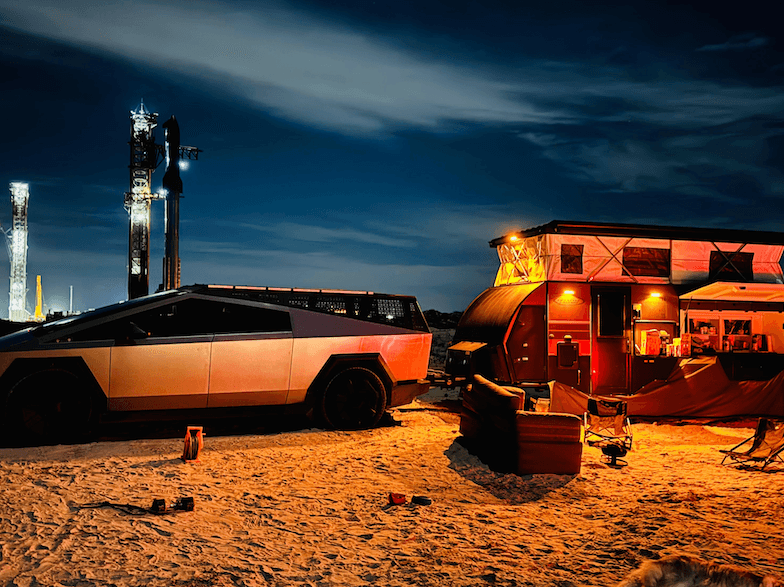
Justin Tyers • 09 October 2025
Solar powered miles in Cybertruck and camper
Whilst Eddie and his wife Louise go hiking, their Cybertruck refuels itself from the sun. Proponents of living sustainably, their tow vehicle just has to be electric …and they prefer boon docking to organised sites. Those two preferences seemed to be incompatible until Eddie had an idea which would neatly combine both of them: he installed a power system in his camper which prioritises EV charging from solar power. They tow a Fusionn Hypercamper; well-equipped for up to four people, and lightweight at just over 2 tons empty – what makes it ideal for their set up is that the Fusionn has a lifting/lowering roof: “ That lifting roof is one of the keys to low-drag electric travel ,” says Eddie: “ Drag coefficient is greatly reduced with our set up because, unlike a lot of towed vans, the Fusionn trailer is the same width and – with the roof down – very nearly the same height as the Cybertruck. Wind resistance is much more important than weight when it comes to maximising the range from our tow vehicle .” Their power installation allows them to slow walk anywhere …potentially, without ever visiting a charging point. It really works for them. Here’s how they do it: Firstly, their travel plans aren’t made around a tight schedule – they don’t need to drive hundreds of miles everyday to keep up with an ambitious travel agenda. Taking a day out to explore on foot, or chill out, their Cybertruck is busy recharging itself from the sun during their downtime, in preparation for tomorrow’s miles. The trailer has been modified with 1400W roof-mounted solar array. They plan to upgrade the awning to add a further800W; and to max-out the power harvest they’re looking to add a solar blanket to the set up. For every hour that they chill out, their EV battery is storing more miles. Eddie controls the charge current to a maximum of 25A. It’s capable of more than that, but he likes to dial back the amperage so that nothing gets stressed. With good conditions a couple of days off in the mountains may add 20 – 50 miles. That way, with their go-anywhere trailer (which has impressive 33″ wheels and is fitted with all terrain tires/tyres) they plan to slow walk around the USA – whatever the weather – enjoying their off-grid lifestyle. The power installation Here’s their power setup: Solar Energy is harvested by two SmartSolar MPPT 150/35 solar charge controllers which store power into four Lithium NG Batteries rated at 51.2V 100Ah – offering 20kWh of stored energy. (The latest NG Next Generation batteries, by the way, feature an integrated shunt, and advanced communication which allows up to 50 batteries to be combined in the same bank. The mandatory battery management system for NG batteries is the Lynx Smart BMS NG. ) Two MultiPlus II 48/3000/35A Inverter/Chargers have been installed to act as a Level-2 (240V) EV charger. A Cerbo GX is the data communication centre – harmonizing the entire system. It provides real time status information, and – with an internet connection – engineering access from anywhere in the world via VRM . On board the camper the same level of access is provided by a GX Touch 70 user interface. Most of the domestic equipment on board is powered from a 12VDC circuit. The system voltage from the batteries, you may have noticed, is 48VCD; an Orion 48/12 30A DC-DC charger is used to drop down for the 12V circuits. 2 x Lynx Power-In Class-T units allow the installation to conform with ABYC circuit protection requirements. The system was designed by Trek Systems, a U.S. based technical distributor specializing in energy solutions for mobile and remote environments. A notable exception to the DC powered domestic equipment is the induction hob fitted as part of the camper’s outdoor kitchen. The camper can also be heated electrically, but Eddie prefers to use a diesel heater. He says it’s important to have a back up fuel source – even if that means fossil fuel. They once travelled with an outside temperature of 0°F (that’s -18°C). In those conditions the ability to heat your space becomes critical and a back up diesel heater suddenly makes a lot of sense. Fusionn Hypercamper They won’t be short of comfort. Their Fusionn camper offers plenty of storage, a shower, outdoor kitchen cooking range with induction hob and accommodates up to four people …so you can take care of drop-by visitors. Image from Lifestyle Campers.com.au A recent 1400 mile journey was made more conventionally, using recharging points along the way. The trip took Eddie and his wife from Boulder, Colorado; through Utah; Reno; Lake Tahoe (a long climb up to 9000 feet altitude); then San Francisco Bay and out to Las Vegas …and back. Eddie notes that when they covering a lot of miles – through remote areas and on a schedule – each time you pass an electric charging point you more or less have to stop to save range anxiety as it may be 100 miles before the next charge station. Towing his caravan loaded up he gets a range of about 150 miles per full charge. By using EV chargers along their route they have achieved in excess of 500 miles in a day – so all travel options remain open. CyberTruck spec sheet Taken from the Cybertruck web page, here are a few more facts about their tow vehicle: In All Wheel Drive – no load, no hitch – the Cybertruck is capable of 325 miles on a single charge. It can accelerate to 60mph in just over four seconds – reaching a top speed of 112 mph; and it has a towing capacity of almost five tons. You can follow Eddie and CyberTruckOne on his YouTube channel and check out his website. Let’s take a video tour of the Eddie and Louise’s trailer camper:
Justin Tyers • 02 October 2025
Traditional Working Ranchers – custodians of the land
The managers of remote J Bar L Ranch , in Centennial Valley, Montana, US, see themselves as stewards of their land. Placing the health and happiness of animals, people and the environment first, their focus is on preserving, restoring and sharing the natural beauty of the land in their care. They’re progressive ranchers: they raise cattle on the herbage which occurs naturally in the valley without the use of antibiotics, or growth hormones, while co-existing with wildlife and working to regenerate the soil and landscape. And they like to share the ranch’s big sky landscape with others – offering generous off-grid accommodation for family vacations, or for group events. Apart from the outdoor activities which the location has to offer – hiking, birding and wildlife watching, nearby fishing access and horseback riding outfitters – there are special retreats and clinics available to visitors; tutor led safe spaces to learn arts, crafts, personal growth and practical skills in a setting which allows participants to be present. Time spent with family, friends and shared interests groups, far from urban hurry, provides an opportunity to reconnect with nature, with each other, and also with ourselves. For those staying longer, the accommodation at J Bar L Ranch comprises secluded traditional historic cabins and houses which have been renovated, refurbished – or in one case, even relocated – to provide a vacation home built with heart from natural materials; offering views you won’t believe; and yet still equipped with pampering modern conveniences. The ranch is twenty miles from the nearest adopted road. Grid electricity serves about half of the ranch buildings – but when it fails, it’s last in line for reconnection. Happily these days the ranch’s two main guest locations, as well as, the seasonal staff complex enjoy uninterrupted power – even when the grid fails – thanks to a major investment in solar based autonomous power. Guests won’t even know their paradise home is off-grid and powered by the sun …because that’s just how solar installer Harvest Solar MT , planned it! Some solar energy provision had been present at the guest cabins for many years, but periodic renewals and upgrades led to a variety of equipment add-ons which were hard to manage. Failures occurred, generators whined. Meg Zaranek manages the ranch’s guest program: “ In the past, the generator would kick on a lot, even during the day when the sun was out. With the new systems we definitely don’t think about our power usage, and we no longer have to listen to a generator. ” she says. “ A few weeks ago, the power company contacted us to tell us we’d be without power for part of the day because of grid maintenance – and we said ‘Ok fine, that’s not going to affect us, because we’ve got out own back up power system .” The systems were designed by the Harvest Solar team, headed by Kyle Macvean. Kyle says: “In the past, the caretakers would get calls that the power had gone down and they’d lost internet connection so they were bouncing around each location trying to get the generator started – or a lot of times they would just have to leave the generator running the entire time the guests were there just because they were busy and didn’t have time to fix the power system. That resulted in a lot of wasted fuel and extra generator maintenance, and it’s expensive to get a generator guy out there. “The new system has already saved the ranch a lot of time and money. As ranchers they still get on their horses every day and go out on the plain – so having reliable power has freed up time. Same for the caretakers and the maintenance foreman – allowing them to focus on other projects, which are many!” How much power? Working out the system size… Harvest Solar MT , based in Bozeman, Montana, designed three systems as upgrades for three off-grid solar power systems to provide power to the staff residence ranch house, and some vacation cabins for summer occupation. “ We always try to design a worst-case scenario so we looked at the maximum guest capacity for each cabin and time of use for each site, plus average hours of sunlight in this location throughout the year. “For guests who don’t understand that they’re off-grid, we wanted to take pressure off the caretakers such that no matter what the use was, the system can handle it. In the worst-case scenario, the generator will start automatically to supply temporary power to peak loads, so the system will restore itself quickly in the event of heavy use. ” The principle devices installed were: 2 x MultiPlus -II 48/5000 inverter/chargers in split-phase configuration 1 x MPPT RS 450/200 solar charge controller 2 x Lynx Distributor 1000 1 x Lynx Shunt 1000 1 x Cerbo GX 1 x GXTouch 50 touchscreen user interface display 4-8 Pylontech US5000 48v LiFePO4 Batteries 1-2 Pylontech Energy Storage Cabinets 11.5kWp bifacial solar panel array to maximise the power harvest – especially in the winter “We reviewed all the major loads (well pump, septic, microwaves, refrigerators, hair dryers, toasters. We wanted to make sure that any type of guest that was staying there could operate and cook in a kitchen without necessarily knowing that they were on an off-grid power system. Smart, uninterrupted, secure power was the goal. ” Winter freeze J Bar L Ranch, largely shuts down in the winter months. All livestock and employees move out of the valley to another ranch location. “ This factored into our design as well – allowing for more battery storage to get them through the dark, snowy winter months without having to rely on the generator. Each system is fully winter-ready, having an insulated room with a space heater. We’ve been monitoring the min and max battery temperature from VRM and last winter, it got really, really cold over a two week period – enough for us to want to come back and install some very simple heater pads that turn off and on based on battery temperature, ensuring the Pylontech lithium batteries stay at around 40 degrees Fahrenheit (5C). Having historical data on VRM was super handy to show the customer. ” The other two off-grid systems will not be used at all in the winter. “ In the past, they would have had to unplug and remove the batteries for the winter because they couldn’t support the standby loads. Now the caretakers can just leave the systems up and running, and this saves them a lot of work. They just literally turn the lights off, and then in the springtime, when they’re ready to receive guests they turn them back on! The batteries are full, and the system’s ready to get back to work. We use Victron… “A huge thing I appreciate with Victron – because we try to be as knowledgeable as we can on everything that we’re installing and recommending and we don’t want to sell anyone something they don’t need – we can monitor the system even after it’s installed, saying: ‘Hey, let’s see how this goes.’ If other things are needed, we have real performance data that we can base our decision on …instead of just spending money that’s not necessary. ” “ It’s really hard for an installer to communicate everything that the system operator needs to know;” says Kyle , “but with the VRM it’s a lot easier. ” As an example, the Ranch had a lightning strike at the main staff housing complex. Luckily, everything that we installed was fine – but they had a Starlink, and a bunch of electronics in the home that got fried. Looking at VRM, I could see the power usage really well on each inverter, so we were able to isolate a lot of components and see if they’d been affected or not – which is really, really handy. T he ranch is a three-and-a-half hour drive from us on a good day – if it’s snowing it could be five hours – but because they have reliable internet connection with VRM, for us as an installer we’re able to see that information. It’s a much better alternative when you’re looking at seven hours of road time for the round trip. “ Never-the-less, Harvest Solar make an annual visit to check the things which may not show up on VRM – such as panel-mounts and wiring, and to make sure no critters have taken up residence in the devices. They also make a ‘How-To’ guide for the owner’s use, as well as labelling system components …making it easier for anyone unfamiliar with the system to find their way around. Node-RED Kyle says that having the support of Intelligent Controls as their distribution partner is another huge advantage. If there’s something that he or his tech team can’t figure out, it’s really easy to get a hold of extra troubleshooting or programming support. “ There’s so much you can do with Victron’s communication software ( Venus OS ) and we’re constantly learning;” he says , “We’ve written additional code that we’ve been able to imprint inside the VRM for different types of scenarios. For example, we have a customer with a three-wire start generator. Most generators are two wire start, and that’s how the Cerbo GX is set up. Intelligent Controls wrote a little bit of code in Node-RED and sent it through the VRM portal to allow us to control that generator with the Cerbo. That’s not stuff we really deal with every day. So being able to have expert support to come up with the right solution to a problem is huge .” Home on the Range The J Bar L cattle ranch employs multiple families across its livestock and guest operations, many of whom live on site with young children. Meg says: “ Taking care of animals, seeing wildlife everyday, there are endless opportunities for discovery and unplanned teaching moments. There’s been human impact in the valley, obviously – we’re here. But as a ranch, we are constantly trying to learn how sustainable livestock practices can benefit the land rather than a traditional extraction model .” Giving back is the model on which the ranch is run for visitors, too. J Bar L Ranch describe their location as the ultimate opportunity to get lost in the sweeping views and natural quiet of the Centennial Valley and reconnect with friends and family …and you know it must be true when they tell you that: ‘because of our extraordinarily remote location, you will be unable to use your phone to navigate to the ranch!’ They highly recommend a 4-wheel drive vehicle with all-terrain tires to best access all of the roads in the Centennial Valley. You can experience the big sky vacation with heart by visiting the J Bar L ranch accommodation booking page. The headline image and the closing image (above) are the work of Ami Vitale . Let’s take a look at the set up at J Bar L Ranch: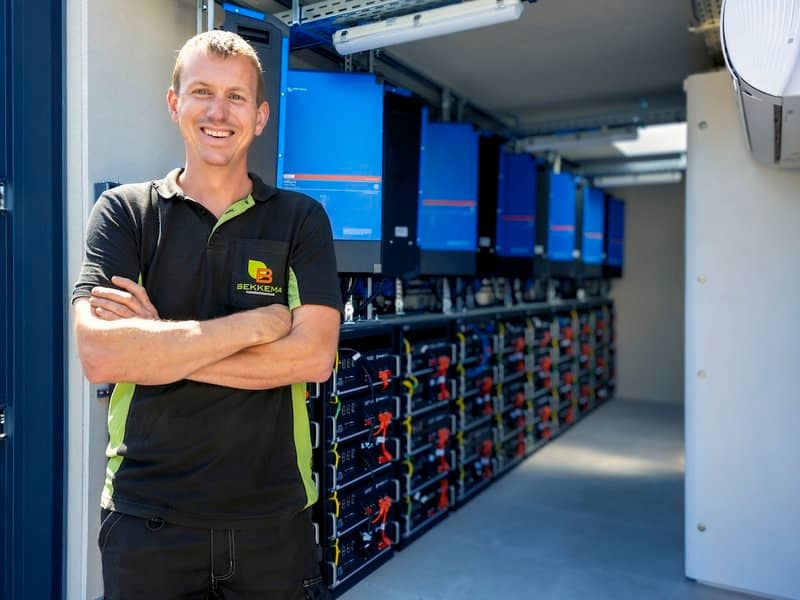
Justin Tyers • 12 September 2025
Peak shaving enables manufacturing expansion
One of the challenges facing successful manufacturing companies in the Netherlands is that when they wish to expand their factory output, there may not be sufficient grid capacity in their location to support it. This was the case for the Fiber Line facility based in Drachten. Fiber Line manufacture high-performance, high tech cords and yarns for many demanding applications – including composite building; safety; packaging; transmission; lifting and haulage. Their electricity grid connection allows for a maximum power draw of 75kW – but their power demand fluctuates between 25kW and 150kW during their manufacturing process. The workaround which was in place was a 360kW solar panel array. Most days it was capable of producing a lot of energy. Some days it wasn’t. In the summer months, a lot of potential was wasted because there was no facility to store energy – meaning that the solar harvest had to be strangled because they could sell only some of it back to the grid. Limited grid infrastructure in their location means that the maximum allowable grid feed is 150kW. With continued growth, Fiber Line needed to expand their factory output, so the time had come to re-evaluate their energy provision and to design a solution which can meet their future energy demands …solving the problem once, and for all time. To do this they called Dutch specialists in sustainable energy and climate control, Bekkema Installatietechniek. Bekkema are familiar with the grid energy limitation, of course, and have developed a number of Energy Storage Systems (ESS), to help clients overcome the difficulties associated with expansion where there is a limited grid. An ESS provides battery storage – sometimes on a huge scale – which can be used night or day either to provide lower cost energy, or to augment a limited grid supply in order to meet peak demands. In the case of Fiber Line, battery stored energy is inverted to AC to meet peak energy demands during their manufacturing process. The backup power is provided both automatically and instantly, whenever required. How and when do Fiber Line use energy… Menno Bekkema – grandson of the company’s founder – explains that they began by analysing how power was used everyday at the Fiber Line premises; they also monitored their solar generation, month by month. “ From that data we were able to simulate the energy surplus and power shortfalls which were likely to occur throughout the year …and therefore make an accurate prediction of the required energy storage capacity.” They drew up a list of the devices needed for the new power system. With a list of necessary devices they could create a 3D model to demonstrate how it could be built into a modified shipping container; and they could produce a wiring diagram for the system realisation. The system was built by Hessel Zwaan , who is pictured at the head of this article. Installing the power system into a container brings a number of advantages: The system can be built at Bekkema’s premises – there’s minimum disruption for Fiber Line, and maximum convenience for Bekkema. Also, it is less expensive to meet safety regulations by converting a container than it is to convert an existing bricks-and-mortar building. Bekkema are able to deliver the containerised system – working and tested – with only the infrastructure cable connections left to be made on site. What’s in the container? The system has 12 x MultiPlus-II 48/15000/200-100 configured for three-phase. A Cerbo GX MK2 is the data communication device which provides harmony across the system, and also enables user- and engineering access on site or from anywhere in the world via Victron Remote Management ( VRM ) 1 CG EM24 Ethernet Energy Meter for the PV-inverters; a EM24 Ethernet Energy Meter for the grid measurements; and a VM-3P75CT Energy Meter for the measurements of the power delivered by the generator. 10 x Lynx Power-In connect the DC cables from the batteries to the MultiPlus’s. 50 US5000 Pylontech batteries (5kW each) and a Pylontech LV-hub for communication with the Cerbo. There is a 50kW back up generator. Two air conditioning units have been installed in the container to maintain a temperature of around 20 degrees Celsius. The aircon units can deliver up to 14 kW of cooling capacity. Smart Office A unique skill which Bekkema was able to bring to this installation was their experience in climate control. Victron’s open source software allows them to make a data communication link between the climate control of the premises and the energy system. Bekkema have a long history of building systems to control heating, ventilation and air conditioning (HVAC) for larger villas and offices. Integrating the HVAC with the power system allows ‘smart’ control of both utilities for smooth operation and energy saving. Fiber Line’s HVAC system has been in place for a few years – now the new ESS is able to communicate seamlessly with it. An example of this smart control was explained by Auke de Groot who is head of Control technology, home automation, heat pumps at Bekkema Installatietechniek; he says: “ In the summer the PV installation is sufficient to charge the battery. In winter the generator is needed to charge the battery on darker days. The generator runs on natural gas – the heating system for the building also runs on gas and shares the same gas-line. When the generator has to run at full capacity, the heating system can’t do so at the same time because of the limits of the gas supply. So, the generator has to run in the hours when the heating system needs less gas. And the heating system should throttle down when the generator needs gas to charge the battery. Because the Victron ESS and the Building Management System which controls the heating can communicate with each other, both systems know, according to chosen parameters, which of them has priority to use more gas. ” Neat! The generator will start and stop automatically according to live data – such as battery State of Charge or a power surge – but it will also start automatically ensure there is sufficient battery charge to cover a predicted surge in power-demand. This is also very smart! Not only does the new power system meet Fibre Line’s power demand, and exceed expectation, but it solves another problem: In the summer when the 360kWp PV array is harvesting a lot of energy, the fluctuating surplus energy can now be used to recharge the batteries as well as sold to the grid – to a maximum of 150kW. So, the EES is not only peak shaving the factory’s power consumption, but also the PV system’s output. Bekkema chose to install the inverters at an angle to the container wall to create more space around them, allowing better airflow from the air conditioners, ensuring better cooling during operation. The container has its own 14kW airconditioning units which keep the temperature idealised at around 20°C. The solution is working well for Fiber Line. Some of Bekkema’s other customers have installed an ESS system so that they can switch to a less expensive gird power connection (saving them several thousand euros per year) and also to benefit from ‘free’ energy when the system has paid for itself …generally at around six years.
Justin Tyers • 22 August 2025
10 Years off grid
Ten years ago we resigned ourselves to going off-grid for electricity; these days we wonder why everyone isn’t doing it! At that time we were building our home on a tight budget. The electricity utility provider quoted £24,000 to connect it to the electricity grid. We knew we could install a solar-based energy system for much less. So we were forced, kicking and screaming, into what has turned out to be one of the best decisions we’ve ever made. I don’t know anything about building a solar energy system (or I didn’t back then) – but I don’t mind learning how things work; what devices …and with what power ratings we’ll need; and then building it myself. As the roof wasn’t slated when the off-grid decision was made, I even designed and built my own solar panel mounts for fifteen panels – saving more money. Ten years ago these were the main components which made up our energy system: Fifteen south-facing solar panels offer 4kWp The inverter/charger is a MultiPlus 48/5000/70 The original battery storage was from 8 x 12V AGM Deep Cycle batteries of 220Ah each. We changed them for Lithium Battery Smart after seven years …though I still use some of the original Lead Acid batteries on my boat. There was a BlueSolar MPPT solar charge controller – now a SmartSolar MPPT 150/100 solar charge controller. The difference between them is principally that the latter has Bluetooth on board. We had a CCGX which has now been upgraded to a Cerbo GX data communication centre device. It harmonises all component parts of the system passing data between them, and also allows the system to be accessed from anywhere in the world via the free to use platform VRM. We can view real time data, install firmware updates when necessary, or even change system settings – from anywhere. We have a GX Touch screen display which allows us to do all the things above, at home. The biggest mistake I made on the original build was to bring the wiring of each panel into the house before daisy chaining them into groups of three. This meant that the solar energy harvest had to travel through almost 200 metres of 4mm cabling. My thinking was that I could check that each panel was functioning correctly at any time without climbing onto the roof. Perhaps that idea was okay in the early days because I did find one or two of the MP4 connections I had made were dodgy after a year or two – having been poorly crimped. The system worked fine, but after seven years I decided to upgrade the cables from 4mm to 6mm, and to daisy chain them on the roof (halving the cable run). I immediately noticed an improvement of over 15% in the solar harvest. Our 4kWp array will occasionally max out at 4.6Kw for short periods! Inverter Charger We have a MultiPlus 48/5000/70 inverter/charger. During the last ten years I don’t recall that it has been overloaded by our needs except on two or three occasions. If the washing machine is on a hot wash drawing 2kW, at the same time as I’m heating twenty litres of water for beer-making – also drawing 2kW, and the immersion heater was also on – consuming 3kW – that would result in an overload shutdown. We are aware of the limitations of our inverter and consequently would allow the immersion heater (3kW) to run at the same time as one other big consumer (up to 2kW). Whilst running big loads, the power draw from more incidental consumers – such as lights (we have LED) and standby currents – are not great enough to overload the Inverter which in any case is capable of providing short term power of up to 10kW. The MultiPlus is the AC charging device for our back up generator. It has a generous charging capacity of 70 amps; in practice we have set the generator current limit to 23A. Setting it higher than that we notice that the generator will experience an over temperature shut down after about 30 minutes – so it’s great to have the facility to limit the generator charge current setting to a level which works for us exactly. The MultiPlus is capable of running my stick-welding machine – but it’s harder to strike an arc if I’m using it far away from the inverter, on an extension lead, and the cable length is too long. Whilst welding, it tickles me to know that stored sunshine is melting my weld metal. Batteries For the first seven years we used Lead Acid batteries offering 440Ah at 48V. They were perfectly satisfactory, and we were careful not to deplete them beyond 50% State of Charge (SoC). Key to this was only running large energy consuming devices – such as the washing machine – around the brightest part of the day wherever possible …or if it was overcast, delay the job until tomorrow, if ‘tomorrow’ was forecast to be sunnier. If lead acid batteries are habitually allowed to drain below 50% SoC they will age prematurely, lose capacity, and need to be replaced much sooner than hoped. We changed our batteries after seven years when I judged that their capacity had fallen to about 80% of the original – 440Ah had reduced to 350Ah. For the new battery storage we chose Lithium. That change brought an immediate advantage – as well as the usual long-term advantages: One of the frustrations of using Lead Acid batteries becomes obvious during winter months when the days are short. Winter sun can be very bright because cold air carries less humidity, resulting in more irradiance for solar harvest. But Lead Acid batteries can only be charged relatively slowly – a 100Ah battery can only be charged at 20A, and in order to avoid boiling the battery even that charge current must be gradually reduced once the SoC climbs over about 80%. (Remember that you can only use the top 50% of SoC, in any case). Lithium Batteries have much lower internal resistance – allowing them to accept charge at a much faster rate – the recommended charge rate for a 100Ah lithium battery is 50A – two and a half times faster – and they can accept that level of charge almost until they have reached 100% SoC. All this is a long way of saying that on short winter days when you may only get a couple of hours of decent sunshine, the difference between lead acid and lithium in terms of solar energy storage is remarkable. A lithium battery can frequently be fully charged from solar on days when lead acid will never get there. The cost of lithium batteries is falling. At the time of writing the purchase price of lithium batteries is about two-and-a-half times the price of Lead Acid batteries per Ah. In the long run, however, the picture changes – Lithium batteries are the cheapest because they can achieve as many as ten times the number of charge-cycles of a lead acid battery. And during each one of those charge cycles more of the Lithium battery’s stored energy can be used – 80% for lithium vs 50% for Lead acid. The Lithium battery charge rate is faster (as already noted); and the charging process is more efficient – less energy is lost as heat, so more energy gets stored. Lithium Batteries store more than 95% of the energy they receive – Lead Acid might not manage much more than 80%. Get Lithium batteries if you can. We don’t heat our home with electricity, neither do we drive an electric vehicle. Some off grid homes do. Off-grid (and grid-tied) solar energy systems can be built to huge scale – even allowing homeowners to warm their home with an air/ground source heat pump during the winter …and to charge an EV . Victron Lithium NG batteries offer a maximum storage capacity of 385kWh in a single bank which must be controlled by the Lynx Smart BMS NG battery management system. More battery banks can be added by parallel connection of additional Lynx Smart BMS NG devices. Field array of solar panels for an off-grid home in the UK which uses an air source heat pump. The size of the a solar energy system is only really limited by budget …and the availability of land to site what is likely to be more than 100 solar panels – usually ground mounted at this scale. (Large solar energy systems employ high voltages and are unsuitable for amateur build – they must be installed by a qualified electrician.) The great news is that any sized solar energy system will pay for itself within six or seven years, typically. The lifetime of the installation – excluding the batteries – will be more than twenty years. Even a lithium battery which is well looked after has a life expectancy of more than 13 years. No sun? Unfortunately it doesn’t matter how big your solar array is, if the sun is obscured by fog or covered by dark clouds for days on end your energy harvest will be miserably small. To secure themselves against those eventualities, off-grid owners usually have a back up electricity generator. Ours is rated at 5kVA – last year we ran it for thirty hours. We didn’t need to run it even for that length of time as our lowest battery state of charge during that period was 51% (of a 21kWh capacity); but because we used to have lead acid batteries we still haven’t quite got used to the idea that you can safely discharge Lithium batteries down to 20% SoC. The generator is an SDMO Silence 6000 . After ten years it starts first time, is easy to maintain, and runs quietly. (Our summer electricity consumption is higher than the winter consumption because, in the summer, we heat our domestic hot water with electricity; during the winter the same tank is heated by a wood-burning range.) Our energy use is about half the typical household usage in the UK – there are only two of us. Our energy demand last year was met by Solar (95.5%) and Generator (4.5%). The cost of fuel for the generator was just over £40/$54/€46. The current UK energy cost, per annum, for a typical household is £1720 – 26p per kWh for electricity and 6p per kWh for gas. In addition there are standing charges of £187 per annum for electricity and £110 per annum for gas. Make mistakes! I prefer getting things right first time – but it doesn’t teach me anything! In the original system build I fused the solar panels with ‘auto’ style fuse holders of poor quality – I noticed that they would often get quite hot. We now use professional breakers. I got quite confused with the communication cables between devices – eventually I was forced to read the manual! My MP4 terminal making was poor – I ended up remaking all of them after a couple of years. I know better now. I tightened connections to the battery terminals using a double ended spanner with no insulation – when the other end accidentally touched the opposite terminal of the battery it resulted in a short-lived but impressive firework display. Making mistakes led to a virtuous circle which I wasn’t expecting …increased knowledge was followed by a higher degree of self-reliance when problems arise – I became more confident that I could find out how to fix it. Analysing the problem gives rise to hunches which may help identify the cause. It may be covered in the troubleshooting section of any product manual – or if that doesn’t throw light on the problem someone else may have had a similar experience on the Victron Community . It includes a DIY space for less technical people like me. Off gridding is life-changing! The more you do, the more you can do. I found that a willingness to try new skills of which I have no experience works every time! All it takes is the confidence to begin by taking the first step. Practical skills are learned by doing . I’ve taken it to extremes: I designed then built our home – carrying out every trade. We’re off grid for all utilities; we heat our home with wood felled, sawn and split ourselves; I found a fresh water spring which is now tanked, pumped and filtered. And we have a private waste treatment plant. As a result the only bill that arrives in the post is a community charge (aggregated local service tax) at a cost of about £1100 / $1500 / €1275 per annum. I love to cook – so I built a ‘summer’ oven… and then a smoker!: Apart from the cost-savings, building your own power system allows you to really understand how it works. The advantage of that isn’t immediately obvious – but when something goes wrong you can fix it yourself rather than wait for an engineer to visit …who will then leave you with a bill which is bigger than you’d hoped! In the UK, we have a rather old fashioned proverb. Before I tell it to you I need to explain that we used to have a 1200-year-old monetary system in which 12 pennies were equivalent to one shilling: The proverb was: Weekly income one shilling, expenses one shilling-halfpenny – result misery; Weekly Income one shilling, expenses eleven-pence-halfpenny – result happiness . The same reassuring philosophy applies to living with off-grid electricity. There are two sides to it – how much energy you harvest on any particular day, and how much you consume. Sensibly managing that ‘income and expenditure’ leads to happiness. Knowledge is power – it’s changed the way we live, providing us with independence and security; and it has completely slashed our cost of living. With a minimal outgoings we can choose how we work – resulting in lifestyle choices that wouldn’t be available to us if we were burdened with debt. It’s the best thing we’ve ever done.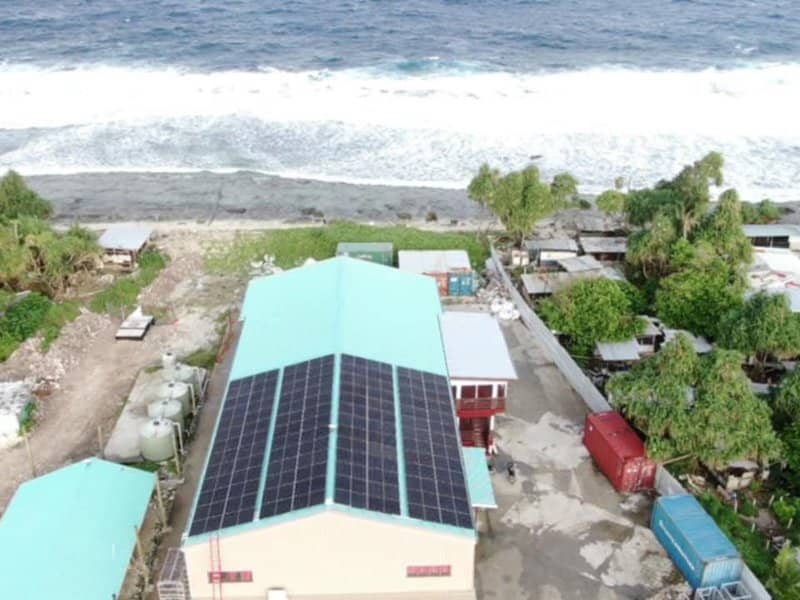
Justin Tyers • 06 August 2025
Pacific Island Bank profits from solar energy
The Bank of Tuvalu – which recently opened its first ATM – has installed a solar energy storage system guaranteeing uninterrupted power. The move solves many problems and offers several advantages: it brings power stability, energy security, greatly reduced energy costs, and – for a nation whose highest point is just 4.5 metres above sea level – leads by example in climate-friendly commerce. National Bank of Tuvalu General Manager Siose P Teo; Talatala Reverend Alamatiga Lusama, MD Sulani Green Energy Polau Kofe Tuvalu is a group of nine small islands in the South Pacific whose 11,000 inhabitants rely on imported diesel to power their electricity grid. Consequently grid energy is expensive, prone to outages and vulnerable to shipping import delays. This solar system was installed at the main branch of the Bank of Tuvalu in Funafuti , the capital island of Tuvalu. Reliable energy ushers in a new era of electronic banking – Bank of Tuvalu have installed five ATM’s and thirty point-of-sale payment devices in retail establishments including the airport. Previously the island’s economy was reliant on cash, which can be slow – most noticeably on pay-days as long queues form at the bank with customers seeking to withdraw their wages. The new energy system was collaboratively designed, engineered and installed by three regional organisations: Victron Energy distributor SolarFiji being responsible for device procurement, installation and oversight; whilst Sulani Green and Electrify EnergyMonkey provide system commissioning, local support and diagnostics. The system comprises an array of solar panels offering 40kWp. An MPPT RS 450/100 solar charge controller harvests the energy and stores it into the battery bank. There are three Fronius Sumo PV three-phase AC inverters of 10 kW each, together with three MultiPlus-II 48/ 15 kVA inverter/chargers, which are able to control battery charging from excess solar energy. Fronius inverters integrated with Victron Energy inverter/charger have a long history of success and testing. (For full installation details, compatibility requirements and settings configuration read our document: AC-coupled PV with Fronius PV Inverters . ) The system employs a ZYC lithium battery bank of over 60kWh capacity. A Cerbo GX data communication device harmonises system components and allows remote engineering access via the internet based platform Victron Remote Management VRM – from anywhere in the world. Local monitoring and programming is available from the GX Touch screen interface. In this hybrid installation a DC circuit provides emergency backup to the operation-critical banking network apparatus. Lynx Distributors offer DC busbars with monitored fuses. Having a landmass of just 26 square kilometres, climate-threatened Tuvalu is one of the smallest and most remote nations on the planet. With limited local support, remoteness from neighbouring nations, and exposure to weather events, especial consideration was given to the system design: High humidity and salt-laden air : Corrosion-resistant components (marine-grade materials and enclosures) were used. Cyclones and strong winds : Panels were installed with cyclone-rated mounting systems. Consistent high temperatures : Equipment was de-rated and ventilated to avoid thermal stress and maintain efficiency. Remote island access : System was built with high reliability and remote monitoring, due to limited local technical support. Primary management of the system will be conducted by Sulani Green The system provides nighttime lighting for users of the 24hr ATM. Sika Sika; Technician , Isilua Baitere; Technician , Ioakim Uele; Technician
Justin Tyers • 28 July 2025
Wild Alaskan bears go fishing – watch them LIVE
A group of high school students in Wrangell, Alaska have designed and installed a livestream camera at the invitation of the U.S. Forest Service. The cameras have been placed in a unique location where both Black and Brown bears are seen to cohabit – at the remote Anan Wildlife Observatory. “ There are bears all over Southeast Alaska, but here at Anan we see both species interacting, living together, and raising their young right here along the river ,” says ranger Jen Kardiac of the US Forest Service. From early July through August, the Anan Creek draws bears from the surrounding area to feast in one of the largest pink salmon runs in Southeastern Alaska. Located deep in the Tongass National Forest, just 2400 lucky visitors a year get to watch the bears fish and interact along the creek – visitor numbers are limited to minimise environmental impact. This new installation allows anyone around the world to tune in ‘ LIVE ‘. Brian Reggiani runs the Teaching Through Technology program from the University of Alaska Fairbanks: “ We now have 15 rural high schools participating in after-school clubs in each community. The group in Wrangell has really shined – in part because of its unique collaboration with the Forest Service. From trail mapping to drone site surveys, each new project has grown in its scope and complexity, which has been really exciting for the students. ” Three years ago, the Forest Service suggested they’d like to put a live camera system on the creek. The Wrangell’s club’s 10 students worked through the winter planning the project after school. From spreadsheet power load assessment, through underwater camera research, remote power supply, to video storytelling, the students first made an exhaustive and professional analysis of what was required before designing a system that would achieve it. Locations to Note: Side 1 is the side with the viewing deck and photographers’ blind. Side 2 is the other side of the creek, where the caves are located. The Lower Falls and Caves camera only shows Side 2. There are four Fishing Holes, all of which are visible with the four cameras. Fishing Holes 1 and 2 are visible on the Lower Falls and Caves cam, with Fishing Hole 1 to the left, in front of the large cave. Fishing Hole 2 is further down, to the right. Fishing Hole 3 is the one directly below the Fishing Hole 3 camera, and you can also partly see Fishing Hole 2, across the creek from this camera as well. NEW-Fishing Hole 4 is upstream on the other side of the deck. NEW-Forest View allows us to watch as bears come and go, checking if Fishing Hole 4 is available or emerging from fishing with a salmon in their mouth, heading into the forest to eat. Some bears also like to lounge on the tree stump near the deck. The Forest Service asked that the camera system be operational for at least seven months of the year – from mid-March to mid-October – and that it should be mostly solar-powered …quite a challenge in Southeast Alaska, where it rains much of the spring and fall. “We had to look at weather and irradiance data to try to estimate how much power our solar panels could collect. We took data from another solar system that’s been operating on a floating ranger station for about 10 years, and used that information to estimate the performance of components installed in that same environment,” says Brian. “The cameras run 24/7; they have a normal camera lens during the day and an infrared camera to pick up bear activity at night.” “In case of an issue, the Forest Service wanted enough battery backup to have a few days to fix it without the cameras going down. So we sized our system for about four days of operating time if you turned off the solar breakers, which just gives us time to get out to Anan if needed.” A local oyster farmer who uses a remote power system suggested the group build using Victron devices for their project. The power system at the Anan Wildlife Observatory consists of: MultiPlus-II 24/3000 3 x 250/60 SmartSolar MPPT charge controllers Cerbo GX – is the communication hub for all devices controlling power harvest storage and usage, and also providing programming and monitoring access to the system from anywhere in the world via Victron’s free-to-use platform VRM GX Touch 50 displays system data with fingertip control Lynx Distributor 1000 a modular busbar with monitored fuses 4 x Pylontech UP2500 24V batteries Brian really liked their choices: “ All the components were super easy to use and configure. Things just worked, which was really nice. We’d done a lot of work ahead of time, so each of the kids knew what each component did, and how they should be wired.” “ We coach the students to have a growth mindset and ask for help when needed. That makes a big difference when working on a project like this that requires a lot of problem solving. It helps the students take risks, understanding that they are in a mode of learning and can figure out the right answers. ” Student Andrei (9th grade), enjoyed working on the mathematics – sizing the system to suit the application. He says: “We built a spreadsheet with all our different watt hours and added everything up. From there, we worked backwards to size the solar array, the charge controllers, the inverter, and the batteries to make it all happen. We played with the spreadsheet until we could say, Okay, here is our total load, here is how much energy we think we can collect during a rainy week in September. I remember being really nervous that my math was right. We told the Forest Service that it would work, and in the end it did. But it felt like one big experiment when we installed it. It was really fun, and I had not done anything like that before.” The ultimate goal was to broadcast the livecam through Explore.org , a non-profit that manages hundreds of wildlife cams all over the world. Jen is a big proponent of live cams. “ Livestreams are a really powerful way to connect people to places like the Tongass National Forest and the animals who live there. When you start to identify individual bears, it changes how we respond to- and participate in conservation efforts. So that when there are threats to a particular area, there’s already a group of people who are motivated to protect that area. When the tech team from Explore.org got involved with the project, and reviewed the student’s’work, they were blown away! The students were spot on with how they had made their sizing calculations .” says Brian. Brian and the students made the trip to Anan – which is about an hour’s journey by boat. Once they got to the trailhead, there was another mile’s walk through beautiful old-growth forest around the lagoon and along Anan Creek. The Observatory sits right over the creek, getting visitors up close and personal with the action below. “It’s very wild being there and spending time with the bears. Each of them has such a different personality – as different as humans. There were about 24 individual bears that we identified and named. Scuba Sue was a class favourite. She can hold her breath for two minutes. She’s an amazing fisherman but a terrible mother – because she forgets about her cubs crying on the shore.” After a few days, when the students had everything installed, something with the power system wasn’t working. They called Reid Loessberg at the Victron distributor Intelligent Controls , who also provide support to the Explore.org tech team. A firmware update and some basic tweaks to the programming of the charging setup was needed – via the Victron Remote Management portal VRM. The firmware updates were installed, settings were adjusted for the installation, and some quick troubleshooting got them back up and running. Keeping the focus on educational aspect of the facility and the installation process, Reid was able to join the team remotely and help guide the student-led crew through the final details of the installation, and before long they were ready to go. “ It was an eager group,” says Reid; “probably five or six people on the phone at one point! There were one or two things that they hadn’t figured out – but never-the-less it’s a huge learning curve and they’d done a really impressive job. ” The system was installed in 2024. Ahead of this summer season the students took the power system back to their classroom, preassembling everything onto a mounting board -and then reinstalled it in a separate room at the observatory so that the Starlink could send a cleaner signal. The Forest Service requested two more cameras on the upper falls – a location where there is no observation deck. “ We knew that our batteries could handle the additional load ,” says Brian “ because the cameras don’t draw that much power themselves. The heaviest load is the Starlink and TV monitor when turned on. “ “ Every morning for the last week, we’ve been logging into VRM just to make sure things are still working; we see that all four cameras only use a hundred watts of electricity, and we’re seeing that information in real time. Just the other day we had 2000 watts at 60 amps coming in. It was amazing, and the kids and I were saying, ‘Wow, that’s a lot of power!’” “ The greatest part about this project is that the Forest Service has given these students an amazing opportunity by saying: ‘Go for it. We know you can figure it out.’” Students from one of the 2024 installation trips, left to right: Spencer Petticrew, Nikolai Bardin-Siekawitch, Anika Herman, Ander Edens, Kalee Herman, Andrei Bardin-Siekawitch with mentors James Edens, Dylan Low, and Brian Reggiani Headline image from an image by Ander Edens. The students have also built a webpage where you can find out more about the Anan Wildlife Observatory – visit https://friendsofanan.org/
Justin Tyers • 11 July 2025
Clifftop Hotel views zero carbon
Guests staying at the cliff-top hotel L’Avenc Benestar Rural in Tavertet, Catalonia, Spain, will be stunned by the views. It’s a former farmhouse which can trace its origins back a thousand years – and can even name its owner of 800 years ago. The building is listed as being of National importance and as an apartment hotel offers peace, solitude and fine-dining to lovers of outdoor rural spaces. After lying in ruins for fifty years the building has been completely restored preserving its important history. The accommodation has been designed in harmony with the building’s original architecture and surroundings. Panoramic glass picture windows enhance Catalan’s traditional building materials of timber and stone – with grand and flattering results. Organic locally sourced seasonal ingredients are presented to table with an eye for detail and an accent on presentation. The off grid family-run hotel increasingly uses renewable energy to reduce their reliance on the generator. Biomass is used to heat the sustainable water supply and PV and wind turbine are used to provide electricity – yet no compromise is made to the comfort of guests. Accommodation units include kitchen facilities such as a dishwasher and induction hob – whilst in the underground car park there are EV charging stations. One of the challenges of running a hotel in a remote and tranquil location is power supply. Even when the electricity grid is available it’s prone to voltage drop and inconvenient power outages. L’Avenc are off-grid and have used a 70kVA generator – now their investment in sustainable energy aims to reduce its use as nearly to zero as they can achieve. Discreetly installed around the location there are three fields of solar panels of differing sizes offering a total peak output of around 43kW. Each array is connected to a Fronius Symo three-phase PV Inverter providing a daytime AC power of up to 36kW. The system was installed by Empordà Energia . Excess energy is stored into Simpo 5000 batteries provided by ZYC Energy . There are 50 Lithium batteries each with a capacity of 5.12kWh; they are combined into a single bank offering 256kWh of stored energy available for 24 hour use. Battery power is inverted by six Quattro 10000/48/140-100/100 Inverter/Chargers arranged for three-phase supply. These inverters are able to control the amount of energy the Fronius PV inverters provide to the battery bank, and can also charge the battery bank from the 70kVA generator. Whole-system communication is provided by an Ekrano GX Communication centre device. Victron Energy topology is flawlessly compatible with ZYC lithium storage and Fronius inverters – the Ekrano GX harmonises the system’s energy harvest, storage and supply, as well as making live system data available locally via a multi-menu touch screen, and can provide engineering access to the system via the internet, from anywhere in the world using the free-to-use platform Victron Remote Management ( VRM ). VRM remote access – for analysis, programming, and firmware updating – is invaluable to installers who can provide customers – even remote customers – with immediate assistance without leaving their office. Out of range status alarms prompt push notifications to make the engineer aware of a potential problem even before the user has noticed an issue. The L’Avenc power system also includes a 10kW wind turbine and inverter. The generator was once used to provide full-time energy but is now used to provide just 35% of the power requirement. Further planned investment in renewable energy will bring this figure closer to zero. A second phase of installation will add another 30 kWp of PV capacity coupled with additional Fronius inverters. Offering a truly wonderful place to stay whilst exploring the tranquility and spectacular scenery of outdoor adventure shapes everything the owners – the Abey-Parris family – do. At the same time their historic and unique hotel remains kind to the environment.
Justin Tyers • 04 July 2025
Premium cheese maker uses natural ingredients and solar energy
Two years are required to perfect De Colțești Brânză Extramaturată de Trascău – a slow-aged, hard cheese. During that time the maturation process is monitored constantly. “ It takes over 10 litres of milk to produce 1 kg of cheese;” says Marius Chiorean, Director General at De Colțești . “The process for this cheese starts with fresh cow’s milk, collected daily from local farms. After coagulation, cutting, pressing, and brining, the wheels are aged in controlled conditions, and manually cared for week after week – turned, rubbed, and monitored. The result is a complex, nutty, intensely aromatic cheese that truly reflects the landscape and patience behind it.” For cheesemaker De Colțești – who are located în the heart of the Trascău Mountains, in Alba County, Romania – the process of making fine cheeses has until now been beset by the additional challenges of serious instability on the local power grid. Frequent power outages and voltage drops affect production, refrigeration, and machinery continuity. Founded in 1994 as a small artisan cheese producer with a deep respect for raw materials the company has grown into a team of around 70 dedicated people who specialise in matured cheeses, using 100% natural ingredients and traditional, slow-aging methods. Annual production is around 700 tonnes and Brânză Extramaturată de Trascău is the jewel in the crown among their premium cheeses. The power of nature De Colțești recently switched to solar power to ensure that their process can continue seamlessly, without power interruption, and to avoid the use of fossil fuels and a costly generator. “We chose to invest in a solar power system with high-capacity storage from Victron because we needed independence, stability, and efficiency;” says Marius. Their energy system employs 12 x Quattro inverter/chargers. Groups of three Quattro’s have been configured for three-phase output. Four sets of three 15 kVA inverter/chargers have been paralleled to provide 144 kW / 180 kVA inverter power and 2400A charging capacity. Significant roofing area on their extensive factory facility, and a large site has allowed the installation of an extensive ground- and roof-mounted PV array capable of providing 500kWp. Surplus power can be fed back to the grid thanks to a significant utility-cable upgrade. Energy storage for the factory’s own use is provided by 96 Pytes V5 LIFEPO4 batteries with a capacity of over 500kWh. Uninterrupted remote power The main objective with this installation was to provide an uninterrupted power system for the entire factory production. Consultant technician Daniel Szomboti of Panouri Cluj says: Victron inverters were chosen to provide seamless UPS capabilities – and they can be retrofitted to work with nearly any existing PV system, offering greater flexibility and long-term value. Careful planning “The project was carefully planned well in advance to minimise any impact on cheese production. The facility can’t operate without electricity for extended periods, and even slight fluctuations in room temperature can alter the composition and taste of the matured cheese worth hundreds of thousands of euros – so precision and continuity are critical. “To ensure reliability, new grid cable were installed in parallel with the existing ones – providing a much-needed upgrade to the facility’s electrical infrastructure. This was especially important given the recent installation of a 500 kW solar system, which the previous grid connection would not have been able to support. “To minimise disruption, switchover to the new system was carried out during a single night, one weekend. Teams worked simultaneously at both ends to connect the new Victron system to the national grid. The local electricity supplier was also involved, and once the Victron system was operational and no longer restricted by the previous setup, they replaced the existing transformer with a modern, higher-capacity model.” Two Carlo Gavazzi energy meters for grid and PV inverters were installed, together with electrical components from Schrack Technik – who reviewed the system design. Off-site system build The system was built into a container which was key to minimising disruption at the De Colțești premises. Panouri Cluj electricians and technicians can mount devices and cabinets, and make connections in an unhurried environment, allowing engineers to carry out final tests before the system even leaves their warehouse. On arrival at the De Colțești premises even very large systems like this one become more like a plug-and-play installation, which is evidenced in the extraordinarily slick single-night installation time! Installation team left to right: Daniel Sirbu – Electrician; Alex Morar – Electrical engineer; Tirath Ram – Technician; Baldev Raj – Technician. Credit also goes to the external team who assisted Project Manager Daniel Szomboti with this faultless operation – they were: Dumitrascu Vlad – Electrical Engineer at Schrack Technik ; and Dragos Spataru – Storage engineer at Fabrica de Baterii Victron Remote Management Remote site management is available to engineers using the internet based platform Victron Remote Management. In the early days of a system going live – and at any time later – it’s valuable to have instant access to system data; to be able to see that everything is working as expected; and to have the ability to control any device without visiting site. Live and historic electrical data can be searched in close detail, across all parts of the harvest storage and use of energy; as well as monitoring the ‘bigger picture’, graphically, for any period at-a-glance. (Engineers monitoring multiple or even hundreds of systems can get up to date with VRMs latest developments for ‘fleet’ management here .) De Colțești commitment to Sustainability Speaking about the new installation and the part it plays in De Colțești cheese production, Marius says: “ The results have been excellent: since installation, our energy supply has been constant, we’ve reduced diesel generator use drastically, and we now have a resilient, smart energy system that fits our needs perfectly. For us, sustainability isn’t a trend – it’s part of our philosophy. We make natural cheeses using traditional methods, and we value local, responsible production. Using clean energy fits perfectly into this vision and helps us walk the talk when we say we care about the land, the animals, and the people behind each product.” Alongside the Brânză Extramaturată, our best-selling cheeses include semi-hard cheese (a younger variety), and several variations with truffle, smoked oak, or mountain herbs. Our primary market is Romania to premium retail, specialty shops, and the catering industry – but we have growing interest from across Europe. Let’s take a look inside the De Colțești factory and watch the cheesmakers at work: From this drone footage by Panouri Cluj we can see how solar energy is the natural solution for power supply – especially when you are located far from the mains power station:
Justin Tyers • 17 June 2025
Shaving ice in the desert
“One of the best things about running a mobile Hawaiian ice business is that your customers – aged from 2 to 92 – are always excited to see you!” Sisters Tamie and Linda have been operating The Polar Express from a retrofitted school bus for 23 years. It seems their bus doesn’t even have to be open for business to attract customers: “ I remember one day our bus broke down when we were driving through a residential area; while we waited for help, kids started lining up on the sidewalk, waiting for us to start serving !” With growing competition, regulation, and operating costs, the success or failure of their business depends on a good deal of planning, paperwork, and reliable electricity. Their equipment has to work faultlessly all day. “Imagine you’ve paid to bring the bus to a music festival, and now there’s a line of 50 customers when all of a sudden everything shuts down and you have to leave the counter to see why your battery isn’t working .” Over the last twenty years Tamie and Linda have tried dozens of inverter, battery, shore power, and backup generator combinations, resulting in all kinds of failure: overheating batteries, machinery shutting down at random, blowing the breakers at the event venue. “ Our ice cream needs to be stored overnight in the vehicle, and every season something would go wrong. More than once we’ve left the truck plugged in overnight only to return in the morning and find the freezer had lost power, and all the ice cream melted. That’s several thousand dollars of product literally down the drain ,” says Tamie. Hawaiian Ice draws more power Linda and Tamie began selling Hawaiian Ices in response to a shortage of pre-packaged ice cream during the COVID pandemic. Shaved ice was a hit with customers, but it complicated their power needs – requiring more freezers, a bigger refrigeration system for liquid ingredients, and an instant hot water heater to meet health code requirements. With all these power-hungry appliances, Tamie and Linda didn’t dare to use an Air Conditioner for their own comfort. “Hot weather is good for business, but for us working a hot tin box all day, usually without shade, it makes you sweat just thinking about work.” Needing a better solution, Tamie reached out to Jason Sloan, owner of Slung-Lo Solar, in Montrose, Colorado. Slung-Lo specialises in the custom design and installation of Victron Energy solar power systems for recreational vehicles and off-grid applications. After years’ of disappointment, Tamie was reluctant to spend more money on a new power solution. “ We grilled – and I mean grilled – Jason over two or three meetings, asking him every question in the book. He was so patient with us, asked a lot of questions back, and showed us several systems they were installing in his workshop to explain how they worked, and how simple they were to manage. ” Free From Worry… “ Tamie and Linda are not technical ,” says Jason, “ they want to show up, flip on the lights, and start selling shaved ice – and we wanted to make sure they could do that .” Jason works with Victron Energy devices because of their advanced custom programming capabilities, and the possibility of split-phase and three-phase configurations: “ Many of our customers want programming flexibility. RV owners travelling across the country want to maximise their solar usage and minimise costs when connected to shore power at campgrounds. We customise how their systems manage shore power—turning it on and off based on battery charge levels and solar system performance. We design battery capacity to match their desired days– or hours of autonomy, then balance the loads accordingly .” Building a business with Victron Energy With a background in building data centres, Jason loves the remote monitoring capabilities he builds into his installations. “Linda and Tamie haven’t been able to depend on their power system in the past. With the Polar Express installation it was important to me in the early days to see how it would cope with a long weekend. I wanted to monitor it to see that the temperatures were where they should be, and that there was no overload. We’re looking for consistency and reliability during operation – and with Victron Remote Management ( VRM ), we can confirm that without needing to be on site .” “We’ve worked with other manufacturers, and we replace a lot of them for our customers. When I started researching who we wanted to partner with from a business perspective, we were looking for quality; a good reputation on warranty; and continually improving equipment, systems, and services. With Victron being a global company with equipment used in a variety of different applications, it helped us make that choice.” In 2022, Jason partnered with Victron Energy distributor Intelligent Controls to access the vendor pricing, system design, and troubleshooting support he would need to grow his business. “We also do a lot of three-phase and split-phase systems”; he says , “the ability to size them based on customer’s need makes it nice to install inverters in parallel to increase the capacity. We do a lot of large RVs which are full-time homes and have 3,600 watts of solar on the roof, and two 5,000VA MultiPlus II ‘s in split-phase – running dryers and three air conditioners. It’s a 140-amp service to the environment! “Victron gives us the ability to blend solar and shore power. On our really large systems, when we hit a certain wattage draw, we’ll activate shore power to offset the draw on the battery. And then when loads are reduced, we turn it back off. It saves them several hundred dollars a month.” Public Event Power Grid Tamie and Linda almost always have a grid connection, but when they don’t they need to be able to power all their loads. By adding even a small amount of solar on top of the bus they can maintain all their refrigerated equipment and run their shaved-ice machine and other appliances without being plugged in. Just last weekend, they attended an event at which vendors paid for a power supply using a generator mini-grid. Unfortunately, the site generator broke down and it took almost two hours to get it back up and running. Tamie and Linda’s solar system provided uninterrupted power – resulting in their best weekend on record for sales! ‘ If we were wondering about our investment before ….we’re not wondering now !” they say. They also enjoy the benefits of an air conditioner on hot days; they have fewer hours of autonomy when it’s in use — resulting in the battery State of Charge (SoC) dropping to 20% after six or seven hours of operation. But they can go all day without plugging in and still drive home with some battery power remaining. Jason’s System design considerations The vehicle spends considerable time parked between events. To maintain optimal SoC levels, Jason incorporated a second 230Ah smart battery that integrates directly with the Cerbo GX , which manages battery charging across all devices through direct connection and the inverter via the VE.Bus. “ We installed a 30-amp shore-power inlet RV connection—similar to what they’d encounter at shows. We then used a dogbone adapter to step down to 15 amps and configured their system with a 13.5A current limit to prevent blown breakers. Nobody wants to be that person at an event!” “ Based on their consumption patterns and system requirements, we installed a Quattro 24/5000/120 inverter/charger. Given their high amperage draw we opted for a 24-volt system with a 230Ah battery .” “Sizing the battery bank largely revolved around being able to travel between shows in Utah and Colorado. In desert areas where it’s warm, they needed to run the air conditioner for at least four hours or use the generator .” “ When planning the installation, we needed to decide where the equipment would go and how to keep it cool – and dry. The freezers generate significant heat, and onboard the bus the atmosphere can be humid, necessitating a watertight electrical system. We also needed easily accessible emergency shut-offs. Our solution was a waterproof aluminium enclosure for the Victron equipment. The box features a floor-level vent for cool air and a top exhaust vent allows airflow across the equipment. A Ruuvi temperature sensor connected to one of the Cerbo GX relays automatically controls internal fans based on the box temperature, ensuring the Victron equipment and battery stay cool and dry .” “ Their generator sits on a custom rack at the back of the vehicle with a cable running to a port on the van’s side, allowing them to plug it in. When the generator starts, there’s a delay on the AC switch to allow for proper warm-up—particularly important at altitudes of 6,000 feet and above, where they often attend events .” An automatic start/stop generator function is triggered by battery state of charge. “We allow the batteries to run fairly low before the inverters automatically shut off. On the DC side a BatteryProtect device is configured to shut off their LED lighting at 30% state of charge acts as a friendly reminder to those working inside that it’s time to start the generator! The power system in The Polar Express includes: Quattro 24/5000 inverter charger Orion Tr-Smart 12/24-15 DC-DC charger SmartSolar MPPT 100/20 Cerbo GX 230 Ah LiFePO4 Epoch Battery BatteryProtect 400 watts of Rich Solar Mega 100 Flex solar on the roof A Cerbo GX MK2 helps ensure remote support capabilities. “ When they need assistance, they can connect it to their phone, give me a call, and I can log into their system and either verify that it’s working as designed or provide support if needed .” Jason installed a custom switch panel in the rear of the bus and added adjustable LED lighting systems on the side, integrated into wall-mounted switch panels. The bright and colourful lights attract attention to the van when parked, and the interior LED lights serve as an indicator signal; when they go off, Tamie and Linda know it’s time to start the generator. The BatteryProtect automatically shuts off the LED lighting when battery SoC drops to 30%. After a few months living with the new system, Tamie and Linda’s anxiety over how it’s all going to work out is starting to thaw. “ The first three weekends we ran it hard, and the weather was hot. Every time we got in the bus, we’d hold our breath and think, ‘Okay, what’s going to go wrong next?’ But already I’m starting to not even think about the power system…and I never thought that would happen !” “You know it’s an intelligent solution when it feels easy and makes life simpler for your customer, ” says Aaron Hanson, owner of Intelligent Controls . “Nobody wants technology for technology’s sake. At the same time, it’s hard to get a high level of performance from highly advanced, customized products and solutions. So to have a customer that’s not technical but loves the outcome is a testament to how Victron ‘just works.’ Jason’s success in the marketplace drives future business and shows new customers that they can achieve a level of reliability and performance using Victron equipment that would have been impossible in the past.”
Justin Tyers • 30 May 2025
Cheetah Conservation Centre – power from the sun
The Cheetah Rescue and Conservation Centre at Geed Deeble, Somaliland, is an 800 hectare rehabilitation facility for sick, injured and orphaned cheetah cubs. The cubs in their care are often confiscated from illegal wildlife traders by the government Ministry of Environment and Climate Change (MoECC). Additionally, persecution from livestock farmers – who sometimes erroneously suspect a cheetah of predation – frequently leads to orphaned cubs. Operated by the Cheetah Conservation Fund ( CCF ) – whose founder Dr. Laurie Marker is a research scientist and conservation biologist – the centre is home to 100 cheetahs. With an estimated 6000 animals left in the world the cheetah – the world’s fastest land animal – is classified as Vulnerable. Exotic animal traders often seize cheetah cubs when they just weeks or a few months old. Sometimes injured during capture and often malnourished, most will require long term veterinary care. Even as adults, they can never be released back into the wild. This is the first facility of its kind in the Horn of Africa. The comprehensive facility includes a clinic; education and training facilities; accommodation for eco-rangers, visitors and staff; refrigerated storage; dining facilities and dormitories. It is also open for public tours, with the purpose of educating local and international visitors about Somaliland’s ecosystems and indigenous wildlife. Wilderness electricity? Until three months ago the facility was powered by two generators running a day and night shift at a cost of $4000US in fuel alone, but a new solar power installation now provides 98% of their substantial power requirements. The walk-in freezer for the storage of feed-carcasses contribute to peak loads of 30kW – ambient temperatures in Somaliland are 35°C. Also, water has to be pumped via three kilometres of piping to serve six 10,000 litre tanks. Solar Power – silent, reliable, free. The solar power system which was installed by SolarLandAfrica comprises of 112 solar panels offering 50kWp. Energy is harvested by four SmartSolar MPPT RS 450/200 solar charge controllers. These high-voltage devices are ideal for controlling large solar arrays and can be daisy-chained for synchronised battery charging from extensive solar arrays. Each RS 450/200 device has four solar trackers on board. Power is stored in forty 5.12kWh lithium batteries offering a total capacity of 204.8kWh. Six Quattro Inverter/Chargers are configured to provide 3-phase 90kVA power output. (It is possible to parallel connect up to four sets of three Quattro devices to provide a maximum 180kVA). Remote system monitoring and control – with VRM SolarLandAfrica are able to monitor and program this system remotely via the free-to-use internet based platform Victron Remote Management (VRM). Instant engineering access using VRM provides historic analysis of each device; firmware updating; and fine tuning of program settings to ensure optimal power harvest and storage. Access can be gained from anywhere in the world with an internet connection. Remote access to this and any other installation is facilitated using a GX communication centre device – in this case a Cerbo GX – which harmonises data communication across the system comprising Victron and third-party devices. The off-grid power infrastructure easily meets the demand from high-start up and power draw equipment – such as the welding machine. The 15kVA Quattro inverters are each capable of providing a peak power output of 25000W. The 60kW diesel generator. remains on site to serve as back up power. The savings on energy costs provided by the new systems are expected to repay investment costs in approximately four years. Left to Right: Mahamed Eid, Technician; Leila Omar, Founder and Managing Director of SolarLandAfrica; Muse Bihi Abdi – former President of Somaliland; Admed Mohamed, Engineer; Mika Häikiö, Partner SolarLandAfrica Outreach Education program for schools and livestock farmers The CRCC conduct outreach education programs to educate pupils and livestock farmers about the dangers and discrimination Cheetahs face. Farmers who lose livestock may suspect cheetahs of predation – sometimes erroneously – and as a result attempt to eradicate them from the area. The CRCC demonstrate how it is possible to identify the predator from the remaining carcass – which may show that, in fact, a Cheetah was not responsible for the kill. CRCC can also help farmers protect their livestock by integrating Anatolian Shepherd Dogs with the herd – they are large, bark loudly, and make very effective guard dogs against predation. Current expansion of the cheetah conservation site will provide more extensive visitor facilities requiring additional power provision; education facilities are also being expanded. The modular nature of the power installation allows it to be extended at any time. I don’t remember putting that in there… Some confusion arose when a Speckled Sand Racer snake – whose skin closely resembles the colour coding of electric cable – took a nap in one of the wiring conduit pipes. I think we can all empathise with installers SolarLandAfrica who took hold of what they thought was a cable only to find that it was ‘live’. The Speckled Sand Racer is not aggressive and only mildly venous; the sting from a wasp being more painful. Apparently. You can follow the news from the Cheetah Rescue and Conservation Centre on their Facebook page. You can support the Cheetah Conservation fund’s work using this link . The Cheetah headline image for this article is by courtesy of Helen Black Photography .
Justin Tyers • 09 May 2025
Neonatal care – solar power saving lives
Despite excellent healthcare from Niall Conroy and his dedicated neonatal medical team, infant mortality at Bo hospital was unacceptably high. The problem outside the team’s control was the daily power cuts – lasting a few minutes, hours …or occasionally, days. Nurse Columbia Samuella Bull talks to project mentor Michael Liebreich Babies die of the cold very quickly – even in Sierra Leone. They need heated incubators, oxygen provided by oxygen-separators, and the overnight nursing team need light to monitor the babies in their care – looking for signs of change in colour or behaviour. During power cuts they used to rely on the torch facility of their mobile phones to check on babies in their care until their phones ran out of charge. A power cut lasting just twenty minutes is long enough to affect the outcome for some sick babies. The usual recourse to diesel generators did not provide the hoped-for solution, says Neonatal Head Nurse, Juliana Conteh – the fuel was too expensive, or sometimes it was stolen. During one power cut of more than 24 hours, the diesel supply simply ran out. Parents of the sick children on the ward at that time clubbed together to raise cash, and then rushed to the local service station to buy more fuel. These days that has all changed. Thanks to a fund-raising initiative by Michael Liebreich of Bloomberg New Energy Finance; and Richenda van Leeuwen of Sustainable Energy for All; a new solar energy system has been installed in a secure compound. A solar array of 92 panels, together with battery storage of 77kWh provides reliable electricity to match the quality of medical care from the team. Dr. Niall Conroy Speaking of the change, Dr Niall Conroy says: “ There are babies in our care, right now, who wouldn’t still be alive without our solar power system.” Solar energy from the panels is harvested by three solar charge controllers – two are the high voltage SmartSolar MPPT RS 450/200 chargers, suitable for long string PV arrays and a 48V architecture; the third, controlling a smaller second PV array mounted with a different aspect, is a SmartSolar 250/100. All charge controllers are daisy chained to ensure that each charger is sending the battery optimal power for its state of charge, regardless of aspect irradiance. The solar system is managed on site by Mohammed Kargbo of the EKI Foundation. There are five banks of BYD lithium batteries with a total story of 77kWh which is converted to AC electricity by three Quattro Inverter/Chargers. Quattro’s have two AC inlets – automatically switching to the live source – and two AC outlets; the second AC outlet will disconnect non-essential loads when the AC source (grid or generator) is lost. The power supply, harvest and storage can be monitored locally using the GX Touch user interface which gives access to a powerful menu of historical analysis, programming, and live data. A Cerbo GX communication centre device acts as the data communication gateway and controls the system; it also provides remote management – allowing the system to be interrogated and programmed from a phone or laptop anywhere in the world, without the need to visit site. Remote reporting is enabled by the internet based platform Victron Remote Management ( VRM ) which is free to use. VRM monitors hundreds of thousands of installation – allowing users and engineers to interrogate or control a single site or hundreds of sites. It is not necessary to check in with the system as VRM can provide automatic push notifications or emails when any alarm parameter has been reached. Intelligent sorting and grouping of sites makes fleet control simple. The Neonatal ward’s new energy system also provides power to a water pump. For two years water had to be collected in buckets because the pump was broken – but now there is also a reliable water supply! Work to improve electricity supply and health standards at the hospital are ongoing. You can help support the project by visiting projectbo.org Let’s take a look at what has been achieved so far in the documentary below.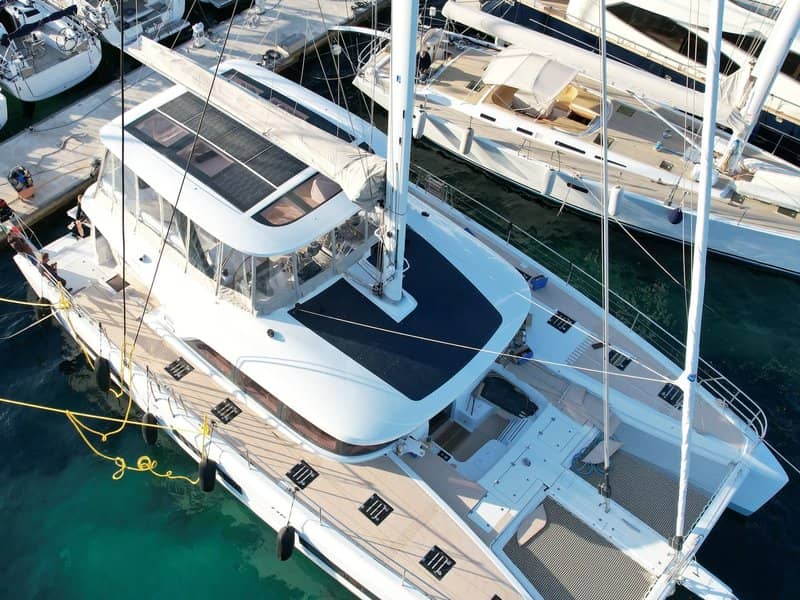
Justin Tyers • 25 April 2025
Redefining marine power onboard brand new vessel
This week let’s hear from Sailectron Services , based in Austria, about their outstanding Lagoon Sixty-5 Catamaran power conversion. Using their own boatbuilder to reconfigure the on-board electric system for an owner’s brand new boat we learn how they significantly upgraded energy harvest, storage and AC DC supply for quiet enjoyment. Whilst plugged in, the vessel can also optimise the use of shore power around the world – regardless of marina mini-grid constraints and quality. Here is Michael Körner of Sailectron Services: The Lagoon SIXTY 5 sailing catamarans incorporate one or two diesel generators in their on-board power system. We regularly equip these vessels with a large customised solar system; up to 4x 150A alternators mounted on a custom-made bracket with 4x Wakespeed alternator regulators; lithium battery storage system, and high-performance inverters. On board energy management is automated and optimised with Victron Energy equipment so that even large power-consumers – such as the air conditioning system – can be operated without noisy generators. Modification work and preparation Our boat builder works with the electricians to convert the battery boxes and adapt the AC and DC cabling for the new load situation. Distribution cabinets, cable labelling and the main DC distribution are prepared in the workshop in Austria to minimise installation time. Energy Management The biggest challenge for the energy management on board is a 120BTU Air conditioning system. There are also kitchen appliances, 230V water makers and other smaller power consumers. On the 24V side, there are power-hungry devices such as electric winches and anchor windlasses – although these are quite easy for the LiFePO4 Lithium Battery Smart to cope with. AC loads are provided by three 5kVA Quattro inverter/charger combi units connected in parallel. These not only offer 15kVA inverter power and up to 30kW peak power for starting currents, they also have an integrated transfer switch that switches between shore power, generator and inverter operation without interruption. This represents a considerable improvement on the factory-fitted manual power-switching provision. Another advantage of this system is the PowerAssist function, which actively limits the current drawn from the shore power or generator and covers peak loads via the integrated inverter. This effectively prevents the generator from being overloaded or a blown fuse on land. Because of the expected high currents of up to 1000A, the Lynx Smart BMS 1000A was installed and combined with a customised DC distribution system. This allows the use of NH fuses that can reliably disconnect the high possible short-circuit currents of a lithium battery in the event of a short circuit. The Lynx Smart BMS combines a battery management system (active control of loads and chargers) with a battery monitor, a contactor for disconnecting the system and pre-charge electronics that pre-charge the capacitors of the inverters before switching through, thus preventing sparking and high switching currents. As the Quattro units only allow 230V input, most vessels are equipped with five Smart IP43 chargers to provide two benefits: Multivoltage charging, basically accepting any shore input voltage and frequency, and faster charging in 230V/50Hz countries, using two separate shore power connections simultaneously. All components are connected centrally to a Cerbo GX communication centre device using VE.Bus or VE.CAN data cables. Wakespeed Alternator Regulator Wakespeed advanced alternator regulators are fully compatible within Victron system architecture and connected to the GX device the WS500 menu will provide data including power output; temperature; charging state; rpm and error status. Four 150A alternators controlled by four WS500 regulators have been added to the system architecture. Photovoltaics In co-operation with SOLBIAN Solar, several variants of the solar system for the Lagoon SIXTY 5 have now been developed for the hardtop and saloon roof, depending on customer requirements. The most powerful system currently available delivers a peak output of 3,254Wp, capable of providing a daily yield of 10-15kWh per day in the Mediterranean summer. This PV system is sufficient, for example, to operate the air conditioning system in ECO mode for 2 hours; without air conditioning, the entire catamaran can often be run using only that power harvest. The customised solar panels can be walked-on and have a non-slip textured surface. All cabling is concealed beneath the modules so that the system is perfectly integrated into the lines of the ship. The system on the hardtop in particular is virtually invisible from the outside; this solar field already supplies 1,446 Wp. The SmartSolar MPPT charge controllers are networked with a VE Smart Network via Bluetooth and also communicate with each other via VE.Direct connections using the Cerbo GX . This networking allows synchronised charging and can also compensate for any voltage drop on the cable to the battery, which prevents the solar controllers from influencing each other. As we use far more VE.Direct connections than the Cerbo can accept they are connected to powered USB hubs via VE.Direct USB interfaces. Monitoring All data collected from the components – including tank and temperature sensors – is gathered by the Cerbo GX, which not only displays it graphically on a GX Touch 70 but also the Raymarine chart plotter: It connects to the Victron Remote Management portal – VRM – via the Internet. The owner can monitor their system using this free platform to access all data and receive alarms if there is a problem on board. Furthermore, our technicians can access the system via the portal and, if necessary, install updates, change configurations or view data records. In addition, the crew receives an audible and visual alarm signal in the event of a critical charge level before the batteries are switched off, which can be muted using a customised control panel. Technical data: Storage (24V, 70kWh): 14x LiFePO4 Lithium Battery Smart 25.6V/200Ah-a BMS: Lynx Smart BMS 1000A Inverter/Charger: Quattro 24/5000/120-100/100 High output Alternator : 4x 150A alternators with 4x Wakespeed alternator regulators Additional multivoltage chargers: 5 x Smart IP43 24V/25A Monitoring: Cerbo GX with GX Touch 70 MPPT controllers: 9x SmartSolar MPPT charge controllers, various models PV: 3,254Wp SOLBIAN Solar Sailectron Services offer installers top-level product-training from their purpose built facility – which also includes a fully-powered showroom of every Victron device.
Justin Tyers • 18 April 2025
Are we there yet?
Because Britain’s most popular holiday destination, Cornwall, is served by only one road, queues of traffic are inevitable at busy times. To make matters worse, the road begins as a motorway, falls in status to a dual carriageway …and finally narrows to an overloaded single carriageway before you’ve actually arrived anywhere to speak of. A four-year, £330M pound project to relieve congestion has recently been completed – which inevitably brought problems of its own whilst work was ongoing. In order to mitigate the increased disruption which attends major road improvement schemes, mobile 24 hour CCTV diverted-traffic monitoring was essential …but how would they be provided with reliable power? Trenching and retrenching grid electricity to them was out of the question because of cost – as was providing them with diesel generators because National Highways (the body responsible for UK strategic roads) operate a Net-Zero Carbon Plan. WJ Sunstone provided the solution: Seventeen surveillance cameras powered by the sun and equipped with batteries for energy storage, ensured road safety and site security at live locations over the considerable work-area. Their autonomy allowed them to be deployed and redeployed at constantly changing locations within minutes. WJ Sunstone’s Autonomous Remote Communications Unit (ARC) can be fitted with a range of camera types to provide high-definition, thermal and radar images. Typically they use a High-Definition PTZ Camera with a video resolution of 1080p; 32 x Optical Zoom; optimised for Long-Range IR laser illumination for clear night-viewing. Images are monitored remotely using a high speed connection. The units are also equipped with public address, local lighting and a geolocation security device to protect them against vandalism and theft. What’s in the box? Solar energy from the built-in 800W solar array is harvested by a SmartSolar MPPT 150/35 solar charge controller. During the day energy is stored into a Deep-Cycle AGM 400Ah battery bank which allows twenty-four hour operation – even at sub-zero temperatures. In order to avoid the batteries becoming too depleted, a Smart BatteryProtect cuts off the power supply in case of low State-of-Charge before the batteries can be damaged. The power flow is monitored by a SmartShunt 500A and provides detailed real-time and historic information about the battery status. Orion DC/DC converter – these units are used to provide precise DC voltage to sensitive equipment and for stepping up/down the battery voltage to the load voltage. A Color Control GX communication device harmonises the system performance and provides live data to WJ Sunstone engineers – in this case via a 4G LTE Router/Gateway – to the internet based, free-to-use, Victron Remote Management ( VRM ) platform. This allows instant monitoring and problem spotting of all deployed devices without visiting site. The deployment of the ARC system on the A30 project delivered exceptional results, proving to be a sustainable, efficient and cost effective solution. The most striking achievement was the realisation of net-zero operation, with the ARC systems’ solar-powered design directly fulfilling the project’s environmental mandates – yielding substantial carbon savings. Using the ARC surveillance system was beneficial to the local environment, too – reducing local pollution because of the system’s silent, emissions-free operation. Crucially, the system delivered reliable, high-quality surveillance feeds, streamed seamlessly over LTE, enhancing traffic management and operational control. WJ Group Chief Executive Officer, Wayne Johnstone said: “ We’re exceptionally proud of what we have been able to deliver on this scheme. The implementation of the solar CCTV units along the A30 has proven to be a more cost-effective, efficient, and environmentally friendly solution compared to traditional hardwired solutions .” The headline image is by Lewis Clarke .
Justin Tyers • 11 April 2025
Huge installation voted Best in Africa
At the recent annual African Victron distributor meeting held in Johannesburg, South Africa, installer James Davy of Solar by Design and his Victron distributor Chris Hulley One Stop Solar stepped onto the podium to describe a huge installation recently completed for a nature reserve in Zimbabwe – the Bubye Valley Conservancy . David Alsina – James Davy – Rob Keij – Chris Hulley – André du Rand The large, carefully designed, and immaculately installed containerised system was voted Best installation in Africa 2024 . The achievement also happens to fulfil one of James Davy’s long-held ambitions – to build a system featuring the maximum power-output by parallel-installed Quattro inverter chargers – 144kW/180kVA – from four sets of 3 x 15kVA units, parallel connected! Bubye Valley Conservancy Towla Headquaters occupies 3760 square km of land and is the second biggest conservancy in Africa. It is home to the greatest lion population and has a very important black and white rhino herd. This system powers the conservancy headquarters – it runs their workshops, their butchery, cold rooms, as well as providing electricity to staff housing and the guest lodge accommodation. Until now the conservancy relied on a 150kVA diesel generator as their primary power source, patching in for a very unreliable electricity grid. The generator typically ran from 6am to 9pm everyday – which was very expensive not only for the fuel, but also the cost of maintenance, spare parts and related expenses. The location is extremely hot – often reaching 50C in summer – and with no overnight power, there were no fans, air conditioning, lights, or refrigeration …just darkness and stifling heat. By day there was the constant din from the generator. It was time to do something about it… One of the greatest challenges for installer James Davy was simply the logistics of getting all devices to site even before work could begin. The system was the largest Victron installation in Zimbabwe when built and comprises: 430 x Jinko 555 W solar panels offering 240 kWP 496 kWH BYD LVL Battery storage 12 x 15 kVA Quattro Inverter Chargers 9 x 450/200 MPPT RS solar charge controllers 5 x Fronius Eco 27 kVA solar inverters A Cerbo GX communication centre allows all installed devices to talk to each other – harmonising the system as well as offering local and remote engineering access. On site access for monitoring and programming is made available by a GX Touch 70 touch screen user interface. Remote engineering access is available via the free-to-use Victron Remote Management ( VRM ) platform which is a boon when monitoring remote installations. Full engineering access, together with historic data for analysis and remote firmware updating can be implemented from anywhere in the world. James says he appreciates the support of his Victron distributor One Stop Solar who immediately resolved an issue with two devices by replacing them from stock without inspection delays. James Davy says: “ It was hard work, but the finished product is very neat and works very well. The client is extremely happy and as a result of their transformative Victron experience they have chosen to standardise the use of Victron throughout the entire conservancy. We’re installing 59 small Victron systems to power their fence, as well as two 45 kVA three-phase Systems and a 30 kVA three-phase system. We’ve also provided 15 portable power system for their scouts and rangers. “At their instruction, we are in the process of replacing all previous power equipment with Victron devices. “ The Africa Victron Distributor meeting in Johannesburg is an annual event at which distributors, professionals and Victron staff can get together in conversation. Attendees learn about all the latest software and hardware development as well as cross-manufacture integrations. It’s an opportunity to ask questions, problem solve, and to learn from each other. Speaking about the new award ceremony, Victron Sales Manager David Alsina says: From a total of 27 candidate-installations ranging in size from 10 kVA to 180 kVA, and located in South Africa Zambia, Zimbabwe and the Democratic Republic of Congo, we selected a top three – based not only the size, but also technical solutions, type of site, location, etc. The three finalists were given a time slot of 5 minutes and three slides to present their systems to attendees of the distributor’s meeting who then voted, producing this worthy winner. The prize for both winners was a professional infra-red camera which can be used to help diagnose sources of overheating. The goal behind establishing these awards is to promote high-quality installations, teamwork and sharing of information from the bottom up. Installers who would like one of their installations to be considered for Best Installation in Africa 2025 are welcome to contact their dealer in the first instance.
Justin Tyers • 14 March 2025
‘Out of the Blue’ goes Green
Out of the Blue is a four-bedroomed water-front holiday home in Maui Bay, Fiji. The 600m² pavilion-styled house accommodates up to 12 guests in en-suite facilities and boasts an infinity pool, well-equipped kitchen and dining room, air-conditioning, courtyard gardens, stunning sea views and water sports just a few steps away. Until recently the house was entirely powered by a diesel generator – but that wasn’t the best solution for either the guests, or the owner. Generators are noisy, expensive to run, require regular fuel deliveries, and inevitably, of course, they will occasionally breakdown – which is embarrassing and inconvenient. That’s no longer a problem: Out of the Blue have just installed a high-spec solar energy system to provide the holiday accommodation with silent reliable three-phase power – night and day. For the guests there are no fumes, noise or power cuts. For the owner the energy is ‘free’, there are very few fuel deliveries needed now the generator is only used for emergency back up, there is much reduced expense, maintenance or breakdowns. And for the planet the energy used is sustainable and carbon-free. Everyone wins! The solar power system was designed and installed by Solar Fiji . Installed devices were specified following an energy audit of the accommodation’s daily energy consumption – which includes air-conditioning, all expected kitchen facilities, laundry room, drink chiller, refrigeration, filtration water pumps, and lighting. To provide peak energy demands and to guarantee ‘cloudy day’ energy storage Solar Fiji specified: Solar Panels: 17.10kWp capacity from 36 Jinko 475W Mono Solar Panels. Battery Storage: 20.2kWh storage with 10 Zenaji 48V 2.02kWh batteries. Power Inverters: 3 Victron Quattro 48/5000/70 inverters configured to provide three-phase power. The Quattro provides stand-alone power or it/they can be connected to a back up generator whose current it can control. When recharging depleted batteries, the Quattro will provide energy to all live appliances, first, and maximise the generator output (to a preset level) using all surplus energy for battery recharging. L-R Atalemo Waqa(Solar Fiji Head Technician), Dean Robertson (Director of Out of The Blue), Lice Ratulevu (Solar Fiji Technician) Solar Charge Controller: A Victron SmartSolar MPPT 250/100 harvests solar energy with better than 99% efficiency. System Monitoring: The system employs a Color Control GX data communication centre device. The Color Control GX – as with all Victron GX communication devices – harmonises the installation by providing data communications between all Victron and other-manufacture devices. With an internet connection it provides system data to anywhere in the world via the Victron Remote Management ( VRM ) platform – allowing engineers to monitor and programme the system without visiting site. Where a GX device is designed to be ‘hidden’ away in the installation a discreet GX Touch 50 touch screen User Interface device allows system monitoring and programming on site. It can provide ‘read only’ operation to guests and deeper access to owners and engineers, for example. Connectivity: GX WiFi module wifi range extender. Distribution: 5 Victron Lynx Power In units offer a fuse monitored DC busbar for efficient power management and distribution. Fronius Inverter: During the ‘daylight day’ a Fronius 10kW three-phase PV Inverter converts solar energy directly into usable power. Fronius PV inverters and Victron inverter/chargers can be deeply integrated – particularly when their frequency shift settings have been correctly configured. [You can learn how to optimise a Fronius/Victron integration, and watch a Victron/Fronius hosted webinar on this page .] Solar Fiji say that one of the main challenges of this installation was optimizing solar panel placement to maximise the solar harvest whilst preserving the resort’s aesthetics. “ Additionally, ensuring that the transition from diesel power to solar was seamless, without disrupting operations, was critical. We’re particularly proud of having achieved a system which integrates efficiently with their backup generator power – a CAT 24kVA – and having significantly reduced fuel consumption.” Let’s dream of a vacation Out of the Blue:
Justin Tyers • 07 March 2025
Water from the Air
The people of Maka, in the Republic of Cameroon, Central Africa have always faced challenges accessing water. For many years villagers have drawn water from a hand dug well – but it dries seasonally. There’s a deeper bore-hole which is in need of repair. In the rainy season there’s a stream running close by – but these days it’s quite badly polluted. And finally, in the dry season, a distant river is their last resort …but the journey to and from it exposes women and girls to the danger of violent attack. The problem they cannot get away from is contamination; there is pollution to some extent in all their water sources which has been causing sickness and is responsible for the higher-than-expected levels of infant mortality in their community. Happily all that has now changed after the installation of a solar-powered water-maker which condenses the moisture in Camaroon’s often hot and humid air, and makes it available for drinking. The multi-agency project to provide clean water was led by humanitarian organisation Aquavera – whose mission is to provide access to clean water, using de-humidification, for those most in need. A local NGO facilitator, Fondation Jean-Félicien Gacha oversaw the delivery of the project’s community facilities; and the solar energy system was built by African Solar Generation. The scheme was officially opened on the last day of 2024. The newly-established ‘Water House’ and community hub is a 300m² space which accommodates solar panels, charge controllers, and inverters to provide three-phase electricity which runs a Trident 200 Air-to-Water maker. The Trident 200 is capable of producing 1,000 litres of potable water per day. Water from the well is now cleansed by filtration; and the community also benefit from a rainwater collection and filtration system. Victron installers African Solar Generation – who are based in Yaoundé, Cameroon – built this off-grid system which comprises of a 25kWp solar panel array controlled by two MPPT RS 450/200 Solar Charge Controllers. The Victron RS 450/200 models each have four maximum power point trackers and are used for larger Solar Arrays – can be daisy-chained (up to 25 units) for synchronised 48V battery charging. The solar harvest is stored into an 84kWh LFP Pylontech battery bank. Stored energy is converted to three-phase power by three MultiPlus II 48/15000 Inverter/Chargers which run the Altitude T200 water condenser. The power system also includes a Cerbo GX communication centre device which allows data communication between Victron and third-party devices and, with an internet connection, also enables remote engineering assistance via the free-to-use platform Victron Remote Management ( VRM ). Diagnostics, firmware updating and system reprogramming are all available if necessary. The system includes a 50kVA back up generator. The community hub is located within the safety of the village and also provides powered workplace facilities where women and girls – who make up 65% of the population – can learn entrepreneurial crafts. There are in fact three main aims of this ambitious project: to eliminate the danger to girls and women; to improve community health; and to empower women by endowing them with financial independence earned from making and selling their hand-crafted goods. Easy access to safe drinking water has changed lives in Maka. The actual cost of providing clean water is a paltry $1US per 20 litres. The opening ceremony was held at the end of last year, where donors, community leaders, and over 500 members of the Maka community gathered to celebrate their new era of clean, safe, and sustainable water access for all; and to say ‘Thank You’ to the donors and partners who made it possible. The installation of the water making plant followed extended meteorological data collection for the area. On days of lower humidity, filtered water from the well, stream and from rainwater storage are available at the rate of up to 5000 litres per day for the village’s 1000 population. Measuring the impact Community organiser Elodie Tchouakui, together with a steering committee of female community leaders, school teachers, doctors and nurses, will manage the ‘air-to-water’ machine and will collect data on infant deaths, school attendance, violence against women and economic improvements to monitor changes after the installation of the ‘air-to-water’ machines. The success of the Maka Water House is just the beginning. Aquavera is already planning its next project in Babou , where a similar transformation is expected to take place as it continues its mission to improve the lives of communities most in need. Olivier Njamfa, Elodie Tchouakui and maintenance community leader The Jean-Félicien Gacha Foundation, an NGO based in Western Cameroon, was created in 2002 with a vision to encourage local enterprise, develop talent, and spread knowledge in Cameroon. The Foundation is well known among the Maka community having already built a school for the village. Olivier Njamfa, president and co-founder of the Aquevera Foundation says: My joy is immense. It’s wonderful to be here in Maka, for the inauguration of the site that gives drinking water. There is an energy, a desire, an ability to continue bringing water to places without water or electricity. Laurent Schmitt, from the funding L’Oréal Group says: The L’Oréal Group, historically committed to women, created in 2020 the L’Oréal Women’s Fund, an endowment fund to support organisations and associations in the field in their efforts to support women in highly vulnerable situations around the world. Gradually, the women of the village will no longer have to go down to the river every day to bring back the necessary water to their families, and they will thus have more time for other activities, such as traditional beading or sewing for which they are trained.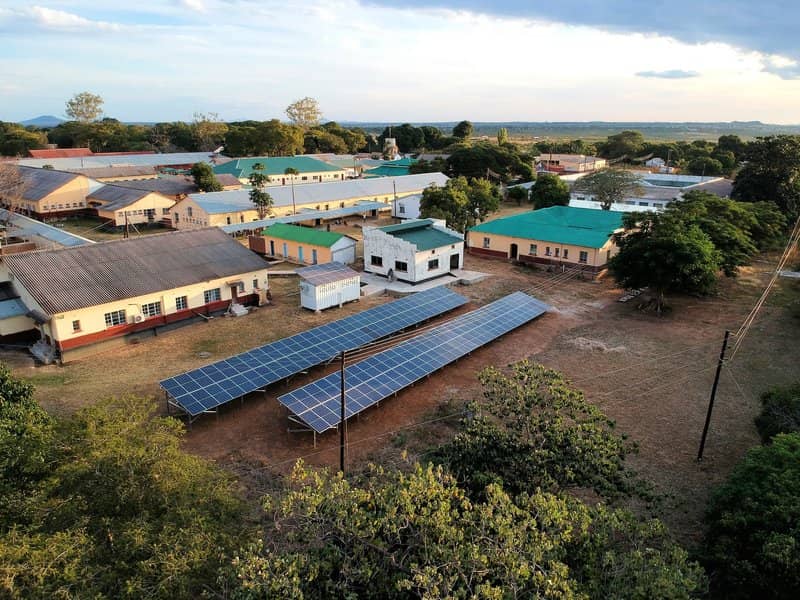
Justin Tyers • 28 February 2025
Solar Plant makes oxygen
St. Francis Hospital in Zambia’s Eastern Province has been providing healthcare for 76 years. With over 500 beds, 700 staff and over 20,000 admissions a year the busy hospital is committed to providing essential medical care in spite of the local challenges – the most serious of which is electricity outages from an unreliable power grid. Help is at hand – a recently completed solar energy system now provides twenty-four hour reliable power, without cost, allowing the hospital to generate its own medical grade oxygen from a three-phase supply. Life supporting oxygen is abundantly available and the cost savings can be re-invested in further patient care. Using an INMATEC POC 8200 oxygen generator, ambient air is filtered by a zeolite molecular sieve which separates oxygen molecules from nitrogen molecules. The unit is capable of producing up to 14 cubic meters of 95% pure medical-grade oxygen per hour which is stored in a 500ltr pressure vessel at 140 bar using an 18.5kW Kaeser rotary screw compressor. There’s an additional high pressure cylinder filling system which is powered by a 1.1kW compressor. The power system, which was installed by Yougo Limited with sponsorship from the Friends of St. Francis Katete Charitable Trust, has 140 Trina Solar panels rated at 345Wp – providing 48kWp. The system was built into a container which offers a number of advantages – most of the wiring can be completed at Yougo’s own premises; it is easy to transport; there is minimum disruption to patients and staff at the time of installation, and by being locked into a container unit the system is more secure. The solar panels are ground-mounted, close-by. When the sun shines, two 25kW SMA Sunny Tripower PV inverters provide a three-phase energy supply. Surplus energy from the panels is stored in a Pylontech US3000 battery bank of 140kWh total capacity. Power harvest is controlled by three 15kVA/48V Quattro inverter/chargers – which also provide three-phase power from battery storage at all other times. The system also uses two MPPT 250/100 SmartSolar charge controllers – which are capable of 5.8kW operation with as much as 99% efficiency. The system is harmonised by a Cerbo GX – a powerful processor which has a range of ports for hardware connections and provides data communication between all system components including third-party manufactured devices. The user interface for monitoring and on site engineering access is provided via a GX Touch 50 touch screen device. The Cerbo GX also allows engineers to programme the system remotely, via Victron’s free-to-use internet portal Victron Remote Management VRM. The Gateway device is a Cerbo GX and GX Touch 50 Display 3 x Quattro 48/15000/200 100/100 wired in 3 phase 40 X Pylontech US3000 battery modules and Hub 1 x SmartSolar MPPT VE.Can 250/100 1 x BlueSolar MPPT VE.Can 250/100 2 x 25kW SMA Tripower PV Inverter Dr. Lalick O.C. Banda, Medical Superintendent at St. Francis Hospital, expressed how transformative this solar installation has been. “Before this system, we faced serious challenges due to load-shedding,” he explained. “There were times we had to scramble to find alternatives to keep critical equipment running, especially our oxygen supply. Now, with the solar power installed by Yougo and the support of Friends of St. Francis, we no longer worry about those disruptions.” The benefits of the solar installation are most noticeable in the Intensive Care Unit where a continuous oxygen supply is essential. Dr. Trevor Halwindi, Senior Registrar and ICU surgeon at St. Francis, explains the importance of the solar-powered system: “Before the solar plant, power outages forced us to rely on backup oxygen cylinders, which weren’t always enough for critical situations. This system has made a world of difference for our patients, especially those on ventilators. We’re no longer distracted by the fear of losing power mid-procedure.” For Dr. Banda, the benefits extend beyond reliable power: “The reduction in operational costs has been a significant advantage for us,” he says. “By cutting down on the high expenses associated with fuel and electricity, we’re able to reinvest those funds into medical supplies and facility improvements. This solar system has had a ripple effect, allowing us to enhance the overall quality of care we offer.” The hospital’s solar-powered oxygen plant has extended the hospital’s reach through mobile clinics that provide essential maternal care, vaccinations, and HIV/AIDS education in remote communities. “Our mission extends beyond the walls of St. Francis,” Dr. Banda says. “With solar-powered mobile units, we can bring critical healthcare services directly to communities that lack access, impacting health outcomes far beyond our physical location.” The solar energy system also provides some lighting to the theatre, ICU and a few other departments in the hospital. Work is underway to provide solar powered lighting to a further 23 departments of the hospital complex. The trust has embarked on an expansion project to double the capacity of the solar power system at the hospital which is expected to be commissioned in early 2025 and will supply electricity to selected parts of the hospital – further reducing dependency on grid electricity, drastically reducing energy costs, allowing money to be invested in healthcare.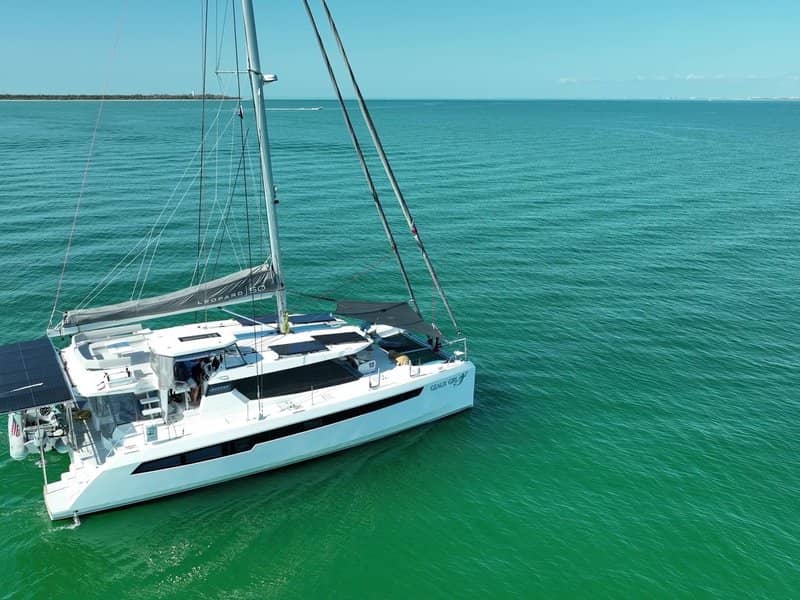
Beril Berkem • 21 February 2025
Powering a 50ft catamaran without a generator
For decades, onboard generators have been the go-to option for topping-up batteries and running power-hungry appliances at anchor. But they come with drawbacks — noise, frequent maintenance, fuel consumption, and taking up valuable space. Now, high-output alternators and smart regulators offer a reliable alternative, generating power efficiently while cruising and keeping your batteries charged without disturbing the peace for you or the other boats in the bay. How it works When the owners of Geaux Girl, a Leopard 50 catamaran, were planning their electrical system, there was one big question: Does it need a generator? For Andre Cormier from The Yacht Rigger , who has completed numerous electrical system installations, the answer was simple: no. Let’s take a closer look at this system. Instead of a genset, Geaux Girl was fitted with a high-output alternator, managed by an ARCO Zeus alternator regulator integrated with Victron components. “Crucial for this electrical design is a reliable and powerful energy system which is why we chose Victron as the foundation of the power system,” comments Andre. Arco Zeus alternator regulator on Geaux Girl The electrical system onboard Geaux Girl includes a 15kVA, 48V Victron MultiPlus-II, working alongside an isolation transformer to supply 230V shore power to the boat. The catamaran is also equipped with a 120V system, powered by two parallel 48V 5000VA MultiPlus-II inverter/chargers, providing a total of 10kW power. This dual-inverter setup allows the 230V system to handle high-power loads like air conditioning, hot water heaters, and an induction cooktop, while the 120V system runs lower-demand appliances without overloading the main inverter. “Victron’s price point and offerings on the 48V system side allowed us to create a powerful yet cost-effective system that eliminates the worry of overloading the inverter under normal use,” notes Andre. 230V and 120V Victron Multiplus-II inverter/chargers on Geaux Girl Geaux Girl’s high power demands call for a reliable way to recharge the batteries while at anchor. That’s where its 4kW solar array comes in, making good use of its large stern arch. The 12V and 48V battery banks are charged independently through Blue Smart MPPT solar chargers, with three 12V 100/50 MPPTs dedicated to the 12V bank and five 150/35 MPPTs charging the 48V bank. When the sun isn’t enough, the high-output alternator steps in to keep the batteries charged. In Generator Mode, the ARCO Zeus regulator boosts alternator output while idling, recharging the batteries while stationary. When underway, the ARCO Zeus alternator regulator can be configured to limit charging at low RPM, ensuring the engine has enough power for propulsion when needed. At cruising RPM, it increases alternator output for charging the batteries. Geaux Girl 48V battery bank Here’s a look at Geaux Girl’s system diagram. If you’re interested in high-output alternator systems, you can find detailed system diagrams here . Geaux Girl electrical system diagram Monitoring With a dual-voltage system, a large solar array, and a high-output alternator, it’s essential to have all the components working together—and to keep track of it all. “We decided to install two Cerbo GX to be able to monitor both systems at a quick glance on the nice displays,” says Andre. The primary Cerbo GX is for the Lynx 500 BMS NG, ARCO Zeus alternator regulator, and the 230V system, while the secondary Cerbo GX monitors the 12V and 120V systems. Solar generation for both the 12V and 48V systems can be monitored simultaneously on the GX devices. GX Touch 50 displays installed on Geaux Girl The ARCO Zeus alternator regulator is connected to the Lynx Smart BMS NG , allowing it to receive real-time battery data, such as voltage and current, and adjust charging accordingly. This also enables real-time monitoring of alternator output and battery charge status on the Cerbo GX touch display, or from anywhere in the World via the VRM Portal . Here is a short video from ARCO Marine showing how this integration works. Alternator information displayed on GX Touch 50 The ARCO Zeus alternator regulator can be monitored and configured through its dedicated ARCO Zeus App. Using the app, you can also switch between operational modes, and automatically log and share data for easy troubleshooting. If you’d like to learn more about the ARCO Zeus alternator regulator and the ARCO Zeus App, you can have a look at this short video , shared by ARCO Marine. In today’s world, we can all agree that moving toward more environmentally focused solutions isn’t just a choice—it’s the way forward. If going fully electric isn’t an option, hybrid systems can bridge the gap. And if that’s not feasible, there are other ways. With a high-output alternator system, running a 50ft catamaran without a genset isn’t just possible, it’s practical. Smart energy management, efficient charging, and real-time monitoring make it easier than ever to enjoy life on the water without the noise, fuel burn, or maintenance of a generator. And if nothing else, the other boats in the anchorage will appreciate the peace and quiet.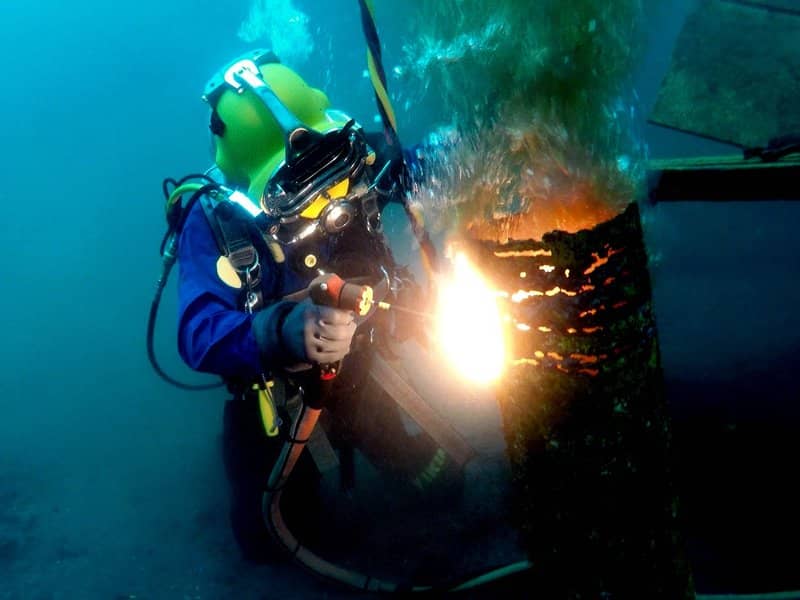
Justin Tyers • 14 February 2025
Clean power for Dive Training Boat
Ireland’s seafood development agency Bord Iascaigh Mhara ( BIM) – which has a dive training base in Castletownbere, South West Ireland – has invested in a three-phase marine energy installation based around a hybrid generator. Occasional hiccups in performance from the old diesel generator on board the dive training Barge meant that it wasn’t able to provide voltage-and-frequency stable power to some of the boats sensitive life support equipment. A hybrid generator prioritises power supply from battery-stored energy. Battery power is replaced as far as possible from solar energy – and the generator is used to make up any shortfall. Generator efficiency is maximised because it runs only when needed, and at its maximum rating. In addition to heavy weight mechanical devices, such as electric cranes, lifting gear, air compressors, the dive training barge has a decompression chamber together with associated breathing support devices to which a stable electricity supply is critical. There is also welding gear, and because a significant part of the barge’s work includes night time training – its lighting systems are also essential. Their old three-phase generator was entirely diesel dependent, but the new hybrid generator introduces lithium battery stored energy together a small (2.25kW) solar array – as space very limited. The panels will work everyday to recharge the batteries making a significant contribution between training programmes. And because the barge is moored a short distance offshore, a wind turbine is under consideration which could provide 24hour power from its exposed location. Maciek Bański One of the greatest advantages of the Victron-based energy system is that it is modular and can easily be expanded at any time to include more power, more capacity, or to introduce new sources of energy harvest. During the winter the barge is brought ashore for maintenance where it is plugged into mains power. The Quattro Inverter/Charger’s bi-directional capability allows the 48V DC battery to be charged from an AC power source – ensuring that the battery bank is periodically fully charged and balanced. In fact the Quattro has two AC power inlets and will automatically switch to the live power source – no manual intervention is needed. The Quattro also has two AC power outlets – one of which shuts down if there is no incoming AC power source detected. Users often connect high load, non-essential equipment – such as Air Conditioning units – to this port to ensure that the battery never becomes depleted by providing energy for non operation-critical loads. It’s a simple but game-changing feature. The system was installed by independent energy specialist, Victron distributor and system installer EnergyFreedom Systems. The Dive Training Barge installation consists of the following primary devices: 3 x Quattro 8kVA in 3 phase setup. 5 x Cegasa E/Bick Ultra 175 Lithium Ion batteries with a total capacity of 67kWh 5 x 435 W Jinko PV panels 1 x SmartSolar MPPT 250/60 solar charge controller There’s a SmartShunt 1000A to monitor battery Ah and generator starter batery 1 x 25kVA 3phase generator running on Hydrogenated Vegetable Oil (HVO) The system is controlled by Cerbo GX communication device which provides data communication between installed devices and also a GX Touch 70 which provides an easy to use local interface to monitor or programme the system. The Cerbo GX also provides data to the internet based platform Victron Remote Management (VRM) allowing the installing engineers from EnergyFreedom Systems to monitor and even control the power system without the need to attend the offshore installation. Company Engineer Maciek Banski says: “The main challenge was to get clean power and plenty of quiet time – without the generator running – so as to limit vibrations and noise, and also achieve fuel efficiency.” The selection of devices for this hybrid generator installation achieves this through the Inverters unique Power Assist feature – which delivers peak energy demands by adding stored Battery Power to the generators AC output. It does this automatically on demand. The small solar energy provision is at its most useful in the summer, of course, when there is plenty of sun – with the frequent result that the generator isn’t needed at all! Cork based EnergyFreedom Systems provide power solutions for the marine, industrial and domestic market. Maciek is passionate about sustainable energy and is never happier than when he is training others – he has been invited to pass on his knowledge by lecturing at the BIM college. Let’s hear from students taking a BIM dive course, and take a look at their facility: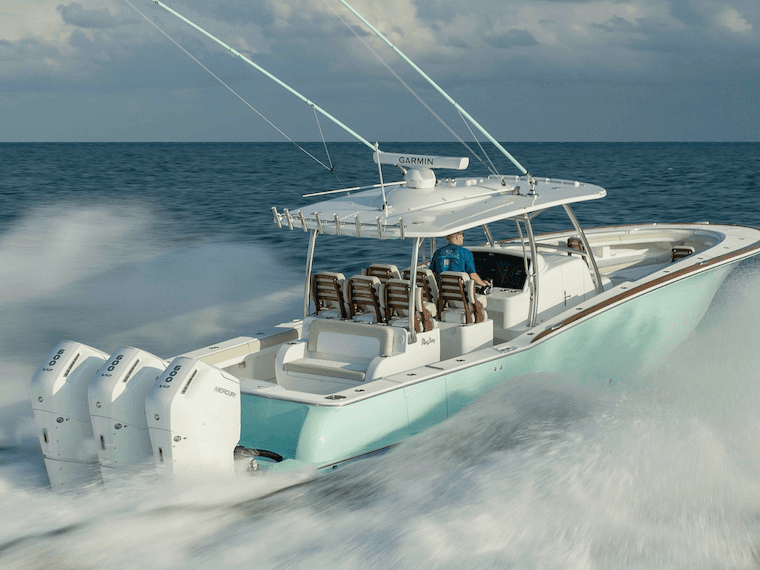
Justin Tyers • 06 February 2025
Sport Fishing with breathtaking power
If you’re not familiar with Offshore Sport Fishing boats – a style of craft to be found, most notably, in North America – you’re in for a helluva ride! Let’s take a look at how they build at Mag Bay Yachts – whose 38 foot model recently won ‘Best of Show under 60 feet’ at the Fort Lauderdale International Boat Show. The boats, powered by gutsy outboard engines up to 600HP, are capable of delivering speeds of over 75 mph. Built primarily for sport fishing, they’re equipped with bait wells, rod holders and power reel outlets – together with insulated below and above deck boxes for the beer and plenty of areas for sun-bathing if nothing’s biting. The deck is protected by high topsides providing a sense of security and the on-board layout is uncluttered providing easy access around- and to the cockpit – essential for sport fishing, and a real bonus for guests who are a bit more comfortable on land than at sea. The father and son team behind Mag Bay Mike and Barrett Howarth bring years of previous experience to their design and build having founded Cabo Yachts. To their extensive experience they add ‘customer feedback’ which informs transitional changes and continual enhancement on board each of the four models in their range: 33 /38 / 42 and the flagship 43. Power options for the 43 Centre Cockpit are either triple Mercury Marine 600HP V12 or quad 400 RV10 Race motors which allow the hull to glide effortlessly over the water in spite of its ten ton displacement. Equally impressive below decks is an awesome LiFePO4-based electric power system designed by ABYC Certified Marine Electrician and Victron specialist Jim Dixon of Dixon Marine, Inc. San Diego, California , together with Kurt Bergstrom – Team Leader, NA Field Application Engineering for Garmin. On board power supply has to take care of the sensitive electrics used for navigation; high amperage deck handling gear; and constant-load domestic conveniences such as air conditioning. Careful attention to system design is needed, if it’s going to be worry-free. Add to that Mag Bay’s desire to eliminate the need for an on-board generator for battery charging and AC supply – but to provide battery charging instead from the high output alternators built into the engines, and it becomes apparent why Jim Dixon’s Victron Energy experience was called in. You can find comprehensive wiring schematics for high output alternator – ‘Genset less’ power installations – on the Victron Energy downloads page. He and Kurt Bergstrom are both qualified sea captains – not only did they get on really well but they hit the ground running because they understand from experience what customers are going to need, and what they’ll one day appreciate they’ve got! What both Jim and Kurt appreciate is that Victron Energy’s data protocols are open source – Garmin/EmpirBu s controls can be deeply integrated with Victron, allowing fine-tuning to meet any bespoke requirements. Included in that design group was Eric Graham, General Manager of Egis Mobile Electric . Working together they designed Mag Bay’s Victron Lithium Iron Phosphate/Inverter based power system and digital switching. Two of Mag Bay’s production models have Victron systems onboard: the 43CC; and the newly released 38CC. Each boat can be optioned with a choice of engine packages. The 38 footer has either 2 or 3 engines and the 43 footer has either 3 or 4 engines. The number of engines dictates the number of start batteries which in turn dictates the number of house batteries in the spec. Lithium Battery Smart 12.8v/330 are installed at 8.44kWh or 12.66kWh total capacity and are managed by a Lynx Smart BMS 500. Both models employ the MultiPlus 12/3000 /120-50 120VAC. Whilst plugged into shore power the lithium engine starting batteries are charged with the Smart IP43 12/50-3 chargers – a five step charger which can provide power to three battery banks. Three-engined boats get a 3-output charger and quad engine boats get two of those units. The chargers are connected by VE.direct cables to a Cerbo GX communication centre device which provides data communication between installed devices (Victron and third-party). A VE.Can to Micro-C adapter cable interfaces into the boat’s Garmin MFDs (Multi Function Display) and EmpirBus’s digital switching system over NMEA 2000. The Cerbo GX will also provide system access via the Touch GX 70 – a touch-screen user interface from which owners can monitor their system status and technicians can gain local access for system management. The Cerbo GX will also provide remote system management to and from anywhere in the world via an internet connection, using the free to use management platform VRM . More about that in a moment… There are about five sub-circuits on the DC load side. They are divided into: 24hr power, EmpirBus, Nav/Com (Garmin), electric reels and stereo. All five have their own Smart Battery Protect . The Smart Battery Protect disconnects the battery from non-essential loads before it can become depleted. Jim programmes the value of each ‘Protect’ unit differently so that they start shedding loads at different voltages – based upon importance. “ For example, the stereo would be the first to shut down,” he says , “and as the voltage continues to drop then we lose the electric reels. Next would be the Garmin MFDs, then the EmpirBus digital switching modules and lastly the 24hour power (bilge pumps.) Of course we would not let the system degrade in voltage that low on purpose so I would guess that when the stereo shuts off somebody would take notice and start the engines to charge the batteries. ” Getting rid of the generator means the owner won’t have the fuel and maintenance costs of the genset – but also, the weight and space saved allows other equipment to be installed – like a Seakeeper Gyro . Lynx Distributors on either side of a Lynx Smart BMS 500 provide a tidy DC busbar with monitored fuses to the connections. Jim has developed a ‘package’ for Mag Bay: when they order a new power system they simply have to specify which model and how many engines it will have, and with that info he knows exactly what the package will include. The seventeenth 43 footer is currently in build. Technical assistance remotely At his shop Jim updates and pre-programs the Cerbo GX and connects a GX LTE cellular modem with a prepaid SIM card before shipping. He also plugs a 16GB Micro SD card into the Cerbo GX to expand the data storage so that no system-status information is lost even if the boat is out of cellular range for extended periods of time. He creates a VRM account for that hull number and provides Mag Bay with access. Jim says: “ At some point the boat’s electrical system will be powered up for the first time and when it does the Cerbo GX will begin recording data and transmitting it to the VRM Portal via the GX LTE dongle. We are recording data at birth! I am notified the boat is online and I can begin programming the MultiPlus, the BMS, the IP43 chargers and do an overall check of the system. The boat is connected to shore power so I monitor charging and check in a few times over the course of a few days to make sure all is stable .” L-R Kurt Bergstrom-Garmin, Luis Uranga-Mag Bay Yachts designing 43CC Hull #1 The new owner climbs on board and doesn’t have to worry about anything, of course, – but if they do have a query or a request, Jim or trained staff at Mag Bay can intercede remotely. A nice touch is that the owner will also find the Mag Bay branding on his power screen, and on the Victron Remote Management ( VRM ) instance. Almost all of the boats built currently have a Starlink installed – seemingly making the GX LTE redundant – but you never know when the Starlink will be activated; and Jim notes that having the boat online from day one of its installation through delivery to the customer is invaluable. “ The connectivity through the VRM Portal has proven to be very helpful especially when the person onboard is not technical and needs help. The VRM Portal is such a fantastic tool .” he says. It’s all in the detail If Mag Bay can’t find an open market accessory of suitable quality, their in-house craftsmen fabricate it. Using top grade, marine quality, polished stainless steel, many of the fixtures and fixings found on a Mag Bay Yacht are unique to the company. All welding is ground and polished, all slot-screws are finished in line: made by hand is the order of the day for both the yacht and its power system. Jim Dixon’s experience is also valued at Victron Energy training events which he attended in his capacity of Ambassador for the Victron brand. He’s a natural teacher with a really easy-going style which allows students to absorb the material by osmosis and at an easy pace. L-R Victron Sales Manager Justin Larrabee; Jim Dixon; and Victron’s legendary Lavon Smith Victron Energy has fifty years of product innovation and it all began with the marine trade. So we can see the direction of travel for the Mag Bay 43 CC when it comes to unparalleled quality of build!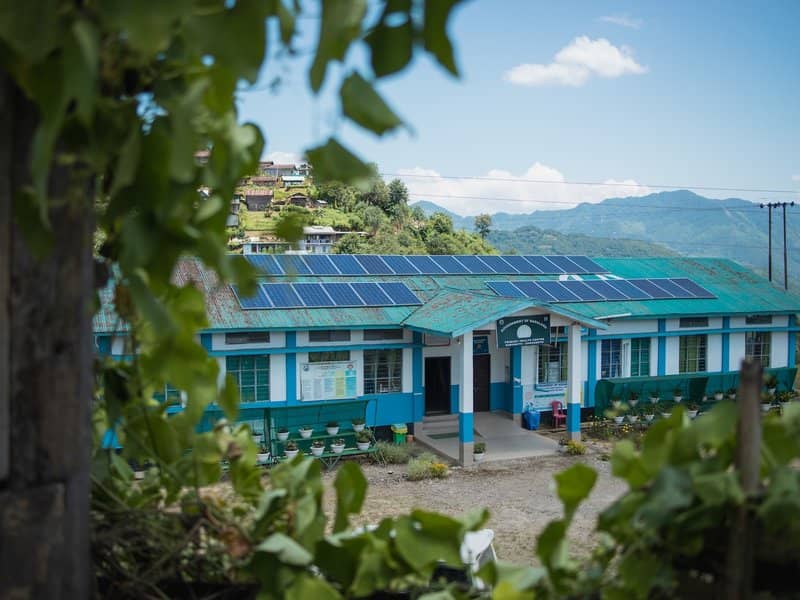
Justin Tyers • 17 January 2025
Nagaland Healthcare – transforming health delivery in North East India
In Nagaland, one of India’s most remote northeastern states bordering Myanmar, healthcare delivery is a daily test of resilience. Steep hills, dense forests and ancient footpaths, with communities scattered across rugged terrain – some accessible only by hours of trekking – is a challenge to modern development, such as grid energy infrastructure. For healthcare providers serving these communities, the battle isn’t just against infirmity – it’s against geography and unreliable power. Before reliable power solutions arrived, medical staff sometime accepted deliveries by torchlight. Change for some has arrived: Sunmeister Energy’s solar hybrid installations – powered by Victron Energy – have transformed twenty-five Primary Health Centres across Nagaland’s remote districts. The installations were supported by the United Nations Development Programme (UNDP) and the Government of Nagaland. At the core of each Sunmeister installation lies a sophisticated Victron Energy ecosystem, designed to withstand Nagaland’s challenging environment. “ In these remote locations, where limited road infrastructure makes equipment transport extremely challenging, reliability isn’t just a specification – it’s everything ,” says Saswat Das, Director of Sunmeister. Intelligence is central to the design. Through Victron’s Cerbo GX and GX Touch 50 interface, these sophisticated systems transform complex power management into an intuitive experience anyone can use. Healthcare staff, often working in isolation, can monitor their power systems through a user-friendly interface, tracking everything from solar harvest to battery status. Real-time data and programming access is also available remotely, via Victron Remote Management – to Sunmeister engineers – invaluable in a region where the nearest technician might be a day away. The digital revolution in healthcare has finally reached these remote corners. Typically these power installations include: MultiPlus-II 48/10000/140-100/100 Inverter Charger Amararaja Powerstack 48VDC Lithium battery storage of 1020Ah 30 x Axitec World Power Solar Panels rated at 10kWp SmartSolar MPPT solar charge controllers 150/60 Cerbo GX communication centre for system data comms and online remote management . GX Touch 50 local user interface for power status observations and programming Doctors can now access telemedicine platforms, consult with specialists in urban centres and maintain digital health records – services that were unthinkable without reliable power. They can participate in online medical training and collaborate with colleagues across the globe – breaking the isolation that often challenges remote healthcare delivery. The transformation has been profound. Emergency procedures and obstetrics now happen round the clock in well-lit rooms with fully functional equipment. Healthcare staff work efficiently in climate-controlled environments. Community trust in local healthcare facilities has surged as critical medical equipment functions reliably, day and night. Lab technicians con complete tests in an unhurried and professional manner without the fear of power loss to their instruments; vaccine can be chill-stored without the anxiety of wasted medicines. “ When you see a health center shift from uncertainty to reliable care, you understand the true impact of dependable power, ” says Saswat Das. “ In these remote communities, it’s not just about keeping the lights on – it’s about keeping hope alive .” In these remote corners of Northeast India, powered microscopy; vaccine refrigeration, and even well-lit delivery rooms show what is possible for remote regions around the world. With the technology and determination, distance and terrain need not determine the quality of healthcare. Perhaps the most telling transformation is in the changing habits of the communities themselves. Villages that once bypassed their local Primary Health Centres – instead traveling hours to larger towns for basic healthcare – now find confidence in their local facilities. Elderly villagers who once hesitated to attend a clinic after sunset now do so. Expectant mothers choose to have their delivery using local services rather than undertake long and risky journeys to larger hospitals. Parents bring children for vaccinations, confident that the cold chain remains unbroken. Once quiet, and infrequently visited facilities have now transformed into busy community healthcare centres, from dawn to dusk. “ The real measure of success,” says Saswat Das , “is seeing these health centers become true community hubs. When a village begins to trust its local healthcare facility, when people know they can get help any time of day or night, that’s when you know you’ve made a difference. In these remote corners of Nagaland, we’re not just powering buildings – we’re powering hope, trust, and better healthcare for generations to come.” Let’s take a look at the difference it’s making to staff and patients:
Justin Tyers • 23 December 2024
Merry Christmas – and here comes the sun!
The winter and summer solstice occurred around the world at 09:20 (GMT / UTC) on Saturday 21st December. In the UK (from where I write) thousands of people get up early to travel to the ancient monument of Stonehenge and celebrate sunrise on the shortest day. Usually, the monument is not accessible to the public, but on the solstices anyone is free to access the site to watch the south eastern horizon illuminate with thin yellow sunlight through its prehistoric arches. For those of us who live in the northern hemisphere the solstice marks a renewal, and we begin our journey back to abundance, and summer sun! Photograph by Mike Peel Meanwhile in the Southern hemisphere, the sun is high and nothing could be further from the minds of pleasure seekers than the winter grey and cold! So, if it’s winter for you just now here’s an idea to dispel the winter gloom: If you can get yourself to Fiji why not swim out to the 7th Heaven cocktail bar? I say swim because it’s a floating bar and restaurant moored a short distance from the shore …think of a boat pontoon with luxury entertainment. You can swim or arrive by boat to relax in a sun lounger, sipping cocktails, and enjoy 360 degree views of the limpid blue sea – without sparing a thought for us and the grey, cold weather you’ve left behind! And if you’re having such a lovely time you simply can’t tear yourself away – overnight accommodation is also available. The floating restaurant bar is off-grid in every sense of the word. Sustainable power for the chillers, pumps, water heating, lighting and wifi is provided by a solar energy system. Three SmartSolar 150/100 MPPT solar charge controllers harvest power from a 13kWp array of rooftop solar panels and stores the energy into Lithium batteries with a capacity of a little over 30kWh. Two 5kVA MultiPlus-II 48/5000 inverter/chargers provide AC power to all the catering equipment, and will also recharge the batteries from a standby 11kVA generator, if required. All DC cabling is neatly distributed using the Lynx distribution system – a modular busbar with M8 or M10 connections rated at 1000A continuous load, and with monitored fuses. A Venus GX communication centre device harmonises the system by allowing all components to talk to each other, and also provides remote engineering access and monitoring – allowing the installers – Fiji’s own Vision Energy Solutions – to keep an eye on the installation – and even make changes – without visiting the site; quite reassuring for the site operators who don’t know when they’ll next visit land! Remote access is available to anyone using any GX device – free of charge – via the Victron Remote Management platform. For those of us who can’t make it to Fiji, it’s good to know that if we wait patiently, the summer sun is on its way back! It only remains for all of us at Victron Energy to wish you and your family health and happiness this Christmas – and if you don’t keep that festivity, we wish you Seasonal Greetings and an adventuresome 2025 that we can all look forward to, together. MERRY CHRISTMAS and a HAPPY and healthy NEW YEAR!
Justin Tyers • 16 December 2024
Electricity installed at Madagascar school
Charity Boky Mamiko was founded in 2017 to improve the quality of education in rural schools in Madagascar. Initially their work was to establish a library of school books, as almost none were available. Building on their success the charity today also provides teacher training and eduction programmes for health and nutrition, environmental studies and more recently – installing electricity! An off-grid power systems for St-Joseph School in Maherivaratra, Northern Madagascar is an historic development for both the school and the region. Access to grid electricity in Madagascar is very limited and not reliable – whereas their Solar powered off-grid system with battery storage is capable of providing power 24 hours per day – even when the grid elsewhere has failed. Electricity has a significant impact on the quality of education the school can provide: learning materials can be reproduced by photocopying and printing; image projectors can be used; computers installed and internet-based learning can be offered. The school is now able to offer adult learning in the evenings – and outside lighting is also provided for safety and security. The electrification project was the culmination of two years work – planning, funding, design, build and installation. The project was launched by ERG with the contributions from UFLEX , MSC Foundation Official , BFC Sistemi and Comoli Ferrari . “ Our schools are all lit up, our children study very willingly, the teachers can work and have lectures at any time ” explained a delighted Sister Louisa – the director of Casa Pasquale’s shelter located just across the street. The solar energy system has been designed to allow future expansion. In addition to providing power to St. Joseph’s school, the mini-grid already distributes power across the street to Casa Pasquale – a girl’s shelter which provides a home and meals for over 100 girls. Power is used to refrigerate food and essential medicines; they have an egg-incubator used to produce chickens; light is available around the campus, and also to the Boky Mamiko library which offers extend study hours for students when required. Future plans include installing pumped water; and because the modular system can easily be expanded there really are no suggestions for future utilities which cannot be considered. The power system comprises: 50 x solar panels of 210W offer 10.5kWp. 2 x SmartSolar MPPT solar charge controller 250/100 VE.Can 1 x Quattro 48/15000 230 Inverter Charger A Cerbo GX communication centre device manages the system and allows engineers to monitor the system using VRM – Victron Energy’s remote management platform – if a fault should occur the system can be diagnosed and corrected in spite of the remote location of the installation. GX Touch 50 provides finger-tip access to system status and programming. 3 x 3.6kWh UFLEX supercapacitor storage system 10.8kWh total at 48 2 x RUUVI sensors The wiring of the four school buildings was carried out by ANKA Madagascar , who specialise in renewable energy. Their engineers and technicians worked day and night to complete the project on time – overcoming many challenges – perhaps most notably bringing the necessary equipment to the Maherivaratra village through floods and monsoon. Sister Louisa who governs the shelter took a great deal of interest in the installation process; she said: “ Anka has installed the power plant and electrified the school with love and lot of responsibility, but most of all with the joy of knowing that they are part of this great projec t”. Classroom photographs are the property of Boky Mamiko.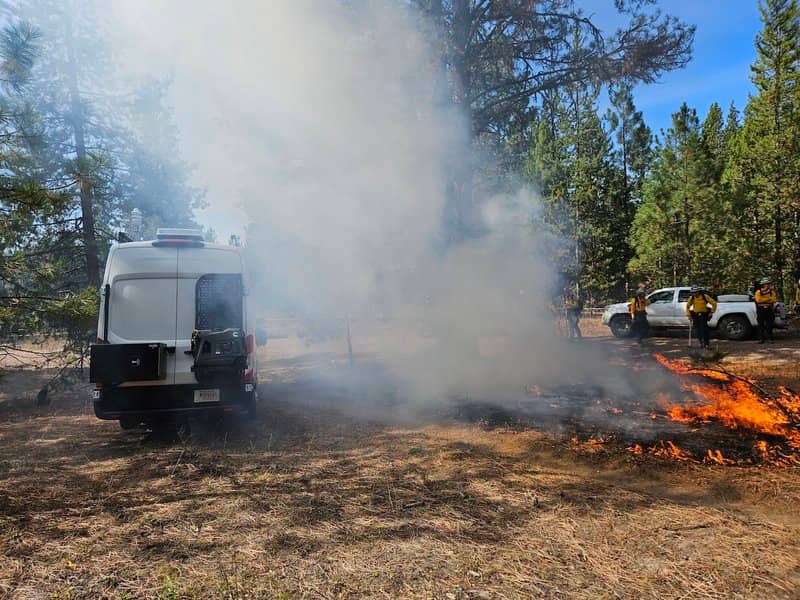
Justin Tyers • 06 December 2024
Wildfire emission research
For atmospheric scientist Dr. Wade Permar, it’s a very exciting day. It’s late fall in Montana, and thick plumes of smoke rise from a forest fire whilst students and staff from the University of Montana FireCenter stand with rakes and water hoses. He and his team are collecting emissions data from a 30-meter controlled fire (or ‘prescribed burn’) line using a state-of-the-art mobile air quality research lab. Dr. Wade Permar Drawing in fumes from the site, the Mobile Lab measures ozone, carbon monoxide, and nitrogen oxides, along with more than 160 volatile organic compounds; it analyses aerosol optical properties, and records meteorological conditions. Particulate matter – visible as smoke – degrades air quality. Because many of the particles are so small they get buried deep into your lungs from where they can cross into your bloodstream, increasing the risk of disease to the lungs and heart. Ozone, high in the atmosphere, protects us from much of the sun’s ultraviolet radiation – but when it’s present at ground level it damages plants and cells. These two components are just a small part of the complex mixture that is smoke, with many of the other gasses emitted by fires being responsible for their formation. The question Dr. Permar and his team are trying to answer is whether the smoke from a prescribed fire differs from a typical wildfire …and is it less harmful to breathe? “ One of the best strategies we have to mitigate the impact of severe forest fires in summer months is to conduct more controlled or ‘prescribed’ fires during the fall and spring when conditions are more favorable for burning .” he says. While air quality has improved in most parts of the US, it’s actually decreasing in the Western United States – as a direct result of increasing wildfires. “ Until now, it’s been very expensive and logistically challenging to collect this type of data. In the past, we mostly studied air quality using research aircraft; putting a bunch of scientific instruments on a plane, and then flying transects through smoke plumes .” Some of the van’s scientific equipment was previously carried in a C130. The Van is a laboratory on wheels. The equipment it contains hasn’t been downsized – it’s big and consumes a lot of power. Here’s Dr. Permar again : For the most part, power and weight are not considerations when the instruments are built, and most are meant to run continuously. That was one important component of the build, a few of the instruments do not like being turned on/off at all, and so need a constant power supply. Another big perk of how the van was fitted out is that we can switch from shore/generator/alternator power without any power drop (we have the most sensitive equipment on UPS). Our mass spectrometer has been running non-stop in the van for the past month. In addition to the instruments themselves, we also have quite a few heaters and pumps that draw a significant amount of power. The van has a power bank to run lab equipment at the same time as allowing other groups to charge drones for scanning fire fronts. They use a WiFi network to help teams stay connected in the field. Ken Smith of Adventure Van Systems was responsible for turning the Ford Sprinter van into a laboratory packed with more power than most off-grid homes. He designed a Victron Energy-based power system centered around a large Pylontech battery bank that could supply power without relying on a generator or solar input. The lab equipment generates a lot of heat, necessitating two roof-mounted air conditioners. “ The dual AC units on the roof, a fan and other roof penetrations for capturing air samples, didn’t leave enough space to mount solar panels,” explains Ken . There’s also an air sampling “stinger” which extends toward the front of the van to capture clean air samples – free from exhaust fumes and road dust, whilst on the move. An onboard generator was considered, but rejected because it would reduce the ground clearance or take up too much space inside the van – not to mention the noise and added air pollution it would create. ” For these reasons, a battery and inverter system made the most sense. The van’s electrical system includes: 2 x MultiPlus-II 48V 5000W Inverter/Chargers 6 x Pylontech US5000 48V rack-mount LiFePO4 batteries 1 x 12V Pylontech RT12100G31 LiFePO4 battery 1 x Smart Solar MPPT 100/20 solar charge controllers (installed as a 48v-12v DC-DC charger for the 12v sub-system – fan, lights, usb charger ports, 12v sockets) 1 x Cerbo GX communication centre device 1 x GX Touch 50 2 x Lynx Power In 1 x Lynx Distributor 1 x 1000A SmartShunt 1 x EG4 Chargeverter 48v Charger – Detects voltage at EV charging stations and charges appropriately. 1 x Zeus High-Voltage External Alternator Regulator 1 x 48v 100A Auxiliary/Dual Alternator The inverters and the battery bank are sized to power all onboard equipment, computer servers, and other electronics for a full 8-hour day of sample collection in the field. A second alternator and external alternator regulator maximize battery charging whilst driving. When it’s deployed for a number of days, by night the van is parked at hotels or sometimes camps, plugged into shore power to recharge the battery bank. An EV charger has also been installed – it’s the primary charging source for the van when parked back at the university’s campus. “ The system only accepts high-quality power to protect the expensive lab equipment from low voltage, for example. It’s very common to have “dirty” or unreliable power at wildland camps or RV hookups, so knowing that we have all bases covered was a major consideration for the system. ” says Reid Loessberg of Intelligent Controls , the Adventure Van Systems’ Victron Distributor. Dr. Permar regularly refers to VRM on his phone so that he can monitor the cabin temperature (a push notification lets him know when it gets too hot or cold); check that the shore power is still live; check that the power load is balanced between the two inverters; check consumption and battery State of Charge to ensure they’ll have sufficient power for the next deployment. Smoke analysed at altitude, in a plane, doesn’t accurately represent air quality at ground level—where humans live and work. The new mobile lab allows Dr. Permar and his team to capture more accurate data which will help inform state policy around the practice of prescribed burns. “ We’ve been able to run 12-hour days of sampling on battery power, even up to 24 hours when the AC units are not running, which is just amazing. The power system setup has exceeded expectations. ” says Dr. Permar. Prescribed burns are controversial due to the risk of them becoming larger wildfires, but the goal is to restore forests through regular low-intensity fires – back to their healthy condition – at the same time as mitigating some of the risks from larger wildfires. When burning in the spring or the fall, there’s a lot less chemistry that takes place in the atmosphere, ” says Dr. Permar. “ The air quality impacts tend to be less severe, and the smoke isn’t transported as far at those times of year because the fires are smaller and the temperatures don’t promote long-range transport. So, the impact tends to be local as opposed to regional. But, for all the observed benefits of prescribed fires, there’s not a lot of data available on their air quality impacts . No one knows the true impact of different policies around wildfire containment until equipment like this is deployed to burn sites and the data is captured. At the tip of the issue is whether this policy of prescribed burns is a good idea. Hopefully, with this lab in the field , we will be able to answer that question clearly – with good data. To learn more, visit the SMART FIRES project page .
Justin Tyers • 29 November 2024
Entry level RV
Why wait until you’re old enough to drive before beginning the Van Life? At 15 years of age, Dutch National Quinten de Jong decided he couldn’t wait until he had a car before beginning his camping adventures – so he built a bespoke caravan to tow behind his bike. Keen cyclist, he began by designing his van and collecting the necessary materials – timber and steel – in his parent’s shed. Despite his lack of welding experience Quinten built the 2m x 1m chassis and began welding steel sheet to form the roof and sides. Internal timber-framing allowed him to form an aerodynamic curved roof. The van is insulated to prevent condensation and features an advanced electric system – including a flexible solar panel and AC inverter. Full Power Lighting, TV and mains hook up. BMV 700 Battery Monitor. The Battery monitor tells you all you need to know about the condition of your battery – voltage, state-of-charge, time remaining at current load, consumed amp hours – together with user-definable alarms and an extensive stored history of battery conditions. The Blue Solar MPPT 100/20 Solar Charge Controller monitors the constantly-changing voltage and current of the solar panel to maximise the energy harvest – which is stored in the battery according to a multi-stage adaptive battery charge algorithm. A Battery Life feature can monitor the battery state of charge over a period of time. If it’s been a while since the battery was charged to 100% (essential occasionally for battery health) the Solar Charger can gradually raise the load disconnect level, breaking the depletion cycle, and ensuring that the battery receives a periodic 100% recharge. In Quinten’s case, the battery he has is a Lithium SuperPack 60Ah – which has an integrated BMS and a safety shutdown switch for over charge, deep discharge, out of range temperature, etc – making it worry free and simple to install. Lithium chemistry has many advantages over Lead Acid. Most noticeably for his rig is the weight saving – at just 9.5Kilos his energy dense battery is less than half the weight of an equivalent AGM or Gel deep cycle battery. It is also far more efficient, particularly when the typical discharge cycle is small – say down to 80% state of charge. The charge-efficiency from 80% SoC back to full charge can be as low as ‘half’ – two amps in for every single amp stored. The efficiency of the Lithium SuperPack will be 90% efficient or better. These figures make a huge difference to the charge time when you’re solar-charging and off-grid. MultiPlus 12/500 Quinten’s Inverter Charger provides an AC Power source for his TV, Lighting and personal chargers. Packed with advanced features in spite of its small size, the MultiPlus 12/500 has a peak power capability of 900W – allowing devices with high-start up current to operate normally; and because it is a true sine wave inverter it can run sensitive equipment faultlessly. Working as a charger the MultiPlus 12/500 can charge his battery from the electricity grid at a maximum 20 A. Battery Switch On/Off 275A. When not in use the system can be shut down with this robust and professional switch in order to prevent losses on stand-by. Learning everything as he went, Quinten says the most difficult part of the build was actually painting his new van, on account of its size. Quinten says: “I am happiest with the electronics in it from Victron Energy. I use the power for my small TV and for the lighting, alarm, etc. I sleep in it in the summer when I go to a campsite and take a gas burner with me as I enjoy cooking.” Is there anything he would change? “I would like to make a lighter caravan under 80kg because this one weighs about 120kg. For anyone thinking about making a bicycle caravan, build the frame from aluminum – because that is sturdy and lightweight – and use wood elsewhere.” Considering the determination shown by Quinten in achieving this project, and the independent travel adventures which followed at just 15, we really can’t wait to see what he will do next. Quinten’s Victron distributor is Combi Noord .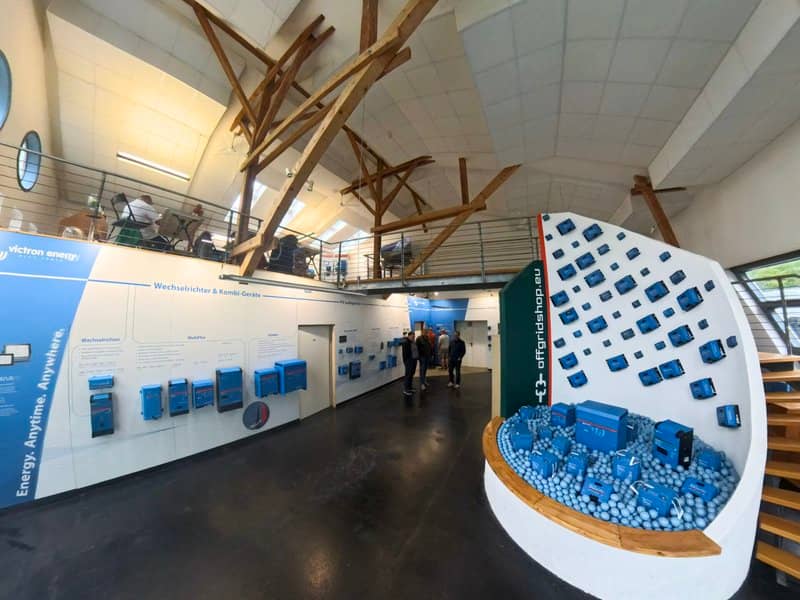
Justin Tyers • 09 November 2024
Showroom of everything…
One of the surprising facts about Offgridshop – a Victron distributor with an impressive portfolio of Luxury Yacht power installations under their belt – is that they are based in land-locked Austria! At 350km from the nearest coast, the Marine arm of their business has grown by word of mouth, and through their attention to detail. Even their new training facility and showroom offers a hands-on power-up experience of every product we make! The strategy of paying attention to every detail seems to be working – requests are rolling in not only from shipyards but also from wealthy clients to replace the factory-installed power systems of brand-new luxury production yachts even before they hit the water (Well, if you’re going to invest millions of dollars in an exclusive sailing boat with luxurious accommodation for your guests you don’t want to be worrying about how the batteries are holding out!) To ensure that their B2B partners make the best possible use of Victron Energy products , Offgridshop have invested in a training facility and product demonstration showroom which not only includes devices from the entire range of Victron products – but everything is plugged in and live! It’s a hands on Victron Experience says CEO Lukas Vrecer. One recent alumni from a one-day training course was Stephan Kress – a seasoned Marine power installer and designer and also Yacht builder – who took the opportunity for some face-to-face problem solving and in-depth discussion to find technical solutions for a whole series of boat installations he has in mind. Stephan Kress Talking about his work, Stephan says: We design and engineer power systems for yachts, tailored for clients who seek reduced noise, lower emissions, minimal pollution, and decreased running costs. Together with our partners, we engineered SAMAR Yachts, a solar-powered electric boat designed for enjoying the sea with friends. This yacht can cruise for eight hours at 8 knots, fully powered by batteries. It recharges with solar energy over five days – or overnight via shore power. SAMAR Yachts offers a way to enjoy the sea whilst respecting and protecting the marine environment. Power systems on boats have unique requirements and Offgridshop offers expertise tailored to those needs. Today we explored the best fusing and racking options for the new Lithium NG Battery system. Victron Energy’s new NG battery system provides a versatile, modular toolkit for various electrification projects, including our vision of a solar-electric yacht like SAMAR. The Offgridshop facility presents Victron products in a comprehensive and positive light. The presenters are highly knowledgeable, and the training modules are interactive and engaging. Offgridshop only offers Victron Energy devices: They have specialized in creating a one-stop-shop for everything Victron to provide a seamless customer experience – from systems planning, training, installation, commissioning and full systems support. Offgridshop staff work with customers from all over the world including large shipyards, automotive corporations and telecommunications providers. Their showroom – which, of course, is powered by an Energy Storage System (ESS) – is open to everyone. The training facility is available to retailers and installation engineers in Automotive; Marine; Mobile; Telecommunications; Industrial applications; and the ESS sector. What’s On display? There are a number of functioning systems: Small demo / training 3-phase ESS featuring MultiPlus-II 48/3000, 10kWh storage, Victron EM, EVCS, MPPT RS, Cerbo, GX Touch 50 Large 3-phase ESS powering the whole building (70kWp PV, 100kWh storage, 3x MultiPlus-II 48/10000, MPPT RS, Fronius Symo, Cerbo, GX Touch 70, EVCS) Large Marine / Automotive demo system (24V LiFePO4 Smart, Lynx Smart BMS, Cerbo GX, GX Touch 70, Raymarine chart plotter, tank level simulation, temperature simulation, PV simulation with SmartSolar 100/20, MultiPlus-II 24/5000, Orion XS, Phoenix IP43 charger, 12V AGM battery, SmartShunt, Shore power simulation LiFePO4 NG demo system (two redundant 24V battery strings with Lynx BMS NG 500A, Phoenix Inverter, Phoenix IP43 charger, Cerbo GX, GX Touch 50) Victron Remote Management Demo system connected to the Marine and Demo ESS Showroom devices Most devices are powered and working, but not as part of a power installation: – Cerbo GX MKI & MKII – GX Touch 50 & 70 – GX Tank – GX LTE 4G – GlobalLink 520 – BMV-712 – SmartShunt 500A & 2000A, Standard & IP65 – Phoenix Inverter 12/250 & 12/1600 – MultiPlus & MultiPlus II 4 sizes – Quattro & Quattro-II 2 sizes – SmartSolar MPPT 12 versions – MPPT RS 450/100 – Blue Smart IP65 charger – Blue Smart IP67 charger – Blue Smart IP22 two chargers paralleled with VE Smart Network – Phoenix Smart IP43 – Skylla IP65 – Skylla-i – Isolation Transformer – Galvanic Isolator – Shore power connectors – All versions of busbars and fuse holders – Battery switch – Lynx Distributor – Lynx Power In – Lynx Smart BMS – Lynx Shunt – Battery balancer – ArgoFET battery isolator – Cyrix ct – Cyrix Li-Charge – Smart BatteryProtect 65A & 220A – SmallBMS – Ve.BUS BMS v2 – Smart BMS CL – Orion XS – Orion-TR Smart – Orion-TR different sizes, isolated and non-isolated – EV charging station – All sizes of LiFePO4 NG batteries – All sizes of Lithium Smart batteries – Different sizes of AGM and Gel batteries Lukas Vrecer (l) and Michael Körner (r) Offgridshop’s installers and engineers travel the world installing new marine DC installations capable of revolutionising power generation – whilst motoring; in silent anchorages, from solar; greatly expanding installed energy storage; and offer clients automated power-management, optimised to the owner’s energy use. It ‘looks’ right too – seamlessly integrated into glass-bridge multifunction displays – power data is available at-a-glance alongside other critical data – including navigational information, climate control, tank levels and everything else pertaining to safe yacht management. We’ll go on board a LAGOON Sixty5 in the coming weeks to take a look at one of their installations.
Justin Tyers • 06 November 2024
The mountain bike events getting children into the great outdoors
“Two years ago I was at a mountain bike race listening to the noise of a generator and struggling to hear the Public Address system ; says Ed Jones from Off-Grid Power Systems . “I decided there and then that I was going to build a power generation trailer so they didn’t need a generator. My son races – he’s just finished his third season with the Ohio chapter of NICA (National Interscholastic Cycling Association) and I wanted to do my part to support their mission to get more kids on bikes. NICA began 13 years ago with the mission to build ‘Strong minds, bodies, character and communities through cycling’. Today there are 32 leagues across America. Approximately 200 student athletes (SA’s) in grades 6-12 took part in the Ohio 2024 season just ended. Five races, fortnightly, from August to early October sees volunteer crews set up on Friday after work until dark, and up again on Saturday morning around 6:30am to prepare for the ‘Coaches Ride’ course inspection at midday and cycling events at 3pm. Friends-and-family ride from 5:30-7:00pm. There are family entertainments – cycling and non-cycling – throughout the weekend. Sunday sees more events, with the awards ceremony at 3:30pm until about 4:15pm – then it’s clean up, pack up, and head back home before dark. A packed weekend for volunteers and participants alike During the professionally organised event power – which used to be provided by a noisy generator – is needed for a whole load of functions: Push-to-talk two-way radio transceivers as well as amateur radio Automated timing equipment at the start/finish line A floor fan to keep the timing system cool in the summer A floor fan to keep the two timing judges cool Inflatable finish line (which doubles as a backdrop for the awards ceremony) Laptops. Laser printer Large screen TV for race results PA system for music, race announcements, and awards ceremony Starlink & WiFi Charging e-bikes (some of the Course Marshalls and Sweeps use e-bikes) Providing power to the Trek tents (they are a league sponsor and also do on-site bike repairs for SA’s) Provides device charging (phones, tablets, etc) to staff, teams, and spectators 120V air compressor for tyre repairs at the race There is a refrigerator/freezer inside the trailer to provide refreshments Ed says: “ Now that we offer ample silent and sustainable power we notice that every time there’s a race, more uses are added to the list !” The towable solar power generator is larger than needed for the OMBL races because the trailer is available to rent for other events and is also used for on-site installation work by Ed’s installation team. The set up inside the trailer looks like this: 2x MultiPlus -II 48/5000 120V – 10kVA, 8kW continuous rating 1x Autotransformer 100A in a 120V/240V split-phase configuration Cerbo GX MK2 + GX Touch 70 communication centre device and touch-screen user interface. There’s a GPS receiver to allow for Victron Remote Management VRM solar forecast updates and geofencing – so the trailer can be tracked if it’s ever stolen. 8x Lithium Battery Smart 200Ah 25.6V battery modules (40kWh total) Lynx Smart BMS 500A takes care of the battery management for Victron Lithium batteries; there’s a Lynx Power In for connecting the DC power distribution and two Lynx Distributors with monitored fuses. Smart BatteryProtect 48/100 disconnects the batteries from non essential loads before they become excessively depleted. The system includes a 48V air conditioner via ATD on the BMS 2x Orion-Tr Smart 48/12-30A DC to DC power supply provides 12V power for ham radios, vent fan, and electric jack 1x SmartSolar MPPT 150/45 Solar Charge Controller maximises the power harvest from solar panels. 6x Merlin Solar TBS240L (240W) flexible adhesive panels on the roof 8x Merlin Solar Panther 200 (200W) portable panels connected to a Hoymiles HMS-2000-4T-NA four port microinverter (two panels per MPPT) for a total of 1600W of AC-coupled solar on the ground when needed. These back-feed the AC output of the inverters A VM-3P75CT Energy Meter to measure the output of the Hoymiles inverter so VRM accurately accounts for the AC-coupled PV production 1x Starlink Gen3 Standard antenna mounted flat on the roof to provide Internet access in remote locations This network is used as a WLAN at the race infield to network the computers, timing system, and a large-screen TV for live results to the spectators, SA’s, coaches, etc. It also provides Internet access for live race updates online for people not at the race to keep up-to-date on race results It also provides public WiFi access when cellular service isn’t available. Copyright: NICA The National Interscholastic Cycling Association’s mission has been very successful in getting more children outside, away from screens, and on bikes. The race league gives them the opportunity to challenge themselves mentally and physically, while teaching them how to handle adversity and progress at the pace that works for them. The OMBL volunteers work their arses off each of the five weekends ! says Ed, who is really keen to spread the word about NICA who are now reaching across the Atlantic in order to replicate their successful events in Europe. Let’s take a look at Off-Grid Energy’s mobile power set up – as seen at an event: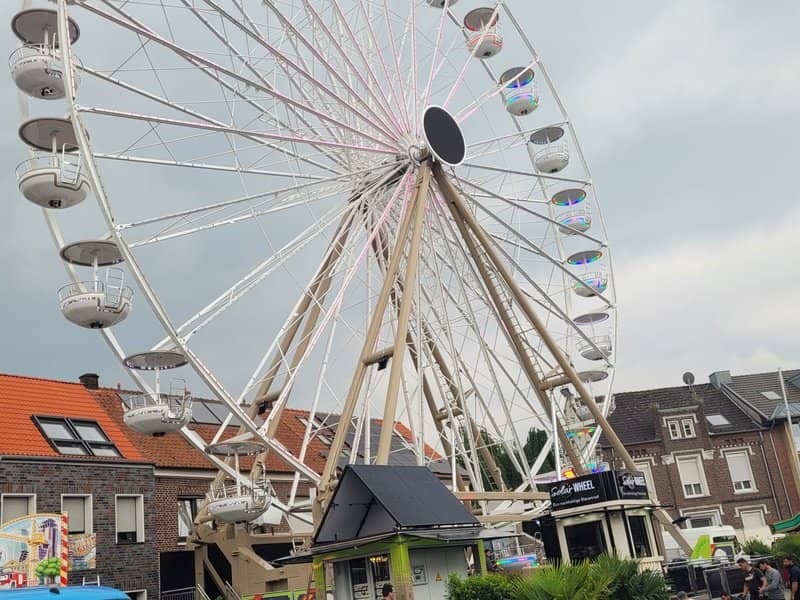
Justin Tyers • 11 October 2024
World’s first solar-powered ferris wheel
Harvey Wegener is a third generation showman who has taken the traditional ferris wheel and re-invented it for today’s environment – high tech carbon neutral and with a stunning LED light show. Billed as the first solar-powered Ferris Wheel in the world the Riesenrad Solar Wheel took Harvey Wegener and his wife Emily three years to bring from the drawing board to reality. There were many muscle-aching trial builds along the way, but the result is a sustainably powered, 33 metre high fairground attraction – which you can rent for your event – and which can transported to site and built in less than eight hours. High energy rides like the ferris wheel are usually associated with the noise and fumes of a diesel generator, and although for safety reasons the equipment has to be connected to a secondary 20kW energy supply for emergency compliance, it’s no longer the case that a diesel generator must be banging away! With 54kWp of solar panels mounted in every available location, and over 200 kWh of Lithium battery storage the ride can run autonomously late into the night. Gondolas, waiting area, checkout, railings and back wall are all equipped with solar panels.” For example, we installed 36 panels in the waiting area alone, and 52 on the roofs of the 26 gondolas. We have specially developed panels that are very thin and light for the gondola roofs. ” says Harvey Wegener. Dussmann Industrial Automation GmbH , who are based in Essen, Germany, were responsible for the electrical design, engineering, construction, commissioning and for providing support during the initial production start-up at the fairground in Geldern – using products from German mobile power specialist and product distributor Transwatt . In the past it has not been possible to take such a powerful ride to locations which don’t have sufficient capacity on the electricity grid. That has changed with battery energy storage: in the North Sea Islands, for example, which can only offer a 16A connection, the grid can supply a steady source of energy for battery storage – including overnight and in the morning when the attraction is closed – and the three-phase inverters will run the wheel from battery storage combined with the limited grid current whenever the attraction is open. Harvey and Emily Wegener’s new green power supply allows them to take the fun of their road show almost anywhere! Solar Power Priority In fact the ride has been achieving greater than 80% sustainability since it began operation in May this year. One of the advantages of the work schedule of a fairground attraction is that the batteries can be charged using solar energy in the morning, when the ride is not yet open and also through the afternoon when visitors begin to arrive …the panels are still able to provide surplus energy to recharge the battery bank in time for a busy evening when it’s dark and the real fun starts! In operation the attraction has shown itself capable of running mains-free for up to 10 hours in the dark. What’s in the power container? 12 x SmartSolar 150/100 Charge Controllers harvest solar energy from the various panel locations – some will be charging fast, others may be shaded depending upon where they are mounted, of course – yet all solar charging will be synchronised by the daisy-chained charge controllers, maximising the power supply to the lithium battery bank. 40 x Pytes E-Box 48100R Lithium batteries store 5.12kWh each – totalling 205 kWh. Victron Energy installations offer a broad range of compatibility with third party devices. More information about the compatibility requirements when choosing Pytes battery storage can be found here . Cross manufacture compatibility allows worry free choices to be made when choosing third party devices for reasons of geography or preference. 3 x Quattro 48/15kVA Inverter/Chargers can deliver 45kVA continuously in their configured three-phase 400V operation. The Quattro can accept AC from two charging sources – the grid and a generator, for example – automatically switching to the live source. As mentioned earlier, when the grid can offer only limited power Victron Inverters can easily be configured to limit the power they draw from that source. Whenever demand from the application exceeds that limit, the inverter will supplement grid power with battery power – using the unique PowerAssist feature. The devices in the power system talk to each other via a Cerbo GX communication centre. The Cerbo GX also makes system status and programming available to engineers and system users via a GX Touch – a touch screen user interface. Access to data is also made available from anywhere in the world using the Victron Remote Managemen t platform (VRM). All data can be analysed historically and data strands can be selected individually for deep scrutiny – allowing problem solving without visiting site. The Ferris wheel, which might be operated in remote areas, also includes a Starlink router for satellite based internet connection. From Rittal there’s a 2000A industrial copper rail and switch cabinets. And from Siemens there are Fuses and an Industrial Wireless local area network extending internet coverage to the fairground. The containerised power for the wheel fills a lorry-loadable unit measuring 2400 x 2400 mm. Not missing an opportunity to harvest more of the sun’s energy – even the container deploys a solar array! “ With lighting and drive, the ride consumes between 150kWh and 180 kWh of energy per day. That varies, depending on how busy the ride is. ” says Harvey Wegener. More thrill-seekers! The new technology has increased the traffic flow as more customers come to enjoy the ride; to catch the view from 33m altitude – and to experience for themselves what is possible with power from the sun. It is hoped that this example will set a precedent and other fairground attractions will now make the switch to clean, renewable energy – whether bumper cars, chain carousels, rollercoasters, ghost trains or free-fall towers – they could all be operated in a CO2-neutral way. Gondola riders can pay for their ticket using the self-order terminal which issues a QR code allowing them to gain access to their ride – but there’s also a classic cash register with attendant so that traditionalists can still enjoy the nostalgia of days gone by!
Justin Tyers • 04 October 2024
Ice Probe aims to travel 1M years in twenty-one days
A team of scientists at the University of Washington Applied Physics Laboratory have developed an ice probe capable of burrowing deep into the ice shelf – and sending back data – in a fraction of the time taken by traditional ‘boring’ methods. The Ice Diver has a heated tip capable of delivering up to 8kW of energy and carries a cargo of 9000 metres of combined cable and fibre optic in its 2 ½” diameter x 11′ long tube. The power and data cable is payed out as the steerable probe heats its way deep into the ice at a speed of 3.14 m/hr. As it descends, the ice – which could be as cold as minus 60°C – refreezes behind the non-recoverable probe. The probe is designed to melt its way down through 3000m of ice to the bedrock below, gathering climate data as it explores ice which was laid down up to a million years ago. For the journey the ice probe needs to carry 6000m of out-and-return power cable, plus a fibre optic cable which sends back temperature and dust layer data from the laser scanner. In order to reduce voltage drop whilst delivering 8kW of energy along 6 kilometres of necessarily very thin power cable, the voltage has to be stepped up to 4000VDC. To prove the technology the research team – Ben Brand; Justin Burnett; Madison Pickett and Sophia Wensman – spent three and a half weeks camping on the Greenland Glacier in temperatures between -5C and -35C. Their prototype unit dived to a depth of 1200 feet allowing them to compare the data they received with the known data from previous ice core extraction. Their results were ratified – but their probe is capable of reducing the bore time through three kilometres of ice from years to a projected 21 days, whilst using a fraction of the equipment – reducing logistics and set up time. The probe design had to overcome numerous technical hurdles. The melting head is heated by what Ben Brand jokingly describes as toaster wire. The amount of heat generated can be controlled, and the probe can be steered to some extent as it descends. The sensitive laser, associated electronics, and the 9km of cable must remain unaffected by the 8kW heat output in the nosecone. The probe body must be kept warm to a lesser extent to allow it to follow through without freezing. Dust layers trapped in the ice tell the story of the earth’s climate and volcanic activity over the millennia. An on board laser reads the dust layers as the probe dives ‘ like a bar code ‘ says Ben; and the information can be used to date the ice layers – much as dendrochronologists are able to date timber samples from their ring-growth pattern. The ice temperature is also recorded – deep ice is warmer than ice near the surface: Greenland ice is -30C at the surface and all the way down to 2000m; deeper than that the ice temperature begins to rise from -30C to -4C at the bedrock. In Antarctica the surface temperature is -60C at the surface – also rising to -4C at the bedrock. The principal power source for the operation is a 45kVA generator – seemingly overpowered for the scientists’ camp requirements, but it will have a future polar-base purpose unrelated to this project. It’s also true that in the arctic climate a generator power output de-rating of between 30% and 50% must be applied. It is essential that the power supply to the probe is uninterrupted and for that reason three MultiPlus -II 48/3000 inverter/chargers, arranged for 3-phase power supply and connected to three 100Ah batteries (offering storage of 15kWh) was included in the power installation. In fact, on two occasions the generator failed – probably due to air in the fuel from a cracked pipe – and the Multis, detecting the power drop, immediately stepped in to take over the power supply to the probe. The switch-in time for the MultiPlus is less than 20 milliseconds. If the power supply is lost to the probe – even for a short time – there is a danger that it will become permanently iced-in and unable to continue its research work. The power installation was controlled and harmonised by a Cerbo GX communication centre device. Ben says he really appreciated the convenience of being able to monitor the power status of the programme from anywhere on camp using Victron’s remote monitoring platform VRM . When he was off-duty, or the probe was not operating, it allowed him to stay in touch with the project from anywhere, reassuring himself that that all was well, and allowing him peace-of-mind without being stuck in the operations tent. VRM can keep you informed by email or push notification about unexpected changes to your system’s status – whether you monitor one installation, or hundreds. The team is back home now assimilating the lessons they learned into their next Ice Diver probe.
Justin Tyers • 20 September 2024
Power where the jungle meets the sea
A boutique hotel in the Mayan jungle, on the coast of Mexico, offers twenty luxurious air-conditioned rooms and yet has no grid connection. It meets its power requirement with a hybrid generator. A hybrid generator prioritises power supply from battery-stored energy. Battery power is replaced as far as possible from solar energy – and the generator is used to make up any shortfall. Generator efficiency is maximised because it runs only when needed, and at its maximum rating. Originally the Dune Boutique Hotel relied on a diesel generator running 24 hours a day – but the fuel costs and frequent maintenance schedule were not only a financial burden, but incongruous with the natural environment in which the hotel is situated. After discussion with local Victron Energy distributor Marine and Solar Energy the hotel owners initially installed a small system to satisfy themselves that hybrid generator technology was wise investment before installing a much more powerful energy system. One of the advantages of Victron Energy devices is that they are modular allowing easy expansion to meet future growth. System Build The current system comprises: 9 x Quattro 48/10000 in three-phase mode offering 90kVA continuous power output 48 x Pylontech US3000c batteries 8 x SmartSolar MPPT solar charge controller 250/100. Cummins generator 80kVA. 80 x solar panels provide 40kWp. Cerbo GX communication centre device with GX Touch 70 which together provide system control and a local user interface. The Cerbo GX also allows remote system management by engineers from anywhere in the world via Victron Energy’s Remote Management platform VRM . Customer care – instantly, from anywhere Marine & Solar Energy can offer their customers a level of support far beyond expectation using Victron Remote Management ( VRM ). Without needing to visit site, engineers or technicians can monitor the installation, analyse performance according to selected data sets (battery state-of-charge / PV yields / AC consumption / Generator input (grid meter data and PV inverter V/A are also available where relevant)) chosen from any point in the system history, and then fine tune the programming or prove the need for system expansion in order to achieve optimal performance …tailored to customer need. In the event of a change of circumstance in power supply or demand, data can be examined at any point during the day, week, month or year…. and beyond, allowing analysts to identify the exact moment any change occurred. As with all installations connected to the free-to-use VRM platform this installation can send status alarms whenever a defined parameter has been met. The alarm status can trigger a notification email to be sent to Marine & Solar Energy engineers. Push notifications can be triggered in response to data-triggers such as low voltage; temperature; tank levels and much more. In fact, if ever there is a problem with a system, push notifications allow engineers to know about it even before the customer does! System installers who manage dozens or even hundreds of customer power systems can organise VRM instances by alarm state, geography or system type and allocate responsibility to designated maintenance engineers. Different levels of access to any installation from ‘read only’ through ‘technician’ to ‘full access’ can be invoked depending on the viewers role. Security measures such as ‘settings lock’ can also be initiated. You can read more about ‘fleet’ management in VRM here . Vertical veggies Hotel Dune also boasts a hydroponic vertical garden. Climate control allows the kitchen staff to grow cool crisp salad ingredients, for example, and serve them to the table within minutes of picking. Hybrid generators achieve their dramatic cost savings in two principal ways: firstly, the diesel genset only ever runs when needed …and at maximum rating; and secondly the unique ‘PowerAssist’ feature of Victron inverters – by which battery power is added to generator power to meet Peak Power demands – allows a much smaller generator to be specified for any application, saving capital investment. For more information about Hybrid power generation take a look at our brochure, view our webinar , or watch this recent video by Jono. Sebastian Lehmann of Marine & Solar Energy says his company “…specialises in domestic Energy Storage – either with or without access to public grid; vessels requiring power – but with minimal use of a generator; and in commercial applications where machinery must be guaranteed an uninterruptible power supply.” Further examples of their work can be found on their website; Facebook page; or on Instagram . Or they can be contacted directly at: Info@marinesolarenergy.com +52) 9982478220 Let’s take a look at Hotel Dune’s exotic location and the power system installed by Marine & Solar Energy :
Justin Tyers • 12 September 2024
The Opal Mines still running as temp soars to 50°C
In an opal mining area where the temperature regularly exceeds 45°C, all work stops between 10 and 5. The extreme heat doesn’t affect the miners so much, in Coober Pedy, South Australia – as they work underground …they often live underground, too, in ‘dugouts’ – but it’s just too hot for the diesel generators to run. No power, no work. However, one mine has installed a solution which changes everything! Forward-thinking mine owner Terry Easy lives on French Island, Victoria , which is not connected to the grid and residents adopt a low-carbon lifestyle. He was one of the first people to install a solar-powered energy system using Faradion Sodium Ion battery storage. The servicing of that battery, connected to Victron system architecture, was overseen by Adam Smith who has since established Everest Energy – the Melbourne based Victron Energy installer – with his partner Jack Sutton . Terry’s installation was so successful he quickly realised that a solar-based three-phase power system built into a temperature-controlled container would be capable of running his mines right through the heat of the day even when a diesel generator would have to be shut down. In fact, with solar power, he would scarcely need a generator at all except, perhaps, during extended periods of poor weather in the winter. Opal Mining uses power to run its electric jack hammers, conveyer belts, washers, noodlers, and the UV dark rooms which help identify the precious stone from among the dirt. The whole process typically requires a 30 – 50 kVA generator. For the power ‘container’, Terry bought an old bus for $14,000Aus allowing him to have the system built in by his trusted installer Everest Energy, which he would then drive to site – eighteen hours away – and be able to move between his mining operations as required. The idea of installing the panels vertically on the sides of the bus utilises all available space and although it might seem unconventional, in a location where the optimal panel tilt-angle is 39°-45°, during the winter months the vertical panels can produce similar …sometimes more energy than those on the roof. In summer the increased angle is still productive because longer days and higher irradiance compensate for the less than optimal summer angle. Also, the panels are not in close contact with the sides of the bus but an air gap has been provided – keeping the bus cooler by adding shade and air flow. The same drive to overcome problems resulted in the stylish installation completed by Adam Smith and his business partner Jack Sutton. They wanted to present all system devices together and the best way of doing that was to build a couple of tiered ventilated ‘stages’ at the back of the passenger area of the bus. The addition cool-blue lighting makes it look even better! The installation is climate controlled – the bus has been insulated around the installation area and there’s a 7.1 kW Mitsubishi Heavy Industries (MHI) split system air conditioner. Explaining the build Adam says: The main system in the bus consists of three Quattro 15 kVA inverter chargers (48V), configured for three phase operation. Power is drawn from 60 kWh of Pylontech battery storage. There are two SmartSolar MPPT RS 450/200 charge controllers; one is for the 440W Suntech all-black panels mounted on the bus which are rated at around 12 kWp; the other is for auxiliary solar panels which can be deployed in the form of flexible solar mats using 430W panels that can be pinned to the ground, allowing easy expansion of the system. However, we haven’t needed the auxiliary solar yet, as the system is performing excellently as it is. The system build even includes an EV Charging point . Another innovation is a secondary power system comprising a custom-built alternator power take-off running at 24 volts and capable of producing up to 9kW. It feeds three MultiPlus 24/3000 inverter/chargers, and has a Cerbo GX communication centre for monitoring and tuning. The MultiPlus’s take their power from the alternators to deliver three-phase AC power into the second AC input of the Quattros – where it is seen as generator power. This setup allows the system to run loads or charge batteries whilst driving or when the engine is idling. The main system has an Ekrano GX communication centre which provides remote monitoring and control on site using the touch screen, or remotely via the free-to-use Victron Remote Management platform (VRM). Engineering support is instantly available whenever it’s needed thanks to a high speed Starlink satellite internet connection – which is invaluable when the installation is 18 hours away in the middle of a dessert. Adam wants to give a shoutout to their Victron distribution partner, Darren Helleren from Retro Power in Clayton. Adams says: Darren is our trusted Victron dealer and repair center, and he has an absolute wealth of knowledge and expertise on Victron products in Australia. We regularly exchange ideas with each other, and both of us have unique strengths across different ranges of Victron products. This collaboration reinforces the fact that Victron dealers, users, and the broader community are strongest when they support one another, helping each other leverage Victron equipment to achieve almost any conceivable power solution. The un-edited headline image is by qwesy qwesy . The opal miner image is the property of NSW DPI
Justin Tyers • 23 August 2024
Power containers for Disaster Relief
The geographic location of the Republic of the Philippines ‘ seven thousand islands make them vulnerable to natural disasters. The archipelago lies in an area of seismic activity, experiencing an average of 20 typhoons per year, and they count 23 active volcanoes among their islands. Catastrophic incidents result in loss of life and in the period of vulnerability which follows – no power, water, food or shelter – an inability to respond will take a further toll. Disruption to the electricity grid hinders any relief effort because communication systems are down, there’s no lighting at night, no pumped drinking water; and medical equipment lying idle which could be used to treat those in need. An immediate solution to reliable autonomous power is available in the form of containerised power systems with battery stored energy, which can be recharged from solar panels. They require no set up; can be left unattended, and there’s no requirement for fuel supply or engineering support. From the moment they arrive on site they can deliver 24 hour power. Because of the frequency of natural disasters experienced in the Philippines the United States Agency for International Development USAID has funded four such containerised power systems to be kept permanently on standby until needed for disaster relief. The containerised off-grid solar systems which include lithium battery storage have been designed and built by off-grid specialist Semper Green Energy Inc . Patrick de Backere , CEO of Semper Green Energy Inc.”We are very pleased that USAID has chosen us and our expertise for this important work in building these containerised power supplies for disaster relief.” There is no doubt that the units funded by USAID – which has been investing in regional development for sixty years – will save lives. The disaster relief power systems are built using the following devices: 17 x 540W solar panels offer 9.18kWp The panels are installed on hydraulic mounts which allow them to be deployed straight from compact stowage to optimal solar gain at the best angle to the sun. A MultiPlus-II 48/10000/140-100 230V Inverter/Charger provides 10kVA of AC power from the battery storage. When a generator is available the MultiPlus can recharge the battery bank with up to 140A of charging current. 3 x BlueSolar MPPT 250V/70A-Tr VE CAN. Maximum Power Point Tracking (MPPT) chargers optimise the solar energy harvest for storage into the battery bank. 10 x Lithium Battery Smart 25.6V/200Ah Smart. Connected in series and in parallel the batteries offer 51.2 kWh storage capacity within the system’s 48V topography. Bluetooth communication allows in-depth cell voltage and battery temperature data to be transmitted to the system’s communication centre, or to a smart phone using the VictronConnect app. Battery management is provided by a Lynx Smart BMS 500 with DC power distribution handled by the Lynx Distribution units which offer safe easy busbar termination with monitored fuses. The communication centre device mentioned earlier is a Cerbo-S GX which harmonises the whole system and provides real-time data and engineering access either on site via the installed GX Touch 50 – touch screen user interface – or it will provide remote access and monitoring via the free-to-use Victron Remote Management VRM platform. More information about local and remote system management can be found here. To allow the Cerbo GX to provide data over the internet, a data communication device is used: The GX LTE 4G-SA cellular modem can operate on 2G/3G and 4G networks and optional antennas are available which are optimised for 2/3G or the 4G network. It includes a built-in GPS receiver. When the optional Active GPS antenna is installed, the system can be tracked as well as Geo-fenced on the VRM Portal. Containerised systems are flexible, of course, and other configurations are possible according to need. Built using reliable devices they can operate in harsh environments, deployed rapidly and managed remotely. Following the loss of agriculture, the natural habitat, damage to essential utilities and to the built environment the availability of power allows survivors not just the ability to secure themselves in the short term, but it also allows them to recover normal social and economic life as quickly as possible. USAID’s work advances U.S. national security and economic prosperity, demonstrates American generosity, and promotes a path to recipient self-reliance and resilience. This collaboration between USAID and Semper Green Energy Inc provides a strategic preparedness – mitigating the natural disasters which will inevitably come. The headline image which has not been altered is the property of SuSanA Secretariat: https://www.flickr.com/photos/gtzecosan/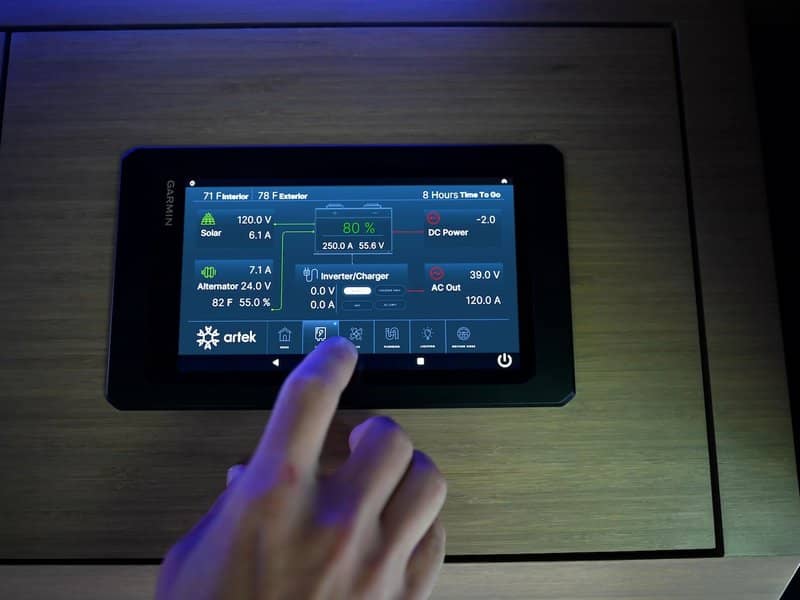
Justin Tyers • 16 August 2024
Garmin integration offers RVers fingertip control of everything
The latest deep dive of Garmin/Victron integration provides a degree of customer personalisation which may come as a surprise to RV system installers and van-builders alike. If not, it’ll certainly impress their customers. Victron’s CAN communication protocol working together with the Garmin RV OEM Control Integration provides the ability to create intuitive single-screen control and monitoring of all critical systems in a Recreational Vehicle and offer customer choices they didn’t know they had. Garmin’s proprietary logic control software can be accessed only by chosen integration partners – one of whom is Victron distributor Artek – based in Milwaukie, Oregon, USA. This week Sam Reiser (above) CEO of Artek tells us a bit about the new super powers this integration unleashes: “RV-C is a communications protocol used on board Recreational Vehicles based on the Controller Area Network bus. Using Vicron’s Cerbo GX MK2 allows for internal Victron CAN communication integration while also broadcasting RV-C to external devices. “A key advantage of this networking is the ability to combine systems rather than operate each one in isolation. “Because of the extensive communication within the ecosystem, we can now prompt actions from far more data triggers. For example, with our pet-safe mode we are able to set a thermostat to keep the cabin within a chosen temperature range using different systems – which might include hydronic heating, air conditioning and ventilation fans. “Furthermore, because we can see advanced Victron data we can trigger those methods of climate control based on the available energy. If the system detects AC ‘shore’ power, higher energy-consuming devices – such as air conditioning or electric heaters – can be initiated. “If a shore power disconnect is detected, higher-consumption devices can be shut down when the battery SOC % falls below a preset level; and instead the ventilation fans will be used for cooling …or the diesel/gas furnace will be initiated to provide heat. “As you can see, this deeper integration allows us to provide users with far more advanced choices, seamlessly. (Application Engineer Jordan Burgess programs a power system unique to customer needs.) “Integrating Victron systems with the Garmin Core System, takes a significant step forward in providing a unified, efficient, and user-friendly platform. It allows for visibility and control of all critical systems – including energy and water systems, heating, ventilation, and lighting – through a single-screen, eradicating the clutter of the traditional RV control panel. RV builder benefits “Elementum Adventure Vehicles , an Oregon-based OEM, adopted this Victron and Garmin solution because they wanted to build in a system which was quicker to install and easier to explain to the client! Not-so-incidentally the client gets a system which exceeds their expectation. “By incorporating all systems into a single screen – navigation, battery power data, tank levels, etc – their clients are able to use features intuitively and without explanation. The old ‘grand tours’ of system education about heating, cooling, and power consumption now presents itself in one convenient location. The client is impressed by that experience and the relationship between the client and builder is elevated. “A key component of this integration is the Cerbo GX MK2, which serves as the communication and monitoring hub for the Victron system. The MK2 includes two fully functional VE.Can ports, with VE.Can 1 being fully isolated. This CAN channel isolation provides the ability to use the RV-C protocol alongside a Lynx Smart BMS CAN protocol which requires its own VE.Can channel and protocol.” [You can investigate the differences between the Cerbo GX, and Mk 2 devices in this comparison table .] End User, and OEM benefits “ For End Users : User-Friendly Interface from a single screen (or app) provides comprehensive control over all RV systems. Victron and Garmin devices have a reputation for reliability in their own right and many sea-miles under their belts in the Marine market where they have long been integration-partners in navigation/power systems. Users have real-time visibility and control over all of their systems and the ability to combine data from multiple subsystems – resulting in peace of mind. For OEMs: Streamlined Integration: OEMs can offer a bundled-solution reducing the complexity and cost of system integration and build design. Reduced Lead Times: The ‘Garmin Core System’ – unique to Artek – provides an off-the-shelf solution significantly reducing lead times and therefore cost, getting products to market faster, cheaper. Tailor made solutions are also available. Enhanced Product Offering: OEMs can differentiate their builds by incorporating a single-screen solution capable of advanced monitoring and control, enhancing the value of their outfits whilst reducing the time needed to explain how such systems work. “ Our videographer, Jono , recently filmed a Victron/Garmin integration in Europe: If you’re in Europe you can visit the van featured in this video on the Victron Energy stand, Hall 13/C32, at the Caravan Salon Düsseldorf exhibition in Germany which runs between August 31 – Sept 8. Artek offers support to OEMs and dealers across North America through continued technological advancements. Their proprietary ‘Garmin Core System’ provides an easy to install off-the-shelf solution to the latest Garmin RV integration, and they can assist with development of bespoke integrations.
Justin Tyers • 09 August 2024
Invisible, silent power on small island
Green power installer Belios are hoping to make the Greek island of Antiparos generator-free, one installation at a time. The islands largest generator-free installation system to date has been installed in a stunning new house built on the island for Craig Cohon – ex blue chip global brand manager. Craig is the founder of walk it back – a collective working to connect individuals and organisations united by the urgent need to find ways of removing CO2 from the atmosphere. To highlight the crisis, Craig spent six months last year walking from London to Istanbul! – a distance of 4,250km – meeting city leaders, policy makers, CEOs, academics and activists …raising awareness and encouraging collaboration. Speaking before the walk Craig’s son Jonas said: It’s a massive undertaking- especially at his age. I hope his body doesn’t decompose on the way there. Let’s take a look at the low carbon footprint home Craig has just built on the beautiful island of Antiparos, Greece. Antiparos boasts Europe’s oldest stalactite, at 45m years. Accordingly construction and project management specialist Parostec design modern architecture which is inspired by the areas’ heritage and the built-environment for which Greece is famous. Craig asked them to design a ‘green’ house. The result is a stunning, uncluttered minimalist hillside home which can run independent of the grid despite boasting a powerful A/C and an electric vehicle charging point. Construction took two years and the property includes a rainwater harvest system. The grid power supply on Antiparos is not always reliable at peak times – on hot summer afternoons most Air Conditioning units will be switched on, putting strain on the grid. But the sun is reliable, and so is the PV power it can generate. The three-phase Energy Storage System in Craig’s house was installed by Belios who specialise in Solar, Off-grid and Energy Storage Systems (ESS). Vangelis Beligiannis , Mechanical Engineer at Belios is proud of what has been achieved and says: Vangelis Beligiannis designed and installed the system The difficult thing with the construction among the Greek islands is to integrate solar panels into the building scheme without changing the traditional character of the house – for which their visibility has to be reduced as much as possible. So in this house the solar panels are not visible from within the house or pool area. This is a very big achievement. We’re proud to have installed the first ESS with full backup capability on the island of both Antiparos and Paros at this power scale. Contractors and designers usually install a huge back up generator in case of grid failure – but things are changing and systems like this will be more popular in the future. The next greatest challenge was to make the house in Antiparos capable of supporting all loads with a solar back-up system – without using a generator. For years, new house construction on the island have had a generator back-up and this was not the best solution. Nobody can enjoy a seaview with a generator working… this system is the first in Antiparos to support a such a big house without a generator. The house is equipped with a three-phase ESS system which powers the air conditioning, EV charger, water pumps, the hot water heat-pumps and all other house appliances. Three Victron MultiPlus II 48/15000 each rated at 15kVA and configured for 3-phase supply are AC coupled to a Fronius Symo 20.0-3-M 20kW inverter. Thirty-four Longi 575W solar panels provide almost 20kWp. A smaller 1100W solar array is controlled by a SmartSolar MPPT 150/35 In the event of an extended grid failure which takes the batteries all the way to a low-voltage shutdown, this smaller array provides the safety net to wake them up again with no grid and no generator required. The battery system consists of four BYD LVS 16.0 towers giving a total of 64kWh capacity. The system’s communication centre is a Cerbo GX which sends data through MODBUS to the control centre of the house. It also provides real-time data, history and system programming access to an on-site user interface – a GX Touch 70 – and also provides communication access from anywhere in the world via Victron Energy’s free-to-use platform VRM (Victron Remote Management) enabling monitoring and engineering access. There is no backup generator. The biggest power-consuming devices are the Variable Refrigerant Volume air condition units which can demand up to 15kW. There’s also a 22 kW electric vehicle charging station. The house is used as a summer residence accommodating between 4 to 12 guests. Belios has been installing solar energy systems since 2010. In recent years their work has increasingly turned toward the ESS and Off-grid markets, which include substantial battery storage. In the early days demand was merely focused on PV panels – which can only make their contribution during the day, of course. Vangelis Beligiannis says : Our goal is to offer PV systems with back up capabilities and integrate the system during the building construction as smoothly as possible. Most of the recent PV installations in Greece include battery storage connected to the PV system – but only offer a PV point as a backup or a backup with a peak power supply equal to the PV inverter power. Our goal is to go a step further and offer systems which provide full back-up using the Victron ESS technology. This ESS systems has been programmed with the recently announced Dynamic ESS feature – an algorithm which automatically buys, sells or stores energy according to network’s changing buy/sell prices and the amortisation costs of harvesting solar energy. This will be a very welcome feature for the new net-billing contracts in Greece. Dynamic ESS will maximise payback on either fixed or non-fixed feed-in tariffs. Birds eye view
Justin Tyers • 12 July 2024
Mobile Medical Consulting Room
Accessing healthcare is harder if you live in a rural area, far away from a doctor’s surgery or medical centre. One solution is for the consulting room to come to you. Vanna Vans who have built their reputation with four-season camper vans have designed a mobile consulting room in which health professionals can carry out routine examinations, administer vaccines, and provide scheduled medical visits right to the patients doorstep – in any weather. Their research into mobile healthcare vehicles highlighted a number of ways to improve the experience for the healthcare user and practitioner alike: Ford Transit or Mercedes Sprinters are used as the platform vehicle because of their proven reliability whilst being manageable, easy to drive and easy to park. The Mobile Medical Units can be used all year round – Vanna Vans are located in West Fargo, North Dakota, US., where the temperatures can plummet to -40F/C – so they get an annual reminder about working in extremes of temperature. A Gree EcoCool 15k BTU 120v A/C unit which incorporates a heat pump to keep the van warm in the winter and cool in the summer. The selection of upholstery and construction material has been made to provide a professional, hygienic yet welcoming environment within the mobile clinic. There’s a chairlift for people with limited mobility, a desk, examination couch, and a power supply for a range of medical electronics – to be specified by the client – but which typically include Cool Cube Medical Coolers; and a Synexis Dry Hydrogen air filtration system . Medical records can be consulted and amended on location via the Ultimate Road Warrior VR2 LTE Wifi system which can pair with Starlink and has a VPN network option to be sure that all medical files are protected by encryption. There’s been a 40% increase in the availability of mobile medical care facilities in the US over the last five years and the passing of the MOBILE Healthcare Act in March 2023 provides access to federal grants which should enable the roll-out of mobile facilities at even greater scale in future. In the pursuit of maximum reliability the mobile off-grid power system has been built using Victron Energy components, and specified to ensure all-day power for lights, AC and heater, basic medical equipment, and the wheelchair lift, whilst clinics requiring larger power systems can elect to have a power system to match their needs. “It’s important to us that the clinics are able to customise their Mobile Medical Unit to suit their needs and budget.” says Vanna Co-Founder Jason Gilbraith . A typical Mobile Medical Unit includes a: ● MultiPlus Inverter/Charger 3000W 120V. These powerful true sine wave inverter/chargers are able to run even the most sensitive medical equipment. ● An MPPT SmartSolar Charge Controller (150/35) will harvest maximum power from the solar panels for battery storage ● The Cerbo GX is a communication centre which harmonises the systems’ power demand and storage; it also provides systems status data to users via a touch screen GX Touch 50 . The Cerbo GX will also make system data and programming available online to installation engineers via the free to use remote management platform VRM . Remote engineering provides medical staff with instant access to electronics expertise in the event of a problem. ● A Digital Multi Control 200/200A GX provides easy input-current setting which is so useful when connecting to a variety of AC power infrastructures at different locations along the route. ● Smart Battery Protect 65A – protects the batteries from being accidentally depleted by high-consumption non-essential loads. ● 2 x Lithionics Boss302 12V battery) ● 3 x 100 Watt Zamp Solar Panels ● American Power Systems 255A second alternator controlled by a Wakespeed WS500 Regulator – fully compatibility to Victron infrastructure. “We use Victron because we consider it to be the best in the industry in terms of reliability, durability, and quality,” says Ben Gleason , Co-Founder at Vanna Vans. “Vanna provides warranty and technical support to our customers, and we expect the power systems we install to perform at a high level for many, many years to come.” For a growing business like Vanna, Victron’s Remote Management Portal ( VRM ) is invaluable. “Having VRM means that if one of our mobile medical vans is up in Alaska eight years from now and is having trouble with the power system, they can just call us,” says Jason. “We’ll hop on their WiFi hotspot, access their system remotely from our computer, diagnose the issue, and resolve it, usually the same day. This is a game-changer for our clients because you don’t have to travel to us or plan ahead to bring it to us. VRM makes anything related to service and technical support a hundred times easier for the owner of the vehicle – and for us as a business.” Charging on the go… With solar panels installed on the roof and a secondary alternator installed under the hood a large lithium battery bank can be recharged using solar energy or alternator power — or both when travelling between appointments. Noisy generators will not need to run in quiet neighbourhoods. Aaron Hanson of Intelligent Controls – who are Vanna’s Victron distributor – says: “Making the transition from building recreational custom vans to manufacturing fleets of professional, commercial-grade vehicles is not easy. Vanna has developed the technical expertise of their team, strengthened their manufacturing capabilities, and earned the support of partners who can really believe in them. It’s exciting to watch Vanna take their business to a whole new level.” Looking ahead “There’s a huge and growing need for quality, accessible healthcare in rural America, and we’re excited about the potential for these vans to be deployed where they’re needed most.” says Ben; “We really wanted the interior of these vans to feel like a modern, dignified doctor’s office; a place that’s warm and inviting – somewhere you’d be happy to enter and want to return for your next visit. I believe we’ve achieved that.” Let’s take a look at the build process: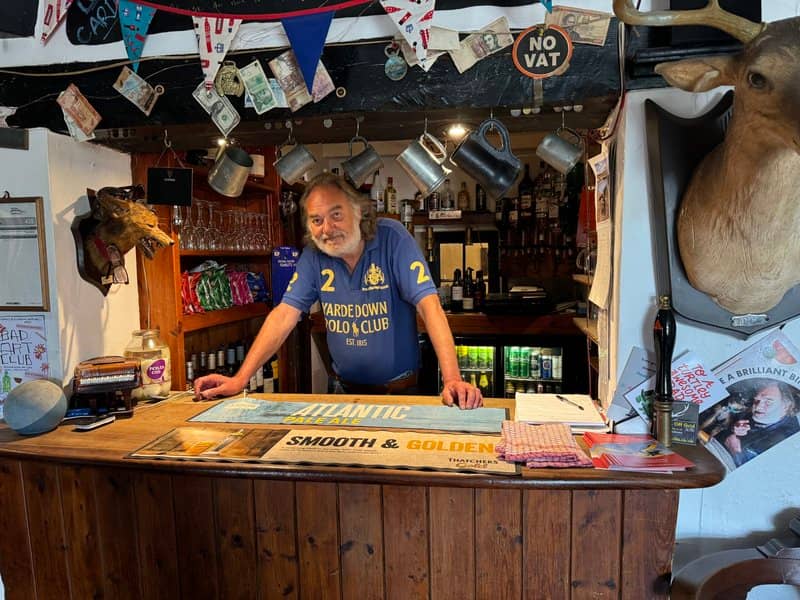
Justin Tyers • 05 July 2024
Candlelit pub adds electricity
When a customer orders a round of drinks at the 400 year old Poltimore Arms , Devon, England, and finds themselves unable to pay because the pub only takes cash, landlord Steve Cotten tells them: “Don’t worry about it, just pay me next time you come.” One of his customers – on a visit to the UK from New Zealand – didn’t have cash and confessed that he may never be back! “In that case, when you get back home find someone who needs £10 and give it to them .” Steve said. A month later a photo arrived by airmail from New Zealand showing the customer giving $100NZ to a homeless man. “If you can’t trust people,” Steve explains, “then there’s nothing left.” Rural Exmoor Google maps The remote Poltimore Arms sits high amongst the clouds deep within the Exmoor National Park. Visitors to the area usually find it by accident because it’s tucked away on the junction of three roads that don’t go anywhere. However once you have found it you will definitely be going back because there is no other pub like it in the whole of the UK. As soon as you walk in you’re at home chatting with complete strangers in a relaxed atmosphere, with no airs and graces. It doesn’t matter who you are or where you’re from. The Poltimore plays hosts to farm labourers, land owners, holiday makers, literary and art critics and, from time to time, members of the royal family. (Who never carry cash). The Poltimore has been welcoming guests for ‘alfresco’ or candlelit fireside drinks – with a rolling diary of food and music events – for four hundred years. Seventy years ago electricity was introduced when the pub got its first single-cylinder generator. During Steve Cotten’s 11 year tenure he’s been through 13 generators. “They don’t last long because they run all the time the pub has customers.” he says. An assortment of lead acid batteries have never coped well with the constant cycling and accidental deep discharges – so in the end it was just easier to keep the generator running. But the cost of fuel soared; initially it was £7000/annum ($9,000US). But recent changes to the ‘agricultural’ UK fuel duty escalated those costs for consumers like Steve to the point where it was unviable. A trial-run using a 3kVA inverter and lithium batteries a year ago was so successful that a 10kWp solar system, 20kWh lithium battery storage and 15kVA inverter have now been installed. The installation has brought the pub, in Steve’s words; “…out of the dark ages and placed it 25 years ahead of anyone else.” No more noise from the generator shed. Guaranteed electricity to the chillers and refrigerators. There’s hot water ‘on tap’; kitchen equipment can be powered for the pub’s themed food evenings – and there’s even a light in the Gents. Oh and – don’t worry – the candles are staying. The new off-grid 15kVA state-of-the-art solar energy installation was built by Off Grid LiFe who understand and specialise in off-grid energy installations covering the south west of the UK. This installation comprises: 15kVA MultiPlus-II Inverter/Charger is powerful enough for any of the pub’s outdoor events. SmartSolar MPPT RS 450V 200A solar charge controller harvests energy from the nearby ground mounted solar array with minimum cable losses. A Cerbo GX communication centre harmonises all devices, providing remote engineering access and many user features such as generator auto-start triggered by low-voltage or low-state of charge. The system can be interrogated by the GX Touch 50 user-interface display. Lynx Distributor – DC busbar with monitored fuses allows for neat installations. 4 x Dyness 5.12 kWh LiFePo4 lithium batteries. Lister petter 16kVA backup generator. 24 x JA solar panels of 420W each for a total output of 10.08kW mounted on seasonably adjustable ‘ Cornish Rocker ‘ frames. Using an allen key the south-facing panels can be angled to the sun’s zenith for optimal solar harvest – six or eight times a year, ideally. A 16 kVA backup generator guarantees energy security, summer and winter alike, and allows for mini-music festivals to take place providing power for lighting, amplifiers, and mobile catering equipment. Apart from that Steve isn’t expecting it to fire-up except during consecutive winter days of moorland fog. Off Grid LiFe installation engineers l-r Phil Waterton, Chris Scullard, Jack Waldron, Colin Ward Steve says there’s one thing about the new system that’s going to take him a while to get used to – hearing no noise, he keeps finding himself wandering out to the shed to find out why the generator has stopped …and then remembers that the reason it’s not running is because it doesn’t need to! Steve Cotten – a well-known local character – is particularly pleased with his outside lights which he illuminates during the day. Decadence. When I ask about his opening hours Steve says: “We’re always open! …and if there’s no one here just help yourself to drinks and leave the money behind the bar.”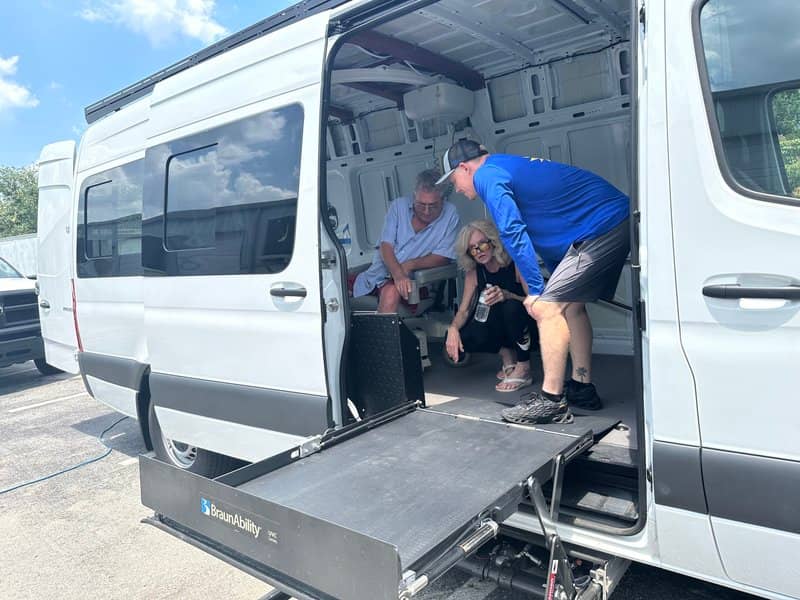
Justin Tyers • 26 June 2024
Maximum mobility RV fit-out
When Rick Berger was looking for an RV he could use, or van conversion he found plenty …but none of which actually suited his needs. Rick has ALS (Amyotrophic Lateral Sclerosis is known in some regions as Motor Neurone Disease MND) and has no mobility from the waist down. “Remember the ‘Ice bucket challenge’ of ten years ago?”, he asks “…well, that was to raise awareness of, and money for the ALS association “. Rick lives in Florida; he has grand children living in Colorado whom he plans to visit – and on the same tour he’ll be taking in The Grand Canyon and Niagara Falls. He’ll be travelling alone. When I ask him how far The Grand Canyon is from home, his echo device tells him it’s 2,284.6 miles. Rick has made some adaptations to his Mercedes-Benz Sprinter with a 170” wheelbase so that he can use it independently. It has a wheelchair lift on the passenger side; the driver seat can be raised or lowered – as can his wheelchair seat – so that he can transfer himself from one to the other. There is also a ceiling lift which allows him to get from his chair into the bed, and vice-versa. He’s afraid that his mobility devices will fail to work – in fact they both have, once each, owing to a mechanical failure. “It scares the hell out of me – but you have to live.” He says. There are production vans for people with access-limiting conditions and there are van-converters who will build those solutions into as-bought vans. But if you wish to stay in control – perhaps doing some of the work yourself, all of a sudden you discover that the companies offering bespoke services actually want to do it their way. One quote for completing the accommodation had $10,000 added to it because some of the work – fitting the mobility assistance devices – had already been done. Access equipment uses power – so Rick needs a cast-iron guarantee that power will always be there. Add to the mix that he has a hypersensitivity to temperature and wants to be able to use the air-con full-time if he chooses and you begin to appreciate that his power system is going to work hard …particularly as Rick prefers to stay off the beaten track rather than plugged in at an organised camp site. Many park up locations have anti-idling laws – so you can’t just leave the motor running. Neither does it work for him to check in at a hotel because American Disability Act compliant locations don’t have the equipment he needs. His RV is his hotel room on wheels. It took Rick a long time to find a mobile power installer who would truly work with him to design the power system for his needs. The company he eventually worked with was Mobile Solar Consulting who thrive on responding to clients’ needs – rather than installing the same as last time. The first requirement was that Rick needs all control to be accessible from his chair “in the range of 15″ to 30″ in height” he says. Matt Walker of Mobile Solar Consulting likes to learn how his customers plan to use their van or RV – and then design a customised power system which will do that for them – both for DIY installers nation-wide , and for those planning to visit the workshop in Jupiter, Florida, for an in-house installation by their team of experts. The resulting installation will be one-of-a-kind. Matt says he likes to install Victron Energy devices because they offer maximum flexibility. Choosing from an extensive list of models for power harvest, storage and conversion – all of which talk to each other – and being able to programme the functions of each allows limitless customisation. But as an installer your reputation is on the line, so it’s the reliability of the electronics which is paramount. The biggest power challenge of Rick’s installation to was ensure the AC unit could run ‘off grid’ – all day if necessary. In fact it can run for two days straight from his 10kWh battery storage – even if no energy is replaced from the 750Wp solar panels, or his dual alternator system. A 48V Nations Alternator capable of delivering a massive 100A has been included in the installation and is controlled by a Wakespeed regulator. You can read more about Victron/Wakespeed compatibility here . System Overview: Lithium Battery Smart – 2 x 200ah 24V in series for a 48V system Lynx Smart BMS – dedicated battery management Cerbo GX + Touch 70 – touch screen user interface and communication centre. Lynx Distribution Smart Battery Protect 220A – drops non-essential loads before the battery becomes depleted. Multiplus 48V/3000W Inverter – continuous reliable power covered by 5 year warranty SmartSolar MPPT 100/20 for 750W of Solar Panels – Bluetooth communication, Intelligent charger 2 x Orion DC-DC Converters 48-12/30A – for powering 12V loads like lighting and USB ports) 1 x Orion DC-DC Converter 48-12/9A dedicated to starter battery for worry free get me home engine start Wakespeed Regulator for Nations Alternator Ventilation Fans automated to turn on at high temperatures using Ruuvi Tag compatibility to trigger the relay on the Cerbo-GX to keep the installation cabinet cool. You can learn how to add Ruuvi Tags sensing here . Manual Transfer Switch installed as a failsafe, allowing the customer to bypass the electrical system and run directly off of shore power (grid energy) while performing maintenance. Hinged front to the electrical cabinet allows easy access for maintenance Looking back on the installation Matt notes some of the features: Larger Battery Bank than usual to ensure the Air Conditioner can run for multiple days without sun, shore power, or driving. Electrical cabinet height was made as short as possible (15”), inverter was mounted sideways, in order to accommodate the lowest possible bed height – required so Rick’s Bed Lift system can lift him into bed. Switch/Control Column (including GX Touch 70) was created near the wheelchair lift/passenger door, which is where Rick enters/exits the vehicle, allowing him system control from a convenient location and height. Smart Battery Protect used to prioritize loads, turning off the 48VDC air conditioner before the batteries are empty, whilst leaving essential loads on. This will notify any user that energy remaining is limited and it’s time to recharge! Secondary Alternator installed to recharge batteries quickly (up to 4kW charging takes the battery from 0% to 100% in 2.5 hours) 48V system was built to accommodate the massive amount of energy coming from the secondary alternator (we normally install new systems @ 24V) Energy dense Smart Lithium Batteries were used to fit the most energy storage into the smallest space, again with the goal of keeping the electrical cabinet’s height as short as possible for accommodating the lowered bed (as opposed to other battery models or brands) Screenshot Trickle charger installed for the starter batteries using Orion 48-12. The wheelchair lift has a parasitic drain on the starter battery. Now a jump start will never be needed! Nomadic Cooling’s X2 AC unit was mounted as far in the rear as possible to allow space in the front for the chair-to-bed ceiling lift. We normally use different air conditioners, but this unit flush-mounts on the interior, saving space for the bed lift system. Unaka’s HSLD Roof Rack made from 8020 Aluminium has been used to mount the solar panels. 750W of solar is installed on the roof, and there is an option to add 150W more later. Rick is planning to get the accommodation fitted out shortly so that he can start travelling. He’s promised to get back to us to let us know how it all goes.
Justin Tyers • 31 May 2024
Van Life Nomadic Workers
Charlie Low and Dale Comley planned to take a year off from their 9-5 jobs to go travelling. It turned out so well they won’t be going back. We knew that we wanted to live differently , says Charlie. We documented our van conversion – sharing the process online – and began receiving a lot of questions from other people who were doing the same. We realized there was a gap in the market; a lack of definitive, factual information based on data rather than opinions and individual experiences. Charlie’s and Dale’s backgrounds are in physics and engineering. With the hands-on experience they’d gained from their own van conversion they wrote The Van Conversion Bible – a comprehensive guide to achieving a bespoke van conversion. To their amazement, it became a bestseller, winning Writers’ Digest self-published book of the year. It was rewarding to see the value so many people found in the book. W e noticed that where people struggled most with their project was the electrical system. Most aspects of a van conversion can be figured out, but the electrical system can be complex for anyone who doesn’t come from a technical background. Breakfast in America On the road one day, they struck on the idea of launching an electrical design service for mobile and off-grid applications. Charlie says: We saw people repeating the same mistakes over and over again – yet there aren’t any companies out there helping individual van converters with their power system. Starting a business we could run whilst traveling, climbing and connecting with people around the world felt like a natural next step for us. Bespoke power systems for non-technical folk The business they started – Nohma – now has engineers around the world who have helped DIYers design off-grid electrical systems for their van, RV, or tiny home. The process starts with a targeted questionnaire. Using a custom-built algorithm of over 200 parameters and calculations, Nohma engineers design the ideal system for each unique customer. Charlie Low Dale says: We love Victron products because you don’t have one or two different inverters to choose from; you’ve got many different sizes available of every product. That means we never have to over-spec something; we can perfectly tailor a system to our customer’s needs. Our software draws from the full list of components available so there are probably tens if not hundreds of thousands of combinations available to us. Victron’s product ecosystem is really crucial to our design process. And because of its build-quality, we know it will last. After some fine-tuning with the customer for final design, Nohma works with its distribution partners around the world to dispatch all the necessary components directly to the customer’s door – including every wire and lug nut. Charlie says: We provide a wiring diagram and installation guide specific to their system so that the customer can safely install it step-by-step, not unlike a piece of IKEA furniture. And when questions arise during or after the installation, an engineer is on hand to help. Being a nomadic business means Nohma can bring other work-nomads on board wherever they are in the world. That provides access to highly qualified personnel regardless of location. With two astrophysicists, and CV’s which document experience working in blue-chip companies like Rolls Royce and Jaguar Land Rover, they feel they have the best team in the world. Dale says: Most of them work remotely using the same power systems they design for customers each day. This allows for an organic way of working, learning, and assisting others. Currently we have 14 team members, spread across five time zones – all travelling in camper vans or living in off-grid tiny homes. Living the life Dale and Charlie love following the adventures of some of their customers and hearing about the new lives they have achieved like Bobby who is driving from the UK to Australia, and Jonas and Lore, who converted a bus into a rolling hotel . Knowing that we’ve played a part in making these pursuits possible feels really special. Bobby is driving to Australia Charlie and Dale were interested in learning more about their prospective customers’ knowledge base. At the end of the 30-question system-design tool, they asked four more questions related to inverter sizing, expected power consumption, battery capacity and solar production. Only 2 people out of 332 correctly answered those four fundamental questions. Dale: Our goal is to make off-grid energy simple and, dare I say, fun, so we really wanted to remove the need for people to make hundreds of individual calculations on their own at the risk of making ‘small’ mistakes that sometimes have big ramifications. Nohma offers their design services at no additional charge, removing the monetary barrier and making professional system design accessible to anyone. North America The US RV market differs significantly from, say, Europe. Dale: For the US market we essentially had to create a new version of our tool to cover systems with much higher power demands. In the UK, we rarely spec a system higher than 3kVA, whereas one of the first US systems we worked on was 2x 10kVA Quattros in parallel! Dale and Charlie spent six months in the US road-tripping from Maine all the way to California. As they zig-zagged across America, they chatted to RVers about how they used their vans, in order to understand the local market. We visited 22 states in total, so we had a really broad view of the different ways people travel, from going fully off-grid on Bureau of Land Management land ( open spaces) to Class A RVs hooked up at managed campgrounds. Nomadic workers Charlie and Dale The North American version of The Van Conversion Bible can be found here . Check out Nohma’s website for helpful resources on everything from a deep dive on lithium batteries to how to live and work as a digital nomad .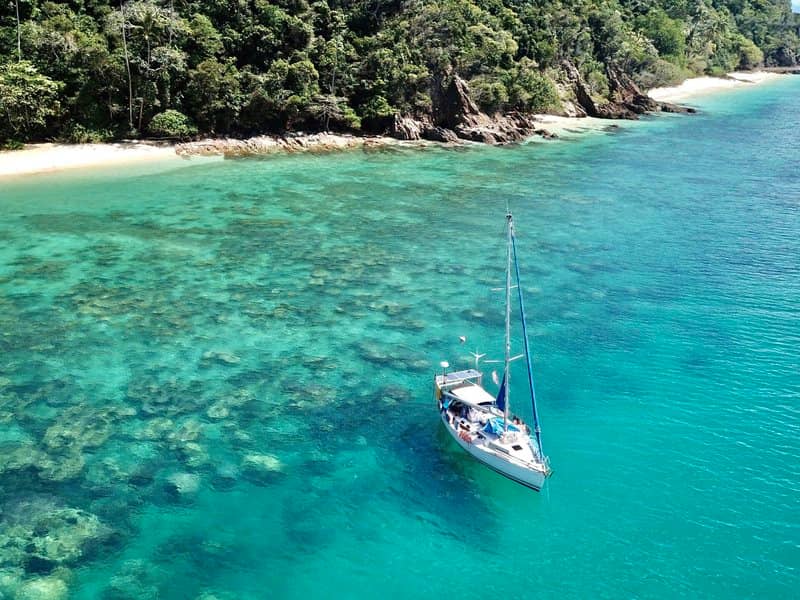
Justin Tyers • 24 May 2024
Endless voyage has more power to keep going
Back in 1975 Blacksmith Gangerl Clemens started building himself a 15 metre steel boat. Twelve years later he set off on a voyage that would never end. He’s still sailing today… There have been many achievements and many dramas during his 100,000 mile adventure: Gangerl has visited a hundred countries – he was the first yachtsman to visit the pacific island of Nanumea; he has been imprisoned; faced pirates; been robbed; dived among dangerous moray eels – there are more than 60 warships lying on the ocean floor in Chuuk Lagoon – and he has survived Dengue fever. Ashore, he and his backpack have trekked across a hundred-thousand miles. Gangerl Clemens The boat Gangerl built was eventually lost in the Seychelles. These day he sails a 35′ Dufour. As he approaches his 82nd birthday, Gangerl shows no sign of slowing down. His main concern – when marine energy system and lithium battery specialists GS-Power caught up with him – was that his electronics were in a dangerous condition – threatening the continuity of his extended voyage. To facilitate his continuing adventure (which you can follow on Gangerl’s webpage ) with a more reliable and safer power system he asked GS-Power to upgrade his vessel’s energy system with the latest equipment in energy management – including LiFePO4 battery technology. This would allow him to be more self-sufficient, reduce the time he spends on maintenance, and to ensure that his beloved yacht continues to plough a furrow through the ocean waves with safety and comfort. A Marine Transformation GS-Power’s marine expertise has revolutionised the power system on board. The original electronic devices have been seamlessly integrated with the new power management system resulting a new level of performance and reliability. The installation was carried out on location in Malaysia at the Dalac Marine Engineering & Services SB. These days, a Victron Cerbo GX is Gangerl’s central monitoring device – the nerve centre of his vessel. It provides real-time insights into his power consumption, harvest, and voltage levels which can be read from a neat touch screen display and user-interface – the GX Touch 50 – or straight from a smart phone. Using real-time and historic information it becomes simple to manage power harvest, storage and usage. Guido Seitz, founder of GS-Power introduces Gangerl to his new controls. Offshore Power Harvesting Gangerl’s boat now has six bifacial solar panels of various sizes, each connected to an individual SmartSolar MPPT 100/20 charge controller. This configuration guarantees a power generation capacity of 800Wp, ensuring efficient energy harvest even with reduced sunlight or in the shadow-mottled conditions typical aboard a sailing yacht. An existing wind turbine with a 12V output has been integrated into the new energy system. Gangerl’s boat now has a robust, energy-dense battery bank consisting of four 12.8V 100Ah Lithium SuperPack LiFePO4 batteries. A Victron MultiPlus-II 12/3000/120-32 Inverter/Charger converts 12VDC to 230VAC, providing a power supply for his domestic and hobby equipment. Gangerl cooks with electricity, is a keen diver, video maker, and drone photographer. When motoring, the 12V system is charged by an alternator via his starter battery. An Orion-Tr Smart DC-DC Charger Isolated ensures the charging process is ultra-reliable and delivers controlled, isolated charging. The Orion protects the alternator from over-heating which results from overwork. When the engine is stopped, the Orion will automatically detect that new circumstance and protect the starter battery from accidental depletion – a mistake common in manual systems when the user forgets to isolate the starter battery after charging and leaves both ‘starter’ and ‘house’ battery banks in parallel, supplying power for domestic loads. Experienced technician Denis gets to grips with the wiring. What are the highlights of the new installation? Real-time Monitoring with Cerbo GX: The Cerbo GX with its GX Touch 50 screen plays a pivotal rôle in Gangerl’s power journey. Offering visual data and real-time monitoring, it simplifies the task of tracking power consumption and voltage levels, allowing Gangerl to focus on his true passions—diving, adventure, and exploration. Enhanced Connectivity: The Cerbo GX harmonizes Victron Energy’s electronic devices yet integrates with third-party devices, presenting a unified system overview. This enhanced connectivity ensures a comprehensive understanding of the vessel’s systems, from navigation to power management. Lithium chemistry’s low internal resistance allows fast re-charging, light weight, small size, and deep discharging …you can use virtually all the battery capacity between charges. Systems Reliability – worry free With GS-Power’s meticulous installation and Victron’s advanced peripherals, Gangerl’s vessel has undergone a transformation. Now, as he sails through the seas he does so safe in the knowledge he has a reliable and efficient power system. It’s a synergy between technology and adventure. Gangerl is the author of several books and has just finished taking part in a film documentary which tells the story of the last forty years of an extraordinary life. Listen out for more news and follow Gangerl on his Instagram channel: @gangerlclemens Gangerl is currently sailing in Indonesia. VictronConnect – instant power readout straight to your phone. All Pictures provided by Rainier Ramisch, Styx Media GmbH
Justin Tyers • 17 May 2024
Brewing from nature
Agnieszka Łopata has a passion for brewing. She began home-brewing in 2009, won a Master Brewer award, completed a university course in brewing, and became a professional brewer in 2013. The craft brewery she opened with business partner Andrzej Czech – URSA MAIOR – is located in Uherce Mineralne in the picturesque Bieszczady region of Poland, and has established itself as a prominent craft brewery using innovative and traditional ingredients. Their range includes organic beers made with wild herbs for bittering, in place of the more widely used hops. URSA MAIOR is committed to low carbon production, minimum waste, and maximum use of solar power during the brewing of its five hundred thousand litre annual output. The brewery has a solar array of almost 40kWp and stores energy into a Pylontech lithium battery bank which has a capacity of 100kWh. ENERP Installer Bartłomiej Choroszczyński with brewer Andrzej Czech The system was installed by Enerp – who specialise in static solar-based energy installations for commercial and domestic applications. Enerp had already provided wildlife cameraman Andrzej Czech with an off grid energy system for his cabin deep in the forest. Andrzej was so impressed that he made the decision to invest in green energy for the brewery. 3-phase AC is required to power the industrial processes such as heating the mash water and controlling the fermentation temperature. Three Victron Quattros each rated at 15kVA and configured for 3-phase supply are AC coupled to two Fronius Symo 20.0-3-M 20kW inverters. In this arrangement, the Quattro’s ‘Limit feed-in’ ability controls the Fronius Inverters over Modbus TCP integration – preventing excess power from being sent to the grid in accordance with the export limit. Victron Remote Management provides real-time and historic data. Password protected access to the settings is available from anywhere world. Data communication between all cross-manufacture devices is enabled by a Cerbo GX which also uploads real time data to Victron Energy’s free-to-use remote management platform VRM . VRM provides engineering access to the system so that its behaviour can be observed, and settings can be modified and tweaked remotely. One of the greatest benefits of commercial Energy Storage Systems (ESS) – apart, obviously, from the reduced cost per unit of energy! – is the security of having an uninterruptible power supply. When goods or consumables are being manufactured, a grid failure at just the wrong moment can be extremely costly in terms of spoiled raw materials, damaged machinery and lost labour costs. There have been two grid failures since this installation was completed – neither had the slightest impact on the brewing process. Energy in a box The cost of grid energy and a desire for energy security is driving interest in ownership of private 3-phase solar energy installations for businesses. For companies with limited internal space, and for those with near-continuous production who cannot contemplate days of on-premises rewiring, containerised power is the answer. Bartłomiej Choroszczyński from Enerp says: For us, containerised energy systems are the right way to help companies with energy transformation within our dynamically changing energy market. Now every company needs renewables to balance their costs. Using energy storage systems allows for increasing independence from the grid. Peak shaving For many growing businesses who use a lot of energy during certain industrial processes – but only for a limited period of time, the ability to cover those peak power demands by adding power from their own battery storage on top of the grid power allows their company to continue trading without upgrading a limited grid power supply. The cost of upgrade can be huge; sometimes, owing to infrastructure limitations, it won’t even be possible. Power Assist is a feature unique to Victron Energy. Whenever energy demand from the AC source (grid or generator) goes above a predetermined current level, the Inverter/charger will add battery power to the AC source to meet the high demand without exceeding the grid (generator) limit. Successful businesses soon outgrow their initial grid connection. Energy Storage Systems meet their expanding demand for energy – allowing the business to continue to grow secure in the knowledge that they will have sufficient energy capacity to meet high-consumption factory processes. Containerised ESS – see it at Poland’s Battery Forum Trade Fair Enerp have built a 20 foot open door energy container for customer demonstration and for use at public exhibitions. Its 3-phase AC output is provided by 6 x Quattro 15 kVA Inverter/Chargers drawing from a 200 kWh Pylontech US5000 battery bank. Visitors will see an EV plugged into a Victron EV charging station NS. The unit is capable of running huge loads and offers both AC and DC distribution. Bartłomiej says : We have an actual installation using one of these containers at a company called CONCEPT – which is general contractor. We travel with a 135kVA model to promote this kind of solution at trade fairs in Poland. It is configured to work with a combustion generator and solar/wind installations and is designed to provide peak shaving, renewables balancing and to provide backup power for the company. Enerp will be present at Battery Forum , which takes place on 22 May, exhibiting their commercial ESS built using Victron Energy core devices. You can find them on stand B2.23
Justin Tyers • 10 May 2024
Unknown Spain – Eco holidays in tranquil woodland
In a climate suited to the cultivation of grapes for fine wine and nestled deep in the 350 square kilometres of the wooded G avarres massif , in Spain, you’ll find Can Font de Muntanya . Originally a farm, the property has been tastefully restored over the last ten years to make the most of its timber and stone – whilst the addition of huge glazing units show-off the dramatic hill-top views. Can Font de Muntanya is a family-run resort of seven suites, a swimming pool, and a commitment to eco-tourism with no compromise. It offers quiet breaks; outdoor activities – such as hiking, cycling and horse riding; or off-road adventure on personal 4×4’s. When the sun goes down leaving tranquility among these Spanish hills, it’s time to sample local wine and take a seat in the open-air restaurant which offers superlative cuisine, made from organic home-grown ingredients. Although the resort is so remote there is no compromise in convenience. Can Font de Muntanya is self sufficient in water – drawn from ancient wells; firewood – fallen from many hectares of woodland – provides heating, and all accommodation suites boast the electric devices you would expect. Off-Grid reliability The off-grid site is self-sufficient in electricity having recently installed a state-of-the-art power plant. Augmenting an existing solar/lead-acid energy system which was unable to keep up with the power demand, the enlarged and improved supply now has an additional seventy-two 580W panels. The power harvest, when added to the existing thirty-six solar panels offers a total of 52.3 kWp. Solar energy is either consumed immediately or stored in the ZYC Energy battery bank which has a capacity 153kWh. There are thirty rack-mounted battery modules rated at 5.12kWh each. (Compatibility between Victron Energy devices and ZYC is explained in these support pages .) The three-phase power supply uses a Fronius Symo Advanced 20 kW SnapINverter and a second 8kW model, both of which are AC coupled to three Victron Quattro 48/10000 Inverter/Chargers. The Quattro’s ‘Frequency shifting’ ability automatically controls the frequency of the Fronius Inverter to prevent over-charging the battery. The system also uses a SmartSolar MPPT RS 450/200 and a SmartSolar MPPT RS 450/100 Solar Charge Controller to charge the battery directly from the panels. These high-power solar chargers are ideal for the large series-connected solar arrays often found in commercial off-grid power supplies. Remote Management The system can be monitored and managed remotely by the installing engineers: A Cerbo GX ensures that all installed devices can communicate – across their different manufacture-stables – and it also uploads real-time information to the free-to-use Victron Remote Management platform VRM . This allows engineers to answer questions and make changes without even visiting site – particularly useful for customer-facing businesses who need solutions immediately, regardless of their remote location. On sunny days the system is easily able to provide the (up to) 150kWh of energy the site consumes daily, but during periods of dull or cloudy weather when the battery falls below a pre-determined % state of charge, a 90kVA generator will be started automatically. The generator meets fluctuating power demand whilst all excess power generated is used to charge the batteries up to the predetermined % State of Charge – at which point the generator is automatically shut down. From the following graph available on VRM we can see that about half the resort’s daily power requirement is met from the ZYC battery bank. Comparing the recent and more historic pie-graphs of this recently installed system, dependence on the generator appears to have been reduced by up to 90%. Speaking on their website, Laura says: Can Font de Muntanya is a very special project for us, and we have been working on this reality for ten years since the whole family (Judith, Gina, Pol, Laura and Marc) moved to live here. From the very first moment we were guided here, we committed ourselves to breathing life back into this space, where centuries ago it was a working farm. Here, man and nature have coexisted harmoniously for thousands of years. It’s an environment rich in forest species which has supported charcoal-burners and the world famous cork-production. Today the Gavarres is an unspoilt area of great scenic beauty that has been recognised as an Area of Natural Interest in order to preserve it and so that we can continue to enjoy it enthusiastically but always respectfully. We hope to see you soon in our home, in Can Font de Muntanya.
Justin Tyers • 02 May 2024
RV enables pedal adventures
This week let’s hear from Nebraska, USA based cyclists Russel and Kim Hilliard who turned their dream camper into a reality allowing them to take their hobby further-afield and also to relax at each day’s end in their ideal mobile environment. Over to Russell… Outdoor adventures My wife Kim and I are avid road cyclists. We usually get in about 2500 outside miles per year most of it in Nebraska where we live and also Colorado. We decided a couple of years ago that it would be nice to have some type of a camper to use to be able to extend our bicycle trips beyond day trips. We began looking into campers but we didn’t like how cheaply they were made. Also we didn’t have a vehicle to tow the camper and so that would mean buying an expensive truck. We looked at a school bus conversion but ultimately decided on an ambulance conversion. After all we are both in the medical field and know the quality of these vehicles and liked the fact that they are usually well-maintained. We spent about 4 months looking for just the right vehicle and ultimately purchased a Freightliner medium-duty ambulance from the fire department in Chambersburg Pennsylvania. This is the mother of all ambulances. It was a 2014 model and had just 78,000 miles on it. I was discussing this project with one of my patients who agreed to fly out and drive it back to us here in Nebraska. The Freightliner today First moves… Our first order of business was replacing all 6 tires, balancing the wheels and checking alignment. We also had the brakes inspected. Next was a trip to Cummins to have the engine serviced. We had Cummins increase both the horse power and torque using software and without invalidating warranties. They also removed the electronic speed governor of 75mph. The Allison transmission on this vehicle was a 5 speed but it has a 6 th gear that was locked out. There is a company that reprograms the transmission control module making the 6 th gear available improving fuel consumption. When it came to the electrical system we scoured the internet and found that many people were using equipment from a Dutch company called Victron Energy. A quick internet search and we discovered that there was a Victron Energy ambassador by the name of Marc Stevens whose company Off-Grid Solutions is located in Chadron, Nebraska – virtually at our back door! We set up the first of multiple Zoom meetings with Marc to discuss our goals for the vehicle which included: A cohesive electrical system where all the components play well with each other A means of harnessing the energy from the 320 amp alternator that comes with the ambulance. Energy efficient heating and cooling of the vehicle. We didn’t want to use any of the rooftop traditional units found on most RVs. As much solar on top of the vehicle as possible. Battery storage to allow us to camp barefoot for a couple of days even if cloudy. Robust high speed internet access even when camping remotely. Remote access to the electrical system from computer or phone. Bringing it all together Marc and I worked for about 3 months on the design of the system. We would have Zoom meetings and then swap email schematics and design ideas back and forth. Here’s the final design. Once the design was completed Marc placed the order for the equipment and I drove to his place in the ambulance to pick it all up. You can put a lot of stuff in an ambulance! I have a background in electrical engineering and am a ham radio enthusiast. I’m also pretty good at using AutoCAD. While waiting on the equipment to come in I mocked up the electrical cabinet and battery compartment for the ambulance and produced an AutoCAD rendering of what it would look like. Next I started installing the devices and making the connections. Everything worked as planned with the exception of the Buck/Boost which had some sort of a fault from the factory. Marc replaced this and we were good to go. What’s on board? The Freightliner installation consists of: · 10 kWh of Lithium Battery Smart at 24V · Lynx Smart BMS This is a Battery Management System especially for Victron Lithium · Lynx Distributor DC busbar distribution and termination with monitored fuses · 900W of PV Modules · 150/60 MPPT SmartSolar MPPT Charge Controller Maximises and manages Solar Energy harvest · 5kVA Quattro Inverter/Charger 24V supplies AC power to domestic equipment · 100A Buck Boost for Alternator Charging · 24V to 12V Orion DC-DC Converter allows 12V devices to run straight from the 24V battery storage · Blue Smart IP67 12V Chassis Battery Charger rugged environment battery charging from gird. · 1000A Smart Shunt keeps account of power in/power out to provide State of Charge (and so much more…) · BatteryProtect 65A Ensures that the starter battery will never be accidentally depleted by domestic power use We next shipped the ambulance off to Colorado Adventure Vans in Golden Colorado. John and his staff worked closely with Kim and I to design the interior of our dreams including: Isotherm marine fridge/freezer Queen-sized fold-out bed. Stand up shower which also has access from the outside. Wrappon Green toilet , we didn’t want to hassle with black water tanks Diesel water heater that also heats the ambulance Pioneer mini-split for heating and cooling Induction cooker for heating soups, etc. Installation of Star Link router Corian counter tops This is a 3 season camper. 2023 was our first full season with it. We spent 24 days camping and really enjoyed it. A few other items to note. We replaced the front seats with new units. We also replaced the front center console with one that was custom made by Colorado Adventure Vans with the same Corian that was used in the back. We left that majority of the ambulance wiring intact. Lights, sirens, PA system all work. We have 2 One Up bicycle racks mounted vertically on the back. I designed and built an 80/20 aluminum extrusion roof rack for the ambulance. This holds our solar panels, awning and Star Link antenna. What next? Victron Ambassador Marc Stevens told me separately how impressed he was with Russell’s wire management and the placement of the equipment – which figures as in addition to Russell’s health career he has a Bachelors degree in electrical engineering! Rusty and his family loved the Victron system so much that we are working on another design for their home which includes two EV chargers as part of the load!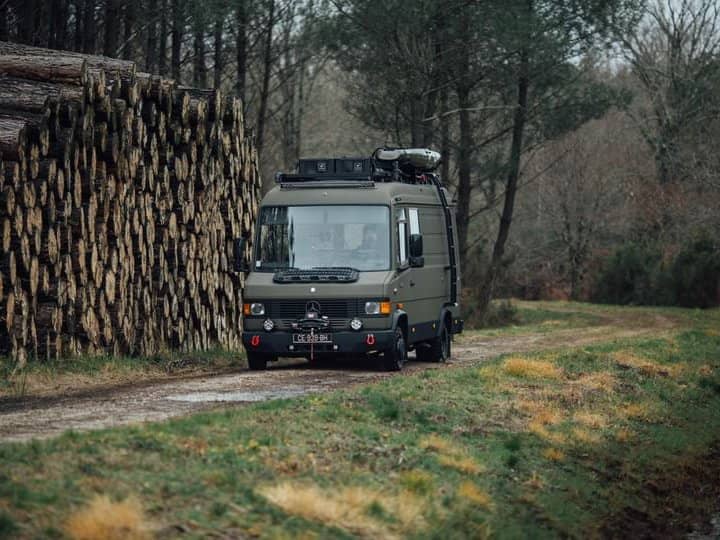
Justin Tyers • 12 April 2024
Master craftsmen’s two-year Mercedes conversion
Are you feeling uninspired by factory-produced recreational vehicles? Take a look at this. Two years of craftsmanship has resulted in a truly unique RV. The vehicle – a thirty-year old Mercedes 508D – had just 20,000 kilometres on the clock when the owner bought it for six-thousand euros (that’s a bit over six-thousand US dollars). In its previous life the Mercedes truck was used as a military ambulance in Germany. The long transformation to a luxuriously accommodated exploration vehicle was undertaken by specialist van designer/builders Van Helping , based in Bordeaux, France who – as you might have guessed – are no ordinary van converters. Company founder Florentin Millet together with his colleague Guillaume have a passion for both creative design and cabinet making – the noble end of the woodworking industry. It’s not just the quality of their work which sets Van Helping apart; because of the nature of their work they can’t give their customers a price. Nor a completion date. For that reason their customers are unusual, too. To begin with the structural work, the Mercedes chassis was restored with some welding; the body work needed tidying and the shell paint was replaced by Raptor coating – which is extremely hard wearing and won’t scratch …or, not very easily. The vehicle has six wheels – four on the rear axle – which were replaced with larger 18.5 inch wheels giving it a bit more ground clearance. The tyres were replaced with all terrain grips so that the 80 HP vehicle can take some pretty challenging surfaces in its stride as it rolls along on its planned world tour. And speaking of rugged environments – the accommodation is protected by cork/hemp insulation in the walls, roof and underfoot to ensure maximum comfort when outside temperatures plummet. It’s a luxury designer apartment with no near neighbours. Mobile Power System The immaculate power installation is housed behind a glass panel elevating it to become part of the designer schematic. Everything has been provided – energy harvest, storage and supply at 12VDC and at both 230 and 110VAC. The system can be monitored and controlled from anywhere in the world. The power installation comprises: Lithium Battery Smart 400Ah – Two 12V 200Ah Lithium batteries. Long life, light, energy dense and with 92% efficiency – most of the energy generated by panels or alternator actually end up in the battery. Lynx Smart BMS 500 – a battery management system especially controlled and efficient charging of Victron lithium batteries Inverter Smart Compact 2000VA provides on board domestic AC Autotransformer this 230V/110V transformer allows the user to ‘plug in’ whilst in North America. Lynx Distributor offers monitored-fuse busbars and allows tidy cable termination SmartSolar Charge Controller MPPT 100-30 for fixed solar panels power harvest SmartSolar Charge Controller MPPT 75-15 used for the vehicles folding solar panels Orion Smart DC-DC converter charges the batteries and protects the (intelligent) alternator Smart Battery Protect worry-free protection of the starter battery agianst accidental depletion – ensuring it will always have sufficient power to crank the engine. Cerbo GX and GX Touch 50 communication centre and touch screen device provide user interface for reading real time data and programming. GX LTE 4G Cellular Modem – 4G (also 2G and 3G) data communication reports to Victron Remote Management VRM platform allowing interrogation from anywhere in the world. It also provides Geo fencing – so you know when your van is on the move if it shouldn’t be. GX GSM Cellular Modem – for use with 2G and 3G networks although this communication device has been superseded by the GX LTE 4G (above) it is needed to connect to the cellular network in some areas of the world. What is all this power needed for? Well, there’s a Thermobox Evo Confort rated at 2500W which provides almost instant hot water, and space heating. There’s a Ceramic Hob, an electric oven, an extraction hood and a refrigerator – there are also pumps, lighting, a 4G router and satellite TV. Top Quality everywhere you look Whilst it’s great to know that life on board is supported by reliable devices to meet every need, it’s the materials and furnishings which catch the eye – and the way in which they have been used in this outstanding build. Guillaume designed the furniture and fittings which are made of plywood covered with a Fenix laminate . The walls and ceilings are dressed with yachting deck-effect plywood of Iroko and Rubber strip. Incidental wood strips of differing lengths applied to the walls – reminiscent of wind chimes (to the writer’s mind) – are a good example of the brave ideas which result in a stand-out feature. Fretwork, cupboard cut-outs, colour choice – nothing is as you expect, everything just works. No matter where you park, your overnight accommodation will be first class. If you’d like to discover more mobile energy systems and learn how they can help you work and play take a look at our Automotive brochure. More RV installations can be found in previous stories on our RV Market page.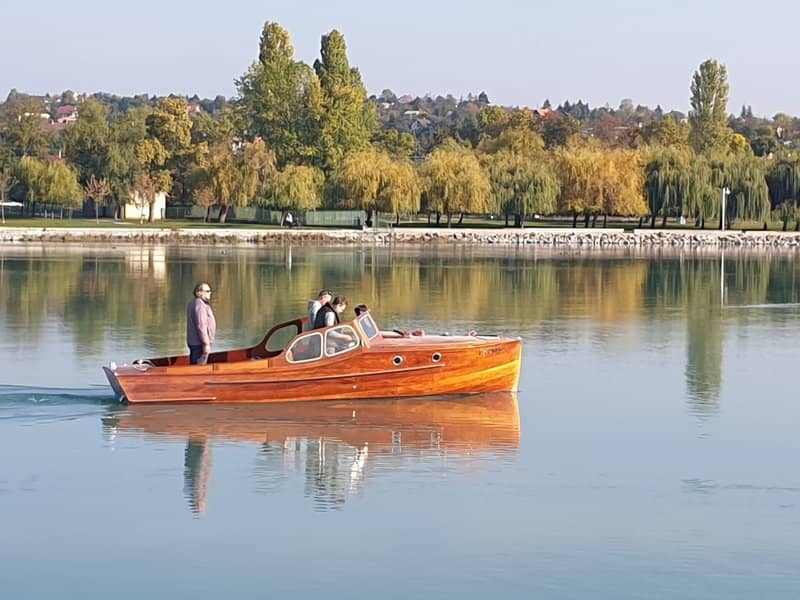
Justin Tyers • 05 April 2024
Silent cruising
Is it possible to improve a classic Petterson ‘Gentleman’s Launch’ built in Sweden in 1938? It seems it is. As part of the restoration of one example of these craft, new owner Zsolt Szabó has fitted her with a state of the art electric motor and a lithium battery bank which allows her to glide silently over the regulated waters of Lake Balaton where navigation is only allowed by non-polluting craft. At the time of purchase the seven-metre launch was fitted with an old 43kW Blade 4900 diesel engine. The shaft was out of alignment causing excessive noise and vibration, and the discomfort was exacerbated by engine fumes. Electric Propulsion The new electric propulsion unit is a Krautler WAd 15kW 48V 370A which weighs just 76kg and is capable of propelling a craft of up to six tons displacement. Zsolt’s launch displaces just one ton – allowing it to be easily driven to her 8 knots maximum hull speed. At a more sedate cruising speed of 4.7 knots the vessel has a range of 65 nautical miles. It’s neat that cooling water for the new electric motor still leaves the vessel via its original exhaust pipe. The main contractor for the project was Budapest-based yacht broker and electric boat specialist Power and Sail working in partner ship with boatbuilders Kormos Yacht Service who repaired the woodwork and made new fittings around the engine bay. The electric propulsion system was installed by Sturm und Drang. Power Train Energy for propulsion is stored in 8 x LiFePO4 Smart 12,8/200Ah batteries. Victron batteries are available in a number of formats and dimensions; the batteries chosen for this installation – configured into a large bank, close to the new motor – fit into the original engine compartment like a glove! The MultiPlus-II 48/3000 Inverter/Charger has been installed to allow the use of domestic appliances on board and also provides battery charging from AC shore power. Berthed at her usual marina there is a 16A power supply – whilst elsewhere on the lake, shore power is limited to 6A. Those varying limitations present no problems for the MultiPlus II – the settings of which can easily be changed to limit the current drawn from the shore supply, avoiding annoying fuse-tripping. More than that, if an on-board device is turned on which draws more than 6A whilst connected to shore power, the MultiPlus II will automatically provide the power shortfall straight from the battery bank, allowing the owner to enjoy using whatever appliances he has on board. When the power hungry device is turned off, battery charging resumes using all available power up to 6A …or 16A …or indeed up to 35A – which is the maximum battery-charging current for the chosen model. Battery charging is controlled using a Lynx Smart BMS – a battery management system specifically for Victron lithium batteries. The BMS is part of the Lynx Distributor system of components based around fused busbars offering modular extension …making for really tidy installations. Also on board there is a Cerbo GX communication centre which provides data communication between all connected devices. Real time system data is presented to the skipper via a GX Touch 70 …a touch-screen user-interface. An Orion Tr 48/12 DC-DC converter, and an Orion Tr 12/24 DC-DC have been fitted. The Orion devices installed on board operate as power supplies which allow navigational equipment rated at 12V, and at 24V to be run straight from the 48V battery installation. In combustion engined installations Orion devices are often employed as battery chargers to protect the alternator from overload – but here they are used to provide a constant voltage to navigation equipment – regardless of the load placed on the battery bank. The Orion supply voltage is user-configurable between 10V and 15V – for the 12V output models and between 20V and 30V – for the 24V output models. By the way, you can explore the capabilities of any Victron Energy device before you own it by downloading the VictronConnect app and searching for ‘Demo Library’ in the menu. Power and Sail’s manager Tamás Lőrincze says his company has been involved with the renovation and electric-conversion of around 60 propulsion systems. Our main marine market is lake Balaton where regulation allows navigation only by electric propulsion, wind, or by hand. There are many, many boats on the lake that basically run on 100% Victron systems. Tamás suggests we run a series of blogs under the heading Victron boats of Balaton! Power and Sail will soon be carrying out an electric conversion for a motorboat measuring over 40ft on deck. You can explore more marine energy applications of all sizes in the Victron Marine Brochure.
Justin Tyers • 28 March 2024
Energy security for schools in Ukraine
The ongoing attacks on utilities in Ukraine result in chaos and difficulties most of us can only imagine. The Ukrainian people continue to show their strength – repairing the damage and re-building systems with more resilience. Let’s hear about just one of those endeavours. The Head of Distribution for solar energy specialist MBI Development is Mykola Hoi. Using his experience of solar energy harvest, storage and supply he formed the charity Energy of Nature to provide educational establishments and emergency services with reliable power so that their work can continue – no matter what. The independent energy systems he designs for schools and kindergarten are carefully researched according to their need – with the intention that they remain suitable for many years ahead. For emergency responders, he has developed compact power units which are highly portable, can be produced at scale, and are proving to be life-savers out in the field. Konotop Kindergarten A Kindergarten located in Konotop City, Sumy region, provides education for 162 children. They experience power outages each time infrastructure is damaged by missile attack. Winter snow had to be cleared from the building’s flat roof before solar mounts (made by Ukrainian manufacturer TM Rudnik) could be installed for the 4kWp array. A Multi RS Solar device has been installed which performs three main functions: it accepts up to 450V from the solar panels and regulates the harvest for storage in a 48V 15kWh BYD battery; it provides 6kVA of AC power distribution; and it can charge the batteries from the grid (or a generator) with a current of up to 100A. The system was installed by MBI Development’s chief engineer Mykhailo. The solar panels were donated by Maxeon Solar Technologies and the Lithium Ion batteries were provided by BayWa r.e. Project expenses were covered by Rotary Club of France. The system includes a Cerbo GX – a communication centre device with a powerful processor which connects and harmonises Victron- or third-party devices for full system control and flawless charge/discharge cycles. The Cerbo GX also enables two way communication on site, or via the Victron Remote Management VRM platform – allowing engineers to monitor data or reconfigure the programming remotely if that should be required. Extensive site surveys are carried out to analyse how the kindergarten’s power requirement will be met. The survey takes into account the location and features of the built environment to ensure that the utility’s benefits will be enduring. Mykola Hoi; Mykhailo; Albert Emergency remote portable power Although the system at Konotop City – and a boarding school at Chernihiv which is nearing completion at the time of writing – are the largest humanitarian projects undertaken by Energy of Nature to date, more than 100 energy mini solar installations have been provided to the emergency services, health centres and local communities. They are used variously for illuminating bomb shelters, powering communication systems, running heating systems, and providing uninterruptible power supply to medical equipment users. Mykola says: Being the official distributor of SunPower solar module manufacturer in Ukraine and having experience in the field of renewable energy for more than 4 years allows us to focus our projects on meeting the needs with autonomous power sources. An important element in our humanitarian activities is an extensive dealer network of regional Partners – installation companies throughout Ukraine, which are involved on a charitable/pro-bono basis in the implementation of projects . The mini solar systems have been wired, fused and switched for the safe provision of up to 800VA with the capability of providing 1500W for short periods. They are neatly packaged into easily transported boxes for deployment anywhere. Let’s take a look at a video presentation from the mayor of Konotop Artem Semenikhin explaining what has been achieved by Energy of Nature and its aims:
Justin Tyers • 29 February 2024
Pacific Island goes green
After a one-kilowatt Hydro Turbine was destroyed by a hurricane in 2015 the residents of Imaki Village, Tanna Island, Vanuatu spent the next eight years generating a few hours of electricity a day from an old petrol generator – on hire. That limited power was provided to a hospital and a school. Donations of two advanced turbines, along with the water management infrastructure came from New Zealand specialist Eco Innovation; and the electronic devices needed for 24-hour power supply were funded by a US benefactor. Groundwork laid by students and research fellows from the University of New South Wales students’ solar energy project: Énergie renouvelable Vanuatu, including a solar array, mini-grid cabling, and hydropower systems helped pave the way for today’s installation. The power plant was then built by volunteer father-and-son team Edward and Michael Lawley ( Eco Innovation ) with support from Colm Franklin ( Independent Power , NZ) and design help from Hugh Piggot ( Scoraig Wind , UK). They spent a busy week on location – overwhelmed by the support of 300 locals who energetically provided their labour in order to secure reliable power. Hauling a thousand metres of 80mm polyurethane pipe through the jungle, carrying a ton of materials to site on their backs by wading uphill through the river, constructing a water course, installing the hydro generator, installing the power plant, and teaching the islanders how to maintain the installation themselves – was all achieved in eight days! The power supply consists of: 2x SmartSolar MPPT RS 450/100 solar charge controllers. These high voltage charge controllers have been designed for larger solar arrays, and have multiple solar trackers. Their installation allows redundancy – by routing hydro and solar harvests through a single device if necessary, or for future expansion of either the solar panels or water turbines. The Solar Array offers 7.5kWp 2 x PLT 150V P hydro Turbines produce 1.8 kW. The water course is able to support more power generation. A Lithium battery bank storing 20kWh A Quattro Inverter/Charger can provide 10kVA of continuous output. A Cerbo GX communication centre device allows data communication between all components so that the sustainable power harvest, storage and supply is properly controlled. Real-time and historic system data can be viewed using the GX Touch 70 screen, which also provides access to system settings. GX LTE 4G which has been designed for exactly this kind of remote installation and allows remote monitoring by engineers from anywhere in the world using the Victron Remote Management portal (VRM). Lynx Distributor offers modular connection of covered busbars for a neat, safe installation area. The new Hydro/Solar system reliably produces 60kWh per day which is distributed to a nearby hospital providing healthcare for thousands of islanders. The hospital now has lighting in every room, and a refrigerated storage facility for medicines. The local school also has lighting in each of its 30 buildings – providing a suitable environment for learning. The community kitchen is now powered by electricity – saving on the import and use of bottled gas, and providing energy security. In fact, because the community is currently able to produce ten times more power than it has historically used, they’ve enhanced the island economy by commercial drying of crops such as coffee, ginger and taro, and they can freeze and store fish. Let’s take a look at what’s been achieved: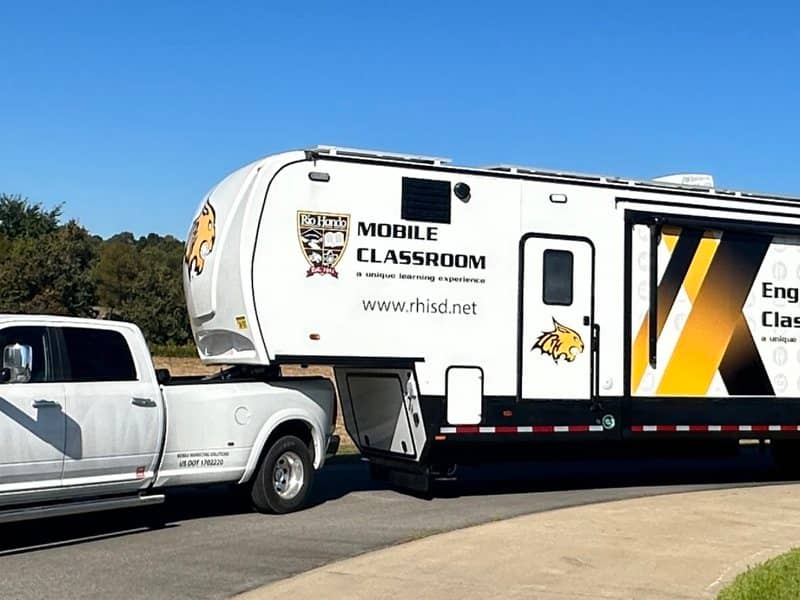
Justin Tyers • 09 February 2024
Science class chooses top gear
Solving the problem of how to be in three places at once, a solar powered science lab is bringing the latest technology to students in three campuses in Texas, USA. The Rio Hondo Independent School District ( RHISD ) wanted to combine the excitement of having a dedicated technology laboratory in an interesting venue …and to be able to offer it to all their students – located across three campuses. Their answer was to commission a 49 foot trailer – the expandable sides of which are packed with technology. Providing learning for 24 – or more – students the mobile science lab has learning stations offering Augmented Reality headsets, 3D printers, there’s a 55 inch touch screen classroom display, a bank of audio-visual screens complete with surround sound – and an independent high speed mobile internet connection keeps it all streaming. Oh, and as you might expect with the latest in lab innovation, the power to run all this technology (and the Air Conditioning system) comes from both real-time and battery-stored solar energy. The trailer/classroom was designed and built by Brewco Marketing Group who specialise in branded mobile facilities across a number of industries. The ‘fifth wheel’ trailer is a triple-axle 49’ chassis with four Expandable panels. When the trailer is parked-up these expandable panels slide out to provide considerably enlarged accommodation. The classroom is pulled to location by pickup truck. Project Manager Corbin Jewell says: This Mobile STEM Lab will be equipped to support RHISD curriculum and prep their students for careers in technology for many years to come . The power installation was completed by Jarrod Douglas – the RV Inspection Guy . He installed twenty roof-mounted solar panels arranged in three strings of 8/8/4 panels offering a total of 4kWp. Each solar string has a dedicated SmartSolar MPPT Solar Charger – there are two 250V/70A devices and a 150V/70. (By the way, whenever you need to choose the right MPPT for your solar array this MPPT calculator is invaluable). The DC solar harvest is stored in two banks of Battle Born batteries – each holding 13kWh. The batteries are wired in series to provide 48VDC to two Quattro Inverter/Chargers , capable of 10kVA constant supply. A Lynx distributor 1000 offers a covered busbar rated at 1000A together with monitored fuses. A Lynx Shunt is part of the neat distribution network and keeps track of the energy going-in and coming out of the batteries. A Cerbo GX acts as the brains behind the installation, providing data communication between devices – and also to the end user – via a GX Touch 50. The Cerbo GX also reports data to the internet and provides remote system access for engineering support or maintenance using the free-to-use Victron Remote Management platform VRM. One of the Cerbo GX’s two relays has been wired so that a back-up generator will fire up automatically if ever the batteries fall below a pre-defined voltage. The solar installation is explained to students using schematics of the wiring plan – it forms part of their technology education. Quattro Inverters have been chosen for their versatility – particularly in this outreach and back-to-base application. Quattros have two AC power inlets and two AC power outlets. Typically the AC inlets are connected to an electricity main – whenever one is available – and also to a back-up generator. The unit will automatically switch to whichever power source is live. Of the two AC outlets the first is typically connected to provide critical loads with an uninterruptible power supply. The second AC outlet, however, will shut down automatically if there is no incoming AC power supply; by connecting all non-critical loads (such as air conditioning) to this AC outlet, the batteries will be protected from over depletion caused by running heavy loads, not essential to the unit’s operation. The mobile STEM lab also allows RHISD to reach out into the community – providing structured education at under-privileged locations, and re-enforcing the school’s message of commitment to excellence. Rio Hondo Independent School District is dedicated to providing a nurturing and inclusive learning environment for students of all backgrounds.
Justin Tyers • 02 February 2024
Removing Vehicles …Remotely
Designed to work in the most congested car parking or storage areas such on board ferries, covered parking or ‘congestion hazard’ areas – such as hospital parking – the job of First Mover is to retrieve or remove vehicles. It’s a powerful battery-powered transporter with low bed height – allowing access under the sportiest aerodynamic road-hugging body shell – capable of lifting up to 3500kg (by the wheel not the chassis) and relocate it – even if that means travelling uphill (max 18°). From a distance of up to 100m one operator working alone can safely move vehicles without assistance from a second operative working as a spotter – in areas which are not accessible to cumbersome ‘tow’ trucks. A lead/acid battery powered version of First Mover is proving to offer the most exciting advantages as it has been designed for emergency and hazardous environments. Even vehicles actually on fire can be safely removed, minimising adjacent damage and averting full-blown disaster. The remote control range of 100m allows safe operation by an emergency worker, well clear of the danger zone. First Mover has a tracked drive unit which can articulate through 360 degrees whilst still attached to the lifting bed -so it’s not even necessary for the unit to approach from directly in front or behind the target vehicle. Keep your distance Galvanic isolation between the lift bed and the control unit avoids the danger of stray voltage from an electric vehicle, for example, shorting out the operating unit. A well publicised fire which occurred recently in a multi storey car park at Luton Airport, UK, – which was believed to have started in a diesel engined vehicle – ended in the complete destruction of the four-year old car park; damaged up to 1400 cars; caused the cancellation of 150 flights and incurred disruption for an estimated 30,000 passengers – that kind of incident makes it easy to realise how a single-vehicle fire in a difficult location can get completely out of control. No one was hurt in the blaze, but the fire caused millions of pounds of damage to infrastructure and private property, and will have caused years of inconvenience before it is remedied. Emergency workers during testing First Mover is the brain child of Brian Sørensen. Having dreamed up the idea he spent days searching the internet for similar vehicles already in production – but there was nothing. He spent years in build and development plundering his savings …so that the units we see today are in fact the result of twenty years of industry experience and product trials. The remote control feature is key to operative safety for the ‘Emergency’ model. Remote control is vital, for example, when attending Road Traffic Accidents as it allows the operator to work well away from the hazard, or remove vehicles from live-lane incidents whilst standing behind a highway safety barrier. ‘Movers’ are available with either 20m or 100m range. The First Mover control unit has a maximum speed of 3kmh and can effortlessly lift more than two tons 700mm above the road surface. Units are equipped with either Lead/Acid or Lithium batteries – depending on their intended rôle. 1 x Blue Smart IP67 charger 24/5. This is the waterproof version of Victron’s ultra-reliable seven-step battery charger. It has bluetooth on board allowing charge monitoring and setting from a phone. 1 x BMV 712 Smart Battery monitor. In addition to displaying live power data the BMV 712 records extensive system data allowing historic analysis and performance over time in statistic and graph form. Data can be interrogated from a phone. The battery propulsion of the Mover is from 2x 200Ah Gel 24V batteries. The flatbed has 2x 95Ah 24V batteries. Together they offer a continuous operation time of 4 hours.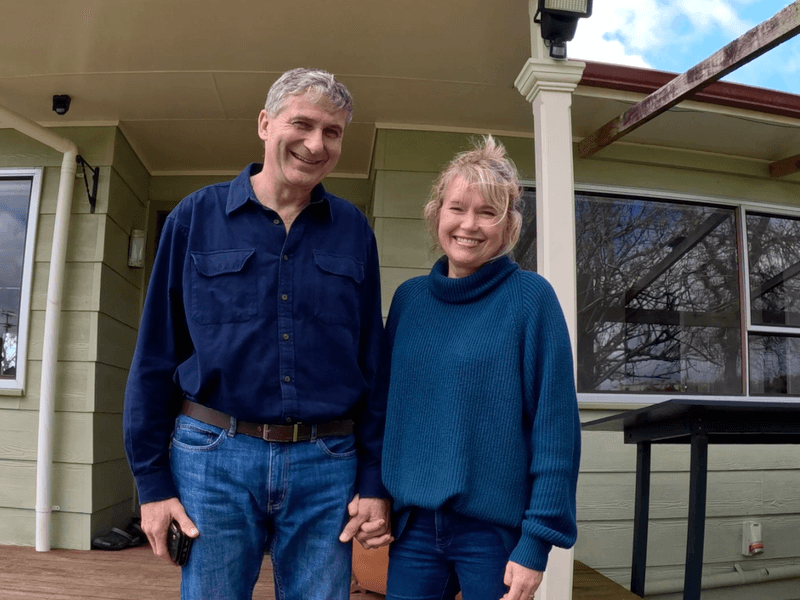
Justin Tyers • 19 January 2024
Mini-grid for extended family
The power supply at Tim and Fiona’s homestead in Auckland, New Zealand is distributed from a micro grid which serves their extended family of eight, across three tiny homes, the main residence, and large workshop. They have an EV and their private water supply is from filtered rainwater which is pressurised – so the power demand across the site can be quite high. At their rural location power cuts on the electricity grid have always been a feature of normal life. But initially the problems of solar power distribution to each household and the varying patterns of power consumption within each dwelling meant that the calculation and sizing of the new solar energy installation was complicated. Planning a system which would work for him, Tim says he felt well supported by the solar engineering, procurement and construction company Sustainable Power Solutions. He’d been dreaming of building a reliable solar energy system capable of providing most – if not all – of their energy needs for 15 years …now they’ve got it he’s really pleased with how it’s all working out. Dependence on the electricity grid has fallen almost to nil, and he plans a final phase which will allow them to disconnect from the grid entirely. Installation Having completed a site survey Sustainable Power Solutions decided to distribute power from a central hub – built inside a small container. This offers several advantages: Centralised power could be located so that the cable runs to point-of-use are optimised. It allowed the system to be factory built and tested – minimising on-site disruption. There is room to add more devices in the container to increase power capacity if that is required in future. The unit is dedicated to energy management without competing for storage space with unrelated items. A 16kWp solar array supplies power to the container which houses the following energy devices: Two Fronius Primo 5KW AC inverters Two Quattro 10kVA Inverter Chargers – frequency shift settings control the output of the Fronius Inverters Colour Control GX is a communication centre device which allows data communications between installed devices, and provides user-access or engineer-access from anywhere in the world via the free-to-use Victron Remote Management platform VRM . Sustainable Power Solutions monitor Tim’s installation via the internet based platform Victron Remote Management. In addition to real-time status, historic analysis, firmware updating and remote configuration, VRM can send email alerts automatically if system data readings fall outside set parameters. Over forty data-sets are monitored across all the primary devices – such as low voltage, low battery and product error code notifications. Lynx Distributors provide covered busbars with monitored fuses and allow for tidy DC distribution Eighteen Pylontec US3000 offer energy storage capacity of 63kWh The container houses a Haier 3kW heat pump Installers Liam and Ash are pleased to have delivered an orderly and uncluttered installation. Located elsewhere on site there is an ITC 10kVA back-up generator. The energy system provides power to a WallBox EV Charger rated at 7.5kW – keeping the family’s EV fully charged. Their average daily mileage is 30 miles (50km) which equates to a daily power consumption of approximately 10kWh. Future Proof During 2024 there are plans to augment the 16kW of solar panels currently on site with a further ground-mounted array which, it is hoped, will provide Tim and Fiona with complete energy independence. The container has been built to allow for future power augmentation. They plan to install a third Quattro 10kVA, and to enhance their solar harvest with two SmartSolar MPPT RS solar charge controllers. These high voltage devices are designed for larger solar arrays, reducing cable losses, and they can be daisy chained for synchronised charging. Complete power independence would at last realise Tim’s dream of 100% sustainable energy. Sustainable Power Solutions can be reached at their website or on their Facebook page.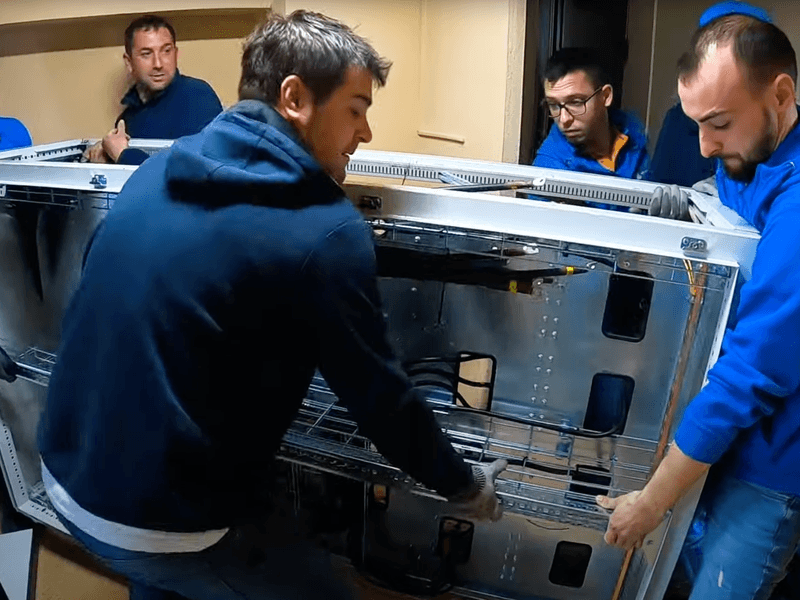
Justin Tyers • 05 January 2024
Power lift
Let’s begin the new year energetically by taking a look at a time-lapse video showing the installation of a super-cool private energy plant in Romania. A lighting manufacturer – Amiras C&L Impex, who are located in Targoviste, Romania – were experiencing frequent power cuts, which prompted them to invest in energy security. Power cuts often impact manufacturing companies more severely than those in other industries owing to the loss of raw materials and because of damage caused to plant and machinery when processing unexpectedly ceases, mid-operation. The arguments in favour of installing energy security become conspicuous because the initial cost of installing private power is amortised even more quickly, followed by many years of ‘free’ energy – at no cost to the environment. The use of sustainable energy in manufacturing demonstrates Corporate Social Responsibility and is a persuasive marketing tool to a new generation of consumers. Victron distributor Darcom Energy is a family business which has been established for over 30 years. For fifteen years they have been designing and installing solar based energy solutions tailored to their customer’s needs. The installation was completed by Andrei Nica, Vlad Besleaga, Teodorescu Niculae Daniel, Teodorescu Stefan Catalin, Stan Alexandru and others. The system we are about to see comprises: 6 x 15kVA Quattro Inverter/Chargers configured for 3-phase power supply. The Quattro’s extensive list of features includes two AC inputs – with automatic switching to the live source; and two AC outlets allowing ‘essential’ and ‘non-essential’ loads to be provided from separate sources, whereby non-essential load will be dropped in the event of a power cut, but essential loads will be maintained with an uninterruptible power supply. 310 x 425W Solar Panels provide 130 kWp. Energy from the panels is controlled by… 13 x SmartSolar MPPT RS 450/200 Tr 48V. These solar charge controllers are built to handle large series-connected solar arrays for charging 48V batteries. SmartSolar Charge controllers can be daisy-chained for synchronised battery charging. 20 x LiFePO4 25.6V/200Ah Lithium Battery Smart. Lithium chemistry’s low resistance allows for fast battery charging – maximising charging on intermittent-sunshine days – and has a long service life with many thousands of charge cycles. VE.Bus BMS – Battery Management for Victron Lithium batteries. Up to 20 batteries can be connected to the Battery Management system which will protect them against over- and under-voltage, and over- and under temperature. Lynx Power In units offer protected bus-bar connection from the batteries to DC services using M8 or M10 connectors. Shunt 6000A /50mV-0,5 / 5x M10 provides clutter-free monitoring of battery voltage, energy out, energy in, for battery capacities of up to 9999Ah. Data can be read from a phone or via communication centre device. In this installation a BMV-712 BT kit was adapted for use with the 6000A shunt. Cerbo GX . The Cerbo is a communication centre hub which exchanges data between system components – providing total system harmony – and allows the user to monitor system data, as well as providing system programming – both on site, and remotely via the Victron Remote Management ( VRM ) platform. A GX Touch 70 provides an intuitive, user-interface and system-programming access via a really neat touch screen. Let’s take a look at the time-lapse installation video:
Justin Tyers • 08 December 2023
Chilling in the Caribbean
From on board his 46 foot Catamaran Sarava, Mark and his family enjoy diving in the blue seas of the Caribbean around their home port of Bonaire – one of the Leeward islands. In fact, if there’s a problem at all in paradise it’s that some days are just too hot. Until recently whenever Sarava was at sea under sail, or at an island anchorage far from the electricity grid, skipper and crew were faced with a choice between turning off the air conditioning, starting the engine, or running a noisy generator. The power demands of his old Heating Ventilation and Air Conditioning (HVAC) system were difficult to meet from the DC battery bank. Must there always be a compromise between comfort and adventure? Not any more, it seems: Realising that there had to be a solution out there somewhere Mark did some research and came across an innovative Variable Refrigerant Volume HVAC system made especially for the marine market by Termodinamica . In fact Variable Refrigerant Volume (VRV) technology is well established in land-based HVAC applications but its maritime use is only just beginning. How does it work? Unlike traditional systems which circulate chilled water, VRV systems channel refrigerant directly to individual air handlers in each zone, evaporating it only where needed. This localized approach eliminates energy losses, and significantly boosts system-efficiency. Hunter Parker of Termodinamica says: Our VRV system employs a “Capacity on Demand” philosophy. The system adjusts its cooling output to meet real-time demands. It has Variable Speed Compressors, allowing for precise control over cooling output. And it employs Zoning Control, whereby a central management system directs cooling capacity to specific zones as needed. VRV8 compressor With the capability to rapidly cool spaces, software-driven Variable Capacity Air Handlers adjust their output to match cooling demands – up to their maximum BTU output – and then maintain set-points with minimal energy. The efficiency of the system allows for operation on battery power alone in this example. Utilizing modulated refrigerant flow and eliminating the need for a chilled water loop, the system achieves energy consumption reductions of up to 70% compared to traditional on/off chilled water loop systems. Hunter explains. All new utilities and power supply The previous power-hungry air conditioning system – along with refrigeration, air compressors, domestic appliances and navigational devices – had to be managed to eke out power reserves, even on short voyages. Even after upgrading to a new Lithium battery system, the skipper and crew aboard yacht Sarava found they still had limited AC run times when using battery storage. But with the new HVAC system the vessel runs from battery for 24 hours. A happy balance has been achieved between efficient energy harvest and storage, and manageable power demands. The power supply – which was installed by Maz Ocean Marine Electronics Installation – consists of: 2 x Inverter/Chargers: MultiPlus 24/3000/70-50 120V. Ultra reliable AC power supply, AC battery charging, current limit, and power assistance for high loads. 5 x Solar Panels: Sun Power 410 Watt each 5 x Solar Charge controllers: BlueSolar 150/70 24V Secondary Alternator 60A 2 x External alternator regulators: Wakespeed 500 Lithium Smart Battery Management System: Lynx Smart BMS Busbar, fuse, cable management: Lynx Distributor Communication device: Cerbo GX – system data, history, and programming from anywhere in the world. User touch screen interface: GX Touch 50 Energy storage: 4x Lithium Battery Smart 12.8V, 330Ah AC Power transformer: Autotransformer – 120/240VAC, 100A GEN AUTO START (custom relay for Onan generator) Termodinamica also offer high voltage DC versions of their systems. Typically these are 700VDC – but custom high DC voltage installations can also be configured. HVAC Build Quality – for the marine environment On board Sarava there are 2 x VRV8 Compressors with an output of 35,000 BTU each and a total of 6 air handlers located throughout the vessel’s accommodation. As any marine engineer will tell you the marine environment presents unique challenges to a vessel’s gear and systems. In the pursuit of excellence marine-grade components – such as Grade 2 Titanium – have been used for Termodinamica’s condensers, together with 316L Stainless Steel for the air handlers, compressors, and other components. But there’s more to the system than great hardware; advanced software management offers both automatic system control and adaptability to respond to user-inputs: A Power Management Slider Bar provides temporary limitations to power consumption during periods of high-demand – from the galley, perhaps – ensuring that the total power load can be managed effectively. That’s critical for vessels with limited inverter capacity. The system also features remote connectivity and control, allowing remote diagnostics and troubleshooting right from Termodinamica’s HQ – which reduces or eliminates the need for a technician visit. Electric Drive – powering the next generation In commercial vessels and pleasure boats, reduced emissions and sustainable propulsion are coming under the microscope. As the marine industry moves toward electric propulsion, systems efficiency and load management elsewhere on board become vital so as to extend the vessel’s battery stored energy. Termodinamica’s VRV system with its reduced HVAC loads, offers the potential for extended range under sail. Mr Maxi 30 Efficiencies already achieved allow for smaller, less expensive back-up generators to run devices. Lithium batteries – with their high charge-acceptance rates – will be topped-off more quickly by the alternator during pilotage at the beginning and end of voyages … or whilst at anchor when the engine is often run solely to wring some charge out of the alternator. Shore power costs – often charged at a premium – are also reduced. Mark says: Finally I can sleep on my damn boat with air conditioning and no noisy generator! During the day – with an ambient temperature of 90°F (32°C) – keeping the vessel cooled to 74°F (23°C) inside draws about 1300Wh …less at night. The peace and tranquility on our vessel have been significantly enhanced. We can now operate all our systems on lithium battery and solar power, making the need for a generator almost entirely obsolete. Living life on the boat has never been more sustainable – or enjoyable . If you sail in hot climates and are building a new vessel or considering a retrofit, Termodinamica’s VRV system might provide just the ambiance you’re hoping to achieve.
Justin Tyers • 22 November 2023
Snake charmers
Twenty years ago, in the Everglades at night, Brandon Rahe used to see dozens of opossums, raccoons, and marsh rabbits. But an explosion in the population of invasive snake species – most notably the Burmese Python – has resulted in significant ecological damage to the fauna of Florida. Today, you’re lucky if you even see a raccoon; He says. Adult Pythons are not subject to serious threat from predators: Birds might have a go at a snake hatchling, and an alligator or wild pig might tangle with them, but once a Python is one year old, it’s large enough to kill them, he says. There may be as many as half a million Pythons in the Everglades. Native snakes competing for the same food and the same habitat, lose out. Brandon is one of about 100 individuals contracted by Florida government agencies to eliminate pythons and seek out active nests. Van life, work and play Brandon’s work revolves around his van and a Victron Energy power system. The van is Brandon’s overnight Python-hunting rig, equipped with light bars on the sides and up to four spotlights up front, all of which are wired to an eight-way switch panel. There’s a nearby campground where Brandon can connect to AC power and run the Air-Con all night. His van is equipped with a refrigerator, too: I love having refrigeration on board at all times, being able to grab a cold drink or a cheese stick. Florida is very hot in the summer. When I’m mobile and go to the grocery store I can put my cold items in the fridge and continue to run errands and not have to race home. The power system – which has recently been updated – includes: Multiplus 12/3000/120-50 120V Inverter/Charger. The robust MultiPlus provides power for all onboard domestic appliances and includes many advanced features. For example it will avoid overloading a generator or a current-limited camp site power supply. It even adds battery power on top of the limited AC supply to meet larger-than-available onboard demand. Orion Tr Smart 12/12 30A Charger – Non Isolated. The Orion DC to DC charger provides 3-stage charging in dual battery installations – where there is a ‘starter’ and ‘house’ battery. It automatically detects when the engine is running or has stopped changing its configuration to avoid accidental drain of a starter battery – eliminating manual intervention or re-wiring. The Orion can also be used as a power supply – maintaining precise voltage supply, overcoming voltage-drop on long cable runs to distant equipment, for example. MPPT 100/30 SmartSolar charge controller. This solar charge controller is a fully featured device which maximises the solar harvest to charge batteries using intelligent charge algorithms. It can be read and programmed straight from a phone. 3 x Pylontech RT12100 12V 100Ah Lithium Batteries BMV-712 Smart Shunt. This battery monitor measures and records a host of system data allowing users to see battery State of Charge, as well as the highest, lowest and present Voltage and Amperage. It provides up to 46 days of historical trends, settable alarms and an automatic relay and will also measure battery temperature. System Upgrade After visiting Yellowstone National Park recently the starter battery in the van failed. They contacted nearby Victron distributor, Intelligent Controls , and after discussions and analysis decided to upgrade the battery bank and exchange their old Automatic Charging Relay for an Orion 12/12 DC-DC Charger. The relay didn’t appear to have failed, but it had a very basic mechanism for regulating the incoming voltage from the alternator; explains Reid Loessberg from Intelligent Controls. Because of the failed starter battery, the relay’s voltage reference got derailed, allowing the alternator to smash the AGM [Absorbant Glass Mat] batteries full of charge until they were swelling up like pumpkins . Incorporating an Orion DC-DC charger into the system ensures that Brandon is able to safely charge any battery from the vehicle’s alternator and do so with much more sophisticated control than the relay they previously had in place. Brandon’s damaged AGM battery bank was replaced with three 12V Pylontech lithium batteries. I had two 170 amp hour AGMs with 50% discharge capacity; he says, which meant I only had 170 usable Amp hours. Now, we’re stepping that up to three 100 amp hour batteries, and if I can discharge the Pylontechs down to 90 or 95%, that puts me at 270 amp hours conservatively. So I have a full hundred amp hours more than I had previously. Shared adventures Taking part in all these adventures is Amanda Radford. Brandon met Amanda while she was working as a nurse in Florida. Brandon was running a gym at that time, and I had a degree in exercise physiology. He encouraged me to take on a few clients as a personal trainer to get a break from the stress of the hospital . When Brandon first invited Amanda to the Everglades to hunt for pythons, she agreed to go. I was definitely scared of snakes, but that weekend Brandon spotted a Python and I watched him reach down and catch it in his hand. From then on I was hooked. It was about a year ago that Brandon became ready for a big life change himself. He says: Right out of college, my personal training business grew very quickly and just never stopped. I loved adventuring and had all the gear and had built out a van with a Victron Energy power system back in 2018 to take on longer cross-country trips, but I just never had time. I was over it . I realized that I need to go live my life before I’m too old or my body shuts down. I can earn money later. Right now, I need to get out there and live my life. Last year, Brandon traveled across the United States, visiting the cities and rock climbing in the national parks he’d always wanted to visit. Meanwhile, Amanda provides in-person and virtual training sessions to clients all over the country – her working life allows her to join Brandon on the road for a month at a time, taking care of her clients from wherever she happens to be. Last year they put 10,000 miles on the van, often camping without an AC power connection. With everything set up just as they need, the adventure is really only just beginning. [If you’re based in North America and looking for some expert ‘mobile power’ advice you can get in touch with Intelligent Controls . Or check out some of their resources – including RV alternator charging .]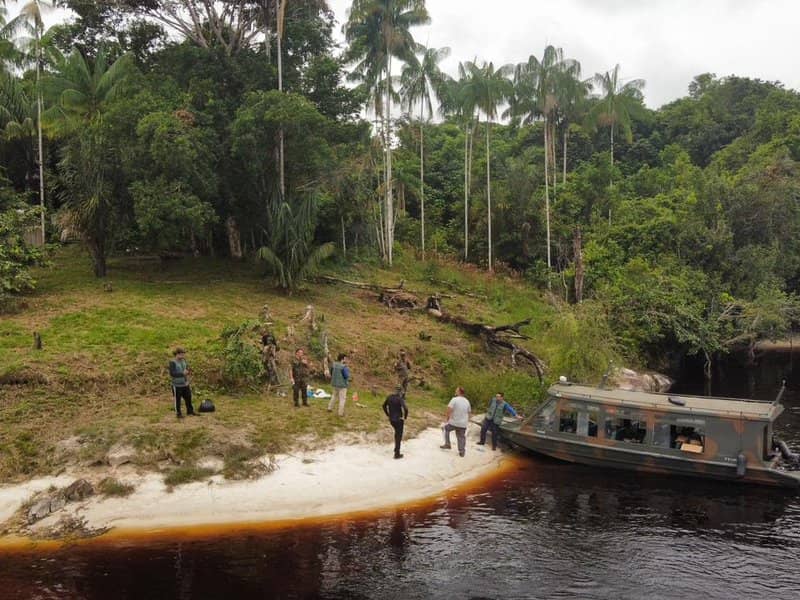
Justin Tyers • 03 November 2023
Is this our remotest installation?
The frontier army in Brazil are embedded in the jungle to control the border against drug trafficking. From their virtually-inaccessible base camps it’s important that the communication and surveillance technology they use runs as reliably as systems along a city street …but in truth that just wasn’t happening. The time had come to rip out the ad-hoc power generation plants and replace them with state of the art installations which would provide reliable power for many years ahead. The problem was getting it there! The army themselves undertook to deliver the pre-built factory-tested power systems in well-manned, well-planned operations. The remotest installation-site took 24 days to reach as the team frequently found themselves hacking through the jungle to proceed along little-used dirt track roads and over unmapped rivers. In places they had to literally build the road infrastructure, including temporary bridges, so that the HGV could reach its destination. In inhabited locations ferries were in operation, but lifts and ground reinforcement measures had to be taken in order to load the army vehicles. In one location – in order to pass under some low-hanging power cables – soldiers stood on the truck roof holding brooms to lift the power cables out of the way! Elsewhere, a truck became inundated in water – sinking low enough to flood one of the containers it was carrying. Fortunately the truck was recovered before the water level became deep enough to damage the power equipment it contained. Prior to the departure of these expeditions, of course, it was essential to check and then double check that all necessary tools had been included in the shipment. Even a missing screwdriver would mean a six-day delay whilst it was being procured. State of the art devices with clever programming That installation has six Quattro 48/15kVA Inverter Chargers which are configured for off-grid supply in two 45kVA cascade systems controlled by a Programmable Logic Controller (PLC) – communicating via Modbus with two Cerbo GX communication devices. In normal operation, one 45 kVA system supplies energy to the army compound – and also to the residents of a nearby indigenous village. As part of the installation the opportunity has been taken to provide an indigenous tribe with reliable energy for the first time via a mini grid. If stored-energy runs low, the PLC will activate the second 45kVA system, and if one of the systems should fail, that system can be by-passed altogether …or either system can run using generators, alone. The idea is to have the maximum redundancy with automatic cascading of power provision – and no need for engineering support or even for unskilled manual interaction. After all, professional help is more than 1000 difficult kilometres away! Pre-delivery testing to ensure perfect operation of the PLC and auto-functionality of this system was of critical importance, and was carried out at the Baratec Laboratory. We carried the story of Argentinian-based Baratec a few weeks ago on these pages. Notwithstanding automation, and remote monitoring, both systems include a GX Touch 70 touch screen device which allows instant local access to all power data – allowing users to monitor the state-of-charge, power input and loads. The first system takes its solar charge from six solar arrays of 10,4 kW each, which are wired to each of 6 SmartSolar MPPT RS 450/200 for storage in 15 x Lithium eBick 280 PRO batteries. The second system has a similar arrangement but uses 4 SmartSolar MPPT RS 450/200 to feed a 12 x Lithium eBick 280 PRO bank. The total battery storage for the system is 363kWh. SmartSolar MPPT RS solar charge controllers are suitable for systems with large series-connected PV arrays and 48 V DC battery banks. In this installation there are 720 Kyocera solar panels capable of providing 187kWp. Four Fronius Symo 15.0.3 three-phase AC inverters work seamlessly with the Victron Energy system – the Cerbo GX communication device of which is able to control the Fronius output power. An in-depth textual and video presentation about how to install and programme AC-coupled PV using Fronius PV Inverters can be found here . The system’s DC voltage is 48V, the Programmable Logic Control devices run on 24VDC – to achieve the conversion there are 2x Orion -Tr 48/24-5A (120W) Isolated DC-DC converters. Technology, Research, Industry Collaboration The national rollout of these installations has been enabled in great part by the technological expertise of Parque Tecnológico Itaipu (PTI) – a research institution whose ambitions are to further the knowledge of sustainable technologies through research, and to encourage collaboration between the development departments in industry, other educational organisations, and end users. Three years ago we carried a story on these pages about PTI and their research into Salt Batteries . The Frontier Army systems are in fact controlled and monitored from the headquarters of the PTI. The installations were of national importance in Brazil, making the news headlines on TV with a summary of the journey, and the importance of the installation to the indigenous people who have been connected to the grid. Portuguese speaking readers will enjoy this broadcast: The project was carried out by the technicians pictured below: From left to right they are: Jairo Lemes da Silva (Technician -PTI), Valentin Silvera Diaz (engineer -PTI), Teniente Furtado (army), Leonardo Rosa Martins (Technician -PTI), Rodrigo Esteban (Technician ITAIPU) and Kiko Sierich (Photographer -PTI). Thanks to Jorge Ortiz – Victron Energy’s regional sales manager for Argentina, Bolivia, Brazil, Guyana, Paraguay, Uruguay – for providing information about this vital, and remote, installation.
Justin Tyers • 20 October 2023
Dive the world
In July, Leonora and Sissel set off from Copenhagen, Denmark, on an open-ended circumnavigation during which they plan to dive the world’s oceans and hope to raise awareness of the sometimes fragile eco-systems they discover. Taking guests along the way, the intention is to be independent from the shore for extended periods. Consequently they have built self sufficiency into their boat, and in spite of having no background in sailing or in anything electro-mechanical they’re learning to master their vessel’s machinery. Lulu Tao is a Beneteau 50 (14.9 m) sloop of thirteen-and-a-half tons displacement. She carries 1,000 litres of water together with 500 litres of diesel for her 100HP Yanmar Diesel engine, and has a 6.4kW back-up generator Navigation equipment She has a comprehensive range of navigation electronics: t here is a 12″ Garmin chartplotter and GNX Garmin wind instruments, radar, AIS, satellite phone, satellite compass, autopilot and VHF radio, search and rescue transponder and emergency position indicating radio beacon. There’s a watermaker capable of producing 60 liters per hour, and of course a range of diving equipment including a compressor, tanks, buoyancy compensation devices and regulators. Let’s hear from Leonora and Sissel as they tell us about their plans. When we first decided to restructure our lives and pursue our dreams just a little over two years ago, we never imagined how many good people would come forward and help us make it happen. We knew that the preparation time for our journey would be challenging, and that we would be presented with new and unfamiliar situations. Neither of us come from a background in engineering, boating, or anything resembling electrical systems and power. However, it did not discourage us because we knew that with the will to succeed, we would overcome all obstacles. We want to be as self-sufficient as nature allows. With the help of mother nature, the wind will be our primary way of travelling around the world. From the ocean we produce drinking water using our 12V water maker. And from the sun we harvest energy to produce the power for our little home. That said, it hasn’t been easy to learn all the aspects of owning a boat in such a short amount of time. We would not have come this far without the help of people who have taught us and little by little we are getting better, smarter and eternally more eager to learn. Our Victron installation contributes to our lifestyle and helps transport us around the world. We have installed 2 x 407 watt Bifacial solar panels in parallel, to which each solar panel goes down to its own solar charge controller MPPT 100 / 30 , as we are not at risk of being without power if now one of the panels should break. From our battery bank, consisting of 3 x 200 AGM batteries , we have our inverter/charger Quattro 12/3000/120-50/50 that convert our 12VDC to 230VAC. Installing dual solar charge controllers arrays on a sailing boat helps maximise the power harvest and to overcome the inevitable shading problem caused by the sails as the vessel tacks toward its destination, or during long ocean passages as the sun tracks from east to west. A companion to our dream is the passion for documenting and sharing our experiences around the blue. We have an infinite love for our oceans and we believe that if we want people to take better care of our oceans, we need them to love them, and we intend to do so through our documentation. This requires a lot of camera equipment, drones, microphones and the more we can charge during the day when the sun is highest the less the strain on our batteries as our Quattro converts 12V to 230V. We are constantly learning more and more about our power consumption, load and improvements, but something that has helped us immensely on our power journey has been our Cerbo GX with 7″ GX Touch screen. With the visual data, the learning curve has been significantly easier and this makes monitoring power consumption, load and voltage a task that can be solved with the touch of a finger. The constant in real time monitoring of the onboard power helps us focus on what we love, diving, adventure and exploring. The Cerbo GX communication device harmonises the power system – both Victron Energy’s own electronic devices, and a wealth of third-party devices – allowing regional products, or special services to be integrated natively. A popular solution in marine and navigation applications is to present all the vessel’s systems information – navigation, power and tank levels – on a single Glass Bridge ‘Multi-Function Display (MFD). This can easily be achieved with a Cerbo GX – or any GX communication device – as they support NMEA2000 connectivity. All Victron products which feature a VE.Can port can also be directly connected to the NMEA 2000 network, using the VE.Can to NMEA2000 cable . If connection to a MFD is not available or desired, a GX Touch device – which has a waterproof face – offers really smart looking user-access to all ‘live’ and ‘historic’ system data, and provides access to extensive menu-driven system programming – such as setting a relay to start the generator automatically whenever the battery bank falls below a certain state-of-charge …or voltage. We have an independent battery bank mounted in the bow consisting of 2 x Optima Bluetop 75AH to power our windlass and bow thruster. By installing a separate battery bank, we have been able to remove a lot of thick cables and replace them with a 10mm cable that runs from our house bank to an Orion DC/DC converter . This has given us an extra layer of security by making sure that our windlass can run independently from our main consumption bank. The Orion DC-DC converter can be used as a three-stage battery charger or as a power supply. As a charger it guarantees that a battery bank located distantly from the alternator will receive the correct charging voltage …where there might otherwise be a voltage drop caused by long cable runs. There’s also a Galvanic Isolator on board to prevent electrolytic corrosion. Whilst plugged into shore power at a marina low voltage DC currents often pass onto the boat along the earth wire and then into the sea via the boat’s underwater metals – such as the propellor or rudder stock – causing damaging corrosion. The galvanic isolator consists of two diodes connected in anti-parallel fashion which allows current in both directions – but only above a certain threshold voltage; in this case about 1.4 VDC. The galvanic isolator is installed directly behind the boat’s 230VAC inlet deck-socket. So far we’ve sailed 3,000 nautical miles and can’t wait to continue exploring and documenting our oceans knowing that our power system will support us around the world using the energy from the sun. At the time of writing Lulu Tao is in Las Palmas de Gran Canaria – a group of Spanish islands in the Atlantic ocean collectively known as the ‘Canaries’ which is a traditional jumping-off point for the Americas, under sail. If you are interested in taking part in the adventure as a paying guest you can get in touch with Leonora and Sissel here.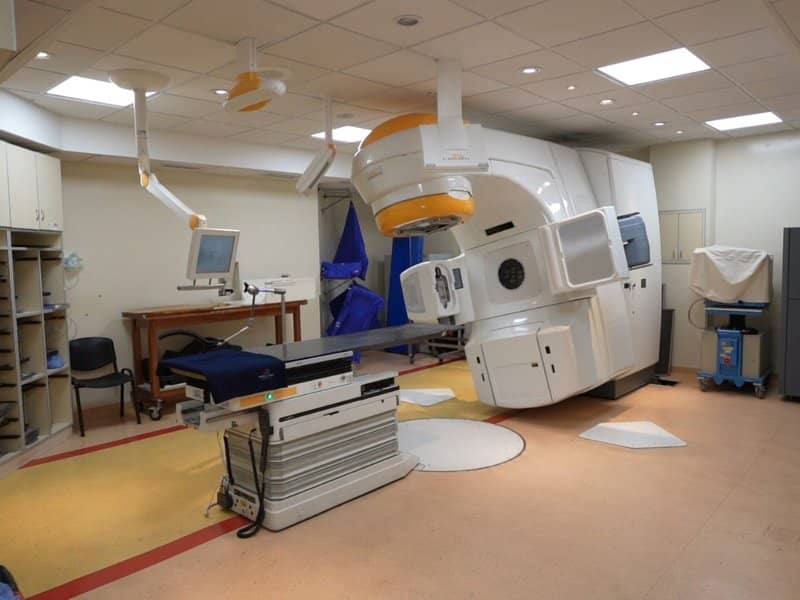
Justin Tyers • 13 October 2023
Clinic Switches to Maximum Power
The Zunino Institute’s cancer treatment medical facility in Córdoba, Argentina has recently solved their grid-electricity supply crisis by installing a large, ultra-reliable private power supply. The battery-based energy system offers 180kVA – the maximum available from parallel-connected Victron Energy Quattros installed in a single system. The problem the clinic had been experiencing was that their local energy grid was not always able to meet the clinic’s power demand. It has two Radiotherapy machines which regularly spike at over 80kVA on start up. In addition to their critical treatment equipment, the clinic also use air conditioning units – together with all the usual power requirements of a busy medical centre from lighting and IT, to water-coolers. Those peak-power spikes frequently pushed the clinic’s demand beyond the grid’s available power resource resulting in regular power outages at the worst possible time …at the beginning of their radio-therapy treatment. Every time power is lost the treatment machines have to be restarted after which the sensitive equipment requires a settle-down period of 15 minutes before treatment can resume. The situation was obviously extremely unsatisfactory. Quite apart from traumatising already-stressed patients it creates the knock-on effect of delaying appointments (which are booked back-to-back, owing to demand) resulting in inevitable end-of-day queues and tired staff. The local grid couldn’t offer the clinic any hope of a future solution to the problem owing to limited built-infrastructure and the underground cable distribution for the local area. The power grid is capable of supplying the clinic with a maximum 110kW – yet the clinic routinely needs in excess of 160kW. The clinic had been asked to reduce their demand, but this was incompatible with their objectives. Victron Energy official distributer Baratec Solar – who work in Argentina and Uruguay – were asked to propose a solution. The challenges Baratec faced were to provide a powerful peak-shaving system guaranteeing an uninterrupted power supply (UPS) from battery back-up capable of running the clinic, at full power for at least one hour from the moment of failure. Sensitive electronics require a near-perfect AC energy source if they are to perform as expected. Pure sine-wave energy from the Quattro Inverter/Chargers is ideal for such demanding equipment. Consulting and Custom Design Firstly, the supply was divided into two zones – critical and non critical. The critical system offers peak shaving – limiting the power demand from the electricity grid – at the same time as instantly providing power backup in case of grid power failure. In the case of grid failure and an extended period of reliance on battery power, a back-up generator is programmed to start automatically. Installed Devices The installation has been built using the following devices: 12 x Victron Quattro 48/15000/200-2×100. Four sets of three 15kVA devices have been configured for 3-phase supply. This arrangement also allows for a remarkable 2400A of charging capacity 4 x X LYTE 51,2 / 480Ah Lithium Battery which are specially designed to withstand high discharge currents to manage peak shaving. 1 x Color Control GX communication centre device provides local user-access to system information. It also harmonises all system components (Victron and third-party), allowing them to ‘talk’ to each other. The CCGX will send data to the internet allowing Baratec to monitor and programme the installation without leaving their office via the free-to-use platform Victron Remote Management ( VRM ) 1 x Battery Monitor BMV 712 Smart . The battery monitor records and stores a wealth of system data including: Battery voltage, current, power, ampere-hours consumed and state of charge; it also calculates remaining run-time at the current rate of discharge. It has a programmable visual and audible alarm; and a relay can be programmed to turn off non-critical loads or to run a generator at a set-point. 1 x Orion-Tr 48/24-5A DC-DC Converter. The Orion has been configured to guarantee an uninterrupted power source for the control board for air conditioners and other non-critical load relays. A testament to the skill of the Baratec engineers is that they make their own lithium batteries which they sell under the brand name of X LYTE . In this system a 1920Ah battery bank stores more than 100kWh of energy. The greatest challenge of the grid-tied installation with back up generator, however, is that the power feed from both the grid and the generator is from a single inverter input. Let’s hear from Sebastian Barratero to tell us how that works: Due to the physical characteristics of the location, the switch point between the electrical grid and the generator was positioned at a considerable distance from the inverters. For this reason, we had to utilize the existing switchgear and channel both energy sources through the same inverter input. Initially, we encountered unexpected challenges due to the age of the switchgear. During transitions from the grid to the generator, it resulted in coupling failures with the inverters. After conducting numerous tests, we identified the issue with the switchgear. Consequently, we replaced it with two new independent contactors, enabling smoother transitions between inputs. Furthermore, we leveraged configuration assistants on the Quattro inverters to tailor the maximum current input based on the connected source at any given time. This approach enables us to perform necessary peak shaving power limits when connected to the grid and increase the limit to draw more power when utilizing the generator through the same input. Jorge Ortiz (left) and Sebastian Barattero (right) with Zunino Institute’s 12 Quattro installation Baratec Solar – a family business In the early 1990s, brothers Mario and Fabian Barattero founded Baratec Rally, a venture dedicated to constructing and developing rally cars culminating in 2001, with BARATEC Suspension for racing cars and other hydraulic systems. In 2015, Fabian Barattero bought a remote building plot on the shores of Cordoba lake, far from the grid energy. An off-grid solar power system from a local provider solved the immediate power need but brought with it so many issues that Fabian decided to research the best solutions, worldwide, and bring his own problem-solving skills to the challenge. Recognising the potential of solar energy for Argentina, he formed Baratec Solar to offer high-quality products to the local market, provide reliable and efficient solutions to domestic, commercial and industrial users. With their engineering background Baratec offers their own-manufacture lithium batteries in Argentina and Uruguay under the brand name X LYTE . The Zunino Institute clinic’s new system – devices and associated cabling – had to be installed in the existing facility which is a traditional building (it was formerly a grand house) whose space is already utilised to near-capacity. Baratec eventually found space on the second floor of the building which presented its own challenges because 12 x Quattro 15kVA had to be carried up two flights of stairs. A quick look at the datasheet tells me that these devices weigh 72 kilos a piece! At the time of installation this system featured the largest battery Baratec had built. The battery supplies the Inverters with a DC current of 2000A – for which a custom busbar was built. More recently, Baratec have built even larger battery storage systems. It’s gratifying to hear that this maximised system has been running for two years, faultlessly. It’s a testament both the reliability of the equipment and the quality of the site installation and planning. As a result the efficiency of the clinic has been enhanced, and patients can be assured of timely treatment. The designed redundancy is able to absorb peak-loading spikes and deliver clean power under all grid conditions. And to be doubly-sure of reliable service under any conditions, the 180kVA generator will start automatically – triggered by a programmed relay if ever the battery bank falls below a preset state-of-charge. Not only has this installation met the clinic’s every requirement, but it has brought a serendipitous advantage for the local community: the grid in their area was fairly reliable before the installation – now it’s perfect!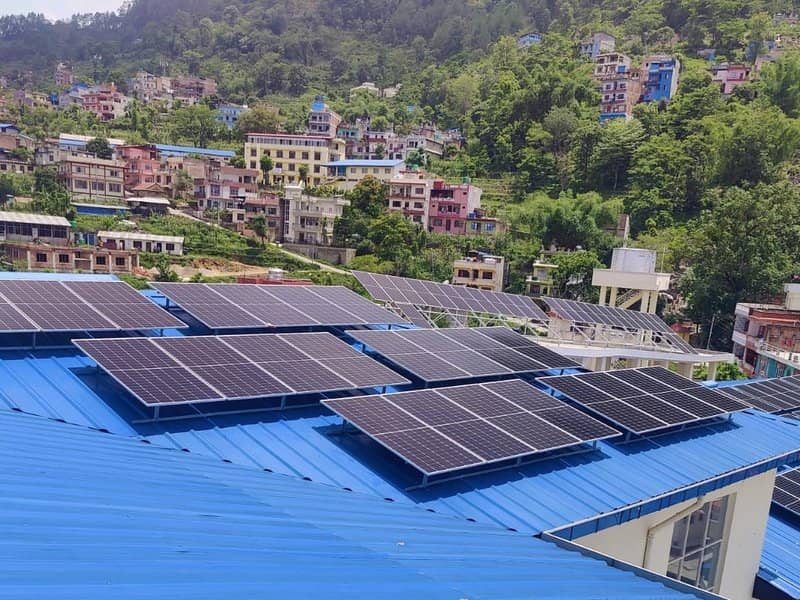
Justin Tyers • 29 September 2023
Power security for Nepalese Hospital
Medical procedures at Gorkha hospital in Nepal have – until recently – been disrupted by up to 15 power outages a day. The city’s power supply varies between 180 to 210VAC, damaging some of the sensitive healthcare devices. Power outages also impede hospital communications, interrupt the water supply and, of course, cause a great deal of stress to hospital staff. Until now the workaround has been to fire-up a diesel generator each time there’s a blackout- but the costs associated with fuel and maintenance, against a backdrop of already-high grid energy prices – convinced the management team to investigate a more reliable – and in the long run, much less expensive, alternative. The solution presented by the region’s local Victron Energy distributor and installer Sunshine Peak Power JV was a solar based three-phase energy system with a generous battery storage. Everything has changed. The 67 bed hospital now has an uninterruptible power supply twenty-four hours a day; at a consistent and reliable voltage from the pure sine wave inverters – ensuring that sensitive electronics run faultlessly. The system designed by Sunshine Peak Power’s Rakesh Shrestha has 118 solar panels arranged in two arrays providing 64kWp to PV inverters configured for three-phase supply. 6 x Quattro 48/8000 Inverter/Chargers allow for a nominal power supply of 48kVA from the battery storage. PV Inverters, and the Victron Energy battery Inverter/Chargers are synchronised – ensuring that AC power supply and DC battery-charging is maximised. The Quattro Inverter/Chargers work in harmony with the PV Inverters, regulating power harvest and sending surplus solar power to three banks of batteries, each having a capacity of 2,500Ah – a total energy storage of 360kWh. The batteries can also be re-charged from the electricity grid or from the back-up generator – if this is ever required. A Cerbo GX communication device allows Victron and third-party devices to work together. It also reports real-time system data to the internet allowing remote monitoring and control from anywhere via the Victron Remote Management ( VRM ) portal – and touch-screen system control is available on site using a GX Touch 70 . One of the challenges of the installation was that the hospital compound has a number of buildings sited close together, allowing very limited space for new installations. The hospital has a much larger power demand than the 38kW grid supply, consequently it was necessary to calculated peak demands – match those with the times of day when power was required, and build a system which shaved peak power demand, and yet had sufficient redundancy to meet everyday running during prolonged grid outages …even covering exceptional loads. Rakesh Shrestha says: “Now in practice, we set ESS as first priority to the solar, second priority to the battery storage energy, third is the grid and last is the generator. The day start with the charging the battery and directly supply solar energy to the hospital loads. In the night when there is no sun the power supply from storage battery and from grid ( in the night grid didn’t charges the battery) Sunshine Peak Power are very pleased with the outcome of this installation which has been working perfectly for some months. It’s an added bonus to be able to make a difference to Nepal’s critical services, and to be able to play a rôle – albeit indirectly – in improving healthcare outcomes for the population of Nepal.
Justin Tyers • 21 September 2023
The road less-well travelled
Boreas Campers build off-road, off-grid campers in Colorado, USA. Their EOS-12 is a 20-foot four-season camper featuring off-road suspension and all-terrain tyres to get into places that most recreational vehicles can’t go. For adventurous folks who want to explore the meaning of ‘remote’ this camper trailer seems a great option. Boreas Campers’ Maggie Reichel says: As a mother of a 2 year old, the EOS-12 and its systems make camping easy. Having the flexibility to camp in a remote area without having booked a campsite makes last-minute trips possible. The comfortable cabin area ensures I have a play area for my toddler even if the weather isn’t cooperating. The large fridge and compact kitchen layout make meal prep a breeze. And being outside while I get food ready while watching my son and the dog playing is so peaceful. Adventure scout There’s room to stow a lot of toys. Maggie says: While my husband watches our son I’ll get a mountain bike ride in as we prefer remote campsites with trail access. I’ll ride for a few hours and come back to enjoy snacks and a hot shower to rinse the dirt and sweat off (indoor or outdoor with the shower attachment and drop down shower room!). Then we’ll enjoy a hot meal and finish the day with a drink and some star-gazing, or reading by the fire’s glow. Camping off the grid means taking your own power supply. Power self sufficiency requires clever management for a successful adventure. Typically recharge power is provided by the solar panels whilst camping, and from the alternator when driving to your destination. Let’s take a look at the EOS-12 power installation: An MPPT Solar Charge Controller 100|50 harvests power from the (up to 1000Wp) solar panel array and sends it to the (up to) 1080Ah Battle Born Lithium Battery bank. A Smart Shunt keeps track of the power going into and coming out of the battery bank in order to provide that invaluable figure for off-gridders everywhere: the battery State of Charge as a percentage. How much power have you got left, and for how long will it go on with the present load? An ORION Smart DC-DC Charger 12|12|30 controls the alternator output, protecting it from overwork and keeping it within safe limits. It will send charge to both the domestic lithium battery bank and to the auxiliary (lead-acid) engine starting battery at the same time. Automatic engine shutdown detection will prevent the lead acid ‘starter’ battery from being drained whilst camping. Back on the road Orion will send up to 30 amps of recharge power to the battery bank There’s a MultiPlus 12|3000|120 Inverter/Charger which provides AC power to the domestic appliances with pure sine wave energy! The MultiPlus converts power from the DC battery bank, easily taking care of any peak power surges drawn on start-up by devices such as fridges; and its clean AC output will run sensitive electronics, faultlessly. The MuliPlus is also a high-current battery charger – sending ‘shore’ or generator power to the batteries at the same time as powering on-board devices – such as Air Conditioning. The MultiPlus can be programmed with a current limit to avoid annoying fuse-tripping whilst staying at organised campsites which have only a limited shore-power supply; or to avoid overloading a generator. Another cool feature is that when a current limit has been set, any power drawn by on-board devices which goes over that limit will instantly be met by adding battery power to the AC source. The MultiPlus will also act as an uninterruptible power supply. The Lynx Distributor provides a 1000A busbar for the system’s DC distribution network, together with monitored fuses. A Cerbo GX acts as the brain of the system allowing the Victron and third-party components to communicate with seamless integration. The Cerbo GX can send live system data to the web – from where it can be interrogated anywhere in the world via the free-to-use platform Victron Remote Management VRM . The data is available to the owner, and anyone else they authorise. That means Boreas Campers – if permitted – can remotely access, analyse and update a system directly from their headquarters in Colorado …wherever you happen to be. The Cerbo GX also syncs with the Garmin ONE automation system installed on the EOS-12. The Operation, Navigation and Entertainment system comes together on an 8” tablet that is docked in the cabin of the camper and allows the owner complete insight into the operations of their camper while off the grid. The Victron components provide extensive power data while the Garmin ONE controls all the systems of the EOS-12. The tablet is useful right from the outset of an adventure, providing navigation from the tow vehicle while heading to the chosen destination. Once on site the airbag suspension can be auto-levelled within three degrees of the horizon. At the touch of a button the onboard air compressor makes adjustments according to an inclinometer. No more wedges, rocks, blocks or running back-and-forth to lie on the bed making sure it’s level. The suspension can also be raised for water crossings – or lowered to avoid overhead obstructions. In addition to indoor/outdoor lighting, night vision preserving red lights under the camper provide handy ground illumination to avoid tripping over the rock you forgot was there. There are indoor/outdoor audio speaker options, too, all controllable from the tablet. The space- and hot-water heaters are dual fuel electric and propane to add flexibility to your resources. The tablet controls the 50-gallon fresh and 40-gallon grey water tank heaters, this keeps the water in the tanks from freezing when temperatures dip. Tank levels are right on screen, too. With all these luxuries of home you might worry what happens if you accidentally leave the air-con on, but don’t worry the batteries will be protected by low-level shut down based on either voltage or state of charge – at whatever level you choose. Boreas Campers sound like a great way to recharge your batteries in the wild – your mental batteries as well as those which only store electricity. You can learn more about the range on their YouTube channel .
Justin Tyers • 01 September 2023
Driverless ice cream?
Alright then, nearly driverless. ERNI the all-electric mobile, robotic ice-cream parlour has to be driven to site by a real person – but once it’s on location the robotic arm can work alone dispensing mouthwatering glacés (and entertainment) for up to five hours. Reputed to be the world’s first mobile soft ice-cream robot, it has single-handedly 🙄 lifted ice-cream sales to new heights in its native Austria. It’s fun, too. Perfectly-twirled ice-creams are served up following a series of immaculately-choreographed actions carried out by ERNI’s robotic arm – which is actually a production line device made by the Electrification and Automation division of tech giant ABB known as the GoFa™ CRB 15000. The ice-cream dispenser is a GelMatic BC Easy 2 PM. Customers, some of whom may be children, do not need to be screened from the robotic arm as it will stop if ever it senses even the tiniest obstruction whilst it’s concentrating on preparing ice creams which are accurate to less than 0.2mm! The vehicle which carries the ice-cream shop is a Piaggio Ape from which the petrol engine has been removed to be replaced by a 48V electric motor. The resulting unit is a stylish non-polluting retro three-wheeler which is climate-friendly and licensable to operate within urban zero-emission zones. And because it has no diesel engine banging away, it can even be deployed indoors, in a shopping mall, for example. The battery-based power system for these mobile vending units was designed and installed in collaboration with our Austrian distributor offgridshop.eu As you might expect, no available surface is wasted on the vehicle. Its roof and side panels carry PV cells which when raised into position form a convenient canopy for customers. Devices used throughout the power installation have been thoughtfully located by the ERNI team to maximise use of the limited space available on the Piaggio Ape. Removing the engine, gearbox and associated fittings provided valuable extra space. Tailor-made boxes to contain system devices are welded during the fabrication process using the GoFa™ CRB 15000 robotic arm! Power for the robotic arm, ice-cream maker, and for the propulsion motor is supplied by two LiFePO4 25.6V/200Ah batteries. Victron Lithium batteries have dedicated Battery Management Systems available in our feature-rich product series of Lynx Smart BMS. ERNI uses a Lynx Smart BMS 500 optimising the life of the Lithium batteries and ensuring they don’t operate outside prescribed voltage and temperature limits – as well as providing pre-alarms before those limits are reached. Pre-alarms can be enabled as push-notifications straight to a smartphone. The Lynx Smart BMS monitors battery state of charge, of course, and can also shut down the system, remotely – in this case by use of the vehicle’s ‘ignition’ key. The Lynx distribution system keeps DC wiring safe and tidy, and offers a bus-bar with monitored fuses. Bench test prior to installation The ice cream maker draws quite a high start-up load at over 3kW for which reason two MultiPlus II 48/5000 inverter chargers have been installed, configured to provide 10kVA Power harvest from the three solar panels which offer just under 1kWp is controlled by a SmartSolar 150/35 solar charge controller. An Orion Tr 48/12 DC/DC converter allows the vehicle’s standard electrics (lights, wipers etc) to run from the main 48V DC battery configuration. Temperature sensors control the active ventilation of the inverters installed in compact housings to prevent overheating. A Cerbo GX acts as the communication centre reporting live data to the internet where it can be remotely monitored – including geolocation – using the Victron Remote Management VRM platform. The touch screen device GX Touch 50 can be used for managing and monitoring the system, locally. System data can be monitored remotely using VRM, which also allows the vending units to be geolocated. The VRM platform makes it possible to monitor all data – both ‘live’ and historic – and the position of ERNI, so that even when operating larger fleets, a single person can very easily keep track of the operating circumstances of all vehicles. Tidy under-seat installation finds yet more room for this technology-packed vending EV On a sunny day the unit can run autonomously for up to five hours. If a longer vending time is needed a battery recharge can be taken from a mains supply or by use of an EV charging station. When the available grid connection is a low-current rated supply it’s possible to set a current-limit on the MultiPlus-II (as with all Victron Inverter/Chargers) so that the annoyance of continual supply-fuse tripping at the source energy will not occur. Green Credentials ERNI’s refrigeration plant runs silently, as far as possible using sustainable energy from its PV panels. In addition, the robotic automation allows for hygienic food handling, and the avoidance of handling money between service. It is also fun! The Victron distributor offgridshop.eu – who are based at Hundsdorf 2, 8111 Gratwein-Strassengel, AUSTRIA – say that the particular challenges they have overcome with this installation were the high power-consumption of the ice machine which has a nominal power of 3.1kW and a high starting current. In addition, the drive motor for the vehicle is supplied by the same battery pack. One of the big challenges was to find room for the whole system in the Ape . Their customers, ERNI, also appreciate some of the cool features of the Victron components: They can be easily expanded and combined. So for example the expansion with 2x Multi in parallel was pretty nice. Operation is really easy VRM runs great and is stable Using the relays etc. it was really possible to control the fans (boxes from the MultiPlus’s and from the container itself). Let’s take a look at the ice cream parlour in action! The ERNI team see great potential for the fleet deployment of their vehicles, noting the ease of operation: Open (cornet) ice cream does not need packaging as the “plates” for the food can be eaten right away. In fact, there is no waste (and if a cornet wafer is discarded, it is biodegradable. Best of all, of course, is the reduced staffing cost! If you’d like to buy an ice cream you can jump onto the ERNI webpage to see where the ice-cream parlours are currently located. And if you’d like to buy your own ice-cream parlour fleet you can contact Jakob Hörbst who will answer your technical questions: find him on +43 664 4056313 or at jakob.hoerbst@erni.gmbh Or find offgridshop and ERNI on Social Media: Facebook: https://www.facebook.com/offgridshop.eu Instagram: https://www.instagram.com/offgridshop_eu/ ….and: https://www.instagram.com/erni.sommerfrische/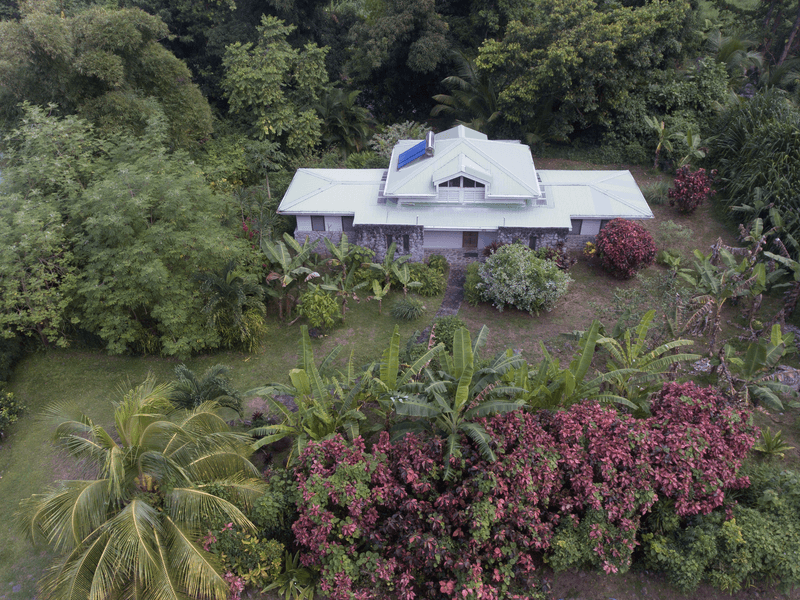
Justin Tyers • 28 July 2023
Caribbean’s Greenest Island Vacation?
Hervé Nizard has been building his tropical eco resort on the unspoiled Caribbean island of Dominica in an unhurried way. Using natural materials, work began at Citrus Creek Plantation in 2008 and now features twelve buildings – including a restaurant offering french cuisine – and accommodation for up to 25 guests. Visitors who love nature and tranquility are treated to freshly-prepared produce, home-grown on the 20 acre plantation, including mango, coconuts, guava, papaya, and bananas. Vanilla and Cocoa are grown for export. Dominica is jungle, but without dangerous animals …so you can walk barefoot on the banks of the Taberi river (alongside which Citrus Creek Plantation is situated) or explore further afield to waterfalls, the second largest boiling lake in the world, or take a walk around any one of Dominica’s nine volcanoes. Cottages built from stone and timber are powered solar energy to run low-demand eco devices such as ‘A’ rated refrigerators which use a miserly 300Wh – per day , ceiling fans offer comfort instead of high-draw air conditioners, and spring water is pumped on demand. Last year, wind and solar met 99% of the eco-resorts power demand. Hervé has a unique advantage when it comes to designing sustainable energy systems – his company Sustainable Earth Inc. is also the island’s distributor for off-grid and grid-tied private power systems with 140 installations under their belt. Sustainable Earth solar lab is located within Citrus Creek Plantation property . This is where Sustainable Earth stores their inventory, and tests solar products and is also where Sustainable Earth Inc prepares, pre-wires and mounts the solar systems which are to be installed by their island customers. The Citrus Creek Plantation solar system is designed as a Mini grid – but with a grid connection: Three solar installations radiate from Citrus Creek Plantation’s main hub, which is connected to the Grid using Grid-Assist with Virtual Switch settings on VEConfigure . The hub has a 9 kWp solar array feeding 2 x SmartSolar MPPT 150/70 solar charge controllers. AC power is provided by two Quattro 48/5000 units working in parallel. Energy is stored in 6 x UP5000 Pylontech Lithium batteries have a capacity of almost 30kWh. Being an island, wind is frequently available as a power source and the system includes a 3kW Wind turbine. The three satellite power systems are typically each provided with around 2kWp solar arrays. AC socket outlets are powered by 3 kVA inverter/chargers – either the MultiPlus or, for easy installation, an EasySolar II unit which has a solar charge controller built-in. Energy storage of between 8 and 10kWh is provided by AGM batteries – and using Lithium batteries in the most recent development. Whenever these satellite power systems for the accommodation or attractions need a battery top up – this is provided by the main hub. (By the way, when choosing a Solar Charge Controller which will be a perfect match for a system’s solar array, cabling distance, and DC voltage, it’s invaluable to consult the MPPT calculator .) Until 2017 the electricity grid in Dominica had been a fairly reliable if expensive utility at 0.45$US per kWh – although prices are expected to fall by a third when a 10MW geothermal energy project is complete. Never-the-less, the category 5 Hurricane ‘Maria’, which struck the island that year, destroying much of the power infrastructure and cutting off supplies to some remote places for over a year, concentrated minds on how to secure businesses and livelihoods from power outages – which are inconvenient in the short term, but catastrophic when they become semi-permanent. Hervé says: Most of the systems we have installed are residential – both Grid-Assist and Off Grid. Grid tied systems do not typically sell energy to the grid in Dominica as exporting energy is complicated, and the network does not pay for imported energy. Consequently the grid is configured as a backup power supply for battery recharging during extended periods of dull weather. The main challenge to the electricity grid on Dominica’s 750 km2 of rugged mountainous tropical jungle which is home for 60,000 people is the weather; most of the power lines are suspended on posts making them very prone to destruction by hurricane. As a result of that vulnerability, the cost of grid-energy, the importance of daily internet access and the environmental advantages of going green, businesses such as supermarkets and hotels, including industrial sites requiring three-phase energy as well as private houses are contemplating off-grid systems for their own power security.
Justin Tyers • 13 July 2023
All-Electric Emergency Response
Even when a firefighter drives to work in an Electric Vehicle it doesn’t stop them being surprised to learn that their fire truck will soon be electric, too. In Washington State, USA and elsewhere around the globe, mandatory change is coming! So it’s reassuring for emergency fleet managers in the Washington region that Paul Spencer , based in Seattle, has been a certified Master Emergency Vehicle Technician for 25 years – and happens to be an expert in mobile energy. Paul’s company Fire Fleet Maintenance has just completed the fit-out of an electric demo-truck rigged as a training centre and a store packed with all the devices and accessories needed to build remote energy systems for all kinds of applications. Welcome Change? Everyone knows the electric transport revolution is going to happen but Fire station managers are nervous about what comes next if their battery goes flat. At the moment, they carry emergency diesel tanks – but aren’t yet aware of the back up measures if you’re all-electric. So Paul’s job right now is to demonstrate how Fire and Medical trucks can meet their mandatory zero emissions target and, of course, work at emergency incidents with 100% reliability. In fact it was in order to help fleet managers understand how they can embrace electric vehicles and on-board power systems which run autonomously that Paul converted his Demo Truck which is provided with 40kWh of Lithium Smart battery storage. To show what it’s capable of he uses a 48/10000 Quattro Inverter/Charger which powers a Welder, Plasma Cutter and air compressor for metal fabrication and fleet repair work. The on-board power system includes an Autotransformer which brings with it the possibility of providing mobile Level 2 Electric Vehicle charging. The idea here is to demonstrate that even if an Electric Emergency Vehicle runs low on battery power on a long assignment, it doesn’t have to leave the job to get a recharge. Paul’s mobile rig which he simply calls ‘Truck 2’ has roof-mounted solar panels together with two MPPT 150/45 Solar Charge Controllers for battery charging from the sun. When the vehicle is travelling, or anytime the engine is running, the vehicle alternator’s charge current is controlled by an Orion DC/DC charger …or in this case two Orion chargers configured to supply the 48V battery from a 12V alternator. Victron Energy Lithium batteries benefit from a specialised Battery Management System in the Lynx Smart BMS device and the DC power distribution is kept tidy by integrating with the Lynx Distribution system which provides 1000A rated busbars together with monitored DC fuses. A Cerbo GX is the communication device which harmonises the entire system and makes system data and programming options available locally – using a GX Touch 70 – and also remotely on the Victron Remote Management ( VRM ) platform. Mobile Electric Emergency Vehicle Charging One of Fire Fleet Maintenance contracts is with San Juan Island EMS who provide emergency 9-1-1 life support, rescue and transport to the residents and visitors of the town of Friday Harbor, San Juan Island, WA. San Juan Island EMS have recently taken delivery of an electric Ford 150 truck – the new Ford Lightning . Paul’s truck, for example, would be able to replenish the Ford Lightening battery from 0% to just about 50% State of Charge – if a remote recharge were ever required – without de-tasking the emergency vehicle! Power Outage – emergency power for community patients San Juan island is remote in the sense that it can only be reached by ferry. Island residents continue to experience a number of short-duration power outages. An extended power outage last December (and also across much of Washington state) focussed minds about how to become more power self-reliant – particularly amongst the retirement community many of whom rely on electric-powered devices such as Continuous Positive Airways Pressure (CPAP) equipment to ease medical conditions. Paul has developed a drop-off emergency power supply to meet the need in exactly that scenario. Housed inside the protection of a weather and shockproof pelican case, a Phoenix 12/500 Inverter provides AC power from a 12/100Ah Lithium SuperPack which has an integrated Battery Management System (BMS). The on-board BMS makes it ideal for non-technical use without the risk of incurring expensive battery damage through over-depletion as the battery will automatically disconnect from its load when the internal voltage drops below a set point. The SuperPack battery is also protected against overcharge, and against unsuitable operating temperatures. The package includes an IP22 Battery Charger rated at 12V/30A. But the clever bit is yet to come – the case also packs a device called a GlobalLink 520 which allows the medical healthcare provider to observe the status of the emergency power supply – such as battery state of charge – direct from their control station in real time. The GlobalLink 520, which includes a 5-year prepaid sim card, automatically connects to the cellular network wherever it’s deployed to report system status to Victron Remote Management ( VRM ) – a free to use remote monitoring platform. GlobalLink 520 can either be hard-wired to monitored devices using its two VE.Direct ports, and/or it can be wirelessly connected to up to 10 ‘smart’ devices using its on-board Bluetooth Low Energy (BLE) communication. The power of this arrangement is that the healthcare operator knows when they need to arrange a client visit to exchange or re-charge the emergency power supply. Overlander? As a mobile classroom Paul’s Demo Truck is an attractive resource for Overland adventurers, mobile home owners and Van lifers, too. Paul took his Truck to NorthWest Overland Rally in June where he taught a class of 30 attendees about installing a mobile power system suitable for their family travel plans. Right through the show Paul was so busy demonstrating power devices, explaining their applications and the problems they solve that he wished he had more help! Benefit of experience – keeping a search and rescue Drone airborne. A lifetime career in Emergency response has led to another innovation in search and rescue – this time for the Police/SWAT department. During extended search and rescue assignments one of the most stressful experiences for the Drone pilot is the realisation that low battery power is limiting the remaining flight time but the operation is not yet complete. A specialist charging pack puts the pilot back in charge with unlimited drone power from stored and from recharge power. AC power is supplied to a TV monitor, and VHF radio charging is also available. More than that, power consumption and battery state of charge data is recorded for flight operation analysis – leading to better preparedness and future flight management. The whole package adds to a really robust drone deployment that will get even better over time. What we are seeing with Paul Spencer and Fire Fleet Management’s power applications is what happens when you combine a lifetime of specialist experience with robust products capable of providing remote energy, anytime, anywhere. We are grateful to Pierce Manufacturing for providing their firetruck image at the head of this article.
Justin Tyers • 27 June 2023
UK farmer harvests three-phase energy
As a young man Simon Fellows started farming a 250 acre mixed farm in Malvern, England. Continually looking for ways to improve his farming methods and to develop his land, he now has 2,400 acres, 10 rental properties, and a state of the art sustainable energy power supply. Simon’s historic half timbered farmhouse is typical of the area Producing 5,000 tons of cereal crops annually, along with Maize, Beans and that dazzlingly bright yellow crop Oilseed Rape, Simon positively relishes taking his business into unchartered waters, learning its lessons, and then investing in change. The most energy intensive operation on the farm is the grain drying shed which has a massive ventilator requiring three-phase power. Until recently that power was provided – during the day – by PV inverters; but with no way to store excess energy from his 45kWp solar array, more potential energy was wasted than was used, resulting in a reduction in bills of only 30%. Wondering if anyone else was in his situation he began researching three phase power supplies using sustainable energy in remote locations and came across some Victron Energy videos by Jono – one about a Timber Processing plant in Scotland which had just the kind of system Simon was looking for, and another in his own industry featured a Turkey Farmer in the South East of the country. Even better, he found a supplier who was located nearby – Energy Monkey – and when he invited them to conduct a survey of his business, Simon immediately felt he could trust the advice of Technical Sales Manager Paul Collins. Simon took the opportunity to maximise his potential and so upgraded his system to a 226 panel solar array on his barn roof which offers a potential approaching 100kWp. Three-phase power is provided by 3 Quattro Inverter/chargers of 15kVA, with excess power being stored in BSL Lithium (LiFePo4) batteries which have a capacity of 61.4kWh, for overnight power supply – an arrangement which is working well and recharges rapidly each morning owning to Lithium’s high charge acceptance rate. The result was an immediate improvement in energy savings of 65%. However, Simon is already thinking of adding capacity to 82kWh – possibly beyond 100kWh – in order to virtually eliminate energy costs, and so that his own house and his full-time let properties will be provided with almost year-round sustainable energy. To improve the power harvest on dull days, and during the short winter daylight-days he is investigating adding a wind turbine to his energy mix. Energy Monkey were responsible for the system design, product supply and for the programming and commissioning of the system which was installed by M+M Electrical Solutions who are local to the farm. Energy Monkey are committed to training non specialist electricians to carry out installations to the highest specification and have invested in a training facility at their own offices. System wiring is kept tidy thanks to the Lynx Distribution system of modular, extendable busbars with a 1000A current rating, and which has monitored fuses. A GX Touch 50 is a system-user interface with – as it name implies – a touch screen allowing instant access to real time system information, and in-depth information and programming options for all connected devices. A Cerbo GX lies at the heart of the installation harmonising both Victron Energy devices and an extensive range of compatible 3rd-party manufactured system devices. The Cerbo GX is a multi-port communication device which, connected to the internet, makes all system information and programming options available from anywhere in the world via VRM Victron Energy’s Remote Management Portal. Simon Fellows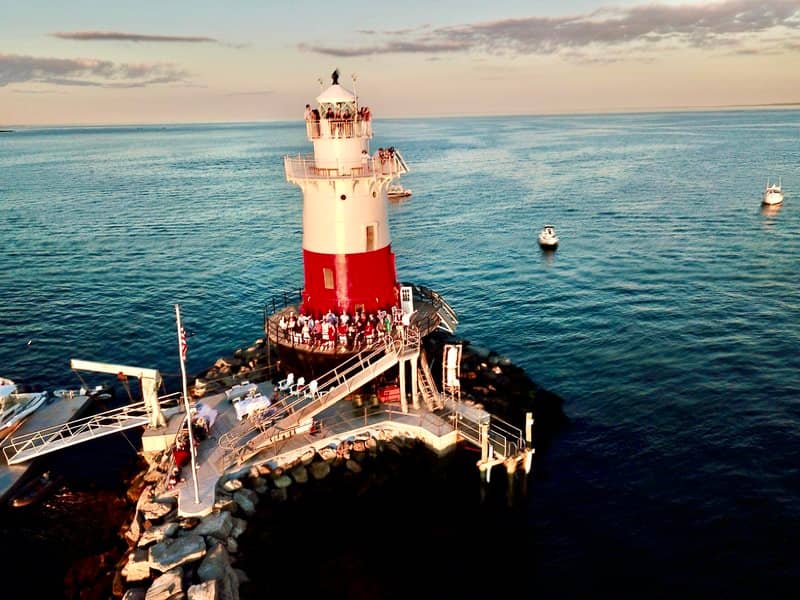
Justin Tyers • 11 May 2023
Bright future for Greens Ledge Lighthouse
The Greens Ledge Lighthouse off the coast of Rowayton and Darien, in Long Island Sound, Connecticut USA was proposed as a navigation aid in 1889 to help mariners through the west entrance to Norwalk Harbor, in the maritime approaches to New York City. It was constructed at the western end of a long and dangerous shoal extending from Sheffield Island and first lit in 1902. In 1933, more than 30,000 tons of sea defence was added to the ‘riprap’ foundation using rocks excavated from the foundations of Radio City Music Hall – under construction at that time. Eventually the lighthouse fell into disuse and in a deteriorated condition was bought by the Pettee family for $150,000 at auction in 2016. They donated it to the Greens Ledge Light Preservation Society – a nonprofit organisation established to bring the lighthouse back into operation. Today, more than one hundred years after its inauguration, Greens Ledge Light – 41° 02′ 30″ N / 73° 26′ 38″ W Characteristic: Al WR 12s – beams out once again as an aid to navigation. Having restored and stabilised the tilting structure which stands 100 feet above the sea, the lighthouse has been repainted. The accommodation, storage and machinery room is immaculate, and a desalination and water treatment plant have been installed, powered by an off-grid solar and wind energy installation. Off-shore, off-grid energy. The lights’ unique accommodation. Posting on the Victron Energy user-forum Victron Community pages in March, Alex Pettee said: Having used these forums for the research/planning, I wanted to share our successful experience with adding a 400W Wind Turbine (Primus Air Silent X) to our Victron-based solar power system and enabling remote monitoring capabilities via the Cerbo GX (the Victron communication and control device) and the internet based remote management platform VRM . We installed this on Greens Ledge Lighthouse which is about 1 mile off the coast of Norwalk, Connecticut. We have about 3kWh of solar capacity and wanted to add a wind turbine to help provide supplemental power in the winter months, given our abundance of wind resource. To enable remote monitoring, we used a SmartShunt configured as a DC Energy Meter. We initially set it to “Wind Turbine” but this did not show up on VRM (it was only accessible via the VictronConnec t app and Remote Console). When changed to “PV Charger” it showed up on VRM alongside the solar panels, and this has been a good setup for us. We’re able to see real-time production in VRM, see historical production via a device widget in VRM , and track the cumulative output via the VictronConnect app. Production-wise – we’ve been monitoring it for about 2-3 weeks and are on pace to produce about 20kWh for the month. It has a steep power curve, so the vast majority of production comes when winds are in the 20-30mph range. We produced about 3-4kWh in a 24-hour period when we had ideal conditions. The Greens Ledge Light off grid system comprises the following components: System Monitoring : Cerbo GX , 2 x SmartShunt (Connection via Verizon LTE) Charge Controller: 6 x SmartSolar MPPT 150|85-Tr Solar Charge Controller Inverter : Phoenix Inverter 3000VA Solar Panels : 10 x 300W Renogy Solar Panels Wind Turbine: Primus Air X Marine 400W 24V Wind Turbine Backup Battery Generator: Fischer Panda AGT- 6000 24V DC Generator regulated by Victron Orion-Tr Smart DC-DC Charger AC Backup Charger: Centaur 24-Volt 60 amp charger Battery : 12x 2V MasterVolt MSV 1650Ah Gel Battery Watermaker : Spectra Watermaker 24V Newport 700 Series Heater : Webasto Thermo 230 24V 80k Btu Hydronic Heater w/ REAL Heat Fan Heaters (1 Per Floor) Water Heater : Webasto Waterheater 20 gal Siting a wind turbine on a lighthouse? You might think that a wind turbine on a lighthouse a mile out to sea couldn’t fail to find the wind – but there are difficulties. Lighthouses need to be easily identifiable by eye, from a distance – and especially in conditions of poor visibility – so you can’t clutter all your utilities: turbine, satellite dishes, solar panels ‘on the roof’. The ‘land’ around the lighthouse is limited and exposed to stormy seas – which only leaves the curtilage at the base of the lighthouse tower. Alex says: When wind speeds are below 20mph or above 30mph – the output of the turbine is generally minimal. However – the unit is not optimally positioned (about 20-30% of the wind is blocked by the lighthouse), so others may have better experience in lower and/or less turbulent wind conditions. We’re happy with the production and are considering adding a second and perhaps a third unit. We’ll attempt to optimize over the coming season and report back any significant findings. We post updates about the restoration work and the off-grid systems on our Instagram and Facebook if folks would like to follow us and/or ask any questions. United States Coast Guard The light and fog horn are managed by the US Coast Guard through a separate solar power system with their own batteries and solar panels. They upgraded their light to LED at the time of the interior restoration. Significantly downsizing their equipment liberated an entire room (which is now used as a kitchen) so that their installation is on Level 6, one level below the light. The old light was a VRB-25 with incandescent bulbs and needed to be serviced at least quarterly, whilst the new LED model is a VBL-44 which uses bulbs with a 10-year life. The new LED beacon has a range of approx 20 nautical miles. Lighthouse Tours open to all With the structural restoration work now complete, Alex tells us that they’re launching their first full season of public tours beginning in late May. You can check dates using their social media links, above. Alex says: We’re in the process of furnishing the restored lighthouse with exhibits and had the idea of utilizing the Victron Remote Management ( VRM ) portal to “show and tell” our completely off-grid renewable energy systems, powered by solar and wind energy. We had already set up all of our systems to be physical “exhibits” that are visually accessible – but the VRM interface takes this exhibitry to the next level. We’re going to be setting up several iPad kiosks with the VRM interface running which we’ve realized are amazing interactive exhibits, showing the real-time energy production, energy usage across AC and DC, tank levels, temperate, and overall system status. Having that visual dashboard to reference will make telling a very technical story much easier, and we’ve found that it becomes a very immersive experience. As a not-for-profit organisation dedicated to preserving this piece of maritime history fund raising is an essential part of Greens Ledge Lighthouse Preservation Society’s activity. In addition to accepting donations they’ve developed a unique and exciting range of hospitality events and opportunities where everyone gains. Can you imagine yourself waking up to this view?
Justin Tyers • 05 May 2023
Remote living without limits
For Marty and his wife Leslie, living and working off-grid doesn’t mean making sacrifices. In fact, it hasn’t seemed to slow them down one bit. Despite being tucked between the mountains in rural Montana, their expanding off-grid power installation has allowed them to pursue their many passion projects such as growing tender plants in a heated greenhouse, soft fruit in an irrigated orchard while running three-phase machinery for Marty’s timber equipment business. And it’s all powered by the sun. When the couple bought the property just two years ago, the cost of bringing in public utilities was quoted at $35K. They decided to invest that money in an off-grid system which they’ve expanded over time, adding batteries, inverters, charge controllers and solar panels. “When Marty first contacted us, he had done his research and had a good idea of what he wanted,” says Aaron Hanson, owner of Intelligent Controls , a technical distributor for Victron Energy. “We helped him choose the right equipment and answered his questions along the way, but Marty fully owns his system. He’s installed it himself. He’s hungry to learn all he can. He monitors his system performance data on VRM and is always looking out for ways to optimise his system.” During a second phase of his installation, Marty doubled the capacity of his battery bank, which now offers 84kWh of usable power. “My SOC (state of charge) now stays at around 90%. When it does drop down, it’s back to full capacity by 9AM the next morning,” says Marty. An electric fence protects Marty’s newly planted orchard and beehives from curious grizzly bears. The roof of the house, now covered with solar panels, yields 24kWp, and this summer Marty will add 46kWp to the ridge of his roof and another 40kWp on the south-facing side of his greenhouse. This oversizing of the battery bank and PV arrays allow for a significant increase in Marty’s loads and ensures his batteries stay charged on cloudy and snowy winter days without using propane or relying on the backup generator. His system generates enough power to cover day-to-day domestic needs, pump water for orchard irrigation, and supply the workshop’s three-phase power tools with plenty of surplus energy for long, hot showers and soon – horticulture. Surplus solar energy will be stored in a large insulated hot-water tank fitted with immersion heaters. Hot water circulated through underfloor pipes will provide heating for the greenhouse, allowing year-round cultivation of vegetables and fruit. “ There is a perception that living ‘off-grid’ means limiting your power consumption to the bare minimum and not being able to run the types of loads you ran when living on-grid “, says Laura Hanson, Head of Marketing at Intelligent Controls. “ Marty’s system is ambitious, but it shows what’s possible with quality equipment and good technical support. He’s a capable person with a vision, and we get to help make it happen .” Marty’s power installation comprises: 6 x 48V 10kVA Quattro inverter chargers configured for three-phase power supply Solar panels totalling over 100kWp when the present and planned installation is complete. 3 x SmartSolar MPPT 250/100 Tr VE.Can Solar Charge Controllers harvest the solar energy for storage into Pylontech Lithium iron phosphate batteries 2 x SmartSolar MPPT RS 450/200 solar charge controllers allow series connected panels installed a thousand feet (three hundred metres) away from the system to provide energy with minimum cable losses. 24 x Pylontech US3000 batteries with a total capacity of 84kWh Lynx Power-In DC distribution units provide bus bars with monitored fuses A Cerbo GX coordinates all installed devices and provides system power data to a GX Touch 50 touch-screen user interface – and also to the free-to-use Victron Remote Management ( VRM ) platform – so that Intelligent Controls can remotely monitor the system to offer advice or take action if necessary. Intelligent Controls provides the products, training, and technical support their customers need to resolve their energy challenge. “We like to describe our business as a problem-solving business,” says Aaron Hanson. “The technology has changed, but our approach of digging in and identifying the best possible solution together – has not.” Marty is pleased to have achieved independence in every area of his life – including energy independence, thanks to his reliable power installation: “It’s been so flawless that when the power went out in town, I didn’t know it,” says Marty. “If you buy Victron and you do it right…You won’t even know that you’re off-grid.” Let’s take a look at Marty’s set up:
Justin Tyers • 21 April 2023
Zen Jungle Retreat
Zen Jungle is a transformational retreat set in the rolling countryside of Devonshire, England. It offers 7 and 14 day residential courses with accommodation in luxuriously appointed self catering lodges which have all the comforts of home – but with 40 acres of tranquility, five lakes and glorious views. During their retreat guests attend a programme of events discussions and lectures which offer participants a new insight into their lives, a chance to reevaluate priorities and to learn to choose different responses to life’s triggers. The goal is living life in the moment, free from anxiety. Visitors can drink and dine in a stylish timber-built restaurant, and at the soon-to-open lakeside bar and grill. The retreat’s accommodation is sumptuous and well provided with amenities. The forty-acre site has been extensively re-developed over the last two years and although parts of it have a connection to the electricity grid, access to power needed to be extended and upgraded to meet increased visitor demand. The projected cost of improving the network supply was high. For those reasons, owner Jason Tyldesley decided to investigate the viability of a solar-based private power system. Ethically, he was already keen to provide the site with green energy for his guests to enjoy silent, worry-free power from the sun. But how do you size a power utility which will provide a flawless service from day one? Perfection through planning Working with solar designers and installers Howetec , Jason produced a spreadsheet of projected power consumption for the accommodation and public areas with daily and monthly estimates. These calculations allow for a system design and build in which everyone can have confidence. Using that data, Tom Howe and his colleagues at Howetec were able to produce a schematic for the planned installation, specifying devices which will meet the retreat’s need today …and allow for future expansion. The scope of HOWETEC LTD works was to design, supply and install the solar and power supply to points of isolation for the electrical distribution to the site. Speaking about this installation’s challenges and successes, Howetec’s Thomas Howe says: A purpose built plant room was built and we designed a system to meet the budget and deliver the required performance, of 6 x Quattro 48/10000 Inverter/Chargers in a Three Phase configuration to provide up to 20kVA per phase coupled to 20 x Leoch LiFePO4 51.2V Battery packs giving a total of 102.4kWh of stored energy. A DC coupled 51kWp ground mount Solar PV system feeds into 4 x SmartSolar MPPT RS 450/200 Solar Chargers providing the main source of generation with the addition of a 110kVA generator to provide back-up power to mitigate short periods higher demand and cover the periods of lower solar generation. The system is electrically rated as 3P / 400V / 125A to accommodate any future increases in demand where potentially another bank of Quattro’s could be added a long with additional storage, but as it stands the back-up generator can deliver this max rated power through the system if required. The configuration also includes a changeover switch for bypassing the system in the event of system maintenance or in the unlikely event of a system failure where the generator would be able to power the loads directly. From a technical standpoint covering the peak loading within budget was a point of long discussion….the initial design of using 6 x 15kVA Quattro’s was changed to 10kVA Quattro’s to suit budget constraints but having a large back-up generator and the possibility of expansion gave us consensus on the current design. Director Thomas Howe has been installing autonomous energy systems all his working life in the Automotive and Marine industries with companies like Sunseeker. Launching Howetec almost five years ago, most of the company’s work load is shore-based and mainly off-grid. Extensive knowledge, tidy installations and an eye for detail have resulted in the bulk of their operations being business to business – as the contract installer of choice. Thomas sees a strong future in factory-built containerised systems for Hybrid power generation – which is a particular interest of his, as is consultancy work in systems design. DC power distribution for this installation is made using 11 x Lynx Distributors which incorporate busbars with monitored fuses. Lynx distributors are modular allowing the busbars to be extended – observing the 1000A current limit – resulting in professional-looking control rooms What is the inspiration behind Zen Jungle? As a successful businessman with financial security Jason Tyldesley felt he ought to be happy – but wasn’t. Disappointed by that ‘disconnect’ he began his own journey of discovery. His learning over the following years provided him with the calm he had been searching for. In order to help others, he organised his knowledge first into a book, and now he provides his teaching in person through the many experiential activities organised at the retreat. Originator Jason Tyldesley (right) If you like what you hear about Zen Jungle but can’t get there in person, Jason’s courses are available in distance learning and virtual coaching formats.
Justin Tyers • 07 April 2023
Waiting for Solar Power?
The Galapagos archipelago has just installed its first Electric Vehicle Charging Station. As you might expect at this internationally important nature reserve the installation is off grid, and 100% powered by the sun. Located on the archipelago’s most populous island of Santa Cruz the charging station serves the sixty-or-so EV vehicles which use the islands roads. No charge is made for the energy they receive. Although the islands have a population of fewer than 30,000, they receive almost a five-hundred thousand visitors per year – with both islanders and visitors benefitting from the EV charging installation, which was funded by the South Korean car manufacturer, Kia Corporation. The remote installation was designed and built by Renova Energia – the Ecuadorian specialist in solar-based energy system design, supply and installation. Their first off-grid EV charging station includes the following devices: 86 x Solar Panels by JinkoSolar offering 34.83kWp 6 x MultiPlus-II 48/8000/110-100 230V Inverter chargers configured for 3 phase operation 16 x LiFePO4 Battery 12,8V/160Ah Smart providing 32kWh total capacity 2 x SmartSolar MPPT RS 450/200-Tr Solar Charge Controllers A Cerbo GX with GX Touch 50 user interface The SmartSolar MPPT RS solar charge controller has been designed for systems with large series-connected PV arrays charging 48 VDC battery banks. It’s equipped with VE.Can bus ports which allows additional SmartSolar RS and VE.Can MPPT units to be daisy-chained for synchronised battery charging from large solar arrays. Testing the system in real life David Aguirre , who was the Lead Engineer for the project, found that they could increase their Kia Electric Vehicle battery’s stored energy from 15% to 90% in just 35 minutes with a 3-phase 22kW charge. A full battery charge in their vehicle provides a range of 150 – 200 km. The station is capable of charging five vehicles per day. The installation’s power history shows that during the first three months of operation it was delivering an average of 100kWh in charged energy per day. Lead engineer for this project was David Aguirre Right first time A number of challenges had to be overcome to achieve this remote installation. Firstly, Renova Energia’s installation technicians had never visited the Galapagos, and had only seen a photograph of the installation site – which was not provided with measurements, so they weren’t entirely sure what they would find. Shipping the installation hardware to site required a land-and-sea journey of 25 days to reach its destination …meaning the consignment had to be right first time – there was no popping back for items which had been overlooked! Also, on the islands there are no electrical consumables available, fixings and fastenings terminals – everything needed for the completion of the job had to be foreseen and included in the hardware delivery. David Aguirre and Paul Coral Electrode Grounding – improving conductivity David Aguirre says: The Galapagos Islands pose a unique challenge for grounding systems due to their poor soil conditions, which consist mainly of volcanic rocks. To overcome this obstacle, we employed an active chemical electrode grounding method. In areas with dry or rocky soil, traditional grounding methods may struggle to achieve low resistance, which is necessary for proper grounding. However, with a chemical ground electrode, a special solution is poured around the electrode to enhance electrical conductivity, even in poor soil conditions. This solution creates a low resistance path for electrical currents to flow from the equipment being grounded to the earth. Chemical ground electrodes have advantages over traditional grounding systems, including their smaller size and fewer requirements for space and electrodes. This makes them an excellent option for areas with limited space or difficult soil conditions, such as urban environments or regions with shallow or rocky soil. The project build was achieved by four team members in ten days. David Aguirre, Paul Coral, (Electrical Engineer), and Electricians Darwin Macanchi, Patricio were on site with Renova Energia’s General Manager Christian Marin overseeing the project from the companies HQ in the Ecuadorian capital city of Quito. Not surprisingly the islanders love their new EV facility and are proud of its contribution to green energy for transport. The Islanders are conscientious caretakers of their fragile ecosystem, and appreciate the opportunity to demonstrate sustainable living to the island’s many visitors.. However, not all Galapagos residents will be choosing life in the fast lane, regardless of how sustainable it is. Tortoise: Magda Ehlers Kia Corporation have commissioned a video of their sponsored Galapagos EV charging station project.
Justin Tyers • 24 March 2023
African Clinics get 24hr power in a box
More than twenty Health Clinics which provide care in the remote areas around Lukulu, Zambia, will soon have reliable electricity from solar energy systems. A design called ‘African Solarbox’ has been developed by Our Energy Foundation working in collaboration with Top Systems and Infralicht . It’s a ready-to-go, tamper-proof energy system consisting of six solar panels and eight batteries which can be delivered to remote locations where it will be providing energy within ten minutes. The system harvests approximately 14 kWh of electricity per day and includes a battery pack with 10 kWh capacity – sufficient for overnight lighting, medical refrigerators, electric microscopy, and the running of various small devices. The system designer is Henk Meulink whose company MijnEnergiefabriek is a wholesaler of intelligent solutions for solar panels and solar water heaters. Our Energy Foundation has achieved more than forty energy supply projects for schools, hospitals and other institutions in Kenya, Tanzania, Uganda and Zambia, using financial support from Rotary International and Lions Clubs International – together with corporations, schools, churches and private foundations. MijnEnergiefabriek also donates 10% of its annual profit to these causes. Discussing typical regional difficulties Meulink says: Lukulu is located in the northwest of Zambia – it’s a very poor and isolated area about the size of the three northernmost provinces of the Netherlands, and can only be accessed by dirt roads. The capital has one regional hospital which used to be without power between midnight and six every morning – so night-time care could not be provided. Fortunately this changed in 2019 with the installation of solar panels, battery energy storage and LED lighting. Robust, reliable solar energy During a visit to Lukulu, Meulink visited various health clinics in the region where the situation turned out to be even worse. There are 23 health clinics around Lukulu, of which only three are connected to the electricity grid, he says. Grid power is seldom available – and never at night. Some clinics had invested in solar panels and batteries, but these were regularly ‘borrowed’ by fellow villagers. This was an intolerable situation which I wanted to solve by designing a robust and reliable solar energy system that could not be misused, or indeed stolen. I made some rough sketches based on Victron Energy components and began investigating Energy Storage Systems ( ESS ) – which is how I met Norman Heins from Top Systems, who was immediately enthusiastic about my ideas. Together with Infralicht we developed those sketches. Says Meulink: The solar boxes had to be vandal-proof. Also, the batteries and inverters had to be free of user-control buttons and switches – a green and red light being sufficient to indicate the current status. The rest of the installation is safely concealed under lock and key. External components such as the solar panel roof are attached with locking screws, preventing removal. 100% Sustainable. 100% Off-grid An important precondition for all devices was clean power – able to be fully charged by the sun. Also, the solar boxes had to be as small enough so that 24 solar boxes could be transported to Africa in a single container. Meulink describes how it was achieved: Eight Hoppecke AGM-Ess batteries of 6V/200Ah each – with a total capacity of 10 kWh – form the basis of every energy system. We chose sealed lead-acid batteries using absorbent glass mat technology in combination with the Hoppecke Extended Stability Standard because they offer the highest quality of their kind. The batteries have an excellent number of charge cycles. Moreover, they are efficient in absorbing charging current and there are no technical parts that can break. This is certainly an advantage in this project, because the clinics are difficult to reach breakdowns could result in weeks or even months of delay before repairs or replacements can be made. In the rainy season, some areas are closed off from the outside world for several months. The Hoppecke battery pack is charged by the sun. Six solar panels of 380 Wp – donated by MijnEnergiefabriek – provide power for each system. The solar panels are linked to a SmartSolar MPPT 150/45 Solar Charge Controller which provides the correct charging current to the batteries. A MultiPlus-II 48/3000/35-32 inverter/charger capable of 3 kVA of continuous power provides each clinic with electricity on demand – night and day. Remote control and monitoring A Cerbo GX communication device provides control and monitoring of the system, whilst a GX Touch 50 display provides a touch-screen user-interface. Thanks to a GX LTE 4G cellular modem and a Zambian SIM card, the system is also equipped with internet access , says Heins. Although the electricity grid in Africa is limited, the GSM network is excellent. Through the network connection system data is visible on the Victron Remote Management ( VRM ) portal. The local African installer/technician; Our Energy Foundation, and Top Systems can log in and even manage the system in the unlikely event that a malfunction occurs. When the door of the Solarbox is opened an alarm is triggered, both on-site and digitally, so that we can immediately take action. Demo Unit To test the design and operation of the African Solarbox prior to shipping, a demo system was first created which was extensively tested in the Netherlands. Based on test results, some optimizations were made. The Solar roof of 4 x 4 meters was fine-tuned so that instead of a flat roof, a slightly pitched roof was chosen, allowing the solar panels to be cleaned naturally, each time it rains. In the summer of 2022, the demo model was ready and Meulink started looking for a sponsor, which he found in a private foundation. Subsequently, the construction of the 23 energy systems could begin and were ready for testing by November. Each folded solar box has a size of 80 x 120 cm. As a result, 24 boxes fit perfectly into a sea container, says Meulink; leaving only 2cm of space! The boxes left for Africa at the beginning of February, arriving a few weeks later in Dar es Salaam, Tanzania, from where they still have to travel approximately 2,000 kilometres to Lusaka. From there, the boxes go in smaller trucks to the Lukulu district. A local installer who has already succeeded in commissioning the Hospital system is once again working with Our Energy Foundation on the installation and on-going maintenance of the shipped units. In addition he will install wall-sockets and lighting points together with LED lighting in all clinics. Plug-and-play energy systems Once on site, the installer will find he can open the boxes and connect them to provide power within ten minutes. However, due to the size of the area, and the difficulty in accessing the clinics, the 23 solar boxes will be installed on a rolling programme beginning in May and not completing until August this year. Solar Benefit Because of the intensity of the sun in Africa the solar energy system will be capable of supplying electricity 365 days a year, day and night, without the need for another energy source. This yields enormous benefits: the provision of First Aid in the area around the location of each of the 23 clinics will be substantially improved; medicines and antibiotics can be chill-stored; and emergency operations, child-berth and other urgent interventions can also be performed even at night – saving lives. The project in Zambia has generated a lot of publicity and interest in the African Solarbox, with enquiries arriving from Suriname, Malawi, Zimbabwe, Sudan and others together with the British Red Cross and even International Departments of Defence taking interest. The availability of reliable remote solar power changes everything.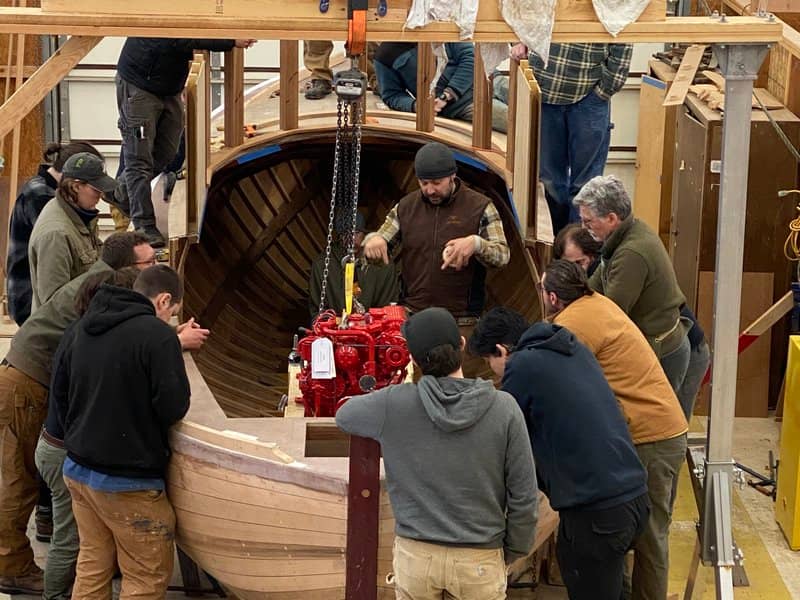
Justin Tyers • 17 March 2023
Traditional Boatbuilding with advanced systems
The Northwest School of Wooden Boatbuilding (NWSWB) in Port Hadlock, Washington State, USA, is a busy school with sixty pupils on campus, some of whom are there to learn wooden boat construction techniques, and others to gain a solid grounding in the electrical and mechanical systems which drive modern leisure and working vessels. Some students go on to take both courses. Graduation from the much-respected boatbuilding school offers easy access to entry-level employment in marina boatyards; commercial boatbuilders; and even more widely in related marine trades. The mission of the NWSWB is to teach and preserve boatbuilding and marine systems skills while developing the individual as a craftsperson . The sheer beauty of traditional timber boats with their sweeping lines ensures that there will always a market for restoration and new-builds. Likewise, students who graduate from the school’s Marine Systems program discover that a shortage of candidates with their skills, and plenty of unfilled vacancies in the industry, brings them many interesting employment opportunities. It’s also true that the woodworking skills students learn are easily transferable to advanced carpentry in any field – and Systems students will find that their new knowledge is equally applicable in other industry sectors, such as Recreational Vehicles, and off-grid homes. Kevin Ritz conceived and developed the NWSWB’s Marine Systems program. The course syllabus along with the department’s hands-on training equipment – including everything from diesel engines to that essential piece of equipment: the marine toilet – have been curated according to his knowledge of what the Marine industry installs in modern water craft. Kevin is a former lead instructor for the American Boat and Yacht Council (AYBC). Now the lead instructor for the Marine Systems program at the school, one of the Marine Systems Diploma Program’s attractions is that it includes twenty-four complete marine electrical power systems – one per student – which becomes the students ‘property’ for the duration their program. Each installation comprises right up-to-date devices used for the power supply of superior marine craft having well-appointed accommodation and utilities. Lithium-Iron-Phosphate Batteries Smart are particularly suited to mobile energy applications because of their light weight and compact ‘energy-dense’ unit size, compared to Lead Acid batteries. Low internal resistance allows them to charge quickly with a cycle efficiency of 92% – both important factors in off-grid energy use. VE.Bus BMS V2 are Battery Management System devices specifically designed to manage Victron Energy Lithium batteries in systems with Inverters / Chargers having a VE.Bus Interface. In case of over- or under-voltage at cell level they intelligently switch and protect the installation. MultiPlus 12/3000/120-50 120V is a pure sine wave Inverter/Charger often chosen as part of a mobile energy installation. Two AC outlets – one of which is live only when there is AC input – allows the user to connect non-essential loads to the disconnect outlet. On leaving their dock or marina berth, only essential loads will remain powered up. Back in dock, plugged in, power supply to both outlets is automatically resumed. And if the shore power is current-limited (as it so often is) the MultiPlus’ PowerAssist feature will add battery power to shore power to run big current draw devices. Isolation Transformer 3600W 115/230V Connecting a shore based ground wire to the metal ground of a boat is likely to cause galvanic corrosion. Not connecting to the shore based ground wire is dangerous. The Isolation Transformer safely prevents shore-power galvanic corrosion by eliminating the electrical continuity between ship and shore. Autotransformer 120/240V-32A provides step up step down output, and split-phase balancing to make maximum use of the available current for both 120 and 240V output legs. A data sheet describing a working example of the problems which can be encountered in a split-phase power supply can be found here . Cerbo GX is a communication device which extends system control by allowing installed devices to talk to each other. Cerbo GX data can also be communicated to VRM – the Victron Remote Management platform which allows users to monitor and control their installation from anywhere in the world. Local touch-screen control can be provided by a GX Touch 50 . Local system management can also be executed using any smartphone or similar device which has the VictronConnect app. All platforms can show Tank Level data, and all data can be viewed both in real time, and historically. Kevin Ritz says: “ Students are going to be able to do hands-on installation practice, programming, and trouble-shooting using state-of-the-art equipment. They’ll be able to hit the ground running when they get into the workplace.” Kevin’s program is supported with input from Victron sales managers, trainers and brand Ambassadors like Charlie Johnson PE, who is an ABYC Master Technician. The electrical training consists of a number of modules beginning with the nature of electricity; the danger of electric shock drowning; overcurrent protection; using a multimeter; series-, parallel-, open- and short-circuits; wiring, crimping, types of termination; schematics and diagrams; load calculations and wire sizing; batteries; alternators, transformers, inverters, generators and galvanic isolation; through to voice communication and the NMEA marine data communication protocols. Kevin Ritz, together with Bruce Blatchley and his students designed and built a fully equipped ‘pump out’ boat which is driven by an electric motor and serves boat owners in the Puget sound. Click the image for full video by Off Center Harbor [ Opens in a new window ] . Energy Installation Training Manuals In addition each student is given a hard copy of the book Wiring Unlimited (digital downloads are free for anyone using the link). It contains a wealth of information about the nature of electricity; and guides the user toward making informed decisions when choosing wiring, fuses, terminations and switches to carry the system’s expected currents, and to serve the installation topography. Students also receive a copy of the book Energy Unlimited (also free to download using the link). Energy Unlimited has been written with the Marine application in mind and exhaustively discusses battery based energy systems: including battery health; battery types; together with charging from AC and DC sources; dual battery charging; and it suggests system design to meet low, medium and high daily energy demands and how to provide sufficient power for inrush – or intermittent Peak demands. Betsy Davis, Executive Director at NWSWB says: “ The Marine Systems program is a competency-based education program designed to teach skills needed by and to meet the demand for entry-level marine technicians. The program provides both theoretical and hands-on learning to provide students with necessary skills to enter the expanding market for marine systems technicians. The program covers tasks integral to marine systems installation, service, and repair in topics such as electrical and solar systems; electronics; corrosion; diesel, outboard and electrical propulsion; steering and controls; hydraulics; plumbing; and heating and refrigeration. “The school’s Marine Systems instructors work together with employers and Victron experts to define topics for training. The goal is to stay focused on what is most important and common in marine installations, and keep it hands on as much as possible. Victron will provide free technical seminars for the industry in the school’s classroom at the Port of Port Townsend’s boatyard.” You can find more information about Victron Energy devices designed with professional and leisure marine applications in mind in our Marine Brochure . You can learn more about the Marine Systems program and enrolment on the school’s website . And you can watch the experience of one NWSWB graduate – Demian Detweiler – here:
Justin Tyers • 10 March 2023
Pulling water out of thin air
The community of Mau and its 100 student school in the Namosi district of Fiji have just taken delivery of an atmospheric water maker. The device condenses water vapour from humid air to produce clean charcoal-filtered drinking water. The installed unit can supply up to 450 litres per day. Mau has a population of around 500 people whose water supply is currently either rainwater – which must be boiled if it is for consumption – or else it comes from a bore-hole, the level of which has been falling recently. The water-making device collects water produced through condensation and works most efficiently in conditions where the humidity is typically above 46%, the ambient temperature is around 25C, and where there is a reliable power source. The company behind the atmospheric water-maker, Waiea water, asked Fiji Victron installer Solar Fiji to design a three-phase off-grid solar energy power plant to provide the unit with its 4kWh – 5kWh power demand. The installation which was funded by the Branch family, who are also Mau residents, comprises: 24 x Jinko 370W Mono solar panels offering 8.9kWp 24 x Narada 2V 600Ah Tubular Gel batteries storing 29kWh 3 x MultiPlus-II Inverter/Chargers 48V 5000W configured for off-grid supply of three-phase electricity 2 x SmartSolar Charge Controller MPPT 250/100 3 x Lynx Power In DC busbar for tidy power distribution 2 x SmartSolar MPPT 250/100-Tr VE. Can 1 x Color Control GX communication device Three-Phase Solar based off-grid three-phase energy systems are becoming increasingly common for remote industrial power supply. In fact even the smallest Victron MultiPlus Inverters, rated at just 500VA, can be configured for three-phase and parallel operation. However, by using our largest Inverter/Charger – the Quattro 15kVA – it is possible to configure a three-phase energy system capable of providing 180kVA. If you want to learn more about three-phase Inverter systems you can view our practical online training for advanced installers. You can also learn more about the theory of three-phase and parallel installations here . You’ll need a Victron Professional account to gain access to our online learning modules, and you’re very welcome to open one. Look for the ‘Sign Up’ link at the bottom left of the Victron Professional login page. Solar Charge Controller for large Solar Arrays The SmartSolar Charge Controllers used in this installation – the 250/100-Tr VE. Can – is suitable for larger series- and parallel-connected solar arrays. Up to 25 SmartSolar Charge Controller units can be daisy-chained using their VE. Can interface, with all units providing synchronised battery charging of the solar harvest. Alternatively, up to 10 units can be connected for synchronised charging using the device’s built-in Bluetooth communication. The community water-maker is sited at the school so that children can easily access healthy drinking water during the day; and, for the community, the schools location on high ground is ideal for downhill water portage to the village. Solar Fiji are pleased to have helped install the island nation’s first condensing water maker. One of the challenges they had to overcome was delivering their factory installed energy system – which is housed in a 20 foot shipping container – to the interior location in Mau. Pictured here l-r are Joni Ravai (Senior Technician), Lice Ratulevu (Technician), and Atalemo Waqa (Senior Technician), together with one of the beneficiaries of this system from the Mau Community Waiea Water filmed the installation of their unit which you can view here: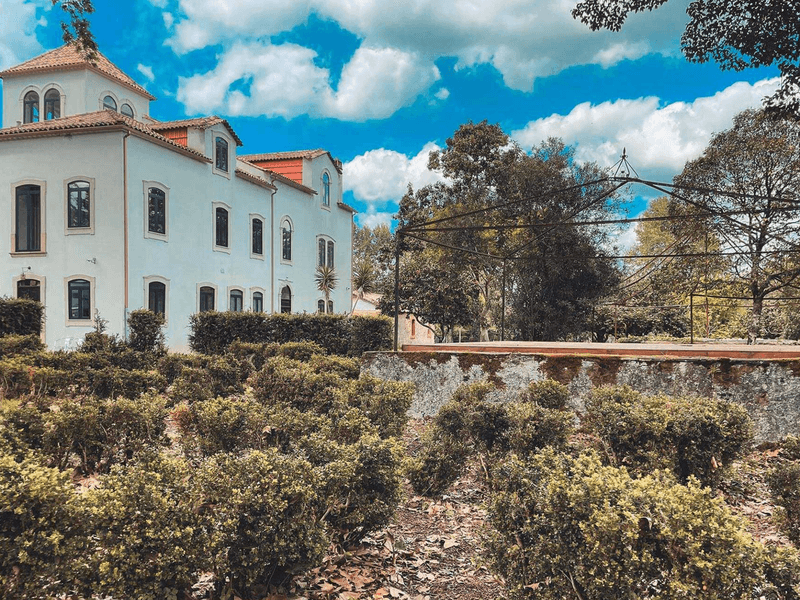
Justin Tyers • 23 February 2023
Sunshine powers Portuguese Yoga retreat
Van life couple Tom and Alison didn’t expect to stop long at her farmhouse in Portugal. After all it was in ruins. Tom says: She’d been trying to sell it for years but no-one was crazy enough to take on such a big renovation project. In March 2020 on a six-week camper van trip around europe, they dropped-by to check on the property for a few days, but with the introduction of Covid travel restrictions just then, they weren’t allowed to leave. Initially installing a water pipe to serve their camper van (the buildings were not habitable) they gradually fell in love with Quinta do Areal and began the ambitious restoration project themselves. Tom wrote to tell us the story: We were lucky to have included solar panels and batteries in our campervan conversion so we didn’t need power. We spent our time working remotely (amusingly, ending up somehow in National Geographic Traveller magazine as “digital nomads”) and doing little jobs around the property. As time went on, our ambition to start renovating the farm properly grew as well and we were lucky enough to find good people to help us. But we spent another 6 months living in our campervan before we could move into any part of the house. When my partner found it, it was a complete ruin. Ten years ago, structural work was undertaken to make the walls of the main building solid again and put a roof on it. Other than that, it remained like a glorified cave for ten years. No windows or doors. No electricity or water or sanitation. Most of the outbuildings were collapsing and the land was being grazed by goats, horses and cows that kept the grass down but were damaging the outbuildings and walls around the property. In the two and a half years that we’ve now been living here, and with help from some great people, we’ve fully renovated the house and some of the outbuildings, we’ve re-roofed all of the of the outbuildings to protect them. We’ve installed solar thermal heating and a large woodburning stove and a large PV array and battery storage so we can run “off-grid” for much of the year. Solar Energy provides 15kVA Tom and Alison’s solar installation comprises: 60 x Solar Panels provide 20kWp Batteries storage is currently 75kWh 2 x SmartSolar MPPT RS 450/100 Solar Charge Controller for larger solar array connected in series 3 x Quattro 15000 Inverter/Chargers have two AC inputs automatically switching to the live source. They also have two AC outputs, automatically dropping distribution to non-essential loads when no AC input is present. This ability dedicates battery storage to essential loads, and provides uninterrupted power. The system is controlled by a Cerbo GX which also provides data to Victron Remote Management VRM Victron’s web based platform which allows authorised users to monitor and manage the system from anywhere in the world. Local user-interface is provided by the touchscreen device GX Touch 70 Summer Pool We’ve also converted a water tank to an outdoor pool and are in the middle of building a spa area, with an indoor pool whilst also renovating another outbuilding into a self-contained guest house. It was obvious that restoration was going to be expensive. We had no real idea how much but realised that we could keep costs down without compromising on quality if we were heavily involved and had people around us we could trust. We’ve been lucky to find really good people. We’ve also been lucky enough to have businesses outside of Portugal that have continued generating funding which has been paying for this project. Our goal is to create a business here that helps this place pay for itself and its future upkeep. And that enables us to continue our ambition out into a large permaculture project to restore and enhance the land, to enable the land to support us and give a lot more back to nature. We have a small farm collection of animals growing here. Our latest addition is a very excitable Serra de Estrella puppy. They’re a giant breed from the mountains here and even though she’s only 6 months old she’s already over 30kgs. We have two proper farm cats who are very good hunters but very much like to be cuddled. We have 6 sheep (more on the way), 3 goats (more on the way), two donkeys (another on the way) and a collection of chickens, ducks and geese. The wonderful thing is that they all happily co-exist. The lead ram is friends with the male donkey and they hang out together. The goats tend to follow the other sheep. The birds tend to waddle around together and clean up bugs from the garden. Our guests come here to relax and be in nature. It’s so quiet here (apart from some of the animals sounds) and we have fields, trees and hills all around us. We run yoga and meditation retreats and get in some excellent plant-based chefs to prepare wonderful meals for our guests. And we have self-catering accommodation too. All of our guests can practice yoga in our yoga studio under the teaching of my partner, Alison, or explore the farm or surrounding area. We bought some electric mountain bikes for our guests to hire if they want to explore a bit further or higher than they could entirely under their own steam. Soon we’ll be opening the spa area too. We had no electricity at all here when we first arrived – apart from the solar panels and batteries in our campervan. When we realised we were going to take on the renovation project, we got a new connection to the local grid. Meanwhile, we were planning our solar installation and waiting for parts to arrive and roofs to go onto outbuildings that we were going to mount panels on. Our aim was to generate as much of our energy and food as possible from our land. That’s worked out pretty well. Most days in the summer, we generate more power than we can use, even charging an electric car as well and the sun generates our hot water and helps us grow an increasing proportion of our food. In the winter, we light the boiler burning wood grown on our land and our PV system still generates enough for our use in the house most (but not all) days. But we can’t charge the car without draining the batteries fully. So we’re going to be installing more panels and batteries soon to cover us for more of our use.
Justin Tyers • 14 February 2023
Daytona Beach puts EV charger in the fast lane
Daytona International Speedway has been thrilling audiences with diverse motor racing events for over 60 years. North America’s most prestigious endurance sports car racing event, the Rolex 24 at Daytona has just taken place. The event heralded the arrival of a brand-new racing class – the Grand Touring Prototype (GTP) – which uses hybrid powered vehicles. With this new class, motorsport sanctioning body International Motor Sport Association ( IMSA ) are sowing the seeds of a greener future in motor racing. At Daytona’s 500-acre site thousands of spectators can enjoy a ring-side seat following the venue’s high-speed racing, nip and tuck, along a three and a half mile circuit that incorporates the facility’s legendary high banks as well as portions of the infield. And beginning this year there’s a new trackside feature at Daytona – putting their money where their mouth is, IMSA has built an off-grid Solar Powered Electric Vehicle Charging Station to demonstrate the viability of EV solar charging technology. Spectators, visiting teams, and top officials from the cutting-edge automotive manufacturers will be aware of the installation which is housed at IMSA’s traveling Konica Minolta Business Center. The rolling facility travels to each of the 11 races on the IMSA calendar and is used for meetings between senior members of the motor industry or other current and prospective business partners and IMSA representatives. At future IMSA race events, the Konica Minolta Business Center will feature big-screen, EV charging status direct from the power monitor, so that forward-thinking race-goers can observe the power transfer straight from the sun to the vehicle in real time! The EV charging station is now a permanent fixture on IMSA’s traveling Konica Minolta Business Center – which is centrally located in the garage or paddock area of every IMSA event. Everybody who is anybody in motorsport will walk past the demonstration unit and be able to follow the numbers as it charges vehicles such as the BMW XM PHEV – using free energy from the sun. The installation consists of 2 x Quattro 48/10000/140 Inverter/Chargers configured for split-phase operation. In addition to providing up to 16kW continuously the Quattros can fast charge the batteries from AC, from connections to the electricity network and a generator, for example …automatically switching to the live power source. The on-board Lithium Ion battery bank features 24 Battle Born 12V 270Ah units storing almost 80kW of energy. On the walk-on roof 12 MerlinSolar flexible solar panels have been installed which can provide up to 5kWp. A Lynx Shunt controls battery charging from either the Photovoltaic panels or external AC, and power distribution is neatly made using the Lynx Distributor – which provides busbars with monitored fuses. The installation supplies two EV Charging Stations, and powers the AC sockets and lighting on board the mobile meeting facility. At the heart of the system a Cerbo GX monitors and controls solar power harvest and battery charging, and also provides authorised users with a touch-screen interface via the GX Touch 70 , smart phone access, and remote monitoring and control using the web based platform VRM . The system was built by Un-Plugged RVs whose George Agutter says he was really excited to be chosen to build this facility. The solar roof of the trailer is a work area every time the awning needs to be deployed. Walk-on MerlinSolar flexible panels, supplied and fitted by RRL Motorsports’ Rob Lebel, allow the entire roof area to be used for solar harvest. Working at short notice, George and his team designed and built a unique installation with huge storage and split-phase power supply which has worked faultlessly right from switch-on. Tyler Bourns – whose company Dragonfly Energy supplied the batteries – is excited too: I think this trailer build, along with it’s incredible off grid power system, is going to open a lot of people’s eyes to the possibilities of using lithium power in unique applications. Back at the race track – nine new-build hybrid GTP racing cars entered the event among a total field of 61 cars. Eight GTP cars completed the gruelling race right to the finish line almost 800 laps later! Meyer Shank Racing’s Tom Blomqvist drove the pole-winning No. 60 Acura ARX-06 along with team-mates Colin Braun, Helio Castroneves and Simon Pagenaud winning by 4.19s. The race winner was built by Honda Performance Development whose team worked for two years on their vehicle. The Daytona International Speedway track will be busy again on the 19th February with the launch of the 2023 NASCAR season and the world famous Daytona 500. Acknowledgement We’re grateful to David Pettit of IMSA and his team for their groundbreaking initiative, and for providing the background information for this story and – together with Tyler Bourns, Meyer Shank Racing, and George Agutter – for providing the images above.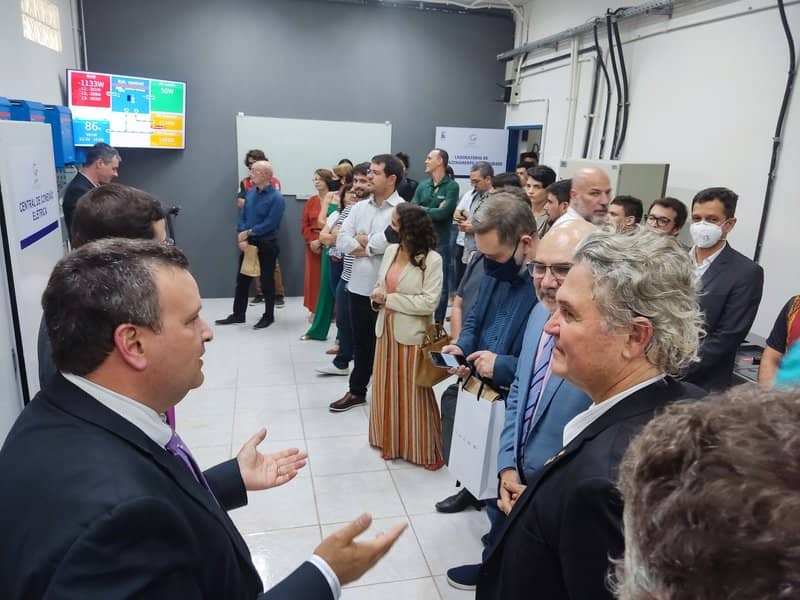
Justin Tyers • 06 February 2023
Brazil’s National Energy Research – powers up
Bachelor, Master and Doctor students on the Electrical and Automation Engineering campus at the Federal University of Pernambuco are contributing to research for the future of Brazil’s power supply. Working with a newly installed 30kVA three-phase power installation, they will help to define the mix of the country’s power infrastructure. The new faculty is known as the Storage and Mobility Laboratory – locally rendered as LAM. In order to meet the emerging energy demands for EV charging; reliable power for industry, and domestic supply using greener technologies, the research team will work with the new installation to explore the efficiency of Hydrogen; the viability of wind and solar at scale, and fast deployment of diesel generated energy – in order to establish their suitability to consumer applications. The build of the research system allows for many branches of research, including: Microgrid Hybrid systems with Diesel generator ESS systems EV charging station Backup systems Peak shaving Load shifting In Brazil, Private energy companies contribute 1% -2% of their profits to share in the benefits from national research programmes. This levy benefits everyone by funding well-planned investigations aimed at meeting the nation’s future needs. In this instance the installation comprises: 3 x Quattro 10kVA Inverter/Charger 2 x SmartSolar MPPT 250/100 Solar Charge Controllers Cerbo GX Communication and control device BYD Lithium battery – Bbox 13,8 kWh Fronius Symo 15 KW 19.3 kWp Solar Array 12.5 kVA three-phase Toyama Diesel generator Siemens Programmable Logic Controller The installation is housed in a new facility occupying three rooms, and extends outdoors where a six-car canopy has been built, on which the solar panels are mounted. The car port includes two EV fast Charging points rated at 22kW, and allows further research into the future of electric mobility, in association with the electrical engineerings department’s Jose Filho da Costa Castro. Professor Pedro Rosas from the Department of Electrical Engineering, invites co-operation with other Universities with different specialities to allow the testing of their research projects – perhaps in the reduction of fossil fuels; remote micro-grid infrastructures; or development of sustainable fuels. PhD student Davidson Marques who is also a Professor in the Department of Electrical Engineering, helped specify the system design, points up both the reliability of the system components and their accessibility for programming using VEConfigure which allows the students to prepare the system with different architectures and further the study of how energy installations might behave in different scenarios. Any simulation is possible – grid-connected; hybrid; and stand alone. Victron Sales Manager Jorge Ortiz is really pleased to have provided assistance and advice during the feasibility studies. The system will provide everything needed for the research work, it’s good that our products have been selected for this important work, and it’s great that students will be introduced to the possibilities of our equipment at the beginning of their careers. From the Control room the operation and control of the micro-grid are accessed using a Supervisory Control and Data Aquisition (SCADA) system. The plant has two devices managing and controlling the system, the Siemens Programmable Logic Controller (PLC) and the CERBO GX device. The devices establish communication via ModBus TCP protocol. The CERBO gathers information from the Inverter/Chargers; charge controllers; battery storage system, and Fronius inverter, whilst the PLC controls the connection and disconnection of supply charges wired into the inverters …allowing a more efficient and controllable environment. A lot of work has been invested in the successful outcome of this project, notably from the following organisations: Laureus Energia; CPFL Energia , Grupo de pesquisa Gift – a research group connected to Universidade Federal de Pernambuco , and Startup microred(uRED). For the acquisition of equipment, the LAM received an investment of R$ 1.25 million from two Research and Development Projects in Wind Generation and Solutions for Expanding the Recharging Infrastructure for Electric Vehicles.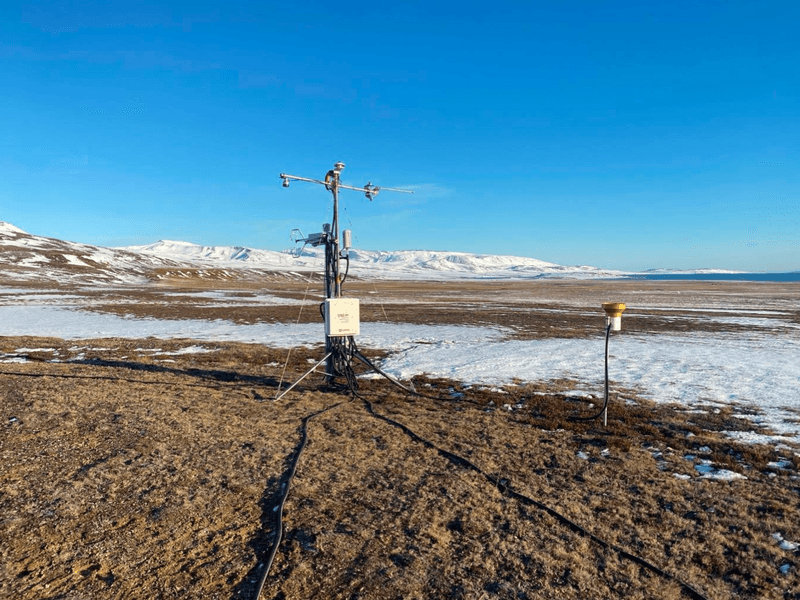
Justin Tyers • 13 January 2023
The changing climate of the Arctic – Data Livestream
A mobile environmental observatory has been established in Greenland which provides almost realtime data from a number of wifi-connected sensors located on the Arctic continent. Simultaneous real-time data is collected from Air, Ice, Ground, Rivers and the Marine environment and transmitted to climate scientists working at the Arctic Research Centre at Aarhus University in Denmark. Many challenges have been overcome to make data available continually, not least the need to generate energy during the Arctic Winter in order to provide instruments with reliable power from batteries which operate at very low temperatures. It is hoped that the project’s success will provide a model for global remote environmental data collection, and satellite transmission. Remote Mobile Observatory ARC-MO the Arctic Research Centre Mobile Observatory is a project to establish two remotely operable containerised weather stations in Greenland. The 2 metre-long wind and solar powered insulated containers are equipped to measure a number of temperature, humidity, chemical, radiation, and biology related data, continuously. The recorded data is averaged and transmitted daily – principally to the Arctic research team at Aarhus University. Data from this station is made available to interested parties at Gios.org Two solar panels on the roof, and two more on the south-facing wall of each container provide plenty of power in the summer. The 380W dual string panels have been chosen for their resistance to the ‘shadow effect’ as snowdrifts frequently obscure part of their surface. In practice the vertical panels can still provide 50% of their rated output when obscured by an 85 – 90cm snowdrift …whereas conventional panels would not harvest energy when covered to a depth of 20cm. All year round Power During the sunless Arctic winter when the solar output falls to zero, power is provided by a Superwind 353 wind turbine. The cut-in wind speed for these units is 3.5m/sec which would be felt as a gentle breeze (Beaufort F3) …there is no upper wind speed limit. At 12.5m/s (Beaufort F6) the power output from the 24V turbines is 350W. When the batteries have reached full charge the insulated containers will be warmed by the fins of the turbine regulator heat-sink. Currently each container has one turbine, but two are planned. The power installation was designed built and supplied by Danish companies: MG Solar; Solar Polaris and Scanpotec and comprises the following equipment and topography: 2x SmartSolar MPPT 150/35 Cerbo GX GX Touch 50 SmartShunt 500A/50mV Lynx Shunt VE.Can Lynx Distributor BatteryProtect 12/24V-65A 32 x Hoppecke Grid Xtreme VR 12-165FT 4 x REC Alpha REC370AA – 370 Wp 2 x Superwind SW 353 w/charge regulator The 63kWh battery storage is caged and was transferred from a Danish Navy vessel – which delivered the equipment to site – by helicopter to the location for the weather station. Staying in control from far away Because the location is not practically accessible for many months of the year, it is imperative that the batteries are protected from over-depletion by a device known as a BatteryProtect – which will drop loads if the batteries ever fall below 40% state of charge (SoC), thus avoiding battery damage or even failure. Service will resume when a charging current is again received and the batteries climb over a pre-determined SoC threshold. The Cerbo GX harmonises the system charge/discharge cycles and reports power data to the free-to-use online platform VRM from where system data can be viewed and the programming can be changed, if required, from anywhere in the world. Battery energy is provided to a comprehensive deployment of scientific instruments measuring climate data including temperature, wind speed, humidity and radiation; gas analysers, ultra sound, radio, thermal and light measuring equipment readings – the data from all of which are recorded by data loggers. Photographic equipment records the arrival and growth of insect and plant life in the summer months. Data Storage An extensive article has been made publicly available concerning every aspect of this far sighted project. It was written by Søren Rysgaard et al – whom we quote: The atmospheric and terrestrial data from the ARC-MO units are collected directly on a CR6 datalogger equipped with 16 GB industrial grade microSD memory card. The ocean data is stored on the topside unit. Daily, all data are synchronized with a local computer (Lenovo T 550) located inside the container HF data are collected via ftp protocol directly from logger memory card and LF data are synchronized with the use of LoggerNet software with a built-in schedule collection feature. All data are saved and stored on the internal HDD of the Lenovo T550 computer. The local computer initiates Iridium connection on daily basis and transmits a single LF data file to data server. A Lenovo T 550 computer is used for data handling, FTP and application server in both containers (Marine, Terrestrial). This model has standard operating specifications suitable for work in extreme environments (low temperature, high humidity, low power consumption). It is also designed to restart after a power failure. Both average data and high frequency data from the data loggers and camera system is stored on a 2 Tb SSD hard disk. In both containers, the server runs a scheduled job for transmitting data by the Iridium satellite system (Iridium Sailor 4300). The job turns on a relay to power up the Iridium modem, compress data files, waits until an internet connection is established, then transmits data by FTP. The connection is then closed, and the modem powered off. The data files are currently transmitted to a FTP server at Aarhus University. If the connection is not established and/or data files are not transmitted successfully, the computer will try to send the data files later. It is also an option to access the station by an external FTP connection and download data or upload new applications or setup files (via static IP address and using port forwarding). Only averaged result files and status files are sent, currently below 100 Kb each day. The max transfer speed is 172 Kb/s. Raw files (high frequency data etc.) and pictures from the camera system are saved on the hard disk (and on the Campbell data loggers as long as space is available). To keep telemetry costs acceptable, these files need to be collected when visiting the station. Wifi Connection Between the two containers, Ubiquiti Rockets (Prism 5AC 5 GHz) and Ubiquiti airMax disk antennas establish a data link via a long range Wi-Fi connection. The distance between the two containers is 25 km. Moreover, it is possible to transmit data within the stations. More specifically, between the terrestrial container (Zackenberg) and the camera system and the limnic sites. There, a TP Link CPE 210 establishes the Wi-Fi connection. We selected a 2.4 GHz system, because theRaspberry Pi computers also connect by Wi-Fi, and do not support 5 GHz. The camera system is only running in the summer-time (from May 1. to August 31.). For the rest of the year, the Wi-Fi system is turned off. Data Access The data stored on the FTP server is automatically transferred via a downloading script running on a local server to a local PostgreSQL database. There, a processing script generates derived values from the measurements to calculate parameters such as sea ice thickness and status of the system and system components. The database is then linked with a Grafana dashboard to visualize selected measurements, derived values, and health parameters from the system. Each link of this chain is deployed locally on the server via a Docker container, which allows the installation to be reproducible and scalable. The coding is done in the Python programming environment, which makes it easy to read and reusable by a large community of users. The Grafana dashboard allows to dynamically change the time range of visualization and to have an overview of all the available data. We use a combination of standard plotting tools and custom plugins (plotly, Grafana Labs) in the Grafana dashboard to display both time series data and profile data of the acoustic doppler current profiler (ADCP). Visual links between different data plots can be made through a duplicated cursor shown on all the graphs. Furthermore, Grafana allows to generate alerts based on the received data, which allows users to be notified by changing status of the system or by environmental changes detected by the sensors. All displayed data (raw, filtered and derived data) can be downloaded directly through the application in csv format. This comprises both the raw data generated by the sensors, the filtered data and the derived data. Data tiles can be shared via links, snapshots and embedded via an automatically generated html code. The data is available on our Greenland Integrated Observing System (GIOS) homepage https://gios.org. You can read full-length academic article from Aarhus University’s climate research team here .
Justin Tyers • 23 December 2022
Altitude 8000 feet
For eight months of the year the Bellrose family are cut off from the rest of the world. Their safety and survival depends on careful preparation, knowledge of the environment, and having the right equipment to get jobs done. The challenges and rewards of living remotely, surrounded by nature, excites many of us who live in towns and cities, so from their mountain home Brendon, Alisa, and Alayah – supported by the younger members of the family – are making plans to share their paradise by welcoming visitors and adventurers. Over the coming seasons they plan to build a hospitality complex, comprising: Bed and Breakfast accommodation; a mountain restaurant; a drone Helipad; a shop; and to construct a community of Tiny Houses for visitors who want a DIY adventure. Among the adventures on offer amid the spectacular Montana Mountains are: Hiking, Wildlife spotting, Skiing, Snowmobiling, Fishing and Hunting. Running a hospitality business which meets the expectations of visitors used to the convenience of having utilities on-demand means installing a reliable power system – and nothing makes more sense than solar energy. In the clean summer air of the mountains, and from the irradiance of winter snow, Brandon’s homestead already harvests more than enough energy for all his power needs. Energy storage, and load provision can be expanded into a micro grid as the business grows – or smaller autonomous systems can be established in multiple locations. Brandon first encountered Victron Energy products in marine installations, and began learning all he could about them with a view to securing his mountain dream. For his domestic use he has an Autotransformer 120/240|100 for split-phase balancing; and a Quattro 48/5000 Inverter Charger. The Quattro has two AC inputs – which can take power from two generators …or from the Grid and a Generator, for example. It also has two AC power outputs – the second of which will be dropped when AC power is no longer being supplied. Connecting heavy ‘non-essential’ loads to this automatically switched source means that battery power will be conserved, and only essential equipment will be powered from stored energy. The GX Touch 50 user-interface presents system data in visual form – Brandon likes that kind of presentation because it shows, at a glance, his present power harvest and supply. A Cerbo GX controls the whole system, reporting data to the internet via Victron Remote Management ( VRM ) – a free to use portal which also allows his off-grid specialist Intelligent Controls to work with him from their own office miles away – analysing any difficulties Brandon has experienced, and even helping him to locate whereabouts in his system there has been an incident or accident. That’s extremely reassuring if you’re cut off by snow for the next 8 months! Let’s hear from Brandon and his family direct, and take a look around their paradise homestead: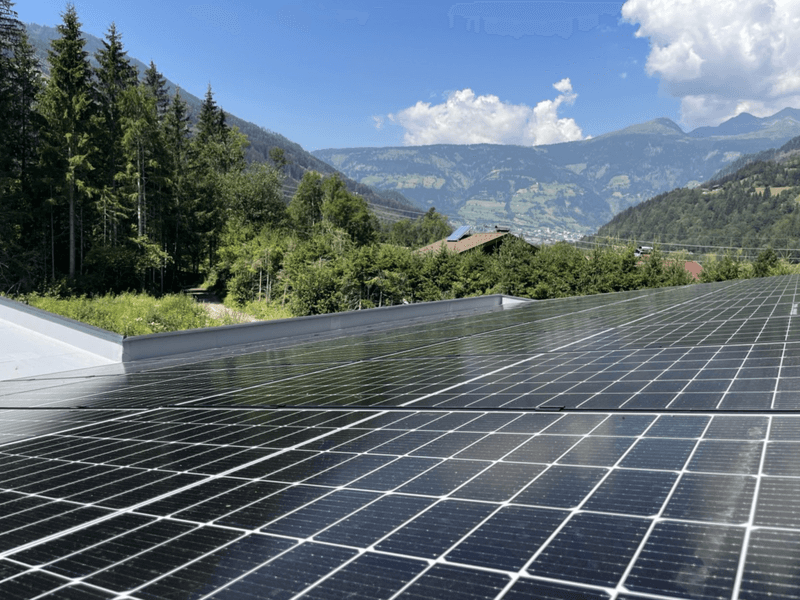
Justin Tyers • 16 December 2022
Stylish mountain eco homes have ESS
High in Austria’s mountains there’s a quiet revolution. Timber built, super-insulated, tiny homes with Energy Storage Systems are delivering low-energy comfort for their owners. The built-in power system also allows the property to run off-grid. The modular house is built entirely from recyclable materials. Here it is pictured in the town of Lainach which has fewer than 500 residents who enjoy the clean air and tranquility you find at almost 1000 meters above sea level. The closest urbanisation – Lienz – is a 25 minute drive away, as is the Austrian ski resort Heiligenblut and the highest peak of Austria (Großglockner). The lifestyle in rural Lainach is highly self-sufficient and attracts independent-minded people who love nature. Perfect then that this modular eco-home has an Energy Storage System – generously provided with: 36 solar panels providing 13kWp, a 14kWh 48V lithium battery, 3 x MultiPlus II 48/5000 – configured for 3 Phase supply, 2 x SmartSolar MPPT 150/100 solar charge controllers Cerbo GX communication device GX Touch 50 touch screen system interface The system was designed by Slovenian Residential Industrial and Marine power specialist Elektro Štumpfl . These 100m2 modular houses can be delivered to site in units – saving labour, noise and nuisance with its short construction time – even in remote locations. And because they are portable, if you ever need to move you can simply take your house with you!
Justin Tyers • 09 December 2022
Drought communities Desalinating from the Sun
Imagine a water-maker capable of supplying thousands of litres of drinking water per day, powered by the sun, and so reliable it will operate remotely for years with just the minimum maintenance, using local labour. Dutch entrepreneurs Sid Vollebregt (right) and Reinoud Feenstra (left) are making waves around the world with their Multi award-winning innovative Elemental Water Makers which can do just that. Desalination takes place when sea water is compressed and driven through a membrane. In order for sea water to be pushed through the membrane it needs to be pressurised to 50 bar (the equivalent of a column of water half a kilometre tall.) The membrane has a screen so fine it strips brine of its salt – and everything else which isn’t actually water. Elemental Water Makers remarkable energy efficiency comes from a complete re-design of the high-pressure side of the system. Ordinarily half the brine pumped into a desalinator will emerge as purified water. The other half will be ejected as waste. A key innovation of the Elemental Water Maker is that it taps into the highly-pressurised unused (waste) brine, and re-injects it back into the intake via a ‘Turbo Charger’ where its energy is used to raise the pressure of the new intake seawater. In fact, instead of drawing the full half of fresh water available, Elemental take only one-third, which results in more energised water available for re-injection, and less-saline waste – which extends the life of the membrane. Also, no chemical treatment is required for the conversion of brine to drinking water. Incredibly, this new-design reduces the energy used for desalination by 80%. This energy saving can be used in another way – Gravity feed: if the sea water is pumped to a reservoir sited uphill, gravity will provide the pressure required to drive it through the desalination membrane – but remember the 500 metre column? …Elemental’s pump efficiency allows that head of water to be reduced from 500 metres to just 90 metres. Often installed in the remotest places, the largest of these robust Desalinators are capable of producing enough water for 40,000 people, every day, fossil-free, using solar power energy plants which can be monitored 24/7 from Elemental’s HQ in The Hague, Netherlands. Solar Power Containerised desalination plants are available in a range of sizes to produce between 4,000 and 100,000 litres of fresh water every day. Everything needed for the production of fresh water – including the solar array, is included in the well designed container space. In the Netherlands, Elemental’s demonstration unit which provides clean water from the North Sea has the following solar power installation: 24 x Solar Panels offering 10.8kWp 3 x MultiPlus II 48/3000 provide three phase power 2 x SmartSolar MPPT RS 450/100 Solar Charge Controllers Cerbo GX GX Touch 50 Lynx Power In DC Distribution Lithium Battery Storage Systems can be managed and monitored remotely via Victron Energy’s worldwide free-to-use management platform VRM . The Cerbo GX communication device harmonises the power system and is able to report all system data to the portal, from where authorised users can manage and monitor the Power production; Energy use, Battery state of charge, Tank levels; Environmental conditions – together with analysing historical data …and much more. Long life and low maintenance of Elemental’s precision equipment is assured by the use of high quality components – the 8 year life-expectancy pump is built from Titanium parts; the pressure tank is built from carbon fibre. All solids in the sea water are removed by a 5 micron pre-filter. The filter is flushable – which saves filters whilst extending the life of the whole system to 15 years. The fine desalination membrane is flushed every four hours – and at the beginning of every day – using as little as 10 litres of fresh water for every 4000 litres produced. Elemental have a strong customer base from exotic Resorts, residential communities and private residences; but an equal part of their business is in helping NGO’s provide funded solutions in drought and famine areas. Elemental is supporting the Elemental Water Foundation as part of its corporate social responsibility to realise clean water projects in Madagascar. Minerals We mentioned that having passed through the desalinator membrane the drinking water produced is so clean it has been stripped of everything …that includes its minerals: In some remote communities where the local diet is deficient in minerals, it’s the minerals in water which prevent bone damage. For that reason Elemental Water Makers include a cylinder containing calcite. The purified water passing through this cylinder absorbs as much mineral as it needs – it doesn’t even have to be dosed. The mineral treatment cylinder is replenished with Calcite twice per year. No further treatment is required if the water is for immediate consumption. Pay as you go Water distribution and metering is fully automated: Pre-paid fobs administer measured amounts of water without the need for paperwork. This automation is also useful for NGO’s – many of who fund drought zone installations. Monitoring allows the water-providers to demonstrate need, and measure the community impact. At the time of writing a large containerised water desalination plant is on its way to Somalia where it will provide water for 40,000 people. Disaster response Elemental have developed a suitcase-sized fast deployment water maker for disaster relief. Two models are available capable of producing 30 and 50 litres of water per hour. power is supplied from a 12 V battery and consumption is just 110W and 240W respectively. Where no power source is available, the desalinators can be paired with a PowerBox provided with Lithium battery, solar panels and solar charge controller. The portable suitcase-sized desalinator weighs approx 40- 50kg, and the similarly sized PowerBox 25kg. Ongoing Success Winner of the Energy Globe Award in 2020 – together with many other national and international credits – during the ten years that Elemental water have been producing their plants, 100,000 people in 27 countries have benefitted from fresh reliable drinking water – an award beyond value. Elemental Water Makers invite you to get in touch if you are working on a seawater desalination project.
Justin Tyers • 04 November 2022
Historic Northern Isles beckon Van Life couple
Rebecca Ramsden and her partner Dave Curnock, who are in their early 40’s, drove 2700 miles in September to explore the North Coast of Scotland, Orkney and the Isle of Skye with their two dogs, travelling in a DIY conversion long wheel base VW T5. Part of their conversion included a DC charging system for their 12 volt leisure batteries. Solar harvest is from a 175 Watt Solar Panel. A SmartSolar MPPT 75/15 solar charge controller stores energy in 2 x 130Ah batteries. When an AC power source is available their batteries can also be topped up using a 230/10A BlueSmart Battery Charger . Keeping things simple and avoiding high power-consuming devices releases you from the treadmill of power generation. Rebecca and Dave have a 42litre Fridge/Freezer which consumes 17Ah/day, 6 x lights and smart-device chargers. Even at that time of the year, with Scotland’s notoriously changeable weather they found they could produce up to 350Wh per day. On the dullest days, however, they only got 40Watts! Touring that far north in September, intending to generate virtually all their domestic power from solar sounds like an interesting experience…so we asked them to keep in touch. We asked Rebecca (Becks) Ramsden to tell us the story of a ‘typical’ day. “No two days were ever the same, often dictated by the weather or a need to leave our stopover location by a certain time. However there are always some ‘domestic tasks’ before getting underway – such as reconfiguring the van from our luxurious king size bed’ to ‘living space’. This is a swift 5 minutes of packing down the bedding and raising the centre bed section up to become our dining table. Then feeding the dogs and ourselves and washing up. “This particular September morning we awake around 6.30am. We are in Orkney, Scotland and in a carpark which allows van stops, providing enough spaces are left for locals to park and take their walks. We have travelled so far approximately 800 miles and taken a 1 hour 30 minute ferry. “Our wake up, as always comes from the youngest of our 2 dogs who jumps up on the bed with a wet nose firmly being planted into our faces, and the other one soon joins him. “After the bed-to-living area shuffle and making tea to go, we head from the carpark, over the sand dunes to a beautiful beach to watch the sunrise over the North sea. “We walk the dogs along the beach, along a narrow coast path around the headland, and spot a wonderful display of birds and seals popping up their heads. “On these walks we normally discuss our plans for the day. We have loose plans but sometimes the weather changes these – or we hear about somewhere we should add to our itinerary. “After an hour’s stomp, we’re back at the van to get ourselves sorted for the day and have a breakfast. “Washing up is in a rubber bucket – then we head off to explore more of Orkney …today we’re only travelling a short distance from the East to the Northwest – approximately 28 miles. “We head to Birsay Earl’s Palace , (stopping in the local shop en route to treat ourselves to some shortbread!). The Palace was home to Robert Stewart, the Earl of Orkney, in the late 1500’s (half-brother of Mary Queen of Scots) and although the palace is a ruin, a lot still stands, making it easy to visualise how it must have looked in all its glory. The information boards help. “Fortunately it has a water tap – so we were able to fill up our water bottles for day – with 2 of us and 2 dogs, we go through a lot! “Back in the van we headed to the coast for lunch with a view – the weather was still a little drizzly and cloudy, so we stayed warm in the van. Our lunches are usually salads, wraps, or sandwiches. We picked up some wonderful smoked cheese and salmon on our travels which were a great lunchtime treat! Solar power keeps our 42 litre 12v compressor fridge/freezer going. It is big enough for the essentials, salads, and some beers too – and so we headed to the Orkney Brewery, next! “They have an amazing selection of IPAs, stouts, and Scottish Ales. We heard about each one on offer and picked up a selection for our own beer tasting later that evening. “The weather cleared to gorgeous sunshine – and although heavy rain and wind was predicted from 6am the next day, we decided we would camp back at our lunch spot. “We walked along the beautiful beach to the prehistoric Stone Age village at Skara Brae. Archaeologists date its occupation to the 600 years between 3100 and 2500 BC. It was rediscovered in 1850 – perfectly preserved under sand. Between 50 and 100 people lived in houses linked by roofed passageways. It is a fascinating place, and easy to imagine what life here was like. “The afternoon sun became lovely and warm, so we walked back along the beach to begin our Orkney Brewery beer tasting while watching the sunset and cooking a curry. “As the sun went down, we retreated inside the van for more beer tasting, to play cards, talk about our day and to share photos with family and friends. “A perfect day, filled with discoveries, history, local produce, and eventually some sun. “We set our alarm for 5am the following morning in the hope of packing everything away before the expected storm arrives, and what we expect to be a very different type of day on Orkney. “Our hobbies at home are walking, exploring, and swimming so this trip was a great opportunity for us to do what we love while exploring such a varied and wonderful landscape. “Before embarking on the trip, I didn’t really appreciate how important having a power supply would be, but the places we visited really are remote! Luckily, we were off work so didn’t have to factor in too much admin or emails, but it was great to have the power available for when we needed to be online. “In the 4 weeks we were on the road we only ate out twice, and had two takeaway meals – so we really relied on our fridge for fresh storage. A hot cup of tea and a steaming bowl of porridge in the morning was a comfort as many nights were so windy it felt like we’d been sleeping on a boat! One night, on the West Coast of Sango Sands (a stunning, cliff edge campsite near to the Smoo Caves) the wind got up to 50mph – Dave googled how strong the wind needs to blow over a 3-tonne van! We were quite surprised the Solar panel stayed on the roof! Solar Power gives you the freedom to explore remote places “We were surprised that – given this bad weather – we managed to provide enough power for our needs … and in the most northern part of mainland UK! About two and half weeks into the trip we used an electric hook up – the BlueSmart Charger was really efficient so that over a 12 hour period it fully-charged the batteries. “Our off grid system and minimal loads gives us the freedom to explore remote places without being tied to finding plug-in power supplies. “Luckily, we didn’t have to do any van maintenance either!” They’re safely back home now. No doubt they will spend the winter planning another trip. When you plan to go ‘remote’ there are some luxuries you really can’t do without – so it’s great to hear that you can still get plenty of solar power, in the Orkneys, in September.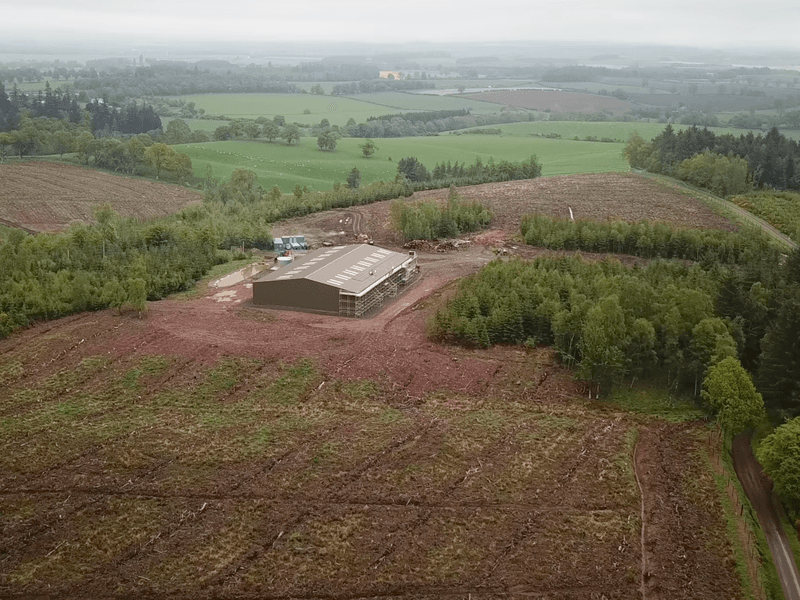
Justin Tyers • 14 October 2022
Scottish Woodlands 3-Phase Power
Video maker Jono has been out in the field, quite literally, to take a look at how a woodland management company in Scotland have installed a three-phase power system which is expected to pay for itself within 3 to 4 years. Craig Nimmo – Utilities and Landscaping Director for Scottish Woodlands – was surprised to learn that three-phase power is available from the sun! His company is very proud of their green credentials and were keen to investigate running their new 100 acre site using sustainable energy. He was expecting a conflict right there because a lot of the industrial workshop equipment they use provides more satisfactory service in a three-phase format. Craig Nimmo Even better – the cost comparison between bringing in grid electricity to their remote location and installing PV based power were broadly similar. The 45 kVA system – which has 91kWh of BYD lithium battery storage – can be completely re-charged in less than three hours from its 108 solar panel array, which is capable of providing 43kWp. Overhead power cables are a hazard for some industries. To ensure that operations can continue even during periods of winter fog, the system has a back-up generator rated at 60kVA. Ian Hewson , from Off Grid Engineering, was tasked with designing and installing the system. He says he spent some time learning about Woodland Managements’ business to ensure their system would be future proof. He also draws attention to one of the new system’s super powers – unlikely to be available with most grid connections: if power demand at the site, working in full swing, ever goes over the 45kVA available from its 3 Quattro Inverters, the Generator will automatically cut in to provide a further 65kVA – resulting in a total power resource of 110kVA at three phase! The site includes a separate canteen, rest rooms and office, which has until now been provided with power from a small generator kept running full time …just in case. That generator is now redundant, increasing economy and affording a bit of silence to staff during their down-time! Ian Hewson The major components of the system are: 108 Solar Panels rated at 400W for a total 43kW peak 3 x 48V Quattro Inverter/Chargers configured for 3-phase supply BYD Lithium Battery storage totalling 91kWh 6 x SmartSolar MPPT RS 450/100 Solar Charge Controllers Lynx Distributor Cerbo GX provides system control and remote management on Victron Energy’s free-to-use platform VRM , whilst a GX Touch 70 provides fingertip system control on site. Hyundai Generator 60kVA Scottish Woodlands, whose clients include Network Rail and Scottish power, are really pleased to have achieved budget stability with predictable energy costs for many years ahead. You can listen to the client and installer interviews and see what has been achieved here: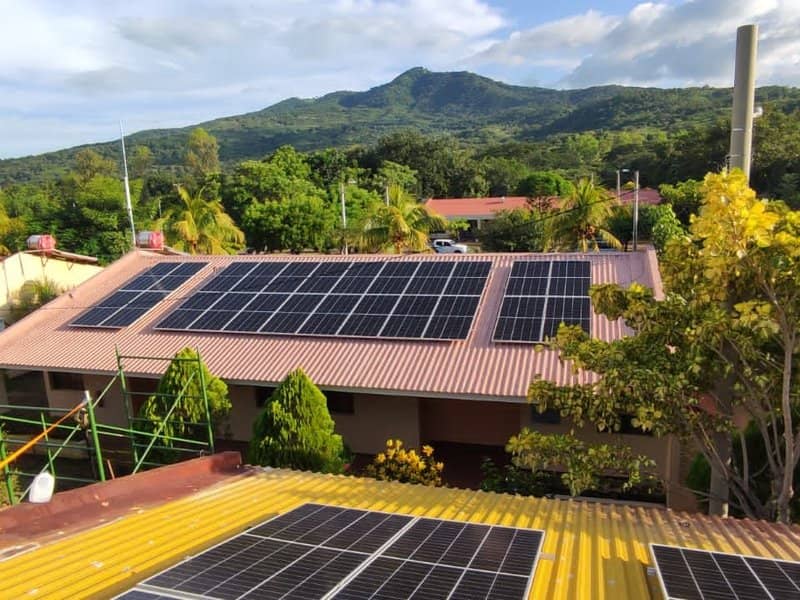
Justin Tyers • 07 October 2022
Geothermal Plant installs solar energy
The San Jacinto-Tizate Geothermal Power Plant , in Nicaragua, which has a production capacity of 77 MW – has just installed solar energy for its own use. Sound strange? A law in Nicaragua compels geothermal energy plants to sell all the energy they produce to the Central America Distribution Network. They then buy back the energy they need for their own use. The power plant is owned by PENSA – one of the largest generators of renewable energy in Nicaragua, which contributes significantly to the overall energy requirements of the country. At the plant, hot water from deep underground is used to power a Two-Step Steam Regeneration Turbine. Power grid Buying electricity from the grid is all well and good until it fails – as they all will of course, – so the Geothermal plant has in the past used diesel generators to provide energy to their sleeping quarters, dining room, kitchen, offices, and geochemistry laboratory during blackouts. Apart from the interruption and inconvenience of power-switchover; the noise, cost of fuel, and ongoing schedule of generator maintenance became unacceptable. Ecami S.A. Managua-based Ecami S.A. were invited to provide a solution to the problem. They have forty years experience in the planning, design, supply, installation and maintenance of Solar Energy Systems – and have installed 20MW of solar energy systems to date. The plant required a photovoltaic system with an installed capacity of 72 kWp interconnected with the local network. The system must fulfill two objectives: first, it must supply the average demand during the hours of sunshine – which is 17 kW. The grid may be used to meet greater demand. The second objective is to supply all or most of the nighttime electricity demand through a battery bank – at least 210 kWh/day on a daily basis. They required a control system which indicates when the batteries fall to 80% SoC, when they will choose to consume power from the grid. Sales representative Leonardo Estrada worked on system design The Solar Installation A 72kWp photovoltaic array was installed comprising 144 TRINA Solar brand solar modules which store power into 48 Pylontech Lithium Batteries (US3000 48-volt 3.5kWh) via 6 SmartSolar MPPT RS 450V 200A Solar Charge Controllers. 6 Quattro 48/10000 Inverter/Chargers provide the power supply, together with a Cerbo GX and a GX Touch 50 which provides system control and remote monitoring. Marketing Manager Elsa Lacayo views the installation with Leonardo Estrada The client now has an uninterrupted power supply …and silence! The space available to mount the installation was relatively small, but with advance planning, Ecami’s photovoltaic designer Jose Medina was able to design a tidy and practical arrangement of the component parts. Since installation San Jacinto-Tizate Geothermal Power Plant reports that the system meets all their demands and they are happy with the results. Pictured L-R: Elsa Lacayo (Marketing), Jose Benito Medina (Photovoltaic System Design), and Leonardo Estrada (Sales and System Design). It’s worth noting that the accuracy of sensitive laboratory equipment depends on the availability of a high quality energy supply. Victron Energy’s range of true sine wave inverters are available with outputs of between 500VA and 15kVA . The Phoenix , MultiPlus and Quattro range of Inverters, and Inverter/Chargers have all been proven over many years and can be configured for three-phase and parallel operation – so that their combined power offers up to 180kVA and 2400A of charging capacity. Nicaragua currently produces more than half its electricity from renewable sources. With an abundance of sunshine and wind, and 19 volcanoes – there are opportunities for the further expansion of its Geothermal programme.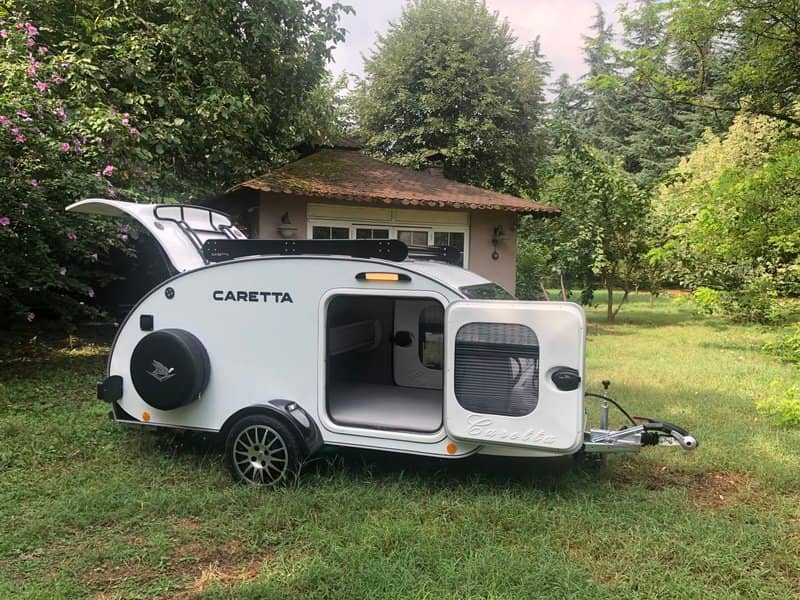
John Rushworth • 25 August 2022
Caretta Mini Caravan
Weighing in at only 390kg the Caretta Mini caravan is designed for easy towing by an Electric Vehicle …or a motorbike! When the whole world is going large this mini model measures just 2.9m long and 1.3m wide, and is the brainchild of Turkish van manufacturer Basoglu Karavan Sanayi Ve Ticaret A.S. In spite of its mini size it shares many of the conveniences of a larger van which – with some optional extras – include 35 litre cool box, single burner cooker, sink, hot water, air conditioning, diesel heating and outside shower. A 60Ah battery runs most of the services and is re-charged by an IP65 BlueSmart Battery Charger, supplied by local power conversion specialist and Victron Energy distributor Linetech Elektronic . You can visit the Caretta Mini at Caravan Salon Düsseldorf – the Düsseldorf caravan trade fair which runs from the 29th August until the 4th September at the Düsseldorf Exhibition Centre, Düsseldorf, Germany.
Justin Tyers • 17 August 2022
When innovative educational technologies combined with solar infrastructure benefit the integration of refugees and the communities that host them.
We have received this story from Vodafone Foundation and UNHCR. In 2013, the Instant Network Schools (INS) programme was developed through a close partnership between Vodafone Foundation and UNHCR , the UN Refugee Agency, with the shared goal of providing refugees and the communities that host them expanded opportunity for accessing high quality, and innovative digital education. The INS programme is the flagship programme of the UNHCR Connected Education team and is founded on a holistic approach to educational technology. The programme transforms existing classrooms into multimedia learning hubs, inclusive of robust teacher training, curated digital content aligned to the local curriculum, and an enabling connected-environment. It also works through relevant national line ministries, implementing partners and the local community. As of April 2022, the INS programme had established 84 centres in the Democratic Republic of the Congo, Egypt, Kenya, Mozambique, South Sudan, and Tanzania. With the objective, by 2025, to deploy to up to 300 schools and reach 10,000 teachers, 510,000 students and approximately 1,500,000 indirect beneficiaries from the students, teachers, parents & community members. In Mozambique, 15 INS centres have been deployed across 12 schools in the Nampula province benefitting approx. 57,000 students and 1,000 teachers …where the initiative is supported by the Ministério da Educação e Desenvolvimento Humano. Access to reliable power is the key to making the most of the INS programme. Most partner schools are in remote areas where access to the grid is either unavailable, unreliable or too expensive. For that reason Vodafone Foundation and UNHCR are investing in solar infrastructure. Each school receives a solar energy system designed for their present and future power needs. In Mozambique Logos Industrias, Lda , was chosen to design supply and instal ten PV energy systems tailoring each to the conditions on site – with regard to access, safety and meteorological conditions. Logos Industrias has almost 20 years experience in Solar Energy, and a national presence through its six branches. In some schools, the choice was to install solar panels on the roof and interior cabinets, while in others in ground structures, with cabinets dedicated to all Victron equipment and batteries. The main components typically used in these systems are: MultiPlus II Inverter Chargers: available between 3 – 10kVA these current control Inverter/Chargers maximise self consumption and iron-out an imperfect grid supply JA Solar 455W Solar Panels SmartSolar MPPT Solar Chargers are used as part of a smart-comms Bluetooth installation for easy set up and monitoring. VE Can ports allow daisy-chaining of many devices, offering synchronised charging across the system. Cerbo GX devices harmonise the whole system including third party devices, and allow remote engineering monitoring and management – ideal for remotely located installations SmartShunt – a tidy, easily installed battery monitor which can be read on your phone Narada LiFePO4 Lithium Batteries By working together, this programme ensures that refugee and host community pupils will have access to a digital education and go on to achieve their full potential. Students learn at the Instant Network School in Maratane Refugee Settlement. The headline photo, and the one above are courtesy of Vodafone Foundation/UNHCR. UNHCR and Vodafone Foundation’s Instant Network Schools programme aims to connect refugee students in a quality digital education and improve ICT literacy and digital skills. Vodafone Foundation’s Instant Classroom – the equipment used for INS – is a digital ‘school in a box’ that can be set up in a matter of minutes. It includes 25 tablets, a laptop for the teacher, a projector, speakers, 3G modem and a library of digital educational resources and is helping shape UNHCR’s Connected Education approach. The INS programme has had a significant impact within the schools in refugee contexts by ensuring that refugees, and the communities that host them, have access to accredited, quality, and relevant learning opportunities.
Justin Tyers • 29 July 2022
Changing Health outcomes in Malawi
The latest project in a UNICEF funded programme to provide reliable power to Health Centres across the southern hemisphere has delivered energy security for twenty hospitals and medical centres in Malawi. With a lack of grid infrastructure in remote areas, and frequent generator failure, child birth and minor procedures were often carried out by candle light. The chilled storage of Covid or Polio vaccines and other medication was either difficult or impossible. Against this background of uncertainty surrounding the quality of care which will be received by clients, some had even given up seeking medical help. It’s difficult to overstate the life-changing difference made by these ultra-reliable solar-based energy systems for the 300,000 people who live in their rural catchment area …and for the staff who run them. The main contractor for this programme, Differ Community Power , have an expertise in delivering sustainable power in remote locations of emerging market countries – for which they work in consultation with governments, NGOs and local companies. Apart from ensuring that there will be power 24 hours a day, Differ Community Power provide additional capacity to ensure that off duty medical staff can socialise, watch television and charge their phones – a work-benefit which experience shows will help in the retention of these highly trained and motivated staff. Some installations provided nearby schools with energy The solar installations – sized according to the health utility they serve – are based around Balance of Storage Systems ( BOS AG ) stand-alone energy cabinets, using Pylontech lithium batteries, using MultiPlus or Quattro Inverter/Chargers . These are ultra reliable sine wave inverters which can power sensitive medical electronics. When connected to the grid, or to a generator, they guarantee uninterrupted power supply in the case of external power failure. The Quattro Inverter/Chargers have two AC inputs – which will automatically switch to the live power source – and two AC outputs, one of which will be disabled if the incoming AC power fails. This feature allows non-essential power devices – such as Air conditioning – to run as long as there is an outside power source, but instantly shut-down in case of external power failure – thus ensuring that the battery storage will not become unnecessarily depleted – and that all essential site equipment will continue to run using battery-stored energy. Smart Solar MPPT 250/100 Solar Charge controllers are typically used to harvest power from the PV array; a Cerbo GX sits at the heart of the installation provides whole-system communication and control, both for Victron Energy and third party manufactured system components. The Cerbo GX communicated status data, and also allows the system to be monitored and managed remotely by engineers – globally – using the Victron Remote Management platform VRM which is free to use. Where critical power systems are installed in remote locations – such as these medical centres in Malawi – 24 hour system data access by support companies who may be located anywhere in the world is invaluable. A happy coincidence of timing for these installations is that they will significantly benefit the Polio vaccination campaign and routine immunization for children under five years old – which is just getting underway. UNICEF Deputy Representative Gerrit Maritz, speaking in Chiwoza, said: Improved health service delivery lies the core of ensuring a healthy and productive population so that they can contribute to the development of Malawi. Many health facilities in the country are experiencing obstacles in providing quality healthcare due to a lack of electricity. “What we are seeing at Chiwoza Health Centre is the commendable commitment from UNICEF and the Government to boost access to reliable electricity at health facilities in rural areas. This year, we all saw Tropical Storm Ana’s impact on healthcare delivery. Many facilities had no electricity for several days. These new solar power energy systems will help prevent such scenarios being repeated, and allow continuous functioning of services at the health facilities even during natural calamities, such as floods. UNICEF is also focusing on capacity-building by carrying out training exercises for the health facility staff, staff house members, and district technicians on how use the systems effectively, and for carrying out basic preventive maintenance. Kjetil Roine , CEO at Differ Community Power (DCP) says that to ensure sustainable power supply to the health facilities robust and reliable components are needed as well as a proper integration of these components. Distributed, stand-alone energy system is not stronger than the weakest link, and through remote monitoring and operation we are able to prevent failures from happening. During the storm Ana our systems worked perfectly, and we currently see an average uptime of 99.8%. The health facilities which have so far benefited from these installations, and training, are based in Mzimba, Kasungu, Ntchisi, Lilongwe, Mchinji Balaka, Blantyre, Chikhwawa Machinga and Nsanje. Modular solar energy systems were installed across 29 healthcare facilities in Malawi.
Justin Tyers • 22 July 2022
Wilderness adventure in Montana
In this blog let’s hear straight from Montana-based Victron distributor Intelligent Controls , about a recent system install ation for an adventure Lodge which regularly accommodates up to forty guests – in the wilderness – with all the comforts of home! All year round and in every kind of weather, Sugar Loaf Lodge & Cabins provides a comfortable respite for hikers, bikers, fishermen, snowmobilers, and even kite skiers seeking adventure in Montana’s Anaconda Pintler Wilderness area. “The Continental Divide Trail is about a mile from here “ ; say owners Jay and Monica Winfield. “Some of our guests have hiked for a few weeks and will stay the night to get a hot shower and restock with items they’ve mailed to us before continuing their journey.” The cabins were built in stages, starting in 2002. Fifteen miles from the nearest town, there were no roads or existing infrastructure at the time. Today, the complex includes five cabins ranging from small, rustic cabins that sleep four people and a small kitchen to larger cabins that sleep 16 and include four showers, four toilets, and a full commercial kitchen. Weather in Montana is unpredictable, and when running a small business at 7,000 feet and in a location where it snows every month of the year, reliable power is not a luxury. It’s a necessity. “When our cabins are full for a wedding or corporate event, there are upwards of 40 people staying on the property. That means every light, refrigerator, toaster, curling iron, and water pump for the showers needs to run.” As batteries age, they become inefficient and take more power and time to charge. This past winter, Sugar Loaf’s AGM battery bank and inverter system first installed in the mid-2000s started to fail: long and frequent generator run times, poor solar performance, and low battery voltage under heavy loads were causing havoc. The transfer relays were suspect on the inverters, and the batteries were starting to heat up excessively—all bad news. To charge these worn-out batteries, excessive absorption and float times were needed from the inverter. The sun is a rare commodity here in the winter, resulting in long generator run times. “We were wearing out generators at an alarming rate and racking up an unacceptable propane bill,” says Jay. “The system was not only failing. It was also literally running blind,” says long-time friend, Dustin Donaldson. “No insight into power consumption. No indication of why the generator was running so often. We wanted to not only fix the system, but to partner with Intelligent Controls to implement a much more intelligent, higher-capacity system that is able to accommodate future growth of the business.” Working with Victron distributor Intelligent Controls , the Sugar Loaf team designed a system that would more than triple the nameplate capacity of the battery bank and double the output and charging potential of the Inverter/Charger, all while reducing generator run time and saving money on propane. The system includes: A 48V DC 15,000 VA 240V AC Victron Quattro Inverter/Charger A Victron 100A Autotransformer 2 Victron 500A smart shunts A Victron Cerbo GX system control and GX Touch 50 display device 12x Lithium-ion rack-mount Pylontech 3,000C 48 Volt batteries with over 40kWh of storage The new Pylontech batteries are fully compatible with Victron Energy systems. “When the Victron equipment sees the Pylontech batteries, it knows exactly how to modify its performance in every situation, even as the batteries age. This is a major advantage when expecting a 16-year battery design life.” says Aaron Hanson, owner of Intelligent Controls. In the colder months, the main Lodge is heated by wood stoves that need to be watched and fueled. “This means we’ve been away overnight just once in almost three years. A few hours in town is the most we’re ever away,” says Monica. Thanks to the Cerbo GX and Victron’s Remote Managing platform ( VRM ), the Winfields can now monitor the real-time performance of their system, even off-site. And by logging that data over time, they can watch the trends that matter to them, such as the number of days between generator starts, power usage in high-capacity time frames, and how much their batteries are charging. “It’s fun to watch from the portal (and we do watch it all the time ) . Our kids make fun of us for checking our power situation even when we are in town.” VRM has become a critical tool for customer education, enabling them to become the true owners and overseers of their system. “One of the most enjoyable elements of the Victron experience is watching customers light up when they see their system online for the first time and start to monitor it’s performance,” says Aaron. “It’s one of those things that, once you have it, you can’t imagine living without it. It truly is the best remote monitoring access in the industry.” The bottom line: the more customers understand and visualize their systems with VRM, the fewer issues they will have. And, of course, it’s dramatically easier to provide advice and support. Because of the unique location, Intelligent Controls added a custom soft-starting algorithm to Node-RED via the Cerbo GX, allowing the generator to warm up before it’s loaded up, and cool down after use. Thanks to VRM’s remote access to Node-RED, this was also added remotely and at no additional cost. “It’s amazing to provide high-end custom solutions to customers without spending the day risking your life on Montana’s highways in the winter,” says Aaron. As the snow melts, the busy wedding season has begun. “We love our new system,” says Monica. “I used to hold my breath when I pushed the start button on our large commercial breadmaker. Since installing the new system, I haven’t overloaded the system once. Being able to focus on our customers and what we do best is a good feeling.” As power needs increase or as the Lodge expands, scaling the size of the Pylontech battery bank, and the solar array is very straightforward. The 15,000 VA Victron inverter is large enough for significant growth. Sugar Loaf Lodge is ready for anything.
Justin Tyers • 08 July 2022
Power lift?
A printing company in the city of Zlín in Czech Republic have just installed a solar system which is expected to provide them with 11 months energy self-sufficiency every year. Not bad when you consider their annual energy consumption is between 120 and 150MWh. Founded in 1994 and employing 40 staff, the company prints a range of advertising materials, cut graphics, advertising stickers, and they provide laser engraving. The’ve been considering energy savings for a long time but until now those savings have consisted of replacing incandescent lighting with LED technology and using warm air from the compressors. Space heating has been provided by two gas boilers and hot water is provided from electric immersion heaters. A tailor-made containerised energy system was designed by Tomas Vocilka from Asolar and installed by energy innovators NWT a.s. The advantage of a containerised system is that all the system building can take place at the solar workshop, reducing on-site installation time and minimising customer inconvenience. The container is future proof – having the capacity to expand the energy storage and output as the company grows and their energy-demand increases. As installed the system has 95 kWp of PV panels storing energy into 211 kWh Winston battery cells. Six Quattro 15kVA inverter chargers have been installed to provide three-phase power for the industrial processes. Three-phase Solar Edge PV Inverters have been integrated with the Quattro Inverter Chargers – an alternative power source combination which has been proved successful for some years now and offers really extensive system control. A Cerbo GX harmonises all devices, and allows both remote and local system monitoring and management. At a glance system data is available from a Case-mounted GX Touch 70 – a really neat touch-screen user interface on which all system components can be interrogated and managed. The Cerbo GX uploads system data to the free-to-use Victron Remote Management platform VRM – providing engineering access for monitoring or intervention from anywhere in the world. The customer was unexpectedly impressed by the efficiency of his new system and the contribution it was making to his output and profitability so that within a few weeks of operation he invested in further expansion to 250 kW of PV and almost double the battery capacity to 400 kWh in batteries – resulting in self-sufficiency for a projected 330 days a year. The abundance of energy has allowed one of the gas boilers to be replaced by a heat pump – gas will now only be used during periods of arctic freeze or prolonged periods of cloud cover. There have now been three successful installations of the Energo container which is offered alongside NWT a.s. standalone products for installation wherever a similar power supply is desired. The installation includes a predictive energy meter which controls the sale and purchase of energy to and from the grid using what the company calls superior Measurement and Regulation (MaR). Taking spot pricing into account the meter is connected to the hourly electricity market for the purchase of energy, and the sale of surpluses. MaR ensures that when the spot price is very low or even negative, the batteries will be recharged from the grid if no PV power is available. If, on the other hand, the spot price is very high and the forecast of solar energy is good, the batteries can be discharged to the grid – selling stored energy profitably. Using intelligent algorithms the meter’s actions are based on the weather forecast, predicted power demand at the printing plant, and data gathered about energy production from the PV array during recent periods. This successful project was overseen Neosolar – a distributor of Victron Energy products for the Czech and Slovak markets. Neosolar provide technical support, service and they regular conduct technical training sessions for distributors and installers.
Justin Tyers • 27 May 2022
Alpine E-bikers
The cycle route known as Véloroute V63, in Pays Voironnais, has become the latest recreational destination to benefit from the roll-out of Solar Powered E-bike charging stations in France. The V63 is a popular cycle route because everybody uses it: Families, Friends, Professional Athletes, Work colleagues and Children have fun at different times of the day, and week – breathing in the fresh air or commuting to work. Found at the gateway to the Alps, it runs between Voreppe and Tullins along the wooded valleys of the Isère; and there’s plenty of wildlife – particularly among the river-islands where gulls and cormorant rest. But it is where people ‘rest’ that the electric bike charging station has been established, in the service and picnic area at Moirans. The charging stations are built by Ecoload who have now established 25 similar utilities across France. Depending on their location and whether or not there is access to grid power the installations consist either of: Solar panel 360W-24V Mono MPPT BlueSolar Charge controller – between 75/15 to 250/60 A Phoenix Inverter 24/1200 to 48/3000 – or in the case of a grid tied installation a MultiPlus II Battery storage employs a 12V/125Ah AGM Super Cycle . Optional remote monitoring is offered to clients in which case the installation will also include a Cerbo GX – which monitors the whole installation – and a GX GSM which will provide a connection to the cellular network where data can be accessed and stored via the free-to-use VRM (Victron Remote Management) platform Typically the capacity of an e-bike battery is 500Wh so although each station is capable of charging between 6 and 12 ebikes from 0 to 100%, in practise users do not wait until their battery is empty – so the typical power output per charge in these stations is around 250Wh, allowing 10 or 20 e-bikes to be recharged in a day (depending on the battery storage chosen) even if there were no power from PV. The V63 development was supported and financed by the Auvergne Rhône-Alpes Region ; the Department of Isère ; and the Pays Voironnais; who work together as the Communauté de communes du Pays Voironnais. Ecoload supported their clients to make the best choices. Before this installation was established it was impossible to charge an e-bike on this cycle route due to the absence of grid electricity, causing a real problem for tourists and workers – that’s why the Communauté de communes du Pays Voironnais decided to establish this Teepee solar charging station as a public service. Ecoload was the brainchild of 3 engineers passionate about mountain biking, and wanting to prolong the pleasure of the ride – whilst preserving the ecology of the mountains. They say: All our charging stations are efficient, but also eco-designed with the greatest respect for the environment, made from durable materials that are as recyclable as possible, integrating harmoniously in the mountains and in the city, and allowing you to enjoy good times in wilderness. Our products are developed, assembled, tested, integrated and maintained by our team whose know-how ensures quality of service with rapid on-site intervention if necessary, for troubleshooting or maintenance. Ecoload developed their first station with the support of Thierry Cortassa (Victron Energy Sales Manager for France in 2017) with successful on-site trials that summer. The trial led to new-design commercial models – known as the Teepee and Cabanàvelo – incorporating improvements suggested by users. Development is ongoing to meet the requirements of customers and users – Ecoload plan a new generation of stations which will integrate more services such as: bicycle security, car charging, and lockers for helmets. Here is a Television report about the benefits of the V63 installation which was aired in France recently: Emmanuel Mercier , Victron Energy Sales Manager for France. says: At Victron Energy, we are very proud to participate with our products and solutions in large deployments of off-grid systems that fit perfectly into our beautiful landscapes while offering unlimited services and energy to bike riders.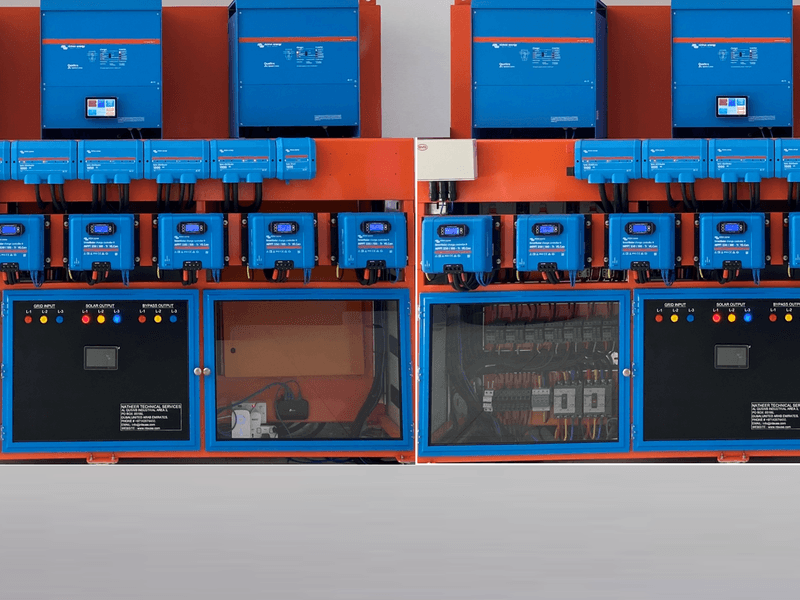
Justin Tyers • 19 May 2022
Tailor-made power plant
A meat wholesaler has been facing huge challenges to keep his warehouse-stored frozen meat in prime condition on the African Islands of Comoros. He buys meat in Europe for consumption in Comoros – where average temperatures of around 30°C and an unreliable power grid present significant challenges to his business. When a grid power outage coincides with a generator breakdown at his storage facility his stock – which might be as much as container -load of chicken wings – must be sold quickly, and will only attract half the expected price. Added to which the cost of running and maintaining 2 x 100kW generators in such a remote location is very high. Solar Energy On the other hand, with an average of 7 hours of sunshine per day in Comoros Solar energy is extremely reliable …and free. Dubai based solar energy specialist Natheer Technical Services – who have over twenty years experience in the industry – were called in to put an end to all these headaches by designing and building a three-phase Solar energy system which would provide all the energy needed to provide 100% uptime for the meat storage facility, and also accommodate future growth. The solution they designed is a hybrid system offering 2x 45kVA off-grid three phase energy; and also 2x 27kW three phase PV solar inverters which are grid-tied. Energy for overnight use is provided by a Lithium battery bank of 480 kWh. The harvest, storage and supply of energy is performed by the following devices: 6 x Quattro 48/15000 Inverter Chargers 14 x SmartSolar MPPT 250/100 Solar Chargers 2 x Cerbo GX – and long range wifi module controls the overall system and allows remote system management and live data analysis to be made available anywhere in the world by using Victron Energy’s free-to-use management platform VRM (Victron Remote Management). 2 x Orion Tr DC-DC Converter 48/24 Isolated 2 x Fronius Eco 27.0-3S 370 x Solar Panels 380W 64 x Lithium Batteries providing 480kWh 18 x Fuse holders with 18 x ANL Fuses and 48 x MEGA fuses A Generator – which is programmed to start automatically in case of any emergency – is connected to the system. The generator also provides cover for any unforeseen additional loads. In designing the system Natheer Technical Services compiled a profile of the energy used by their client and initially provided 180kWh of battery storage. After 6 months of in-practise testing the client chose to add a further 180kWh of energy storage, client confidence is demonstrated by the fact the system now has 480kWh. Building power systems ‘in-house’ at their own facility allows Natheer Technical Services to construct and test high quality installations with easy access to component parts, and then install the system anywhere – even in remote locations – with full assurance that the power plant will operate perfectly with little disruption for the client, and in the shortest possible time. Natheer Technical Services are active in the Marine, Off grid and Automotive industries. They say: We have carved our own niche in the market by providing power backup solutions using superior quality products at competitive prices. We can customize systems according to the requirement, using our own team to design, assemble and commission the installations.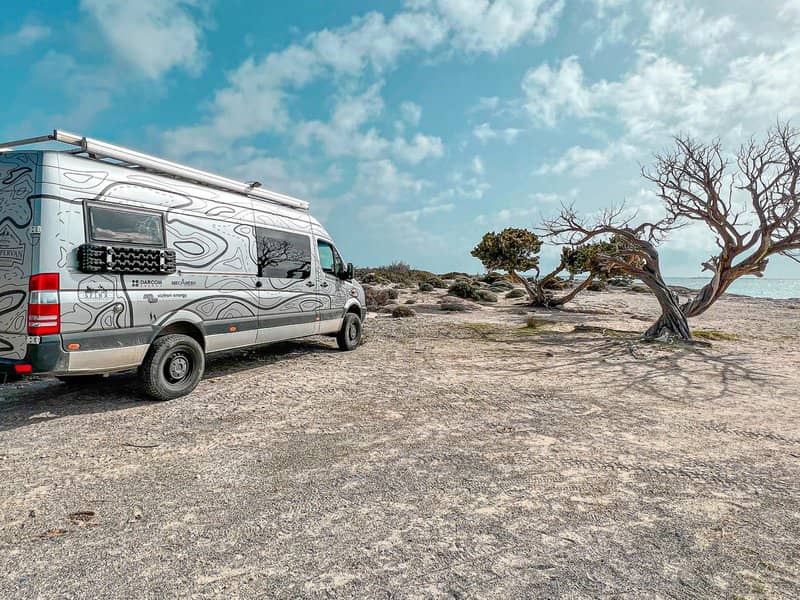
Justin Tyers • 29 April 2022
Van life E-Bike adventurers
Commercial photographer Radu Tudoroiu and his girlfriend Ana Stoica – who is a textile specialist – tell us about their van life. “We’ve had our fair share of campfire stories. It’s part of life when you decide tarmac and hotels aren’t really your thing for the most part. Whether you’re detained in a war zone, burn your clutch under the scorching Saharan sun or just run out of battery on an deserted beach on New Year’s Day, they’re all adventures to be shared. “Our four-year journey on board a 4×4 Mercedes Sprinter has taken us along some of Europe and Africa’s most stunning and desolate roads. Out of season beaches, no-signal winding mountain roads, the type of places you read about online or click on in your instagram feed: these are the destinations that we find enticing. And all of them, with little to no exceptions … are off grid. “We average 3 months a year on the road since buying the van and plan to spend six months on board our van called Gloria The Sprinter this year. After an initial DIY build, the 4×4 off grid van has recently been professionally re-fitted by the dynamic team over at Sfinx Camper & Conversion – working in partnership with Bucharest-based Victron Energy system designers and installers Darcom Energy . “This means the van now has everything you need: hot shower, filtered drinking water with 160L tanks, Queen sized bed, tons of storage space and a slideout for e-bikes and gear. And many more, but let’s stick to the highlights. “Time spent roaming is not limited to only the summer months. Therefore, the van has quite a complex electrical heating system with floor heating for cold mornings, de-icing system for the grey water tank and pipes and heating pads for the lithium batteries – all with their own thermostats to keep everything from freezing up. None of this would be possible if it weren’t for the 2 x 160Ah batteries. “In winter time, the onboard heating has no problem keeping the van toasty, even at -25 Celsius, so that parking up by the slopes for a weekend of offgrid snowboarding is … well, a breeze. “My knowledge of the ins and outs of the electrical setup stems from my work: overlanding and working remotely since 2004, it is essential that power packs allow my cameras to work all day … so I’m aware of how much energy I’ll need for each job. Especially since I’ve always had to keep a watchful eye on the regular two-battery-one-inverter setup in my off-road cars, where one has to be mindful of every drawn amp. Having the Victron power plant has been a game changer for both work and fun. “My on board electrical boiler, for example, has a capacity of 14 liters. In order to raise the water temperature to 55°C, I use 30% of the battery capacity – or roughly 100 amps Sprinter Installed energy: 2 x LiFePo4 12.8v/160Ah MPPT 100/30 SmartSolar charge controller Smart BMS CL 12-100 Orion 12/24-10 DC/DC converter MultiPlus Compact 12/2000/80-30 Cerbo GX GX Touch 50 “Our system has been designed around our outdoor hobbies, some of which are quite energy hungry, as is the case with the two full-suspension e-bikes with a 100km range which draw roughly 1.3kW between them for a full charge. They allow us to park their van out-of-town and go exploring off-road trails or ride down any town centre without the hassle of parking, traffic jams or city taxes. Vanlife + e-bike tourism is the perfect combination for our travels. Gloria The Sprinter is a little over 7 meters long and 3 meters tall, so squeezing through small downtown streets without mixing some paint with other cars is not as easy as one might think. Do-able, but not always easy if you’re in Crete or in Toscana. “However, Gloria was never designed for the city. Apart from the two e-bikes, the van accommodates our 5 meter Prijon expedition kayak on the roof rack (with paddles and vests), snowboards and kite surfing gear in the garage under the bed. All at the same time, with room to spare, due to the great interior design thought up by Sfinx Campers. “To maximize on recharge power our van is fitted with a 260A alternator, which charges the batteries without breaking into a sweat, while driving, with a maximum of 100 amps, through the SmartBMS CL-100. Should all other options fail, the MultiPlus 2000 can be plugged into any 230v home outlet and will charge the van in a couple of hours. So really, redundancy is key when we’re talking about 6 months on the road. “With businesses in advertising, teaching and textile care, our dream is to create a solar-powered off-grid campground in the Transylvania region of Romania. Our vision there is for a 70kW off-grid solar system powering a five-star manicured site which is appropriate for adventurers, travellers and lovers of the great outdoors, gliding along the freeways, eager to explore the wonderfully unspoiled landscapes Romania has to offer. But that’s still in the dreaming and drawing phase and will take some time before it all comes together. “I’m a big fan of Victron products – along with the 8,300-and-climbing users of his Campervan Romania Facebook group. At the beginning of September the community will have their very first CamperVan Festival, where I hope to bring together members, partners and vanlife enthusiasts for a weekend of workshops, music and relaxation in the heart of Transylvania. “As is the case with all dreamers, our future intends to be even bigger. The 4×4 Sprinter is an amazingly capable offgrid machine which ticks all the boxes. But what about an upgrade to a 6×6 12 ton truck loaded up with everything Victron has to offer? Wouldn’t that be a good upgrade?” You can also follow Radu on any of his other social media channels: YouTube Instagram TikTok
Justin Tyers • 22 April 2022
Amazon community’s green energy
The community of Vila Limeira has become the first village in Amazonia to benefit from 100% solar mini-grid power provision. They can scarcely believe what has been achieved! Formerly the community ran a diesel generator which provided electricity to the school, church and homes only between the hours of 7pm and 10pm. Even then the cost of 300 litres of diesel per month, together with spares and lubricants, placed a heavy financial burden on them. Added to which, unexpected blackouts caused by the unreliability of their generator were both inconvenient and disappointing – each home having candles and torches as back up for that regular eventuality. The new solar mini grid project was designed and supplied by ION Energia and supported financially by the World Wildlife Fund in Brazil It includes: – 80 x Solar Panels of 400W – 3 x Quattro 10kVA 48V Inverter / Chargers – 5 x SmartSolar MPPT 250/100 Solar Charge Controllers – 6 BYD 13.8kWh Lithium Batteries – 1 x Octo GX The community Minister Gilase Oliveira was the first to suggest at a community meeting that they apply for help in funding the scheme. As with all ‘impossible’ dreams, at first no one believed it would ever happen – yet a few months ago lights were dazzling when their new solar energy system was commissioned. Already new life has sprung into the community. With reliable power available at the flick of a switch teachers can consider educational aids such as video instruction; families have light in their homes; and everyone begins to dream of greater possibilities for themselves, and their future. Until recently the community of over 80 people were vulnerable to the usual disadvantages caused by the lack of a reliable electricity but now have an off grid system of which they are proud. They foresee neighbouring villages following their lead in choosing solar generated power entirely appropriate for their fragile environment. The solar array of 32 kWp, and lithium battery bank of 82.8 kWh are expected to provide useful service for 25 years and 15 years respectively. Here the community members explain what the installation means to them in their lives: And here you can learn more about Victron Energy in Latin America, including Energy Storage Systems (ESS) webinars, and in depth product training which will be of particular interest to installers in the region .
Justin Tyers • 08 April 2022
Speedway competitors tour in style
Top level motor sports competitors such as double World Champion Polish Speedway rider Bartek Zmarzlik ; and triple World Champion Danish Speedway rider Nicki Pedersen travel in style with a mobile home, and on-the-road workshop, of course! Their stylish touring homes are Mercedes Sprinters imaginatively converted by Tapsam Designs Jacek Świerz. Electrical design and installation of the tailer-made power system for AC appliances is the work of Victron Installers Sun Track . During his more-than-twenty-year career Nicki Pedersen has been a Grand Prix cup winner nearly fifty times. L-R Nicki Pedersen, Agata Świerz, Marcin Świerz Twenty-seven year old Bartek Zmarzlik became the youngest Grand Prix cup winner in the history of the sport when he was just seventeen. L-R Marcin Świerz, Bartosz Zmarzlik, Agata Świerz Could comfortable accommodation and access to a power-equipped garage have something to do with their top-level success? Bartek Zmarzlik’s installation includes: Lithium Battery 100Ah Phoenix Inverter 12/2000 Orion Tr Smart 12/12-30A Battery protect VE Bus BMS BMV-712 Smart Battery Monitor Blue Smart IP22 Charger 12/20 Nicki Pedersen has: MultiPlus 12/2000/80 Battery protect Gel battery 110Ah Orion Tr Smart 12/12-30A BMV-712 Smart Battery Monitor In both cases the Orion Tr Smart ensures that the batteries receive a controlled recharge voltage and current during the adaptive three-stage battery charging process. They are suitable for use with lead acid or lithium batteries, and can be used with smart or standard alternators – both of which will be protected by the device from damage caused by overload. Tapsam’s Jacek Świerz is a professional van converter working throughout Europe since 1996 – even sending a vehicle as far away as New Zealand – making Tapsam one of the most experienced specialist sports van-converters. Initially converting exclusively for Speedway riders, these days they fit-out for competitors riding quads, motorbikes and cycling. They’ve learned to shine their flare for design brightest in the cab, living accommodation, and the mobile garage at the rear – resulting in ultra-practical support vehicles and the best on-tour lifestyle. The living space, for example has road-safe sofas, and fold-out beds capable of providing overnight accommodation for 5 or 6 people. There’s TV entertainment, game consuls, air conditioning, and IT chargers with a fridge and coffee maker in the kitchenette. The garage is equipped with a compressor, pressure washer and power outlets for recharging tools, together with motorbike stands, go-kart crossbars, bicycle holders and – most usefully – a shower cubicle which when not required folds-away into the garage wall. The accommodation area includes the electronics c ontrol panel for easy monitoring of the Energy system. Tapsam Designs collaborate with Sun Track using Victron Energy devices to achieve rugged and reliable installations. Sun Track’s long history began with system design for IT and Security installations, and in 2016 they began to specialise in mobile energy, and solar installations. The combination of interior design and top-end electrical installation is proving to be a highly desirable combination for motor sport and cycling competitors as they travel between events. Let’s take a video tour of one of their most recent installations: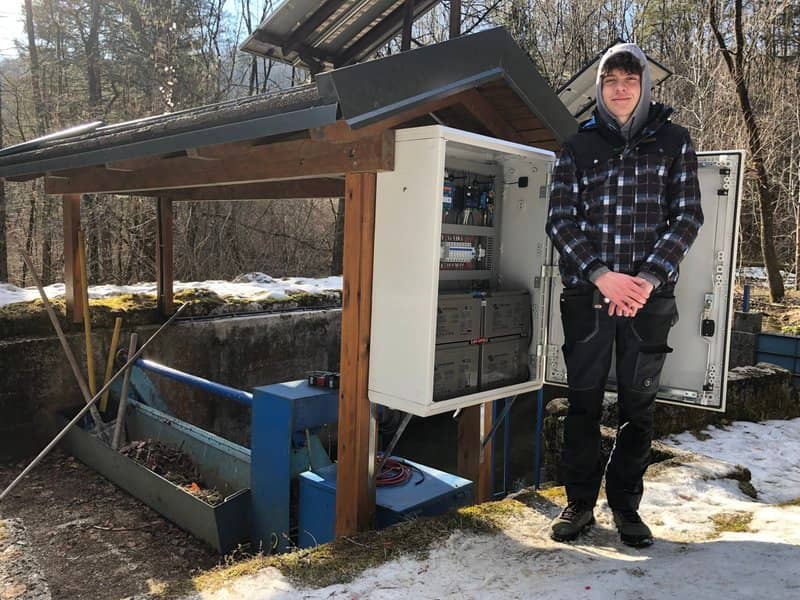
Justin Tyers • 01 April 2022
Solar Power regulates a Hydroelectric generator.
A 400kW hydroelectric plant near the Slovenian/Italian border had been running inefficiently for years until a third year electrical student decided to put it right as part of his coursework. The problem was that the signalling apparatus designed to monitor the depth of the headwaters, two kilometres distant from the generator, had long since stopped operating because of numerous cabling problems along the route – resulting in efficiency losses of up to 20%. Aleks Žvikart – who is also an intern at Victron installer Elektro Štumpfl – decided to design and build an off-grid power source at the remote headwater so that levels could be monitored remotely. TURBINE The Pelton turbine has a horizontal shaft; a capacity of 560kW; and is designed for smaller water-flows with large drops. The turbine is connected to a supply pipeline terminating in a nozzle which directs and controls a circular jet of water pointed at the driver blades. The power of the turbine can be regulated by moving the needle valve in the nozzle. The task was to establish a communication between the water catchment and the power plant engine room – measuring the water level at the catchment pool, and sending this data to the engine room two kilometres away. The remote distribution cabinet contains the following components at the water catchment site: Venus GX MPPT 100/30 BlueSolar Charge Controller Router: ROUTE 955 SmartShunt 500 / 50mV Battery Protect SBP-65A AGM Battery (2x90Ah, 2x 110Ah 24VDC) Orion DC/DC Converter Tr 24 / 12-5A MCB circuit breakers BUS bus + and – BUS collector PE The tidy cabinet has been divided into four sections from top to bottom: • Active components (MPPT, Venus GX, RUT 955, SmartShunt) • SPD, current protection, BUS busbars + and – • Terminal blocks and BUS – PE collector • Battery Storage With his theoretical and practical skills Aleks was able to increase the annual production of electricity by 15-20% – whilst maintaining the renewable ethos of the system Water and Sun. The 400kW hydroelectric power plant also has a 20 / 0.4 kV transformer station, through which it is connected to the electricity network in the nearby village of Podbela. Engine room with built-in generator, 0.4 / 20kV power transformer; 630kVA and 20kV high voltage switchyard. This is a very creditable piece of work from a young student. His internship at Elektro Štumpfl – who have a fifty year track record in electrical installations for Industry, Residential, and public buildings, and the manufacture of switch gear – will be a perfect opportunity for him to develop his skills and understanding of the industry. Aleks would like to add that he planned his project using Schrack Design software which he says helped him dimension distribution enclosures and delivers the required proof of documents.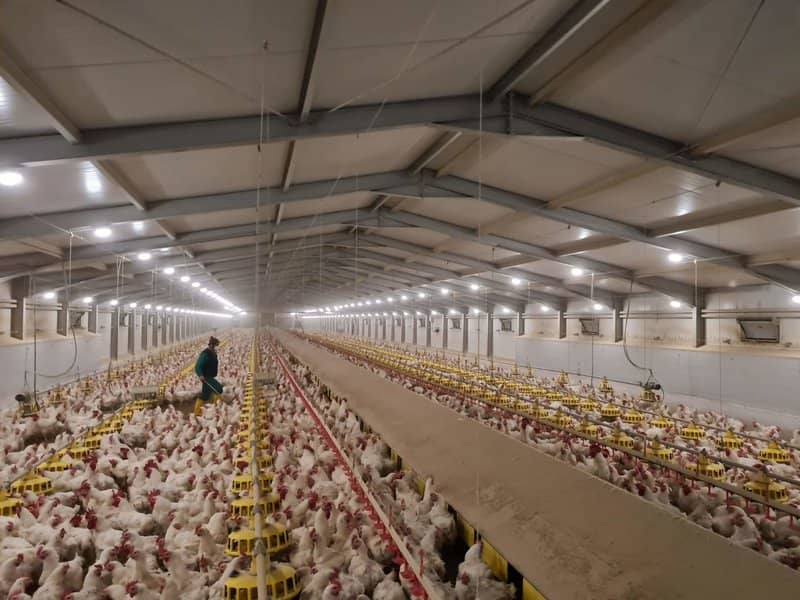
Justin Tyers • 18 March 2022
Chicken Farming with Solar Energy
A Spanish Farmer – Casa Nilo SL – has invested 4 million euros establishing the largest privately-owned chicken barn in the Catalonian province of Lleida. Situated in Arbeca, 40,000 breeding birds, and 4,000 roosters are free to roam the floor of a temperature controlled rearing shed, powered by solar energy. The chickens are raised in a temperature-controlled atmosphere of between 23°C and 24°C in winter, rising to a maximum of 26°C in summer. The new farm – known as Granja Finet – complements two others owned by Josep Carrera located at Els Alamún and Vila-sana. This latest investment increases his stock holding to over 130,000 birds – but this is his first venture into solar-powered off-grid farming. System Designer Francisco Blasco and his team at Iser Smart Energy – who worked in partnership with Bet Solar – faced considerable challenges in calculating the energy needs of the plant – not least because there are so few examples of this kind of installation on this scale. Señor Blasco says: We were not very clear about the storage needs to be able to have energy at night, and also the differences in consumption throughout the year. Thus, data from other older farms were taken, and then oversized in a prudent manner. Being one of the largest farms of this type in Spain – and in this part of Europe – it was prudent to install an auxiliary system made up of several diesel generators to avoid problems. The results, in terms of the power of the inverters and the photovoltaic array, were very successful. Francisco Blasco Despite having a large battery of 370 kWh, that figure proved inadequate on the hottest days of summer due to the high power consumption of the cooling system at night. Because of that the energy storage capacity has been expanded by an additional 93 kWh, bringing the battery to 462 kWh. The installation comprises: 400 Solar Panels offering 180kWp 9 Quattro 15kVa Inverter/Chargers 4 Fronius 27kW Solar Inverters 7 SmartSolar Charge Controllers 250/100A 24 BYD LVL 15.4kWh Lithium batteries of 370 kWh total capacity were later expanded to 462 kWh There are two back up generators: one rated at 350 kVA, the other at 180kVA Iser Smart Energy has twenty years’ experience in Solar Energy design, construction and maintenance installations. Señor Blasco praises his dynamic team’s experience in both off-grid and grid-tied installations. He says: We are constantly innovating our organizational and technical ability, and we prioritise the quality of our work above all else. The farm’s energy system power 7,000m² of buildings on a land holding of 20,000m² – and the family has purchased an additional 120,000m². The system, which was commissioned six months ago, is meeting all expectation and demonstrates what can be achieved for off-grid energy-intensive farming.
Justin Tyers • 11 March 2022
Solar Energy Ice Plant
One of the greatest challenges to installing a US$110,000 solar power system at Government-owned Ice Plant on a remote Island, in the Fiji Archipelago, was transport. During the final stage of the journey all the component parts were waded through water and loaded into an open boat. These logistics were carried out by the system installers – SolarFiji . The cargo for this major Fijian off-grid system consisted: 75 JA Solar 330W panels – offering 25kWp 5 MPPT SmartSolar 250/100 Charge Controllers . 48 Narada Tubular Gel Battery of 600Ah each. 3 Quattro 48/8000 Inverter/Chargers configured for 3-Phase. and a Color Control GX which allows local and remote system management and observation using the free to us app Victron Remote Management ( VRM ) The site has been operational for four months selling ice to local fishermen, to allow them to conserve the quality of their catch, which they can then sell for a premium on the mainland. In the past, the plant compressors were run by a diesel generator – fuel for which was expensive; difficult to transport; maintenance costs were high; and – for the low lying Fijian Islands whose Prime Minister Voreqe Bainimarama attended COP 26 in Glasgow – not very green. The new Plant is silent, with zero emissions and is capable of producing up to 750kg of ice a day from it’s solar three-phase off-grid energy installation. The generator – has been left in situ as a back up – used to consume 600 litres of diesel per month, but no fuel has been purchased since the new system was commissioned late last year. Demand for ice has doubled in the local area since the installation of the new system, bringing advantages to the 1300 local households who are dependent on fishing for their income. In addition to the wider supply, there is a programme to educate fishermen to make more economical use of ice – in particular by insulating ice storage boxes, fish holds, and catch-containers. The success of this plant is being closely watched: The ministry of Fisheries operates 24 other ice plants, and is considering providing more of them with solar-harvested energy. Additionally the ministry has a number of requests for further plants which may be granted if the site under consideration is in a convenient and accessible location, in cooler parts of the land, where there is access to clean water supply. Solar Fiji are pleased with the success of this major installation, and they and their sister company Green Power Co based in Australia, work hard to ensure they offer top quality systems, appropriate to the customers needs, using reliable components, installed by well-trained engineers. The Headline image ‘Fish packed in Ice’ is the work of Lotus Head . You can watch a video of the Rabi Island installation here: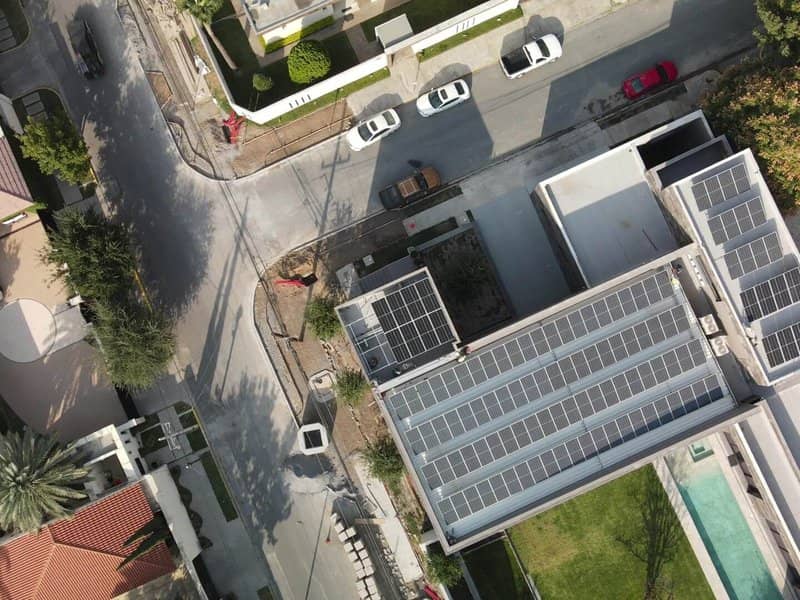
Justin Tyers • 25 February 2022
No whine in the cellar?
The owner of a large house in San Pedro Garza Garcia, Mexico, always regretted that the 40kWp grid-feed solar array he had installed at his property was not able to provide power to his home when the grid failed. That limitation almost proved catastrophic. He uses his basement to park two Teslas …and as a workshop; there’s a TV room; it’s used for general storage – and it’s also the location of his consumer unit and circuit breakers. The problem is that during extreme weather events the basement is prone to flooding – for which he has extraction pumps ready for use. One evening, during a rainstorm, the grid power also failed – so he wasn’t able to operate his pumps. He and his caretaker rushed out to buy a petrol generator to begin pumping out the flood water before it accumulated to the height of the electric mains. It was a race against time – and their constant fear was that the sockets would become submerged, and that the grid-power would be restored whilst they were still in the basement. It was time to make a new arrangement. Seeing advertisements from Victron Installer Evotech he got in touch with them to learn about Energy Storage Systems ( ESS ), together with some of the advanced features of the Quattro Inverter/Charger. Most useful to him was the ability to prioritise power supply to essential devices during blackouts; the ability to add power to the existing supply in cases of high demand; and the fact that the system will only sell surplus power to the grid when no self-consumption or further energy storage is possible. Deciding to retain all elements of the existing Solar Edge 30kW PV Inverter system, Evotech’s MD Ricardo Rodriguez designed an ESS which could be added to the existing installation – but also offer battery back up for 8 hours charged by its own 11kWp solar array. A new Pylontech battery storage of 20.2kWh is maintained at 100% for emergency use. The main components of the system are: 3 Quattro 5kVA Inverter/Chargers 20 Solar Panels of 550 watts 2 MPPT RS 450/100 Solar Charge Controllers 6 Pylontech Lithium Batteries with a capacity of 20.2kWh Cerbo GX for whole system control, and remote live data and monitoring on VRM GX Touch 50 for local live data and monitoring Ricardo Rodriguez was pleased with the result A manual switch was installed to select between the backup system or public energy network, this is very useful when performing maintenance. Grid supply is becoming less reliable as demand increases, and weather phenomena become more common. And – like elsewhere in the world – Mexico has been facing steep rises in energy prices, with high-user tariffs (DAC rate) up to four times the price of economy units – the higher tariff being imposed by Mexico’s national grid utility provider CFE to households whose energy use exceeds 4800kWh/annum. This client’s domestic loads include charging for 2 Tesla EV’s; there’s an elevator; several air conditioning units; a swimming pool; 8 or 10 pumps; space heaters; an industrial type 3-phase oven; plus lighting and wall sockets. To design the optimum system for this house, Evotech first carried an energy analysis out to find out the consumption of the house over time. It helped a lot that their client was already monitoring his consumption with an energy meter. https://www.victronenergy.com/blog/wp-content/uploads/sites/10/2022/02/Energy_Diagnosis_189462332.mp4 From that information Evotech were able to size the appropriate battery capacity, Inverter/Chargers and solar power harvest required. The knowledge that the basements pumps will operated come-what-may next time there is a flood is reassuring. Included in the critical load circuits are all of the lights and wall sockets, 6 drain pumps up to 1 hp, several water pressure pumps, kitchen appliances – (including a smart fridge which has a lock-out device when the power fails). Finally, functional tests were carried out, it was tagged, the monitoring was reviewed and a thermal imaging inspection was carried out to confirm that everything was operating as expected. Since 2020 Evotech has installed a number of systems which take advantage of the many switching features offered by the MultiPlus and Quattro . Ricardo Rodriguez says: EVOTECH has taken on the task of offering Energy Storage Systems that allow customers to store energy, and for the solar panels to continue working when there is no CFE (grid) energy, we achieved this by installing multimode inverters with lithium batteries together with solar panels for electric power 24/7/365. Evotech have made a video promotional video based on this installation: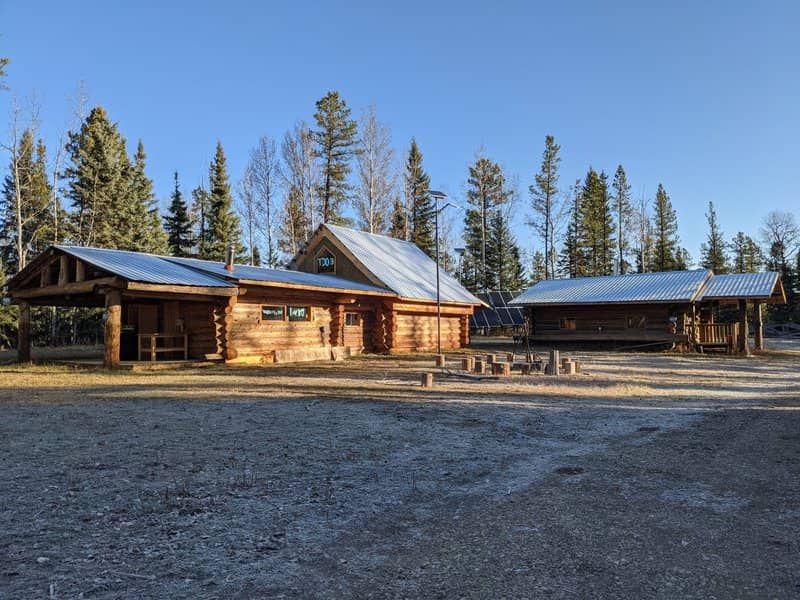
Justin Tyers • 18 February 2022
First Nation Community Building
Sunchild First Nation Outdoor Education Centre – set amidst the Canadian plains of Alberta – has been built as a meeting place and educational facility for the people of the Sunchild Band. The Elders’ aim for the facility is that: Through traditional knowledge, language, education and strong leadership, Sunchild First Nation will create a healthy and safe future for its peoples. In the past the log cabin buildings had no power at all – not even a generator. But now, with the addition of a modern new timber building a solar-based energy system has also been installed to serve the whole facility. CBI Solar designed and built the 10kW system using a new product of ours called the VE Panel – more of which in a minute. The Education Centre installation provides power for lighting, the kitchen and water supply – together with ‘Streetlighting’ which allows outdoor activities to continue after dark; and a security camera is also in operation. 10kWp of ground-mounted bi-facial Solar Panels take full advantage of the brilliant winter sun dazzling onto the snow which covers the ground for months during the winter. Two SmartSolar MPPT 250/85 Solar Charge Controllers harvest the power and store it in a Pylontech battery bank with a total capacity of around 26kWh. Power is provided to loads by two Quattro 48/5000/70 Inverter/Chargers – which will also charge the batteries from a backup diesel generator. Internet is available on site allowing the system to be monitored remotely using the Victron Remote Management VRM portal; and locally via a GX Touch 50 . Overall system control is provided by a Cerbo GX . VE Panel A really tidy feature of the installation is its use of safety enclosures – known as a VE Panels. VE Panels are available in North America to provide a ventilated pre-wired DIN rail enclosure which securely houses all circuit breakers and exposed wiring terminals. The VE Panel Enclosure and components are UL/CSA certified and designated for indoor use. The unit is designed for 3kVA and 5kVA MultiPlus and Quattro Inverter/Chargers, and helps installers in America and Canada to complete safe and tidy installations. VE Panels make it easy to build systems in your workshop, and then take them to the customer’s site. The prewired, DIN rail enclosure attaches to the Inverter/Charger and includes an AC bypass switch; DC disconnect breakers; AC DC breakers for over current protection; Bus bars; and a standard 500A shunt – which can be upgraded to the Victron SmartShunt 500A . Knockout panels in the casing allow cables access to suit the installation. More information about using the VE Panel can be found in the product manual. CBI Solar CBI Solar is a crucial member of Watts Projects Inc – a family owned company established in 1996 and based in Red Deer, Alberta. In 2019 CBI Solar completed Canada’s largest (1.55MW) roof-top grid-tie project at Genesis Place – a municipal recreational facility in Airdrie, Alberta; and have since expanded their Utility-scale; Commercial; Off-grid and Mobile solar business across Western Canada. CBI Solar and Watts Projects Inc. work with First Nation communities across Western Canada. Let’s take a look inside one of the Sunchild First Nation community buildings courtesy of Luke Pasishnik :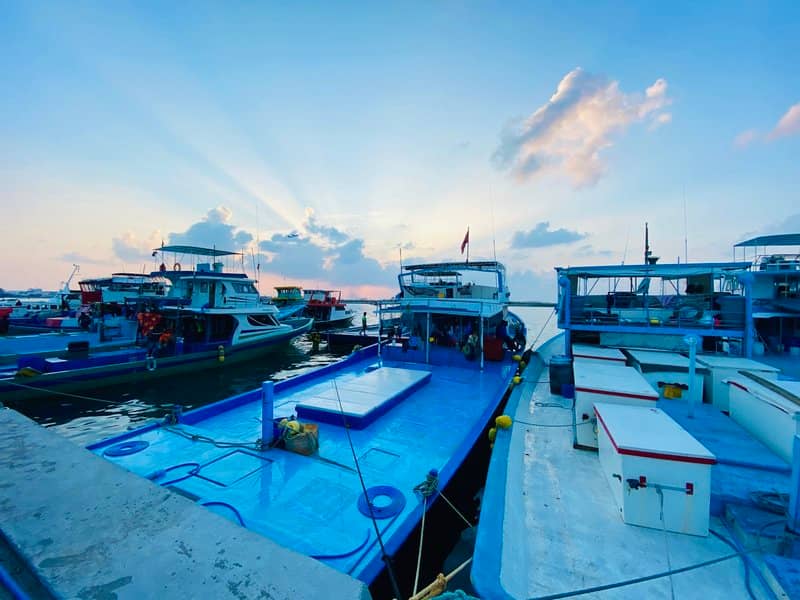
Justin Tyers • 11 February 2022
Commercial Fishing
Did you know that most of the global fish supply comes from the Southern Ocean? Me neither… Encouragingly, a growing part of that fishing is carried out on small boats by islanders and coastal dwellers who need the work. In the Maldives, for example, fishing accounts for 30% of the National Economy. How are local boats able to access such a heavily regulated market? Buyers such as supermarkets, for example, need to see a paperwork chain which guarantees the fish they’re buying was caught with legal methods, from safe boats which provide fair working conditions. Enter the world of fishing fleet monitoring. Integrated Monitoring Inc. in partnership with local Broadband and Mobile operator Ooredoo Maldives , began a five-year program for the Maldives Ministry of Fisheries Marine Resources and Agriculture to fit 730 small vessels in the Maldives with their Fleet One surveillance and monitoring system – a programme funded by the World Bank. The system includes GPS tracking and up to four high-resolution, low-light, tilt pan and zoom cameras able to discern movement and activities of interest. These high definition cameras allow identification of the fish species as it comes over the side. Initially, not every fishing-boat owner can see the benefits of being tracked and monitored – and there’s a very real fear that the monitoring equipment could drain the ship’s battery so deeply that the engine can’t be re-started. (Fishing boats often spend the night drifting, engine off.) That’s where Integrated Monitoring’s long experience and understanding of the industry rise to the surface. All monitoring installations are provided with a Battery Protect 65A which disconnects non-essential loads whenever the battery voltage falls below a pre-set level – ensuring that the battery always retains sufficient power to operate the stater motor. The Battery Protect devices are locally supplied in the Maldives by Marine Equipments . Iain Hayes of Integrated Monitoring says: We did a lot of product testing until we found the Victron Battery Protect 65A. That single inexpensive device guarantees the vessel’s safety by ensuring there will be sufficient power to start the engine. As to the rest of the crew’s concerns, the monitoring system brings a raft of personal benefits: Electronic catch reporting makes light work of the admin; Email and Social Media connection allows the offshore crew to stay in touch with friends; Video and voice calling allows them to check-in with their families at home. For the boat owners and fleet operators regulation-compliant fish attracts a higher price when it’s landed, and from a safety point-of-view they always know where their vessels are. These are persuasive benefits in exchange for using legal gear to fish for abundant species, with happy crews who receive fair rewards and liberties. What about the time laid up in port having the system fitted? …and what about getting installation technicians to remote locations? Iain again: The surveillance installation can be fitted in an hour-and-a-half …and we’ve got that down from just four hours! As for skilled labour, knowing how these fleets work we simply trained local engineers who were already employed in maintaining the fishing fleets in their home ports. Satellite datacoms at sea – in this case provided by Inmarsat – will always be expensive. For that reason the computer-controlled monitoring cameras are quite discerning about the data they record and transmit. This allows an 80% saving in data transmission. Routine monitoring information is saved to a 1 TB hard drive, the contents of which are downloaded back in port using Ooredoo Maldives cellular network . When Iain’s work is complete in the Maldives, Integrated Monitoring have their sights set on the Indonesian small fishing fleet – a market of around 10,000 boats. And the roll-out won’t stop there: in the longer term Iain hopes to offer monitoring to most of the 50,000 small or private fishing boats in the South East Asia region; driving up standards and ensuring fish-stocks remain sustainable.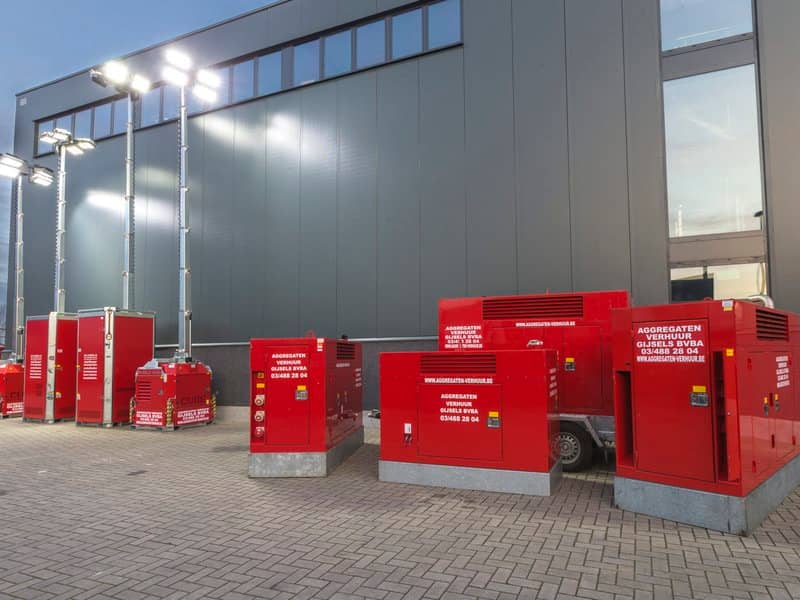
Justin Tyers • 14 January 2022
Generator hire win-win.
Gijsels BV are a prominent Generator Hire company in Belgium who have built their business over twenty years by supplying reliable gensets – usually in the 20kVA – 600kVA range – immediately from stock. Part of their success is a rigorous testing regime – before supply, and on return – during which the units are run under load for an hour to ensure they are performing satisfactorily. Until recently all the electricity generated during load-testing was dissipated as heat by a ‘resistance’ bank. Elias Gijsels – the son of the company’s owner – happened to be working on a sustainability project at school and suggested the test-energy was stored and used to run the workshop and offices. He helped design and install a system – which includes a PV array – which allows the company to be power self-sufficient. Elias Gijsels prepares to store the energy produced during product testing. Depending on the season there will be up to 12 people working at Gijsels – both office and workshop staff – which places a number of demands on their energy supply and results in a typical power consumption of 90/100kWh per day. They manage their schedule with the aim of testing one unit per day – thus spreading the energy production over time and allowing maximum consumption of surplus energy, which is stored in a battery bank of 76.8k kWh. Off Grid In order to comply with the National Grid power regulations in Belgium, Electrical Engineers Ysebaert.be – who advised and supplied the system components – incorporated a Break before Make transfer switch as seen on the system schematic below. This ensures that the private power system will not become grid-connected. The system benefits from a solar array with PV Inverters maximising daytime consumption, and it is the company’s expectation to be energy self sufficient even when they have installed an EV charger for staff use. The three phase system employs 3 x Quattro 15kVA Inverter Chargers together with Pylontech storage and is controlled by a Cerbo GX . Also in the build: Lynx distibutors US2000 Pylontech batteries 32 modules + 1 communication hub PV active on the public grid (AC 6 kW) PV active on the energy system ( AC SMA 15 kW) Transfer switch 80A Ysebaert Product Manager Luc Baeyens explains that ‘energy transition and the innovative use of energy’ is the key interest in his division of the company. Ysebaert works with clients to develop systems that will find the right match between investment and energy transition. He continues: At Gijsels the main business is generator rental – but they do want to make the switch/transition to use energy in an innovative system. The combination of a generator and their energy system provides extra value for the user – less use of fossil fuel, and less pollution. The supply of mobile energy is an area in which Ysebaert themselves are working as they develop mobile temporary energy systems, incorporating generator back-up, for use on construction sites.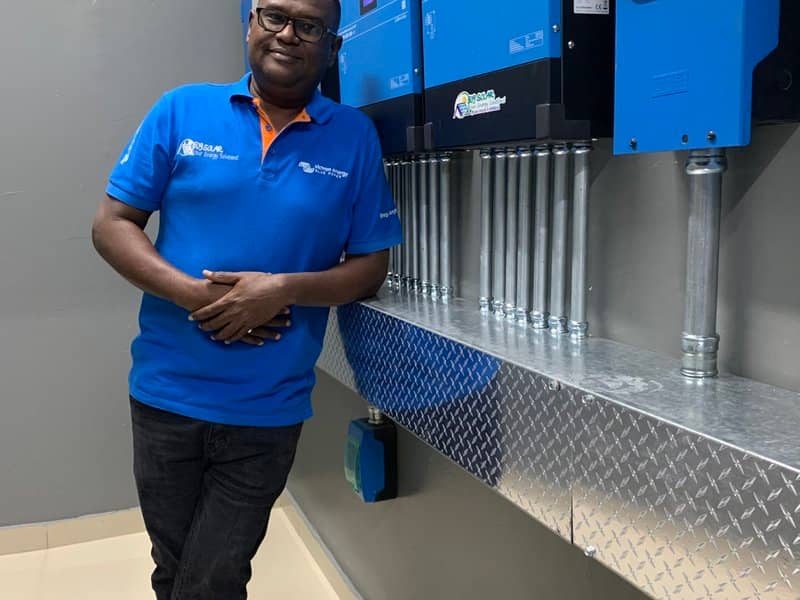
Justin Tyers • 07 January 2022
No Power. No Fuel. No problem.
The largest Haitian electrical retail store – Thompson Electronics – who sell consumer products for the home had to do some Blue Sky thinking after experiencing increasing difficulties in keeping their own lights on. Fortunately Haiti’s Luciano Bolivar , Steeve Cabane and the team at 509Solar knew how to help. As a country Haiti is facing difficulties on a number of fronts, making ‘normal life’ quite difficult at the moment. The area Power Grid (EDH), for example, is only rarely able to provide power to consumers – making commerce very challenging. Stores like Thompson Electronics and other businesses occupying the same building had been relying on a private generator running from seven in the morning to seven at night – but the added difficulty of a national fuel crisis has made even that remedy untenable. 509Solar is a Victron Energy installer based in Port-au-Prince – they were asked to design and install a solar-based microgrid. Luciano says: The Victron Energy Microgrid installation changed everything from the perspective of people and work because now, with this system, the site no longer has the noise and pollution of a generator and we have created peace-of-mind for the owners, who were stressed not knowing how they were going to keep the building and businesses trading without fuel for the generator. The city’s electricity is almost non-existent. Fortunately for Thompson Electronics the new system was installed in time for some busy December trading. The really tidy 60kVA power installation comprises: 6 x 10kVA Quattro Inverter Chargers 2 x SmartSolar MPPT RS 450/200 1 x Fronius Symo 15kW 6 x BYD Premium LVL 15.4 1 x Cerbo GX with GX Touch 50 3 x Lynx Power In 101 x Canadian Solar panels for a total of 43.6kWp This three-phase parallel 120/208V configuration Microgrid has been appreciated by many people both inside the power room and on the shop floor – together with the Medical Clinic and Women’s Fashion outlet who also benefit from the advantages of reliable power. The difficulties faced by the country many of which stem from the disastrous 2010 earthquake also offer a tremendous opportunity to build a greener future. At present only a quarter of the Haitian population has access to grid electricity, and there is no single grid provider. Luciano says: We at 509Solar have the most technically advanced Victron Energy expertise in Haiti, and are ready to help anyone in the country who needs power. Our goal is to make Victron Energy the standard in Haiti when it comes to renewable, reliable energy. We work with heart and passion offering our customers good quality products, professional installation and guaranteed after-sales support. And I must tell you that we also assist people who do not buy their Victron products from us. This makes us the reference in Haiti when it comes to Victron Energy. This installation at the Thomson building is the first microgrid for 509Solar – and we can see by its success that it will be the first of many.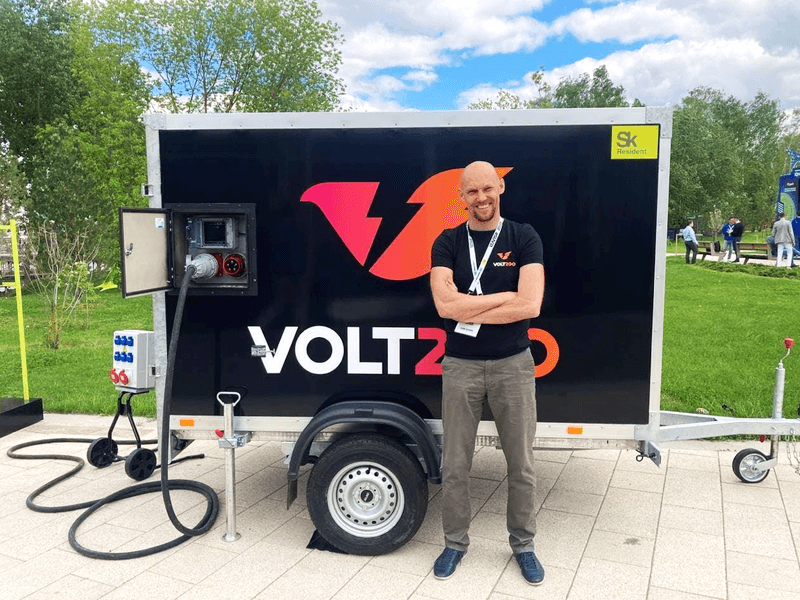
Justin Tyers • 17 December 2021
Electric Vehicle charging that comes to you.
When entrepreneur Leonid Neganov set out to build an EV charging infrastructure in the Moscow region, back in 2016, he found that – owing to the very limited number of Electric Vehicles, and the high price of real estate rental – having a static EV charging business wasn’t viable. Based on that experience he and Dmitry Kukushkin started the company Volt2Go having come up with the idea of creating an autonomous mobile charging station which offers EV charging where and when it’s needed. The scheme – which launches early next year – offers EV drivers the ability to log on to an App to book a charging time-slot at a convenient location around Moscow. The exact location will take into account the fact that users are more likely to require a charging point near the centre of the city during the day, and out in the suburbs by night. Whilst on-station the charging trailer will usually be grid connected – but with 3 x Quattro 15kVA on board it can meet much bigger loads than the grid can supply at the point of connection. And speaking of bigger loads the mobile unit – known as Power Boost – is equally capable of supplying power to temporary locations to run power tools and plant on Construction sites, for example. Having created an autonomous EV charger, we would not have been able to provide it with a sufficiently high utilization factor; says Leonid , the founder and ideologist of Volt2Go . We call our mobile unit the Power Boost as it is a universal solution for both optimizing energy supply, and charging electric vehicles. As a former Minister of Energy for the Moscow region, and holding a degree in Engineering and Physics, Leonid has a thorough understanding of the problem he is trying to solve. The energy grid in the Moscow region has limited capacity – it can meet all usual domestic and industrial needs, with occasional voltage drops common to many power grid providers – but upgrading the system to power big loads at any location is very expensive. This is one of the reasons why EV fast charging stations are unviable …and it’s a headache, too, for industries such as construction where projects require temporary access to a lot of energy. The Power Boost mobile energy trailer can deliver a lot of energy, even 3-phase, for limited periods of time …whilst battery storage is replenished between those peaks. The mobile power trailer was built with the help of technical advice from Oleg Nyunyaev – whose company Trio Solar , is based in St Petersburg, and specialises in Private Power Solutions. Oleg says: We chose Victron products for quality and reliability, as well as due to the fact that their products allow us to create quite complex technical solutions simply by assembling the necessary devices, knowing that they will interact with each other perfectly. The Power Boost uses: 3 x Quattro 48/10000 inverter/chargers and has a bank of 4 x 25.6V/200 Ah Lithium Smart batteries . The system is controlled by a Cerbo GX controller and has a GX Touch 50 display. A smallBMS , SmartShunt ; a GX LTE 4G modem with a GPS has been installed which allows for remote monitoring and tracking of the trailer. The unit is compact, light and can fit into a small van (VW Caddy or similar), or it can be towed as a trailer. Power connections are accessible externally with the GX Touch 50 screen viewable in a secure box which is accessible to authorised personnel – but can be monitored by anyone. The unit can be run off-grid and is able to provide an o utput of 36 kW; 380 VAC 3 phase, and has a c apacity of 20 kWh. The Quattros installed can offer a short term peak power output of 25kw, and its Power Assist feature allows the inverted battery power to be added to the available power from the grid. External load connection is also possible from a remote panel housing a set of various single- and 3-phase sockets. Here we see the installation complete with 4 solar panels 175W-12V Mono on the roof of the trailer. The next development of the project will be to integrate a portable 25 kW DC fast-charger into the existing system. Testing with a Nissan vehicle has been completed. We shall watch Volt2Go with interest when their scheme begins in the new year, and wish them every success. The Power Boost trailer will be a good solution for EV charging for many areas of the world.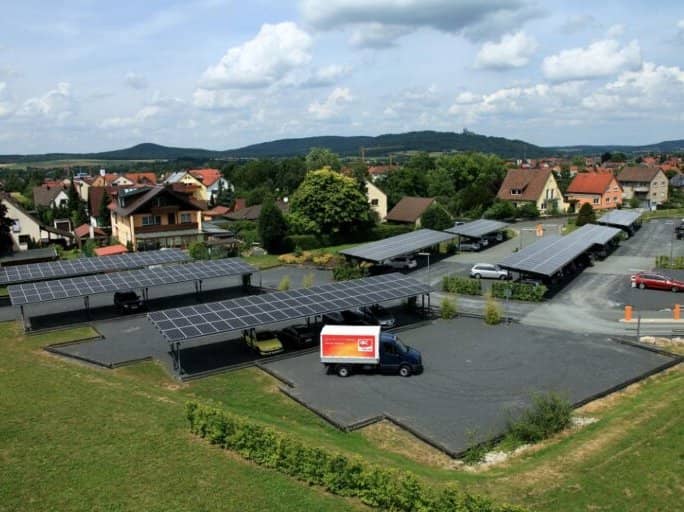
Justin Tyers • 09 December 2021
Solar Professionals leading by example
Solar Power specialists IBC Solar employ almost 250 staff at their office in Bad Staffelstein, Germany, where for fifteen years they have been working toward energy self-sufficiency, and as energy philanthropists. Early on in their plans they took on the challenge of providing Electric Vehicle (EV) charging from Solar Energy. Because their office is located near residential dwellings, they decided to make EV charging available to their neighbours, free of charge, using a Radio Frequency card access system. Power for their office is mainly derived from a PV array offering 24kWp. The energy is stored in 5 BYD Battery-Box LV units each having a capacity of 13.8kWh. 6 Quattro 48/15000 Inverter/chargers supply the loads from battery. The system provides the majority of their energy needs, and effective peak shaving for well-managed energy usage. Oliver Oswald, Project Engineer for Commercial Energy Systems, says: Our house system achieves a lot and is also extremely innovative. Because it intelligently networks all of these areas of application with one another, so that self-consumption is increased, the grid connection point is relieved and the expenses for electricity purchase and grid fees are reduced – and all regulatory requirements are met! These kinds of installation are unusual in Germany where the reliability of the national electricity grid is high, and private installations maximising self consumption and energy storage are only now beginning to find favour. There are four Electric Vehicle charging points in the residential solar car port, and a further seven at their Head Quarter offices. Peak Solar output for the car port is 125.6kWp, and battery storage is 70kWh. Decentralized energy generation and intelligent self-consumption Oliver Oswald continues: A special feature is that the battery storage system can be used independently of one another and for different purposes. As already mentioned, they are used at IBC SOLAR’s headquarters to increase self-consumption and to reduce network charges through the use of peak shaving. The storage system contributes around 13,000 kWh of solar power annually. The central Energy Management System at a higher level records all relevant status data in the system and then forwards the corresponding control commands to the respective devices. In addition, in the area of charging infrastructure, we have created the necessary prerequisites for integrating manufacturer-independent wallboxes and charging stations into a backend in the future. The wallboxes and charging stations have the OCPP1.6 communication protocol for the correct connection. Even visionary altruistic schemes such as Free Public EV charging will encounter legal hurdles; at the time of writing IBC Solar have had to suspend that very popular scheme. Nevertheless IBC have demonstrated what is already possible and we hope their ground-breaking sustainable scheme will soon be made available once again – for the sake of their neighbours and the planet!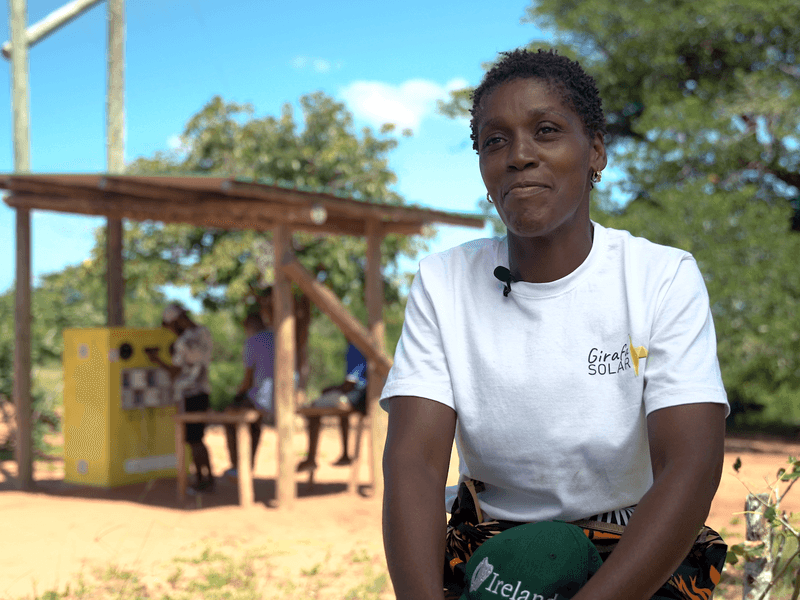
Justin Tyers • 19 November 2021
Giraffe charges phones
The community of Mangunze, in Gaza, Mozambique have been promised grid electricity for years. Although the grid passes in close proximity, years have gone by, and yet a connection has still not been completed. Solar Giraffe benefits from an environmentally appropriate local design Some community members have small solar panels on the roofs of their houses – but not everyone can afford that investment. When it comes to charging mobile phones those without panels have either to ask neighbours for help, or pay for recharging commercially. Solar Giraffe is the solution to their problems. It’s design incorporates an elevated platform for two large PV panels; battery storage so that the charging station can still be used when cloudy weather persists for days; phone charging points are contained in lockers – so that users can do other things whilst their phone is charging; light allows for night time community gatherings; and a radio provides news and entertainment. What’s in the cabinet? Power from the panels is harvested by a BlueSolar MPPT 100/30 for storage in four heavy duty AGM batteries providing 220Ah at 24V. A Phoenix 24V 250W inverter provides power to ten phone charging outlets. A Venus GX communication device harmonises charging and power provision, and ensures long battery life by preventing the batteries from becoming too depleted. The GX device also enables remote system performance monitoring by installation team by communicating with a GX GSM which transmits small economical data packages wirelessly via the mobile phone network, to the free-to-use Victron Remote Management ( VRM ) platform where performance can be examined in-depth. The system is protected by circuit breakers and RCDs. Inside the charging cabinet. The solar system design was carried out with help from Frangilio Nhanale of Logos Industries . Two managers have been employed and trained to educate users about how solar energy is harvested and stored, and how they can use the facility thoughtfully and carefully. Sónia Preciosa Langa (pictured above) is a 47 year old mother of four who lives in the village. She says that the availability of electricity would allow her and others to start a business – without it they are unable to do anything. She says that if electricity came to the community she would feel that they had evolved. In the early days she couldn’t imagine that the Solar Giraffe would be useful – but now that it has arrived and is providing almost 300 phone recharges per month regardless of the weather, she is very pleased with the development and enjoys helping her community ‘brothers’ use the Solar Giraffe. Giraffe manager Gilda Manuel on the phone outside her house. The Solar Giraffe was designed by Ruben Ferreira Morgado who works as an architect and sustainable designer with the Carlos Morgado Foundation. He carried out extensive research among community members to make sure that the design would be useful to their need. This led to the development of a facility which provides not only phone recharging, but it is also a space where the community can gather to listen to broadcast music and news, and to discuss their everyday struggles and successes. Because of it has proved so popular, five more are planned in early 2022. Sonia demonstrates charging operation. Speaking moments after the inauguration, the District Administrator, Carlos Buchili, said “ This project exactly brings this clean energy, renewable energy and that our population has the possibility to charge phones, listen to the radio and in short it is a space for sharing ideas . ” The promoters of the project, the Carlos Morgado Foundation, and Associacão Nyikani Mavoko – supported by the Mozambiqe Women of Energy – secured funding from the Embassy of Ireland, whose representative Ambassador Nuala O ‘Brien, provided 500,000 meticais for the scheme – equivalent to about €7000. Solar Giraffe was installed in the catholic church site, Missão de São Benedito de Mangunze. “ This project is welcomed to the Mission of São Benedito de Mangunze because it will help our brothers who have difficulties in charging the phone in their homes, because this solar panel story is not just anyone who has it, and it will help a lot. I think it is a huge leap for the people of Mangunze. Sometimes people came to Mass on Sundays and everyone went with their phone and wanted to be the first to charge in the church. “, said one of the residents of Mangunze.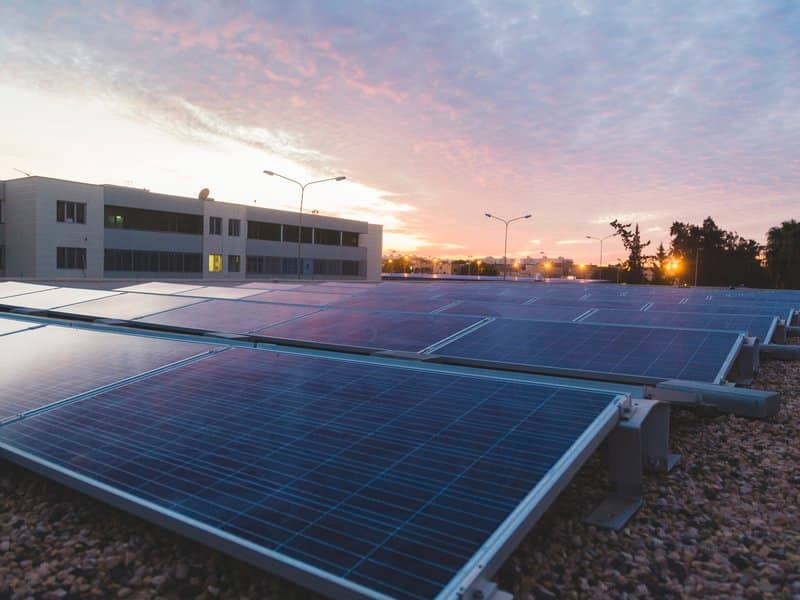
Justin Tyers • 29 October 2021
Saving lives in Libya
Fifteen large hospitals in Libya – all of which are state-owned – are now able to provide the standard of patient-care they would wish, thanks to reliable power. The electricity grid in Libya suffers from frequent blackouts and brown-outs with the network voltage often falling from 220V to 170V. Power distortion has been measured at up to 54%, with the result that it is simply not possible to sustain the operation of sensitive medical equipment. Neither were the difficulties with power supply limited to faults with the national electricity grid: during blackouts power was provided by overworked generators which would often fail after 10 or 12 hours – either because of mechanical problems, or they simply ran out of fuel. The results of these failures can only be imagined. In fact, many readers will be surprised to learn that in the smaller cities of the south, whenever someone presented at hospital – for an operation, or for the birth of a child – family members would arrive at the facility carrying 200 litres of fuel so as to ensure that the power didn’t fail during their loved-one’s medical procedure. In these cities, everyone knows everyone else, so it became normal practise to phone the hospital ahead of a patient’s arrival, and ask: ‘What do you need in order to function properly?’ Even regular calendared life-saving procedures such as kidney dialysis could not be guaranteed to be delivered safely and successfully. All that has now changed in fifteen important hospitals thanks to solar based energy installations carried out by the country’s largest solar power installer. The project was funded by the UNDP , the contractor is Gsol Energy and their partner in Libya Insiab. Ubari General Hospital Ubari General Hospital has a typical installation and benefits from: 200 PV panels providing 50kWp 2 x Fronius Primo 8.2kW inverters benefit from 18kWp of the solar array – providing single phase power demands, whilst surplus power is directed to battery storage via: 2 x Quattro 48/10000 . As well as charging the battery bank from the Fronius units the Quattro is connected both to the main electricity grid, and to the stand-by generator. 8 x MPPT 150/70 Solar Charge Controllers OPzV battery bank 48V/2600Ah CCGX communication device harmonising the system and providing data for remote monitoring by engineers. All except for one of Insiab’s fifteen hospital installations retains a grid connection – the exception being a location where the grid was so unreliable that it was not felt worthwhile to make a connection. Insiab engineer Tarek during a maintenance visit. At the other end of the spectrum, one of the hospitals expressed surprise at being included in the private energy programme claiming that the electricity grid was very reliable. It turned out to be extremely lucky that the installation went ahead because two days after completion the ‘usually reliable grid’ failed completely for two whole days – an event for which the hospital could not have been prepared. Insiab engineer Ahmed – Listening to the power consumers experience ensures ‘need’ is matched with ‘provision’. Daily consumption at the hospital rises to 160kWh. Daytime consumption is easily met, and there is a reserve capacity in the battery of 80kWh. Reliable This programme of installing secure power began in 2017 – the passage of time has proven the installations to be 100% reliable in all cases. So successful, in fact, that not only are necessary power requirements in the Intensive Care Unit , Operating Room and Emergency Room are met, but the installations can be reprogrammed to provide power back to the grid – improving reliability for other users. Insiab Libya Solar pride themselves on the professional standard of their installations using world class electronics, installed by highly trained engineers. In other projects they secure the power for telecoms networks, and for Internet Service Providers – ensuring that Libya’s utilities benefit from full up-time. Highly trained staff ensures a high quality installation Solar Solves Social Problems Insiab are passionate about encouraging the Libyan government – a country rich in oil – to take advantages of solar. A recent project to light the streets in the city of Sabha has seen the installation of over 1000 solar streetlamps – a project which has been successful on many levels: unlit streets provide opportunities for crime – such as kidnapping, which is prevalent in the city – and also an excessive number of road accidents which result simply because drivers cannot not see the dangers around them, resulting too often in serious injury and death. The street lighting project has changed the environment completely; people now feel safe when walking the street. A project to install a further 3000 streetlamps in Libya is underway. Insiab Educate students around Libya’s energy future Students from the Institute of Electrical and Electronics Engineers (IEEE) facility in Tripoli University enjoyed a site visit hosted by Insiab to one of the 15 systems in Tripoli. They were given a tour of the system; learned about its design; the reason behind the choice of components; and how it functions. After the war in Tripoli, followed by covid restrictions, student-learning has been much-disrupted: this visit offered them hope of a return to normal, and inspiration for the future – as well as demonstrating the long-term stability efficiency of the system which has been working faultlessly since its installation five years ago. In these three images we see Project Engineer Sondos Elgabroun conducting IEEE students around one of her installations.
Justin Tyers • 08 October 2021
Earthship
Australian national Evie Verdini Fensom has been into sustainable living right from school when she helped build a model house from straw bale and bamboo. Now she has a three year old daughter, Audrey , that early experience is paying dividends as she and her partner, Tristan seek innovative ways to build themselves a family home. Their project began six years ago when they bought 110 acres of bushland. They developed most of it to run sheep, and they’ve planted crops for home consumption. Their interest in a sustainably-built, zero-energy home led her to the concept of Earthships – an architectural design which stores the sun’s energy in an ‘earth shelter’; provides non-mechanical ventilation to replace air-conditioning; protects the occupants from extreme heat; and provides them with warmth at night and during the winter. The architectural drawing of their Earthship home is featured at the head of this article. Air conduits buried in the wall flow naturally, removing the need for air conditioning. They stayed in an Earthship prior to building one, and became convinced of the wisdom of the design when they enjoyed a steady indoor temperature of 18°C whilst overnight temperatures had fallen to 7°C outside. The design incorporates ‘earth tubes’ through which air travels by natural convection to maintain a ‘chill room’ at a temperature of 10°C …in spite of soaring desert temperatures. Energy harvest, storage, and supply. Evie and Tristan’s land is remote from the electricity grid – they didn’t even ask the energy supplier to quote for connection to the electricity grid when they learned that their neighbour – a few years previously – had a grid-connection quote for over a quarter of a million dollars. Enough said. They decided to install off-grid solar-based private power – a system which is expected to provide 15000kWh of free energy per year. The System has been installed by MyEnergy who have over ten years experience of providing residential and commercial power solutions. It comprises: 36 Solar Panels 370W providing 13.3kWp 3 x SmartSolar MPPT 250/60 Quattro 48/10000 Inverter Charger Fronius Primo 4.-0-1 6 x Pylon US3000 lithium battery storing 3.5kWh each Color Control GX Evie’s house is being built largely with the help of workshop students They’ve chosen to construct their 187m² house by hosting training courses organised by Earthship Eco Homes designer and workshop trainer Dr Martin Freney. Once building code approval has been obtained for a project, Martin instructs students in Earthship building method and theory, hands-on, at a cost of around A$100 per day. Stamping out the clay Evie provides refreshment for the workers – and her house is built from their labour. It’s a sociable and fun way to self-build, keeping costs of construction to a minimum. Evie says they are lucky to have a heavy clay soil for building, though it’s not so good for farming! The glass and earth design makes maximum use of natural materials lying close-to-hand. A glass wall, facing the sun, admits solar energy into the house where it is absorbed by the building’s ‘earth mass’. The foundations incorporate recycled materials – typically used tyres filled with rammed earth, and some of the walls have bottles and cans embedded in them …sometimes the glass bottles are left revealed allowing coloured light to be conducted through the wall to great effect. Progress so far… With Earthsip building there’s plenty of room for innovation such as the solid concrete floor which has been stained with Ferrous Sulphate – a chemical commonly used in agriculture for lowering soil pH – and which Evie says has given the concrete a pleasing earthy colour. Straw is a ‘waste’ material. Storing carbon, it actually reduces the carbon footprint of construction – and even better, it super-insulates the building …further reducing the requirement for energy expensive domestic heating or cooling. The walls are clay-covered straw bale and are further protected from bushfires by a tin sheet – an incombustible barrier which is required in her area (BushFire Attack level 29) to mitigate natural risks. Evie’s roof is also tin – it’s quick to lay, light, inexpensive, and has a design life counted in decades. Water Storage Domestic water is provided by rain-water harvest and stored in a 137,000 litre tank with 35,000 litres stored in a shed for agriculture, and a further 23,000 litre mandatory storage for fire-fighting. Waste (grey) water is used on-site for irrigation and fertilisation. You can follow Tristan, Evie and Audrey’s progress on their Earthship Inman Valley Facebook page.
Justin Tyers • 17 September 2021
Van life with induction hob
A lot of people think cooking with electricity is only an option at home, connected to the grid. After all, an electric cooker typically has its own dedicated circuit using 6mm cable and a 32A fuse, so cooking with electricity in a camper van is completely out of the question – right? No …it seems. In this article part-time van lifers Shamira and Niels share their experience of induction cooking from battery. Real-Life Road-Trial At the time of writing – September – Shamira and Niels have been touring in Sweden for four weeks without visiting a campsite or plugging into the electricity grid. They have been cooking most days, spending most of their time parked up, and only driving for a couple of hours every 2 to 4 days. Their main source of battery recharge has been from their solar panels and they report that they are completely satisfied with their installation choices. Shamira van Veenendaal is a 30 year old photographer and blogger, and her partner Niels de Graaf, 34, works as an IT network engineer. They live, work and travel part time with their cat Saartje in a DIY conversion van. It’s a compact Mercedes Sprinter with a 128″ wheelbase re-purposed with sustainable self-sufficiently in mind: solar panels, compost toilet, compressor refrigerator, diesel heater and – and as we are about to learn – an induction hob-cooker powered by their lithium-based Victron installation. Induction on board Gas is by far the most widely used fuel for cooking in a camper van; it’s cheap and easy to install. But for those who want to be independent of gas stockists induction cooking beckons. Electricity allows you to be completely self-sufficient; you no longer need space for a gas bottle; it’s safe, and it’s sustainable. So why do so few choose ‘electric’ for cooking on-the-road? Is it because the complexity of charging and power provision need a bit more thinking through, because there is more initial expense; or because people don’t believe it can be successful, off-grid? Shamira says it was an interesting challenge, … but we can now say from our own experience that it is indeed possible and we are very happy with this option for cooking. How much energy does an induction hob use in practise? Shamira says: Many people who are interested in cooking on induction only look at the maximum power of the hob (usually about 3500 Watts) and conclude that it is not viable in a camper. However, this figure is based on two cooking zones on the highest setting at the same time. Nobody uses that, not even at home. We put it to the test by cooking a pasta meal for two. Pasta is a useful starting point because you have to boil a pan of water for ten minutes whilst cooking meat or vegetables on the other hob. Experiment “We brought 750 ml of water to the boil on speed 8, then let it boil for ten minutes on speed 5 and also baked some vegetable mince with red sauce on speed 6. The entire meal took about 25Ah of battery capacity (this also depends on the efficiency of the hob and pans, how much water you want to boil and whether you keep the lid on the pan when cooking for example) and the continuous power did not exceed 1600 Watts at its peak – most of the cooking draw less than 1200 watts. At no stage did our food preparation approach even close to the maximum power of 3500 Watts. So you do not need a mega inverter of 3000 Watts or 5000 Watts. Our inverter is rated for a continuous power supply of 1600 Watts. We find it is more than enough. We can also use the coffee machine and small kettle on it which it handles really well. General thoughts and observation regarding van life Lithium-based Induction 25Ah of battery capacity is of course quite something in such a short time, but most motor home owners do not cook every day. We regularly only warm up a soup or make wraps with vegetables where we only roast some pine nuts. This will draw considerably less power because you use fewer cooking zones and you don’t have to boil water …and keep it at the boil. Averaged over days, much less battery capacity is used on cooking than in our example. In practice, it’s easy to recharge that 25Ah. And it’s good to know that a lithium battery can be discharged up to 90%. Suppose you cook such a pasta meal every day and therefore consume about 70A per day including all other electrical loads (refrigerator, lighting, charging laptop, etc.), then you can still get almost three days of autonomous power using a 200Ah lithium battery. That’s without recharging via solar panels or the dynamo while driving. If the sun is shining or if you are going for a drive, a lithium battery will recharge relatively quickly. They have a lower internal resistance during charging than lead batteries. Recharging the last 20% is particularly slow with lead batteries because of the increasing internal resistance (which means less current will flow). We have therefore opted for a 200Ah lithium battery. Electrical installation for induction cooking in the camper The electrical set-up in a motorhome designed for cooking on induction looks a bit different due to the choice of a lithium battery. It becomes more complex and also more expensive. Below you will find everything you need to take into account with a lithium set-up, apart from the standard components that are usually present in a motorhome. Do you want to know product costs or where to order? We’ve listed all the products and other useful equipment for the camper on our webpage Wander Rebel – a link to which appears at the end of this article. Main components 200Ah Lithium Battery : as you can see in the calculation, it is really not necessary to buy a few hundred Ah of lithium batteries. 200Ah is sufficient, but keep this as a minimum if you also want to be off-grid for a few days without adding power via the solar panels or charging via the dynamo while driving. Do you cook a little more extensively than we do or do you want to be free for longer? Then opt for more capacity. BMS : The BMS is a special protection for lithium batteries. This checks the condition of the battery, mainly the cell voltage and temperature. The BMS can stop the battery charger (protecting it from overcharge) or switch off consumers (if the battery becomes too deeply drained). In addition, the BMS will prevent charging if the temperature is too low or too high, to prevent damage to the battery. Battery Protect : a battery protect (battery guard) is an electrical switch that interrupts the connection between the battery and all electrical consumers such as lighting and the refrigerator as soon as the battery falls below a certain voltage. This is detected and communicated by the BMS. This prevents the lithium battery from being discharged too deeply. The battery protect stands on its own, but it is better to place it in combination with a BMV Monitor. This is very accurate, but it also gives you direct insight into the current battery statistics. MPPT SmartSolar Charger : an MPPT solar charger maximises the power-harvest from a solar panel and stores it in the battery. The MPPT with bluetooth is more expensive, but the advantage is that you can also read the yield, system data and all kinds of other statistics of the panel on your smartphone via the free Victron app VictronConnect . Solar panel : like many others we prefer to camp off-grid, but accept that sometimes that brings limitations. In bad weather or in winter, a panel produces less, while at the same time you often use more power. If you have the space and budget, certainly do it, but it is really not necessary to put 500+ Watts of solar panels on your roof to be able to cook on induction. We have 320 Watts. That’s modest, but we don’t need more. After all, we can be free for about three days on the battery alone and we can extend that via the alternator if we are driving. Even in March – when the sun is still quite low and weak – we can be off-grid with what we produce from the solar panel and the alternator if we’re driving. DC/DC Converter : If, as is usually the case, you have two battery banks and want to charge the household battery via the vehicle’s dynamo while driving, you must install a battery combiner . This prevents the starter battery from being drained with the result that you can’t start the engine. However, if you use a lithium battery, you must install a dc/dc charger instead of a normal isolating relay. This prevents the alternator being overloaded by the battery; prevents the vehicle’s starter battery from being drained, and also prevents the lithium battery from being charged with too high (or low) voltages that can damage the battery. Multiplus 12/2000/80 Inverter: As you can see in the calculation, an induction hob consumes quite a bit of power, but for the average camping meal, not nearly as much as the maximum power indicated in the product description. We have therefore opted for a Victron Multiplus 12/2000/80 with a continuous power of 1600 Watt. Do you cook more extensively than we do and do you want to be sure that your inverter meets the requirements? Then choose a Victron Multiplus 12/3000. The Multiplus series is useful anyway because it is an inverter and battery charger in one. It also works perfectly with the Victron Digital Multi Control. Digital Multi Control : This panel is for switching the inverter on and off, but also very useful for setting the current limit between two AC power sources. For example, if the campsite power grid does not supply enough amps for your induction plate, you can indicate on the panel the maximum amperage the campsite does supply. During cooking, or whenever you turn on devices which exceed the power available from your hook up, supplemental power will be added by the Victron MultiPlus using a feature called PowerAssist. This way, even with a low current camping connections, you can still use larger devices in the motorhome. Cooking in the camper on induction with a lead battery Electric cooking in the motorhome on induction is also possible with a lead-acid battery, but we do not recommend that. You have to take much more battery capacity with you compared to a lithium battery. This is because at large currents a lead (sulfuric acid) battery suffers from two phenomena. The total available battery capacity decreases as the discharge current increases, this is the Peukert Effect. The battery capacity specified by the manufacturer applies if you empty the battery in 20 hours. This means that a 100Ah battery is empty after 20 hours of supplying it. If you are going to increase the discharge current to more than 100A or even greater – because you are going to cook on induction – then the total battery capacity will be much lower. In addition, due to too high a discharge current a lot of heat is created and there is sulfation in a lead battery, both have a bad influence on the capacity and lifespan. If you still want to cook on induction with a lead-acid battery, then an AGM battery is most suitable for (short-term) high discharge currents. With lithium batteries, it is sufficient to look up the maximum discharge current allowed in the specifications to determine whether this is sufficient for cooking on induction. With a lead-acid battery, you would do well to limit the maximum discharge current to about 20% of the total battery capacity. If you want to cook on induction, you quickly need 1200 Watts to boil water (sometimes more in the peak), this is converted to 12 Volts, exactly 100 Amps. Assuming 20% maximum discharge current, you arrive at a battery capacity of 500Ah and that is the minimum to take with you. It’s possible, but it’s a bit of an exaggerated set-up for motorhomes. That is why most people opt for a lithium battery with this kind of power or capacity (also because it has up to five times more cycles). After all, two AGM batteries of 250Ah also require quite a bit of budget and you also add about 130 kg! to weight. Our plan to cook on induction in the camper was made possible in part by a collaboration with good advice from Stroomwinkel.nl. You can learn more about life on the road and useful links to purchases at Shamira and Niels’ webpage Wander Rebel. You can also follow Shamira and Niels on Instagram .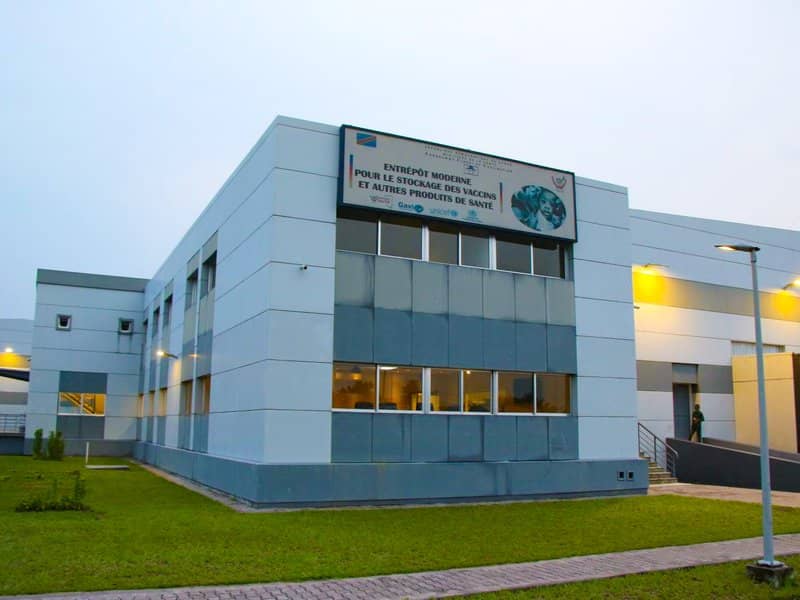
Justin Tyers • 10 September 2021
Vaccine storage for D. R. Congo
A vaccine storage facility, known as The Kinkole Hub, has been commissioned by the Expanded Vaccination Program office of the Ministry of Health in the Democratic Republic of Congo. Built with funding from UNICEF The Kinkole Hub – which is situated in Kinshasa – is a temperature controlled facility for the storage of medicines, in a suite of cold rooms, and a modern warehouse. The site also includes administrative offices. The cold rooms offer constant, controllable above- and below-freezing environments suitable for vaccines requiring very specific temperature-storage. Power blackout protection has been assured by choosing a private electricity supply based on solar energy. The Ministry of Health chose this option because it offers cheaper, more reliable energy. This installation was completed by GoShop – the authorised reseller of Victron products in the DRC. GoShop have designed a containerised solar-based Uninterrupted Power Supply for the site’s refrigeration plant and administration department. Power to the offices can be redirected to the cold rooms in the event of a breakdown, or to avoid a critical power situation. The solar based system comprises: 640 mono solar panels producing 150kWp a further 180 mono solar panels producing 72kWp 18 Quattro inverters of 15kVA 6 Fronius Eco of 27 kW 5 BYD Battery Box of 13.8 kWh 96 GEL Valve Regulated Lead Acid 2V 3000Ah batteries 3 Color Control GX 2 Indelec lightning rods. The Democratic Republic of Congo experiences one of the highest density of lighting strikes in the world – lightning rod protection is mandatory. The integrity of the system is further secured by a back-up generator. The modern warehouse facility at Kinkole is the largest in Central Africa, and has a total of 13 cold rooms including 10 refrigerated rooms, 2 freezer storage facilities, and one ambient room. GoShop have been supplying power equipment for forty years and are, today, involved in a number of large scale aid-project installations – including a 200kWh system for the World Food Programme; together with state owned facilities including a 350kWh installation at the Presidential Palace.
Justin Tyers • 24 August 2021
Solar-powered sailing around the world
The first thing Tiger Brisius and his partner Julia did in preparation for their planned circumnavigation of the world was to remove the diesel engine from their thirty-two foot Olle Enderlein yacht and replace it with an electric motor. The motor is a GreenStar Marine E20 rated at over 10kW max – which GreenStar say is equivalent to a 20HP marine engine. The great thing about having an electric motor on board a sailing yacht, of course, is that when you’re voyaging under sail the motor becomes your electricity generator. GreenStar Marine are taking great interest in this project, supplying one of their prototype units and modifying the control for a 48V supply. The resulting higher RPM is really useful , says Tiger, as the torque offered by electric motors cannot be fully utilised on board Idun [their yacht] because the propellor aperture constrains the size of propellor which can actually be fitted. Tiger and Julia are undertaking the work of installing the motor themselves. Ocean voyaging demands self reliance – so it is essential to understand every aspect of your vessel’s gear. GreenStar are designing a new control system which will be optimised for their vessel but the fact that the installation isn’t quite complete yet hasn’t kept them off the water. Because there are no controls by the tiller I have to call down to Julia ‘Forward! …Astern! …Forward again! ‘ and each time I call, she reverses the terminals! says Tiger. The yacht – known as an OE 32 – is built for safety on the high seas and has been well-proven on blue water. The unit can handle up to 10kW input power continuously and peaks even higher – though with the modest propellor fitted to Idun they won’t need that much drive. When sailing at a little over 7 knots (the maximum hull speed for their classic Scandinavian long keeled yacht) they’re expecting their propulsion unit, working as a hydro-generator, to return an enviable 1000W/1400W from their three blade 15 x 9 propellor. GreenStar’s own trials, with a larger propellor have achieved 1800W from the same unit. Tiger’s shopping list for Idun’s electrical installation is as follows: 8x LiFePO4 Battery 12,8V/200Ah – Smart 1x Lynx Smart BMS 1x Lithium SuperPack 12,8V 100Ah 2x Smart BatteryProtect 48V-100A 1x Cyrix-i 400 A 48 V 1x MultiPlus-II GX 48/3000/35-32 3x SmartSolar MPPT 100/20 1x SmartShunt 500A 1x Cerbo GX 1x GX Touch 50 1x Lynx Power In 1x Lynx Distributor 1x SHORE POWER CORD 25M 16A/250VA 1x Power inlet stainless with cover 2x Sunpower Maxeon 3 solar panels rated at 390w The solar panels will sit on top of a solar arch they’re designing. If that’s not enough we’ll put up two flexible 115w, Tiger says. Both adventurers feel it’s really important to strive toward a low-carbon lifestyle. Tiger says that although he doesn’t like being drawn into discussions about trading diesel for big battery storage he’s confident that after the equivalent of 700 litres of diesel-consumption running-time, his installation will be greener. For ever. Tiger, who has been sailing all his life, bought their vessel three years ago and keeps it moored at the Stora Hunduddens Varvsförening boatyard in Stockholm. Idun is a blue water cruising boat, sturdily built for safety at sea – but she delivered an impressive performance during a 24 hour race last autumn …crossing the line amongst the sprinters. In the true spirit of adventure Julia will build her sailing experience locally – and learning as she goes. She’s really looking forward to their open-ended adventure which will begin next summer: It’s such a huge project it is hard to comprehend! she says. Their current plan is for their voyage to last 3 years – but if they can find work en-route they’d like to extend their cruise to 30 years 😉 In order to raise funds for the project Julia has taken work in a Supermarket, although she studied Sustainable Energy Technology. Tiger is working in a Camera shop – although his passion is for filmmaking. Setting off in August 2022 they will sail through the English Channel and out to the Canary Isles before making a classic trade-wind-assisted crossing of the Atlantic ocean in November …arriving in the Caribbean in time to celebrate Christmas. From there they will continue west-about, zig zagging across the pacific to experience for themselves the excitement of deserted atolls and paradise islands. Having crossed the Pacific, Tiger and Julia plan to pay a second visit to New Zealand and Australia. They’ve done some travelling already in both those last named countries – although on that occasion they flew out, so they’re already excited about arriving at those distant shores as wind-and-electric navigators. Julia and Tiger invite you to follow them on their Instagram page which they will keep updated with news and pictures of their preparations. They welcome any questions about their set up and plans …and once underway they’ll be sharing their ocean experience with you first-hand. We wish them well and look forward to publishing a detailed account of how their electric sailing works out in practice.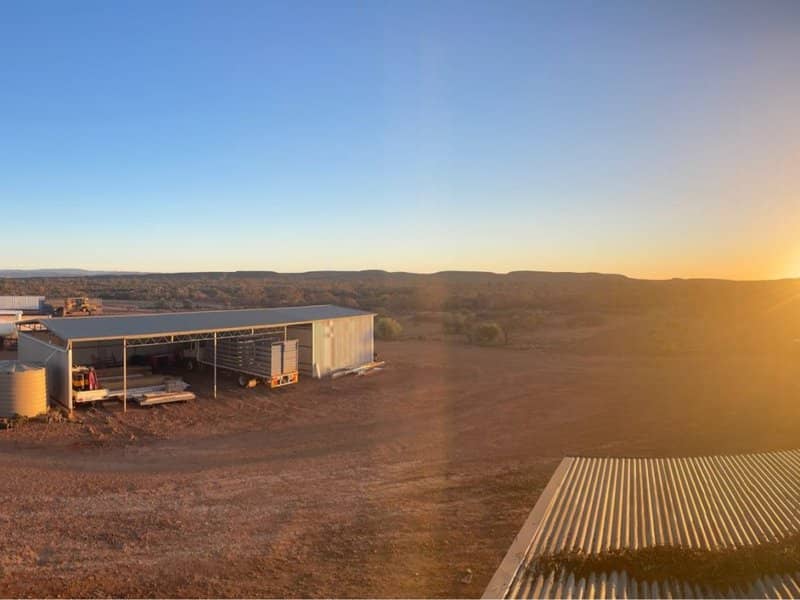
Justin Tyers • 17 August 2021
Reliable power in the Australian Outback
South Australia is home to farming stations which are among the remotest inhabitations on earth. The people who work them have to be pretty self-reliant. 600km from the nearest city of Adelaide, the Wertaloona Station – which was established 170 years ago – have just installed a solar based power system to run their three homesteads, water pumps, cooling rooms and shearing sheds. The worker accommodation has recently been increased and a new air-conditioning system installed to cope with temperatures which can often climb to over 50ºC. Diesel costs more than A$1.50/litre and the generator is noisy – so it was time to invest in silent solar and reap the rewards of free energy. The system was installed by Ciaram Granger Managing Director of My Energy and comprises: 2 x Quattro 48/15kVA Inverter/Chargers 50kWp of Solar Panels 3 x SmartSolar MPPT RS 450/100 Solar Charge Controllers 3 x AC coupled PV Fronius Primo 8 Inverters Cerbo GX 100kWh Pylontech Lithium Battery storage 24kVA Welling & Crosley Kubota Diesel generator The new MPPT RS solar chargers have been designed for large solar arrays. Two solar trackers on board allows connection to two dissimilar Solar arrays. VE.Can bus ports allow up to 25 MPPT RS units to be daisy chained, all synchronised, for large scale solar farming. Up to 450V input from the panels allow for longer cable runs/lower losses. The estate works 2500km² of land with up to 6000 cattle or 30,000 sheep. They produce European Union accredited organic beef, lamb and, of course, they produce wool. That large scale activity is watered from 28 Bore Holes. Ten dams have been built among the five creeks and associated water courses which run through the holding. A Cerbo GX is the communication device at the heart of the installation, harmonising the system’s cross manufacture components and reporting the system data to My Energy via the Victron Remote Management (VRM) platform. VRM allows installers like My Energy to offer on-going monitoring for their client – without call outs. Any questions the client has regarding their installation can be answered immediately. And they don’t have to wait for a scheduled visit from an engineer if changes to system programming are required – quite reassuring when you live a day’s drive from anywhere.
Justin Tyers • 13 August 2021
Off grid Spanish mountain cabin
Manolo Llongo works for solar distributor Krannich Solar Spain where he has been kept so busy for the last ten years that he has only just found the time to install off-grid solar energy for his second home in the mountains. It’s in Krannich Solar’s DNA to increase social awareness of sustainable electricity and respect for the environment, so it was inevitable that the same ethos would inspire Krannich’s own employees! Finally, after preparing customer orders at Krannich Solar practically since the company opened its branch in Picanya (Valencia), Manolo has decided to take his property to the next level and benefit from advantage of solar energy himself. With the support of solar installer Eraeco , Manolo and his family will enjoy even more sustainable visits to his property at weekends, and in summer. Manolo chose the best brands from Krannich Solar’s portfolio. Twelve units of Trina’s high-efficiency photovoltaic modules were installed, placed on a coplanar structure on the roof of the house. A SmartSolar MPPT charge controller harvest power for storage in Lead Acid batteries monitored by a BMV 700 . Accurate battery voltage and temperature information is relayed wirelessly to the solar charge controller by a Smart Battery Sense . Domestic energy is provided by a MultiPlus II 48V Inverter-Charger which provides power to the water heater, two water pumps, two refrigerators, a freezer, a microwave, the pool treatment plant and the rest of the domestic consumption. Manolo is happy to have taken this step towards energy self-sufficiency. He says it was very exciting to witness the moment his cabin was disconnected from the grid. I’ve seen grid-isolated supplies like this for a long time, but doing it for myself – and seeing what solar energy can provide has been amazing . Solar installations like this are an ideal solution to eco-independence. All the more so in second homes where consumption is occasional, and moderate. Spreading the word about getting rid of overpriced energy bills forever Manolo is expecting to be busy with a rush of orders at Krannich, installed by Eraeco, as others follow his lead!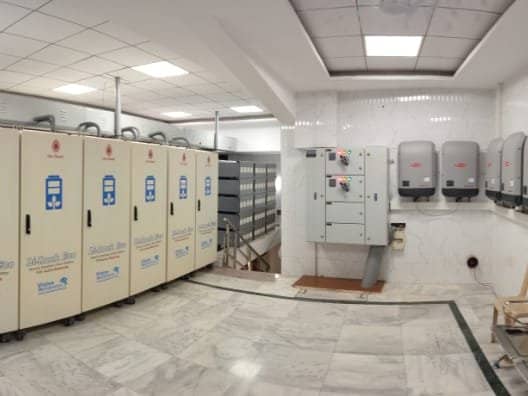
Justin Tyers • 27 July 2021
India’s Spiritual retreat with silent power.
Silence has fallen at the Om Shanti Retreat Centre in Bohra Kalan, India – a place of spiritual learning of the Brahma Kumaris. Until now they’ve been using Diesel Generators to patch up an unreliable electricity grid supply. Apart from the increasing cost of diesel, and maintenance, fuel transportation to their remote location, and additional problems associated with onsite storage of Diesel, eventually the generators themselves became increasingly unreliable causing frequent power cuts and brownouts which interrupted the smooth running of some of their facilities. Om Shanti Retreat occupies a 28 acre remote site. The time had come to install a solar based Energy Storage System. Their installation includes a huge battery storage of 1MWh. The design and build was completed by Vision Mechatronics who combined Li-Rack Eco lithium batteries with Tubular Gel Lead Acid Batteries to complete what they say is India’s first lithium-lead hybrid solution. It provides extended power backup time, and an alternative to diesel generators. Vision Mechatronics says: The integration of existing Lead Acid Batteries leads to a circular approach, it adds to the life of the Lead Acid Batteries, increases the backup duration and provides the maximum utilization of resources to the end user. This solution is very versatile and can perform the functions of not just Backup but also Peak Shaving and Frequency Regulation along with Diesel Replacement. The new installation has been configured as an Energy Saving System. Once the batteries are fully charged, and all current loads are being met, excess energy from the solar panels can be exported to Grid. This maximises the Solar Energy harvest which is expected to reach 3.1M units of energy per annum. The system comprises: Li-Rack Eco Lithium Batteries (by Vision Mechatronics) 614.4kWh Lead Acid Gel Batteries (HBL) 480kWh 12 X 15kVA Quattro Inverters offering 144kW 12 X Smart Solar MPPT 250/100 VE.Can 5 x Fronius Eco 27.0-3-S Three-Phase solar inverters A solar array of 200kWp Cerbo GX GX Touch 50 The system was officially inaugurated with a lamp lighting ceremony Vision Mechatronics say: The Active Balancing BMS in the Lithium Battery enhances the life expectancy and performance by around 30%-40%. The IoT enabled Li-Rack ECO batteries feature Predictive Monitoring which helps us to predict 15 days in advance that the battery will be non-functional or needs repair/replacement. With the Auto-On /Off feature the smart battery sends alerts regarding imminent failure or error, enabling the customer to take corrective action, leading to a 99% up-time. Vision Mechatronics Pvt Ltd is a dynamic organisation headed by Dr. Rashi Gupta. Dr. Gupta is a woman-entrepreneur who is known as Batterywali of India . A pioneer of Lithium Batteries manufacturing in India she has developed what Vision Mechatronics describe as the world’s smartest lithium battery. Dr. Gupta was among Asia’s Most Influential Women in Renewable Energy in 2020. Vision Mechatronics say their mission is to provide energy solutions that work with minimal maintenance to provide carefree power supply. The company affirms the United Nations Development Programme’s goals working toward gender equality, and are committed to providing clean energy. They also work toward rural electrification to offer better opportunities for economically deprived children. Om Shanti Retreat Centre has a 200kWp array Life learning and Training in Rajyoga Meditation continues in the peace and beauty of the Gurgaon district of Haryana.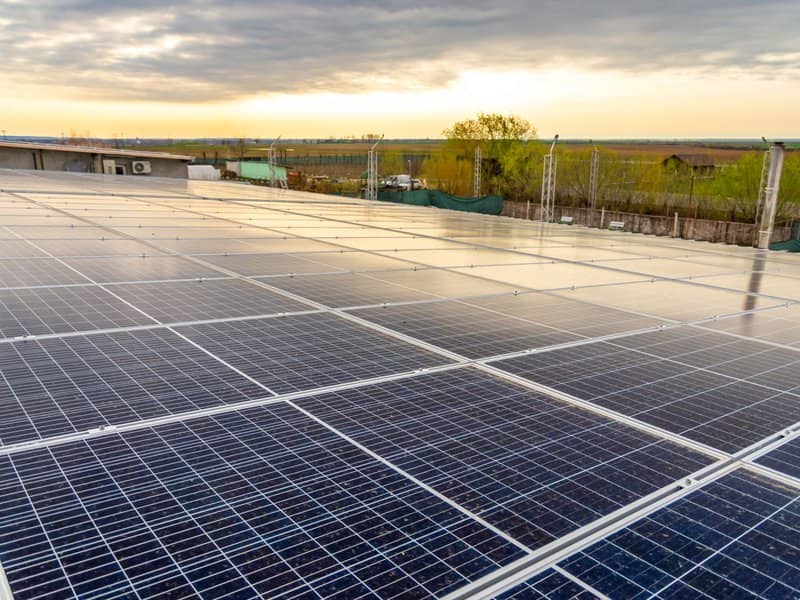
Justin Tyers • 05 July 2021
Private 3-Phase for lab-equipment manufacturer
A successful laboratory equipment maker in Romania has invested in private energy to secure their plans for future growth. The local grid was not able to cope with their increasing power demand resulting in between 3 and 5 power outages per day. For E-Laborator Feeria SRL that kind of disruption to their manufacturing schedule was bad enough – but added to the cost of ruined tools and spoiled fabrics every time there was a blackout, the situation soon becomes financially untenable. Any interruption which might have been caused by changing power source was virtually avoided by choosing a containerised power system designed and built off-site by Darcom Energy . Of course, PV panels are sited out of everyone’s way on the roof in any case!… but with external siting of all major system components the changeover to private power was as painless as it can possibly be. What’s inside the container? This really tidy installation build was filmed, and the resulting footage edited by Jono – a link to his time lapse video appears at the bottom of this blog. The mini grid arrived in an insulated, air-conditioned shipping container housing: 6 Quattro’s 48V/15kVA configured for three-phase supply 15 SmartSolar MPPT 250/100 20 LiFePO4 25.6V / 200Ah BMV 712 Smart Battery Monitor 6000A Shunt Externally the mini grid further comprises: 2 Fronius Symo 20.0.3 Three phase PV inverter 40kW max 130kWp photovoltaic panels Fronius inverters enjoy complete system compatibility with Victron Energy products. The entire system-control is displayed on a single neat GX Touch 50 , and can also be monitored and controlled from anywhere using Victron Remote Management ( VRM ). The customer has also chosen to use Node RED programming with which Victron’s operating systems are compatible (though unsupported) – enabling him to customise his information display and include information from unrelated hardware devices. During extended periods of poor weather the private power supply will be augmented with output from a 35kVA SDMO generator. E-Laborator – who manufacture a range of laboratory equipment from seating, to lab-benches, and wet and dry storage systems – even provided an unexpected bonus for their neighbours: since installing their mini grid – which exports surplus power – the local grid-supply has become more reliable! Let’s watch the slick installation:
Justin Tyers • 29 June 2021
Orangutan Sanctuary in Sumatra
An imaginative and groundbreaking scheme for the protection of critically endagered Sumatran and Tapanuli Orangutans is under construction in Indonesia. Orangutan Haven combines nature conservation with opportunities for further research, learning and education of the wider public about the effects of Palm Oil plantation on the future of these intelligent apes, and other species. Forty-eight hectares of wetland valley are being re-developed to provide nine moated islands on which eight Orangutans currently in quarantine can live out their lives – expected to be at least another fifty years – in peace. The Orangutans in quarantine have all been harmed by human action – some are blind after being shot with air rifles; others illegally kept in cages as ‘pets’ have been unable to develop normally, and cannot be released back into the wild. Orangutan Haven is a major environmentally sensitive development which will quickly become financially self-supporting through visitor ticket sales, whilst at the same time bringing economic benefit to the region in North Sumatra, Indonesia. A sustainable Visitor Centre, and a Forest School will provide multi media educational resources for schools, and for the education of the wider public. Further building work includes the orangutan houses, keeper’s depot, veterinary clinic, restaurant and bridges, together with landscaping, and the installation of service infrastructure such as water supply systems, settlement ponds, and a solar based electricity provision. A 6.5kW (max) micro-hydropower plant was installed in 2017 by a consortium led by a Swiss Non-Governmental Organisation and Swiss Entec AG. Taking advantage of a 4m drop, the hydroelectric plant currently produces 3.5kW from a 250l/s flow – and is expected to provide about 10% of the site’s power need. The additional solar facility – which was installed by Alva Energi – has a 6.2kWp solar array together with battery storage of 30kWh built by the German Lithium battery manufacturer Balance Of Storage Systems – BOS. Then energy system comprises: Solar panels array totalling 6.2kWp BOS HS Business 10 is a 10kWh storage system incorporating a 5kVA inverter. Three of these pre-assembled units have been installed, configured for 3-Phase operation. 3 x MultiPlus 48/5000/70 SmartSolar MPPT 250/60 Power is used on site to provide energy for the veterinary clinic’s lighting, refrigeration, water purification and filtration; it will facilitate ticket sales and refreshment vending in visitor areas; provide comfort in staff accommodation; power the multi media audiovisual equipment in the planned Forest School and exhibition hall; plus all the usual needs for site maintenance such as recharging power tools; and on-site security equipment. Veeresh Anehosur from BOS-AG says: We have years of energy industry experience and expertise of lithium technology and are happy to see our modular turnkey solution working faultlessly in tough environmental conditions. Offering onsite support during COVID-19 travel restrictions is tricky; however backed by our Training Programme and Remote Installation Support, Alva Energy have done a great job installing the preassembled system quickly, and without onsite support from Germany. Orangutan Haven primarily needed a modular system whose capacity could be expanded as their energy demands grow. A 30kWh/15kVA system has been installed as part of phase 1, and further capacity will be added shortly. Left to right Andhika Wicaksono: PV Engineer (Alva Energi); Gilbert Murrer: OUH Project Coordinator; Suherry Aprianto: OUH Project Leader; Wilson: MEP Contractor Orangutan Haven is already accepting animals from quarantine and will be welcoming its first human visitors early next year. The facility is within easy reach of the major city of Medan, close to a tourist route to the Karo Highlands and Lake Toba. As visitor numbers grow, and more facilities are offered – such as the planned Eco Buggy’s – the solar based system can easily be extended. Director of Operations at Alva Energi, Dr Ali Aryo, says: Orangutan Haven’s choice of renewable energy resources should be applauded – and copied elsewhere. We’ve designed the off-grid PV system with a long-term solution in mind. We expect to see this PV system scaled up, and integrated with other green energy resources such as micro-hydro system. A commitment by all parties involved to optimize the system and system-infrastructure at all stages was one of the main keys of the success of this project. Orangutan Haven seeks to help individual animals – but also to change attitudes about the plight faced by Orangutan, and all species, in the pursuit of profit. Nine moated Islands During construction of the sites infrastructure, many experimental conservation methods are being trialled – notably planting schemes to stabilise banks; and eco friendly dams and culverts to prevent erosion of the wetlands. Model of the Rainforest Centre (RFC) by Lukas Zollinger An imaginitive approach has been chosen for providing the site with buildings – architectural ideas from around the world are received for consideration from design students taking part in competitions established by the Haven. Orangutan Haven benefits from well-considered innovative solutions; and the students benefit from an opportunity to exhibit their skills in response to a real-world design brief. Each Island will have a combination of climbing trees, elevated platforms, and grassy swathes. Nine Islands have been created each surrounded by moat at least 5m wide and 1.5m deep. The moats are kept flooded by a system of dams built from materials lying close-at-hand. As the site becomes populated with Orangutans, rope bridges will be erected between the islands allowing the apes to socialise. All buildings – such as this staff canteen – are designed to blend in naturally with the environment. A bridge which provides access to the sanctuary has been provided with lighting so that its use can be extended – night and day – to a meeting room, or workshop. You can be a part of the important work being done by Dr Ian Singleton OBE and his team at Orangutan Haven by supporting the project with a donation . Dr Ian Singleton OBE Alva Energi have commissioned a video highlighting their participation in the scheme: The Sumatran Orangutan Conservation Programme (SOCP) has been achieved through the cooperation of the following organistions: The Indonesia-based NGO the Foundation for Sustainable Ecosystems Yayasan Ekosistem Lestari (YEL) Swiss-based NGO The PanEco Foundation The Indonesian Government’s Directorate General of Natural Resource and Ecosystem Conservation The image used in the headline of this article, and following this acknowledgement, is the work of Maxime Aliaga .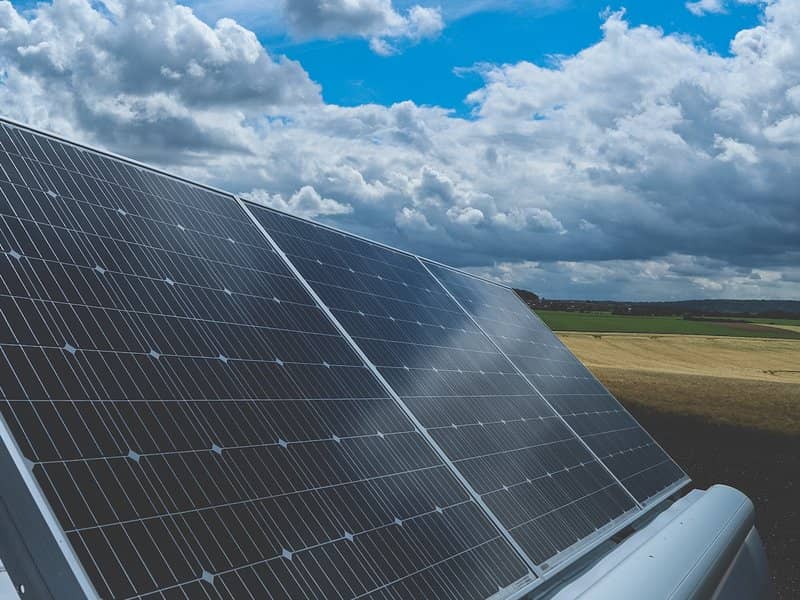
Justin Tyers • 18 May 2021
Van Life …with Home Electrics
Tom Alderdice has found the job he loves. His consultancy and installation service Tiny Build Electrics – helps Motorhome and Caravan owners design and install the energy systems they need to power both their needs and luxuries – grew out of a passion for sustainable living combined with the freedom of the road. With twelve years top-end kitchen fitting experience he realised his best route to owning a mobile home which suited him was to buy a long wheel-base Mercedes Sprinter and customise it to his own- and his partner Sarah’s-preference. Tidy and light, a lot of the materials used have been re-purposed using surplus timber, wicker-work trays – even copper plumbing has been turned into stylish towel rails. Already familiar with domestic AC electric circuits – though not the DC systems, inverters, and energy-from-solar, Tom set about learning everything there was to know about leisure vehicle power systems. He first discovered Victron products through our YouTube channel ; then began working through all the training videos (Victron Professional account required for access ), really appreciating the logical easy-to-follow presentation from Digital Training Manager Guy Stewart. He viewed the webinars; and experimented with the MPPT calculator , trying out all kinds of combinations to see how they performed in different scenarios. And he familiarised himself with the product range by changing the settings and parameters, virtually, using the Demo mode on VRM. Having calculated his own power needs he bought the equipment required for his own system – making a very professional job of the installation. LiFePO4 12.8V/300Ah Lithium battery VE. Bus BMS MultiPlus 12.3000/120-50 Inverter Charger Solar Panels 200W x 3 SmartSolar MPPT 100/50 Buck Boost 50A DC – DC converter CCGX communication device (with USB Wi-Fi dongle support) Smart Battery Protect 100A x 2 Digital Multi Control 200/200A (allows input current to be limited to campsite max capacity, avoiding annoying overload trips) Lynx Distributor Smart Battery Sense Putting his newly acquired knowledge to use he began to help other van owners with their systems, creating an Instagram page and populating it with really great images of Van life together with explainers and calculators in the hope of making the process easy to follow for others who have less experience. It was only when his partner, Sarah, suggested he turn his interest into a business that ‘the stars aligned’ he says, and he gave up work as a kitchen fitter and he began to offer consultancy services to Campers who share his interest in the great outdoors and DIY. He notices that the biggest hurdle for most van fit-out DIYers is their electrical system – so his consultancy is aimed at that niche – carrying our a power audit of client’s 12V and 240V needs, and supplying the equipment to do the job. The system design is informed by listening to clients travel plans – how often will they be going ‘off-grid’; whether they will be travelling most days (benefitting from alternator charging) …or remaining static for quiet days of exploration on foot. From that information he produces a schematic: He loves to see the changing expression on peoples faces during video interviews as they explain their worries about wiring a system which can provide: AC distribution from a hook-up energy supply, battery charging, and AC power distribution from battery when camping off grid …and then explains that MultiPlus does all that in one box! Off-grid Battery Charging from the Alternator whilst driving, or from Solar Panels during the day, is achieved by adding a DC-DC converter, and Solar Charger, respectively. At the heart of the electrical installation Tom recommends the Cerbo GX for total van-system control as its tank input ports allow critical information about the van’s stored-liquids to be presented at a glance – on a smart phone, or at the touch of a button on the cool-looking GX Touch 50 screen. If clients prefer a simpler system with less clutter, fewer units, and everything hidden behind panels, he recommends installing a SmartShunt which acts as a battery monitor, and relays full system data to a Smart Phone via Bluetooth. All system parameters: State of Charge; System Voltage; Consumption; Charge Current – and extensive historic data, can be easily read straight from the screen. At the end of the consultation clients are free to source and install the recommended equipment themselves using a personalised schematic which Tom offers on the visualisation software Visio . Alternatively he will undertake the whole installation project. Innovation in reliable electronics is only part of Tom’s enthusiasm for Victron products – he loves the communication and management platform app VictronConnect ; and the web-based Victron Remote Management (VRM) portal which allows him to monitor and re-program clients systems wherever they are in the world if they’ve installed a GX LTE 4G modem – or third party alternative – which uploads system data to the VRM platform via the cellular telephone network. As his clients build their systems he knows questions will arise to which they’ll want answers in seconds , so he’s formed a WhatsApp user group where currently 80 members help each other whilst Tom monitors in the background ready to jump into the conversation if it needs steering back on track. He also provides a drive folder populated with multi-media client content aimed at answering some of those frequently asked questions. One of his more unusual clients is stripping a Uni Mog ex-equipment transporter back to a more military style vehicle in order to take into the Egyptian desert to use as a base for family weekends …and to indulge in his hobby of remote-controlled vehicles and boats. Exactly why he takes remote controlled boats into the desert is a question we must leave in the air. Eventually Tom and partner Sarah plan to live full time in the van with a Truma Combi 4e boiler capable of heating 10 litres of water in half an hour from 600W solar output, an LPG heater and an Eberspacher diesel heater in standby, and do some travelling of their own.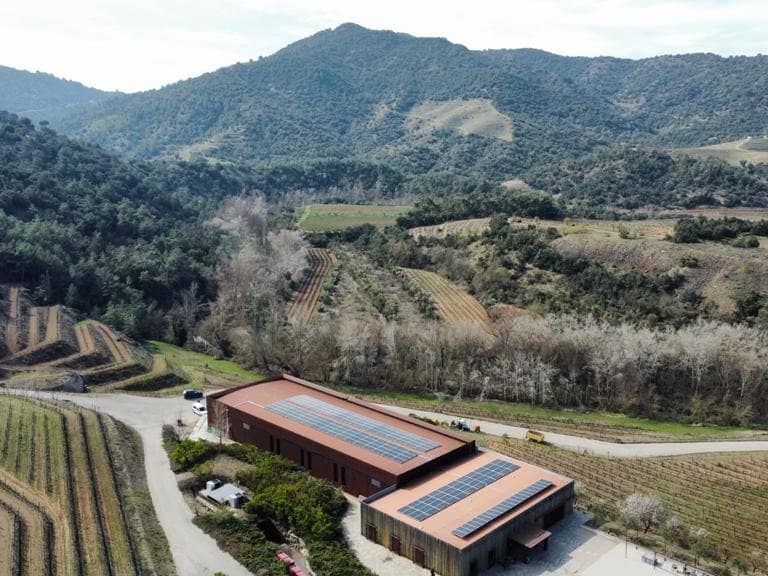
Justin Tyers • 11 May 2021
Spanish Winemaker hears nothing through the Grapevine
With three vineyards under cultivation, winemakers Perinet can produce both single grape variety, and blended-grape wines of endless depth and character. The diverse location of their vineyards amongst steep the hills of the Priorat – from the high altitude Mas Vell plantation, to the precipitous slopes of the Pendent plantation – produce low yield grapes from slate and quartz soils. Even the climate differs on each three vineyard alternating from moist maritime breezes fresh off the mediterranean to hot arid continental winds blowing from Aragon’s desert land. Silence Perinet Winery decided that it was time to retire their diesel generator and allow silence to fall over the vineyard, stylish visitor centre, fermentation rooms and cellars so that wine tourists can enjoy the stunning scenery in silence whilst almost 200 solar panels quietly generate green power, and the winery reduces its carbon footprint to zero. Vaulted Roof Solar installers Ruano Energía – experts in domestic and industrial solar energy systems – faced their first challenge when installing the solar panels: The winery has a vaulted profile roof – whereas panel mounting systems are designed for flat roofs. Some innovation was required in producing a tailor made cradle. Panel attachment to vaulted roof MAGNUM System Two more challenges had to be met: the system needed to be designed to provide 100% of Perinet’s energy demand; and the installation of this major system must cause a minimum of disruption. Ruano Energía decided to supply their MAGNUM system – built off site in their own factory all major components are pre-wired and fused allowing the whole installation to be transported to site and rolled into position with the minimum of disruption to the client. Only the Solar wiring and consumer distribution connections need to be completed on site before the system can be made operational. Factory built, Ruano Energía’s MAGNUM is delivered as a complete installation. The system Ruano Energía designed comprises: 190 JA SOLAR panels rated at 450Wp, totalling 85kWp 40 PYLONTECH US3000 batteries with 3.5kWh nominal capacity, totalling 140kWh 3 FRONIUS ECO 25.0-3-S de 25kW three-phase grid inverters 9 Quattro 48/10000VA configured for three-phase operation Cerbo GX GX Touch 50 Lots of power in a small space The Fronius Inverters supply daytime demand direct from the solar array; excess power is used to charge the batteries. The Quattro inverters, configured for three-phase, provide night time AC direct from the battery bank. Cerbo GX provides cross-manufacturer, whole system control The Cerbo GX provides whole system control – harmonising Victron and other-manufacture components as they harvest, store and provide energy, and ensuring that the batteries are optimally charged. The GX Touch 50 provides user-interface for system monitoring and control via a neat touch-sensitive five-inch screen. Ruano Energía specialise in the use of natural resources – especially solar energy. Where necessary their highly qualified engineering and assembly team manufacture bespoke solutions to facilitate systems installation. Offering advice before, during and after commissioning they provide long term monitoring for efficiency control, production and load point control equipment. Remote system monitoring and control using the Victron Remote Management ( VRM ) portal allows real time observation and record analysis. Each component of the system can be scrutinised individually, and historical event-data can be ‘time-slot’ selected to allow deeper examination …from anywhere in the world. Virtual control offers full system access for engineers. They key aim for this energy system in the stylish and remote Priorat region was to achieve an installation which would be maintenance free, and eliminate ongoing-costs for the customer. Perinet are very satisfied with the MAGNUM system which allows a lot of technology to be packed into the smallest possible space. And as a maker of superior wine, this commitment to green energy, and their investment in a carbon free future from renewables lies at the heart of their pact with nature. Lets take a tour of the Perinet vineyard with Antoni Sànchez-Ortiz: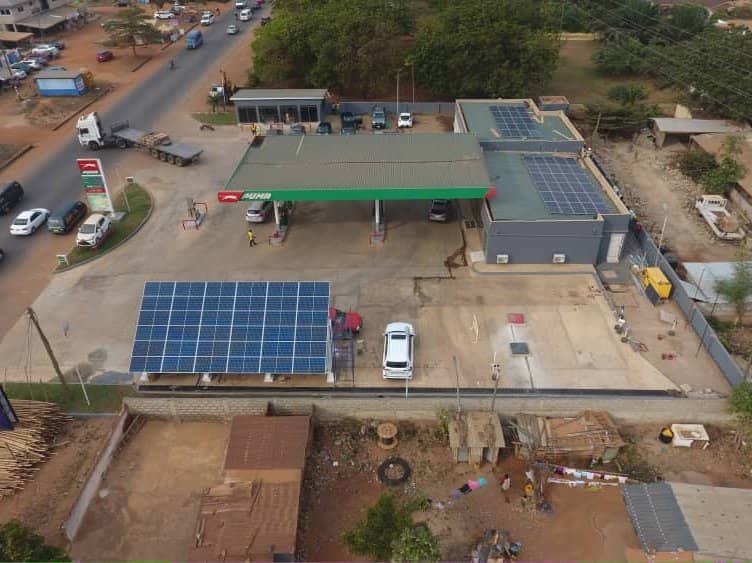
Justin Tyers • 04 May 2021
Ghana: Solar energy at the fuel pump
Victron Installer Tino Solutions based in Ghana is delighted to be rolling out green energy for the International Petrochemical giant Puma Energy. The first phase of installations across 5 regions in Ghana has seen 11 solar power supplies totalling 400kW installed in Fuel Stations and Bulk Distribution depots, and was completed in little over a month. On the forecourt solar energy is used to pump and meter fuel delivery, outside lighting, powering air compressors for tyre inflation – indoors the energy is used to power the convenience store machinery and refrigeration. One of Postino Dugle’s engineers checks the battery installation For Postino Dugle – CEO of Tino Solutions – the most satisfying part of the job is that he is able to demonstrated the success of the project in real time to Puma investors based in Singapore. As with all new projects there were some doubts about how effective the installations would be – both by the facility managers, and the project investors. To be able to demonstrate such a resounding success is really exciting. Apart from demonstrating Puma Energy’s commitment to green energy, until now there has been a legacy of problems with forecourt business transactions. Grid electricity in Ghana is vulnerable to voltage drops and blackouts. If a power outage occurs when a customer is pumping fuel they will be forced to wait whilst the service station switches over to back up generator. The problem is so common that all service stations have this facility. Furthermore, when the meters are shut-down due to unexpected power loss the meter reading is also lost – this often leads to angry disagreement between the customer and the supplier about how much fuel has been taken. The fast switching times of Victron Inverters provide an uninterruptible power supply – so that station managers are absolutely delighted that this problem is now behind them. The systems typically comprise: 40 JKM solar panels at 390Wp each 3 x MultiPlus II 48/5000 Inverter/Charger; or the Quattro units which have 2 AC inputs 3 x SmartSolar MPPT 250/100 charge controllers 24kWh BYD LVS Premium Lithium battery storage Cerbo GX for system control and communication BMV 702 battery monitor Lynx distributor bus bar GX communication device harmonises the system’s power harvest, storage and supply as well as making system data available to administrators and managers worldwide via the free to use Victron Remote Management VRM platform Grid fuel prices are comparatively expensive in Ghana – costing 0.23 US Dollars per kWh for non-residential consumers. This investment provides security in the long term both in terms of reliability, and in cost management. Postino Dugle started his company in 2005 – building it up from what he describes as ‘humble beginnings’ the secret of his success has been his determination to install top quality products to a high standard now matter how small the job. It took some courage to stick with that ethos – because competitive business, installing cheaper products were able to offer customers a lower price – but he notices that over the years those competitors have fallen away.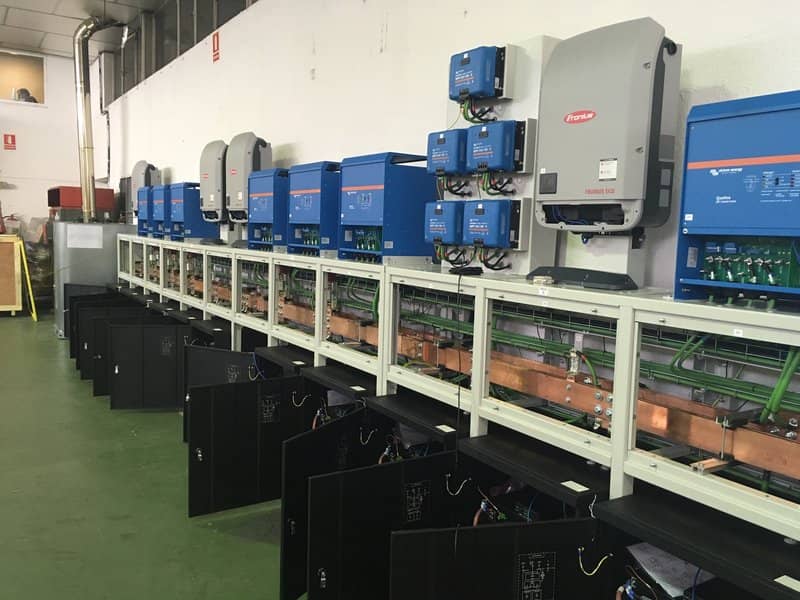
Justin Tyers • 27 April 2021
300kWh – Agricultural Machinery workshop runs off-grid
An agricultural machinery workshop in Palencia has achieved power independence after regional solar specialists Bet Solar designed an off grid power supply which would meet their 300kWh/day requirement. Working with installers Transdiesel S.L , power for the facility is harvested by 750 Solar panels rated at 300Wp and runs a range of workshop equipment – including an overhead crane operation, boilers, workshop machinery, irrigation pumps and the office buildings. The installation comes after a decision to expand the company – further work is underway to build a suite of offices and larger workshop which will double their working capacity. The private power installation will be fully operational when building work is complete in three months – in the meantime the customer is very happy with the work in progress. The decision to install private power was linked to company growth. Plans to provide an enhanced connection to the electricity grid would have entailed new lines and infrastructure over a long distance, together with way-leave permission requirements from third parties. Bet Solar commented that the installation of off-grid electricity is always a challenge, whatever the size of the solar PV plant. “ We specialise in system-design and in supporting the installer in the configuration of the equipment – together with programming based on customer consumption habits, photovoltaic potential and battery capacity and chemistry .” The off-grid system includes: 750 solar panels of 225k 9 X Quattro 48/15000/200-100 5 X SmartSolar MPPT 250/100-TR 1 X Fronius ECO 27.0-3-S 5 X Fronius ECO 27.0-3-S LIGHT 15 X BYD B-BOX 13.8 offering 207kWh 1 X Octo GX Current daily consumption is around 300 kWh but will more than double when the office building and workshops are complete. Most consumption occurs during the day – hence the 5 Fronius ECO 27 kW grid inverters in addition to 6 Victron SmartSolar MPPT 250-100 TR VE.CAN solar charge controllers. The 9 Quattro inverter/chargers of 15 kVA operate in parallel, giving the installation the capacity to withstand nominal loads of up to 135 kVA (108 kW). To this power we can add the grid inverters during hours of sunshine – reaching a maximum power of 270 kW in the middle part of the day. In the absence of solar energy, the installation is supported by two generator sets which can operate in parallel. The main generator runs on propane gas with an output of 100 kVA and a second auxiliary paralleled diesel set can provide 200 kVA extra power if required. The Quattro inverter’s no-break functionality with 20 millisecond switching prevents micro-cuts occurring when the generator sets start-up or shut-down – thus ensuring the high power needs of the plants operation can continue without interruption, even while the grid or generators cut in and out. For night time working the installation has been fitted with a 200 kWh lithium battery bank. The 9 Quattro 15kVA inverters have a peak-power capability of 225 kW and with huge charge-current handling can re-charge the battery bank in under 3 hours. The entire system is monitored and controlled remotely by the Octo GX – a communication device which harmonises the operation of all Victron and third-party equipment, and which provides an interrogatable user-interface for the client. For the installer the Octo GX allows remote system monitoring and control, together with the storing of historical system-data, allowing critical analysis of consumption and loads; scheduling consumption to the times of greatest solar production; and the ability to diagnose and repair any anomalies without the need to travel to the installation. Remote management is provided free of charge to all users by the Victron Remote Management ( VRM ) platform. The system was pre-assembled on Transdiesel’s premises which allowed a delivered on-site assembly-to-operation time of just three days. Transdiesel S.L and Bet Solar are proud of this system which is able to double its power output should the customer need this facility in the future.
Justin Tyers • 20 April 2021
RedHeads Winery harvesting the Sun
Talking to Alex Trescowthick, Chief Winemaker at RedHeads Wine you soon realise he’s not afraid of cutting a new path. Alex traces his open-mindedness about winemaking to a lecture he attended in 2016 by Roger Boulton – a Professor in Chemical Engineering. Professor Boulton’s research into fermentation has solved many old questions over the years, made some discoveries, and proposed new theories for the fermentation process, and achieving stability in the finished product. At the end of the chemistry-focussed lecture, the question most on Alex’s mind was: “Why isn’t everyone making wine in this way?” So the offer back in 2017 to set up RedHeads Wine , owned by the well-known Laithwaite family of wine merchants, and located in the favoured Barossa Valley of South Australia (the Wine state); together with a licence to experiment and develop new methods and processes in the making of small-batch premium wines, couldn’t have come at a better time. Alex Trescowthick, Winemaker Grape Selection In addition to producing wine from their own grapes, RedHeads select berries from other premium growers around South Australia – choosing their grapes row by row. From peachy Chardonnay to robust Graciano; From Barossa-abundant Shiraz to lesser known varieties like Touriga – RedHeads hunt out low-yielding grapes which will be perfect for the bottling they have in mind. When RedHeads relocated their business in 2019, they realised they had an opportunity to build a winery which would be at the forefront of innovation in the wine industry. New Build plant and reservoir Solar Energy Early on, an application to upgrade the electricity grid to suit their needs resulted in a much higher quote than expected. A consultation with MyEnergy Engineering whose electricians and engineers have over ten years of experience of energy harvest and storage for Commercial and Residential customers, demonstrated that for the same investment they could purchase their own solar energy installation and eliminate their electricity bills. RedHeads Wine – who say they have ‘Green Heads’ when it come to decision making – liked the idea of solar powered winemaking, but wondered whether in practice, their installation would cover 50% or 75% …or more, of their requirement. Now that it’s all up-and-running they have their answer – 97% of their energy requirement is met by their solar installation. The Energy Storage System (ESS) at RedHeads Wine was designed by Ciaram Granger, Managing Director at MyEnergy , and comprises: 3 x Quattro 48/15000 Inverter/Chargers 80kWp Solar Array 6 x 250/100 SmartSolar Charge Controllers 7 x BYD Batteries totalling 96.6kWh storage 2 x Fronius Symo 15kW three phase inverter Cerbo GX communication device and: GX Touch 50 whole-system control is brought together by one simple touch-screen device Energy Storage Systems are designed to maximise self-consumption and storage of energy generated by your own system – only reluctantly buying or selling energy to the grid. Ciaram chose the new Cerbo GX for its dual core processing power. The Cerbo GX acts as the communication centre of the system keeping the power harvest, storage and supply harmonised across all devices – including third party manufacture products like the BYD battery bank, and the Fronius three-phase Solar inverters. The neat touch-screen GX Touch 50, offers at-a-glance system status information. User-interface couldn’t really be much simpler. There are other ways to communicate with the installation, too: Alex likes the fact that he can monitor the power plant on his smart phone using VictronConnect ; and MyEnergy like the fact that they can monitor the site remotely using the Victron Remote Management ( VRM ) platform – without even leaving the office. Irrigation. Zero Carbon, All aspects of RedHeads Wine’s 500 tonne operation site-build were considered with advice from the Environmental Protection Agency. It allowed them to re-think their processes, and tailor their site to allow for new innovations. “It would have been easier just to replicate other wineries and carry on the way things are ‘usually’ done'” says Alex, “but our goal is to make remarkable flavour-packed vegan wines using 100% sustainable energy, in a process which is carbon-neutral,” Rainwater – a precious resource in the Barossa Valley – is collected and recycled to a 3m deep irrigation lake, then pumped to the vines… a set up which has won RedHeads a Water Management award. LED lighting throughout the plant was obviously the right choice – but Alex is willing to innovate with new chemistry and technology in the winemaking process; by employing natural non-chilling stabilisation processes using Carboxymethyl Cellulose (CMC); enzyme filtration/polishing; specifying larger surface area cooling tanks; concrete tanks whose mass provides much more thermal stability; and increasing building insulation to stabilise temperature. It is after all the cooling plant that uses most energy – so that’s a great place to start looking for savings. RedHeads Wine’s Solar installation is designed to be scalable, of course, as production increases. And there’s a plan to charge electric site-vehicles; and those belonging to staff members. What meat does the butcher eat? I asked Alex which of his wines we should be looking out for. With the RedHeads portfolio currently running at 35 labels – many of which are gold award winners, vintage after vintage – he struggles to flag up any one in particular – but as a piece of general advice he suggests beginning our journey of discovery with any of his Shiraz: “We’re based in Australia, after all.” he says. I notice that the 1888 Cottage Shiraz is made using grapes grown on RedHeads own vines – perhaps Alex has that one in mind? Studio Bar So if you’re passing through Southern Australia why not visit the Studio Bar, or book a tasting in their historically interesting listed ‘Homestead’ which was built in 1888 – hence the name of their flagship wine. Or if you live the other side of the world and find yourself browsing the Laithwaite site – or the shelves of your local wine store – stride over to the ticket marked ‘Australia’ and pick up a RedHead.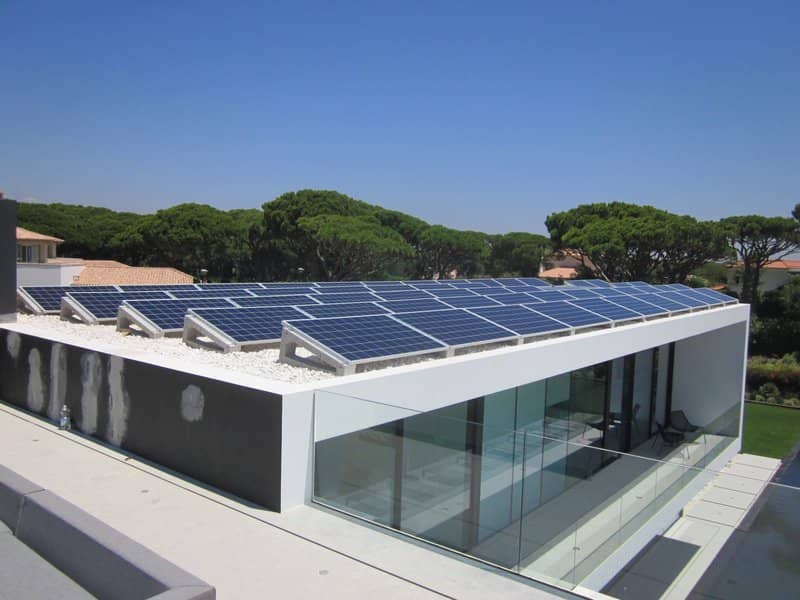
Justin Tyers • 13 April 2021
Can Solar Power really look this good?
When the owner of a luxury villa asks for a major solar installation to be retro-fitted to his architecturally interesting property without spoiling the appearance, you know it’s going to be challenging. Surface mounted utilities isn’t work you can hide, but local solar experts Freelight – who also have offices in Spain – saw an opportunity to add further interest to the architectural design of this stylish property near Almancil – Portugal’s Golden Triangle in the Algarve – and made it look easy! Power blackouts and voltage drops together with ever-rising energy costs set the owner on a mission to find alternative ways of enjoying his built-in facilities with increased reliability, and in a way which was greener, and at less cost. He has circulation pumps and filtration plants for the swimming pools and irrigation system; together with underfloor heating serving over 1000m² of floor area – all of which totted up bills of thousands of euros per month. With their knowledge of the market Freelight designed a three phase system comprising: 30 x 305Wp Monocrystalline All-Black panels (9150Wp) 55 x 275Wp Policrystalline Trina panels (24.275kWp) There are two grid-tied Fronius Inverter Fronius Symo 10.0-3-M Fronius Symo 15.0-3-M (25kW in total) There are three Victron Inverters Victron Quattro 48/15000 (45kVA in total) Energy is stored in three racks of 6 x Pylontech US3000B – with a total capacity of 63kWh – and a Pylontech LV-Hub Whole-system communication and control is performed by a Color Control GX. The GX device has many functions, including controlling the solar harvest, battery charging, Solar inverter output; and communicating with a Carlo Gavazzi EM24 Grid Meter. The system is configured to be an Energy Saving System (ESS) designed to optimise self-consumption and battery storage, and minimising the purchase/sale of energy to the grid. The ESS system includes 45kVA of Victron inverter power, 25kWp of solar PV and 2 Fronius inverters Victron GX communication devices support an extensive range of third party storage and switching equipment, allowing endless combinations of product to function seamlessly; and to be remotely controlled and configured using the Victron Remote Management (VRM) platform. 63kWh of Pylontech battery storage Remote access allows Freelight to monitor customer’s installations and carry out programme changes without leaving the office. The owner is delighted both with his new system’s performance and appearance – indoors and out. Larry Parker of Freelight says: “The greatest challenge of this installation was to aesthetically integrate the panels, cabling and inverter installation to make it fit in seamlessly with the visual attractiveness of the property both in terms of outside profile and interior design. Hence the decision to use the all-black panels which were placed flat on the roof to avoid being visible from the main road. “Together with other one-off adaptations to common traditional PV systems we feel our greatest success here has been the pleasing cosmetic appearance we achieved. We hope it will inspire local architects, at the design phase, to integrate PV and ESS solutions into their projects.”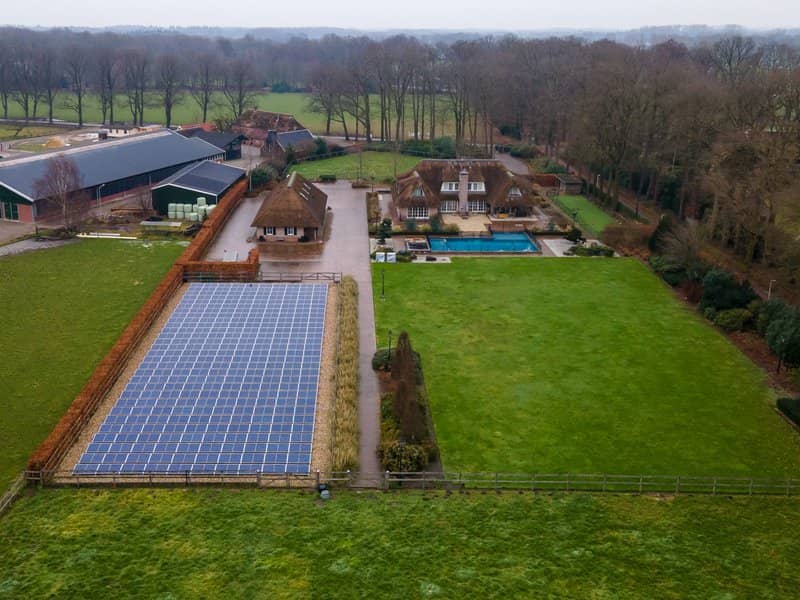
Justin Tyers • 09 April 2021
It’s your electricity. Why not keep it?
Selling solar-generated electricity to the grid is losing its shine. Around the world the price paid for consumer feed-in electricity is falling. And in Holland a ‘netting’ scheme – where the buy and sell price of electricity was matched – will gradually be phased out between 2023 and 2031. We all like ‘Zero’ bills …so has the time come to store the energy your solar panels generate during the day so that you can use it yourself, in the evening? Norman Heins , from the Dutch Solar Energy specialist Top Systems , says it’s time for Energy Storage Systems (ESS). Well-informed customers in both the residential and Commercial sectors are already installing them. “In addition to the ambition of many home owners to live more sustainably, home energy storage is encouraged by the government because our energy grid is not designed for large-scale feed-in or peaks in demand. When residents cook with electricity, heat their homes during cold snaps, or charge electric vehicles all at the same time, the grid can become overloaded. An energy storage system using lithium-ion or salt water batteries smoothes out these peaks. Moreover, ESS systems can serve as an excellent emergency power supply. ESS is still a niche market, but with the netting scheme running out, energy storage will become viable for many more home owners.” Right now, ESS is a good financial choice for households with high energy demand. A good example of this comes from a recent installation for Jan-Reint Harbers at his 3,000m² home in urban Rijssen. Jan-Reint says: “When we bought the house in 2016, the first steps in sustainability had already been taken. For example, the house already had a heat pump for heating and cooling. This made significant strides toward zero-bills. The heat pump is one of our biggest energy consumers. In 2017, we converted the existing Koi pond into a swimming pool, adding two power pumps to keep the swimming water at the right temperature. Their system comprises 290 solar panels, three inverter/chargers and eight MG lithium-ion batteries. Future-proof system Jan-Reint considered two options for generating sustainable energy: either a wind turbine; or solar panels. “Because our house is located in built-up area, on reflection a turbine would be inefficient. Moreover, I did not want to obstruct the view. The choice for solar panels was therefore an easy one. Adding battery storage future-proofed our system; the grid connection was no longer an issue, and the value of our home increased. ” The installation was carried out by Bettink BestWatt (part of Rengineers) who are specialists in total solutions for sustainable energy. “We advise, supply and install solar panels, small wind turbines and energy storage systems so that customers can be self-sufficient and no longer dependent on an energy supplier,” says engineer Henk Bettink. “In our Experience Centre in Barneveld, customers can see and experience various systems – including the ESS solutions from Top Systems, noted for excellent price and quality. ” Jan-Reint Harbers was immediately enthusiastic about the systems, the professionalism, good communication and enthusiasm of Bestwatt. “Together we drew an inventory of energy consumption, wishes and possibilities; performed calculations, and chose the most suitable locations for the panels and batteries. ” “Because of its thatched roof, a roof installation was not desirable, says Jan-Reint, “A solution was found in the equestrian manège built by the previous owner, which was converted into a solar panel field. “I levelled the manège, laid a geotextile membrane, and covered the area with gravel to ensure good drainage on which BestWatt mounted 290 solar panels in a steel frame. By locating the panels on the lowest ground, our views remain uninterrupted. The highest structure is just 40 cm above ground level.” Battery storage attracts attention The solar panels are connected to a battery system installed in the attic of the detached barn. Jan-Reint says: “The battery system attracts a lot of attention – especially because the GX Device panel shows exactly how much energy we are generating and consuming at any time, and – by percentage – how much energy is still in the batteries. Typical GX device display shows at-a-glance system data “So far zero-bill living has worked fine – not surprising as 290 solar panels are a lot for home energy consumption. But in time our energy consumption will increase: for example when we start driving electrically our system is prepared for this. ” BestWatt are also able to monitor the entire system from their own office using the Victron Remote Management ( VRM ) platform. Top Systems advised the installation of three Victron Quattro 48/10000/140 Inverter/Chargers of 10 kVA. These units charge eight MG lithium-ion batteries of 7.5 kWh each (total: 60 kWh) – using every ounce of solar energy which is surplus to demand. The Quattros discharge the batteries whenever demand is high, and after sunset. Henk Bettink appreciated having the support of Top Systems during this 2019 installation “We used Top Systems’ wiring diagrams for the installation of the batteries, and a technical specialist from Top Systems visited the project for a pre-commissioning check.” Salt water batteries or hydrogen Most ESS solutions – as in Rijssen – are supplied with lithium-ion batteries. “For those looking for the optimum in durability, however,” says Norman Heins “our saltwater batteries are also very interesting. Virtually no energy / heat is lost, and water and salt can in principle be reused endlessly. That makes the saltwater batteries the greenest battery system available. ” Top Systems recently began an ESS hydrogen project, in which a hydrogen installation is used in combination with salt water batteries. “This is also a very sustainable choice.” Norman Heins is the Sector specialist for Energy Storage Systems at Top Systems, and welcomes enquiries in and around the Netherlands. Readers from other regions can discover more about how energy saving systems offer zero-bill power-security by contacting their local Victron specialist .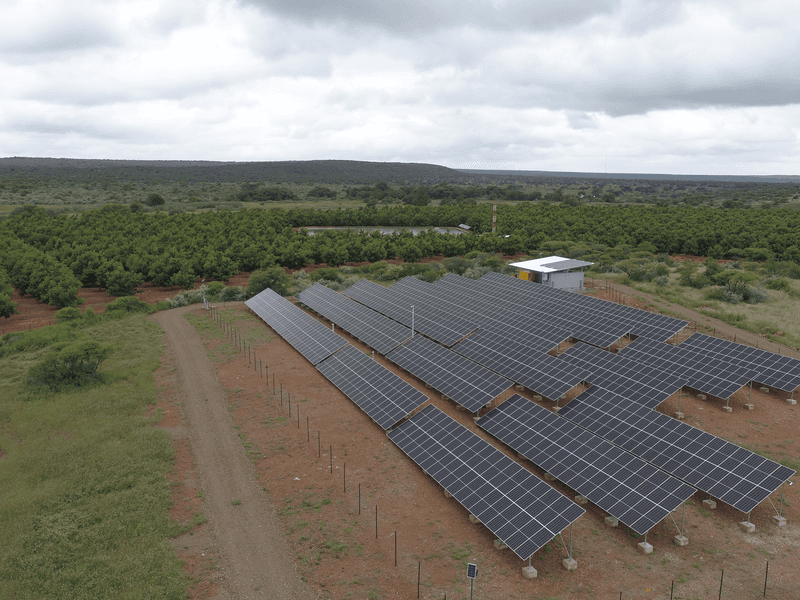
Justin Tyers • 29 March 2021
Largest private solar farm South Africa
A 180 Hectare Pecan Nut Orchard in Hartswater, South Africa has solved its irrigation problem virtually overnight by installing the region’s largest off-grid low-voltage solar farm. The problem was not access to water – 1200km of canals constructed as part of the Vaalharts Irrigation Scheme supplies the water they need. But the electricity grid infrastructure in South Africa is unable to cope with demand and is subject to a rolling schedule of power shutdowns. Even when the supply is on, it is notoriously unstable. This farm waters its orchards in rows according to a timed irrigation schedule – a schedule which is cycled throughout the plantation. Water has to be ordered in advance from the Irrigation scheme and is channeled to the farm in time slots. If a power cut coincides with the water’s arrival the farm is unable to extract it; the water is lost, money is lost …the irrigation schedule is spoiled, and trees are left in drought conditions, devastating the harvest. Two systems provide 270kVA The Hartswater Pecan Plant decided the time had come to make a major investment in private power – for which they turned to Ecotrades Solar Power Systems – South African experts in domestic and industrial solar power. Ecotrades suggested a 270kVA private power supply divided into two separate power infrastructures to avoid voltage drops on the cable distribution network which runs to 4.5 kilometres! Ecotrades qualified engineers benefit from continuous industry training. Ecotrades pre-installed the system in four insulated, air conditioned shipping containers – two for the battery banks, two for the inverters …carrying out the work on their own premises before transporting the valuable cargo securely to site in their own crane-trucks. Heavy duty bus bar Izak Oosthuizen , Managing Director of Ecotrades says: “One of the biggest challenges in this installation was battery balancing. The installation includes 336 batteries – all of which must be connected using identical cable lengths. Potentially there’s going to be a lot of slack cable. In the end we were able to solve the problem – for which we’d like to acknowledge the help from Victron Sales Manager Gerrit Tromp – with an ergonomic battery arrangement, wired into some really heavy-duty bus bars 100mm wide, and 10mm thick.” The system comprises: 18 Quattro Inverter/Chargers of 15kVA – totalling 270kVA 50 SmartSolar MPPT charge controllers 250/100 VE.Can 12 Fronius Eco 27kW 3-Phase Solar Inverters 336 SolarMD SS 202 7.4kWh Lithium batteries – totalling 2.5MWh 1680 Longi Solar panels rated at 430Wp – that’s a total of 722kWp 2 Cummins diesel backup generators rated at 200kVA each 9 Step-up Step-down Transformers to reduce losses in the 4.5km of private grid infrastructure 2 Cerbo GX provide whole System monitoring and control – including control of third party devices 36,000 BTU air-conditioning keeps the high power inverters functioning optimally. A late enhancement to the planned design was to mount the solar charge controllers outside the container where they can readily dissipate heat whilst reaping their huge solar harvest. The solar chargers have an IP43 protection rating (unit is protected from water spray falling vertically, or within 60° of vertical) so there was no ‘downside’ to installing them open to the air, under a profile roof. Performance on Victron Remote Management The Hartswater project on the Victron Remote Management (VRM) platform can be viewed in real time without visiting site. The Advanced tab provides an analysis of power input/output, and demonstrates how the 25 daisy-chained VE.Can Solar Charge controllers synchronise their output. Overall system control is provided by the Cerbo GX . This installation demonstrates how well the new Cerbo GX performs even near its design limits with 25 MPPT solar chargers; 6 Fronius Solar Inverters; 135kVA of inverter power; and Solar MD lithium batteries with huge capacity all connected to each device. No problem. Incidentally, using VRM you can examine system data for almost any time-range, from the last hour, few hours, day, days, week, month or months, back through the lifetime of the installation. This is really useful when you want to analyse and compare how a system performs throughout the seasons, or as a result of some change, or new event. Ecotrades use their own fleet of delivery trucks with hydraulic lifting gear in order to keep propriety of every stage of their installation contract. A great deal of time will have been invested in the pre-assembly stage of a bespoke system – so it’s vital to maintain integrity between factory and installation site. The greatest power demand on the farm is from a number of 30-40kW water pumps, served by step-up step-down transformers. The pumps send water through hundreds of metres of hose from reservoir to sprinkler irrigation outlets. There are also four homesteads on site – which all now benefit from the introduction of a reliable energy source. Relay-triggered Generator start The Solar MD Lithium batteries in this installation can withstand being discharged completely more than 4000 times, but last longer if they are not depleted below 20% state of charge. For this reason the Cerbo GX has been programmed to auto-start the generators if this threshold is reached using one of the on-board relays available for just such a task. A further command auto-stops the generator when the battery state of charge has climbed back up to 40%. Ecotrades expect this programmed charging parameter to extend the life of the batteries from 11 years to 16 years – with an assumed end of life residual capacity for the whole battery bank of 70%. Thus the programmable relay can deliver enormous economies by extending battery life. Swarm of bees Izak recalls an unusual incident: After a week of poor weather the Cummins diesel backup generators roared into life as expected but one of the units – with only three hours runtime on the clock – soon stopped owing to a Low Oil Pressure event, and couldn’t be restarted. Ecotrades technicians arriving on site found a pool of oil on the ground had been blown out through the dipstick aperture – but couldn’t find the cause. After two days without a successful restart they decided the unit would have to go off-site for investigation …and just then noticed that a swarm of bees had taken up residence in the breather-pipe! “We weren’t expecting anything like that! he says – “…from now on we cover the breather with mesh.” Genuine Beeswax …secreted exactly where it will be least useful. Satellite view The scale of the water/electricity installation is best viewed from a satellite. The farm is located between Hartswater and Jan Kempdorp in Northern Cape, South Africa. Successful water management maximises crop harvest The Pecan nut farmer is really pleased with his investment. He owns other farms, too, and is in discussion with Ecotrades about a private power installation for those. In fact there are many hundreds of farms in the region and Ecotrades is hoping that the success demonstrated here will encourage other farmers to choose the reliability of private power. That will avoid the headaches of power outages; interrupted irrigation schedules; and it will guarantee bumper harvests. Ecotrades have produced a video of the installation process: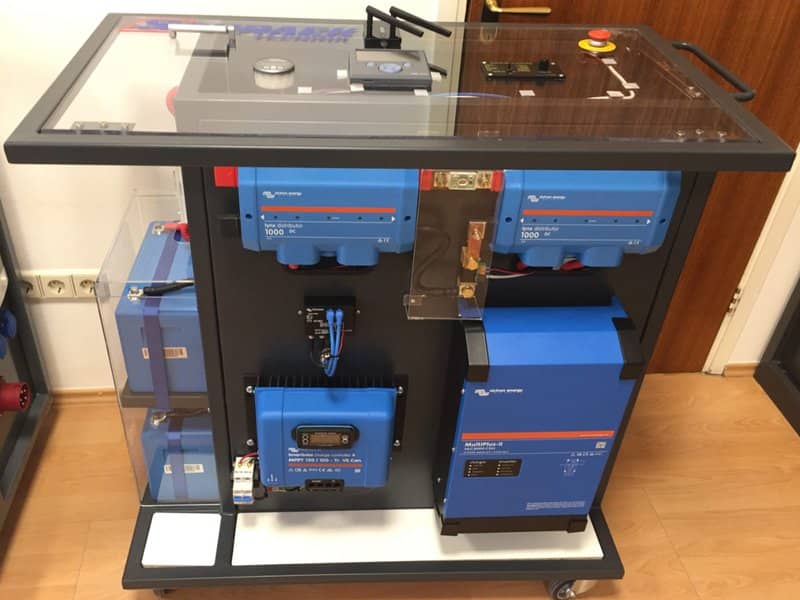
Justin Tyers • 23 March 2021
Teaching Renewables in Croatia
Right across central Europe Schrack Technik provide energy solutions to industry, home and the Electric Vehicle market. They educate customers about the advantages of Solar – and also provide demonstration mobile energy installations for the classroom. In this article Josip Zdenković (PH.D / M.Sc. E.E.) manager of Schrack Technik , Zagreb, Croatia – tells us what his team is doing to help young people in schools in his region. The idea is to use Schrack employee Dario Jankovic’s M.Sc dissertation to serve as an education for those who follow. Josip says: “We are all aware of so called Zero-Energy Buildings through concepts like Passive Houses, Green Building, or Solar Gain. Heat that is not lost does not have to be replaced. This is the key principle of the Passive House Standard and is achieved mostly by means of a well-insulated building envelope, sun shining through the windows, and a ventilation system in which heat from sources such as people and appliances is recovered from the extracted air. The reduced energy demand can be met using renewable energy sources. With regard to the remaining electrical energy requirement, we must control our mains consumption! Photovoltaics and battery storage technology enable that. “Presenting information about electronics and their features is not such a simple task – even to experienced and educated customers! So how do we present it to students aged 15 to 20, pre-university or college? “We are certain that this is the latest age at which we can inspire young people to take an interest in the field of renewables. Shall we use the component-to-system or system-to-component approach (bottom upwards or top-down) to lecturing? We decided with students to adopt a top-down strategy. “Schrack Technik uses a Victron Energy Storage System as the right story for that approach! Here is the Schrack Technik “top-down” story: “It’s clear to every student that the best houses can produce its own needs in addition to producing surplus energy for our electrical cars too! Having a good building envelope; upgrading the windows, installing a heat recovery system, what else can we do? “Today we are using mains electricity as our only energy source. The sun’s energy is at our disposal as a cost-free alternative energy source, but let’s do more. Let’s make it the dominant energy source, keeping mains energy in reserve. How much domestic energy consumption could be provided by the sun is related to power-system dimensioning. Pictured below is the whole system. The house owner should set mains house consumption. Then the actual consumption from the mains is measured. Based on difference between set and actual consumption the consumption controller will pass energy (either direct from sun, or stored from battery) to house loads. So long as there is enough energy from sun, or stored in the battery, house consumption from the mains will be hold on set point. Once there is no sun or there is no more energy stored in battery, the house will be supplied from mains as normal. “Do you think this is enough simple story for students? What are the possible ways of converting solar energy into electricity, and how to control energy flow “In order to achieve the house consumption to stay on set-point, students must understand devices and possible energy flows within those devices. In the picture below both the devices and the possible energy flows are shown. Here we will not go into detail, anyone who is reading this blog is familiar with those devices and their basic operation. Of course for students there should be added some extra words! Educational Energy Storage System based on Victron ESS “For the first set-up Schrack Technik decided to prepare minimal configuration based on Victron ESS which demonstrate the power electronic components, energy flows, and overall strategy to control house consumption from the mains. For the sake of simplicity it was decided not to use a grid inverter for the first model set up, but it can be employed at anytime – the model housing is managed in this way too. Also single phase ESS has been chosen instead of three phase ESS. For educational purposes, single phase ESS is sufficient to show strategy of house mains consumption control! Model set up “Schrack Technik model set up is designed to be mobile. That simply means it is on wheels so that the model can be taken from classroom to classroom. Each classroom should have a 5 pole mains outlet (L1,L2,L3,N,PE – full TN-C-S connection) to connect mobile set up to the mains electricity. “This model emulates a typical house load and typical connections. Loads could be connected to all phases and to MultiPlus II output. This set up can demonstrate off-grid systems too. Photovoltaic modules can be connected to the system, or alternatively a power supply (voltage source with current limitation) can be used. This is important because during the lecture it may be cloudy and the PV modules may not be producing electricity. Devices hang on all three sides of the housing, the fourth side is reserved for grid inverter option. Battery monitor , Color control and Digital Multi Control are installed on a glass top – allowing a view to the back side wiring. Electrical set up schemes “The next two schematics show set-up detail: power components and communication components. Atypically, it is the Battery Monitor and the Color Control connection. Supply of these devices is connected after main battery switch …so when the Lithium batteries are switched off no current is drained from them. This is for safety reasons: because the models are mobile they will not permanently be connected to the mains. When not in use the LFP battery should be switched off from any load. What’s inside?: – Multiplus II 24/3000 – SmartSolar MPPT 150/100 VE.Can – Color Control GX – Energy meter EM 24 – 2 x LiFePO4 Batteries 12,8 V/100 Ah smart – VE.Bus BMS – BMV 712 Smart – 2 Lynx Power in – Digital Multi Control – together with all necessary fuses, switches, protections, cables and covers Donation “Schrack Technik d.o.o. donated a mobile ESS for education to three schools in 2020. There will be three more beneficiaries in 2021. We connect all the teachers involved, so they can exchange experience, working materials and ideas for practical exercises. Schrack Technik trained the teachers – now it is their turn to promote house consumption control to their students. All teachers get administrator access on their installations on the Victron Remote Management (VRM) portal – which allows remote system control and monitoring. Schrack Technik believes that a lot of students will absorb the idea of mains house consumption control. They will learn how simply it can be commissioned and followed on VRM portal and how useful is to control house consumption from mains. Playing with such simple system will enocurage young future installers – freeing of any hesitation about PV installation! High school Konjščina has 270 students and an electrical engineering department. Course tutors Ivana Smetiško, Dalibor Smetiško, Mario Varga, Milan Havoić invest their own time making sure their students have access to the latest developments. Building a Schrack electrical laboratory – they hope to become a centre of competence in renewables education. Electro-mechanical vocational school, Selska , has 600 students. Three enthusiastic teachers: Damir Čolig, Ratko Harausek and Mladen Klobučar lecture in renewables. With a focus on mechanical and electrical engineering they demonstrate the application of the science around real-world examples such as motor vehicles. Technical school, Daruvar, has 474 students whose education is focused on trades and technology. Mario Havranek is the lecturer in renewables, and has a particular interest in Zero-Energy building. He is pleased to be able to offer his students training using the very latest technical equipment. “All students get a copy of the 400 page Schrack Technik brochure showing photovoltaic technology using Victron products, in the main, together with practical examples of Solar installations. Schrack have given away 3000 copies since the programme began 5 years ago.” And for those who speak Croatian and are keen to learn more about the practical application of Victron products – here is a video lecture which has been put together for students of renewables: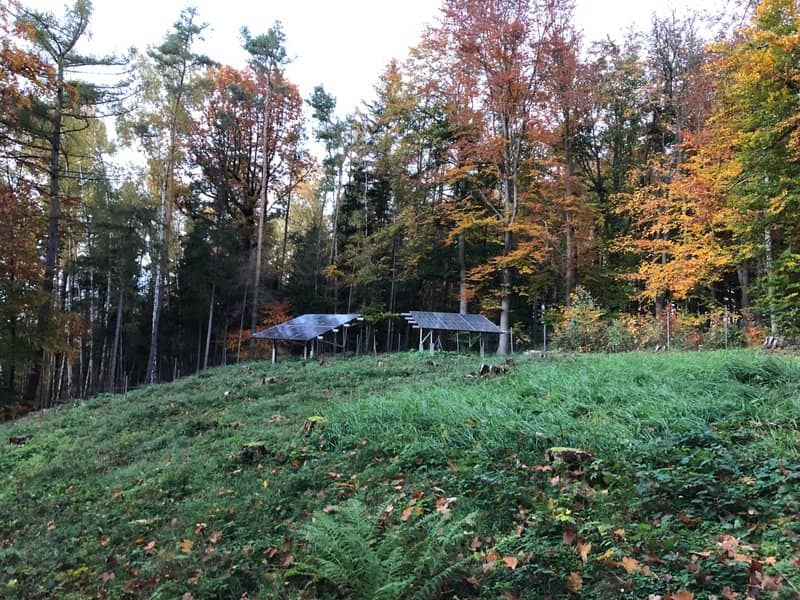
Justin Tyers • 16 March 2021
Forest well-water purification project
The 200 residents of Urphertshofen, a German village in Middle Franconia, have been supplied with domestic water from a woodland well for centuries, but reduced rainfall in recent years has caused the well to run dry. No problem, they have a second ‘reserve’ well – but turning to that well, recently, they found that although the water was more plentiful, it was not pure. In order to make it fit for drinking the water has to be ‘sterilised’ with Ultra Violet light. But as the well is located within a forest, without electricity, that is easier said than done. Germany has a substantial infrastructure of reliable grid electricity – so off-grid power systems are uncommon in that country. The cost of getting electricity to the site would be prohibitively expensive – and so the residents of Urphertshofen decided to investigate the feasibility of an ultra reliable source of off-grid power. Local solar experts IBC SOLAR who offer private power solutions of all sizes to domestic and industrial markets were asked to design a solution which would never fail – winter or summer – to meet the community’s requirement twenty-five cubic metres of treated water per day. A MonoSol photovoltaic array has been installed with an output of 4kWp – large enough to keep the 24V 235Ah battery charged at all times of the year. A SmartSolar charge controller has been chosen to harvest solar energy. The 24volt Phoenix Inverter has proved itself to be reliable over many years of service – accepting an input voltage of between 18.4 and 34 VDC which it converts to 230VAC. The 250VA model which has been chosen is ideal for running small loads at up to 88% efficiency – essential as the unit is powered-up 24/7. In the unlikely event of a power failure, the engineering company IDEAS has provided an additional built-in safety valve which ensures that the water is bypassed and cannot be used as drinking water – an intelligent solution offering peace-of-mind.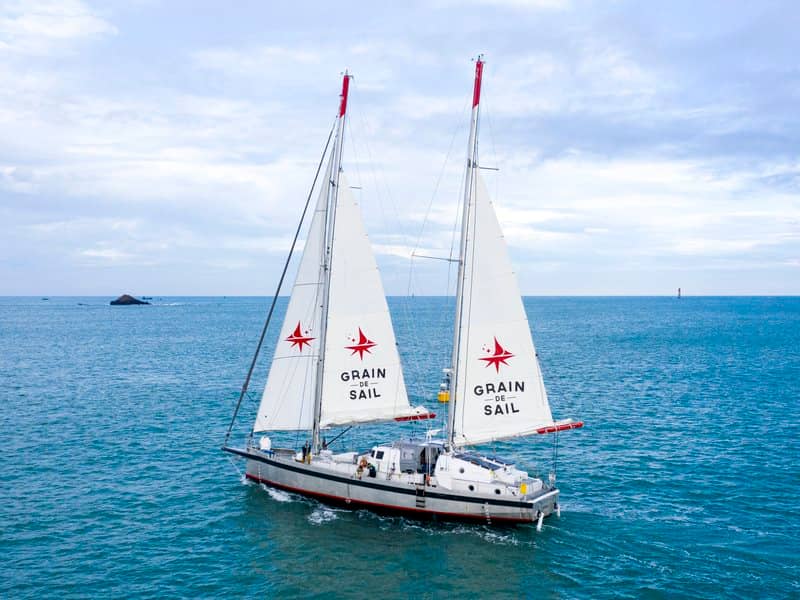
Justin Tyers • 15 February 2021
Wind Cargo: Maiden voyage return
The sustainable cargo ship Grain de Sail is expected to arrive back home in France by the middle of this week after completing her maiden voyage to the Americas. Trading in Wine, Coffee and Cocao, Grain de Sail is a cargo ship with a difference – she leaves no carbon in her wake. The ship is owned by the company – also called Grain de Sail – based in Morlaix, France who are coffee roasters and chocolate makers selling their produce through over 650 outlets, and achieving a turnover of €5m, whilst offering full-time work to over 50 employees. With his crew of four, Master Loïc Briand set sail on the 18th November with 15,000 bottles of French organic wine bound for New York – over 3,000 miles distant – where he arrived 28 days later having weathered 50ft waves and four storms. The vessel left New York on December 28th and tracked through the Caribbean to Central America to load 33 tons of Cocoa Mass (future voyages will load coffee, too) before embarking on a return Atlantic crossing to the port of St Nazaire – where they will clear customs before sailing on to their home port of St Malo, in France. As you might expect the Grain de Sail produces and stores her own sustainable electricity, too, from a rugged and dependable power system designed for the rigours of the sea. Her Victron Energy installation includes units built with the Professional Mariner in mind, such as an Isolation Transformer offering power security without the risk of galvanic corrosion. Two 5kW Quattro Inverter/Chargers provide domestic AC to the ship’s main loads which include fresh and sea water pumps; an electric cooker in the galley; plus air-conditioning for the hold. Three SmartSolar MPPT Solar Charge Controllers harvest solar energy from three Solar Arrays, for storage into a bank of ten AGM Batteries whilst a 1000A Lynx Shunt keeps track of the power harvest and demand. An Orion Tr DC-DC converter allows 12VDC navigation equipment to be operated from the ship’s 24VDC supply. A Battery Isolator allows two battery banks to be charged from one alternator which avoids the risk of forgetting to separate the house and starter battery banks once again when charging is complete – a constant worry present with ‘manual’ switching procedures. Her anchor is set and retrieved using a 24V winless rated at 2700W Twelve Solar Panels produce 24V/2.1kWp Two 24V shaft generators produce 1200W She has two wind turbines of 24V/400W each Two 24V alternators produce 8.4kW – driven by her auxilliary engine which is rated at 115HP Ten 12V batteries each holding 265Ah are divided into two banks A Global Maritime Distress and Safety transmitter has its own 130Ah battery The idea behind the daring commercial operation is to demonstrate that sustainable world trade can also be profitable for the ten year old company Grain de Sail . Importing their raw materials under sail quite literally offers a taste of adventure to both the importer and the consumer alike! The Grain de Sail is a modern version of an old Schooner – 72 foot in length, and built of Aluminium in 2019 by Alumarine Shipyard she has the capacity to carry 50 tons of cargo in her air-conditioned hold. This latest enterprise which takes them into the import/export business has been long in the planning, and a larger vessel capable of carrying twice the tonnage of cargo is expected to begin trading in 2023. For now there will be two wind and sea-swept voyages a year. Salt chocolate anyone?
Justin Tyers • 06 February 2021
Recharge your batteries at the Superbowl
Tampa Bay Buccaneers and Kansas City Chiefs will be in action in Florida this weekend (February 7th) at the Super Bowl LV. The game will witness a Clash-of-the-Giants in which Kansas City Chiefs Quarterback Mahomes – last super bowl’s most valuable player – will help his team fight for supremacy over Tampa Bay’s 43 year old veteran and six-time Super Bowl Winner Tom Brady … who some say is American Football’s greatest-ever player! It’s great news for American Football fans that this year’s game is going ahead – albeit with limited in-person attendance. Those who do attend will be able to take time out from the game to recharge their batteries – now that Lumos Solar have installed twelve of their stylish SolarZone seating structures. Under the shade of a canopy of Solar Panels Super Bowl visitors will be able to sit down, plug in their laptop, recharge the battery and browse the internet at the same time. Or they can simply chat with friends whilst waiting for their mobile phone to recharge from a wireless recharge pad located on the table. All this is available from the smartest bench you’ll ever use! The shade canopy consists of six solar panels capable of harvesting 1800Wp – plenty of energy for a stream of visitors powering-up throughout the day. The table hosts four wireless charging pads for mobile phones – and four outdoor 110VAC laptop-charging sockets. Four integral benches face each other at a discrete distance providing room to work whilst at the same time maintaining social distance. Because the power source for SolarZone seating structures is the sun itself, SolarZone bench sets do not require connection to an established power circuit or the grid. And they can be sited where they will be most useful to customers or site visitors, without the need for any site preparation or foundations. By night the benches are lit by four separate strip lights incorporated on the canopy support structure (a neat design feature!) ensuring that the benches are just as handy after the hours of darkness as they are during the day. Thanks to the battery bank, the chargers just keep giving – allowing visitors to work, keep in touch, or simply socialise in a lit environment. The lighting-up times for the benches are user-programmable. A function of the Solar Charger – known as Streetlight – follows the ever-changing times of dawn/dusk with the season and alters SolarZone’s lighting-up time automatically. Times can be re-programmed, and the SolarZone’s power system data can be monitored by an administrator in seconds using the Bluetooth connection available in SolarZone’s electrical installation. Powder coating ensures that the units will stand up to the elements – still looking great after many years of service and, because they are available in an unlimited rage of colours, they will echo any corporate branding. What’s on board? A Cerbo GX communications device harmonizes and controls all power devices, and allows their data to be managed remotely using Victron Energy’s free-to-use platform VRM . Maximising the solar energy harvest there is a Victron MPPT SmartSolar 150/45 charge controller with built-in MC4 connectors. The solar charger provides a controlled charge to the battery – the moment any current is drawn from the power sockets by users the new demand is compensated for by drawing more energy from the panels. Given the very large solar array in this installation, the Cerbo GX device and DVCC function are able to protect the batteries from over-current by limiting the battery charging current whilst still allowing maximum solar power to run the loads. Solar energy is stored in two slim Telecom batteries with a capacity of 200Ah at 24V – ensuring there will be enough energy for 8 hours of illumination together with 4 hours of phone charging and 8 hours of laptop charging per day. Power for the four 110volt AC laptop charging sockets is supplied by a Phoenix Inverter 24/800 Keeping stock of energy in/out and much more besides there is a BMV-700 battery monitor An Orion Tr 24/12 DC-DC converter allows 12V lighting run from a 24V battery source. These utility benches are a great way for companies, public institutions, or hospitality providers to demonstrate their commitment to high levels of service for their customers and visitors. At the Super Bowl teams come and teams go, but SolarZone are a fixture. Let’s soak up a bit of the atmosphere direct from the Super Bowl to get us in the mood. https://www.victronenergy.com/blog/wp-content/uploads/sites/10/2021/02/IMG_3704_156363478_156640838.mp4
Justin Tyers • 26 January 2021
Safari Accommodation: 3 phase from the Sun
Offering 5 star accommodation in remote locations requires a lot of discreet work behind the scenes. Kambaku River Sands Safari Lodge is an unfenced holiday resort offering direct access to the natural habitat of the Leopard, Lion, Rhinoceros, Elephant and Buffalo – whilst at the same time pampering guests with luxurious accommodation, world class cuisine, and even wine tastings. This level of customer service must be underpinned by a reliable electricity supply – which can be challenging in remote locations, particularly in South Africa where poor electricity infrastructure and the difficulties of meeting energy demand is ‘managed’ by recoursing to scheduled power outages. Fortunately there are alternatives to grid energy provision: To solve the problem of silent reliable energy Kambaku River Sands called in local experts in power solutions Current Automation – who designed and built a tailor-made power unit offering a whopping 135kVA. The factory-built 3-phase Hybrid energy system comprises: 9 x Quattro 15kVA Inverter/Chargers 3 x AC coupled Fronius Inverters 24 x SmartSolar MPPT 150/100 Solar Charge Controllers A Cerbo GX – together with a GX Touch 50 takes care of system control an offers remote monitoring and intervention 200kWp solar panels 6 x 100kWh Lithium Battery storage Current Automation have 25 years of experience in providing mobile and static energy solutions to industry and the domestic market. They envisage growing demand for their new factory built turnkey power solution – particularly because of the difficulties associated with running a business in South Africa where the inconvenience of power outages are overlaid on top of a track record of unreliable power supply. In order to showcase the many features of their product Current Automation commissioned a video summarising the key features of their product: The great advantage of a factory built solution to clients’ power needs is that it offers quick installation of a major infrastructure – whilst causing minimal interruption to business operations. It allows hospitality businesses – like Kambaku River Sands – independence from the vagaries of the power grid in order to offer quality service to discerning guests – no ‘ifs’ no ‘buts’, just great service. So if you’d like to treat yourself to world-class cuisine and specialist wine tastings; to dine alfresco or in the game reserve – by the riverbed surrounded by camp fires; you know someone who has invested in your comfort!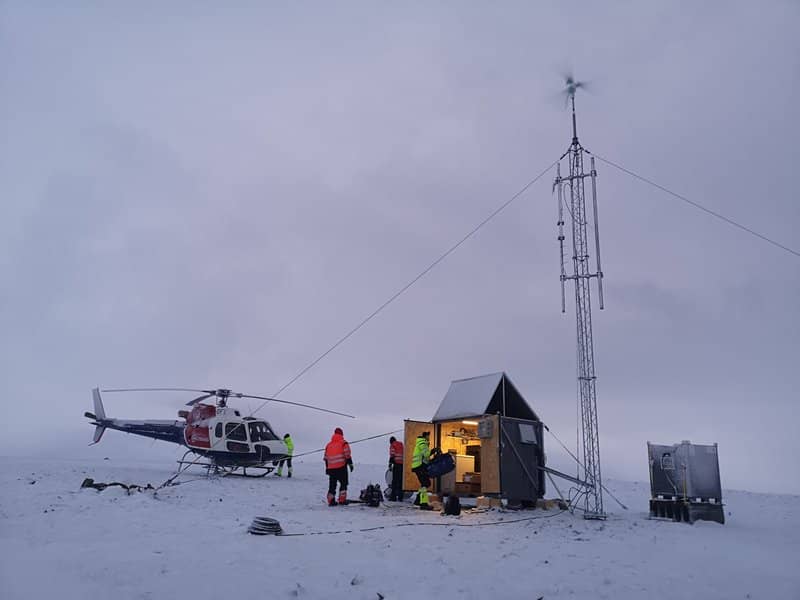
Justin Tyers • 19 January 2021
Safety Net? Norwegian Salmon farm gets mobile signal
Along the harsh and wild coast of northern Norway fish farming is big business. Here the fjords are deep, the mountains high, and civilization is far, far away. Salmon farmers work from rafts which have little or no access to power and the internet – and those which do have some form of communications have to rely on poor and intermittent signals to conduct their radio communications. The key to more reliable communication is to site masts at strategic locations using the mountain peaks which offer line-of-site relays between each other, and down to the rafts far below in the fjords. Of course, these mountain peaks are remote, and are themselves not connected to grid power. Often they will be offshore – unconnected to the mainland. In order to improve safety and efficiency a better communications infrastructure was needed. Electronic Engineers AB Elektro were invited to build a standalone “node station” capable of supplying power to the various transmitters. AB Elektro spokesman Ole Aleksander Isaksen says: This was a new and very exciting project to embark on, so we just had to do it! When it came to designing the power station the requirements were simple, but one thing was absolutely clear – owing to its remoteness and inaccessibility the electrical system had to be completely reliable! A single call-out due to component failure would be very expensive; risky, too, as it’s not easy to pilot a helicopter to site: Áksonjárga – a hub-location – lies offshore, west of Magerøya, which is 10 km from the nearest road, 200 meters above sea level, and so steep that arriving by boat it’s impossible to get there on foot from the shore. Isaksen added: Since we have a great deal of experience from work in the aquaculture industry and the maritime working environment in general, we naturally had some knowledge of Victron Energy products, so we knew we would feel safe using them for such a project. To help select the Victron products which were best suited to our planned installation we contacted Gylling Teknikk AS. Their technicians impressed us with their knowledge of Victron Energy, and we knew they would be able to support us with any question we threw at them. They even took the time to visit us in Alta to introduce themselves. Further collaboration, proved us correct in our surmise that they are very competent in their work! Inside the container we see: Skylla 24/100 Battery Charger x2 SmartSolar MPPT 250/85 Solar Charge Controller Venus GX for System Monitoring, Management and Communications 2 x BMV 712 Battery Monitors BlueSmart Battery Charger Phoenix Inverter 24/500 Battery Storage is 24V 1200Ah in a bank of 20 Torrent TRE12-20 units Back up Generator 6.9kVA During the course of the project, we have become familiar with the components that are relevant to our use, with assistance from Gylling Teknikk AS, and now find it really easy to put together power stations, and there is flexibility in the types of stations we can build. The final installation went smoothly; the station is now running autonomously without any problems, We are very happy with the result, and the customer is so happy that they have ordered a second power station. We can now boast that AB Elektro is able to supply electricity even where it is not available! We foresee a long collaboration with Victron Energy products, and Gylling as the supplier. This will apply to other relevant installations – not just power stations.
Justin Tyers • 05 January 2021
Empowering Myanmar
There’s an ambitious programme to bring PAYGo electricity to remote island communities in Myanmar. Owing to the difficult terrain in Myanmar, currently only fifty per cent of the population has access to reliable energy. But in the State of Tanintharyi – a region of over 800 islands – that is now changing, one mini grid at a time. Heading up this initiative Techno-Hill Engineering have a team of 40 engineers who are already widely experienced in large-systems having completed 20 mini grid infrastructures, capable of supplying 7,000 households with 24 hour power – which benefits over 40,000 people. Each sustainable mini grid, serving hundreds of households, breathes new life into communities whose nearest source of electricity was, previously, more than ten miles away. A typical installation has been installed at Kyauk Kar village which can offer up to 209kW of energy. The system comprises: 656 Solar Panels of 330Wp 144 Batteries – 2V 3000Ah 9 Victron Quattro Inverter/Chargers 15kVA 5 Fronius 27kWp Inverters 16 SmartSolar MPPT Solar Charge Controllers 1 back up Generator rated at 130kVA The total capacity of the battery bank is 864 kWh, and the panels will often generate over 1500kWh of energy in a day. So far, over 2MW of installed energy power the lives of 40,000 people – at home, at work, and in school. Techno-Hill’s Managing Director, Barani Aung, explains that the cost of each installation is part-funded by an 80% loan from several organisations: The World Bank; Myanmar’s own domestic Department of Rural Development National Electrification Program; The Rockefeller Foundation; and Techno-Hill themselves. The remaining 20% is provided by the community. Once installed, local businesses and households pay for their electricity using a Pay As You Go meter at a cost of 26 cents (US) per kWh unit. Not only is that cost remarkably cheap compared with the 60c – 1USD per unit which some communities pay for diesel-generated electricity, but generators typically run for just 4 or 5 hours per day; the quality of the electricity produced is poor (causing frequent failures for users of computers, or other sensitive equipment); and diesel fuel itself has to be regularly transported from far away in order to keep the generators running. All of this places obvious restrictions on local development, meaning businesses cannot operate at full capacity, and households cannot always get their power when they most need it – at night. Electricity is not the only benefit: Techno-Hill implement a program of on-going training, offering continual improvement for their engineers, and they educate local residents in the safe use of electricity. What is electricity used for? Of primary concern to Techno-Hill are the island communities where one of the most successful industries is fishing – Lobster and whitefish are caught and often exported to Thailand. The availability of a reliable source of electricity enables fisherman to achieve best prices by exporting premium-quality fish which have been kept in filtered, aerated tanks. Additional exports can be chilled, or frozen. Catering, Engineering, Healthcare, Tourism, and Farming industries are all benefiting from high quality, cheap, reliable and green energy. Communities thrive – and their future is assured as children can extend their education after hours of darkness. Electricity is bringing new equality too – empowering women to take control of their lives and use their full potential for the benefit of the whole community. Indeed Barani Aung herself is part of a new wave of senior female company directors who are helping to shape the future of Myanmar. Having graduated in Singapore, Barani’s background is in building data-centres for system control and monitoring. Unusually, a number of the organisations involved in the roll-out of Myanmar’s sustainable energy programme are headed up by women. Barani says she recognises that she has more opportunity for personal development than did, for example, her mother. With one eye on the future Barani encourages her own daughter to observe the work she is doing, encouraging her young mind to see a world of possibility. The Myanmar state of Tanintharyi has 80,000 households – about 400 villages – who have no access to power. Techno-Hill aim to connect 50,000 households by 2024 – well on the way to bringing electricity to all who need it for their development. Taking the country as a whole, there are 20,000 villages yet to be connected to an electricity supply. Myanmar sees the challenge in a positive light, aiming to become the leading country in the world for decentralised sustainable energy provision. You can find out more about bringing power to remote locations by reading our Energy Access information pages. We are grateful to Sasin Tipchai for the headline image.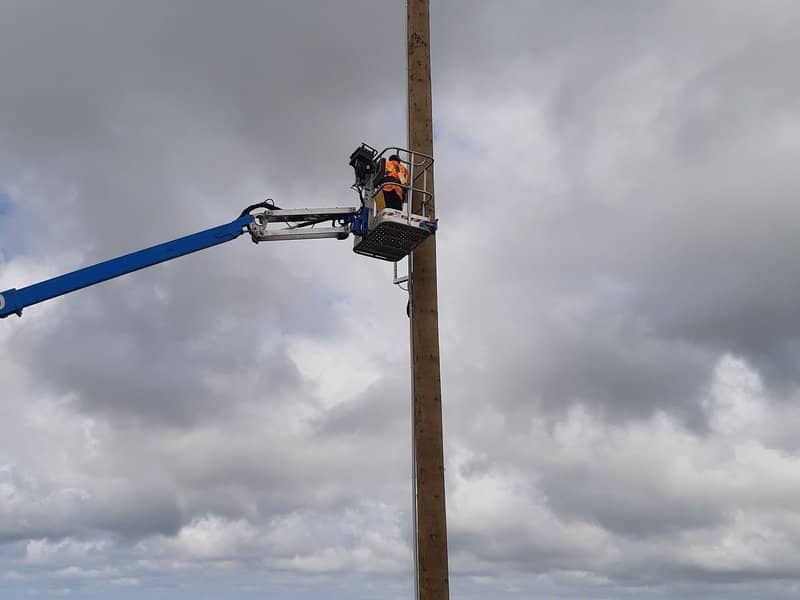
Justin Tyers • 07 December 2020
How do you monitor a WISP?
Interesting discussions take place on our Community Pages all the time, offering glimpses into how Victron products are used in the real world. Richard Mahoney is project leader for New Zealand based StrataNet which operates a wireless internet service in rural locations and recently uploaded an account of how his company tackles the problem of monitoring remote installations. He says : As a Wireless Internet Service Provider (WISP) the ability to remotely monitor our sites is critical. Network uptime is at the forefront of everyone’s mind in the industry, so we do whatever it takes to ensure that all of our sites remain online – from network infrastructure through to power systems. WISPs probably have the greatest diversity when it comes to telecommunications carriers. Being a WISP, our power systems range from small solar sites drawing tens of Watts right up to larger sites drawing hundreds of Watts 24 hours per day. We use grid power, generator backup, and even wind power. Furthermore, here in New Zealand we experience harsh environmental conditions: probably the highest UV radiation in the world; salt spray in many areas; strong winds, heavy rain and snow – yet we are also at the forefront of infrastructure engineering when it comes to Telecommunications. I’ve been in my line of work for several years and I’ve seen a lot. It only takes a couple of Saturday night callouts to realise the necessity of protecting outdoor cabling and infrastructure which have been chewed by cows …or ants nesting inside the cabinet, causing failure. So how can we monitor our remote infrastructure? This question has been plaguing me since day one. I can’t count the number of times I’ve asked various internet forums or Facebook groups about remote monitoring – only to be told about some over-complicated system with an Arduino or Raspberry Pi that doesn’t quite do what we want it to. We’ve trialled all sorts of Solar Charge controllers without achieving the results we hoped for in terms of remote monitoring. Believe it or not the best way we could find to monitor Lithium battery levels at one of our critical solar sites was with an IP camera pointing at a battery computer screen! We’ve used this solution, along with various DC voltage monitors, to get by – but it’s been less than ideal. During bad weather our staff have periodically logged on to the camera to check the battery levels! When we secured a contract to build over 100 new transmitter sites to deliver internet services for rural communities in NZ – a fairly substantial contract for a small country – we simply had to find a solution to monitoring ALL of our sites from the office. As they say: with great power comes great responsibility. We offered suppliers the opportunity to tender for different parts of the build – from civil work, to radio supply, and power delivery. That’s when a local company introduced me to the Victron product range. At first I was hesitant having seen a lot of products that didn’t quite do what I want them to, but I bought some Victron units for research. Victron – our knight in shining armour (almost). The solution we’d been searching for all this time turned out to be the Venus GX . The Venus GX is a little device that interfaces Victron products to the internet via the Victron Remote Management portal; but what’s more – the GX product range has a great feature called Distributed Voltage and Current Control ( See GX Manual section 8 ) which allows all of the devices connected to the GX device to talk to each other ! This allows sharing of battery data, temperature sensors, even telling a grid charger to dial back its current when a parallel solar charge controller is getting lots of sun. This blew me away! Small cabinet layout Aside from the Venus GX, the other device that really takes the cake is the BMV-700 . Somewhat similar to the battery computer in the grainy photo earlier in this article – as seen by our IP camera – the BMV-700 offers one key feature I’ve been asking for: a digital interface to other devices. And that’s just it – when paired with the Venus GX (or any GX device), we can now remotely view our battery State of Charge (SOC) using the VRM portal. It even emails us when the SOC drops below a predefined percentage! We’re now up to about 20 GX devices deployed to the field with many more to come, and I’ve been very impressed with the results. Most of our sites feature a BMV-700, however for some of the larger sites we’ve opted to use Pylontech Lithium batteries ( conveniently, Pylontech have official support from Victron) which have a built-in battery management system; it pretty-well does the same work as the BMV-700. To add to that, the BlueSolar charge controllers that we’re now deploying (and a handful of mains chargers) also have a VE.Direct port which can plug into the Venus GX allowing us to graph and view how many kWh our panels are producing in real time. Downside? So far, I’ve harped on about the amazing things that Victron can do for us. But what about the bad things? Well, there is one thing that I wish Victron would catch on to: rack-mountable devices. That’s right, not everyone using Victron products is trying to tuck them into the back of an RV or motorhome. Around 80% of our sites have 19” rack mount enclosures – which is standard for the telecoms industry. I’ve had to suck it up, bolting chargers and charge controllers onto rack shelves. This might not sound like such a big issue, but it takes time to mount (remember, we’re talking about close to 100 sites with rack enclosures); and also each large device takes up to about 4-5 RU (1 RU = 44mm), whereas I feel this could be consolidated into 1-2 RU. Space efficiency is important in our industry. Large cabinet layout So, while I feel they’re great for the WISP/telecoms industry, many carriers may overlook Victron products because they look like “consumer-grade stuff” as they are not easily rack mountable. In my opinion, if some of the larger products such as solar charge controllers, inverter chargers, the higher power end of Orion DC-DC converters (also very handy products!) and the Venus GX devices were available in a 19” rackmount format, this would open up Victron products to a whole world of telecoms industries that otherwise may have overlooked their product range. Remember, WISPs are very “hands on” and will do whatever it takes to get the job done – whereas some of the larger telecoms tend to stick to more of an “industry standard” approach. So we finally have a simple and very comprehensive solution to monitoring the power system at every site – all from a very handy web portal (there’s also an app for smart phones). From anywhere in the world I can view the power status of all of our sites in a matter of seconds. You can even sort the list by order of battery SOC, or voltage. The Victron product range coupled to a GX device has been an absolute game-changer for us – now I can spend more of my Saturday evenings enjoying my social life rather than thinking about the status of my network. Thank you Victron! Richard, Infrastructure Engineer for StrataNet Limited.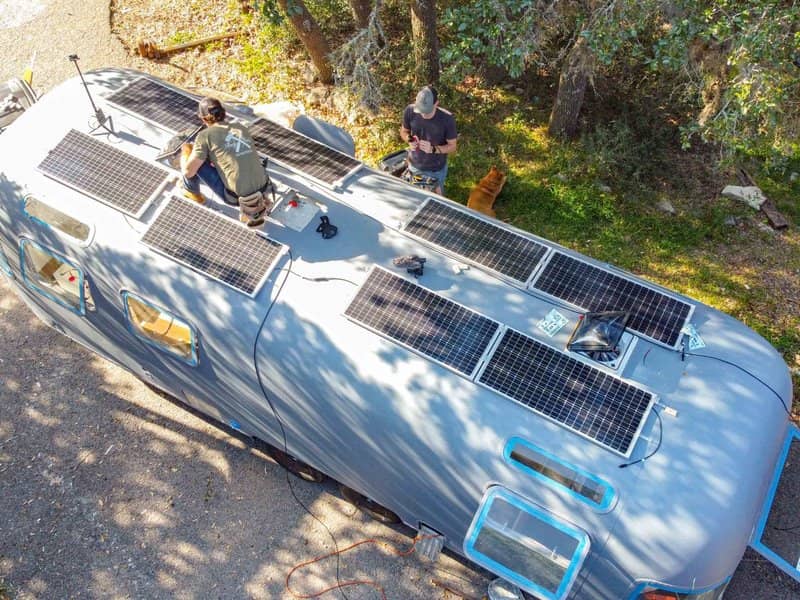
Justin Tyers • 30 November 2020
YouTubers Rebuild a 1976 Airstream
Victron Ambassador Nate Yarbrough recently traveled to the Hill Country of Texas to collaborate on an electrical installation with fellow Youtuber and master woodworker Andy Rawls who is working on a 1976 Argosy travel trailer restoration project. Andy’s strip-down restoration of his classic Airstream has been in progress for almost a year, but when at last the time came to install a smart new electrical system on board, he asked Nate for a helping hand. Recognising an excellent opportunity to teach people how to undertake their own DIY restoration of campers – and have it turn out like a pro, Nate loaded up with a full assortment of Victron equipment and made the trip from Colorado to Texas. After performing a power audit, Nate determined that Andy would be using about 3.7KWh daily. The devices drawing the biggest loads will be the coffee maker, blow dryer, and blender. Smaller but longer demands will be from laptop, phones, TV, etc. Nate decided that Andy’s needs will be met by: Victron Multiplus 12/3000/70 120V SmartSolar MPPT 150/70 BMV-712 Smart Battery Monitor 4x Battle Born Lithium Batteries 8x 100W Newpowa Solar Panels Over just two days, Nate and Andy got to work cutting lots of wires, crimping lots of lugs, and shooting videos for each of their Youtube channels along the way. Although Andy had a bit of electrical work experience beforehand, it was mainly residential with no experience of typical DC installations – inverters, solar, batteries, etc. He learned loads about how the flow of power works in a system like this, and using off-grid power once his camper is complete. He and his family plan to hit the road next spring. A full tutorial on the installation from both well-known YouTubers is available right here: Find out more about either of these talented guys by visiting their website: Nate Yarbrough Andy Rawls
Justin Tyers • 24 November 2020
Private Power Plant for Super House
Zimbali Coastal Resort on the North Coast of KwaZulu-Natal is home to some of the most beautiful country in South Africa. And some very smart houses. One of them is owned by Basil Reekie and his family who split their time between Johannesburg and Zimbali. Their home has a three-phase grid supplied electricity with 80A on each phase. However, when the family is staying in the house they require 130A per phase. Their Victron system doubles-up as a very large PowerAssist – as well as providing battery backup during South Africa’s load shedding – scheduled power outages – and the occasional local grid failure. The Reekie home in Zimbali has a 41.5kWp solar array on the roof split between AC and DC coupled strings. The DC coupled bank feeds a 100kWh Lithium battery and 45kVA of Victron inverter power. The AC coupled bank feeds a 20kW three-phase Fronius inverter which is controlled by the Victron system. Backup power can be provided by a 60kVA three-phase Diesel Generator. The system comprises: 3 x 15kVA Victron Quattro Inverter/Chargers C2 x 250/100 MPPTs with 40 x 415Wp Canadian Solar facing South West Fronius 20kW with 60 x 415Wp facing North West FreedomWon 100kWh LiFePo4 Battery 60kVA Diesel Generator 3 phase energy meter on AC input and Generator input The substantial system was supplied and installed by Solarvest who have installed over 200 systems in the province and elsewhere around the country over the past decade. They are Victron Authorised installers and well-known experts in large Victron installations. Solarvest was supported in the installation by Ultimate Electrical Solutions who built the stainless-steel cabinet to house the inverters and MPPTs in the machinery room (which is situated underneath the swimming pool!). The generator was supplied by Dedicated Power and the integration with the Victron Quattro’s was configured by Solarvest. The incredible 100kWh FreedomWon battery was built and supplied by FreedomWon in South Africa. FreedomWon are officially supported by Victron and the battery is capable of discharging an incredible 2000 Amps on a continuous basis. Another refinement to this significant installation is the way it integrates with the Control4 Home Automation system to automate the configuration of the grid setpoint and battery minimum state of charge based on whether the Reekie’s were staying in Zimbali or not. Basil Reekie has an unusual hobby: he is a remarkably capable home automation engineer. He has used the Control4 automation system in his homes for several years – configuring over 200 add-on drivers to the base Control4 platform. In collaboration with Warwick Chapman from Sensible Solar and Matthew Walsh from Tech Up Consulting (both Victron Authorised Installers), the team used a Modbus TCP driver for Control4 to read the current battery SoC from the Victron system – based on that information, and whether power hungry equipment (e.g. the sauna and steam room) are currently turned on, it adjusts the grid set-point. This configuration allows Basil’s system to automatically adjust these values based on the power requirements of the house; available battery power; and whether the Reekie’s are at home. When in Residence they’re able to maintain the SoC between 60% and 90% quite comfortably – despite peak electrical usage of up to 130A – while ensuring that the draw on the grid never gets too close to 80A per phase. In the extremely unlikely event of the SoC dropping too close to the chosen minimum SoC (40%), Control4 also turns off non-essential high power utilising equipment such as Pool Heaters and less important Air-Conditioning Zones. Since implementing the automation, the battery has never dropped below 50% when power management is active and has never exceeded 90% when there is still solar power available. Thus the solution met the Reekie’s 2 requirements, namely: Utilise all available solar power while they are in residence and using a lot of electricity; Never overload the grid connection – thus avoiding circuit tripping. Power Management is turned on and off (along with many other home automation features) by pushing one virtual Control 4 button on a Touchscreen (or iPad) which changes a variable called “InResidence” – which alerts the system as to whether or not the House is in use and, thus, whether active power management as outlined above is required. Basil has also configured the system to: announce a power cut over the house speakers (usually caused by a load-shedding event) and also announce reconnection to grid electricity. Announcements are suppressed between 10pm and 8am. turn backlight colour Red on keypads and switches for the duration of any power cut, though not in private spaces in the house. The system is a testament to the accessible firmware and versatility of Victron electronics, and the ingenuity of clients and installers. All parties involved, including the Reekie family, are immensely proud of the resulting solution. System Installation and Integration Team Solarvest : Anton Lotriet, Ronald Pratt, Peter Maric and team Ultimate Electrical Solutions : Riaan Allen, Russell Ralph and team FreedomWon : Antony English and team. Automation Integration Team Sensible Solar : Warwick Chapman Tech Up Consulting : Matthew Walsh Owner of Residence & Control4 Jockey : Basil Reekie
Justin Tyers • 18 November 2020
Iconic lighting
A young engineer has designed and built solar lighting for a local place of remembrance. The carved cross is believed to be at least 100 years old and stands near the spot of an historic incident in which a timber worker lost his life. From now the craftsmanship of the carving will inspire reflection both night and day. When he was offered a Summer Holiday internship at Victron Dealer and Installer Elektro Štumpfl Ltd , Electronics student Aleks Žvikart was keen to get his hands on the professional products which would allow him to develop his understanding of manufacture and industrial applications. He saw his solar illumination project as an opportunity to make a contribution to his community. Aleks Žvikart is currently in his second year of attendance at an Electrotechnical high school in Maribor, Slovenia. With his mind settled on a career in electronics, he was keen to get some experience of the domestic and marine electronics industry. This internship introduced him to Victron Energy products – he says: I did some research on Victron products and I was instantly “hooked”. My first project was the illumination of the cross. Now I am making a test board with Victron components so that I can present my research back in school. The main focus of the test board will be the Venus GX and the many different ways to use it – monitoring PV and weather stations, for example. We wish him well in his career. Family owned organisation Elektro Štumpfl has been established for fifty years and specialises in Marine applications. That division is headed up by Electronics engineer Gregor Štumpfl who explains that their company’s strength is in being able to respond to individual client needs and applications – producing bespoke cable harnesses, switchboards and panels. Their solutions are mainly based around Victron Energy and Fischer Panda – the latter being widely recognised for advanced generator manufacture. Fischer Panda products embed seamlessly into Victron systems and are fully controllable via GX communication devices. With installations in over 800 boats – motor and sail – Elektro Štumpfl is keen to stay ahead of the technology, and to make a name for themselves in the marine market .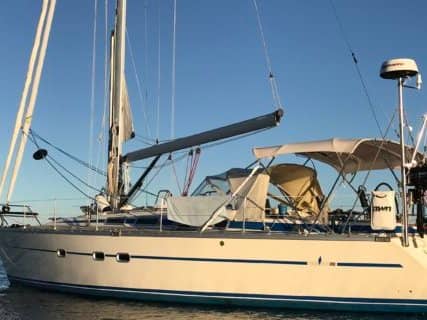
Justin Tyers • 13 November 2020
Installing a High Powered Alternator?
Recently we heard how Stefanie fitted Lithium batteries and renewed the electrical system on board her yacht Taku Moe. She soon found that her old alternator wasn’t packing a big enough punch for her new batteries – and wasn’t surprised. Here she tells us her experience of installing a high-power alternator. Stefanie Loges takes up the story: Our new lithium installation has already proven itself on a 10-day round trip through the Danish South Seas, although the solar modules are not yet installed and we were dependent on shore power or a generator to charge the lithium bank. An advantage of Lithium storage is clearly the ability to discharge the batteries far below the usual level of 50% State of Charge (in the case of lead batteries) without fear of shortening battery life. However, a clear weak point emerged during the trip that I had actually foreseen. The old 14V / 50A alternator of our Volvo Penta 2003t was noticeably and measurably overwhelmed to supply the Orion-Tr Smart 12 / 12-30 DC-DC Charger (B2B) with sufficient power. The Orion should run the lithium bank via the starter battery with a constant current of min. 35A load. The current is not adjustable, so always full power until the batteries are full. The whole thing works quite well for almost an hour, but the alternator heats up minute by minute. At well over 100°C, measured with an infrared thermometer at the hottest point of the alternator, I decided to switch off the Orion, using the Bluetooth function, in order to protect the alternator. I read somewhere that conventional generators have an average (from cold through warm to hot) efficiency of perhaps 50%. That seems to be true with our alternator. Good old Valeo alternator from Volvo Penta My first thought was to install a smaller Orion with max. 25A Output. But I dismissed that idea immediately because we definitely don’t want to forego fast charging of the batteries. If only 250Ah have to be recharged, we would, in theory, have to let the machine run for 10 hours (excluding any solar power input). So a different concept has to be found in order that we don’t miss out on power generated by the engine when we’re forced to motor because there’s no wind. Amongst English-speaking Blue-Water sailors there is a lot of talk about Balmar high-performance alternators which use an external regulator to control the field voltage, and include different charging programs for different battery types. Including one that you can completely adjust to your own requirements. Balmar alternators are temperature-controlled, meaning if it gets too warm for them, the output is reduced by reducing the field voltage. The controller also has other features such as a ‘Belt Load Manager’ to keep the slip and abrasion of the V-belt under control and reduce output power. More on that later. However, a Balmar alternator is not exactly the cheapest on the market and, at around 850 euros, makes a deep hole in the treasure chest. But you do get an external controller, cables, and a 1/2 inch V-belt pulley. Alternatively, an original Volvo Penta 70A alternator could be used. That should cost about 600 euros. Too much – in my opinion – for old technology, because the intelligent controller and other features are missing. After a short consultation with Balmar, we negotiated a reasonable price with Energy Solutions UK for a price for the Balmar KIT, 621 Series 100a SingleFT Alternator, MC-614 regulator and temperature sensors, and the new alternator was delivered just a week later. Balmar 621 alternator with MC-614 and accessories Usually the starter battery is attached to the alternator. The consumer bank is then charged either via an isolating diode, an A2B (Alternator to Battery) or a B2B (Battery to Battery – DC-DC Charger). As I explained above, this works in principle, but not particularly efficiently – unless you already have a powerful alternator. In order to be able to draw full power, the alternator should charge the consumer bank directly via the controller – our starter battery has a 110Ah capacity (remember that batteries should only be recharged at a rate no greater than 20% of their capacity – in this case max 22A charging current). For that, the Balmar would be completely oversized. So the wiring has to be changed completely. A new 50mm2 cable is required from the alternator to the lithium bank, an a battery switch should be installed as a service disconnect for working on the alternator – and also a corresponding fuse for the cable. Laying the starter cable from the engine ignition switch on the control column to the engine compartment to the MC-614 was a bit more complex. With the starter cable, the charging of the lithium bank by the VE.Bus BMS or a manual switch can be interrupted at any time during operation without damaging the alternator. Then the Victron Orion-Tr Smart 12 / 12-30 DC-DC Charger had to be exchanged for a 12 / 12-18 and reconnected so that the starter battery can be charged further as required. The rest of the installation was absolutely uncomplicated, even for a layman like me with two left hands when it comes to manual skills ? The new circuit diagram Too bad that when we tensioned the V-belt we placed the tensioning lever exactly where a fresh water cooling water pipe runs from its pump. The pressure bent the line and loosened its seat in the pump – resulting in 5 litres of glycol-fresh water mixture in the engine bilge. A fitter then had to fix that ? We carried out a first test without programming the MC-614 controller. Even when the engine was idling at 850 rpm, the clock showed more than 50A and at 2000 rpm it reached 80A. That was a good start. However, the V-belt worries me a bit. With a width of 10mm, it is only suitable for 50A provision. Anything beyond that significantly reduces the service life of the belt. A wider V-belt won’t fit onto the V-belt pulley of the fresh water pump and flywheel. To solve the problem, new V-belt pulleys are required – ordered specifically for our engine: Balmar 48-VSP-2001 Pulley Kit for Volvo Penta 2001, 2002, 2003, 2003t with K6 V-belt pulleys for a V-ribbed belt. Balmar 48-VSP-2001 Pulley Kit for Volvo Penta 2001, 2002, 2003, 2003t The so-called Belt Manager of the MC-614 is now used to (at least temporarily) avoid the problem. The Belt Manager reduces the field voltage by approx. 5% per setting – with 9 settings available. At position 9 the field voltage is reduced by approx. 45%. Reduced field voltage means reduced output – by how much cannot really be predicted because other parameters such as temperature, V-belt tension etc. also play a role here. You just have to try it out. I chose the highest setting -9 when idling at 850 revs and got around 20A; at 2000 revolutions I got around 45A with a cold alternator. The small V-belt should not have any problems with amount of work and should last until the new V-belt pulleys are installed. Balmar 621 100A alternator with 10mm (3/8 ″) V-belt installed Programming the MC-614 takes some getting used to. The delivery package includes a magnetic pen with which a magnetic reed switch in the MC-614 can be switched. The controller can then be programmed using the reed switch. A little awkward, but do-able. You have to click through the menus serially until all settings are made. There are some great programming instructions on Marine How To – one of the best sources on the Internet when it comes to Balmar and the basics of electrical installation in the yacht sector. Balmar Max Charge 614 External Regulator – the red dot represents the reed switch I have chosen the following settings for our Victron SmartLithium 12.8 : bA Battery Type: LFP bEL Belt Load Manager: -9 dLc Start Delay Programming: 1 AHL High Voltage Limit: 14.2 CL Battery Temp Voltage Compensation Limit: 14.2 (this means that no temperature compensation takes place) bu Bulk Voltage Limit: 14.2 Au Absorption Voltage Limit: 14.2 A1c Minimum Absorption Voltage Duration: 0.3 (corresponds to 18 minutes) Fu Float Voltage Limit: 13.4 AL1 Max Alternator Temperature: 100 (° C) b1L Battery Over Temp Limit: 44 (° C – however no temperature sensor connected because the VE.Bus BMS is in control) SLP Battery Temp Compensation Slope: 0.0 (see also CL) Regulator Programming Cheat Sheet can be downloaded from marinehowto.com We’ll see how the Balmar alternator does with new V-belt pulleys. Stop Press: The installation of the pulley kit seems to be a bit more difficult than I thought. Reason is the water pump pulley, which originally is not screwed to the pump and instead was cold-weld. Now I’m seeking for a solution to easily get the old pulley off and install the new one without destroying the pump. A fitter hopefully will get it done in the next few weeks. German speakers will certainly wish to follow Stefanie’s blog.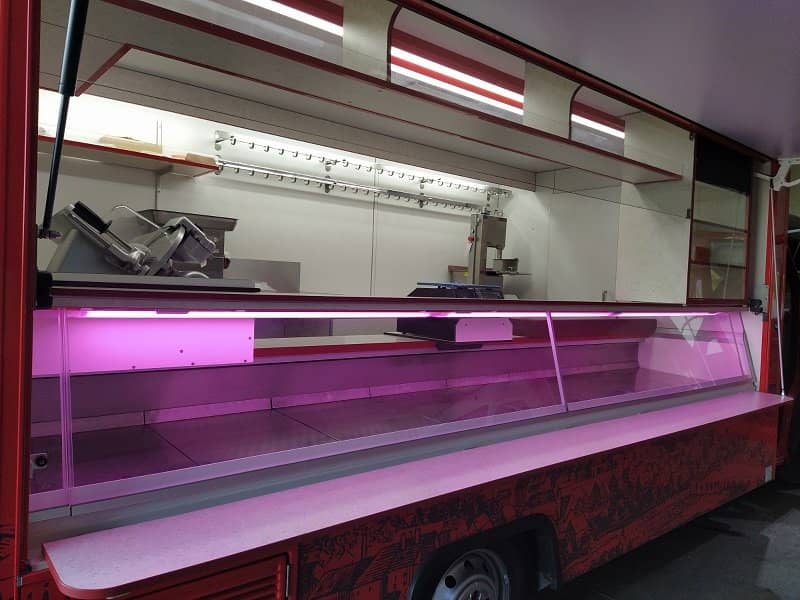
Justin Tyers • 04 November 2020
Refrigerated mobile butcher shop
Until recently lead acid batteries – half a ton of them – provided the daily energy needed to run the refrigeration plant of a mobile butcher shop selling produce amongst the hilly terrain in the Rioja region of Spain. Worse still, the sixteen batteries could only be recharged from a 230V power supply at the end of each long day. CHANGE TO LITHIUM BATTERY STORAGE What a difference Lithium has made! With a 60% reduction in weight; the addition of solar power, and charging from the alternator, the power installation has gone from ‘worst’ to ‘best’ of all worlds. The cutting edge installation was carried out by Distribuciones Solares del Principado SL (DSPSolar) based on Spain’s north coast, for Rioja region’s Parry Innovation S.l – who specialise in converting Borco Höhns commercial vehicles into attractive and practical mobile retail outlets. The fuses and equipment compartment is accessible from outside in a hermetic enclosure fitted with a rubber gasket. It is equipped with forced air extraction controlled by a thermostat for proper ventilation. The power provision for the mobile butcher shop plying its trade in sunny Spain takes advantage of every opportunity for power generation, weight minimisation, ease of use, and system control: 3 x LiFePO4 25.6V / 200 Ah Batteries MultiPlus-II 24/ 5000 Buck-Boost 100A DC-DC converter 12V Alternator – 24V Battery step-up 2 x Solar panels of 400w SmartSolar MPTT 100/30 solar charger VE.Bus BMS BMV-700 Battery Monitor Smart BatteryProtect 12 / 24V-220A Smart BatteryProtect 12 / 24V- 65A Upgrade external plug to 32A for mains power supply connection. Three LiFePo4 25.6 V / 200 Ah Lithium Victron batteries in parallel. There is room for a fourth battery in the future. The shop is most popular in summer. And it is in the summer that the demands on the power plant are greatest – more produce is carried; working days are longer to satisfy demand; and the refrigeration plant has to work harder in the high ambient temperatures. Other devices related to the preparation and sale of meat are also in constant use. The reliability of the system takes all the headache out of keeping produce freshly chilled and supplying a higher quality product to customers. Schematic In response to a reader’s question, asking for a schematic of the installation, Héctor Cortés of DSPSolar tells us that he modified the following drawing. He says: We have not used a Color Control GX We have only used one MPPT solar charger The MultiPlus is the 3K model The DC distributor (Lynx) is artisan-made 😉 Did you know that Schematics for all Victron Products are available as a downloadable asset from our Website? Simply select a product from the search bar of this page to see lots of suggestions.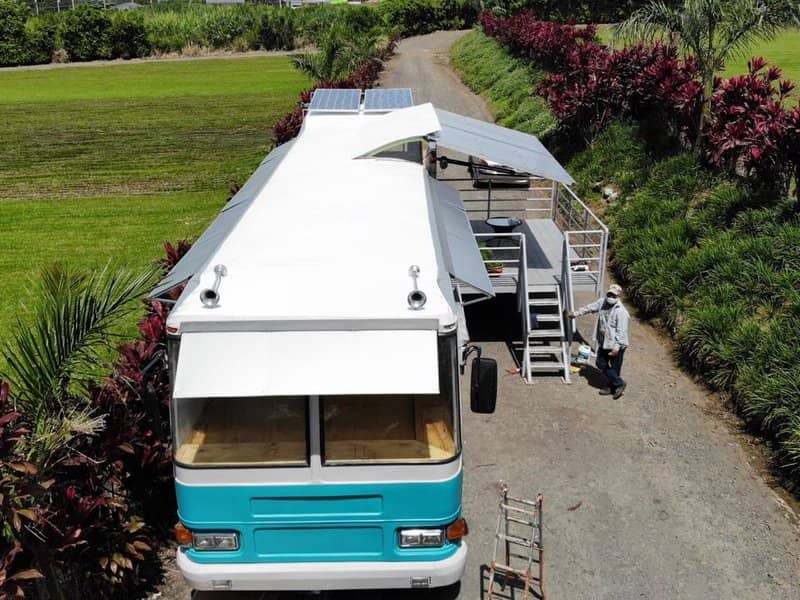
Justin Tyers • 21 October 2020
Costa Rica – the first bus home
Amidst the universal problem of affordable housing, young people particularly are turning their backs on traditional housing solutions in favour of something that better expresses their lifestyle choices. Into that growing market steps a stylish housing idea by Micromacrocostarica who have re-purposed a bus into a very well designed micro-home. Behind the idea is musician, filmmaker and creative director Alex Catona who teamed up with Architect Francesco Bracci – both of whom have let their visual flair take centre stage. Not only is the bus stylish, and cleverly designed – but the level of craftsmanship is enviable. In Costa Rica, by law, Public Buses have to be taken out of service after 20 years – so there are plenty of buses available for conversion. At the moment only 15% of the materials are recycled – turning a bus into a house puts that figure much nearer 100%! In its 38m² of floor space it has an outside terrace; King sized bed plus sofa bed; dining room for four people; shower room and kitchen. The kitchen features all the appliances you would expect to find: gas stove, refrigerator, microwave, washing machine. The seating area has a TV, it also has 20 led lights so that you can reflect your mood – plus the computer and phone charging points you expect in a new home. The accommodation also benefits froim a 9000BTU Air Conditioning unit. An unusual feature is the hydraulic door. As the only entrance to the property is provides security. The door is raised on two hydraulic pistons – whose appearance and performance are improved by being made from stainless steel, and can be left fully extended to provide a roof the to the outdoor seating terrace. The nominal consumption of the pistons are 335W each, 240V split phase. The power installation was carried out by HCG Ingenieria (Victron Energy Distributor in Costa Rica) – Nundi Technologies . Project director Luis Fonseca says that: “the greatest challenge for this installation was ‘space’. You have to find the right place for the equipment and for the batteries. We managed to install them in the luggage compartment. The advantage of this is that the installation has support from the bus chassis – a very strong structure. Also the solar panels had to be well secured to a structure capable of withstanding strong winds, and of course we had to finda tidy way to run the cable connectors from the panels to the charge controllers.” The installation chosen comprises: 2 PV panels of 325W each, by Trina Solar 2 Multiplus compact 12/2000/80 1 Smart Solar MPPT 100/50 BMV 702 Battery Monitor Battery protect System control uses a GX device Battery bank of 490Ah The installation team is made up of Ing. Luis Fernando Fonseca (Project Manager) and his son Fernando Fonseca (Technician) Nundi Technologies specialize in solar energy solutions and energy storage, in small and medium applications. MicroMacro point out that buses were designed with people in mind. They offer a well-lit, well-ventilated, insulated space which needs no foundation because it is already raised off the damp ground. Those who value financial freedom, a space to call their own and playing by their own rules are invited to visit our tiny bus home, either via Virtual Tour or by making an appointment in person. Sceptics will become converts sooner rather than later. sayMicroMacro. The multi-functionality of all handmade furnishings, the overall practicality of every square inch and all the other high end interior design touches we’ve managed to squeeze in this surprisingly spacious model, will win anyone over who values, independence and style over clutter and wasted space/time. Not only will does the new home owner get a house but a level of luxury not found in conventional housing. You won’t have to understand Spanish to enjoy this tour:
Justin Tyers • 15 October 2020
Energy Container
With 75 years of experience under their belt, leading German Cable manufacturer Klaus Faber AG have diversified into the field of portable power. The company likes a steady hand at the helm – their CEO retired recently at the age of 90 – and with the new CEO Joachim Czabanski came the idea of developing a containerised power system which could be drawn from stock, on demand, flown to site, and deployed in an hour by non-technical individuals who have no tools. If this sounds like the ideal solution for power in disaster zones, refugee camps, exploration areas, or defence – then you’re right – these are the kinds of applications Faber Infrastructure GmbH have in mind for their Mobile Power Systems. One-and-a-half years in development, the 20′ container offers 80kWh of Li-ion battery storage, and provides up to 30kW at 230/380V, configured either as an off-grid or grid connected power source. The unit is scalable allowing in-parallel connection to more containers. What’s in the box? German engineering allows 64 Solar Panels to unfold from the unit – deployed ‘by-hand’ in four pitched arrays offering 24kWp. Power is harvested by 8 solar chargers – SmartSolar MPPT 250/100-Tr . A frame-mounted 15kVA Fischer Panda generator – installed for back up purposes – slides from the unit complete with its fuel tank into the outside world for easy access. The container is so designed as to allow the generator to run within the security of the container shell. 3 x Quattro Inverter Chargers offer 30kVA (60kVA peak). The Quattro has two AC inlets which could be connected to both a generator and grid power, if available – automatically drawing current from whichever source is live. Its two AC outlets offer an uninterrupted power supply in the event of grid or generator failure; at the same time non-essential loads – such as air-conditioning – will be dropped, securing the stored-power supply for all essential loads. The Inverters can be configured for three phase supply. Sophisticated software provides optimum charging of the 80kWh lithium battery bank – which can be scaled up in size. The remote power installation can be managed and monitored from anywhere in the world via satellite, using the Victron Remote Management Portal. This means that the power supply, wherever it is in the world, is never far away from technical support. What becomes possible? The most urgent humanitarian requirement in a disaster zone or refugee camp is clean drinking water. Water pumping and purification needs power, and that power becomes available without the need for difficult or dangerous fuel transport. The simple provision of Lighting allows emergency operations to continue 24 hours a day; and Communication networks can be established. When used in commercial applications – such as mineral exploration – the container meets the power-requirement of staff sustainably, silently, and without pollution …and when it’s time to move on it leaves no footprint. Faber Infrastructure GmbH intend their new containerised-power modules to become industry leading emergency remote power units. By keeping warehouse stocks of their Faber Mobile Power System units ready-built, they are able to offer rapid response to urgent and emergency power need, anywhere in the world. Thanks to Bob Hopman who is the Victron Energy Sales Manager for Germany for bringing this story to our attention.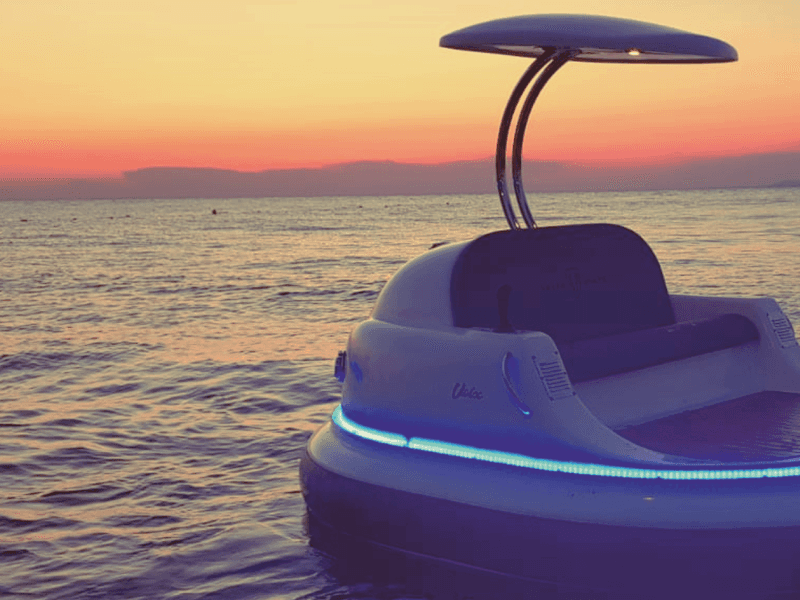
Justin Tyers • 09 October 2020
Battery powered boating fun
After 28 months of research and design in Germany the Turkish-built watercraft Voly and Volx are proving to be popular holiday destination get-afloats. The electric boats are offered by Volan Boats. Volx The 2.5 metre Volx has a maximum speed of 10kmh from its 2.5kW motor. The three-seater craft has a run time of between 3 and 6 hours and is powered by an 8kWh Lithium battery which has a fast-charge time of 2.5 hours. At the heart of the power drive sits a Multiplus II 48/5000/70 . Easy to drive, with its joystick control, the Volx is already proving popular with hotels, beach clubs and watersports centres and privately as well. To start driving Volx you just push one-touch button. The joystick responds to right, left, forward commands and moves the vehicle smoothly in the desired direction. Voly The Voly – slightly longer at 3.5 metres in length – is a trimaran capable of 12kmh. Complete with a boarding ladder, there is no propeller to worry about which makes it ideal for trips around the bay looking for deserted beaches from which to swim. The build quality of both craft allow holiday destinations, resorts and hotels to offer the freedom of the water to adventurous guests in a way which is silent and stylish. https://www.victronenergy.com/blog/wp-content/uploads/sites/10/2020/10/Video-2020-09-15-at-14.17.40-1_145734675.mp4 No smoke on the water Both at sea and on land there is an expectation nowadays that sustainability lies at the heart of recreational pursuits. Voly and Volx show how this can be achieved in an exciting way way which invites participation.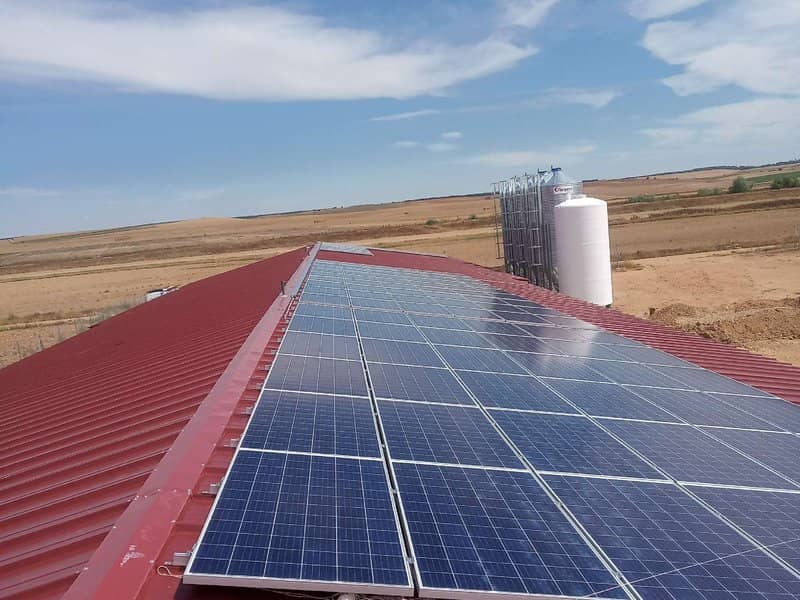
Justin Tyers • 10 September 2020
The sun – a Poultry farmer’s friend and foe
Ventilation and climate control account for most of the electricity consumption in a poultry farm. Constant temperature and excellent air quality are essential for the optimal development of birds, and need to be carefully controlled throughout the year. In a warm climate, like Spain’s, the summer season brings a considerable increase in electricity consumption – particularly at night, so that a reliable electricity supply is an absolute must. The good news for poultry farmers is that the hot season is also the time when their solar modules will generate most power. The real challenge is designing a system which supplies the farm’s energy needs 24 hours a day – plus contingency. This is the challenge that Cambio Energetico decided to take up for their client JAVEPA S.L. – a modern turkey farmer in Zamora with a 2480m 2 unit under a thermal ‘sandwich’ construction roof. Configuring the Inverters Off-Grid System configuration 126 Sharp polycrystalline solar modules offering 41.5kWp 2 SmartSolar 250V/100A charge controllers 3 Quattro 48/10000/140-100/100 inverters 1 Fronius Eco 27.0.3.S inverter 21 Pylontech US3000 lithium batteries storing 67kWh Connecting the batteries to the Busbar Cambio Energetico, who have been designing and installing off grid systems for more than a decade, chose an AC-coupled system for the JAVEPA project, connecting a Fronius inverter along with the Quattros. The system also relies on Pylontech lithium ion batteries and a genset for backup. Connecting a Fronius grid-tie inverter to a Victron system is especially interesting when most of the electrical demand occurs during the day. The Fronius inverter powers loads directly improving efficiency to over 90% . When there is surplus PV power available the Fronius inverter does not reduce the power harvest but uses the energy surplus to charge the batteries. On cloudy days the batteries supplement the power output from solar without having to rely on the generator; whilst at night, the batteries will take over full supply (if sufficiently sized for the installation) powering all loads, and only starting the genset – automatically – in case of need. In this image a new intake of livestock arrived on the 21st July One of the most interesting advantages that an AC-coupled system like JAVEPA’s provides is that it reduces unnecessary usage of the batteries, thus extending their life (a battery energy storage system is generally the most expensive and ‘consumable’ element in a solar installation). Another benefit for JAVEPA is that the whole system can be monitored remotely using Victron’s Remote Management portal VRM , so that trouble-shooting and fine-tuning of the installation can be performed without a site-visit by the installer’s technicians. A more conventional DC-coupled system would be preferred for projects where the industrial activity reaches its peak at time of low solar-energy production. In this case, the best option would be a system which efficiently charges the battery bank. In both cases, the genset would only have to operate occasionally, thus reducing fossil fuel consumption and equipment maintenance, as well as extending the life of the generator. Fronius Setup MG 50/60 Connecting a Fronius grid-tie inverter to a Victron off-grid system is made possible by Fronius’s Setup MG 50/60Hz. (MG stands for micro-grid while choosing 50 or 60Hz will depend on the country). The Setup MG makes it possible for the grid inverter to modulate the power according to the frequency it receives from the Victron inverter which, in turn, will modulate the frequency based on the batteries’ state-of-charge (SOC). The Setup MG works in a similar way when the genset is providing frequency and voltage. It modulates the power according to voltage, thus avoiding reverse-current when there is more PV power available than required by the loads. Lithium-ion batteries Tidy installation – all set to go Off-grid systems are increasingly opting for lithium-ion batteries rather than lead-acid. Cambio Energetico decided to use Pylontech lithium-ion batteries for JAVEPA for their increased efficiency, greater depth of discharge, optimal scalability. The battery’s ability to report any malfunction is another compelling reason. Victron systems are compatible with a number of third party manufactured lithium-ion batteries, including Pylontech. Cambio Energetico have produced a video of their installation:
Justin Tyers • 25 August 2020
Hybrid Electric vessel – powering across Zürich Lake
Swiss Passenger vessels Forch and Zimmermann have just had re-fits to their power drive systems – dramatically reducing running costs, and simplifying their engine rooms, too. Previously, the only way to meet the vessels’ peak power demand was to install a pair of 27kVA generators – even though their energy consumption averaged just 8kVA. Now the ships’ power demands are met without using any generators at all! In preparation for the re-fits various energy-saving measures were examined – electric motor, hybrid drive etc.; before deciding on hybrid power generation system. The new arrangement not only saves fuel by generating electricity on demand, but it also means more space and less maintenance in the engine room. Efficiency of the ship is improved; and maintenance costs are reduced: having done away with two extra motors, the expensive particle filters could also be removed …and problems with the alternators and short-circuit power from the old inverters are now history. Zürichsee Schifffahrtsgesellschaft ZSG operate a fleet of 17 vessels, including two paddle-steamers, which take tourists on gastronomic, nostalgic, or sightseeing tours of the Alpine lake. The design and installation of the new power-plants was the responsibility of LEAB who specialise in mobile energy applications. The installation of DC systems with high currents over long distances needed careful consideration – Roland Reutimann , Executive Director of the Swiss remote energy specialist – chose to install a 24V lithium system with 6x 12V 160Ah Super-B batteries, which feed 2 sets of 3 Victron Quattro Inverter/Chargers – each configured for three-phase supply. The models chosen were 24V 8kVA. Both vessels have been equipped with identical systems. Reutimann says: We were able to create a redundant system using an automatic transfer switch – so if one Quattro 400VAC row fails, the second 400VAC automatically takes over the entire operation. The batteries are charged via the alternators of the boat engines, which together produce 400ADC. The continuous consumption of the entire boat is around 300A at 24V. This means that the batteries are always full and, should the boat engines fail, we can guarantee continued operation for more than 1 hour . Lake Zürich is twenty-five miles long and two wide – so an hour of operating time is ample to return to the safety of the shore. Established for over 30 years, LEAB AG supply and install solar panels, batteries, inverters, chargers, generators, etc., for industries such as manufacturing – in Emergency vehicles, Utility vehicles, Caravans; and also in remote Alpine Houses. The company have their own workshop where the devices can be pre-installed; and their long experience has taught them what kinds of hurdles the customer might have. Their solution has certainly proved popular with ship owner ZSG, who are very pleased with the new arrangement, describing it as …an easy-to-use system that saves space and fuel – for us the right step into the future. We can see LEAB’s installation in this short clip: The headline image is owned by Eluveitie and is reproduced, unaltered, with kind permission.
Justin Tyers • 19 August 2020
Sustainable Herb Growing
Since 1946 Herman Kraeuter have been growing herbs for chefs and the home in Neuss, Rheinbogen. Now in its fourth generation the family owned business produces 200 tons annually of over 40 herb varieties. All that production consumes a lot of energy – particularly for the chilling plant, packaging machines and greenhouse lighting. Organic herbs are included in their range – in fact sustainability is at the heart of everything they do. So they asked IBC Solar – who have been experts in the solar energy industry for the last 38 years – to supply design a private energy system for their factory operations The system they designed and installed with the help of technical partner Kempka-Elektrotechnik has a solar array capable of generating 416 kWp and storing it into a BYD battery bank with a capacity of 207 kWh. System technology allows them to consume as much of their home-produced energy as possible, and to buffer peak load demand. This reduced Hermann Kraeuter’s dependence on the grid hugely. The system optimises self consumption – running the factory plant in real time, storing surplus energy in the battery bank, and only reluctantly buying and selling to the grid. It also provides energy for their staff Electric Vehicle recharging stations. Having a renewable energy system plays directly into the core values of their business, enhancing the brand, and reducing the cost of their commercial operations. Their story is told in this video: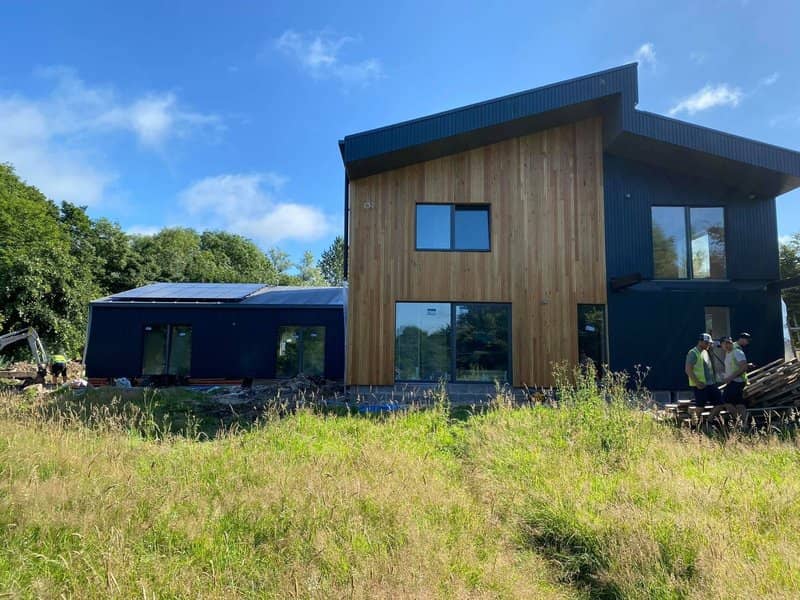
Justin Tyers • 11 August 2020
Video shows ESS installation
There’s a great new video by Jono on our YouTube channel which offers an in-depth look at the installation of an Energy Storage System (ESS) in a house currently under construction in Dorset, UK. ESS systems are designed to maximise the consumption of home produced power – supplying loads in real-time, using surplus energy to recharge the batteries, and only reluctantly buying or selling power to the grid. Reluctant builders Sue Wardell and her partner Mark Oppe bought an old property for renovation – but decided on closer inspection that the fabric of the building was too poor for re-use. They made the decision to demolish it and build a modern, super-insulated house, using the existing foundations. Their system has an energy meter which measures supplied to and taken from the grid and sends that information to the Color Control GX. The local grid electricity supplier offers a dual energy tariff – more expensive at peak times, cheaper at night. This means that during periods of poor weather when the solar harvest is reduced, the system can be programmed to recharge the battery bank, when necessary, using grid energy during the cheaper overnight tariff. The private energy system is being installed by Callidus who specialise in off-grid energy in remote locations. They were able to do a lot of pre-installation work at their own premises, in Devon. The system comprises of: 15 x Q Cells 320W Mono Black solar panels (4.6kWp) MultiPlus-II 5kVA MPPT 250/100 Lynx DC Distributor Color Control GX Pylontech Lithium batteries 9.6kWh Pylontech batteries A legacy of research and development of Victron Energy components has resulted in extensive compatibility with important third party manufacturers allowing installers to customize their clients systems according to demand. The incorporation of Pylontech batteries into this Victron-controlled system is just one example of the seamless communication made possible by that work. Two AC domestic circuits Power is supplied to two separate consumer units, one of which is connected to critical loads such as lighting and refrigeration. In the event of a mains power outage these prioritised loads will continue to behave normally. In the video Sue and Mark explain why they decided to install an independent energy system, and how it fits their lifestyle: Sue Wardell’s building blog can be found here .
Justin Tyers • 28 July 2020
Electric Construction Crane
What seemed a dream a few years ago has become an affordable reality: construction-site equipment powered by high-performance batteries …which require only two hours of charging. Mobile power supplier MobilHybrid recently demonstrated the savings potential of their technology, together with other advantages, during the construction of a large block of residential units built between May 2018 and June 2019 in Austria. “Ultimately the increasing demands from energy suppliers with regard to load peaks and feedback – and limitations of grid power – leave us with no alternative but to use powerful diesel gensets”; says construction manager Derfler, of the Austrian construction company HITbau, who are based near Linz, and specialize in property development. If civic law limits noise and emissions it’s almost impossible to use conventional construction machinery and cranes at the same time, safely. With their innovative mobile power storage technology MobilHybrid have shown that site gensets can be shut down whenever they would otherwise be operating at partial-load. They say their solution is easier, more economical and more efficient. When the battery runs low, the intelligent electronics inside the MobilHybrid unit will start the generator automatically. The integrated high-performance batteries have the advantage of being capable of receiving a full-recharge in just two hours. The generator is then automatically switched off again and the construction site and its containers are once again supplied silently, and without emissions. Thanks to the high overload capacity of the MobilHybrids – the MH24 offers 72kW peak power and has three Quattro 10kVA’s on board – construction machines such as saws, pumps, welding machines and construction cranes with high peak-loads can also be safely supplied. A construction site crane – the Potain Mdt 218 – has been operated using a MobilHybrid MH24 power unit for months. The best thing about it is that we were able to completely do without the diesel generator; reports the site manager. Harald Hornbacher, MD of Laurer Baumaschinen GmbH, based in Jenbach, has successfully employed a combination of construction cranes and MobilHybrid for years. Energy providers are increasingly limiting the grid connection performance and sometimes prohibit the connection of network-critical consumers such as construction cranes; he says. Both complement each other perfectly, since the MobilHybrid buffers peak loads of up to 125A from the battery and thus there are no critical network effects – as the construction site in Austria shows. The connected load limit is 40A, the Potain crane with 34 kW lifting motor power and 120A starting current could therefor not be supplied by mains electricity. Usually an 80-100kVA diesel generator is used. Diesel consumption is approximately 350 litres per week – and extremely inefficient. The crane operates with very little power when swivelling or lowering building materials, but a lot of electricity is needed for a short time when lifting heavy loads. Therefore, a smaller generator cannot be used. Experience to date shows that diesel gensets in this performance class us up to 20,000 litres of diesel per year – yet operate at less than 10% efficiency, which also leads to high maintenance costs, noise and emissions. At the construction site the crane and all other electrical construction machinery, including the containers, are connected directly to the MobilHybrid – which hosts a range of outlets, with up to 125A available. The electricity grid is connected to the MobilHybrid, and a current-limit is then set inside the unit so that no more current than the approved limit is drawn. If more energy is required than the power grid can provide, the MobilHybrid supplies the additional energy from the battery. If less energy is required than the available current limit, the surplus electricity is directed toward on-board battery charging. The purchase of a mobile electricity storage system pays off within a year; says Hornbacher, who has already sold several MobilHybrid units in Austria. The MobilHybrid scores particularly well at inner-city construction sites where strict requirements regarding noise and emissions apply. If you combine this with a mobile PV system – also available in the MobilHybrid portfolio – some of the energy can be generated in an environmentally friendly and sustainable manner. Dr. Michael Seehuber Executive Director of MobilHybrid explains: It is not necessary that the construction site be provided with three-phase power ; it is possible to optionally supply the energy storage with only single-phase 220V generator or grid power. This opens up completely new possibilities for the use of powerful electrical machines with three-phase current without any generator.
Justin Tyers • 14 July 2020
Remote power aids Mountain Rescue in Georgia
Dramatic Mount Kazbeg in Georgia, which climbs more than five kilometres into the sky has been luring climbers to its steep slopes for a hundred and fifty years. At 3700 metres there is a disused meteorological station station. The building was always known as Meteo, but it has been repurposed in recent years and is now operated as a bunk hotel for climbers – changing its name to Bethlemi Hut. It’s proving to be a lifeline. With mountaineering comes danger and sadly many people have lost their lives on Mount Kazbeg over the years mainly due to its remote location and the difficulties of communication with the outside world. Without timely help a minor incident can turn into a serious accident. Two actions have been taken to make it safer: firstly, the owner of Bethlemi, with funding assistance from a Czechoslovakian non-governmental organisation, have commissioned MZE Ltd – who have offices in Tbilisi, and are specialists in Solar Energy – to install a remote power system. Formerly they have had to rely on an ageing generator – for which it was not always possible to obtain fuel. With reliable power the local cell net provider, Magti, agreed to install an amplifier, as a result of which Mobile network coverage for the area has been much improved. Equipment for the installation was delivered by helicopter on three flights – owing to space and weight limitations. Two engineers accompanied the cargo, and their work was assisted by local staff. The installation comprises: 12 Solar panels offer 3kWp 85A MPPT charger MultiPlus 5kVA 12 Deep cycle Batteries with a total capacity of 1200Ah Secondly, because the climb is particularly popular with Polish climbers – their government now funds doctors and climbing instructors to train tourism-climbers in first aid, and climbing techniques. As a result of these initiatives, climbing Mount Kazbeg is much safer. And it’s more comfortable: It takes a day to walk from the last habitation – the small town of Stepantsminda – to Bethlemi, where climbers can stay overnight, and use the small cafe whilst waiting for clear weather (sometimes for several days) which will allow them to begin their ascent. They will also stay there on the way back using it as a hotel – a lifeline, albeit with limited comfort and services. During their expedition they will find that a phone signal is available from Stepantsminda (Kazbegi) to Bethlemi; and that intermittent coverage is also available from the Bethlemi along the route to the summit. The middle section of the climb is reckoned to be the most dangerous and, alas, much of it lies in a signal blackspot – but these days help is much closer-at-hand than it was.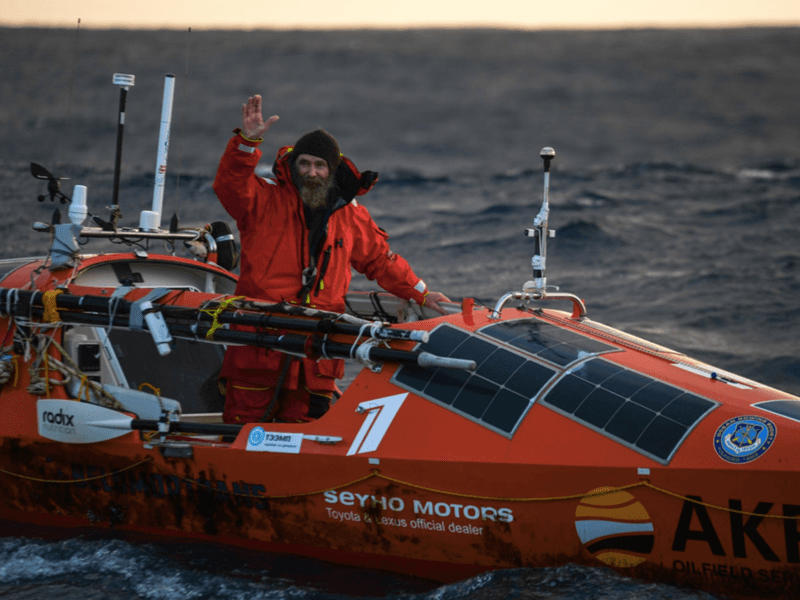
Justin Tyers • 10 July 2020
Rowing around the world alone
Fedor Konyukhov is an extraordinary man. Sailor; Hot Air Balloonist; Trekker (Desert and Polar); Dog-sledder; Rafter; Priest; Artist; Author; Skier; Cyclist; 4x4er; Camel Caravaner and Mountaineer – he has set world records in most of those disciplines. A Russian national, at the age of 67 (the world’s oldest solo rower) he was further south than any other rowing boat had ever been at 56°40’S – a latitude known as the Furious Fifties – as he rowed the Southern Ocean. Even at that latitude this was no ordinary rowing trip. Fedor spent 154 days rowing eleven thousand five-hundred kilometres from New Zealand to Cape Horn. The longest period of time anyone had spent being thrown around in the washing machine of the Southern Ocean up to that point was 59 days – that earlier record being held by French rower Joseph Le Guen. Fedor’s extraordinary perseverance can only be imagined: For most of the time on this passage the weather was too extreme to row. Shortly after he set off he realised that the trip was going to take at least twice as long as he predicted. The reason was that in these, the world’s wildest waters, he was at the whim of ocean currents; contrary winds; towering, breaking waves arrived from more than one direction; some having been built up by a previous storm – others by this one. It was too late to turn back, and there were no islands ‘en route’ at which he could call in for recuperation. So with no alternative he plugged away at his objective, succeeding, where others had failed – sometimes in tragic circumstances. Many things have to be right in order to achieve success: His Carbon Fibre/Kevlar boat was built by Rannoch Adventure who themselves have plenty of ocean rowing experience. His nutrition was provided by Radix Nutrition . His ocean clothing had to protect him from the worst weather, and the strongest surface winds anywhere on the planet in order to avoid exposure. His electrical equipment, too, had to be the best – from the water-maker which would allow him to turn sea water into drinking water; to the Raymarine navigation and communication equipment with which he could plan his route; learn of impending storms; and keep in touch with the outside world. Fedor had three ways of generating the power required for his electronic equipment: He used flexible solar panels by Russian manufacturer Teemp which claim a remarkable efficiency of 22%. He had two Rutland Windchargers ; and a specially adapted EFOY fuel cell power plant which produces energy by reacting hydrogen contained in Methanol with Oxygen. He used two Victron MPPT Solar Chargers enduring that the batteries were charged with maximum efficiency. Fedor lost some of his panels when his boat was capsized in a storm. He describes the movement of his boat during that storm as like an autumn leaf corkscrewing as it fell. This footage of Fedor’s video diary gives we armchair-adventurers a flavour of life alone in the Southern Ocean. Well, that puts things into perspective! And we’re proud that in some very small way we went with him. Does Fedor Konyukhov have plans for another adventure? Well, only that next year he will begin crossing the two great oceans – the Atlantic and the Pacific – in a solar powered Catamaran. As you do…
Justin Tyers • 01 July 2020
The Youth Club that comes to you
A bus in Ljubljana has been converted into a Youth Centre so that young people have somewhere to meet friends – even when there is no local facility. The bus will come to them! It’s a great space to hang out – warm, light and fun with plenty of room for groups to gather, chat, make a hot drink, and to enjoy music and the company of people of their own age. With all electrical work carried out by installer Elektro-Stumpfl the bus has Lighting, refrigeration, the kettle and re-charge points, using a Victron Quattro . The Quattro was chosen because it can accept power from two AC sources – this allows the bus to plug in to the mains electricity where it’s available, or a generator, or both. The Quattro takes power from whichever source is active and will ensure an uninterrupted power supply from the battery bank if external power should fail. The Quattro also has two AC power outlets one of which shuts down when no external power is present. This allows the system to be configured so that non-essential loads will not be supplied if the external power source ceases – meaning that the batteries do not become depleted by supplying those non essential loads. Another useful feature of the Quattro takes care of those occasions when there is a short-term demand for high power – high enough to exceed the output of the connected generator (for example). The Quattro will automatically meet that demand by adding battery power to the AC source – keeping the generator below its rated limit. No need to buy a huge generator – and underuse it most of the time! These and many other functions of the Quattro ensure a continuous, worry free power supply to make sure the party doesn’t end early. The bus can provide both AC and DC power to consumers, and much care has been taken with the installation – tinned copper conductors inserted into protective sleeving allows all weather, low temperature, and chafe-protection to ensure that the bus provides years of trouble-free service. The battery is protected with ANL Fuse and by a Battery Protect unit – ensuring that the battery never becomes too deeply drained – leading to long life, and maintaining their capacity. The supply is further protected by AC and DC circuit breakers. This simple project has been a great success bringing happiness to the young people of Ljubljana – because it’s an exciting idea, and a facility you won’t find in many places. Instead of hanging around the streets, now they can catch the bus.
Justin Tyers • 17 June 2020
Private Island, Private Power
The private island of Noa Noa, in the Philippines, offers exclusive breaks for those in search of deep relaxation. The Philippines has 7641 islands; arguably the most beautiful among them belong to Palawan – a narrow archipelago of islands and islets in the west of the country. Silent white beaches lapped by crystal-clear water – through which you can see the coral – the island of Noa Noa’s native styled houses accommodate a maximum of 12 guests in six modern luxuriously furnished suites. With no connection to the electricity grid a reliable private energy system is essential in order to offer guests the kind of luxury they might expect. Noa Noa’s old power system has just been replaced. The ‘back up’ generators were doing a lot of work – costing money and making noise. Victron Energy dealer JK Solar Powerhouse in Puerto Princessa Palawan have installed a new off-grid system. The old solar panels (6.6kWp) have been replaced by 72 new ones – offering 28.8kWp – on an unusual roof space which needed a lot of thought and careful design. It is a credit to Mark Apdon, of JK Solar Powerhouse, that he was able to survey the complicated roof using an image from Google Earth, and working with AutoCAD design software produced a panel layout which would maximise on the available space – amazingly getting within 50mm of the actual roof size. The new system comprises: 72 x 400W Solar Panels 6 x SmartSolar MPPT 150/100 48V 1760Ah Lithium battery bank Quattro Inverter/Charger 15kVA Color Control GX BMV 700 Battery Monitor The Victron system – which can be programmed to work seamlessly with a lot of third party equipment – has been re-connected to the two existing generators. A relay allows automatic start/stop of the generators – triggered by the battery State-of-Charge, or by low battery voltage – ensuring that the third-party batteries get the charge they need, when they need it. It’s worth noting that this start/stop function is just one of many programming features available from the Color Control GX which can be monitored and programmed remotely using Victron’s Remote Management platform VRM . It is free to use and allows installers to offer their customers excellent levels of support without ever leaving the office – regardless of how remote the installation. The Noa Noa installation has recently completed its first year of operation during which the generator has been required to provide just 4% of consumed energy. Arrive by Sea-Plane; enjoy boating; Coral reefs; silence and all the comforts of home – you too can visit this island paradise …take a look at their website and dream! The Victron devices in this installation were supplied by Danny Maesen of PhilSolar Equipment and Trading Inc who wishes to thank Koos and his JKSolar Power house team for the professional work they have carried out. Design and installation were performed by: JKSolar Power House Inc. Gabinete Building, National Highway, Tiniguiban Puerto Princesa City 5300 Contact: Koos Mulder Email: jksolarkoos@gmail.com palawansolarpowerhouse@gmail.com Danny Maeson is the Victron Energy importer and distributor for the Philippines and can be contacted at: PhilSolar Equipment and Trading Corporation 2F Cargohaus NAIA Complex Paranaque City 1700 Manila Contact: Danny Maesen Email: danny.maesen@me.com danny@philsolar.ph
Justin Tyers • 12 June 2020
Off-Grid, 3-phase, 24/7
One of the contracts serviced by the UK company Jackson Civil Engineering is to provide twenty-four hour maintenance for the M11 Motorway which connects the East Midlands to London. A team of 20 work around the clock from a base near the motorway which consists of offices, workshops, bedrooms, showers, and a canteen – but which cannot be connected to the national grid without huge expense because the power line is routed on the other side of the road! Their solution has been to keep a 70kVA generator running, permanently. It supplies three-phase power to the site – even when demand is limited to a few laptops, on standby. The generator was on hire at a cost, with fuel, of £30k per annum. As their only power source, whenever the generator failed it left the workforce without power, unable to perform their work; and with no heating or other ‘home’ comforts. An intern, looking for inefficiencies at the site, spotted this anomaly and contacted Ian Hewson from Off Grid Engineering to design and cost an alternative power supply. The solar based system Ian proposed had to overcome a few hurdles itself: the site comprises of container-style units whose 0.6mm roofs were not strong enough to support the ballast for flat roof solar-panel mounting – necessitating a bespoke design which would transfer the load to the sides of the containers. As for the electricity supply, the other challenge was keeping the 3 separate phases balanced whilst having the ability to boost the supply if there was a spike in short-term demand. Ian resolved this by choosing Victron Quattro 8kVA Inverter Chargers which have a peak power capability of up to 15kVA for short bursts of time and can be configured for three-phase supply. This is the system that Ian designed: 30 x 325 watt Q-Cell solar PV modules (9.75 kWp) 3 x 8 kVA Victron Quattro inverter/chargers SmartSolar MPPT charge controllers 250/100 3 x BYD B-Box Pro 13.8 kWh batteries 40 kVA diesel generator 200 amp changeover switch Victron Color Control GX The installation was completed in under 2 weeks. Analysed after eleven months of operation they found they had made savings of £25k; placing the project break-even point at 2½ years. Generator run-time has been reduced from 24hrs/day to 3½hrs/day …using a much smaller generator. Using a smaller generator near its peak output extends the life of the generator and is more fuel-efficient. The Quattro has a power-assist feature – if there is a spike in demand which would exceed the generator’s maximum output, the Quattro immediately supplies that demand from the batteries. Jackson were awarded a ten year contract which has seven years to run. Savings by end-of-contract are projected to be over £130k. If there had been more roof-space, Ian would have recommended installing twice the amount of PV – taking the total solar generation capability to 20kW instead of just under 10kW. This would have decreased their reliance on the generator still further. One of the features of the system that Jackson Civil Engineering are particularly excited about is that it can provide detailed information regarding energy usage. They were in the habit of simply filling up their diesel tank every week with no information about when and where energy was being used. Thanks to the Color Control GX – which controls the installation’s power harvest, storage and supply – system data can be viewed both locally and remotely via the Victron Remote Management platform VRM. This provides Off Grid Engineering with the ability to observe and make alterations to the system programming. A ‘History’ function stores comprehensive energy-use profiles. Acting on information they found there Jackson chose to replace their convection heaters with infrared heaters – which require far less energy. They can also maximise their use of ‘free’ energy by running optional loads when the demand is low, and the batteries are at 100%. These switch-ins can be programmed to occur automatically. Jackson Civil Engineering is pleased to be part of the green revolution having drastically reduced its emissions by 26.5 tonnes of CO 2 per year – equivalent to planting 133 trees a year, they say. Jackson’s have become strong advocates of green energy production, regularly promoting the benefits of green energy use to other businesses they work with. Off Grid Engineering specialise in off-grid energy systems of any size, both on land and at sea. Headline image is by Lynda Poulter .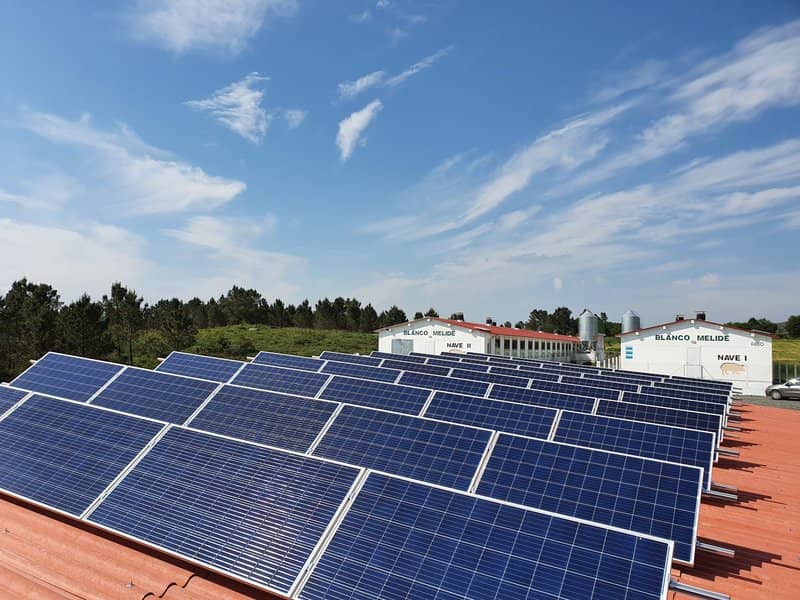
Justin Tyers • 09 June 2020
BYD Battery Box Premium LVL installation
The first photovoltaic installation in Spain with the new generation of BYD batteries is up and running. The installer Efigalia , in collaboration with Krannich Solar , carried out the installation of the BYD Battery-Box Premium LVL batteries. Early in 2020, the battery manufacturer BYD launched its new Battery Box Premium models, whose strength lies in high energy density, allowing a reduction in volume of more than 50% compared to its earlier models. Not only that but the batteries are scalable – 64 units can be connected in parallel, making a storage capacity of 983kWh attainable. Efigalia’s installation is a remote off grid pig farm in the province of Lugo, using two Battery-Box Premium LVL 15.4 batteries to store a total of 30.72kWh of capacity. Krannich Solar supplied the materials for this installation including fifty STP330-24 / Vfw photovoltaic panels from Suntech; together Fronius and Victron inverters. Victron inverters are fully compatible with these batteries – and indeed many more battery technologies. 50 x Solar Panels with 16.5kWp output 1 x Fronius Symo 15.0 Inverter 3 x Quattro 48/8000 Inverter/Charger 2 x BYD LVL 15.4 lithium batteries 1 x Victron Color Control GX . This system employs a Color Control GX at the heart of the installation and harmonises all devices – which you notice are from a variety of manufacturers. Victron GX devices are compatible with a long list of Battery technologies including the new BYD LVL. A new feature of the BYD LVL in tandem with a Victron GX product is the ability to see detailed cell level diagnostics – such as maximum and minimum cell voltages and temperatures. We can see the number of connected battery modules, if whether any of them are preventing a charge or discharge. The total available capacity in Ah is also displayed. Using Victron’s Remote Management platform VRM , an authorised technician can examine and control the system remotely. During the day power to the farm is primarily supplied by the Fronius Symo Inverter. Excess energy from the Fronius unit is directed to the Victron Quattro inverter/chargers and used to charge the batteries. Over-charging is prevented by the Quattro’s frequency shifting capability. Jaime González, commercial representative of Krannich Solar in the northern region, highlighted the great work of the Efigalia installer, and their … pioneering work in launching an isolated system with this new BYD product – we will soon begin to see it in many other facilities requiring cutting-edge innovation . Diego Mazaira, the manager of Efigalia, said he was …excited to see that photovoltaic energy gaining importance in the renewable energy sector, and companies like BYD investing in it and developing increasingly efficient equipment. The marriage between Krannich Solar and Efigalia continues their success in the north of the Iberian peninsula having recently installed and supplied the materials for various residential and industrial self-consumption projects in A Coruña, and on different farming businesses in Galicia.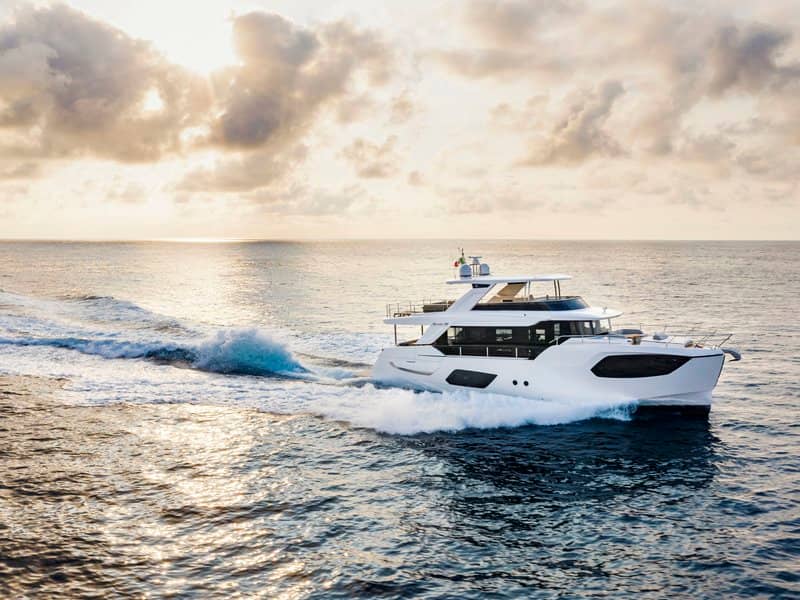
Justin Tyers • 05 June 2020
Navetta 68 – Glass bridge integration success
Absolute – the Italian luxury yacht maker – sets out to create innovative craft which introduce the latest technologies. Take, for example, the stylish Navetta 68 which boasts a multi-function display (MFD) which allows at-a-glance energy management information – such as power consumption and battery State-of-Charge – to be viewed alongside navigational information right there on the vessel’s Glass Bridge instrumentation. From now, the skipper has all operational information concerning his/her craft right at their fingertips. The aim of combining these dissimilar information systems is to simplify the presentation of power-related data; and to make it easy to find. All data is now directly accessible on the MFD up on the Bridge; the Flying bridge; and in the Crew’s Cabin – in a clear and simple format. Breakthrough In the past, the need to display navigational information alongside other critical data such as tank-levels; communication monitoring; environment information; safety data; etc has been hampered by the fact that the information from these services all use different data-communication languages. Most importantly, systems information about the ship’s power generation, storage and supply has been completely isolated from all other services. Systems Manufacturers working within their own disciplines haven’t previously worked with each other to harmonise their products. The not-very-pretty result has been a dashboard cluttered with different shaped, sized and coloured displays, all vying to grab the attention of the eye. Not any more: How is integration achieved? Integration with an MFD is as simple as connecting an ethernet cable. Although any Victron device with a VE.Can port can be connected to an NMEA 2000 network, most installations include one of our GX Products – Venus GX; CCGX; Cerbo GX etc. and the connection should be made to that device. The GX product acts as a hub, collecting information from all other power devices connected to it – such as Inverters, Battery Monitors and Chargers – and makes that information available to the MFD. Here’s a cool screen shot of the basic information at-a-glance. UFLEX SRL The power supply and storage system aboard the Navetta 68 was designed by UFLEX SRL – an Italian company specialising in maritime power management and supply systems and part of the ULTRAFLEX GROUP, which is a worldwide manufacturer of steering and engine control systems. The power supply and storage system they designed for the Navetta 68 comprises: 2 x Skylla-i 24/100 2 x Phoenix Inverter 3000 Shunt + Battery monitor BMV-702 Venus GX GX GSM Blue Smart IP22 Charger 12/30 (3) (genset battery) Phoenix Inverter 24/3000 (2+1) (engines batteries) 2 x DC/DC converters Orion 24V/12V – 40A Navetta 68 – Italian styling and pedigree As its name implies the vessel is 68 feet in length and has berths for 16 people. Four cabins are available for the owner and his/her guests with a further cabin for two crew. The light and airy accommodation is extended right through to the engine room – where the Navetta 68 is powered by either: Two Volvo Penta D13-IPS1350 (2×735 Kw) units; Or, Two D13-IPS1200 (2×662 Kw). Venus GX The Navetta 68’s Garmin GPSMAP8400 navigation system combines information from the ship’s electrical power installation thanks to a Victron Venus GX device which is connected to all power generation, storage and supply equipment; and can further be configured to monitor tank-level gauges; engine room temperatures; alarmed areas; Bilge/Fuel/Water pumps etc. It provides at a glance infomation on a wealth of information – including power consumption, battery State-of-Charge, Time-to-go, AC power source – via an ethernet connection to the Garmin navigation system. Leading Navigation system manufacturers Glass bridge integration is not only possible with Garmin, but also: Navico; Simrad; B&G Lowrance; Raymarine navigation systems; and Furuno. Victron’s Cerbo GX? For commercial shipping using SCADA control-system architecture, MFD integration is also possible via the Modbus TCP protocol. For this application the new Cerbo GX communication device would be a good choice as it offers many and varied communication ports which can be connected to: Tank level indicators; Alarmed areas; Bilge/Fuel/Water pumps; AC circuits; DC circuits; Electricity Generator charging; and of course Navigation equipment. In common with other GX devices the Cerbo GX can act on the data it receives: Pumps can be automatically activated in response to tank-level conditions; generator start-up can be triggered by low-voltage conditions or low/high temperature alarms – to give just two examples from a very long list of interventions. The Cerbo GX has a dual-core processor allowing intelligent and programmable automation and control of systems which can be uniquely configured for each ship (or remote installation). System status information can be viewed and settings changed right there on the bridge, from nearby …or from anywhere in the world, and its ports can be used for: Monitoring the Victron power & battery system Programmable relays (stop/start a generator) Digital inputs (Door/Burglar/Smoke/Fire Alarms) Temperature sensing (Battery/Engine bay/Ambient temperature sensing) Tank level inputs. (Bilge/Fuel/Water/Waste tanks) Connecting to the NMEA2000 network Network (Ethernet connection to router or Multi-Function Display (MFD)) HDMI (Media Connector to the GX Touch 50)
Justin Tyers • 27 May 2020
Classic Boat Restoration fits Blue Power
In his latest video Jono shows us how an Edwardian Gentleman’s Launch – one of those fine wooden boats, varnished to glass, and built to show off the fashion-and-style of the 1930’s super-rich – is being restored to its original beauty. But the Penelope II conceals a modern secret – Blue Power. The work on Penelope II is taking place on the shores of Windermere Lake, in the UK’s famous Lake District, under the watchful eye of Windermere Jetty Museum’s Stephen Beresford. The electrical installation is being carried out by Chris Dobson of UK Marine Electrics Ltd. With safety on the water in mind, the installation includes a Smart Battery Protect which automatically switches off the power supply to services if the house battery becomes too depleted. It also includes an Argo Diode Battery Combiner which allows either the House or the Starter battery to provide electricity to two essential services: the bilge pump; and the VHF radio – which is used for ship to shore communication. If the voltage falls too low in the house battery for either of these essential services to work when required, current will be drawn from the starter battery instead. One other ‘worry free’ feature of the installation is a Cyrix Battery Combiner. When the vessel’s diesel engine is running the house battery is recharged from an alternator. The Cyrix is a heavy duty relay which detects when a charge current is available and automatically combines the Starter battery and the House battery on the same circuit – ensuring that they both get charged. When the engine is stopped and no charge current is available the Cyrix drops the Starter battery from the ‘House’ circuit – ensuring that it doesn’t become depleted, and will therefore always be available for engine starting. Here is a list of the Victron equipment installed on the Penelope II: 2x AGM 12-110 Batteries 1x BMV 712 Battery Monitor and shunt Master Switch & Fuse Services Master Switch 1x Cyrix-ct Intelligent Battery Combiner Relay 1x 80A Diode Battery Combiner 1x Battery Protect 65A1x 192341 12v Relay for Navigation and Anchor lights 1x 192341 12v Relay for Interior Lights 1x Bilge Pump, switch and alarm panel 1x Raymarine VHF Radio Various DIN Rail terminals And here is the video: Jono and Molly filmed at Windermere Jetty before the UK went into Covid-19 lockdown. Unfortunately we will all have to wait a little longer before Penelope II is out on the lake taking passengers. The image used at the head of this blog was taken by Gary Campbell-Hall , and has not been altered.
Justin Tyers • 22 May 2020
Silence as Brazilian farm goes green
Water is the lifeblood of Tambaqui Farm in the Riachão das Neves area of Western Bahia, Brazil. From deep in the interior of the region they produce Fish and Lamb. Filtered and aerated water is needed to provide a clean, healthy environment for the twenty-six fish ponds; and the ‘soiled’ water is used to irrigate and fertilize the land, encouraging grass growth, and feeding the Sheep. Circular agronomy. Until recently water was pumped around the farm using a 30kVA diesel generator. The operating and maintenance costs were high and – because of fluctuating oil prices – unpredictable. Generator breakdowns threatened the very survival of the stock – and so keeping profitable was a constant headache. With the generator running for 10 hours a day – consuming 3000 litres of diesel per month at a cost equivalent to $1 (US) per litre – there was a $3,000 monthly bill to add to all the worry. The Sun was the Solution Seeking to offer a more efficient private energy supply for the farm, SunHybrid do Brasil designed and installed an off-grid power system based on PV panels. All pumps, motors, lighting and office equipment for the farm is now powered by their photovoltaic solar generator. The 120 solar panel array offers a 32kW peak power provision which is harvested by five Smart Solar 250/100 MPPTs and stored in 24 Opz tubular batteries with a total capacity of 1520Ah. The battery voltage; state of charge; current in and out, and history is monitored and stored by the BMV 702 battery monitor. This information is available at a glance on the face of the BMV; otherwise, information relating to the whole system can be interrogated from the Color Control GX which is the communication hub, keeping everything in harmony. From the Tambaqui farm’s remote location the Color Control GX also relays its information via a wifi module to the free-to-use Victron Remote Management VRM platform – from where the system can be monitored by the installing engineers who can answer client-questions and make adjustments without visiting site. AC power is available from three 15kVA Quattro Inverter/chargers – currently the largest units in the Victron range, here they have been configured to provide three-phase power. It’s interesting to note that for even more demanding installations up to 6 sets of three Quattro units can be parallel-connected to provide 144kW / 180kVA inverter power, and more than 2500A charging capacity. The original schematic shows the set up at Tambaqui Farm , but has been modified with an increased number of panels: By day the farm equipment is run using solar energy in real time. Power provision overnight comes from the tubular plate battery storage system – which also take over the power supply during periods of poor weather. There is also an aquarium for the fry – or baby fish – which is circulated and aerated twenty four hours per day. The system, as designed, includes two back-up generators which could be auto-started by a relay – but the farm owner Mário Mascarenhas had such faith in the new system that he decided that he didn’t want to include the generators. He was right – he has never had any problem with lack of energy. Mário is pleased to have invested in a clean source of energy, reduced his carbon emissions, introduced peace and quiet – and is delighted to be free from the worries of fluctuating oil prices. The system cost is expected to be recouped within 3 years – and with operating costs under control and predictable, he finds that the farm is more profitable. He says: The activities of our farm are always focused on sustainability. We work to conserve nature, and resources, by refraining from burning diesel oil. We find in the generation of solar energy a solution that provides us with savings and at the same time reduces our impact on nature. About SunHybrid do Brasil SUNHYBRID do Brasil specialize in photovoltaic solar energy and have more than 25 years of experience in this technology through their parent company in Germany. They aim to build their reputation on professionalism, attention to detail, and the installation of high quality equipment.
Justin Tyers • 15 May 2020
Blue Power in Vanuatu
Two houses; a large swimming pool with water pumps and filtration system; fridges and freezers; fans; lighting; air conditioning, and a beautiful tree house which has all the luxury of home. The owners of this property in Port Vila, in the Republic of Vanuatu – which lies in the Pacific Ocean a thousand miles off the coast of Australia – wanted a private off-grid energy system, without compromise to their lifestyle, and which would have a design life in excess of twenty years. That challenge was taken up by Solar Fiji who engineered, designed and installed what is one of the biggest residential Off-Grid Solar Power Systems in the South Pacific. Solar Fiji are based in Suva, and work alongside The Green Power Company in Melbourne, Australia. The energy from 48 solar panels which provide over 22kWp is stored in a SimpliPhi Lithium Ferrous battery bank with a capacity of just over 60kWh. Two Victron Quattro inverter/chargers provide 30kVA of power; and the system includes two Fronius Primo 8.2kWp AC Inverters. Oh, and there’s a 15kVA back-up generator. This diverse range of equipment by different manufacturers can be harmonised into one optimal system largely thanks to the compatibility testing and support of the Victron Energy components which lie at the heart of the installation. For example, the Fronius Inverters offer maximum efficiency by taking power directly from the PV panels and supplying the energy as domestic AC. When supply is greater than demand excess power is fed to the Quattro and used to recharge the battery bank – overcharging is avoided by the frequency shifting capability of the Quattro, which reduces the Fronius supply in accordance with the battery voltage. Notice that the batteries in this case are manufactured by SimpliPhi …compatibility between Victron Energy components and this Lithium Ferrous storage bank is also supported. The batteries get the power they need, quickly, efficiently and safely. The 15kVA back-up generator is also supported and has an auto start functionality. This is controlled by the Color Control GX , which can trigger automatic relays according to various user-programmable ‘conditions’ – such as low voltage / low State-of-Charge / or high demand. The backup generator might be required during extended periods of gloomy weather – even in Vanuatu a little rain must fall. If whilst the generator is running there is a surge in demand of power which exceeds the output of the generator, the Quattro’s PowerAssist feature will immediately meet that demand – supplementing the supply with inverter power from the battery bank. The purpose of the Color Control GX – and all Victron’s GX devices – is to allow the installation’s components to talk to each other, continuously optimising power harvest, storage and supply – across manufacturers – and changing dynamically according to the status of the system. The installation was undertaken by Pita Tamani, Iliesa Lotawa, Tony Pecora and commissioned by Ciaram Granger. It comprises the following equipment: 48 x Sunpower X21 470W Solar Panels – total of 22.56kWp 16 x SimpliPhi 3.8kWh Lithium Ferrous Battery Bank – total of 60.8kWh 2 x Victron Quattro 48/15000 Inverter Chargers 1 x Victron Smart Solar MPPT 250/100 Charge Controller 1 x Victron Smart Solar MPPT 150/45 Charge Controller 1 x Victron Color Control GX for remote monitoring and visual display 2 x Fronius Primo 8.2kWp AC Inverters The Off-Grid Power System is expected to offset most of the generator usage, and the system to pay for itself in 6.6years. The customer is expected to save $1,672,180 Vanuatu Vatu / $14,000US in the first year alone.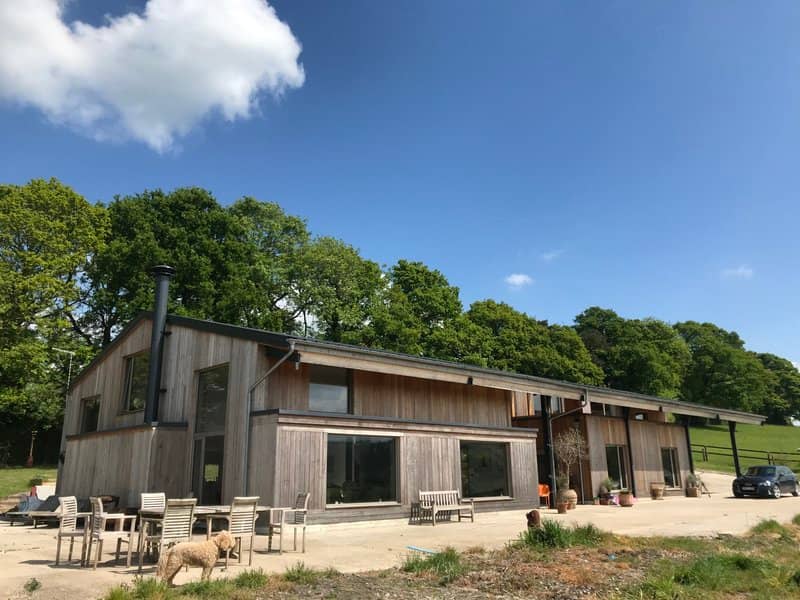
Justin Tyers • 08 May 2020
Off-Grid Solar provides Air Source Heating
Unexpectedly, one of the biggest challenges of Vanessa and Bruce Jones’s self-build project became: how to provide their home with electricity? The nearest grid connection was 500m away …but from there it had to cross neighbouring land. Negotiations to bury cable under land they didn’t own failed, which seemed to leave them with just one alternative – paying the local energy provider more than £100k to provide them with a connection via the road. Two years of uncertainty ended when Ian Hewson of Off Grid Engineering was able to reassure them that a private off-grid energy system, based on Photovoltaic panels, could provide them with all the energy they needed, summer and winter alike, for their five-bedroomed house – which is heated by Air Source Heat Pump. Vanessa and Bruce, along with their 2 children Rory and Freya, had always dreamed of building their own home in the country. Vanessa grew up in rural Somerset – so after living in London for a few years the family decided to make a permanent move to the countryside in 2006, where a long search for land eventually produced a large field with a steel-framed cattle barn, in Dorset. They fell in love with its beautiful views, and the shape of the barn offered great potential to convert into a 5 bedroom home. The home they have built seems both modern and yet traditional at the same time. Most importantly it sits comfortably in its rural surroundings. As for the electrics: Ian Hewson worked closely with the heating engineer to design a power system with sufficient capacity to keep the domestic heating operating throughout the shorter days of winter – and provide energy for all the appliances and conveniences of a large family home. Here is the system they have installed: 80 x 335W JA Mono-Crystalline Solar Panels Victron 15 kVA Quattro 3 x 13.8 kWh BYD LiFePO4 battery bank 4 x 250V/100A SmartSolar charge controllers Octo GX System harmonisation and remote Communication 20 kVA LPG back up generator One of the barn’s design features is its glass roof. Roof mounted PV panels would detract from the appearance, so Ian suggested locating the 80 panel array in their field discreetly concealed by the hedge. He assisted the Jones’s with the necessary planning permission – needed as this was a Class Q agricultural building conversion – and worked with contractors to prepare the site. Remote monitoring Off Grid Engineering are able to monitor and manage Vanessa and Bruce’s power system thanks to the Octo GX which communicates with, and controls the system components – including the BYD LiFePO4 battery storage. Victron Energy systems are seamlessly compatible with a number of leading battery technologies , worldwide. The Octo GX allows the system’s live and historical data to be monitored and managed by Off Grid Engineering remotely using Victron’s Remote Management Portal VRM . Bruce, Rory, Freya, and Vanessa Vanessa, Bruce, Rory and Freya have the house of their dreams amid the rolling hills around Shaftesbury – far from the madding crowd – and can relax in the knowledge that their solar energy, too, is free …protecting them from the spiralling costs of electricity. What’s a Twoot? Off Grid Engineering monitor the whole installation with data transmitted from a Twoot. I had to ask – Ian Hewson says: A Twoot is a 4G wifi unit that runs off a fused DC feed directly from the battery bank …like the Victron GX GSM . The difference is that it has internally fused DC outputs and multiple ethernet ports so that the unit can offer a basic internet connection to the client or other monitoring systems (such as the heating), as well as support internet connectivity for a Victron ‘Venus’ communication device. It was developed by myself and Tom Griffiths – from Specific IKC – and has been installed in about 60 of our off-grid systems across the UK. Now her self-build is complete Vanessa – who works for the tailor-made safari operator Natural High Safaris – has some advice for anyone thinking of carrying out their own project: Don’t give up on the search for a plot; ensure you have the best team you can – from architect to engineer to main contractor. Engage the services of a quantity surveyor at the outset to give you a realistic costing… and if converting a building which has no services, carefully check the costs of bringing in utilities. Off Grid specialist Both Scott and Ian are highly qualified electricians – terrestrial and marine – who use their passion for off-grid energy to help clients power their lives …wherever they happen to be. What makes Off Grid Engineering unique is that they specialise in Off Grid systems – from camper van to 3 phase industrial supply. No worries. Two winters later… how’s it all going? We re-visited the Jones’ sixteen months after they had moved in to find out if their off-grid energy supply was meeting their needs. Here’s Jono’s video update:
Justin Tyers • 05 May 2020
Discover Advanced – battery charging USA
With an interest in sustainability which goes back twenty years, Marc Stevens of Off-Grid Solutions walks the walk; he and his partner Lisa Derby live off-grid in the Pine Ridge Forest of Nebraska. Not only do they benefit from the daily experience of living with the technology they install, but Marc has worked in relief zones in Sudan and Haiti for the humanitarian medical non-governmental organization Médicins Sans Frontières, providing remote power for refrigerating vaccines – as well as the simple convenience of lighting. At home this year they’ve made a big change to their power storage. After using Lead-Acid batteries and installing them widely for clients, Marc and Lisa have switched to lithium – choosing Discover AES LiFePO4 Batteries. He says: Though Discover AES batteries can be setup as a “drop in” lead acid replacement – sometimes referred to as Open Loop – they can also be configured with Victron Energy’s power equipment in a Closed Loop communication configuration. Lisa Derby, Marc Stevens What does Closed Loop Communication mean? The Discover lithium batteries have their own battery management system – and the Victron Quattro Inverter/Chargers and Solar Chargers also have their own management device, (in Marc’s case the Octo GX) – but the two systems can communicate with each other via Discover’s LYNK Gateway Communication device. The battery Charge and discharge settings are dynamically controlled by the Battery Management System (BMS) of the AES Battery – the LYNK Gateway provides the datacoms. The manufacturers claim this topography can provide up to 25% faster battery charging. The arrangement allows the charge characteristics of the Quattros and MPPTs to be governed by the Octo GX (or any of the other Victron GX devices, such as the Color Control GX , Venus GX , or Cerbo GX ) with instructions from the connected AES battery storage module. Insulated battery box, recessed into the floor. Marc has his Discover AES Batteries installed in a purpose-built insulated battery enclosure which is partially recessed in the workshop floor to provide a more stable temperature environment. Marc uses twelve 200W panels. He finds this sufficient in an area which benefits from an annualised average of 5 hours sunshine per day. Though later this year he will add a 1kW turbine to his installation. He says; In the past, while configuring off-grid systems there were sometimes a few unknowns using different lead acid batteries concerning charging set points – such as temperature coefficients, and Absorb times. This Closed Loop battery management technology is an installer’s dream with easy set-up and adaptive interaction, and as system owner’s we have seen improvements in recharge times, turning a great system into an even better one. Victron Energy has invested a lot of time in third party product compatibility with other leading electronics manufacturers. This level of system integration allows the installer to design intelligent private energy systems at large scale; in high ambient temperatures; for optimised Energy Storage Systems; and which are tailor made for any unique requirements a user might have. You will find more information about configuring Discover AES LiFePO4 and Victron Energy systems on this page . Blue sky thinking? Marc and Lisa get an average 5 hours sunshine per day at their homestead in the plains of Nebraska. In the case of Discover AES LiFePO4 batteries, the manufacturer states that their product can be continuously operated in a partial State of Charge (SOC); or, alternately discharged and recharged to 100% of its rated capacity without loss of performance. They say their LiFePO4 batteries will retain more than 90% of original capacity for at least ten times longer than a high-quality lead acid battery – and back up that claim with a 10-year, unlimited cycle, warranty. Marc and Lisa’s off grid installation comprises: Two 5kVA Quattro Inverter/Chargers programmed in a Split-Phase configuration 2.4kW of Photo-Voltaic capacity Two 250/60 Smart Solar MPPTs Octo GX and Two 42-48-6650 Discovery AES batteries providing 13.3 kWh of energy storage The System is located in a semi-heated workshop. This system allows them to use normal energy-efficient household appliances in tandem with propane for cooking and wood for heating. The system also supports seasonal irrigation for a large garden. Opportunity loads are applied when the batteries are fully charged …the excess energy being used for space- or water-heating, and for pumping water from a borehole with a depth of 100m (330 feet) into a storage tank for future use. In so many ways, then, they’ve got the future covered. The headline image for this article is the work of Ken Lund , and is reproduced with slight cropping.
Justin Tyers • 01 May 2020
Philippine distributor knuckles down for Lockdown
Using ‘Lockdown’ as a gift of time staff at PhilSolar Equipment and Trading’s Mindoro outlet in the Philippines, decided to build a new demonstration board to illustrate the Victron Energy equipment they most frequently supply. The shop looks out onto a yacht club, so a lot of their installations are on board luxury boats. We already have a few smaller mobile demonstration systems, says company Chairman Danny Maesen , but now we’ve built a combined AC and DC supply – and a number of nice gadgets have been integrated. On the demonstration board a Victron Quattro 48V 10kVa is connected both to the grid and to a generator – for which an automatic start/stop function has been programmed using the Color Control GX . In case we have to switch off the system for whatever reason, an ATS is switching automatically to the grid; he says. The Quattro has two AC outlets – of which the second AC outlet is only live when incoming AC power is available – this is a very useful design feature which is often used in this way: Connecting essential loads to the first AC outlet assures the user of an uninterrupted power supply at all times – regardless of what is happening at the grid, or generator. By connecting heavy loads – such as Air Conditioning, for example, to the second AC outlet ensures that those loads will only run when AC power is available. In the event of a grid power failure the systems batteries will not be drained by these non-essential, power-hungry loads. The Mindoro set up has two pilot lights which shows which system is active. With the Digital Control we can easily adjust the AC charge current from the system; Danny says. Two SmartSolar MPPT 250/85A solar chargers are connected to two 4.86kWp solar arrays. The MPPTs can supply loads directly, and are used to charge a 48V/400Ah Lithium battery bank. DC-DC converters Also on the board are two DC-DC converters: the Orion TR 48/12 ; and the Orion TR 48/24V which the Mindoro shop often use to test appliances on the 24VDC systems found aboard their customers yachts. (The liveried Mindoro shop, seen below, is in walking distance from the Puerto Galera Mindoro Yacht club – which is pictured at the head of this article.) The Orion 48/12V is connected to a 12V fuse box. CCTV, lights, router and night lights are all supplied from the 12V System – as are two cigarette plugs with USB ports which can be used to charge mobile phones and other appliances. The night lights, by the way switch on and off via a relay on one of the MPPTs. Switching is controlled using Streetlight – a dynamic function which can be programmed to trigger actions based on the ‘daylight’ day. The daylight day changes, of course, with the seasons – but this functionality tracks the length of day, and adapts accordingly. A BMV-712 monitors the battery state of charge, loads, and keeps account of current transfers within the installation. PhilSolar has installed off-grid and hybrid systems all over the Philippines. Danny says that Victron Energy has a very wide range of applications in his country, including power supply to Private islands; Beach Resorts, and the more unusual installation like the wind Lidar measurement project we mentioned recently . Also, in a country as fragmented as the Philippines with its almost eight-thousand islands, there is a demand for Solar based Micro grids, and uninterrupted power supplies for businesses as well as installations aboard luxury yachts. And of course PhilSolar have had their own commercial van installed with a solar powered inverter – which they find useful when working remotely. Danny says; We have used the Lynx Power In busbar system to connect all chargers, inverter, batteries and DC-DC Converters. All the connections are fused with mega fuses. We adjusted the busbar system a little bit so all the mega fuses could be mounted on the Lynx Power In. A separate system with a battery switch is also connected to the busbars – this can be used for testing new incoming battery systems. We used JAB receptacle female connectors mounted on the board, and this system has its own BMV 712 battery monitor. An old, but good working Motorola GSM has also been installed on the board to show how old and new technologies can be compatible. This is the schematic of the demonstration board – for which Danny wishes to thank his Mindoro team: Patrick, Krizzia and Rhen. You can get hold of Danny at: Contact information: Victron Energy Mindoro shop PhilSolar Equipment and Trading Corporation 143 National Highway, Muelle 2F Cargohaus NAIA Complex Puerto Galera 5203, Oriental Mindoro Paranaque City 1700 Manila victronenergy.mindoro@gmail.com danny.maesen@me.com danny@philsolar.ph
Justin Tyers • 21 April 2020
Soaking up the sun
Domestic 3 phase power supply is common in Portugal – but in the experience of Iain Garner of Solar Algarve matching an asymmetrical supply to ever-changing asymmetrical demand often leads to supply failures. One of his clients had been experiencing power outages almost daily. She and her extended family occupy three houses at the same address. Their grid power ran a borehole pump, a pool pump, further irrigation pumps plus, of course, the domestic power required for three separate living spaces. Nothing daunted, Solar Algarve presented her with a grid-tied Energy Storage System (ESS) design which would not only solve her power stability issues, but also reduce her bills to near zero whilst providing energy for a heat pump and take into account the future requirement for an EV charging point. The heat pump is a unit from RED , and provides domestic hot water as well as underfloor heating …surplus energy can then be used to heat the swimming pool. Optimised ESS – Victron Energy / Fronius / BYD The system they installed combines Victron Energy, Fronius and BYD power storage in a fully integrated, modular and scalable package which produces asymmetrical power support across the 3 phases as required – eliminating grid overloads and power outages. Ian Garner – Solar Algarve The Fronius Symo solar inverter takes energy directly from the PV panels to supply AC power to the house during the day. Any surplus power is fed to the MultiPlus-II units which charge the BYD LVL 15.4 battery. At night (and during the day when power demand is high) the MultiPlus II units provide AC power directly from the battery storage. The system comprises: Fronius Symo 8.2 3 x Victron MultPlus-II 48/5kva 1 x BYD LVL 15.4 Combiner box with Color Control GX mounted AC output for Fronius (small breaker box) AC Input/output/surge/bypass control for the main power lines 1 string 13 x 310Wp mono black PV panels, plus 1 string 14 x 310Wp mono black A panels = 8370Wp Solar Algarve can monitor system performance remotely using Victron’s free-to-use VRM portal – even making changes to settings where necessary. Iain Garner says: “ Something that has really changed for us over the last few years is the integration Victron Energy has developed with Fronius, BYD, and others – making systems truly scalable. We can build systems based on today’s needs – but as future circumstances change we can respond, we’re not stuck with standalone, unsynchronised equipment. We find this ability to respond to change – combined with the capabilities of ESS – takes a lot of pressure out of the decision to move away from complete grid reliance; and that, coupled with the Color Control GX data which we can monitor via the VRM portal, creates a great solution for these types of situations. “The BYD LVL units are the latest model from BYD. This is the first set we’ve managed to get hold of and I think people will be interested to know that integration is as good as ever – no problems there . “As for the asymmetrical consumption, the image [above] of the Color Control GX screen shows this up really well. The Fronius is plugging away like grid inverters do, all 3 phases more or less equal whilst the Victron phase output is all over the place – as per the demands of the property. This matters to us in Portugal because our meters work a bit differently from a lot of other places, we bill by the phase, not the overall amount, so feeding one phase and consuming on another is double trouble for us… For the client we’ve made a big step towards energy security and self sufficiency. The fact that we can build a modular system now, and add to it later, allowed our client to make the jump… especially as she plans to buy an EV sometime in the next 18 months.” Recalling the history of Solar Algarve, Iain recounts that it was formed when he and Bart de Graaf joined forces a few years ago. “ We bring together a wealth of off-grid and storage-based system experience. Based in the Algarve we work all over Portugal – principally on domestic and commercial systems with an emphasis on creative, robust technical solutions. Our client-installations range from micro-off-grid to commercial grid-connected systems. ” Headline Image by Karl Egger from Pixabay
Justin Tyers • 17 April 2020
Canadian logging camp goes green
Domestic power for seasonal logging camps is traditionally supplied by a generator, banging along all day. So when Volts Energies were asked if they could provide a silent, worry-free alternative, they rose to the challenge by designing a solar energy trailer which could meet the camp’s power requirement. Volts Energies have been providing private energy solutions to residential and commercial clients across the American continent since 2003. They came up with a ‘mobile’ solution because camps change location. After it’s bumpy road journey, the panels, which lie flat against the roof and one side during transport can be deployed in under twenty minutes on their bespoke aluminium framing which allows them to be tilted toward the sun in the familiar way – seen here outside their factory during construction. Bifacial panels The 16 panels housed on the trailer offer 6kWp in normal circumstances – but that output can be augmented by the fact that the eight panels on the roof section are ‘bifacial’ …able to absorb energy which has been reflected from the white trailer roof onto the back face of the panel. This neat ability allows the Photovoltaic installation to provide over 7kWp. Volts Energies have chosen to harvest the Solar power with a pair of SmartSolar MPPT 150/100’s for the roof section; and a pair of SmartSolar MPPT 150/70’s for the wall. Energy is stored in three 24VDC battery banks of 1012Ah each, bringing the total energy reserve to 72kWh. The AGM batteries have a combined weight approaching two tons – so it was decided to install them above the trailer’s double axles, to support the load. They occupy an insulated wooden structure which secures them from any inadvertent metallic contact across the battery poles, whilst also having ventilation holes to dissipate heat during heavy use. All component parts of the installation were fitted directly onto a plywood sheet for ease of working, and later installed into the trailer as a complete module. That module includes an Orion DC-DC 24V to 12V converter which was installed to power the trailer’s 12V lights using the 24V battery bank; a pair of Lynx Power In modular DC bus bars ; and the installation’s AC output which is provided by a pair of MultiPlus 24VDC 3kW 120V Inverters/Chargers. These MultiPlus units can provide a peak power of 12kW – perfect for the power surge when the site’s air conditioning system starts up. Internet monitoring for remote systems Remote monitoring of the system is provided by the Color Control GX control panel – the communications module which sits at the heart of the system controlling the entire installation, and which is connected to the internet by satellite. This allows Volts Energies to monitor system performance remotely; receive alerts in the event of a problem – change settings if necessary – and monitor the batteries’ state-of-charge. Speaking of state of charge – the unit responsible for keeping track of the batteries’ performance is a BMV-712 battery monitor. The BMV-712 keeps account of all the power going into …and coming out of the battery bank – together with a plethora of other current and voltage -related information which it logs for inspection. It also has an alarm and automatic relay which can be programmed to trigger actions in the event of low/high-voltage; low/high temperature; low state of charge etc. All of this information is available from the display on the BMV itself; via Bluetooth on a smart phone or other device; or from anywhere in the world using VRM – Victron Energy’s free-to-use Remote Management platform. At the logging camp a relay has been set to start a 13kW generator. If the solar resource is insufficient, or energy demand is high and prolonged, the generator starts – and stops – automatically according to battery voltage. This start-up can also be triggered remotely, using VRM. All electrical protections are of course present. At the AC outlet of the inverters, long extensions have been provided to route the current to the three construction trailers which the system supplies. When traveling, these extensions are disconnected, rolled up and stored in the trailer. Everything has been designed to facilitate the installation and removal of equipment quickly and safely for future users. This trailer was ordered by the client after he successfully ran his logging camp all summer using a similar but smaller trailer – built by Volts Energies – without using his generator at all, resulting in huge fuel savings. This second trailer is an endorsement of Volts Energies planning and design to meet their clients demands for remote energy. Trailer power In a country the size of Canada customers can’t always come to you. Volts Energies have fitted out another trailer which they take to potential customers to demonstrate remote power. Seen in the image below, they’ve promised to show us how that trailer is fitted out in a couple of weeks.
Justin Tyers • 14 April 2020
Brazilian Electricity Regulatory Agency trials Salt batteries
The Itaipu Technological Park, which is near the city of Foz do Iguaçu, is a Brazilian research centre for green energy. Together with energy provider Companhia Paranaense de Energia, they have been trialing a domestic Energy Storage System (ESS) using Solar Power and Sodium Nickel Chloride batteries. The research and development project is supported by Brazilian Electricity Regulatory Agency. Senior Engineer Valentin Diaz says “We plan to integrate Victron energy products to other research projects and we are happy with the results so far” By the end of 2019 the first of seven planned ESS prototypes began operation using Salt batteries. A swiss-made 48TL200, FZSonick battery was chosen, for which a bespoke charge algorithm was programmed into the system’s Color Control GX (CCGX). The Victron CCGX is the communication device which sits at the heart of private power plants, receiving data, monitoring status, and controlling charge/discharge parameters. First prototype of a 6 kva storage system to be implemented in rural areas in Brazil. For the Itaipu Technology Park trial changes were made to the CCGX’s Venus Operating System software (Linux Kernel), allowing the implementation of the desired charge-control algorithm and Battery Management System (BMS) parameters. The CCGX’s broad range of third-party-manufacture product compatibilities, together with its user-definable programming options makes the CCGX a versatile and popular choice – particularly as it connects to Victron Energy’s free-to-use remote monitoring platform VRM – allowing systems to be monitored and controlled from anywhere in the world. The facility to remotely monitor this pilot project was pivotal for the engineers at Itaipu. 24 solar panels used for the R&D project The 6 kVA ESS (18 kWh capacity) prototype has applications for domestic rural and city dwellers – ironing out power grid issues such as voltage fluctuations and power outages. Switching times are so fast that the installation acts as an uninterrupted power supply. Further improvements will be done in a second prototype in order to reduce weight and size of the proposed solution. This installation employs: 2 Victron Quattro 48/3000/120V Inverter/Chargers 2 x Victron BlueSolar MPPT 150/70 Victron Color Control GX Canadian PV Modules (7.9kWp) FZSoNick 48TL200 Batteries (19kWh) The Project is planned to be complete in 2021 and it is hoped it will be adopted by industrial sectors, including electricity and agribusiness. Headline image: PT R&D headquarters, part of ITAIPU – claimed to be t he world’s largest generator of renewable clean energy.
Justin Tyers • 10 April 2020
Fiji Van bringing power to the people
Joe Baravi is the sales manager for Solar Fiji . His van is equipped with a fridge, coffee maker, rice cooker and microwave – in short a mobile kitchen, powered by the Fijian sun. He’s been driving his kitchen around the islands’ village communities to demonstrate what’s possible with solar energy; making breakfast, lunch and tea …chatting to people, and giving iced-cream to the children. He says he’s spreading the word because not many people realise the possibilities of solar power generation – or if they’ve had experience of it in the past they’ve been disappointed. So he wants to change that perception by demonstrating professionally installed equipment in action. Solar Energy is the ideal solution in paradise. It solves your problems silently, without harm to the local environment; and it’s free-to-use. But what problems could there possibly be when you live on a Paradise Island? Well, a typical shopping trip into town from the outlying areas might take an hour or two by bus …followed by another hour-or-two bus-journey home – so getting the groceries may cost a whole day. In temperatures which constantly hover around 25°C fresh produce quickly deteriorates – so even by the time you get home another shopping trip looks imminent. Refrigeration extends the life of a lot of perishable goods, reduces waste, and saves time and money – so there’s a great economy in owning a solar fridge. Joe’s van is equipped with the luxury appliances people want for their home: a kettle, a deep freeze, a toaster, an electric frying pan; iced-cream maker, and milk shaker. Whilst the kettle’s on, he takes time to demonstrate the power consumption, solar harvest, and storage – all of which can be seen at-a-glance on the display of the Color Control GX. The van installation comprises: 6 x 85W Solar Module Poly Flexible Panel – for the van’s roof. 1 x Multiplus II 48V 3000W 1 x SmartSolar MPPT 100/20 48V 4 x Gel Battery 12V 90Ah 1 x Color Control GX 1 x LYNX Power In The van is a sociable way of allowing Joe to show-off the installation – and demonstrate the type and size of domestic appliances it can run. He makes coffee for visitors; he cooks and shares traditional rice dishes with enquirers. As he works and crowds gather, an ideal opportunity arises to discuss how the sun which blankets the islands in tropical warmth can also help the islanders stay cool. At the moment the van includes Joe’s accommodation – together with domestic lighting and charging points. But later plans include refitting the van into a mobile cinema as a fun way of demonstrating that all kinds of mobile businesses can be run when you have remote energy. Remote power is being installed everywhere in Fiji. Joe says that villagers are straightforward and once they decide to install a solar system after having seen it demonstrated, they stick with their decision. A typical installation consists of 2 panels and an 800W MultiPlus Inverter/Charger. And when neighbours see how well it works, they want one too. The team outside their Suva HQ: Joe Baravi (Sales Manager), Pita Tamani (Head Solar Technician), Ashna Bandana (Electrical Engineering Intern), Ayshna Lal (Business Manager), Paula Tukana (Solar Technician), William Fuata (Sale Rep), Peniami Vuadreu (Sales Engineer)
Justin Tyers • 03 April 2020
DIY Energy Storage System – with Electric Vehicle power provision
John Smith wanted to charge his Electric Vehicle with solar power …off-grid energy for his house …a worry-free Energy Storage System (ESS) for his holiday-let property … And he wanted to install everything himself – for which he became a qualified Electrician. This is his story: It was when he retired that John’s work really began. He took on the renovation of an 18th Century, six-bedroomed farmhouse on the North York moors. Believing it would take five to ten years (it took longer) he and his wife, Penny, had the idea of converting it into a house for themselves, and a holiday-let-next-door. When the properties were almost complete they became interested in solar energy – and when John saw his US-based son’s Tesla, his dream of power self-sufficiency blossomed. Beginning with a small PV system the idea was to expand as their experience and knowledge developed – with the ultimate goal of buying an EV and powering it from their own solar harvest. A meeting with Dr. Mohamed Mahmoud of MeadoTech – system designers and suppliers of renewable energy solutions – was pivotal for John who describes Mohamed as his friend and mentor. Recounting the story he says: I cannot go past this point without stating how none of what we have achieved could have happened without the help and assistance of Mohamed. His endless patience in explaining options and limitations was amazing. Off Grid The first system they installed is off-grid and comprises Easysolar 48V 5kVA, which combines a solar charger, Inverter Charger, and AC distribution panel. Storage is by 16 Rolls S605 6V 468Ah Lead Acid batteries wired in two parallel banks of 8, in series 15 Sharp NU-RD300 Black Solar panels wired in five parallel strings of 3 in series (4.5kWp) Born 1942 John was apprenticed in the steel and chemical industry and, with night school gained a qualification in Mechanical Engineering. Most of his career he served as a Railway engineer and later, Production Services Manager for Corus (formerly British Steel). He’s also passionate about working with wood. The purpose built timber-framed outbuilding whose roof supports the panels were built by John using mortice-and-tenon joints secured with oak pegs. This building is an open garage/workshop and houses the Electric Vehicle charging facility. John says: System 1 gave us everything we wanted. It powered the EV throughout the year and all major appliances in our main house during the summer. The Kitchen has a dedicated Consumer Unit and change-over switch. The limitations to the installation were a voltage-drop in the lead-acid battery bank when a sustained heavy load was applied; and the inverter output could not cope with the EV ‘fast-charger’ mode (drawing 8kW) – nor with multiple kitchen-appliance loads. It’s worth noting here that home-installed Electric Vehicle chargers will typically provide 15 miles of range per-hour-of-charge at their standard charge rate (circa 3kW); and 30 miles of range per-hour-of-charge at their fast-charge rate (circa 7kW). Penny checks the system status As the house was split into two John and Penny decided to install a second solar system: Grid-tied Energy Storage System (ESS) Grid-connected Energy Saving Systems prioritise self-consumption of harvested energy, only reluctantly selling or buying power from the grid. John’s system comprises: Quattro 48V / 8000VA A Fronius Primo 5KW Solar inverter 8 x Victron LiFe PO4 12.8V 160 Ah Batteries wired in two parallel banks of 4 in series 16 x Sharp NU-RD300 Black Solar panels wired in two parallel strings of 8 in series (4.8kWp) The panels are mounted on two asymmetric-roofed outbuildings which have the unique feature that the solar panels actually form the roof-covering on the sun-facing pitch. This feature avoids the environmental impact of installing a conventional roof only to cover it with solar panels …and it also looks better. Breaking away from John’s story for a moment we got in touch with Dr. Mohamed Mahmoud to ask for his thoughts on John’s project He told us: “ In the early 80’s I had some scientific thoughts about electronic ‘Green Parasite’ feeds from natural resources such as Solar/Wind/Hydro/Bio Fuel/Thermal etc., to produce energy for living, whereby if no resources are available it goes into sleep mode. Back then, only basic renewable energy components and microcontrollers were available. “John’s site is a perfect template for a modern ‘Green Parasite’ for self-consumption. A Victron ESS is a smart flexible system – easy to deal with, programmable, and expandable; all options are available to achieve what you planned. “Three strong features in a Victron ESS system makes it superior to other systems in my opinion, compared to Tesla PowerWall and others… first the DC-Link where multiple MPPT Charge Controllers can be integrated in the system connects direct to the battery, especially the VE.CAN MPPT models that could be daisy-chained and synchronized, so in John’s project this would provide future expansion to his system by adding wind turbines and hydro turbines using the DC-Link feature. I estimate his water stream could generate about 1kW of continuous power, maybe John could charge all of his neighbours EV’s as well! . second, though Victron ESS supports many 3rd party lithium batteries, both the ‘Sustain Voltage’ and ‘Cut-Off Voltage’ settings in the ESS Assistant are strong in-depth features which adapt to any type of LiFePO4 battery to control depth of discharge. third, the Zero Feed-in function using a Fronius PV Inverter makes its automatic control much easier and more accurate …which leads to much greater grid stability.” John says that both systems have exceeded his expectations: We now have the best of both worlds with ESS and Off Grid which supplies 95% solar energy for our domestic consumption and EV charging with scope to further utilise solar energy if we can devise more innovative solutions. He says that in spite of the steep learning curve related to how these systems work, he now plans to investigate potential for Hydro generation from small stream in his garden; investigate the potential for small scale wind generator; develop a solar powered night storage heater – day charge/night release; investigate possibilities for Air Source Heat Pump powered from solar to replace oil fired heating; convert his oil fired AGA/Rayburn cooker to electric; convert/replace petrol ride on lawn mower to battery electric; and develop his ideas on the use of hydrogen as an energy storage source. Is sustainability catching?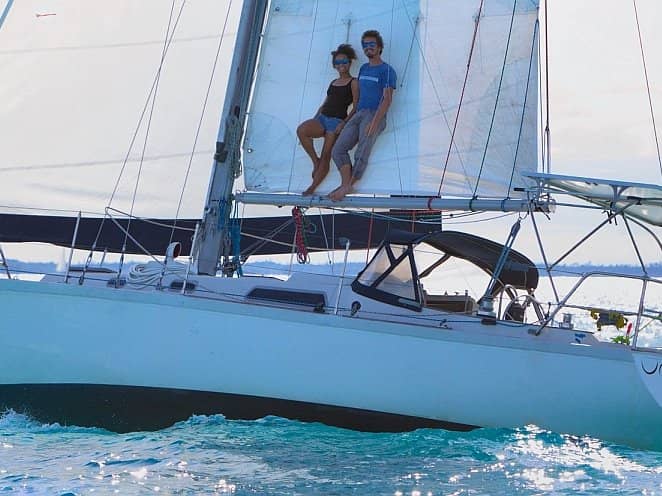
John Rushworth • 26 March 2020
Sailing Uma: Off-grid energy usage
With 156,000 subscribers, the Sailing Uma YouTube channel is a fun and educational resource for voyaging sailors – particularly those on a budget that do their best to avoid marinas. Doing so means living primarily off-grid using the power of the sun for Uma’s principal energy needs. No mean feat when you consider Uma has an electric motor for auxiliary propulsion, rather than diesel. Uma Uma is a 1972 Pearson 36. As her webpage says: “She is neither fancy and expensive, nor cheap and flimsy—to us, she is perfect. We wanted a name that carried with it the motivation and rational that led us to buy her in the first place. Her name was inspired by the Portuguese number 1 (uma), meaning first or primary.” Electricity needs Personally I’ve been following this adventurous couple ever since they first got Uma and started converting her to electric propulsion. My interest was to see how others do it, having converted in much the same way to auxiliary electric propulsion some 7 years ago myself – and having discovered just how hungry power needs onboard can be, when considering generation of electricity, storing the resulting energy and managing the use of that power. My own electric journey with Sailing Yacht Elektra is linked from my personal webpage, along with a little about myself: http://John.Rushworth.com My own efforts aside, how have Dan & Kika done it? Some of it is down to using efficient Victron Energy products, but that’s only part of the story. Good management of resources is also key. In this video Dan explains how they have arrived at a good balance and understanding of their energy needs. Note: Do forgive Dan his muddling of Power (W) vs Energy (Wh), as you know what he means to say! Conclusion Having recently crossed the Atlantic to UK, Uma’s current stats say it all and give Dan & Kika the authority to talk about voyaging and energy use onboard a sailing yacht. Countries Visited – 22 Nautical Miles Sailed – 18,358 Gallons of Diesel Consumed – 0 I trust you agree and enjoy the video above and their excellent YouTube channel. My thanks to Dan & Kika for the use of images and content for this blog. To learn more about energy onboard why not check out the Victron Energy booklet – Energy Unlimited , available for download as a PDF in our Whitepapers section of the main website. John Rushworth Links Sailing Uma Website Sailing Uma on YouTube Sailing Uma on Facebook Sailing Uma on Instagram
Justin Tyers • 19 March 2020
Large-scale Fish Farm catches the Sun
A farm in Mali, West Africa, is stretching the boundaries of what’s possible. In a landlocked country well-known for producing Cotton, Rice Millet and Corn, the Complex Agro Industrial de Baragnouma produce fish – at a rate of 5 tons a day. In order to maintain conditions in which the fish can thrive water has to be continually filtered and oxygenated. Water treatment takes a lot of power – at the Baragnouma complex that power is provided by solar energy. It seems fatuous to say that the reliability of their remote power plant is paramount …but if the power were to fail for just 30 minutes, the fish would die. It was decided at the outset, in 2014, that the farm would incorporate solar energy power provision to the greatest possible extent – though few could have foreseen the scale of its success. Ninety-eight per cent of the power requirement is met by solar energy, back-up generators providing the other two percent. In fact there are seven off grid solar-powered electrical installations at the Complex Agro Industrial de Baragnouma which provide inexpensive sustainable energy not only for their pisciculture but also for: Chicken, Dairy, Fruit and Vegetables; a factory which produces animal feed; workers houses; and two small offices. Fortunately sunshine is very dependable in Djoliba which is 40km from Mali’s capital, Bamako. Their investment over 6 years has exceeded a million dollars – yet these investments are lower than the cost of the diesel which would otherwise have been used. And the solar installations save more than 400 tons of CO2 emissions annually. The carefully orchestrated infrastructure includes a Fish nursery for 20,000 Alvins per cycle of production, which are reared in 8 ponds. There are a further 14 ponds each of 1000m² for the specie Clariidae. Thirteen much larger ponds provide the habitat for rearing Tilapia. There is a recycled water requirement of 14,570 cubic metres per day with pumps working at up to 180 cubic metres per day; and top-up pumped from boreholes. The seven Off-Grid Systems have a total capacity of 520kW. Generating a similar amount of energy using diesel would cost around $260,000 a year …add to that the cost of maintenance, transport for fuel, and depreciation of the generators and it’s easy to see how the cost savings, and power security make the solar option so desirable. And the farm operates silently – which is a bonus for the 100 or so employees who are all fully engaged with the project. The installation was carried out by Sonikara Solar Electro – overseen by company CEO and Founder Mouctar Doucoure. Working with the support of Victron staff, it is a ringing endorsement of the technological ability of Sonikara that they have been awarded the maintenance contract to oversee this huge installation for the next five years – monitoring and maintaining the system so that it runs without missing a beat. Anco van Bergeijk (support engineer for Victron in Africa) Mouctar Doucoure (CEO and founder of Sonikara Solar) The Biggest standalone Victron installation provides 3-phase power to the fish and chicken food factory – which can be seen in the video below. It employs: 12 X 15kVA Quattro Inverter/Chargers 6 x Fronius 27kW Eco 120 x 2V/3000Ah OpzS batteries Color Control GX 300kVA genset In 2018 a dairy was added, together with a food processing factory. Last year saw the construction of some impressive looking greenhouses for vegetable production. As each success is chalked up so more new ideas are tried the owner has ever greater plans for the future of this diverse farming model. The latest installation powers the greenhouses, and provides water treatment and pumping, together with a heat regulation system. It employs: 3 x 15kVA Quattro Inverter/Chargers 1 x Fronius 27kW Eco 2 x MPPT SmartSolar 250/70 6 x BYD B-Box 10kW Other installations in this large farm complex provide: 5kVA for the Egg incubators (poultry) 10kVA for the Poultry farm 60kVA for the Fish nursery and lab 10kVA for the Offices and Conference suite 10kVA Further offices 3kVA for Employees houses 3kVA for the Cattle farm Victron products have a broad range of compatibility with third-party manufactured equipment. Fronius inverters and BYD’s Iron Phosphate chemistry batteries – chosen here for their scalability, and their ability to operate in temperatures of up to 55°C – all work seamlessly with Victron Solar Charge controllers, Inverters, and with our data-comms controller the Color Control GX (CCGX). Using Victron’s Remote Management platform ( VRM ), the CCGX provides at-a-glance remote monitoring and management so that the Sonikara team can perform interventions whenever required, from their own offices. Victron provides training and support in West Africa (and indeed all over the world) to ensure that the skills are available for projects of this scale to be built, and offers continued training to equip solar engineers with the necessary expertise. The positive social and economic advantages are substantial and far-reaching. The farm provides fresh fish, chicken, milk and vegetables to the national and local market of Mali, Bamako. In addition to the farm’s 100 employees, it provides work for local traders, and trickle-down benefits for other commercial operators. Mouctar Doucoure said: The challenges of an off-grid electrical project of this size is to constantly adapt to growth, and to educate all involved. We accomplished this by creating local expertise and by expanding the systems step-by-step. The quality of wiring installations, batteries, and the system design was tested after each phase. Also; all the systems can be constantly monitored online. Let’s take a look at the site through this informative video. It’s interesting to hear a word or two about how the video was made. Seizing the opportunity to provide experience for some Video School graduates in Mali, it was decided to commission them to film and produce the promotional video below. Much was learned and the result by Israel Oron and his colleagues – former students from Conservatoire des arts of Bamako – is excellent: The ‘win-win’ success of this project which creates useful employment; increases education; produces healthy food in a noise and pollution-free environment; as well as reducing costs and reduces carbon emissions – is that it becomes a beacon showing the way ahead …demonstrating how technology can be harnessed for the future benefit of local communities. All images: Photos/Film: B-Twien Clicks | Film & Photo or Ewien van Bergeijk – Kwant.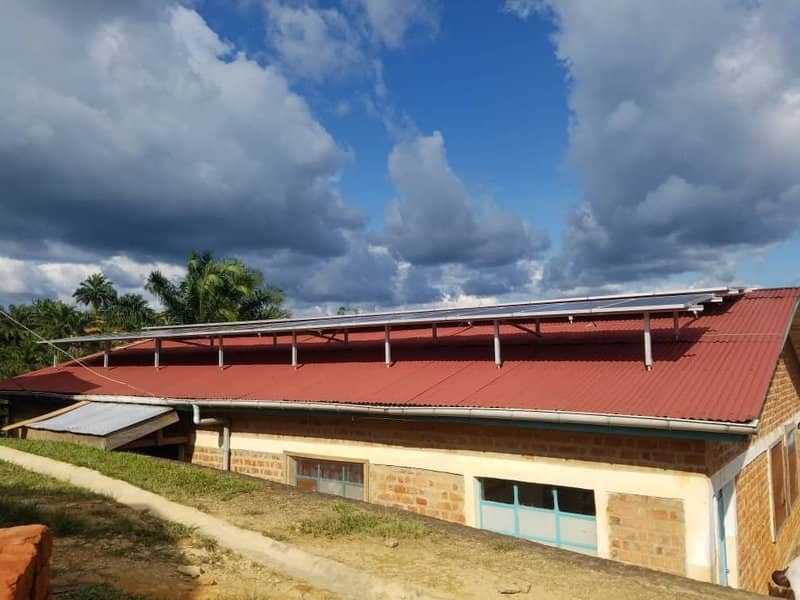
Justin Tyers • 27 February 2020
Remote Congolese Hospital gets private power.
The Kibuluge General Hospital in the Shabunda territory of the Democratic Republic of Congo is so remote that it’s difficult to get to it by road. When you depend on a diesel generator for operational power, just obtaining fuel can be a headache. In the past the hospital, which is run by Medicins sans Frontière Espagne, has struggled to provide its patients with 24 hour care. But that has all changed thanks to solar power and Lithium storage. The installation was designed and completed by Victron Dealer GoShop – a long established electro-mechanical engineering company operating in the DRC which specializes in solar-based power installations – and who are helping to establish the Congolese infrastructure by way of Mini-grids, and irrigation pumps for agriculture …to name but two applications. Local knowledge is essential – Shabunda lies in an extremely remote part of the DRC, where working with partners is essential. Engineers and equipment were flown in by NGO partners. GoShop believe it’s important that the equipment that they install is reliable, has a long service life, requires few maintenance call-outs …and it helps a lot that it can be managed remotely – using Victron’s Remote Management platform VRM. Power from the hospital’s 32kWp solar array is harvested by five MPPT 250/100 which charge seven lithium batteries providing 13.8kWh of storage. A Quattro 15000 VA provides power to the hospital and charges the batteries, when necessary, from two standby generators: an SDMO 9kVA and 6kVA. Victron Inverter/Chargers work seamlessly with a large range of power plant. The hospital, which has its own operating theatre, now benefits from an uninterrupted power supply. The generators are programmed to start automatically in the case of voltage drop or low battery state of charge – and can also be started remotely via the ColorControl GX – which lies at the heart of the system, harmonising power harvest, storage and demand. It also offers at-a-glance status information, and is the communication unit which provides remote management and uploads data-logging information to the Victron Remote Management platform. An unusual feature of installations in the DRC is that they are routinely surge protected against lightening strikes. It is a fact not often reported that at 70 lightening strikes/km²/year, DRC experiences more electrical storms than anywhere else in the world except Lake Maracaibo in Venezuela – with which it is about equal. Tragically, in 1998 all eleven members of a football team were killed when lightening struck the field during a game. The danger posed, and damage done by electrical storms is an ever-present fact-of-life in the DRC. Lightening conductors are also routinely fitted. A Citel DC surge arrester has been installed for each of the 4 regulators and two Prevectron S60 lightning conductors from Indelec. These surge protecters play an important rôle in protecting the installation when spare parts are expensive and hard to obtain. Surge protection is less common elsewhere in the world. In other countries solar arrays and framing may be left ‘un-grounded’; lightning is less common, and off-grid systems are not connected to long cables (which can receive an induced voltage impulse from a nearby strike). In a second large-scale and recently completed installation by GoShop, in partnership with Equatorial Power, the radiology department of another hospital – the Bugarula General – has benefited from a transformative mini-grid installation on the Island of Idjwi – the second largest lake island in Africa. Electricity has never been present on the island, severely limiting the islanders’ ability to engage in commercial activity – in spite of the fact that it has an estimated population of around 300,000 inhabitants. Notwithstanding the difficulties of access, GoShop and Equatorial Power have built a 20kVA installation serving over 300 households in just eight weeks. The plant became operational in January. It too is registered on the VRM portal, highlighting the value of remote monitoring and management in areas where engineer call-outs are impractical and would result in great inconvenience for Pay As You Go (Paygo) clients. 16 BYD lithium batteries provide a total storage of 40 kWh, the installation is protected by surge arresters and lightening conductors; and has a 50 kVA Teksan Generator programmed to start automatically in the event of a low battery voltage should there be an extended period of bad weather. Households account for more than 50% of the customers of this mini grid – the rest being made up from small businesses – such as hairdressing salons, offices, shops, refreshment stalls as well as medium-sized enterprises such as the hotel and those offering temporary accommodation. Equatorial Power will remain in charge of the project’s future maintenance of the plant, as well as taking on the job of marketing the benefits of a reliable source of electricity to future clients. GoShop foresees growth opportunities having demonstrated the viability of building infrastructure projects as demonstrated in this pilot scheme – which has been greatly admired.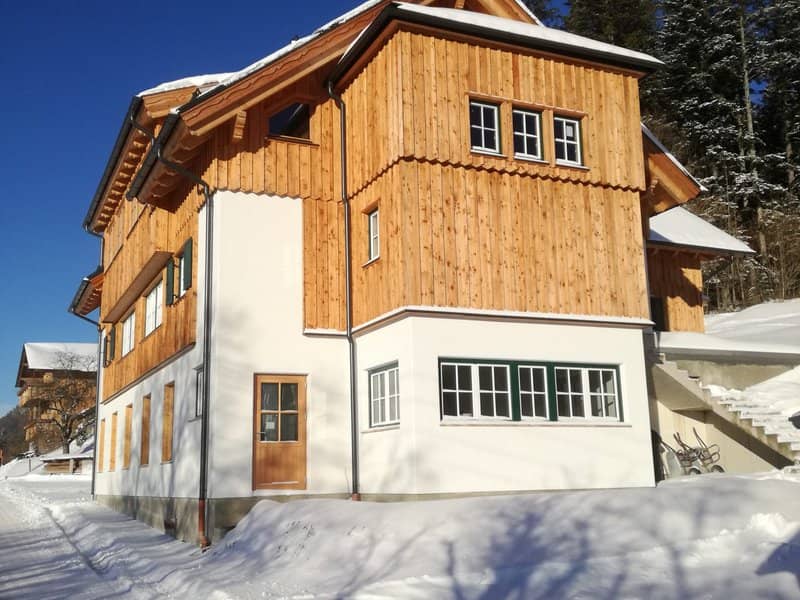
Justin Tyers • 25 February 2020
Silent 3-phase Grid-parallel ESS
Remote in the Northern Alps at 800 metres there’s a hotel and bunkhouse providing itself with silent 3-phase energy. The owner is an electrical engineer and knew exactly what she wanted to achieve when she got in touch with energy specialist and installer Elektro-Mechanik Meisl . Built in 1973, the hotel which includes a former cow-shed has just been converted almost entirely by its owners to a luxurious 30 bed apartment hotel popular with kick-back-and-relax tourists and companies who wish to provide training breaks …who can also take advantage of the built-in seminar room for its meetings. In the summer the hotel has a bunkhouse which is busy with trail cyclists. Self-build runs in the family – the cow shed was built by the great-grandfather – more-recent excavation was completed by the grandfather, and the hotel owners acted as their own architect and builders – he is a plumber …and they knew at the outset that they wanted to run their hotel as far as possible on renewable energy. They have succeeded with their ambition rather well, we hear: The owners say: We wanted a storage system that provides a full 3-phase emergency power supply – we are in a mountainous region and power failures are common. Further it was crucial that it could be easily integrated into our custom energy management concept. Therefore ENERFLEX was actually the only possible solution we found. And we were not disappointed. ENERFLEX is an energy storage system developed by Meisl which offers a broad range of solutions according to customer requirements. Grid-parallel configuration allows customers to maximise their self-consumption with zero feed-in. Power from Photovoltaic panels is sent directly to the battery bank, or diverted for use in real-time according to demand. The system also allows for an uninterrupted power supply. Enerflex is factory-built, resulting in fast installations which look really smart. The Energy Storage System (ESS) installed in the Alpine hotel is capable of providing 3-phase electricity to run their commercial-grade cookers and boilers. A private energy system was required because of the frequent power outages which – owing to their remote location – can be of long duration. Even on get-away-from-it-all breaks, guest expect continuity of service. The result of all this planning is that the accommodation block is achieving 80% self-sufficiency. In addition to powering normal loads there is a ventilation system; 5000 litre hot water tank; space heating; and a 11kW wall box to charge an Electric Vehicle. Victron energy design their products to work seamlessly with in-house as well as third-party components. The Color Control GX frequently lies at the heart of these systems – harmonizing the differing technologies, and allowing the whole installation to be remotely managed and monitored via the Victron Remote Management VRM platform – which is free to use. Let’s take a closer look at the system Meisl have installed – it comprises: 21.6 Kwh 48V Murata Storage 3 Victron MultiPlus-II 48/5000 1 CCGX 17.11 kWp PV Modules 2 Fronius PV inverter 1 Smart1 controller Bob Hopman, Victron area sales manager for Germany says: In general the German market for home storage systems is growing faster each year – and with the new MultiPlus-II range which has all the certificates needed (VDE-AR-N 4105) now available in 3kVA & 5kVA the system calculations are very flexible. A hoteliers’ ability or failure to be able to provide guests with high levels of comfort will make or break their business. In the Alps there’s no shortage of wood and the hoteliers take advantage of that as part of their vision for sustainability by burning wood for space heating. It’s important to keep your guests cosy at an elevation of 800 metres, in the Alps, in the winter. The hotel owners are happy with the result …and so are their guests.
Justin Tyers • 04 February 2020
Power in the wilderness
AAP Animal Advocacy and Protection has been rescuing exotic animals from illegal trafficking, abuse, laboratory testing and travelling shows for over forty years. More recently their facility in the Alicante region of Spain – Primadomus – offers a permanent home to exotic animals which cannot be returned to the wild, or rehoused elsewhere. The centre offers a better life to primates and big cats which have been held captive for years often in appalling conditions …causing misery, poor health, and all too frequently death. The first primates were accepted at Primadomus in 2009. The first Big Cats arrived in 2015, and a year later all 24 cat enclosures were ready for occupation. The facility has its own offices, quarantine and veterinary surgery – which together with specialist installations for animal feeding necessitate the operation of power-hungry climate-control and refrigeration-plants in an area which is remote from the electricity grid. Fortunately, basking in Spanish sunshine most days, the choice of solar energy was a natural choice They discussed their energy requirements with local installers Tecnovasol Energy – who specialise in green energy systems. With their own engineering department they design and build Solar and Geothermal energy accumulation installations to both corporate and private users. The installation at AAP Primadomus uses Lithium storage and has a generator back up: 99kWp photovoltaic panels 60kVA of power is provided by 6 Victron Quattro Inverters There are 12 Victron MPPT 250/100 for solar power-harvest and which offer a DC Coupling load power of 59.30 kW 6 SMA SB5.0 inverters of 5 kW – together with a 10kW SMA STP10.0 inverter offers 40kW of AC Coupling load 19 BYD Model B-Box Pro 13.8 cabinets provide a LiFePO battery capacity of 262.2 kWh The installation can be remotely monitored via the Victron Remote Monitoring portal which provides in-depth analysis of system use, and performance. Tecnovasol – who have 14 years of experience of off-grid and green energy solutions – are also based in the Alicante region Spain, and are well placed to offer on-going engineering diagnostics and monitoring for this critical installation. The AAP Foundation recognises that rescue, rehabilitation, and finding animals a permanent safe home is not a solution. For that reason it also works hard to bring animal abuse and trafficking to public attention, and lobby Government for change. Although the importation of big cats and primates has been illegal in most countries for a long time, the law is not always upheld . The AAP Foundation was established in the Netherlands in 1972 by Okko and Riga Reussien. It relies on public donations and volunteers for its two centres in Almere, Netherlands; and Alicante, Spain. There is a donation page on their website.
Justin Tyers • 28 January 2020
Vibez Radio: Off-grid, On-line
South Africa’s first off-grid radio station Vibez.Live plays hits for listeners around the globe. Just launched, they’ve already built their listenership up from 11 to 11,000. Vibez.Live hopes to take on the world with its live daily shows featuring laid-back classic hits drawn from the last fifty years of popular music – as well as offering an alternative stream of upbeat, uptempo music and sporting interviews. Broadcaster and founder John Badenhorst says that starting a business in South Africa’s current economic climate is challenging, particularly so when that business depends on uninterrupted power. Local grid power is vulnerable to fluctuating demands and security issues, so for John – whose broadcasts come from a studio and live events – the solution was to go off-grid. He doesn’t regret it – within seventy-two hours of the station going live there was a power outage lasting four days. Vibez.Live, using off-grid power, remained unaffected. Travelling light The great thing about the Victron EasySolar is its portability and ease of set-up. One single unit provides all the electronic wizardry you will need: Solar- and AC-Charging; an inverter (of up to 5kVA), together with system control from a CCGX – which provides at-a-glance status information including battery state-of-charge, and system programming – either at the touch of a button or online. The EasySolar features four AC outlets – a fifth is available whenever the unit is connected to an AC supply (the electricity grid or a generator, for example). At live events -Fishing Competitions or Golf Tournaments – the station output is broadcast over a Public Address system as well as via the internet. EasySolar provides sufficient power for this demand …in fact there is capacity to spare – site officials and other service providers often ask if they can ‘borrow’ some electricity to run their own facility. In his set-up John uses a Lithium battery from local manufacturer Freedom Won – EasySolar is compatible with many battery technologies, and with equipment provided by third-party manufacturers. All that remains is to plug in the solar array and Vibez.Live is good to go ON AIR ! Outside Broadcast John, who is based in Johannesburg, brings twelve years of broadcast experience to the new station which he decided to set up having seen a gap in the broadcast market. “Consistency is the key to success and our easy listening programming with a variety of music and genres dating from the 60s all the way to the late 90s has got us known as a Retro Radio Station.” Studio Broadcast “Fishing as a sport generates around 26.5 billion South African Rand every year. We have a very popular show every Tuesday evening from 7pm (South Africa) bringing all the latest news and opinion in the sport which attracts a growing audience from around the globe.” “Slowly our dream of a radio station is coming together, there are still hurdles to overcome as broadcast equipment needs to be purchased to move to a totally digital platform and here we rely on advertising, sponsors and donations. However, we feel comfortable in the knowledge that we will never be off air. Victron has us covered there.” Having secured its own future, Vibez.live hopes to offer training and jobs. John is passionate about supporting the local community and doing what he can to improve the local unemployment rate …to give young people a chance. The off-grid system was designed and supplied by Solar Charge Solutions (image links..) Why not tune in and hear what’s going down in Johannesburg? You’ll be in company with other listeners from: New Zealand, USA, Mexico,Canada, Mozambique, UK, Bahrain, Turkey, Russian Federation, Italy, India, Brazil, Greece, Sweden, Benin, Mauritius, Switzerland, Azerbaijan, France, Indonesia, Japan, Australia, Germany, Ireland, Morocco, Thailand,Portugal, Malaysia, Romania, Peru, Argentina, Uruguay, Philippines, Chile, Finland, Seychelles, Kazakhstan, Spain, Serbia, Singapore, Pakistan, Poland, Colombia, Israel, Sri Lanka, Taiwan, Montenegro, Uzbekistan, Slovenia, Venezuela Website: www.Vibez.Live Facebook: www.Facebook.com/Vibez.liveSA Instagram: @Vibez.Live E-mail: info@vibez.live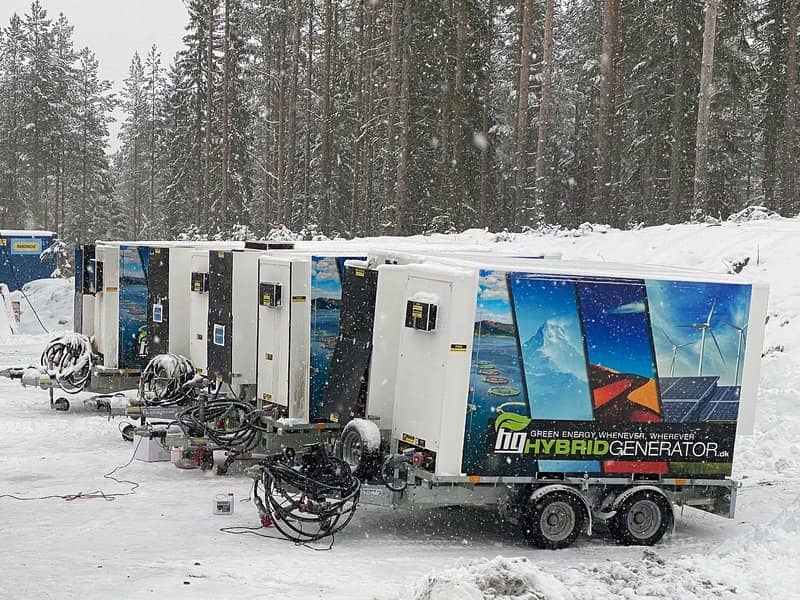
John Rushworth • 16 January 2020
Sophisticated Hybrid Generators
Rune Eilertsen, Managing Director of Hybridgenerator ApS in Denmark, certainly knows how to grasp a good idea and implement it. Whilst many companies use Victron Energy Inverter/Chargers supplied by battery systems to provide power during low load diesel generator periods, when not running at more engine and environmentally friendly full generator loads – Rune decided there was a better way to do things. The result is a range of sophisticated Hybrid Generators that flips things on their head – by using inverter power as the primary high power source, together with a smaller supplementary diesel generator. In fact, in many units inverter power is all that is required. Serious portable trailer power – 9 x 48V, 10000VA Victron Energy Quattros. 5 on one side, 4 on the other. Click image to learn more about Quattros. Key differences When compared to most hybrid-generators Rune’s systems are lighter and more cost effective, due to the factors below. System replaces a 120 to 150 kVA genset Trailer mounted, towable with a pickup truck All within a 3500kg towing weight, including 750 litres of diesel onboard Better power to weight Superior power output quality Optimised battery system for heavy use Small generator, big battery/inverter power Benefits of primary Inverter power use Portable Power Particularly when considering onshore wind turbine installation and commissioning, there are attractive benefits and cost savings compared to using just a standalone generator. In Summer, fuel burn is reduced by up to 75% Generator servicing, reduced by up to 80% Simple logistics, tow to site Less generator fuel refills Longer system lifespan No damage from unstable diesel generator power when commissioning turbines Hybrid Generator built into a trailer, along with tow vehicle and service vehicle at an onshore wind turbine installation. Harsh environment operation Hybridgenerator ApS designed their products from the outset to be rugged and suitable for harsh environments, such as Arctic weather conditions. Key example reasons why the units have been well received in the harsh environment market: Rugged – even with 8 fast charges per day, the system and batteries will not overheat. Cold weather – the battery system holds itself in a warm state when used in the winter. The future Hybridgenerator ApS are currently working on a battery system that can have 25-30 thousand charges, together with a 10 year warranty. Shortly they will also implement Stage V Generation, to reduce soot and particle emissions. This, when compared to just using a generator at low load for long periods, will greatly assist the onshore wind turbine industry – as when using a hybrid instead, its the ideal combination for low and high load operations. Conclusion Having worked in the wind turbine industry myself and seen the huge generators that are transported about, I can see clear advantages to using a hybrid system. We’re delighted to see Rune using Victron Energy products to help him achieve his business goals. Thanks to Niels Kaarill , Victron Energy Sales Manager for Denmark, Finland, Iceland and Norway , for the heads up on Hybridgenerator ApS. John Rushworth Contact Rune Eilertsen Hybridgenerator ApS Phone – +45 3163590 Facebook – https://www.facebook.com/hybridgenerator/ Website – http://www.hybridgenerator.eu/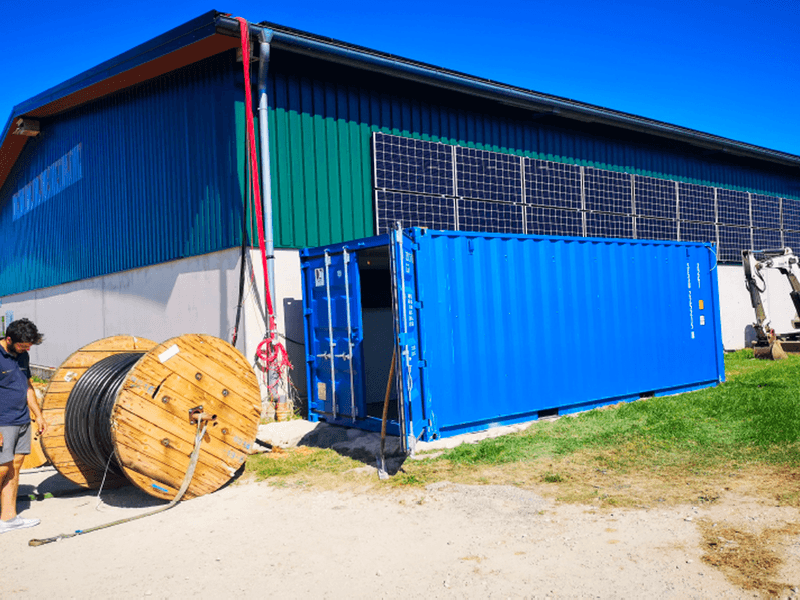
Justin Tyers • 23 December 2019
VIC – ESS turnkey power container
A biogas plant producing 500kVA has found that the most cost effective method of providing its own machinery with power is by using solar energy. It is more profitable to sell 100% of the energy it produces to the grid and to install a containerised solution to supply its own power needs in the form of a VIC – Sonnenspeicher VIC-ESS energy container. VIC-ESS container is a highly portable, powerful and instant turnkey solution to renewable power requirements. The biogas client has opted for a 200kWp solar array; coupled with a 120kWh Lithium Iron Mangan Phosphate battery bank. 200kWp solar array… The 90 kVA three-phase grid-parallel system uses 8 Fronius 25kVA inverters, together with 6 Victron Quattro 15kVA / 48V inverters. The grid is protected by a 250 kW ENS release point anti-islanding system. All hardware is controlled by a Color Control GX allowing system data be interrogated and managed via the Victron VRM portal from anywhere in the world. Further system monitoring – also read by the Color Control GX – is provided by Zigbee and Gavazzi meters. One of the advantages of the VIC-ESS container is that VIC – Sonnenspeicher complete the system build off-site – all tidily installed into an insulated, air-conditioned 20ft shipping container – and then deliver it to the customer ready to go. Assuming that electricity costs continue to rise VIC- Sonnenspeicher calculate that this installation will pay for itself in approximately 7 years. Their containers are configured as Energy Storage Systems (ESS) so that self-produced energy is made available for the consumer’s requirement – with surplus energy being used to charge the battery bank. Here a “zero feed in” power option prevents it from being fed to the grid. Containers can be paralleled, greatly extending the power which can be made available. Victron Quattro’s for example, can provide 3-phase power of up to 144kW / 180kVA, and more than 2500A charging capacity. This combination of Victron hardware, and system design and build by VIC-Sonnenspeicher allows reliable energy provision to be made available anywhere in the world – operational in the shortest possible time. Insulation being installed in a 20ft shipping container. Air conditioning is added, too.
Justin Tyers • 03 December 2019
Pietrosella – the traditional Corsican village of the future?
One man’s dream to build an off-grid eco-village in Corsica is being realized as we speak. The idea is to build ten houses nestled discreetly into the hills overlooking Ajaccio bay, together with a community building where all the residents can gather at the end of each day to talk, drink wine, and play cards. Work on the mini grid which will power the village is already complete: Christian Tartaroli – who is the project manager at Soleco installed 400 solar panels able to harvest 120kWp will be stored in a bank of eighty Lithium 24V/180Ah batteries with a capacity of 368kWh. All that battery storage is managed by five Lynx Ion BMS units which ensure that all battery cells are kept in balance, and are protected from over-and undercharging. The power which is harvested by 20 SmartSolar MPPTs 250/100 is inverted to domestic voltage by 12 Quattro 15000/200 which together can offer a huge 180kVA capacity. To keep all this equipment working together in harmony Soleco have chosen to install a Maxi GX. The Maxi GX has 25 VE.Direct ports allowing connection, control and monitoring of the numerous devices typically found in these larger installations. The Maxi GX ensures that all system components can talk to each other – and is critical for a real time dynamic control, which responds instantly to the variations in solar energy received; and to fluctuating power demands. A GX GSM allows the installation to be remotely monitored and managed via the mobile phone network. Soleco’s Christian Tartaroli (3rd right) led the project. Wilco (far left) from MG Energy Systems configured the Lynx Ion BMS. Victron Sales Manager David Foret is 3rd from left. Grid electricity is available near to the development – but the owners have decided to turn their back on that to create their eco village which incorporated both traditional values and a sustainable future. The visual impact of the installation has been kept to a minimum by mounting the panels at low level, and allowing them to follow the contours of the hill rather than sticking to a rectangular plane. When the houses have been constructed and are occupied, we’ll re-visit this story to hear about village life in this slice of Corsican paradise. Thanks to Victron Sales Manager David Foret for bringing this story to our attention.
Justin Tyers • 26 November 2019
Smart solar-powered bench
There’s a new product on the market from EnGoPlanet – the people who make Solar powered streetlights . EnGoPlanet Smart Solar Powered benches – which are ideal in college and work campuses, or public waiting areas – provide an opportunity to charge your phone or laptop whilst chatting, waiting for a friend, or watching the world go by. The bench can provide wi-fi internet access; and lighting too …and one very innovative model offers e-scooter docking and charging! For businesses like Microsoft and Volvo the benches are a statement, in addition to providing rest-period convenience for their employees. They’re made from durable materials such as stainless steel, aluminium, and wood composites for a long outdoor life. And they’re reliable, too, having been equipped with top-quality off-grid electronics such as the Victron MPPT 75/15 solar charge controller which maximises the power harvest from the solar panel at the same time as managing the charge supplied to the battery. With installations in locations as diverse as Dubai and Canada – whose temperatures can differ by 65C ! – the benches have proven their climatic versatility. Some bench designs incorporate advertising space offering the possibility of sponsorship, allowing them to become self-financing, or profit-centres. With a choice of models, their ultra-modern, clean-line appearance will appeal to many organisations for whom outdoor-space design is important. The makers, EnGoPlanet, claim that the Smart-City concept – whereby IoT connected municipal services are efficient and self-powering – will be worth $350bn by 2030. The off-grid bench works independently from the electricity grid, and can collect data, and offers passer-by power-on-the-go. They identify that their product is part of that vision and makes a contribution toward tomorrow’s cities.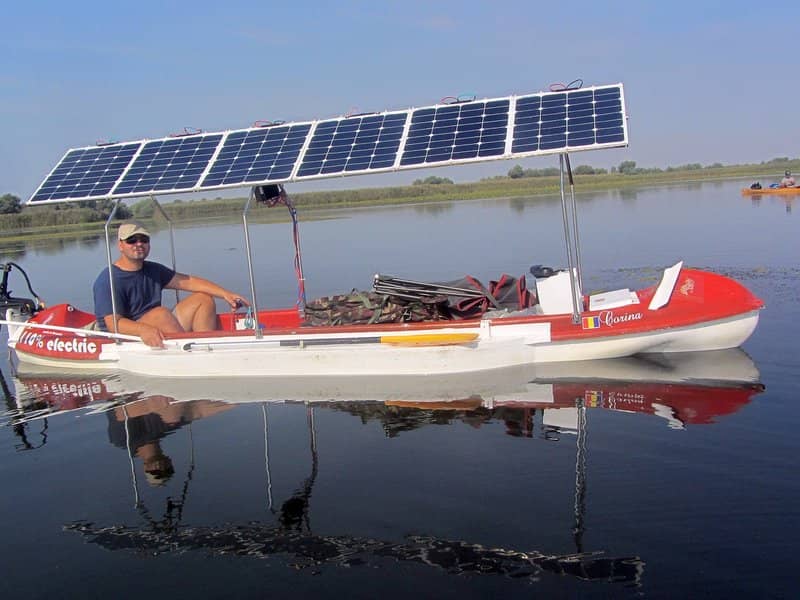
John Rushworth • 21 November 2019
Start with a Solar Canoe, end up with a Solar Cat or two…
Every waterborne electric propulsion journey has to start somewhere. My own started about 7 years ago, concluding with the sale of Sailing Yacht Elektra in recent weeks. That aside and the insights gained over those years, it was refreshing to hear from Nicoara Bogdan in Romania – who started his own marine electric propulsion journey in 2016. Project No. 1 His first project (shown in the headline image above) was a fibreglass canoe converted to solar/battery/electric, using a small 12V DC electric motor, 6 x 50W flexible solar panels wired in parallel giving 300Wp in total, controlled by a PWM solar charge controller charging a 12V, 100Ah AGM battery, which provided power to the motor. That all worked well but like all journeys, lessons are learned on the way and there are always dreams and improvements to be made with ‘the next project’. Project No. 2 The second project was a solar catamaran using similar electric principles but with increased motor power, more battery Ah and more Wp in solar panels, adding in upgrades and refinements along the way. Project No. 2, with later sponsorship & stickers The Cat concept was chosen for the low drag 5.2 m, 2.2 m width hulls and generous space for solar panels, not to mention being fully demountable for transport by car. Bigger budget required This time everything worked well as before, but two 24V motors were used (one on each hull) giving a total of 2kW of electric asymmetrical thrust power. Plus there was more room for solar, allowing 3 x 250 Wp of panels to be fitted. Still, more could be done… It was at this juncture that Nicoara was fortunate to meet Lucian Popescu , Victron Energy Sales Manager for Eastern Europe and Eftenoiu Cornel of Darcom Energy, who are a Victron Energy dealer in Romania. With some help and sponsorship from both Darcom Energy and Victron Energy in Romania, Nicoara’s craft is now running sweetly. Arriving at the launch site CAT assembly Success! A solar sailing pause & solar recharge On his second trip along the Danube river Nicoara achieved 24 km range entirely propelled by battery electric propulsion and that included going both upstream and downstream. Victron Energy products used 2 x 12.8V, 90Ah LiFePO4 batteries 1 x SmartSolar MPPT 150/35 solar charge controllers 2 x BatteryProtect 1 x BMV-700 battery monitor 1 x MPPT Control 1 x 100-3AC Argo Diode Battery Isolator 1 x Battery Balancer 1 x 24/12 Blue Smart IP67 Charger Waterproof Project No. 3 The 3rd iteration is about to start, with yet different hulls. Nicoara said: “My next goal is to upgrade to a 48v electric system with more solar panels and of course a bigger outboard engine to achieve an epic trip of more than 1,000 km on the Danube river in Romania using only solar power and to prove that this technology is sustainable and will have a bigger impact in the future for all of us.” Project No. 3 begins… Conclusion Congratulations to Nicoara on an evolutionary fun project. Asked why he chose Victron Energy products, Nicoara said: “I chose Victron Energy products because of their known performance, reliability, constant improvements and after sales care and support.” Speaking a little more to him, it seems a future dream is to visit the CLAFIS Victron Energy Solar Boat Team, winner of the Monaco Solar Boat race . Going by Nicoara’s success to date, it wouldn’t surprise me if he’ll be upgrading further and getting into solar boat racing! Regardless, we wish him well with whatever he does next with his solar electric boat passion. Meantime the message from his sponsors is – it has been a pleasure to have helped out to get him thus far. John Rushworth Links Nicoara Bogdan’s personal website – http://bogdanminitehnicus.ro/ Nicoara Bogdan’s YouTube Channel – https://www.youtube.com/channel/UCkZOf4if3ny19DhAA92SNsg Nicoara Bogdan’s Solar Canoe on Facebook – https://www.facebook.com/Canoe-solara-590276254504986/ Victron Energy Romania – https://www.facebook.com/victronenergy.ro/ Solar Cat sponsor (Darcom Energy) – https://www.darcomenergy.ro/ Flexible solar panels – https://www.das-energy.com/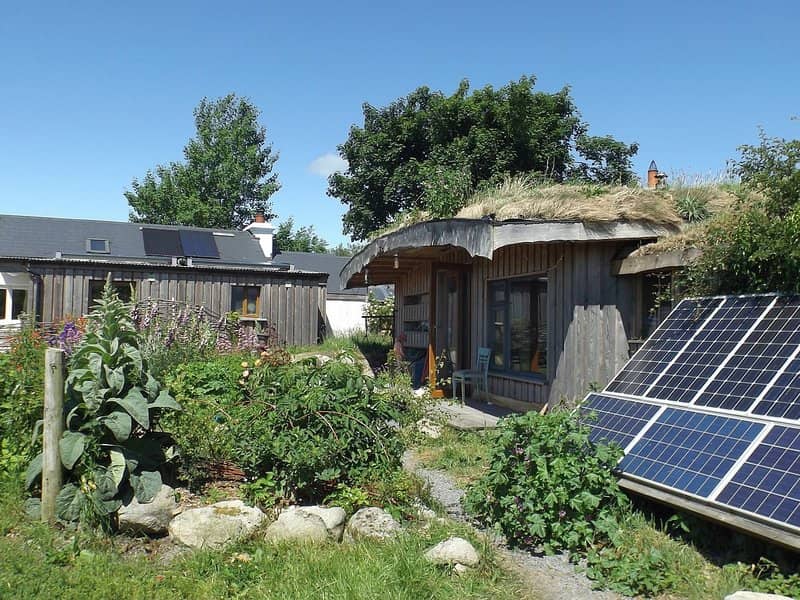
John Rushworth • 05 November 2019
Off-Grid living, working & educating at Lackan Cottage Farm
I first heard from Steven Golemboski-Byrne of Lackan Cottage Farm around four years ago and wrote a blog in 2015 about their family lifestyle. Things have certainly moved on since then – now Steve is even more of a Victron Energy aficionado, to the extent his product knowledge and practical expertise has increased – which now enables him to run courses for other off-gridders from all over the world. We like what he is doing, so we decided to sponsor some course demonstration equipment to help him out and spread the Victron word. In this guest blog Steve details the history of his family’s off-grid journey and how that has evolved to date. John Rushworth Lackan Cottage Farm Eight years ago now, my wife Claire and I set out on what we hoped would be an off grid adventure. We wanted to see whether we could reduce our ecological footprint, and provide for our own needs in energy, water, food and fuel. To begin with we lived in a tiny house on wheels – a converted horsebox, and our requirements were minimal. All we needed to run were a few lights, a laptop, coolbox and charge a phone. It was at this point we first encountered Victron products, when Phillip Gordon (now a UK & Ireland Sales Manager for Victron Energy) came to see us and gave some much needed advice. Now it is hard to imagine that we managed with 160Wp of solar panels and a little BlueSolar 75/15. After much searching we found a property in rural County Down in Northern Ireland – Lackan Cottage Farm. With two cottages and six acres of land including birch woodland, it was ideal, and we set about renovating the property. As there was no grid electricity connection we decided to develop our own generation, and the gift of some used solar panels gave us a good start. We realised early on that without a substantial solar installation we wouldn’t be able to rely on solar PV alone, and so installed a Bornay 3kW wind turbine to keep our batteries charged through the middle of winter. Bornay 3kW wind turbine It soon became apparent that there was plenty of interest from others interested in doing the same as us, and we began to offer short courses in food growing, natural building and permaculture. A natural progression from that was to develop one of the cottages as self catering accommodation, and we made the decision to use this as an opportunity to try out a variety of environmentally friendly materials and techniques, so that visitors could come and experience off grid, low impact living in a way they could relate to their own homes and lives. Seven years later, Lackan Cottage Farm is established as a pioneer in Green Tourism in Ireland, and we are the first business here to be accredited under the internationally recognised Green Key standard, run by the Foundation for Environmental Education based in Denmark. We welcome visitors from across the world to stay here throughout the year, and offer advice and consultancy to those interested in adopting aspects of what they have encountered here. We also run courses and training both here at Lackan, and across the island of Ireland, predominantly in Practical Sustainability, Off Grid Living and Permaculture. A key aspect of all these courses is energy production, and of course we are able to demonstrate the viability of renewable energy here in the Irish climate. Over the last 2 years we’ve also had the opportunity to film with both the BBC and RTE, UK and Irish state broadcasters, which has been invaluable in getting our message out to a wider audience. Victron products form the core of our power generation system, and increasingly we are assisting course attendees with the installation of their own equipment, once they have attended a course and been impressed with the Victron equipment that they see here. These are typically battery based off grid systems, where reliability is crucial. From cottage renovations to tiny homes on wheels, we have been involved with some fascinating projects and people. Our own system has grown considerably. With over 6kw of installed PV, and a 3kW wind turbine, we run a range of BlueSolar and SmartSolar MPPT controllers, which feed 24kW of OPzS batteries. We then use three 24/3000-70 MultiPlus units connected in parallel to provide power to our cottage. Left to right – Grid tie wind inverter, CCGX/BMV-712; Solar iBoost; 24/3000 Multis, BlueSolar and Smart Solar MPPT charge controllers. The wind turbine is AC coupled to this system, as is an additional 3.9kW of PV, and a load diversion unit uses the majority of the power from these to heat water in the two cottages, with our core DC coupled PV arrays providing domestic electricity. Monitoring is through a BMV-712 Smart, and a Color Control GX (CCGX) unit. We also use Victron Energy meters on the AC coupled wind and solar to provide accurate information to our CCGX and the VRM . Just one of the solar arrays at Lackan Cottage Most recently we have separated the second cottage using its own 24/3000 MultiPlus, and a smaller battery pack charged by a 2kW PV array through a SmartSolar 150/60 MPPT. This is monitored using a BMV-700, and a Raspberry Pi running the Venus OS. Once again it is interesting to be able to demonstrate a different approach to monitoring the system, and we’ve already helped one other user to install a Raspberry Pi based monitor. Steven Golemboski-Byrne of Lackan Cottage Farm, instructing on one of his courses. With another 4 courses left to teach this year, and over 50 attendees to introduce to our systems and Victron products, we’re confident that Ireland’s network of small scale renewable energy producers will continue to grow. Steven Golemboski-Byrne Links Phillip Gordon – Victron Energy UK & Ireland Sales Manager Lackan Cottage Farm – http://lackancottage.co.uk/ Facebook – https://www.facebook.com/lackancottagefarm Twitter – https://twitter.com/lackancottage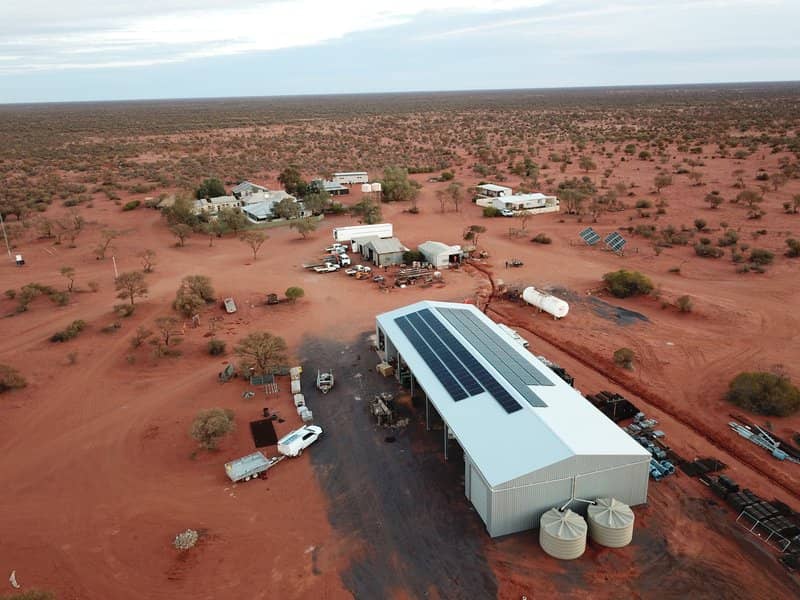
Justin Tyers • 30 October 2019
3-Phase in the Outback?
Cattle and Sheep stations in Australia’s remote outback are typically powered by diesel generators. Running power-hungry industrial/agricultural equipment – together with domestic supply – they bang away consuming between 100 and 200 litres of diesel per day. A lot of stations were established in the 1800’s. They’re run by tough people used to hard work, and harsh conditions. The fact that diesel-generators are dirty and expensive; that diesel oil has to be brought in from far away; and that engine maintenance is added to the farming routine is something you just have to put up with. Until now. MyEnergy Engineering recently completed three projects powering huge cattle and sheep stations in remote locations in South Australia which demonstrate how stations can be run cleanly and silently. And you don’t have to get your fuel from hundreds of kilometres away …Solar Energy comes to you. Add to that diesel-fuel costs of $1.80A per litre, and the case for solar is easy to make. People are sometimes surprised by the scalability of Solar Energy. A lot of power can be stored in specialised large-scale batteries – for twenty-four hour use. And when you need to run big machinery for your industrial or agricultural business, remote solar power systems can provide it …on-demand. Three-phase supply is no problem, either. Technical Challenges… The Australian outback presents opportunities (there’s plenty of sunshine, and plenty of room to site PV arrays) …but with summer temperatures of over 50°C there are also technical challenges which have to be overcome. MyEnergy Engineering have been designing and installing remote power systems for over 11 years. Directors Ciaram and Wayne Granger say that reliability, and the ability to remotely monitor diagnose, and programme their customers’ installations is one compelling reason they choose Victron Energy components. Cross-compatibility with third-party manufacturers allows MyEnergy to install Victron Energy Components at the heart of their projects – knowing that they will work seamlessly with battery technologies, built by others, which have been specially designed for mass-storage at high ambient temperatures. Ingomar Station Ingomar is about 700km north-northwest of Adelaide, making it one of the northernmost homesteads in South Australia. The Station grazes sheep and cattle and was built in the 1880’s. Their new power system runs the homestead and all adjoining buildings and work shops. Their 45kVA installation consists of: 3 x Victron Quattro 48/15000 Inverters in 3-phase configuration. 8 x Victron SmartSolar 250/100 Charge Controllers 7 x BYD 13.8 Cabinets (96kWh Total) 50.4 kWp of Trina Solar Modules OctoGX for system monitoring and off-site control The installation is designed with capacity to take over from the diesel generators completely – yet it is entirely compatible with the existing site generators – in this case a 40 and a 60 kVA Staunch Diesel Generator, which will be used as back-up. Mount Eba Station Mount Eba lies at the centre of South Australia. The Station was established in 1874 and extends to some 3,380 square kilometres, grazing sheep and cattle. This installation has: Quattro 48/15000 Inverter/Charger Victron SmartSolar 250/85 & 250/60 Chargers Victron Octo GX for Monitoring Trina Solar Modules (20.4kWp) Integrates the existing tracker system (4kWp) BYD Lithium Batteries (82kWh) This system also integrates the existing diesel generators. Kondoolka Station Kondoolka Station is situated on the Eyre Peninsula, just outside the Gawler Ranges national park and was built in the late 1880’s. Similarly to the other stations its installation comprises: Victron Energy Quattro 48/15000 Inverter/Charger Victron SmartSolar 250/100 Chargers Victron Color Control GX for remote monitoring and management Trina Honey Solar Modules BYD Lithium Batteries And it also integrates the existing diesel generators. MyEnergy Engineering have completed over 450 remote installations together with almost 5,000 grid-connected systems. With over 60 years of remote energy experience between their engineers, they pride themselves on the quality of their work and on providing silent energy to customers who need to rely on it. And they seem to be getting it right: Mount Eba Station owners Pete and Margie Whittlesea said: We can’t believe how eerily quiet it is round here – now the generator never runs.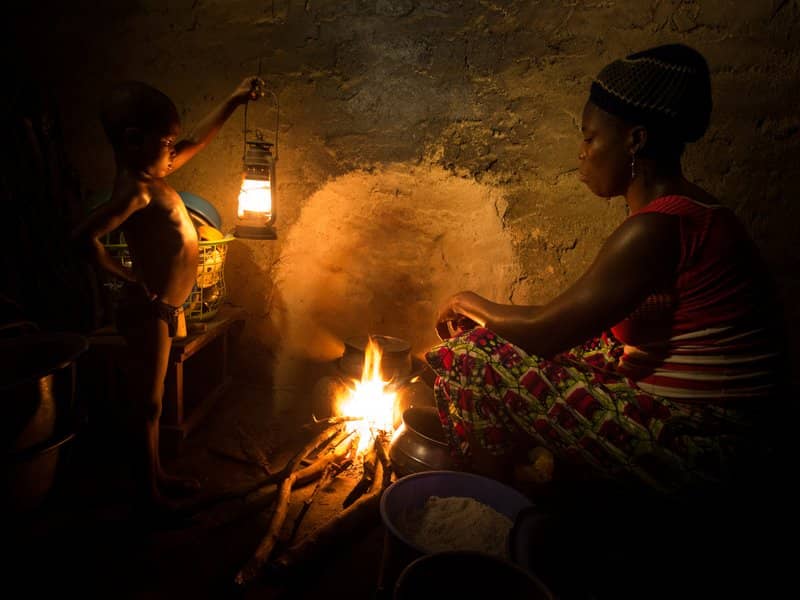
Justin Tyers • 22 October 2019
Nanogrid TOGO
SOLERGIE is changing lives for the better in the West African country of Togo. Because of their huge land area, 75% of the population of West African countries live beyond the reach of the national electricity grid and have no access to a dependable source of electricity. Solergie plans to install the infrastructure – in the form of nano grids – which provides people living in rural locations with the clean, reliable electricity they need to empower themselves. It changes everything – and has an impact which most of us can only imagine. Home study for children, after dark. The means to charge a mobile phone – without which they are useless. And the possibilities for entrepreneurship: sewing machines; electric razors; television/cinema’s; iced-cream shops; irrigation for farming – all of which are key if rural communities are to thrive in locations where there is no grid-electricity infrastructure. “Without Solergie, I have to work with scissors and a mechanical razor. With the energy provided by Solergie, I can use an electric shaver. I have a modern system now.” Solegiebox nanogrid …typical System A SolergieBox is a solar power system which can offer electricity to 8 clients, creating a very small electrical grid – or nano-grid. Each nano-grid can be expanded according to customer demand, but a typical installation for 600Wh per day consists of: 2 solar panels of 155Wp each 1 Gel Battery of 145Ah 1 Phoenix Inverter 12/800 230V VE.Direct IEC BlueSolar PWM-Solar Charge Controller 12/24V-20A 8 energy meters The SolergieBox XL provides 1200Wh per day and includes: 4 solar panels of 155Wp each 2 Gel Batteries of 145Ah each 1 Phoenix Inverter 12/1200 230V VE.Direct IEC BlueSolar PWM-Solar Charge Controller 12/24V-20A 8 energy meters SOLERGIE have installed over 400 nano-grids throughout Togo designed to provide 230V electricity to families and micro-entrepreneurs. The provision of irrigation pumps and refrigeration units, for example, result in better crop yield and the ability to store produce until it is needed, or can be sold – generating income for local villages. A less obvious advantage is adult education. Communities can become better informed about national and international politics and events – much of which would not otherwise reach villagers. And a more outward looking lifestyle is stimulated by simply having Solar energy technology – made possible by Photovoltaic panels. An example of this education-transfer comes from one entrepreneur who has set up a village-cinema using a large-screen television.The cinema entrepreneur went to University to earn a degree – but came home again when he wasn’t able to find work. The availability of reliable, silent electricity has allowed him to start a business in his own village. Solergie is committed to providing the infrastructure and investment to make a difference to the 8.2 million people who live in Togo. Using fewer cables than a mini-grid, the SolergieBox provides low-cost installations – a benefit which is passed on to householders. Solergie’s commercial risk is reduced because the solar system can start small and grow as client trustworthiness is established. And each household has their own energy meter so that they are billed based on their own electricity use. These SolergieBoxes are connected to the mobile network, and send an SMS showing system status and reporting client-consumption – and also enabling remote payment. Consumers will eventually become the owners of their own sustainable power plant, but this pay-as-you-go, consume-to-own model of tariff offered by Solergie means that the cost of ownership is spread, making it affordable for low-income families. It is exactly this kind of seed corn investment which earns the Solargie Nano-grid its place in the list of economically viable models for rural electrification. Lighting your home by Paraffin lamp creates fumes; risks to health; contaminating spillages and unpleasant industrial smells. Lighting your home with electricity provided by a generator is noisy dirty, and expensive to run. Lighting your home with technology is exciting! It gives rural communities a hand up, helping them take their place in the 21st century. Investment in the rural infrastructure is welcome by all. The change to clean electricity allows rural inhabitants to compete on an equal footing, and change cannot come fast enough.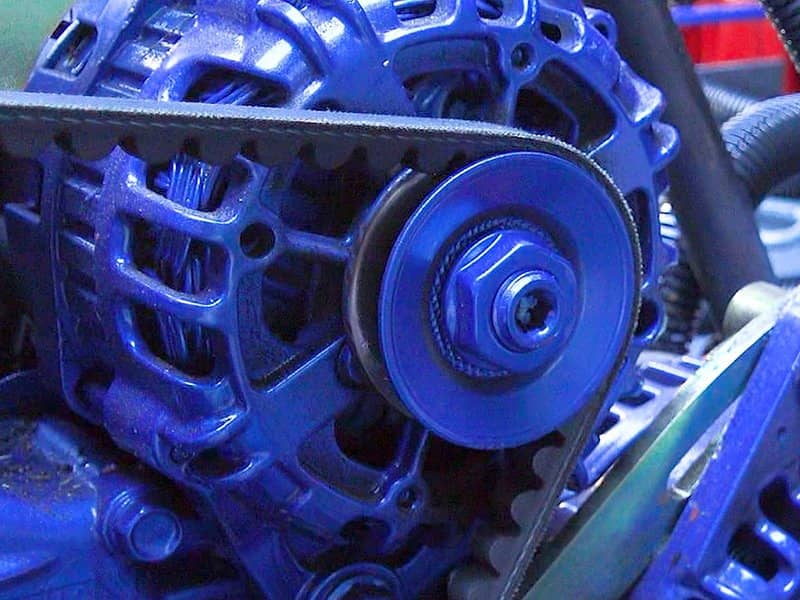
John Rushworth • 07 October 2019
Careful – Alternator Charging Lithium
Charging lithium batteries from an alternator, be that in a boat or vehicle, presents some challenges when compared to the straightforward nature of charging lead based batteries. The video in this blog highlights these lithium challenges and shows you what can happen when things go wrong – namely alternator overheating, smoke and an expensive alternator replacement, not to mention the risk of a battery thermal event. Challenges when charging lithium with an alternator The two key issues demonstrated in the video are: Alternator overheating Alternator rectifier diodes failing because of over voltage after disconnect by a BMS Test rig The test rig in the video is by Victron Energy dealer, ATI Energy, Bucharest. Lithium charging video In this video, by Jonathan Cecil of Journey with Jono, we put both a traditional and a regulated alternator through their paces. Using different RPM, we charge a 300Ah lithium battery and test the results. Conclusion It’s only by using the correct lithium battery charging solution/s in a given situation, that you can be sure of system safety. Victron have a range of solutions, such as the Buck-Boost DC-DC Converter (used in the Victron Van install ), and the similar lower power Orion-Tr Smart DC-DC Charger Isolated , as well as the BMS 12/200 as used in Jono’s canal barge, plus more on the way. BMS 12/200 installed in Jono’s canal barge. So – stay tuned, as Victron are in the middle of expanding their range of alternator charging for lithium batteries. In the meantime make sure you are using the right tool for the job – all of which can be discussed on the Victron Community . John Rushworth Links ATI Energy website ATI Energy on Facebook Journey with Jono on YouTube Journey with Jono on Facebook Journey with Jono website
Justin Tyers • 03 October 2019
Planning a transatlantic family adventure
Jonas Edholm, his wife Susanna, and their children Axel (11), Alma (8), and Atle (6) are planning to sail across the Atlantic in a 12 metre yacht next year. Their boat, Liv, has a displacement of 7.7 tons and can set almost 100m² of sail – not including their five spinnakers. Whilst a lot of parents hesitate to take their children out of their routine for fear of what they might miss, Jonas and Susanna take the opposite view: Our main objective is to show our children that you can pursue your goals and dreams and that you don’t always have to follow all the norms of what you should do and should not do. This project involves us all in the family and will give us experiences and memories that will last our lifetime. Our children will both learn and experience different cultures, people, geography, languages, and environment that is very different from the traditional classroom. During our journey, the children will also be homeschooled and follow the Swedish school’s curriculum so they get the same schooling as the children back home. Their journey will begin next July, commencing Stockholm, and will take them through the English Channel, Bay of Biscay and out to the Canary Islands, before crossing the Atlantic to spend the winter in the Caribbean …but you can start to follow their blog, now. In spring 2021 they will begin their homeward journey and be back in Stockholm before school starts in mid-August. Jonas – who works in IT and computer science – has been taking a great interest in the electrical set-up of their boat. The navigation and communication station includes: Raymarine e95 MFD plotter Wind, Log and Depth data on Raymarine displays, 2 x i70s, 1 x i60 Wind , 1 x ST60 Wind and 1 x i70 Raymarine Evolution Autopilot with linear drive Raymarine RN300 GPS Raymarine RAY 54E VHF AIS Trueheading CTRX Carbon+ ShipModul MiniPlex – 2Wi 4G Router Additionally there is a low-power refrigeration unit; an 800W foredeck windlass – and a 1000W stern windlass, both of which would be used only occasionally, with the engine running. There’s a water heater which can be electrically-powered but is plumbed into the engine’s water cooling circulation. There’s an Eberspächer diesel heater, too, which has an electric fan drawing between 7 and 40 Watts – depending on blow-speed. Liv’s power supply, control and storage comprises: 320 Ah LiFeYPO4 lithium batteries Victron BMV-712 battery monitor Victron SmartSolar MPPT 75/15 55W Solara M-Series Solar Panel (planned to increase to 800W) Balmar 120A alternator Victron MultiPlus 1600VA Jonas prefers manual intervention and monitoring of his system. Here, in his own words, is how he has set it up: (I’ve taken the liberty of re-phrasing some of his words. Any resulting errors are my own.) By connecting a relay cable from the battery monitor to the switch of the ML-RBS remote battery switch, I can trigger the ML-RBS to disconnect the battery if the BMV-712 measures an overvoltage or undervoltage event on the battery bank. For simplicity I ran the wire from the battery monitor to the remote switch instead of to the battery switch. I got a couple of questions from a facebook group (which I recommend: https://www.facebook.com/groups/427372107686109/) about my wiring. Here they are if you’re interested: Always-on bus bar -> BMV-712 (COM) BMV-712 (NC) -> Contura Remote switch (Pin 1) Since I am using the ML-RBS 7700 I am not employing inverted settings on the BMV-712 and the NC (Normally Closed) relay connection from the BMV-712 to the Contura switch. If the over-voltage relay is triggered, I have to re-connect the battery manually at the remote battery switch. It doesn’t happen automatically – but I figured that if an over-voltage event is triggered, I want to investigate before re-connection is made. BMV settings The BMV-712 needs some specific settings when you use the BMV with Lithium batteries since they have a much higher charge efficiency. Some friends have been using Pukert exponent 1.03 and Charge efficiency factor: 98% with excellent results for their lithium Winston cells or Winston 12V batteries. These settings are slightly different from the recommended settings from Victron. So I’m going to start with the recommended settings from Victron and see if I need to adjust them over time. Current settings on the Victron BMV-712 Battery capacity: 320Ah Charge voltage: 14.0V Tail current: 4.00% Charged detection time: 3m Pukert exponent: 1.05 Charge efficiency factor: 99% Current threshold: 0.10A Time-to-go averaging period: 10m Relay mode: Default Invert relay: Off Minimum closed time: 0m Relay-off delay: 0m Low SOC relay On: 5%, Off: 6% Low voltage relay: On: 11.6V, Off 11.7V High voltage relay On: 14.6V, Off 14.2V Alarm buzzer: on Low SOC alarm On: 10%, Off: 12% Low voltage alarm On 12.6V, Off: 12.7V High voltage alarm On: 14.5V, Off: 14.2V Mounting and configuring MultiPlus inverter/charger I prepared the mounting and wiring for the MultiPlus. The only thing that remained was to program it. The mounting is not ideal in a cabinet as there might be some issues with cooling. I don’t expect to use either the inverter or the charger for long periods – but I will have to monitor the temperature. There are some dip-switches on the MultiPlus which enable some settings but don’t offer the charge profile that I want to use. The MultiPlus charge profile for lithium using dip-switches would set the absorption to 14.1 V and the float to 13.8 V – which is too high for my preference. Neither can I set the charge curve with the dip switches. I bought a USB to VE.Bus converter which allows me to make my own settings using Victron’s VE Configure software – because I might fiddle with the settings after some testing and adjust them over time. The current settings used after configuring the MultiPlus using VE.Bus are: Lithium batteries: Checked Use equalization: Not checked Charge curve: Fixed Absorption voltage: 13.80 V Float voltage: 13.30 V Charge current: 37 A Repeated absorption time: 1 Hr Repeated absorption interval: 14.00 Days Absorption time: 1 Hr These settings will make the battery pack stay below and never reach 100 % SOC – but that is something that I prefer. It will also disable the Float charge cycle since the float setting is too low to start. Neither charging to 100 % of SOC or using Float is something that I want. Configuring MPPT I had already installed the MPPT. Since the SmartSolar MPPT 75/15 connects to the VictronConnect app via Bluetooth, it’s effortless to configure the settings on the MPPT. Current settings on the SmartSolar MPPT 75/15 Absorption voltage: 13.90V Maximum absorption time: 6h 0m Float voltage: 13.20 Equalization voltage: 0.00V Temperature compensation: Disabled Low temperature cut-off: 10.0°C Finally, because I don’t want the Charger permanently ‘on’ when connected to shore power …and neither do I want the Inverter to be permanently ‘on’ – drawing stand-by power – when it’s not in use, I wanted to have an easy way to turn the unit on and off. For this I have installed a Digital Multi Control Panel. If you are planning a journey – over land or sea – and want to exchange ideas …why not start a discussion on the Victron community page? Right then, which way is South?
Justin Tyers • 01 October 2019
Mlinda – Powering economies in Rural India
Mlinda is an initiative which supports marginalised communities living in rural India to achieve sustainable village economies. They do this by installing solar mini-grids for industry; by assisting local entrepreneurs to purchase modern efficient electric machinery; and by encouraging a diversity of business-types – so that communities have a broad spectrum of employment opportunities, and work is not seasonal. In 2016, Mlinda began their Rural Electrification Project. To date they have installed 31 mini grids, each of 20-30 kWp, in the Gumla district of Jharkhand. Mlinda’s model for mini grid installation and support to the communities is anchored in close ties with villagers, and deep understanding of their energy needs. Engineers and local operators stay in the villages and work with the communities. Consumers pay an upfront connection fee and then pay for energy usage through pre-paid meters. The mini grid is designed to cater for 80% productive and 20% domestic loads. Mlinda grows demand responsibly, ensuring it is based on low energy devices. They also provide loans to farmers to finance energy efficient devices to accelerate uptake. Reliable power allows agricultural based-economies to irrigate crops; hull grain; express vegetable oil; refrigerated storage of crops; in addition to support industries – such as metal fabrication; mechanical repair; and banking. Power allows for the introduction of businesses like chicken rearing – creating a demand for grain on the farmer’s doorstep. The programme encourages the spawning of lots of ‘small’ electricity users, rather than one or two big ones – this ensures that every member of the community gets a chance to develop their potential by having access to electricity in spite of the fact that they may use very little. At home, electricity allows domestic chores to be performed more quickly, and (usually) women can choose to take on independent work opportunities beside caring for their families. Children’s education benefits, too, because reliable domestic lighting enables them to study at home, after dark. A private school and a health centre have been connected to Mlinda mini grids. Victron MultiPlus inverters can be configured to provide the 3-phase electricity which is often needed in industrial applications. The CCGX – which is the communication hub of each system – allows for remote monitoring and management using the free-to-access MPPT maximise the harvest from solar panels – typically 20 – 30 kWp – and stores the energy into a diverse range of battery technologies, in this case lead/acid The Victron Remote Management portal is an indispensable tool for rural, or hard-to-reach installations. inverter systems are incorporated with a remote monitoring system which facilitates in overseeing the grid performance and taking corrective measures in terms of repair and maintenance. Monitoring can be carried out locally or remotely using the open source “Victron Management Portal”. The portal is used to track health of the grid and has proved to be an important information and monitoring tool. The Mlinda initiative is intensely ambitious and plans to achieve 50 mini grids by the end of next year, serving 5,000 families and businesses. In order to reach this target they have to create the tools and manuals, and invest in staff-training programmes which will allow the replication of what has been achieved so far, on an increasing scale. From there they hope that by 2023: 125 villages will be powered; 250 villages by 2025; and through training of other organisations, 1000 villages soon after. The headline is owned by: © Flickr/ La Citta Vita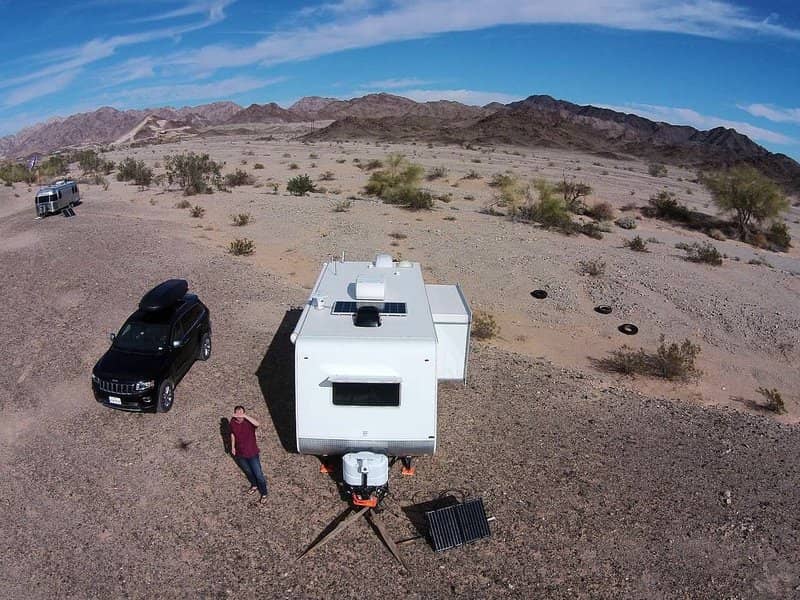
John Rushworth • 26 September 2019
How a Battery Monitor changed my (RV electrical) life
Battery monitors, on the face of it, are a simple yet essential piece of kit for many. No more so than for Kelly Beasley and Marshall Wendler of CampAddict. Kelly recently got in touch with me about their insightful experience with a BMV (Battery Monitor Victron) – a BMV-700 in this instance. Victron offer a complete range of battery monitors and monitoring solutions, from a basic BMV to more complex offerings. You can read about that in a recent blog, which covers all monitoring solutions, the complete BMV product range, accessories and related products . Who are Camp Addict? Taken from their website, CampAddict.com bill themselves as: “Your #1 source for camper accessories, travel trailer accessories, motorhome accessories – RV accessories of all kinds! Some items are RV must-haves, some are RV essentials.” Kelly & Marshall Co-founder Marshall Wendler brings his technical expertise to help explain RV products in an easy to understand fashion. Full-time RVing since April 2014, Marshall loves sharing his knowledge of the RV lifestyle – which is just the case in this guest blog by him, which we hope many will find useful. John Rushworth Full-time RV life I’ve been living full-time in my RV for over 5.5 years, and the vast majority of this time I’m boondocking (not staying in RV parks) so I’m not attached to any type of utility. Boondocking in the Alabama Hills, California Power is a constant need, and I rely on my two 6-volt batteries to supply my power. I have two choices to keep my batteries charged – solar power and portable generator use. Both options require me to understand how much power I’ve used, what charge condition my batteries are currently in, and how much power I’ve been able to ‘put back’ into the batteries. Portable solar panel. The main headline image in this blog shows that too, plus rigid panel rooftop solar. Back in the early days, I had a couple hundred watts of solar power charging my batteries. Other than the solar controller’s basic display, there was no way of knowing what was really going on with my batteries. I was able to see battery voltage, and that was it. No clue of the actual flow of electricity in/out of my batteries. Enter The Battery Monitor It wasn’t until I installed a Victron BMV-700 Battery Monitor did I finally have an ‘ah-ha’ moment regarding what was going on with my batteries. With the optional Bluetooth Smart dongle (you can purchase the BMV-712 Battery Monitor to get built-in Bluetooth) I can monitor the battery condition via an app on my iPhone. This has turned out to be one of my most-used apps. I’m even a bit weird about how much I enjoy seeing what’s going on with my batteries. Now, with VictronConnect , I can see how much power is being placed into my batteries from my solar system, how many amp-hours of power I’ve used, and when my batteries have been topped off. My Electrical Life Pre-Battery Monitor Before I had my battery monitor, my daily routine would go something like this: I would wake up in the morning and cycle my solar charge controller’s display through to the screen showing the battery voltage. I would try to do this before the sun was hitting my solar panels for a true reading of the actual battery voltage. If you look at this screen when the solar panels are generating power, you are seeing what voltage the solar charge controller is sending to the batteries, not what voltage the batteries are at in a ‘resting’ state. This ‘resting’ state voltage would give me an idea of how depleted my lead-acid batteries were overnight. With lead-acid batteries, you are not supposed to drop them below a 50% charge level for maximum life. The best way to observe the correct charge level is to observe the ‘resting’ voltage (ideally with zero load and after a few hours of no use, but this isn’t practical in RV life). If my batteries were showing around 12 volts I’d know they took a good hit that night. If they were closer to the 12.4-volt range, then they had a pretty good night. But I didn’t know how much actual power (amp-hours) had been ‘removed’ from the batteries. I would then observe the battery voltage, as displayed by the solar charge controller, throughout the day as the solar panels charged the batteries. However, this only told me what mode the solar charge controller was in. That is, what voltage the controller was sending to the batteries. I had zero idea of how charged the batteries were. My solar charge controller is a ‘stupid’ PWM controller (As opposed to a ‘smart’ MPPT controller). This means it runs on a set program and isn’t ‘smart’ enough to make adjustments during the day based on battery voltage, change in the amount of sun the solar panels are getting, etc. The information it showed me was pretty much useless. The only good information was the voltage of the batteries when the solar panels weren’t producing, but this is only one piece of the puzzle. Many pieces were missing! Side note: If you think that the battery level indicator on your RV’s information panel (the one that also shows holding tank levels) is any good, think again. This typically shows battery levels in 25% increments and goes off the battery voltage only. And by that, I mean the battery voltage that it senses at a given moment. For example, if your water pump kicks in, the battery voltage will temporarily drop. The battery level indicator may sense this and show an overall decreased battery charge when in reality your battery level is just fine. Yeah, these battery indicators are pretty useless pieces of equipment. My Electrical Life Post Battery Monitor To say that installing a Victron battery monitor was one of the best modifications I did to my travel trailer isn’t doing it justice. As corny as this may sound, the Victron battery monitor changed my life. At least my RV electrical life! The Victron battery monitor can ‘see’ the flow of electricity into and out of my RV house battery bank. It does this via a shunt that is installed as the last item before the battery’s negative terminal. Any power ‘leaving’ the battery first passes through the shunt before being ‘consumed’, and any power being put back in the battery (via solar or shore power) also passes through the shunt. The shunt is connected to the battery monitor head unit that displays, and keeps track of, this power usage. Now I have access to how much power has been taken out of the batteries (how many amp-hours), what the precise voltage of my batteries is, and how many amps of power are being either pulled out of, or put into, my batteries. MUCH more USEFUL information. I’ll admit it. I was a bit obsessed, and maybe still am, with watching the Victron app to see what is going on with my batteries. I watch how many amps my solar panels are currently putting into my batteries. Boondocking & Battery Watching in Moab, Utah I watch how many amps of power it’s taking to charge my computer at night when I don’t have solar to ‘help’. Watching what happens when the water pump cycles on. It’s the little things in life! The number one benefit of having a battery monitor has to be I now can be kinder to my batteries, which translates to longer battery life. Your Batteries Will Thank You Lead-acid batteries like to be fully charged each day. If you aren’t able to fully charge them daily, their lifespan will suffer. This was the case with my first set of RV batteries. They were showing signs of coming to the end of their life before I had been living in my RV full-time for a year. Before I had my battery monitor, I had no idea what was going on with my batteries state of charge. Today I can verify that yes, indeed, my batteries were fully charged on a given day. Or no, I was still down X-number of amp hours today because it was a bad solar day, and I better limit my use through the night. It is my strong opinion that a battery monitor should be a mandatory piece of equipment for any RVer who isn’t plugged into shore power all the time. If you ever rely on your RV house batteries to power your rig, then a battery monitor is a key piece of equipment to help you truly understand what is going on with your batteries. Marshall Wendler Links CampAddict Website – https://campaddict.com/ CampAddict on Facebook – https://www.facebook.com/CampAddict/ CampAddict on Instagram – https://www.instagram.com/camp.addict/ CampAddict on Pinterest – https://www.pinterest.co.uk/campaddict0183/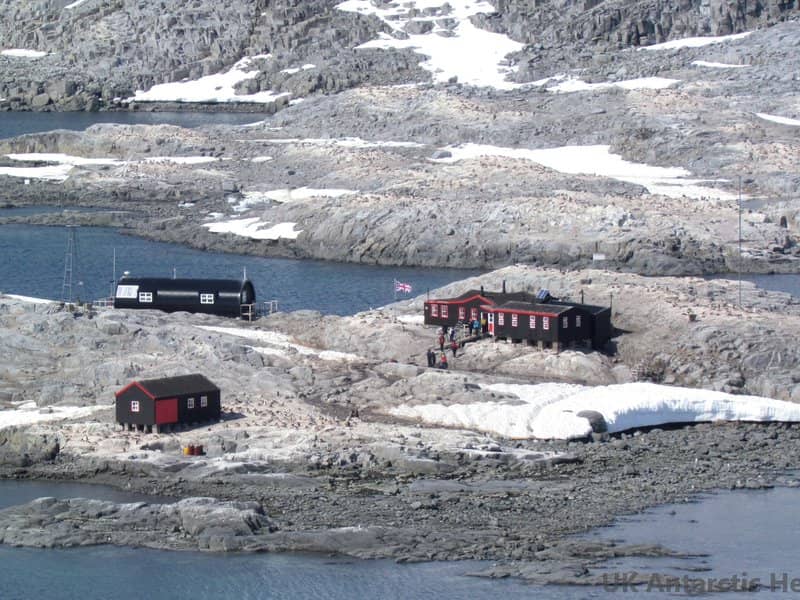
Justin Tyers • 24 September 2019
Antarctic Station enjoys Solar Power
From November to March each year a small group of UK Antarctic Heritage Trust (UKAHT) staff travel to the end of the earth to open up a Post Office. Not just any post office, of course – Port Lockroy has been a home to explorers, whalers, scientists, and sailors for over a hundred years. Today, its shop, museum, and post office receives 18,000 visitors per year who buy souvenirs, and between them send 80,000 postcards back home to their families all over the world. That makes Port Lockroy the most popular destination on the Antarctic continent. Base A Originally called Base A, Port Lockroy is located on Goudier Island – a thousand kilometres south of ‘Cape Horn’ …that infamous Ship’s Graveyard situated in the ‘roaring forties’ at the southernmost tip of Chile. It was the first permanent British base to be established on the Antarctic Peninsula. Built in 1944 as part of a wartime mission code-named Operation Tabarin, after the Second World War it served as a science base – becoming the first of many British science bases around Antarctica. In 1962 it closed. In a dilapidated condition its historical importance was recognised in 1994, and it was designated a Historic Site. Restored in 1996, responsibility for it’s care and maintenance passed to the UK Antarctic Heritage Trust who – since 2006 – have opened its doors every austral summer to adventurous travellers who can enjoy; learn; and help raise funds for the future posterity of the site when they purchase items from the shop. Today Today’s visitors still arrive in Sailing Ships – and even small yachts – but more normally in the Cruise Ships and Cargo vessels which drop anchor in the sheltered harbour off the coast of Wiencke Island, nestled in the meeting-point of three seaways – offering safety amid dramatic mountain and glacier scenery. Silent Power To avoid running a noisy generator, and importing fuel, the trust’s seasonal staff and visitors now benefit from 24 hour clean, silent energy provided by the sun. Power is harvested from a 2.6kW PV array by a pair of Victron MPPT 150/35 SmartSolar charge controllers. The battery bank is composed of 8 x 6V 335Ah Rolls AGM lead-acid cells which are maintenance free. A 3kVA Multiplus inverter/charger offers residents the comfort of home. It is capable of charging the batteries from the generator, if that should be required, and its PowerAssist feature combines battery power and generator power – greatly extending the capability of the installation. Bringing it right up to date – the system is equipped with Bluetooth, allowing performance to be monitored from a phone or other smart device. The normal installation route for this kind of system uses trained engineers – this wasn’t possible 8,000 miles from home, and it’s a credit to the UKAHT team, and to Midsummer Energy – who provided the team with training, together with written explanations and instructions for installing the pre-programmed system they had designed and supplied – that the ‘amateur’ installation of the all the kit has been such a success! Conservation at Port Lockroy Port Lockroy is the flagship historic site of the UK Antarctic Heritage trust, and the only site manned by a team every season. The harsh Antarctic climate and up to 18,000 visitors take their toll on the building, so a rigorous conservation management programme is in place to take care of the buildings and the artefacts within. What kind of things can you see at Port Lockroy? Visitors who enjoy going off-the-beaten-track will be able to take in the museum, gift shop and post office. In addition, there is the Gentoo penguin colony which shares the island with the UKAHT team. The colony is protected and the UKAHT team monitor the population to chart breeding progress each season. And if you’re considering applying to become one of the exclusive residents of Port Lockroy for a season of maintenance work and welcoming visitors, you can find out what to expect by reading their regular blogs, penned from the far end of the earth. This year’s volunteers have just been selected .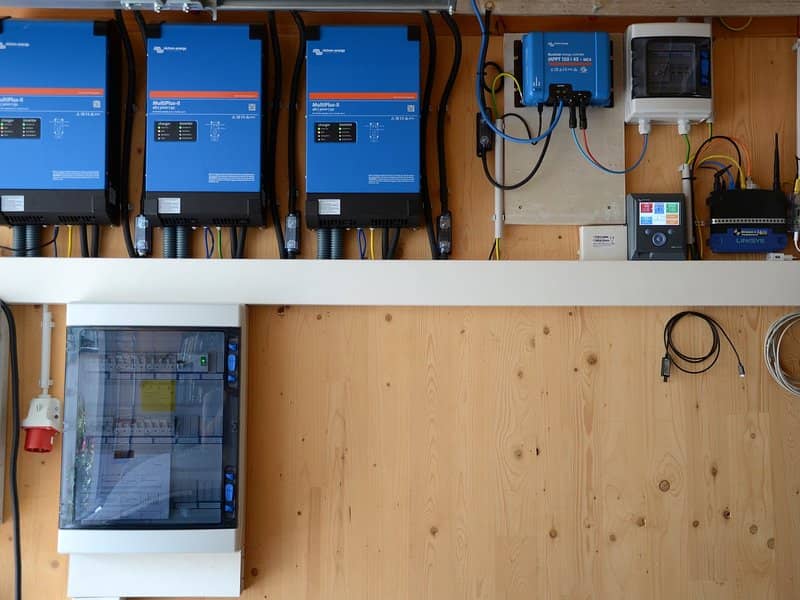
John Rushworth • 19 September 2019
Msol GmbH – A PV, Energy Storage & UPS project
It’s great to hear from Victron Energy customers, be they end users, dealers or indeed budding dealers and installers. Here’s a case in point. Bernhard Matschinger got in touch with me lauding Victron’s products, which initially led him to build his own PV, Energy Storage UPS system and ultimately his own company – Msol GmbH. For Bernhard this project was a prototype and proof of concept, as it uses non Victron Energy batteries/BMS. That being the case, this gives rise to important safety and system integration considerations. More of that later, but first a bit of history. Where it all started Back in 2013, when Bernhard saw his first ‘ mjlorton ‘ video on YouTube (228K subscribers) he became fascinated by Victron Products. Here’s an example video from that time. Bernhard is a qualified Civil Engineer with 25 years experience in designing/building low energy homes and industrial buildings. Having been the CTO of a construction company for many years he also made his IT hobby into a profession too, around 10 years ago. So now he has two strings to his bow – one in design and construction, the other creating software based on C#, .Net for Web and ERP. Due to his experience it was natural for him to want his own PV, Energy Storage & UPS system – so he built one. System background Eight years ago Bernhard and his wife built their own low energy family home from scratch, doing nearly all the work themselves. The area of their home is 255 m², which per annum requires around 2,300 kWh of electricity (6.3 kWh/day), plus 2,600 kWh (7.12kWh/day) for hot water – giving a total of 13.42 kWh/day of electrical energy needs. For space heating they use around 500 kg of wood pellets per annum. The resulting direct energy costs are around 100 € for heating per year, 260 € for hot water (5 persons) and about 320 € / year for grid energy. That equates to about 1.86 € per day for heat and electricity – significantly less than their neighbours in the region. However when the family got a Tesla Model S, energy usage increased somewhat. Tesla Model S charging With these increased energy needs and since building their home, Bernhard had always been looking for some grid independence, with ways to reduce direct energy costs, plus a route to ensure no power blackouts. Standalone PV made little sense, as in the day the family is mostly away from home when excess solar power is available, plus feeding back to the grid pays peanuts at 3.9 cents per kWh. Everything changed though when he discovered Victron products – a result of lots of YouTube research, website surfing, drawings, calculations and finally discovering the Victron MultiPlus – one of his favourite bits of kit that has just what he needs. Time for some shopping Retail therapy… The primary shopping list: 3 x MultiPlus-II 1 x BlueSolar 150/45 MPPT 1 x Color Control GX 24 x 280 Wp Solar Panels 16 x LiFeYPo4 cells 260 Ah 1 x SolarEdge 5kW + 18 Optimizer 1 x Active BMS by AutarcTech The build Every carport array needs a little solar helper… A very neat installation. Documenting the first 8 of 16 battery cells being equalised. The battery housing is made of 6 mm Promatect (a fire resistant material) which is designed for 60 min fire resistance. Mounting the Multis, cable trunking and starting to create the fire-resistant housing and rack for the battery cells. Sturdy 70mm² cables. BMS data collection – Software C#, written by Bernhard. Up and running with the Color Control GX. Safety & system integration considerations With many people now wishing to use second-life batteries (Tesla for example) or indeed new individual cells made into a self-build battery bank, as Berhnard has done – it is very important to be aware of the safety considerations when integrating Victron Energy power products with non Victron batteries and a non Victron supported BMS. Prior to publishing this blog, we wanted to be certain Bernhard had catered for key safety aspects with his choice of battery/cells – so, we asked: “Can you confirm if you have installed a safety contactor between the battery and the rest of system, and how that is switched?” Bernhard responded: “It is absolutely independent, and yes, there are all breaks on the positive side. The negative side is connected to the common negative pole and is not switchable; all fusing (also the CCGX, the MPPT and the 3 x MultiPlus-II) is done on the positive side. There is a 200A Fuse inside the Battery housing, a manual Contactor (Emergency Switch) and an automatic Relay Contact, driven by the BMS. The cabling is 70 mm² oilflex copper cabling with 3 safety layers.” “As regards the active BMS by AutarcTech, it monitors each cell for voltage and temperature; plus it monitors the whole bank for max charge and discharge current, over and under voltage and over and under temperature. It also operates the main contactor.” Bernhard also wrote his own software in Python and C# to collect data from the AutarcTech BMS, to display that data in Visu. Bernhard’s software, using Visu to display the data for his own personal interest which shows the behaviour of the cells: voltage, charging, discharging or inactive state. Note: specific information about non Victron, yet compatible batteries that have been tested and are supported can be found here . Now let’s deal with all the caveats, from a Victron viewpoint, that relate to similar systems to Bernhard’s and integration with Victron products. Victron Energy safety & liability statement Here’s what Matthijs Vader, Victron Energy MD had to say: “To make for a safe lithium system; there must be a mechanism in place that automatically disconnects the battery from the rest of the system on cell under-voltage, over voltage and also on cell-temperature issues as well as other adverse conditions. This means that the voltage on each cell needs to be measured individually. And also temperature needs to be measured and monitored; preferably at cell level, but usually it is also OK to measure it for a certain number of cells together. Those measurements must be taken care of by a BMS. At Victron we do make BMS-es, but they are only to be used with our own batteries. We do not make general purpose BMS-es. Also, the under voltage lockout of an inverter, and the over voltage protection in a battery charger can *not* substitute a BMS: both only measure total battery voltage, rather than the required individual cell voltages, and temperatures. Finally, the BMS must control a contactor, that disconnects the battery from the rest of the system. Please take this seriously, any Tesla or other cell over and under voltage can lead to explosive fires and other severe issues. For which at Victron we take zero responsibility and also accept no liability at all. It’s the responsibility of a BMS to disconnect the battery in case of issues; not of the Victron equipment. I’d like to help by recommending BMS-es; and I know that at least one company you can consider is REC-BMS: https://www.rec-bms.com/ . And I’m sure others active here will have more recommendations. Lastly, note that there is a distinction between the aggressive chemistries (like in the Tesla cells) and the “safer” LFP chemistry. Definitively for the aggressive ones you need safety measures. The safety risks are less with LFP; but you’d still want one for longevity reasons, and also we do require one / take no responsibility for any safety issues with those either.” Conclusion In this project you can clearly see that Bernhard has taken such safety and system integration issues very seriously and his system went successfully live in early April. From that day on he was able to charge his Tesla and slowly switch the loads to the PV System, once he complied with local planning regulations to connect to the grid. For that he had to hire a professional electrical engineer, who checked the completed system and submitted permit applications to the power company for approval. Now that is completed he has all the required certificates to operate his system in a grid parallel situation. I think you’ll agree this has turned out a very professional build. Indeed Bernhard is delighted with it and has paid Victron some rather nice compliments too: Victron was the best choice I made. Wonderful and really good ‘deep diving’ documentation. Robust hardware and good supply. It all works really well. Of course having such a neat system, many of his neighbours and others have now shown interest in a system like Bernhard’s. If you have too, why not check out the links below. My thanks to Bernhard Matschinger of Msol GmbH for the images and information used in this blog. If you are considering a similar system, don’t forget the Victron Energy Community is a great place to meet fellow Victron users and Victron experts. John Rushworth Links Msol GmbH Website – https://www.msol.at Msol GmbH on Facebook
Justin Tyers • 16 September 2019
Solar energy excitement in Nigeria
The market at Sabon Gari in Kano state, Nigeria, has 12,000 shops where you can buy everything from vegetables to visual arts. It’s so big they call it ‘Mini Africa’. Several kilometres of bustling passageways and roads, packed with shoppers and the shouts of traders calling attention to their bargains, makes for an exhilarating atmosphere …you simply can’t visit Nigeria and not go there! © Alexander Kohler, Source Persistent Energy However until recently there’s been something else in the atmosphere, too: quite a lot of smoke! Noise and fumes Grid electricity supply problems resulted in 72% of the shops which needed electricity deciding to generate their own power using petrol and diesel generators – a survey found. Apart from the pollution and the noise, the market regularly experienced destructive fires causing damage estimated in the millions of Naira. © Alexander Kohler, Source Persistent Energy To address this and similar issues, The Federal Government of Nigeria, through the Rural Electrification Agency launched Energising Economies Initiative (EEI), to focus on building a reliable energy infrastructure at markets and other economic hubs – together with private developers. His excellency the Vice President of Nigeria, Yemi Osinbajo accompanied by REA CEO/MD Damilola Ogunbiyi conducting inspection of one of the energy hubs at Sabon Gari. Survey, design, install The Nigerian based off-grid energy specialist Rensource – who aims to build West Africa’s largest portfolio of electricity micro-grid utilities using best-in-class technologies – were asked to carry out the installation. Rensource recruited and trained 100 engineers, administrative staff, and craftsmen. Like so many countries, Nigeria has a large jobless population – new recruits were drawn from amongst Nigeria’s unemployed. The first goal was to win the confidence of market stall holders that reliable power provision could be a reality – it was something no one had experienced before. A ‘needs’ survey provided the team with information essential to their system design …some shops needing only lighting; others had air-conditioning and refrigeration units. How was it achieved Working from survey results, a colossal 1.6MWh bank of Lithium-iron Phosphate batteries from hybrid battery manufacturer and technology partner BOS AG , based in Germany was selected as the power storage solution. The power installation was zoned into 160 10kWh systems – each providing power for between 60 and 80 shops. 800kVA of power is made available using 160 Victron MultiPlus inverter/chargers. These inverters have a peak power capability equal to double their continuous output – which ensures smooth power supply even as air conditioning units, for example, cycle on-and-off. 320 Blue solar MPPTs 150/70 units harvest the power from a 1.6MWp solar array, optimising the charge current to the Lithium iron battery bank. The system allows for future expansion – which is just as well because business is booming and demand for power is growing. This clean electricity – made affordable by smart meters – brings only benefits it seems: Whereas the price of generator-produced electricity was around 1000 Naira per day, smart energy has brought that cost down to 116 Naira, typically. International recognition The success of this huge project has received deserved international recognition – Rensource won the Excellence in Climate Solutions award at the Transformational Business Awards ceremony (also known as ‘the Oscars of the renewables world’) which was held in June 2019, hosted by The International Finance Corporation (World Bank Group) and Financial Times. Since the completion of this project, four more markets now benefit from renewable electricity with a further fourteen scheduled. These developments are bringing welcome employment and training to enthusiastic young people who are really enjoying being involved with such a worthwhile scheme. Rensource team after the inauguration ceremony! This project helped create many jobs for the youth of Nigeria. Veeresh Anehosur of BOS AG says: The key to these mini grids and micro utility projects is that they need to be commercially attractive and sustainable in long-term. This is possible only if the technology works flawlessly over the years. ‘Low’ or ‘No’ system downtime and good system-level performance helps win customer confidence in the project – which decreases non-payment risk …a perfect scenario to recoup the initial investment. How do you ensure an efficient and cost-effective mini grid over time? One key element is to include lithium. Lithium has one of the least LCOE [Levelized Costs of Energy] compared to Lead acid. For projects where an initial low-capital investment is critical, a combination of Lead acid and Lithium can be used which gives a cost-effective high-performance solution. Let’s have a look around the market, and hear how market traders are getting on with their new clean power: The headline image for this story carries the following credit: ©Alexander Kohler, Source Persistent Energy – the whole Nigeria album can be seen here .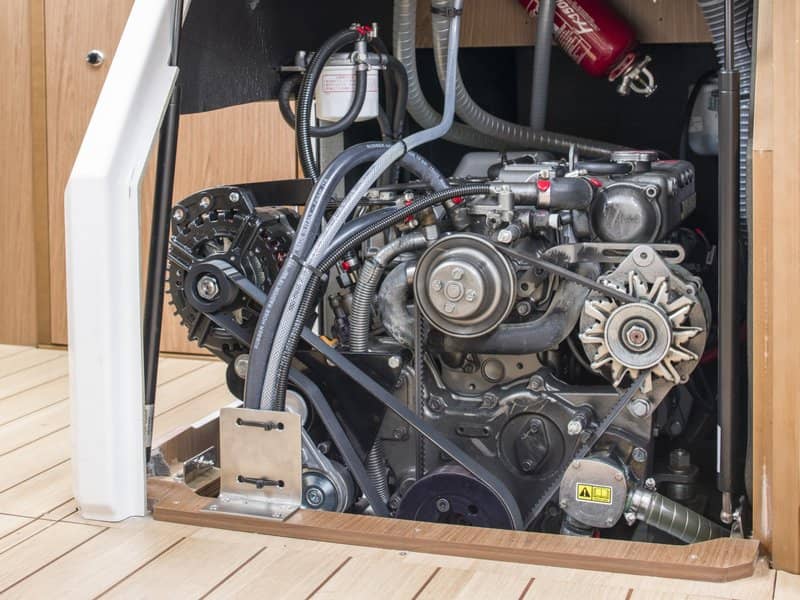
John Rushworth • 29 August 2019
Single Fuel Sailing
Most sailing yachts carry three fuels onboard: diesel, propane and petrol. It would be nice if you didn’t have to – for both safety and simplicity. And in fact that’s exactly what Ken Wittamore, Managing Director of Triskel Marine Ltd., has achieved with his Hallberg Rassy 42, named Armorel. Not only does Armorel use diesel as a single fuel solution; her electrical energy needs are primarily taken care of by Integrel – an advanced generator replacement technology. We’ve reported about the award winning Integrel before in the blog – Nigel Calder and the Integrel 9kW ‘Alternator on Steroids’ . The headline image above shows Integrel fitted to a Jeanneau Sun Odyssey 44. Let’s have a look at how single fuel sailing aboard Armorel, fitted with an Integrel system, comes together – utilising Victron Energy products to store and distribute all that power. A bit of history First a quick look to the past – Ken and Nigel combined have many decades, nay a few lifetimes of experience in the marine world. Nigel with his world famous books and articles, along with his various personal yacht projects – plus Ken with his own boat Armorel and his company Triskel Marine . Getting to the juncture of single fuel sailing with oodles of self generated energy; is one that is the culmination of such experience, the genesis of which can probably be traced back to the HYMAR project in which Victron also initially had a role. I won’t bore you with the details of how we got from there to here – suffice to say a diesel engine with Integrel generation and plenty of stored energy onboard has emerged as the best commercial solution for most yachts with demanding energy and propulsion needs. If you wish though, here is a link to the: Final Report Summary – HYMAR (High efficiency hybrid drive trains for small and medium sized marine craft). Subsequently and as a consequence of the HYMAR project, Nigel Calder was involved in the development of Integrel with the Triskel team. Fast forward to the present and Integrel is now a production item, with system design, manufacturer and installation all by Triskel Marine. Integrel has now been fitted to a number of vessels – all of which use Victron Energy products. They include Armorel – a Hallberg Rassy 42 (using just one fuel), Topaz – a Sun Odyssey 44, plus a brand new Lagoon 46, which uses 4 x Victron 200Ah, 25,6V Lithium Smart batteries in series/parallel giving 20.48 kWh of energy storage @48V, along with an 8kVA Quattro combined inverter/charger . Of course, subject to the vessel, not all require 8kVA inverter/chargers. Armorel in fact uses 2 x Victron MultiPlus 3 kVA inverter/chargers instead, along with the same battery setup as above – which is sufficient to achieve single fuel sailing in her case. Why use one fuel? The best person to explain this single fuel solution is Tom Pugh-Jones, Customer Service Manager at Triskel Marine. Here’s his take on the matter: “Firstly, getting propane off the boat increases safety levels onboard, as you’re no longer having to cook with a naturally colourless, odourless and highly flammable gas. A gas that can’t escape anywhere, save usually into the bilges; an explosion waiting to happen? Also, as many of our client’s cruise in different parts of the world, they have to adapt their gas configuration dependant on where they are in the world – not convenient. The alternative is electric cooking which is a game-changer, but it doesn’t come without its power demands. Armorel’s Techimpex Horizon2 gimballed induction stove, grill and oven – showing the 2,000W & 1,800W hob plates in action. Secondly, we’ve done away with the 4 stroke outboard tender engine, the reasoning behind this is two-fold, we don’t want to have multiple fuels – yet another flammable hydrocarbon – therefore electric simplicity is key. Also, 4 stroke engines seem to struggle more and more with modern fuels as there’s a higher level of bio-ethanol in petrol these days, which gums up carbs and makes them less reliable. Modern electric outboards are great, requiring less maintenance with a similar performance and they charge straight from a 230V socket. Torqeedo offer an excellent range of electric outboards. Their Cruise models range from 5 – 20hp . Torqeedo Cruise electric outboard. With an all-electric energy boat you have to plan less, as you’ve always got available power which allows you to be off-grid for longer. The only difficulty is the large amount of electricity needed, but with new technologies being able to generate, store and distribute large amounts of electrical power throughout a boat – this can now be achieved. Armorel at anchor, with no shortage of electrical power. Integrel whether at anchor or underway allows us to make the most out of our diesel engine and it’s spare capacity, by generating lots of energy – storing that in modern batteries that can easily accept and discharge large currents, quickly.” Integrel “Integrel to our mind is the future of power generation afloat, completely replacing your stand-alone generator by using spare capacity from your existing inboard diesel engine. Integrel uses smart new technology to generate up to 9kW of electrical power without compromising your engine’s performance. In fact, the system actively manages its output, so that the engine is always running at its most fuel efficient. Side view of a standard diesel engine with an Integrel Generator, fitted to Topaz, a Sun Odyssey 44. The battery bank on the right is a 48V bank, comprising of 4 x Odyssey PC1800-FT batteries. By using your engine for both propulsion and power generation, both tasks are delivered at optimum efficiency, resulting in overall fuel savings (in comparison to a separate generator and diesel engine) of up to 25%. One engine, two jobs, less fuel. Integrel Smart Controller aboard Topaz, a Sun Odyssey 44. Integrel is completely automatic, working in the background with no direct input from you. It requires no maintenance other than a periodic belt change, offering substantial savings on fuel and maintenance costs across its lifetime.” Integrel Monitoring aboard Topaz, a Sun Odyssey 44. Energy storage and distribution Of course it’s all well and good having an integrated smart generator, but without a method of storing and distributing that energy to create the power to run air conditioning, a stove, fridge/freezer, maybe a microwave, charge an electric outboard, plus all the usual nav and domestic demands of a modern yacht – well it simply couldn’t be done. That’s where Victron Energy come in. Here’s how such an upgrade works on Armorel. Click the image above to download a PDF of Armorel’s system schematic. With Integrel and the normal alternator – you have system power, stored energy and redundancy like never before.” Complimentary Victron Energy products Triskel Marine use a variety of Victron products in their installations including: Lithium Smart batteries Example – 4 x 200Ah Victron 25,6V Lithium Smart batteries being fitted to a Lagoon 46. Quattro Inverter/Chargers MultiPlus Inverter/Chargers Orion DC-DC Converters Example – Victron Orion DC-DC converters fitted to a Lagoon 46. SmartSolar MPPT – Solar Charge Controllers Lagoon 46 – integrating Integrel and Victron Energy power products. Conclusion Combing Integrel and Victron Energy products helps vessels achieve energy autonomy for Triskel Marine and their customers – which to my mind makes a lot of sense. Such a system gives you as much AC and DC power whilst away from a shore supply as it seems one could possibly need – and all with just one diesel engine, plus a single fuel solution if you wish. One engine, two jobs, less fuel. Single fuel sailing – simple and safe. If that appeals to you then why not check out the links below. John Rushworth Triskel Marine – https://triskelmarine.co.uk Integrel – https://www.integrelmarine.com Credits Thanks to Tom Pugh-Jones, Customer Service Manager at Triskel Marine, for the images and information used in this blog.
John Rushworth • 20 August 2019
“The MultiPlus is amazing.”
I’m not saying the MultiPlus is amazing (although I think it is), but that is what Victron Energy customer Johannes Hovda tells me. Johannes and his family chose Victron products for the conversion of their 2006 Scania Irizar, 58 seater, touring bus – which it seems is large enough to be a school in its own right! Johannes is an active member of the Victron Community , an ideal place for any budding bus, van, boat conversion or upgrade project to begin – a place to share and learn about Victron products with the support of other like minded folk. The photos above show the proud owners of their potential bus conversion on the day of purchase, all completely oblivious to the enormous amount of work which lay ahead. In fact at this point the kids still thought the conversion would be a 3-day project! Back to reality – here’s a few more photos to give you a flavour of this labour of love. In the beginning The beginning – removing the seats, ripping out the interior to the bare framing; with rotten floorboards and some rust to deal with. Spray-foam insulation – which has turned out to be incredibly efficient. Installing the Hydronic underfloor heating system. This runs off of the water heater, as well as the engine coolant and Webasto diesel heater. It’s really starting to take shape now, with the installation of the hardwood laminate flooring. Not to mention welding, welding, and more welding for supports for a new roof window, in addition to all the steel structures being built for the walls, bed frames, room dividers, etc. Nearly there A/C unit mounted in one of the original luggage compartments underneath the bus. The Victron MultiPlus is the heart of both the 24V DC and 230V AC electrical system, along with dual 24V alternators, a Venus GX, BMV-702 and 24V 200Ah Lithium battery pack. Comfort at last Living room with tables and seating for 12 people. 4 x bunk beds, plus a master bedroom at the very back of the bus. Separate shower and bathroom are on either side of the bus in front of the bedrooms. Kitchen, with full-size sink and a flush mounted dual-zone induction cooktop (from IKEA). On the other side (not shown) is a full size fridge/freezer combo (IKEA), a Siemens micro/convection/grill combo oven, A/C unit, a regular washing machine, plus additional AC outlets. Ready for the road and thanks to the “amazing MultiPlus”- the kids enjoy the convenience of using electricity just as they do at home, with air conditioning, regular appliances and lots of ice cream in the freezer… Whilst there are still projects left to complete, such as interior furnishings, trims, doors, lights, etc., the Hovda family have still been able to take their comfortable bus conversion on a 3 week vacation across Europe this summer. A letter of thanks – “the amazing MultiPlus” After their inaugural summer trip, Johannes sent us a letter of thanks to compliment Victron Energy on “the amazing MultiPlus” – that crucial bit of kit that makes all the comforts of home available whilst on the road. Here’s what he had to say: “I just wanted to provide a success story and a shoutout to Victron. Thanks for making an amazing product, which has proved invaluable in our bus conversion. We had gone back and forth about installing propane heaters/cooktops and even considered a diesel (webasto) cooktop. When considering an electricity-based system, we considered how to limit electrical consumption, as well as which appliances or features we could live without. We also considered several cheap inverter products, but finally invested in a MultiPlus 24/3000-70-16, with a Venus GX and a BMW-702. Our battery is a 200Ah Lithium pack. In the end, we decided to just go all in – 100% electric – and have wired all the following on the AC1 output: 1kW Split system Air Conditioner (Heat Pump/Inverter) Dual-zone Induction Cooktop Full-size Microwave/Grill/Convection Combo Oven Full-size Refrigerator/Freezer combo 7kg Washing Machine Outlets for all kinds of tools/accessories, such as heat-guns, hair-driers, hair-straighteners, vacuum cleaner, computers, etc. Electrical Hot Water heater (on AC2), which also can be connected to the engine coolant/webasto). Whilst on our maiden voyage, we visited several campsites across Europe. The ability to use PowerAssist is especially amazing, since several campsites only provided 10A or even 6A of 230V service. So, even with only 6 Amps of available shore power, we had full AC running, whilst cooking pizzas in the convection oven, charging our DC system (lights, kitchen fans, water pressure pump, etc.), running the fridge/freezer and vacuum cleaning – all at the same time! The best part was how we completely “forgot” about being on the road – the Victron setup gave us the freedom to cook, work, clean, and basically operate like a normal home, without ever having to worry or consider any electricity limitations. Future plans include 4 x roof-mounted solar panels (totalling around 1,400 Wp), which will be connected to a future investment of a Victron SmartSolar MPPT charger. In the meantime thanks again for fantastic products (and community ) – the MultiPlus has taken what we anticipated to be a stressful, big headache and turned it into a completely worry free experience.” Conclusion It’s great to hear from customers and such a pleasure when they take the time to tell us of their experiences – my thanks in this case go to the Hovda family for doing so and sending us their photos. On their inaugural summer adventure Johannes tells me: “We have driven 3,800 km. Starting in Norway we took the ferry to Denmark, visited Fårup Sommerland enjoying the privilege of bus parking right by the entrance, drove to Hamburg and stayed at a large campsite (Sud-see) for a few days, then continued further south in Germany, visiting family near Frankfurt. Next we stayed at a quaint campsite for several days, then took a detour over the mountains down to the Rhine for some castle sightseeing and even got to take our bus on a miniature ferry across the Rhine. Finally we drove home via Hamburg and Denmark again, finishing with a trip to the beach just south of Hirtshals before catching the ferry home. Everything worked out great. We especially remember commenting to ourselves how awesome the Victron setup worked whilst cooking eggs and bacon on the cooktop, with fresh baked baguettes in the oven as we were sitting in the ferry queue in Hirtshals.” I guess this fun photo of the Hovda family absorbed in sand castle building says it all. It’s what family holidays are all about – even if they have all the comforts of their usual home! John Rushworth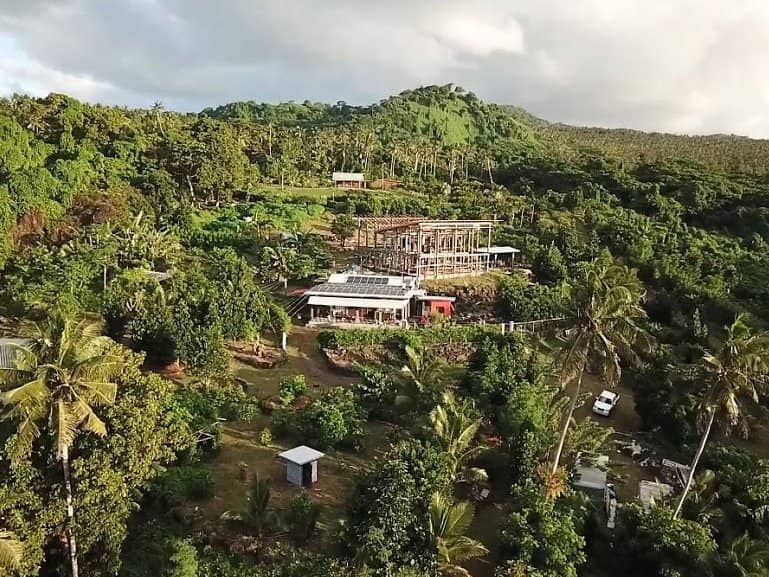
Justin Tyers • 08 August 2019
Fijian organic Iced-Cream: 3-phase off-grid
A remote part of the island of Fiji with no access to grid electricity may not sound like an ideal location for a business. However, German national Robert Glowatzki and his Italian wife Lucilla Chiericati have set up a factory to make organic iced cream – using exotic fruits like S oursop, Passionfruit and Vudi (my mouth is watering as I tell you this). Initially they powered their 3-phase machinery using a generator – but felt it was incompatible with their ‘organic produce’ ethic …and with their own ‘sustainability’ principles. Not only that, but the generator was noisy, and the fuel was expensive and troublesome to obtain. They decided to ‘go green’, installing a 3-phase solar power plant to run the factory – making them the first iced cream factory in Fiji to be fully powered by the sun. The system will also power their home – which is under construction. Fuel savings are projected to be about $13,000US per year. Silence is priceless. The new energy system was designed and installed by GreenPower Co and Solar Fiji . It had to be compatible with a back-up generator which the factory already owned (a Geko 4kVa 3-phase Diesel); and because Yanuyanu food production is a young business, they needed their off-grid system to be expandable – allowing it to grow with the company. Solar Fiji’s director Joe Baravi was delighted to be awarded the contract for this installation – it’s one of the largest they have completed: Forty-two Canadian Solar Hiku 400w solar panels with 16.8kWp have been chosen; along with a 28kWh bank of Simpliphi 48volt Lithium Phosphate Batteries. One of the strengths of Victron Energy’s equipment is its extensive compatibility with third-party manufacturers – at the heart of this installation lies a Color Control GX , offering remote management, and controlling power harvest and storage via: 1 x Victron BlueSolar MPPT 150/45-Tr 3 x Victron SmartSolar MPPT 250/85 15kVA of continuous power (30kVA peak) is made available for running the plant by 3 x MultiPlus 48/5000 Inverter/Chargers which have been configured for 3-phase operation. With MultiPlus, as their business grows – so the installation can be expanded. Up to 6 sets of three units (wired for 3-phase operation) can be parallel connected to provide 75 kW / 90 kVA inverted power, and more than 2000 Amps charging capacity. When their generator is in use the unique PowerControl and PowerAssist features of the MultiPlus will automatically reduce the power it is supplying to the batteries as factory loads increase. If that load should exceed the output capability of the generator (or any other AC source) …the MultiPlus will boost AC supply to the loads by adding battery power to it. All this happens so quickly that uninterrupted power is assured. (Further details of Victron/Third-party-manufacture battery technology compatibility is available here ). The Yanuyanu iced cream factory complex is surrounded by organic farmland – so the clean air, silence, and minimum use of fossil fuels will be welcomed by all… Justin Tyers Thanks to Ayshna Lal (Business Manager at GreenPowerCo) for providing the details for this article.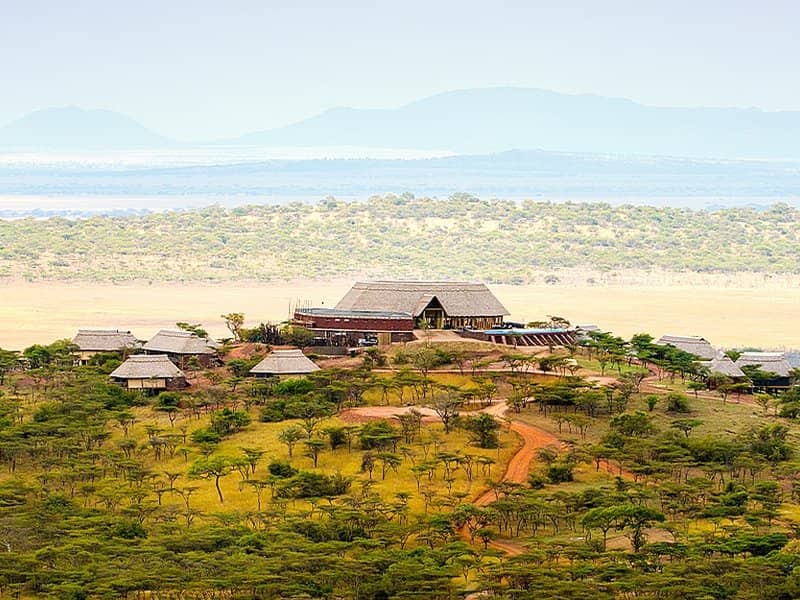
John Rushworth • 31 July 2019
Serengeti Off-Grid Solar Saviours
Sometimes a project is just too large, complex or geographically remote for one company to do on their own. It takes cooperation to achieve the desired outcome; and so it is with Lahia Lodge and their large off-grid solar/battery system, in Tanzania’s fabulous Serengeti national park. Cooperation – GadgetroniX technician replete with Victron cap. This brand new luxury resort is (surprisingly) the first large tourist accommodation in the park to run entirely from solar power. This is not just for lighting, as it includes heating, running the large fresh water supply pumps, plus all the equipment needed to operate the infinity swimming pool. That’s every electrical item that such a special resort needs – and now it’s all off-grid solar/battery/electric technology. Approaching the Lahia resort. Of course Lahia resort has a backup generator too, just in case of an emergency or maintenance. Yet were such a diesel the main power source – imagine the fuel consumption, the noise, the fumes – not what you want where the beauty of the vista, the peace and wildlife is why people come here. Just a few of the 488 solar panels needed for the resort. MG Energy Systems B.V. The project lead in this instance are Victron Energy’s close friends, MG Energy Systems B.V. , who are also based in the Netherlands. In Leeuwarden in fact, which is about an hour by car from Victron’s Almere office. Always good to keep your friends close. Of course as the project build itself was in Africa, that required in-country cooperation too. In this case that was down to local Victron Energy and MG Energy Systems’ dealer GadgetroniX Tanzania, in close cooperation with Anco van Bergeijk (Victron senior engineer based in West Africa). Solar Saviour System To give you an idea of the scale of this project – think 488 solar panels (totalling 160kWp) and 20 NMC lithium battery modules (150kWh), based on 18650 cells. Now imagine that battery bank as a lead one; apart from the sheer volume/space that such a lead bank would take up – it would require about 120 batteries with a weight of roughly 9 tonnes to get even close to the lithiums! Lithium/Solar System. An obvious choice then – 20 x MG HE lithium-ion batteries were chosen weighing ‘only’ a total of 900 kg, yet giving the same useable energy as that large lead bank would have. It’s not just weight though, as lithiums can charge and discharge much faster than lead. Indeed were the system a lead battery bank with the heavy use of such a demanding resort, it would likely last only a few years. By comparison this lithium-ion system is strong enough and tough enough to power an entire off-grid tourist resort (like Lahia) for at least a decade or more. Whilst solar and lead-acid batteries are still widely used in Africa, it’s a struggle to build large systems for self-sufficiency – that’s where lithium-ion comes in. For a comparison see this blog: Lithium-ion vs AGM . A first Here’s what Mark Scholten of MG Energy Systems had to say about their completed project. “It’s our first system to run in parallel redundant mode, which means several strings of batteries are connected in parallel and set up to control the Victron inverter/chargers through a digital link. Even in the event of one battery string failing, the installation will keep running on the remaining ones. In case of an emergency or maintenance a back-up generator will seamlessly kick in. The Lahia resort system is a proof of concept for the tourist industry – that it can be done and this is how. We’ve worked long and hard to commission such an advanced large-scale off-grid eco-friendly energy system, but it’s been worth it. Many thanks for the hard work of the local team and staff to help bring this project to fruition. As they say in Swahili – A sante Sana (Thank you very much).” Components used in the system are: 488 x Solar panels 4 x Fronius Eco 9 x Victron Quattro 14 x Victron MPPT 2 x Victron Venus GX 5 x 4 MG HE Series battery modules 5 x MG Master LV Cooperation & Compatibility Victron Energy cooperate with many companies to ensure their products work well with such partners. MG Energy Systems and indeed Fronius (in this case) are such examples. 9 x Victron Quattro, 4 x Fronius Eco It’s not just batteries from MG though when it comes to compatibility with Victron products. There are many others too. Battery Compatibility: https://www.victronenergy.com/live/battery_compatibility:start To learn more about using Fronius with Victron products, these links should give you an idea: AC-coupled PV with Fronius PV Inverters: https://www.victronenergy.com/live/ac_coupling:fronius CCGX & Fronius PV Inverters: https://www.victronenergy.com/live/ccgx:ccgx_fronius Victron Community – search for Fronius: https://community.victronenergy.com/ Conclusion Cooperation between companies and compatibility with their various products are key to building integrated systems, where specialist knowledge from each company is required. Maybe this photo of a local smiling GadgetroniX technician working with Victron and MG Energy products says it all… If you have a project that you need battery cooperation on why not give MG Energy a shout, or indeed have a chat about it on Victron Community in the first instance. Credits My thanks to Mark Scholten of MG Energy Systems for the information and images used in this blog. If more companies like theirs built renewable projects like this we can truly call them – Serengeti Off-Grid Solar Saviours. The headline image used in this blog is courtesy of Tanganyika Wilderness Camps Ltd . John Rushworth Useful Links MG Energy Systems B.V. – https://www.mgenergysystems.eu/ MG Energy Systems on Facebook – https://www.facebook.com/mgenergysystems/ GadgetroniX Tanzania on Facebook – https://www.facebook.com/gadgetronix/ GadgetroniX & Victron Energy – https://gadgetronix.net/victron-energy/ Tanganyika Wilderness Camps on Facebook – https://www.facebook.com/twctanzania/ Lahia Tented Lodge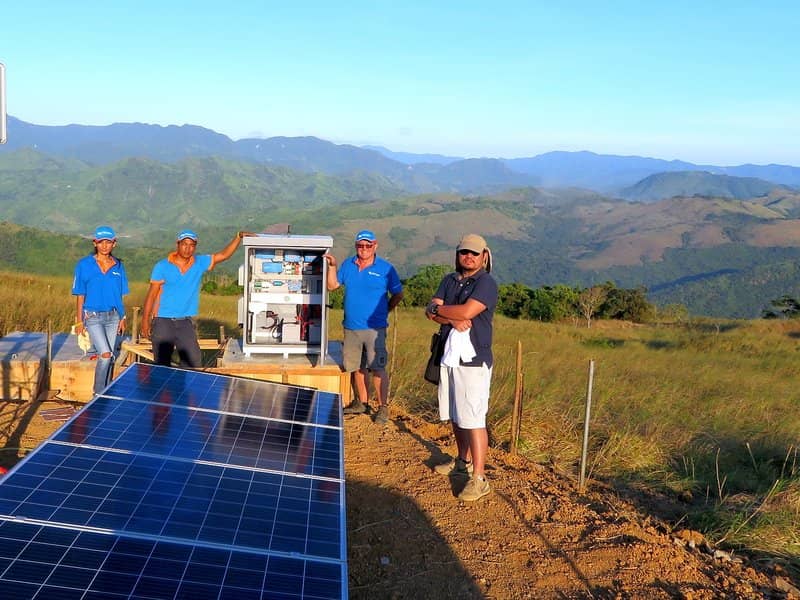
John Rushworth • 23 July 2019
Onshore wind measurements using vertical profiling Lidar
We get some unusual applications of Victron Energy products and this seems to be in that class – a niche market where wind measurements need to be taken for onshore wind farms. This installation uses Victron components to give power to and allow a vertical profiling Lidar measuring device to run with a 24/7 electricity supply, utilising off-grid battery/solar power. This sophisticated wind Lidar solution collects precise data at differing elevations, providing an ideal resource assessment for wind turbine optimisation and monitoring – be that in the development or the operational phase. Often proposed wind farms are in remote areas areas and getting a reliable electricity supply is no mean feat. Of course just a generator could be used but that is not the most environmentally friendly solution and it requires a constant supply of diesel – not a situation you want when a site is on a mountain top! Better to have a generator as backup. The team at PhilSolar revel in such remote challenges and a few months ago they were approached with just that. Modular design The challenge was to design a system that could be easily constructed and initially tested in an on-grid friendly environment and then transported to be rebuilt at a site, then moved to another site as required – as these Lidars are moved regularly. A plug and play modular system was the solution. PhilSolar designed a solar/battery enclosure with blower and exhaust fans, programmed to run during the heat of the day. Two temperature sensors measure the internal enclosure and external temperatures. The blower has a capacity 130 CFM (Cubic Feet per Minute) creating an airflow through the enclosure. The metal enclosure contains 2 x MPPT solar chargers, 2 x battery chargers and 2 x 12.8V/100Ah lithium batteries in parallel, along with local and remote setup/monitoring. Added to that is a standalone solar array of 2 x 2 x 270Wp solar panels so energy is assured throughout the year, including periods of poor PV harvest. This solar array is enough to charge the batteries in most situations at the various locations, however a backup generator is also available just in case. Connections The modular components have plug and play connections. For the backup generator a Victron shore power cable is used along with a Victron stainless steel power inlet which is built into the enclosure. For the Lidar its power cable is connected to an Anderson plug and a corresponding one to the enclosure. For the solar array MC4 connectors are used. All components including the batteries have Bluetooth communication and can easily be setup and checked with a smartphone on site. The backup generator is connected to the 2 x 25A battery chargers, however the use of the generator is expected to be infrequent. A Venus GX and a GX GSM with an external antenna is connected to the system for remote communication and management via the VRM . System components 2 x SmartSolar MPPT 100/50 Solar Charge Controllers 2 x Blue Smart IP67 Charger Waterproof battery chargers 1 x BMV-700 battery monitor 1 x Venus GX 1 x GX GSM + Outdoor Antenna 2 x PhilSolar 12.8V/100Ah Bluetooth lithium batteries 4 x Jinko Solar 270W Polycrystalline panels 1 x Own design and tailor made galvanised and powder coated enclosure Art Sign mounting set, with inhouse made concrete ballast blocks Remote challenges As usual the logistics of getting the equipment to site were challenging. About 400kg materials needed to be hauled to the top of the mountain. A few local strong-bodied guys managed it in one day. It’s a 2.5km uphill hike with bulky, heavy equipment – and some parts were very steep. The installation site is somewhere up there… They make them strong and tough in the Philippines. Solar umbrella! Installation time. Ready to connect module wiring and test. Conclusion This isn’t the first of PhilSolar’s remote installation challenges , and whilst the design can be commended I think the principal congratulations must go to the workers that lugged all that equipment to site. Surely the modular re-assembly of the system on site was the easy part! My thanks to Danny Maesen of PhilSolar in the Philippines for the info and photos used in this blog. If you have a remote installation challenge in the area do give Danny a shout. Details below. John Rushworth PhilSolar Equipment and Trading Corporation – Supply, import, logistics and Victron support. Website – http://philsolar.ph Contact Danny Maesen: danny.maesen@me.com PhilSolar Equipment and Trading Corporation 2F Cargohaus NAIA Complex Paranaque City 1700 Manila Philippines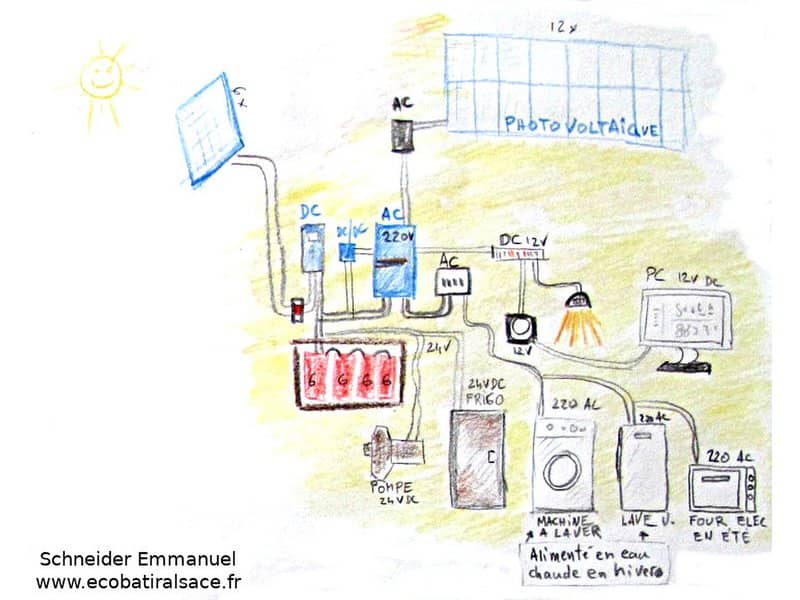
John Rushworth • 16 July 2019
DIY off-the-grid living & working
Some of the most fun blogs I get to write are often about interesting individuals and their DIY installs, rather than some high end multi thousand Euro project. Victron Energy is far more than the commercial professional end of the market. As such we love hearing from our individual customers about their projects too – particularly enthusiastic DIY’ers – who by their very nature become knowledgeable about Victron products through determination, research and simply doing it themselves. Emmanuel Schneider from France is such a person and it is with delight we received the following letter from him. Emmanuel building from the ground up… A letter from France I would just like to thank you for all your products that you have developed. Thanks to you and the sun, I was able to build my house. I live in France in the Alsace region (by choice I live off-grid) and here there is a particular architecture that dates back 500 years or more. So I recovered an old house that dates back 1600 years and made it as comfortable as a 2019 house, with an ecological philosophy. I created my off-grid renewable energy electrical installation from 6 x 250Wp photovoltaic panels with a BlueSolar MPPT 150A 24V solar charge controller and a MultiPlus 24V 3000A combined inverter/charger, as well as an Orion DC-DC converter 24V/12V and a BMV-700 . I have 4 batteries of 6V totalling 600Ah. What a pleasure to no longer have an electricity bill! A little later on I added an AC inverter with an additional 12 x 250Wp photovoltaic panels, which thanks to the MultiPlus simulates an electric grid. I was able to set all this up with my computer and a MK3-USB Interface . I have built a workshop too which I work from every day. I never run out of energy, to such an extent that I bought an electric boiler and I’m able to heat my domestic hot water with electricity in summer. I am so happy with my installation, that I did the same for my parents. My neighbours saw that my system was working well too and so I also made an installation for them – using an EasySolar , because his wife was afraid to leave the electricity grid. For me, the future for energy must be like this. Each house having its own electricity supply, connected house by house, village by village. I have many people who come to visit me and ask me to do the same electrical installation as my home. Little by little I have become an installer of the Victron brand, without intentionally meaning to do so! I wish you a long life and congratulations again. A bright day to you. Emmanuel – a simple user of your products. Powered by Victron Energy products… Emmanuel builds his off-grid home It’s not just Justin Tyers (my fellow Victron blogger) that builds their own timber framed, straw bale insulated home . From a solid base houses grow… The wooden frame begins to take shape. At last a roof… Topping out. Natural materials – earth and straw bales. Beautiful tiles. Home is where the heart is – and the workshop! Emmanuel’s off-grid workshop Solar powered workshop It wouldn’t be a workshop without some Victron Blue… Conclusion Speaking to Emmanuel, now he’s installed his own and those few other Victron systems, he tells me he has “realised the future” and wants to deploy the “Victron electricity network” further afield. An example being that he and his neighbour are now connected and are able to share the energy that the sun is willing to give them. In conclusion he says – “Perhaps, little by little, I will be able to convince the village, which is sometimes easier than convincing politicians.” Maybe you are keen to get started with a DIY install using Victron Energy products, where nearly all the products you need are available under one roof? If so, here are some resources to get you going: The Victron Community Victron Professional Victron Remote Management (VRM) Victron Energy’s YouTube Channel Victron on Facebook John Rushworth Credits My thanks to Johannes Boonstra for making me aware of this project via Victron Sales Manager Emmanuel Mercier in France – and of course Emmanuel Schneider himself for the images and information used in this blog. Emmanuel Schneider’s website
Justin Tyers • 04 July 2019
Thailand micro grid fills Redflow ZBM2 with Victron Energy
Ten Redflow ZBM2 zinc-bromine flow batteries – which have a ten year warranty and are great for use in high ambient temperatures – are storing 100kWh of energy to provide a village in mountainous northern Thailand with electricity – for the first time. Ban Pha Dan, 70km south of Chiang Mai is surrounded by a wildlife reserve where power poles are forbidden – consequently access to the national grid has never been an option. The installation – which is backed by the Thai Government – consists of a 19.8kWp solar array; energy from which is harvested by five Victron BlueSolar 150/85 MPPT solar charge controllers. 30kW of power is available to the school, village hall, and temple, thanks to three Victron Quattro 48/10000/140 Inverter-Chargers working in parallel. Lithium batteries deliver power to the houses. The well proven plug-in compatibility between Redflow battery technology nested within a Victron installation is seamless – and thanks to a Color Control GX, interrogation, control and management of all devices is available at the touch of a button via the CCGX screen, or remotely using the free to use Victron Remote Management Portal. Thailand’s Energy Minister Dr Siri Jirapongphan visited Ban Pha Dan to inspect the new microgrid and energy storage system in mid-January. Dr Jirapongphan said that non-fossil energy would account for 35 per cent of Thailand’s total energy capacity by 2037. Redflow Managing Director and CEO Tim Harris said ‘The Ban Pha Dan deployment provided a compelling model for remote communities in both developing and developed countries. This solar-powered microgrid with energy storage shows how to provide environmentally-friendly energy for remote communities.’ The flow batteries and Victron equipment were installed by TSUS , Redflow’s long term partner in Thailand. TSUS has extensive experience in the design and build of renewable energy systems in both the public and private sectors. Among the advantages of zinc-bromine flow batteries are: 100 per cent daily depth of discharge, tolerance of high ambient temperatures, a simple recycling path, no propensity for thermal runaway and sustained energy delivery throughout their operating life. Tim Harris says: ‘Just like mobile telephony leapfrogged fixed-line telecommunications in developing countries, microgrids can deliver the benefits of modern technology without the massive infrastructure spend required by grid-based energy utilities. Redflow believes microgrids present a strong market opportunity for our zinc-bromine flow batteries.’ Justin Tyers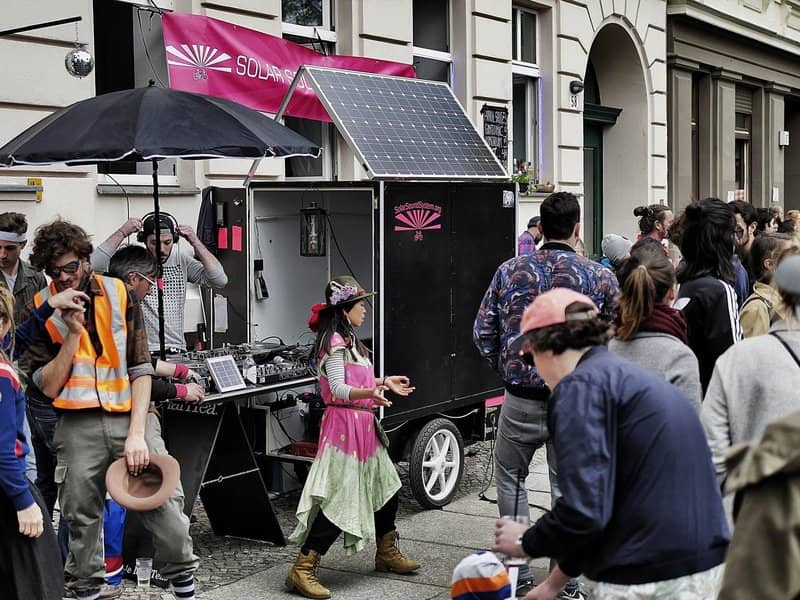
Justin Tyers • 27 June 2019
Solar Sound System – Summer Smoothing
The man behind the tables needs your help. So that you can continue to enjoy the smooth sounds of summer you’ll need to donate some pedal power. For twenty years the Bicycle and Solar Panel powered Solar Sound System (3S) has been spreading its ecology message against a background of music. Six hundred events later, Solar Sound System – which has bases in France (Paris and Marseille), Germany, the Basque region of Spain, Tel Aviv, Hong Kong and Lausanne (where it all began twenty years ago) – plans to expand its franchise model worldwide in order to spread the word about how easy it is to make the transition to renewable energy. Potential managers can get in touch with 3S here . Front man Rubens Ben tells me he’d particularly like to hear from someone in Florida or California. 3S was started by Cedric Carles, joined later by Thomas Ortiz and Rubens Ben, who are passionate about spreading their message of culture, ecology and professionalism everywhere there’s a street-party; cocktail party; festival; park – or in fact anywhere people gather to have a good time. So what’s inside the box? Since its inception 3S have been using ultra reliable Victron energy components. The inverter is a Phoenix Pure sine wave 24/800 The multi-tasking MPPT solar charge controller handles power from the panels and power from the pedals and stores in one or two AGM Batteries In 2016, so that the music never stops, they began 24 hour broadcasting at Radio3S.org When it’s time to kick-back, why not chill out to the notes of an ecologically-powered Solar Sound System? Justin Tyers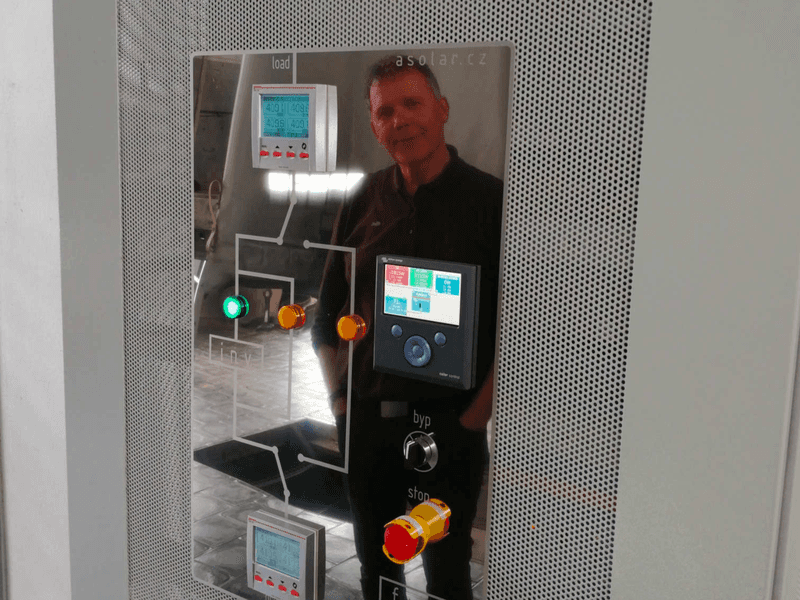
Justin Tyers • 25 June 2019
Three-Phase, Grid-tied, Energy Storage System …Czech it out
Helped by a generous state subsidy, Czech used-truck dealer Dvorák Trucks have been able to dramatically increase self-consumption from their PV array, and provide themselves with greater three-phase energy security. This very tidy installation was designed by Asolar in association with the Czech and Slovak Victron distributor Neosolar Dvorák Truck – Servis s.r.o. – who buy and sell trucks trailers and plant – already had a 51kWp solar array but weren’t able to take full advantage of the power those panels produced without battery storage. One of the advantages of the Victron Energy’s Inverter/Chargers is their compatibility with a wide range of battery technologies – allowing Dvorák Trucks to incorporate a bank of 12 BMZ ESS7 Lithium ion batteries providing 81.6kWh to their Victron Quattro inverter/chargers, configured for 3-phase power output – with no issues. Three Phase Three Victron Quattro 48/10000 inverter/chargers provide three-phase power to their maintenance and repair workshops. A mains inverter and three-phase energy meter is installed on their grid-tied system. Victron equipment is accredited with a long list of compliance certification – making it possible to build Energy Storage Systems which can be connected to the national power grids throughout the world. Maximising self-consumption Dvorák Trucks now enjoy greatly increased self-consumption of power they produce which saves money; provides an uninterrupted power supply; offers a peak power capability of twice the continual power rate; allows powerful battery-charging; AC current limiting – to prevent overloading the grid; and enables the PowerAssist function – a feature of the Quattro which adds battery power to grid-power in order to meet high demand. The Quattro has two AC outlets – allowing it to ‘zone’ power supply into ‘essential’ and ‘non essential’ equipment. If there is no AC input – during a power outage for example – the Quattro will automatically disconnect non essential loads such as air conditioning, for example. Dvorák Trucks, buy and sell, maintain, and valet Trucks, Coaches, Plant, and Vans – during a power outage, at night, or when the sun is not-so-bright, the features of their new installation allow the workshop to keep on trucking. Justin Tyers
Justin Tyers • 06 June 2019
EnGo – Smart Solar Street light pole
EnGoPlanet – sustainable solar lighting experts – recently launched a stylish new street light pole product which can even be retrofitted. The attachable design is of a solar cylinder module which can be quickly and easily mounted on any suitable pole for easy installation and disassembly. Using 6 slim solar panels, with a solar cell efficiency of up to 21.2%, fixed to a hexagonal frame, ensures that half of them will face sun light at any time of the day. The off-vertical cluster arrangement of the panels makes them less vulnerable to high-winds, less likely to accumulated dust and grime, and easier to clean. The energy is harvested by a Victron SmartSolar MPPT 75-15 . Bluetooth enabled, SmartSolar MPPTs include features which protect the battery from being too deeply drained, and have intelligent dynamic charge algorithms which work with the seasons to ensure the battery will at least periodically be returned to 100% charge. EnGoPlanet use their own high-quality Lithium batteries, making the unit suitable for off-grid applications where night lighting is required. They can also be used where a grid connection is present – in which case the units will run from their own batteries except where long-continued spells of poor weather require a power supplement to be drawn from the grid. This option is recommended for locations which are often cloudy, or shaded. Alternatively, grid connected poles can be supplied without battery. Energy produced by the panels will be sent directly to the grid. Savings of up to 80% are possible. EnGo Tower installations are also able to collect valuable environmental data which can be interrogated online. Other applications for the poles are for uses such as CCTV, sensors, wifi hotspots, and even phone charging points. Justin Tyers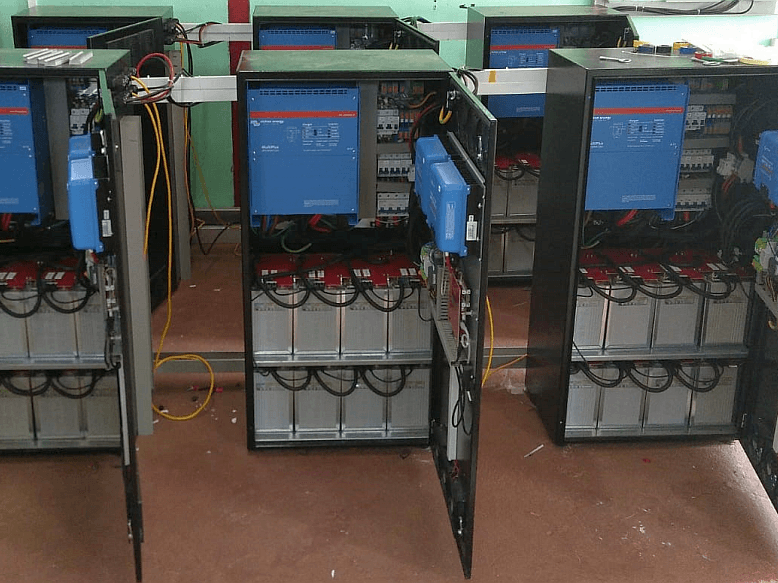
John Rushworth • 16 May 2019
BOS AG: Myanmar Li + Pb Mini-Grid
BOS AG (Balance of Storage Systems AG) are a supplier of products and services for off-grid energy solutions. Based in Neu-Ulm near Munich in Germany and founded in 2014, the aim of this young company is to become a leader in decentralised energy supply. Their focus is on Li-Pb (lithium-lead) hybrid charging technology for solar systems which support intelligent load management. As BOS use Victron Energy products in their systems it was good to hear from one of their staff and to gain insight into how Victron products are integrated into their solutions. My thanks to Bob Hopman of Victron Energy for making me aware of this project. Here then is a guest blog, by Veeresh Anehosur of BOS, about a mini-grid on Kenti island in the Mergui Archipelago . John Rushworth Kenti island Mini-Grid Mergui Archipelago (locals call it Myeik) is a region of untamed beauty comprised of 800 islands, with beautiful mangrove forests. Most of these are uninhabited and untouched, whilst some are sparsely populated and off-grid. One of these islands is Kenti island, which is a 3 hour drive, then a 20 minute ferry ride from the port city of Myeik . Around 2,500 people call Kenti island their home, where their major sources of income are from fishing, rubber plantations, farming, shops, small workshops for tasks such as welding, grinding, minor repairs to boats, and a rice mill. Until 2017, the island received power for only 4 hrs in the evening from a 50kVA generator, owned by a private individual on the island. People paid 650Kyats/kWh (USD 0.6/kWh unit) with a minimum usage of 10 units per month. This meant the villagers had to pay a minimum of 6,500Kyats (USD 6) per month regardless of whether they utilised the full units or not. The 4 hours of energy in the evening was also not sufficient for the villagers, as they couldn’t use it for anything apart from lights and phone charging. Altogether not an ideal when considering the high cost of energy, which was a major expense for the islanders. A better solution was needed. Under the NEP program with the support from World Bank and DRD, a 63kWp 288kWh lead acid mini-grid was built in June 2017. The mini-grid was well accepted and villagers started to buy fans, refrigerators, rice cookers, washing machines and other such conveniences. Until recently, the mini-grid worked fine but in recent times the capacity fell short as the energy demand had shot up due to the demand. This increased the diesel generator runtime significantly, which also increased the cost of energy to the developer. The company which owned the mini-grid (Techno-Hill) approached BOS AG (BOS) for a solution to expand the mini-grid capacity to cater for the growing energy demand. BOS recommended 6 of their HS10000 solution, which is a Lithium based plug and play solution with inbuilt Victron inverter/chargers and MPPT solar charge controllers. The system was designed to be a Hybrid, combining lithium and lead acid batteries, the combination of two differing battery types helps to reduce the cost whilst keeping the performance and life as good as lithium on its own. To Reach Kenti island, we had to take a flight from Yangon to Myeik, a taxi ride from Myeik to a jetty and then a boat ride. The road to Kenti island from Myeik was quite rough alongside a thick rubber plantation. On reaching the jetty, a small boat ferried us to the village in 20 minutes. Our daily shuttle to the village. Equipment getting loaded on to the ferry. All set for the installation! Our team members from Techno-Hill were happy that they didn’t need to carry heavy lead acid batteries this time, as logistics on these islands is quite a nightmare, since everything needs to be hand carried due to the unavailability of forklifts. People on the island were happy seeing the equipment, as this meant that they would now be able to do more with the extra energy – like power foor an ice making machine! The installation started with the PV panels. An additional 48kWp of Solar PV was installed on top of the 63kWp which already existed. On the power side of the system, 6 x MultiPlus 5kVA inverter/chargers and 12 x 150/70 MPPT solar charge controllers, along with 60kWh of Lithium-Ion batteries were added to the system. After two weeks of hard work in the hot and humid Myanmar weather (getting bitten by mosquitoes and sand flies was an interesting experience!) the installation was completed. In the photo above, the old Schneider system with XW inverters can be seen in the background along with lead acid batteries from Luminous on the left. On the right-hand side of the photo are the HS10000 units with Victron components inside the box. The new system capacity is now 111kWp PV, 288 (Pb)+60 (Li) kWh battery backup with 51kVA (XW inverters) + 30kVA (MultiPlus). The project has now been running since February 2019 and has helped the developer Techno-Hill to reduce the diesel consumption significantly. The Lithium capacity can further be increased as and when needed, as the HS10000 is very modular and scalable. It is incredible how the power has changed the lives of these island people; it seems like the village comes alive after sunset with so many activities going around on the island. Fishermen export their fresh sea catch to Thailand and Japan everyday in the evenings, school children study together, people hangout over a beer (yes, they can now chill the beer!). School children study in the evening. Relaxing in the evening. The hybrid combination of lithium and lead acid is a patented technology from BOS AG. Scaling mini-grids with lead acid backup has been an issue with lot of projects, as lead acid capacity is not scalable. In such cases, the BOS solution of expanding the capacity with lithium batteries is helping developers and energy producers to scale up with the least capital expenditure. Veeresh Anehosur BOS AG (Balance of Storage Systems AG) Links Website – https://www.bos-ag.com Facebook – https://www.facebook.com/balanceofstoragesystems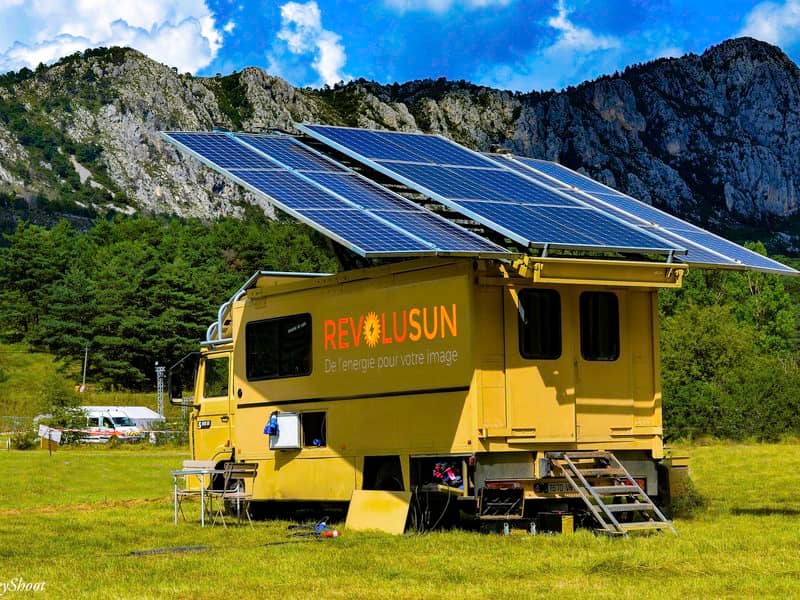
Justin Tyers • 02 May 2019
The Revolusun Revolution
Guillaume Leblond is on a mission to revolutionise the way power is provided at outdoor events. His company, Revolusun supplies green power …whilst at the same time spreading his sustainability message. For him, it’s a journey which began twenty years ago… Guillaume became interested in sustainable power in the way a lot of us do, building systems which provide camper vans with go-anywhere electricity. That experience sparked a passion for sustainable energy. He has studied the subject at Companions of the Solar Energy in 2006, he has worked it, and now in partnership with a friend who is a solar-electronics distributor he has built a ‘mobile’ business -Revolusun. When I say he ‘built’ a business, I mean it quite literally: In 2015 he bought a truck and converted its chassis to turn it into a mobile power plant. On the roof he added a hydraulic solar frame which unfolds to extend 30m2 of solar panels …and point them directly at the sun. Because the panels are roof-mounted, they take no ground space, and don’t hinder passers-by. The Solar panels, together with a Gel battery bank, enables him to provide clients with up to 70kWh of energy in a single day …beginning the moment he arrives. But his customers gain more than just a peak power capability of 20kW – the powerful message behind all this is that we care for the environment …and it’s a message his customers can make all their own by emblazoning their corporate colours and logo onto the Green Power Truck. Revolusun allows for silent, smoke- and pollution-free power for sound, light and refrigeration equipment at outdoor events. It’s a must-have when the event is all about enjoying the beauty of the great outdoors – but it also has a powerful message at motor sports events …where big organisations need to show that they care about the environment. For event organisers Revolusun is a win-win situation. They benefit from silent power, whilst at the same time demonstrating to their visitors that they are concerned for the environment. Let’s look behind the scenes at the components Guillaume has used to build the system: 2 Multiplus 48/5000/70/100 2 MPPT 150/70 2 DC link box [now known as the Lynx range] 24 Deep cycle Gel Battery The installation provides a maximum 40A AC via 12 separate outlets – or up to 200A with an external power supply. Révolusun also offers 2 external chests with P32, P17 and conventional jacks. Whilst working on site the truck is provided with a full-time engineer – plus, of course, the system can be monitored on a mobile phone via the VictronConnect app. At the heart of the system is the communication gateway – the Color Control GX – which together with the battery monitor provides real-time dynamic control and data: 1 CCGX 1 BMV 1 long range antenna The mobile energy system arrives with a fully-charged battery bank of over 1300 Ah – so the system is ready to deliver regardless of whether the sun is shining or not. It offers 10kW of continuous power and up to 20kW peak power via 12 AC outlets – which Revelosun points out is enough to run three houses. It’s becoming increasingly popular at outdoor country events to provide silent, green power – and at some events it is expected . Guillaume is working hard to make sustainable energy the norm and is currently building a second power truck capable of even more power provision. He welcomes enquiries from all over the world – and if you too are passionate about green power, or if you are interested in partnering with him, Guillaume Leblond would like to hear from you. Here’s the concept in action: Guillaume’s company Sol R Max installs domestic Solar Power and water Heating systems in his native St Jean d’Avalanne in South Eastern France. Justin Tyers
Justin Tyers • 16 April 2019
Power in Paradise
To say that Fiji is close to New Zealand is a bit like saying that Scotland is close to Spain – such is the scale of the Pacific Ocean. But at 18 degrees South, seven or eight hours of sunshine per day is typical throughout the year – making Solar energy an obvious choice for islanders who wish to overcome any breakdown in grid-electricity supply. With 300 islands scattered over its pristine clear waters, reflecting blue skies, access to the public grid has some obvious limitations in Fiji. Due to high energy demands, certain areas of the main islands experience occasional blackouts or brownouts. For some, energy back-up is essential. That’s where Solar Fiji – a renewable energy company based in Nasinu, Suva, on the beautiful tropical islands of Fiji – step in. To meet local demand they employ five technicians who have been trained on the island, and at The Green Power Company HQ in Melbourne Australia. The Morris’ residence on the western side of the main island, for example, occasionally experience unexpected blackouts which disrupts their work, and their lifestyle. Not any more. One of Solar Fiji’s most recent installations, the family have recently provided themselves with an independent power provision which will allow them to enjoy an uninterrupted power supply. A Victron Quattro 48/8000 inverter charger has been chosen to meet the family’s occasional high power demand which might otherwise cause a trip to occur when any heavy-loads are turned on. Quattro’s PowerAssist feature allows battery power to be added to grid power offering a Peak Power Capability of 16kW …it’s hard to imagine what it can’t do. The Morris’ installation consists of: 12 x 270W QCells Solar Panel 2 x Victron MPPT charge controller 150/45 1 x Victron Color Control GX 1 x Victron Battery Balancer 1 x Victron Battery Monitor BMV 1 x Victron Quattro 48V 8000W 8 x 12V 100Ah Narada High Temperature Battery By installing a grid connected solar (PV) energy supply, electricity reliability increases to 100%, silently, and without burning fossil fuels. And whilst energy prices are increasing (and we are all using more of it) the cost of solar energy installation will soon pay for itself providing you with free electricity and ensuring that you, too, live a little closer to paradise. When you actually live in paradise, and all the hard work is done, you might as well pull-over for a few minutes to inspect the beach. Thank you to Ayshna Lal at The Green Power Company; and to Victron’s Chris Soumbassis for bringing us news from the tropics. Headline image by HeikoBrown Justin Tyers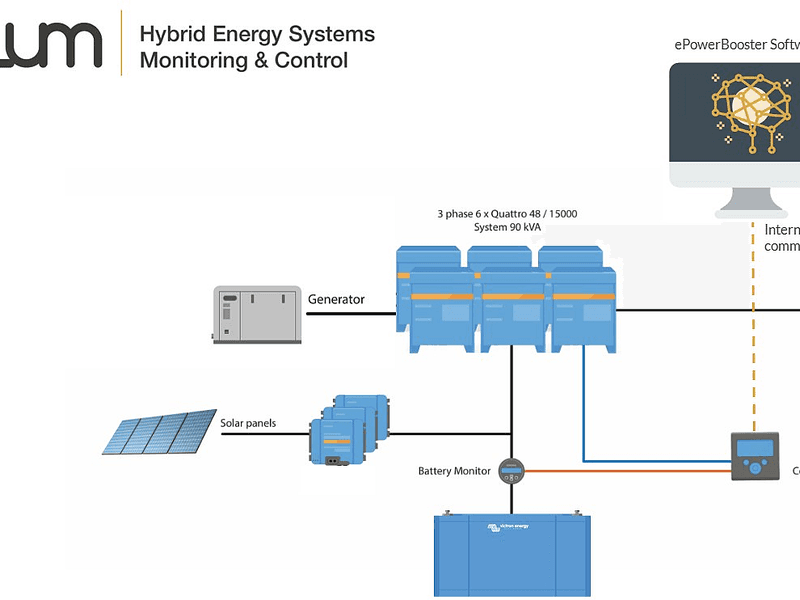
John Rushworth • 11 April 2019
ePowerBooster: Saving fuel in hybrid energy systems
Karim El Alami and Cyril Colin met at UC Berkeley in California, whilst studying for their degrees in civil and environmental engineering. Their drive was to develop software to manage hybrid energy systems and reduce operators’ bills. In this short case study we focus on a hybrid energy system using Victron Energy components and ePowerBooster software – a new cloud-based controller built by Elum Energy, the company Karim and Cyril founded after their university days. Introduction It is often hard to define fixed genset start and stop rules that stay optimal throughout the year. For example, during the sunny season, charging your battery at night with a genset may lead to lost solar energy that could have been stored the following day. This is the issue that ePowerBooster solves. Rather than using a fixed set of parameters, the solution continuously monitors the daily PV yield and load profile – then adapts the start/stop rules. This solution is surely of interest for any site where fuel costs are a consideration. The ePowerBooster especially helps in monitoring and optimising projects with large and/or multiple systems, where minimising operational costs are important. Potential users can sign up to the free Victron VRM portal without installing any additional hardware and take advantage of a free 1-month trial of ePowerBooster. The opportunity then exists to save up to 15% on fuel costs. About Elum Energy Elum Energy’s headquarters are in Paris, France. They specialise in the development of control systems designed for hybrid and battery-based solar projects. Their microgrid monitoring and control solutions are considered reliable, efficient and highly compatible. They can be installed on projects ranging from 100kW to 20 MW. To date systems have been installed by leading renewable project developers in more than 10 countries. Case study: Ziragula – Rural electrification microgrid – Tanzania The ePowerBooster has been deployed since January 2019 on a site developed by PowerGen in Tanzania, where it enables the electrification of rural communities. PowerGen started using the ePowerBooster on their PV/Battery/Diesel hybrid system without making any changes to their pre-existing hardware configuration. On this islanded hybrid site, eLum’s ePowerBooster algorithm optimises generator cycling schedules in order to maximise solar energy usage and reduce generator runtime & fuel consumption. Compared to fuel consumption with native Victron systems, the addition of ePowerBooster reduced fuel costs by 8% during the first month. An example – on the day shown in the graph below, genset consumption was 7.5kWh compared to 18kWh. This saved around 4 litres of fuel on that particular day. Click image above to enlarge graphs. To learn more, see the ePowerBooster PDF Datasheet . ePowerBooster and Victron Energy integration The video below shows how Elum Energy’s ePowerBooster cloud-based controller connects with Victron Energy’s control and monitoring systems. Conclusion Anything that helps to reduce the use of diesel fuel and save money can’t be a bad thing. We are delighted Elum Energy have chosen Victron Energy system components and the VRM Portal to work in association with ePowerBooster. For additional information about ePowerBooster, please email contact@elum-energy.com My thanks to Yoann Le Fol (Victron Energy Sales Manager for West and Central Africa, Madagascar, Comoros) for making me aware of this project. John Rushworth Links Website – https://elum-energy.com/en/home Facebook – https://www.facebook.com/eLumEnergy Twitter – https://twitter.com/eLum_energy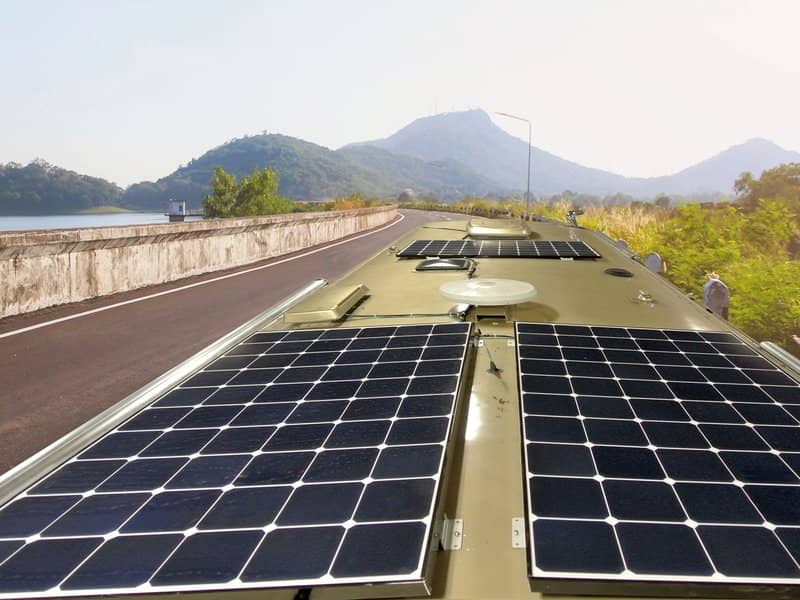
John Rushworth • 04 April 2019
9kWh of Lithium reserve to roam the roads
Volts Energies are a Canadian Victron Energy dealer based in Laval , Quebec – and it seems their customers’ motorhomes (RVs) are just as large as their American neighbours. Such behemoths require serious batteries. Over the last 15 years Volts Energies have specialised in off-grid photovoltaic solutions, providing energy systems for recreational and commercial vehicles, boats, plus residential and commercial remote sites. They install Victron Energy products all over Quebec and sell them throughout Canada. In this guest blog, Céleste Léal who takes care of Renewable Energy Technical Support at Volts Energies takes up the story. John Rushworth Lithium Reserve A motorized converted mobile home, that requires a lot of energy to live at home on the road while visiting America. No less than 900Ah of 12.8V lithium batteries, totalling 11.5kWh of stored energy, with a 9.2kWh useable energy reserve – this is what was recently installed by Volts Energies in a converted bus. The lightness of the product (compared to lead), its flexibility of use and its life span are all reasons why lithium batteries are an excellent choice of energy reserve for a motorized vehicle. Victron Energy’s LiFePO4 lithium batteries come with safety and control devices to maximize their potential while maintaining their lifetime. To provide 110V electricity in the RV, a Quattro inverter / charger from Victron Energy has been installed. Drawing energy from the three 12V batteries, the inverter can provide 5000W of electricity continuously, allowing the microwave, refrigerator and even the air conditioning of the vehicle to operate. 12V loads, such as lighting, are also provided. For both DC and AC loads, a safety device cuts the power supply from the batteries in the event of a deep discharge, to avoid damaging them if excessive power consumption occurs in the motorized vehicle. But how to recharge the batteries on the road? In addition to the vehicle’s alternator that recharges the batteries while driving, three solar panels of 360Wp each have been installed on the roof of the bus. A solar charge controller from Victron Energy, supporting up to 150V of solar panels, optimizes the energy of the sun to distribute to the batteries, with a charging current of up to 85A. When cloudy weather does not allow for battery recharge, the generator installed at the front of the vehicle can take over. Through the Quattro, which also has a charger function, the generator can provide up to 220A of recharge current to the batteries. When the vehicle is parked and plugged into a 110V power outlet, the Quattro will also charge the batteries from this source. What to do when the outside temperature goes down too low? Lithium batteries do not like negative temperatures and recharging them in these conditions can cause serious damage. Here again Victron Energy components work together to detect low temperatures, warn the user with an audible alarm, and prevent the different charging systems (solar energy, alternator and grid) harming the batteries. The user can then start the vehicle to warm the cabin, then recharge the batteries in good conditions when the temperature is raised back to normal. Victron Energy installed equipment To monitor and interact with its energy system, the user has several control screens placed near the driving position. The BMV-712 battery monitor displays all important battery status information: current voltage, current draw, state of charge, remaining usage time, temperature, etc. One can program an audible alarm, for example to warn the user that it is time to recharge their batteries. Victron Energy’s Color Control GX is the control and communication center of the system. It receives information from all components to display to the user. It is easy to visualize the energy getting in and out of the system, through recharge and consumption. Many settings are also accessible in the control panel menus. The Color Control is also the link between the energy system and the internet. Victron Energy has an online monitoring portal ( VRM ), where you can remotely monitor an off-grid system. Using a USB wireless transmitter, the Color Control transmits its information to the monitoring portal. Installing so many components, to replace the previous and outdated system, was a major challenge. Limited space, existing wiring to unravel were all obstacles that had to be overcome to achieve the installation. Combining several sources of battery charging, new or already present on board was not without difficulties either. Some electrical circuits had to be modified to ensure that the operation of one did not conflict with the other, and that component could recharge the batteries. Victron Energy hardware installation. - 1 x Cyrix-Li-ct 12/24V-230A intelligent Li-ion battery combiner - 1 x Battery Monitor BMV-712 Smart - 1 x SmartSolar MPPT 150/85-Tr - 1 x Lynx Power In - 1 x Lynx Distributor - 1 x VE.Bus BMS - 3 x LiFePO4 Battery 12.8V/300Ah Smart - 1 x Quattro 12/5000/220-100/100 120V VE.Bus - 1 x Color Control GX - 1 x CCGX WiFi module simple (Nano USB) - 1 x BatteryProtect 12/24V-220A - 1 x BatteryProtect 12/24V-100A - 2 x BatteryProtect 12/24V-65A 3 x LiFePO4 Battery 12.8V/300Ah Smart batteries. Note that the protective battery terminal caps were not installed at the time of this photo. Equipment Testing Then came the testing phase, to make sure that the system would work at its best performance, while recharging the batteries to ensure a long life. The functional tests also brought their share of surprises, which led to new modifications, to adapt to the existing system. Conclusion At the end of this project, the Volts Energies team built a high-performance and safe installation to ensure a reliable energy reserve for motorized travel enthusiasts. Céleste Léal Volts Energies Links Website: https://en.volts.ca/ Online Store: https://store.volts.ca/ Facebook: https://www.facebook.com/voltsenergies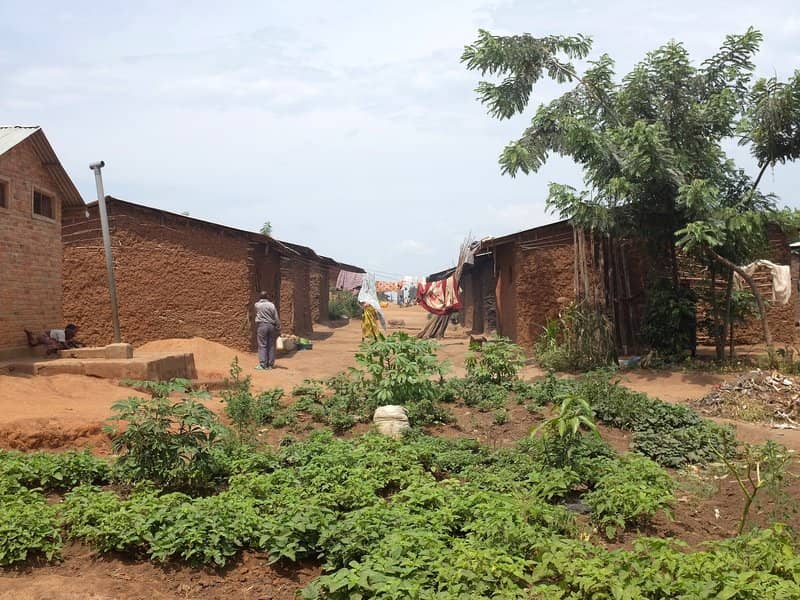
John Rushworth • 28 March 2019
Great Lakes Energy: Mahama Refugee Camp mini-grids
Recently Alp Tilev, Managing Director of Great Lakes Energy in Rwanda, got in touch with me about their Mahama refugee camp project – to build two mini grids and area lighting within the camp. The camp is is located in the Eastern Province of Rwanda ensuring a safe haven for over 50,000 Burundian refugees. This is the sixth refugee camp, the newest and largest in Rwanda. Despite the country’s small size and densely populated territory the camps total 164,561 refugees, who are primarily from Burundi and the Democratic Republic of Congo (DRC). The Mahama camp can be a dangerous place at night, but installing area lighting in much needed places has provided children and adults a safer place to be during the hours of darkness. Not only that but the children can also play sports such as football and basketball in these well lit areas. Installation The Great Lakes Energy team worked alongside refugee interns during the installation, training them on the fundamentals of renewable energy systems. These refugee technicians have now become part of the GLE team. The excitement and enthusiasm from these new team members is quite incredible, working tirelessly through the holiday season to finish the project for the new year. Completed mini-grid and lit areas The solar array and power electronics building with lit and safe play areas. Equipment used For each of the two mini-grids: 3 x SmartSolar MPPT 250/85-MC4 1 x Victron BMV-700 series 1 x Color Control GX 1 x MultiPlus 48/3000/35 24 x Sunlight 2v OPzS 2225AH battery cells 45 x 255W PV module (11,475Wp) Conclusion Thanks to the GLE team dedication the camp inhabitants had a place to celebrate and welcome in the new year. Kudos then to the GLE team: Honore Basazababo, Alp Tilev, Sam Dargan, Jean Aime Niyonsenga, Furaha, Boaz, Ulbain, Gerrard. Going by Great Lakes Energy’s mission statement, the team’s dedication and their passion for refugee involvement says it all: “The future is not some place that we head towards and that we have no control over. It’s a place where all our accumulated actions come together in creating something that will be our children’s reality one day. It’s important to remember that we create the future. This is the mission that drives Great Lakes Energy (GLE) in building such projects.” This is the project that inspired the refugee mini-grid: https://www.olympic.org/light John Rushworth Links GLE website and other projects: http://gle.solar Victron power improves student learning time Victron & Open Energy Monitor (EMON)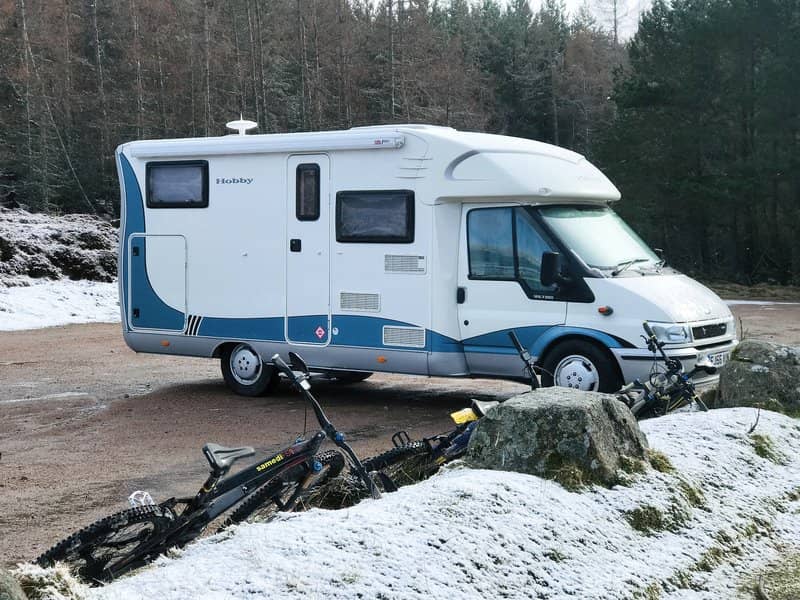
John Rushworth • 20 March 2019
Bigger batteries: More Ah needed?
It’s a complaint I often hear – ‘My leisure batteries aren’t big enough and they keep going flat quickly.’ This blog is primarily aimed at motorhome, RV, campervan, caravan, commercial vans, boat and yacht owners – concerning the issue of more battery capacity needed, with different ways to achieve that. When running out of amps many assume their leisure batteries have failed, yet often this is not the case. It’s more how, where, when and what the batteries are used for. Things like cold temperatures, high loads and deep discharges affect battery capacity (Ah) and life. And certainly these days we often place greater demands on leisure batteries than the original system design may have intended. This presents a dilemma. Running out of Amps A typical small yacht, that was built some years ago, might have a 90Ah leisure battery and a 80Ah starter battery on a split charging system. The battery boxes, cabling, charger and alternator will all have been sized accordingly. But these days you are running more equipment, often at higher loads and need therefore more battery capacity – so you don’t have to start the diesel engine to inefficiently charge with the alternator, when away from shore power. Maybe you start off by adding a small solar panel, but even that is not enough. Now you are faced with redesigning the system to get more capacity. Costly in both time and effort. The same goes for motorhomes. For instance, my recently acquired 12 year old Hobby T600 motorhome (shown in the headline image) has 1 x Sonneschein gel leisure battery 78Ah (C20), 65Ah (C5) and a Duracell 74Ah starter battery. That gel leisure might be fine for folk with small 12V needs that spend 90% of their time on hookup, use gas for cooking, heating and 230V for the fridge – and rarely go off-grid. But as I soon discovered, switching on a number of 10W lights and running the gas heating fan overnight – it quickly depleted the leisure battery whilst away from shore power. No surprise there you might say, but once again you find yourself pondering more power and energy from the leisure battery or batteries. In the meantime updating to all LED lighting at 1/10th of the power consumption has helped, plus changing to a Victron MPPT from the old PWM one for my 100Wp solar panel means it performs more efficiently and improves solar harvest. The MPPT in the top right of the photo below is networked using a Smart Battery Sense , as the ambient temperature of the MPPT compared to the leisure battery temperature can be as much as 10 ° C difference. Doing this ensures temperature and voltage compensated charging; a factor that also needs to be taken into account for cold weather charging . Upgrading to LEDs and a MPPT Solar Charge Controller The above mods though didn’t fully solve the problem – as I wanted to charge my electric bicycle off-grid, plus my friends’ bikes and make ‘electric’ toast, use an electric toasted sandwich maker, boil a small 600W kettle, plus run my laptop and other device chargers from AC power. That meant an inverter. Not something everyone requires, but having AC and DC electricity can be very useful. The solution – just get bigger batteries? A larger Ah battery solution might sound obvious but once you start looking into it you discover you need extra space, the current battery box or boxes are too small, weight might be an issue, the cables are too thin to take higher current, the charger is no longer big enough, plus where to locate an inverter if needed. If that’s not a project you can do yourself there will be an expensive hourly rate to get a technician to upgrade your system. There has to be a simpler way. Fortunately most modern boats and vehicles, to get more kWh and Ah, generally have larger and often paralleled batteries. Personally I prefer a large monobloc battery (say 220Ah) or smaller ones in series to give the equivalent Wh of energy, as that is considered safer than parallel. Need more batteries for a new build, then series the largest monoblocs you can get and run at say 24V or 48V with DC to DC step-down to 12V. That assumes you have a suitable alternator of course. Regardless, it’s easy to see that getting more energy and power with an upgrade is not as easy or as inexpensive as it might first appear, when compared to designing a new build. Insight tip: Energy vs Power if those terms and their differences are not familiar to you. Compared to my older vehicle my friend’s nearly new motorhome has both more energy and power available, with 3 x 95Ah (C20), 85Ah (C5) Varta AGM batteries giving a total of 285Ah @12V at the 20 hour C rate, where C refers to the capacity and the 20 or 5 is the number of hours to deplete the battery to 10.8V (flat). Faster discharges shrink the Ah – as you can see by that 5 hour Ah rating which is related to the load. Note those Ah capacities for those C rates are when a battery is used on its own, not when paralleled as running in parallel with more Ah improves any reduction in Ah due to higher than standard 0.05C loads. These ratings referred to are all at a temperature of 25°C, which is the standard rating temperature. Below that temperature, battery Ah decreases further as it does with age. So, what starts out as 285Ah (of which 50% is generally accepted to be the economic discharge usage) is now 285/2 x a higher load than the standard rating of C20 (or 0.05 x Ah) of say 0.1C (28.5A discharge) at 25°C (an inverter type load), which then shrinks the Ah by a factor of around 0.84 as shown below – 285Ah reduced to 240Ah. Temperatures of lower than 25°C and age will shrink that Ah even further. I have assumed a Peukert exponent of 1.25 for this 285Ah lead acid AGM battery bank. The Peukert Calculator used in the screenshot above is a spreadsheet in Microsoft Excel format that allows you to enter the battery capacity and Peukert’s exponent. It then selects various discharge rates, calculates run times (note that the times are in decimal hours i.e. 1.5 hours is 1 1/2 hours = 1 hr 30 minutes), Peukert corrected amps and total amp hours available at the different discharge rates. It also incorporates a graph of discharge current against available amp hours. The extent of the effect may surprise you. The calculator, written by Chris Gibson, is the copyright of SmartGauge Electronics and is available here . Now let’s put in an ageing factor of 0.8 (so you still get what you need even when the batteries get older) and suddenly the available Ah is 285 x 0.5 x 0.84 x 0.8 = 95.76Ah or 12V x 95.76Ah giving 1.15kWh of useable energy compared to a stored C20 energy of 3.42kWh 25°C. No wonder folk think their batteries need replacing or they need more Ah! The above applies to lead-acid battery technology, lithium is far more forgiving with a Peukert of around 1.05. You can read about LiFePO4 vs AGM technology in a recent blog I did concerning Victron Energy’s new SuperPack batteries . Choices & a different approach Contemplating getting more useable Wh for my motorhome I started looking at upgrading my standard system, but the leisure battery is under the passenger seat with restricted space, the wires run under the floor and inbetween bulkheads, plus I needed a bigger charger, not to mention an inverter to charge my electric mountain bike. Maybe the alternator would need to be upgraded too. Anyhow hopefully you get my point – it was simply not realistic to modify the standard system either in terms of cost or effort, plus the leisure battery happened to be brand new. My solution was to create a separate, standalone, portable ‘Powerpack’ – similar to a powerbank for mobile phones. It was something I could put together easily in the comfort of my workshop (living room in fact). Admittedly I went somewhat over the top – but that is as much to illustrate what can be achieved and how space and weight criteria can force a choice. Ideally I prefer Lithium-iron-phosphate (LiFePO4 or LFP) to our Lithium-Ion HE Battery and Lynx Ion BMS, as LFPs have a higher cycle life and the HE BMS is quite sizeable taking up extra space. However in this particular case due to the actual dimensions of the space available and weight considerations I had to use the HE NMC type. Fortunately my inverter loads are low too, so the HE type could accommodate them, whereas on my boat LFPs are better due to that chemistry’s higher continuous discharge rates. In fact were weight and size not an issue then AGM’s would have been okay too, as of course would the all in one design of the Lithium SuperPack range – having no need of an external BMS taking up extra space. You’ll see what I mean in the table later in this blog. Your requirements might be more modest too in terms of battery type, power and size – so besides my own Powerpack build I’ll include other versions in a later blog, which will show how to size an inverter for charging electric bicycles off-grid as an example. For now I’ll leave you with some before and after photos of my solution, which simply goes inline with the hook-up shore power prior to the RCD/Consumer unit in the van. Unplug two male/female 16A commando type plugs/sockets and the original system is back to normal and you have a Powerpack for use elsewhere. Using this system my standard leisure battery is always full off-grid, either charged from my Powerpack or solar, plus there’s increased energy and power available for the needs mentioned earlier. The planning stage Pretty lights and LED momentary start switch. USB GPS to set a Geofence when parked. Testing – electric bicycle battery charging Phew, got the measurements right… 16A Commando plug/socket connections top right, allows simple inline connection from the back of the shore hookup and prior to the RCD/consumer unit. And just enough room for the electric MTB in the motorhome garage… Lead vs Lithium Having recently written about Victron’s new LiFePO4 SuperPack range along with a comparison to AGM, now seems a good time to compare lead vs different lithium types – so you can see why in this case weight, dimensions and energy density were more important than cycle life and better (higher) discharge C rates (power). 60Ah 12.8V LiFePO4 SuperPack 90Ah 12V Lead AGM 100Ah 25.2V HE NMC 200Ah 25.6V LFP- Smart Weight 9.5kg 27kg 15.7kg 56kg Size (mm) (l x w x h) 229 x 138 x 213 350 x 167 x 183 362 x 193 x 214 317 x 631 x 208 Useable energy @ 25°C 614Wh 540Wh 2,016Wh 4,096Wh Cycle life 2,500 cycles 600 cycles 2,000 cycles 2,500 cycles Cost x 2.5 (approx) x 1 x 2.5 (approx) x 2.5 (approx) Notes for the table above: Useable energy and cycle life are based on 80% depth of discharge for LiFePO4 and 50% for AGM, these being considered the most economic use of those battery types. The NMC lithium can be discharged to 100% in ‘Performance mode’ albeit at the cost of cycle life, giving more useable kWh than the 80% DOD shown in the datasheet and in the table above. 75% is considered the ‘Default mode’, 100% is ‘Performance mode’, all of which can be adjusted by your dealer with the Lynx Ion BMS tool. Higher loads with lead will further reduce available Wh ( Peukert’s Law ) when compared to Li-ion. Capacity is also reduced for all types by temperatures below their 25°C temperature rating ( see the respective batteries and datasheets ) Conclusion With no modifications to my standard motorhome system, other than the inline connection, this drop-in modular build has proved a great way to get more Ah. Lithium batteries are not essential though, subject to your needs, but in my case using NMC Lithiums as opposed to my preference for LiFePO4 was necessary – due to the required location of the pack and weight. Using a lead based system was out of the question as it would have loaded the back axle way too much and there would simply not have been the space to accommodate all that dead lead, let alone my eMTB. Full specifications of my 200 Ah NMC build, along with other ‘Powerpack’ options and how to size an inverter for a required load, such as electric bicycle charging – coming in another Victron Energy blog soon… If you have any comments about my ‘Powerpack’ build I’d be pleased to hear from you in Disqus below. For technical questions please ask me or indeed others on the Victron Community site. John Rushworth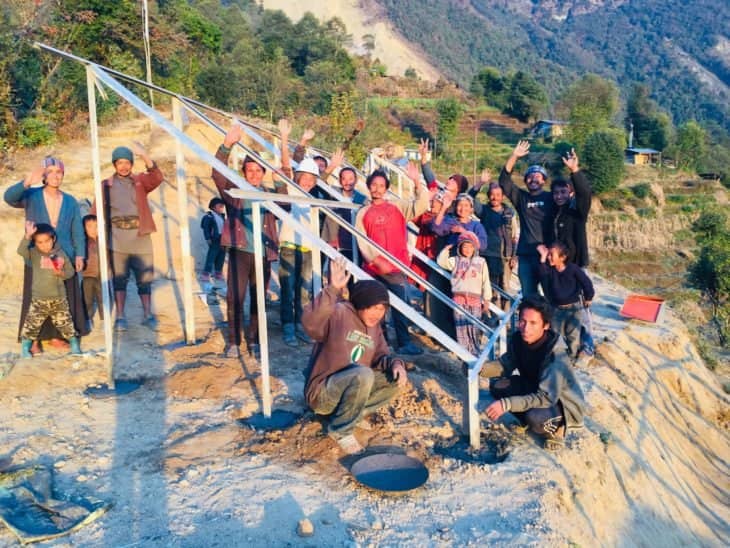
Justin Tyers • 07 February 2019
Sustainable micro grid brings hope in the Himalayas
The bright light of hope has been kindled in Chetang – a remote community of subsistence farmers in the Himalayas, 50km from Kathmandu. Surrounded by the breathtaking mountains and precipitous valley floors – which tourists travel thousands of miles to explore – residents look forward to the prosperity that a solar-powered electricity micro-grid will bring. Installing it can be dangerous work, however, as engineers from Gham Power found out: Nepal is a beautiful country, but for many life is not easy. 7 million of Nepal’s 30 million inhabitants have no access to electricity; and almost three million are either small-holders, or subsistence farmers – contending with drought, forest fires, landslips and flooding – which frequently wipes out the crops they depend on. Tourists pass-by but as a rule do not stay in Chetang because of the lack of infrastructure and accommodation. All that is about to change. Once reliable electricity is available, hotels become established, and tourism follows …leading to hospitality employment, and income for farmers who have an outlet for their produce. Electricity leads to more successful harvests, too, thanks to pumped irrigation. A poor community like Chetang would be unable to fund the initial investment required for an off-grid solar micro grid, but local solar energy installer Gham Power , working in collaboration with the not-for-profit organization, Grid Alternative , based in California, USA, obtained the necessary funding to provide a 15kW micro-grid consisting of 2 Victron Quattro 10kVA inverter chargers; 4 BlueSolar MPPT 150/85 solar charge-controllers which maximise the solar power harvest; a Color Control GX from which to control and monitor the installation; and a battery monitor – the BMV-700 . Transporting this equipment to such a remote location meant it had to be hand-carried for the last 15 km with the help of villagers. Installing it presented members of the Gham Power team with dangers they hadn’t expected: Whilst working on one of the transmission lines, a landslip swept by two of the engineers, cutting them off from the rest of the group. The ground was so dangerous that eventually they had to be rescued by helicopter. After that event it was decided to suspend installation for a period of two months …and when the team returned they saw the wisdom of their decision – as further landslips had occurred: Life in the hills around Chetang is precarious, but with the installation of their new micro-grid, and the prosperity it will bring, the future looks more promising. Gham Power are proud to have Victron Energy as their partners …and we at Victron Energy applaud the energetic work Gham Power are doing. Justin Tyers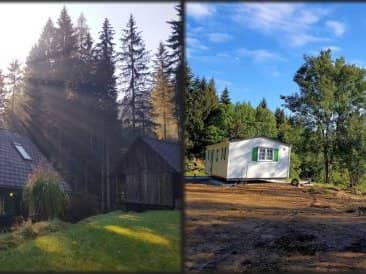
John Rushworth • 23 January 2019
DIY ingenuity: Hydro Power MkII – Part II
Just over a year ago there was a blog about Hydro Power , in which Markus Pauritsch used a Victron MPPT solar charge controller loaded and driven by a Pelton wheel water turbine to charge his off-grid cabin battery system in the Austrian Alps. As you may also recall a few weeks ago we left the subsequent blog: DIY ingenuity: Hydro Power MkII – Part I at the point where the rebuilt system (after a storm) and his neighbour Werner’s brand new (joint venture) system were at the testing stage. But how did that go, did it all work? Just before we get into that – Markus’s off-grid cabin and Werner’s nearby new off-grid static mobile home with its power system shed are shown above. Not only do both systems use Victron Energy products but I also discovered Werner has gone ‘Victron Everywhere’, equipping his micro off-grid trailer too! Hydro Testing Here’s what Markus & Werner had to say about this phase of the project: “The first pressure tests turned out to be not so successful. The pressure went up to 7 Bar, but we had to make several attempts to keep the hose stable and tight. We connected the hose from the supply-pond with a pipe consisting of segments and we used ‘special’ foam to stick them together. Lessons were learned. Don’t use foam for that! Not only because it doesn’t last, but it can get into the main hose and getting it out was difficult to say the least. Plan B and we used a reduction and connected the segments with clamps. After everything was tight we had a stable pressure of 8 Bar. Voltage measurements at the hydro generators brought up very much higher open circuit voltages, than expected from the seller’s datasheets, measuring 160V after rectification from the smaller generator and 307V from the larger one. That was too much for both of our chargers as the maximum input voltage is 150V for mine and 250V for Werner’s. So I came to the conclusion to build an electric brake system. Tests with some 100 Watt light bulbs connected in parallel revealed that I need 1A of load current for the smaller generator and 1.375A for the bigger one to bring it down to a safe voltage.” Electrical braking After thinking about potential solutions Markus came up with 3 possibilities. Connect a power resistor in parallel to the rectified generator output to brake it. This would be the easiest way, but usable energy would be lost through the resistor, something Markus didn’t like. Build a voltage stabilisation circuit with a transistor, a power resistor and a Z-diode that would short circuit the generator at e.g. 230 plus volts to brake the system. The problem was, that they would be need to be active circuits which are complicated to calculate and build. The worst part is, they would tend to oscillate. Build a serial diode brake. The idea here was, that a silicon diode is not fully conductive in transmission direction below 0.7V. Solution 3 became the initial choice. 300 were soldered in series and then connected in parallel to the rectified generator output. The diode characteristics would then be the generators ‘brake characteristics’. The cost of 300 pcs. 5A diodes was about 30 Euros. Markus thought they would work, as he needed ‘only’ around 1A of load current to brake the generators and bring them down to the required voltage. It seems though, that he under estimated what it means to burn up to 300Watts of energy. The diode bridges worked, but got hotter than anticipated. A new approach was needed. Markus calculated some power resistors (solution 1) and all looked good on paper and worked in practice. For the smaller Pelton wheel, the resistor brake works perfectly braking to 132V, a safe input voltage for his MPPT charger. For the larger Pelton wheel he got a voltage of 222.5 Volts. The MPPTs were then connected to the rectifiers and a generator maximum power output test was conducted. The larger Pelton wheel had too small a nozzle setting and so it did not reach sufficient RPM under higher loads. The solution was to drill the nozzles, altering them from 6mm to 8mm. As a result, the generator now went to high speed under load, producing 270V with the power resistor brake and 330V without. As the larger MPPT is rated at 250V, it was disconnected before any damage was done. More lessons were learned – first do the nozzle setup, then calculate and buy the brake resistors. Werner’s brake resistor was subsequently removed and a heater used as a brake, which works perfectly keeping his larger MPPT within the correct voltage range. Power Test Results The results turned out really well. Smaller generator Click to enlarge – note the Pelton wheel on the Venus screen of the Raspberry Pi. Tricky to do but Markus did it. Larger generator Werner’s completed Energy Hut. Werner’s completed Energy Hut. Note he and Markus use a MultiPlus each as they both have a 2.5KVA gasoline generator each for backup, connected to AC in on the Multi. Conclusion Markus tells me: “Implementing Hydro Power was a major step forward to having continuous renewable off-grid power. In the winter the solar yield is poor because of the sun angle and as there is no possibility for us to connect to the grid, hydro was the only option. We are very pleased with the updated system and if we carry out any further improvements I’ll keep you updated.” John Rushworth Credits Markus Pauritsch for the information and images used in this blog. Markus would like to thank all the willing helpers, his Victron Energy dealer Polz Solar and in particular Peter Polz himself, who Markus tells me has given outstanding support – even when using MPPT solar charge controllers as Hydro Power charge controllers! The Hydro project team.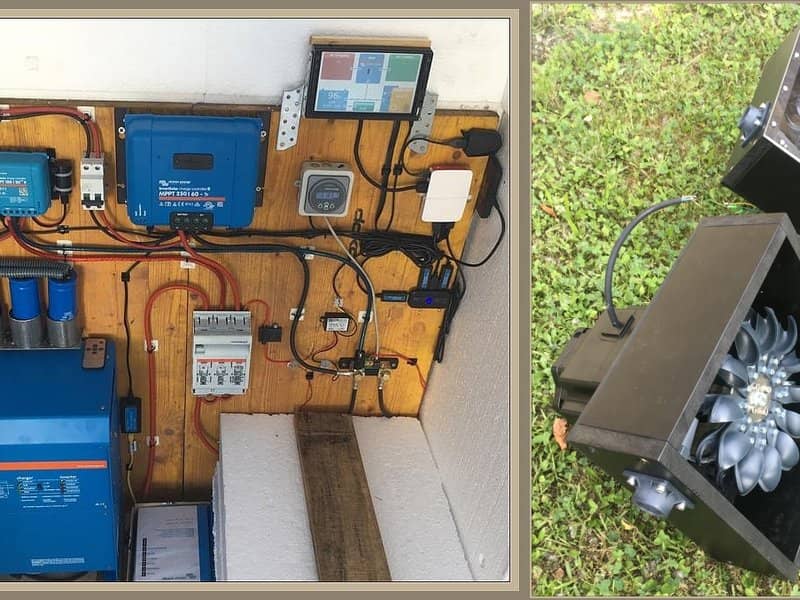
John Rushworth • 03 January 2019
DIY ingenuity: Hydro Power MkII – Part I
You may recall a year ago a blog about Hydro Power , in which Markus Pauritsch used a MPPT solar charge controller loaded and driven by a Pelton wheel water turbine to charge his off-grid cabin battery system in the Austrian Alps. This year (the last day of 2018 as I write this) things have moved on from one man’s DIY system. The installation has now grown by necessity. Whilst the original install had worked well, that all came to a halt when a summer storm turned the hydro supply stream into a torrent. Some hundreds of tons of terrain slid down the hill, wiping out the Pelton wheel, the hydro feed barrel and most of the firehose feed. A further mudslide hit the wood shed, a tree fell a few metres from the cabin roof and Markus got a black eye! Time for a rethink. Project planning & build Whilst pondering the rebuild, Markus talked it over with his friend Werner – who for some years had wanted to build an off-grid recreational home on the land he owns adjacent to Markus, but lack of time on Werner’s part had prevented such a build. Pooling resources was the logical conclusion and a joint project was born. As before solar was to be part of the project for the cabin and Werner’s new off-grid static mobile home, yet the topography of the location warranted hydro power to provide the lion’s share of power. Topography The distance between Markus and Werner’s location is 400m, with a height difference of plus 100m to Werner’s. Werner has a small fishpond to feed the pressure hose, which also acts perfectly as a surge tank. The actual measured head between the fishpond and proposed generator house is 90m. Water supply to the fishpond is constant at around 12 to 15 liters per second, depending on rainfall and season. This Google Maps 3D aerial view shows the proposed cable in red and hose in blue. Water turbine generator As shown in the headline image of this blog 2 x Pelton Wheels were chosen for hydro generation, purchased from eBay. The datasheets below show Nozzle Diameter, Head, Water Flow, Open Circuit Voltage and Power. The smaller one has one nozzle, the larger one has two. Feed pipe The feed pipe chosen was 90mm OD and 70mm ID, being vacuum stable and frost resistant. Around 500m of pipe was required. The weight of the drum exceeded 1.5 tons, so movement to location was difficult once off the transport delivery vehicle. Werner’s doggedness won the day. The pipe installation process was hard going and made worse by the storm damage, making the terrain particularly difficult under foot. A chainsaw winch was used to ease installation, winching from tree to tree down the hill. Cable 402m of 3 core 6 mm 2 copper earth type cable was chosen, buried with the help of an excavator. Generator house The woodshed became the generator house, being close to the stream and with an easily built outlet for the Pelton wheel water, but first the stored wood had to be moved before construction could begin. Victron Components Werner – 48V system: SmartSolar MPPT 250/60 charger for Hydro Power MultiPlus 48/5000 4 x 90Ah Victron AGM batteries wired for 48V BMV-702 SmartSolar MPPT 100/20 400Wp Victron Polycrystalline Solar Panels. Markus – 12V system: BlueSolar MPPT 150/35 for Hydro Power MultiPlus 12/3000 12V AGM batteries BMV-700 Battery Protect 65A BlueSolar MPPT 100/50 600Wp Victron Monocrystalline Solar Panels Both installations are monitored with a Raspberry Pi with local touchscreen, running Victron’s Venus OS and connected to the Victron VRM Portal via a 4G connection. If you want to know how to do this, see this blog . System testing With the construction finished it was now time to test the system – but did this MkII system perform as hoped, using MPPTs as Hydro Power charge controllers? For the answer to that you’ll need to read Part II, coming soon… Credits Markus Pauritsch for the information and images used in this blog. Markus would like to thank his Victron Energy dealer Polz Solar and in particular Peter Polz himself, who Markus tells me has given outstanding support – even when using MPPT solar charge controllers as Hydro Power charge controllers! John Rushworth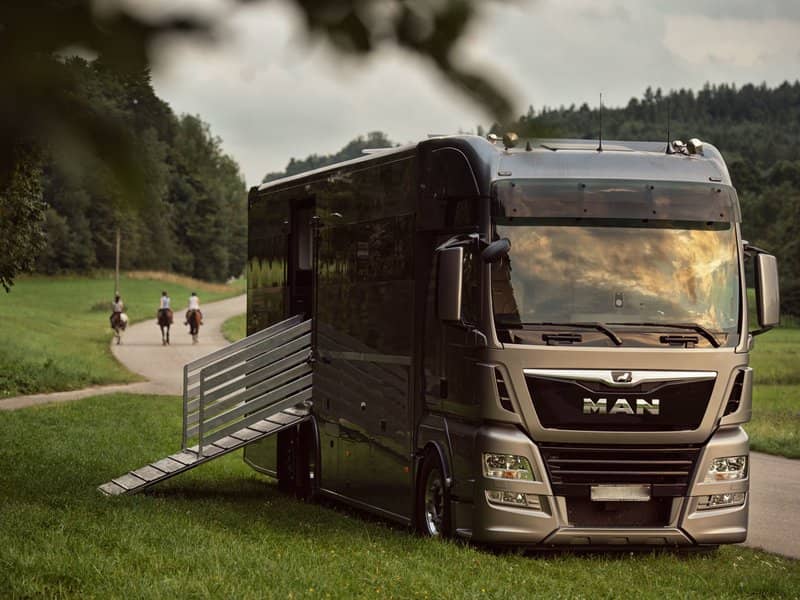
Justin Tyers • 27 December 2018
Event Horses Travel First Class
If you have even a passing interest in Equestrian sports: Horse Racing, Polo, Show Jumping, Dressage or Point to Point, you will know that in order to compete in international events, both Horse and Rider need to arrive in tip-top condition. Horse Truck Ltd. is a bespoke transport maker – helping them do just that. The company was founded in 2003 by Josef Toth – himself an experience rider. Josef grew up and used to ride competitively in Hungary when it was under communist rule. In those days sport horses didn’t travel in such luxury – that was one of the reasons he began building superb horse transports – taking them to another level – and using his first-hand experience of taking valuable thoroughbreds hundreds – or thousands – of miles away, and delivering them ‘keen’ to the start line. Josef employs 22 staff in a modern purpose-built factory building of 1000m2 where they build around a dozen luxury trucks a year …for discerning owners across Europe. The conversions are available on a chassis of your choice – which could be the 3-axle MAN TGX 26.460 with its flat-profile coachwork, for example. It offers a 460hp power unit, together with a number of automatic driver assistants such as lane deviation warning, distance regulation, and hill start – plus leather cockpit, wraparound display and multifunction steering wheel with optional Bose sound system! The accommodation for up to six horses air conditioned – and they can be video-monitored day and night thanks to the stabling’s dual day/night-lighting systems. The box includes storage for tack, feed, and health products – together with a horse shower and box hose-down facility. And to help overcome the fear of ‘loading’ which is quite common in horses – the ramps (situated to the vehicle’s side and rear) are of solid no-slip design, and incorporate aluminium barriers on either side of the gangway. The owner’s accommodation, as you might expect, has the appearance of a luxury apartment – with sumptuous leather upholstery adorning cleverly-designed seating – all of which can be built according to the owner’s specification. Together with a range of luxurious entertainment appliances …it really feels like a home-from-home: accommodating six or seven, beds automatically lift-out when needed; bedrooms feature en-suite toilets. The kitchen has all the fitted appliances you would expect: including ceramic hob, fridge freezer and micro-wave – for those whose second hobby is creating haute cuisine. All these appliances: 2.5kW air conditioning under floor heating pumps; ceramic hob cooking, and the luxury of home entertainment, place substantial energy requirements on the on-board electricity installation. Josef meets this requirement by choosing to equip his luxury horse trucks with Victron energy systems – so that demanding owners will not be let down. He says what he likes about Victron products is that they are easy to use, and easy to install; they integrate well with each other, and with the electrical provision already installed on the base truck. A typical system comprises a 5kVA Quattro which provides all the power you might need in a small household, and can be connected to two AC power sources at the same time – a diesel generator and the electricity grid, for example …automatically taking power from which ever source is active. The Victron system provides for automatic generator start-up , triggered by low voltage / high demand. And its unique Power Assist feature will meet power demands which are greater than the rated output of the generator (or grid) by adding inverted battery power to the AC supply. On board one of Josef’s Horse trucks the Quattro typically charges a 440Ah Lithium battery bank . Lithium batteries can be cycled between 20% and 100% state of charge – allowing much more of the stored energy to be used in comparison with lead/acid battery storage …without reducing the service life of the battery. Inside the accommodation the switch panel is equipped with a BMV battery monitor to provide accurate start-of-charge and voltage information; and a CCGX – from which the entire installation can be controlled and monitored …even remotely. The CCGX provides status information – such as how much power us being consumed; how much provided by the generator; and historical information – which provides an overview of how the system is coping with demand, and whether a change of regime or supplementary equipment is needed. If you are interested in knowing more about remote monitoring your power installation, take a look at the Victron Remote monitoring app which includes a ‘demo’ mode. Justin Tyers
John Rushworth • 07 November 2018
Brač island: Drinking in luxury
Take one private beach, crushed ice courtesy of solar powered battery energy, mix your cocktail of choice and relax… That sounds good to me and power for the adjacent beach bar is all down to Victron Energy dealer Solar Projekt, from Split in Croatia. They carried out sales, project planning and installed the bar’s solar system – which is nearby the Hotel Lemongarden, located on Brač island in the Adriatic. The image above is courtesy of Hotel Lemongarden No ice without sun 7kWp of solar panels harvest the energy for the natural stone house beach bar. Behind the scenes are: 1 x Victron Energy Quattro 48/8000/110-100/100 inverter/charger. 2 x Victron Energy SmartSolar MPPT 150/85-Tr solar charge controllers. 1 x Victron Energy BMV-700 series Battery Monitor. 2 x Victron Energy MPPT Control . 1 x 1000Ah/48V/C10 OPzS battery bank, shown below the cabinet in the photo below. 1 x Electrical cabinet with the BMV-700 and MPPT Controls let into the cabinet door. Inside the cabinet are the MPPT controllers and protection devices. System operation Whilst the hotel is connected to the grid, the beach bar location precludes that. However with the system above the bar now has power autonomy for 2 days and in case there are long periods of cloud cover there is a generator as backup. This is programmed to start automatically when the voltage in the battery bank reaches a set low point. Generator power is then available to the bar, whilst at the same time the battery bank is charged by the Quattro charger side of this combined inverter/charger. When the battery bank is full, the generator automatically switches off and the system continues to run on the battery solar system once again. Conclusion There would seem little point in having a bar in the sun without ice, but thanks to Victron Energy dealer Solar Projekt, the Hotel Lemongarden’s beach bar now has buckets of it. My thanks to Boris Tudor of SOLAR PROJEKT d.o.o. for the information and photos in this blog. John Rushworth Links http://solarprojekt.hr/ https://www.facebook.com/solarprojektdoo/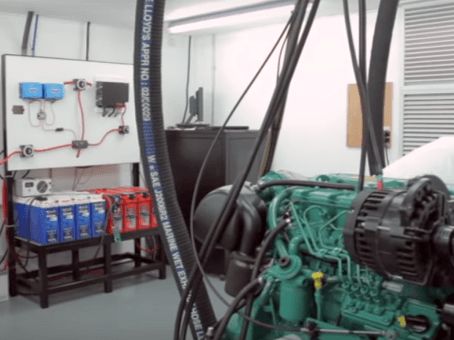
John Rushworth • 03 October 2018
Nigel Calder and the Integrel 9kW ‘Alternator on Steroids’
The screenshot above is that of world renowned yachting systems author Nigel Calder in the Triskel Marine lab with their new to market Integrel product, which makes some powerful claims – up to five to ten times the output of a conventional alternator. Integrel stands for Intelligent Generation of Electricity and as you can see – Victron products are part of the system. But what exactly is Integrel? Integrel gives high power outputs whilst cruising and at anchor when in standalone generator mode by using the spare power capacity available in a marine diesel cruising engine. This is achieved with the help of permanent magnets, intelligent loading and management of the system. As a product it is classed as ‘an advanced generator replacement technology’. The system was revealed at the recent Southampton boat show. Don’t worry if you missed it and want to see the system, there’s an on the water opportunity at METS. More of that later. Who needs a standalone generator… As a fellow sailor friend (MD of OceanTools ) said when I told him about Integrel: “I’ve been saying for years that a cruising yacht doesn’t need two engines.” Or as Nigel puts it: “This system is the one I’ve always wanted in my own boat for the last 35 years and now it has been finally achieved.” In fact he calls it – his retirement present to the cruising community – which over the years represents around ten million dollars in grant and R&D investment with both lab and on the water testing. By doing away with a separate generator, Triskel get typical standalone generator outputs using just Integrel. This has many benefits; for instance less space required, fewer through hulls, less expensive than an equivalent separate generator and as efficient as one, no extra separate generator running hours or maintenance. Having satisfied themselves of the reliability and efficiency of the system, Integrel is now available commercially and it looks like it may become the de facto standard for cruising yachts. Who needs a separate generator anyhow… Summary video Full technical video Specifications Victron Energy components such as inverter/chargers are offered as part of the standard and optional systems. Victron MPPT Solar Charge Controllers can also be added as an additional charging source. The standard Integrel system consists of: 9kW engine mounted Integrel generator Engine mounting kit Integrel system controller 48V battery sensor Integrel 600W 48V to 12/24/36V battery to battery charger 5″ touch screen user interface 48V 10kWh advanced lead acid battery bank Wiring loom and fuses 3kW 48V inverter/charger Additional options and upgrades: Additional battery storage can be added in 10kWh increments. Lithium ion batteries are available as an option Inverter/charger is also available in 5kW, 8kW, 10kW and 15kW Integrel battery to battery charger is upgradable in 600W increments to 2400W Simrad multi-function display Further battery sensors can be added to monitor the house and engine start batteries Integrel onboard Paul and Sheryl Shard of Distant Shores (a Sailing Adventure TV Series) features the Integrel system onboard their new Southerly 480 . Southerly are part of the Discovery Yachts Group . Conclusion Victron Energy are flattered that boating systems guru Nigel Calder and Triskel Marine are using our Inverter/Chargers as part of the Integrel system. If you want to see one of test boats with Integrel onboard, then a Hallberg-Rassy 42 will be on show in Amsterdam for the METS Show, from the 13th – 15th November 2018. This will enable people to see the Integrel system working in situ, on the water. The boat will be moored for the duration of the show at the City Marina and transport between METS and the marina will be laid on free-of-charge by Triskel. Those interested in finding out more about the system are encouraged to visit their stand at METS in Hall 7, Stand 033e, where you can chat and book a visit to the boat, or alternatively contact Triskel directly to reserve your slot . Of course Victron Energy will be at METS too, on stand 01.541 Interestingly Integrel has been entered for the 2018 DAME Awards for Machinery, Propulsion, Mechanical and Electrical Systems & Fittings, as well as entering two categories for the Boatbuilder Awards , including the Collaboration Category alongside Discovery Yachts. Results will be announced at the METS show and I suspect Integrel will be right up there – after all it does seem like a game changer for the cruising world. John Rushworth Links Nigel Calder’s books – https://www.waterstones.com/author/nigel-calder/104898 Integrel – https://www.integrelmarine.com
John Rushworth • 26 September 2018
STEPSOVER World Tour – A helping hand
It’s almost a year ago today that we published the blog – Globetrotting with Victron Energy . Things have certainly moved on since then for Simone Monticelli (Simo), Lucia Gambelli (Lucy) and their Victron equipped globetrotting truck, Valentino – named after possibly the most famous GOAT (Greatest Of All Time) motorcycle racer, Valentino Rossi. To date this intrepid couple and their 4×4 supertruck have over 500 days of travel with 13 countries crossed and 3 different continents under their belts – as this map shows. Upgrades A few months ago Simo got in touch with me about the possibility of some Victron upgrades and a little sponsorship. It took seconds to say yes to this enthusiastic couple. Passionate about Victron kit and with the fantastic photos they post – it was hard to say no! Here then is the first in a series of blogs by Simo about their travels and what makes their globetrotting tick. A selection of photos too… John Rushworth Why our equipment and choices are so important for us Independence and budgeting Over five hundred days ago we left Italy in order to start our journey. At the time we knew our travels would last, but not take us as far as they already have. What we did know back then is we would leave Italy and our first destination would be Morocco. Beyond such initial certainties we only knew that our truck would become our new home for some years. Argentina wasn’t even on the agenda back then. Argentina – Montagna. Trying to work along the way, to finance our journey, it has been important to calculate a daily budget that we must try to respect. The way you prepare a vehicle for independence, that is also a home on wheels, is important for not only comfort but equally for the daily budget. Additionally we have to consider that turning a truck into a four-wheeled house, ready to face a hypothetical tour of the world, means that both the vehicle and the owner/s must be ready for anything. Argentina – Salar de Arizaro. Off the beaten track We have always been passionate about off-road vehicles, remote locations and generally inaccessible places – but above all the most important thing for us in such locations is independence and self-sufficiency. For us also it is important to forgot the typical situations of a conventional overland trip, i.e. camping or rest areas. Staying for a few weeks in solitude in the desert, in the steppe or wherever we want to park is an essential prerogative of our journey, so the vehicle has to be set up accordingly. Victron equipped. Today as I write we are in Perù, far from Senegal, the country from which we first presented ourselves to the Victron Energy blog a year ago. Actually we have been travelling for about a year and a half and from the day of our departure we have crossed: Morocco, Mauritania, Senegal, Uruguay, Brazil, Argentina, Chile, Paraguay, Bolivia and finally Peru, the country where we are now. Here’s a selection of photos from these areas. Bolivia – Panatanal region. Bolivia – alone on the road. Chilly in Chile… Bolivia – Salar de Uyuni. Patagonia – Torres del Paine National Park. Argentina – Ushuaia, Tierra del Fuego (The End of the World). Vehicle choice Now you have a flavour of our travels let’s get back to our choices – and why we chose Valentino to be our home. Many ask us why we have chosen a truck for our journey and the answer is very simple, because this is the only vehicle that could allow us to carry the weight of a truly independent set-up while remaining comfortable in the days when we have to live inside (rain, snow, illness). For us, as previously stated, it is important to limit the travel budget as much as possible and for that reason we can say that the more independent the vehicle is, the more we can limit daily costs. Some may think that a truck like ours consumes more than a smaller vehicle and that therefore their savings may somehow be relatively smaller too. However, during our trip we have interviewed dozens of travellers, many that are on the road for many years, from those who travel by motorcycle to those who use trucks like ours through to normal 4x4s and VW Kombi type vehicles – that today are so fashionable (just look for #vanlife on Instagram). Many of these people have found that they spend twice our monthly budget, and this stems mainly from the fact that they have to use services that their own vehicle cannot deliver (bathroom, electricity, cooking, heating, clothes washing, security…). How we achieve independence Think about the electricity needed to power our induction cooker for instance, which allows us to cut the costs and inconvenience of any propane cooking gas. Cooking with electricity eliminates the difficulties of finding the correct size and shape of gas bottles when changing countries. True, you can say that there are kitchens that are powered by diesel, but these are more for the marine world – where the altitude is never a problem! We however have ascended to 5,000 metres for many days in Bolivia and would have found ourselves in serious problems with the difficulties of operating gas cooking devices over 2,500 metres. In the overlanders world energy means independence, and the energy we use is produced exclusively by the solar panels that we have installed on our roof. Actually we have 1.5kWp of Victron Energy photovoltaic modules that are controlled by two BlueSolar MPPTs , a 150/70 and a 75/15. These controllers (our source of power conversion from the panels) charge a Victron Energy Gel battery bank, which stores around 21 kWh of energy. Our 4×4 truck is also equipped with a combined oven, which we use a lot to cook our favourite dishes, plus a washer-dryer that for us is fundamental to limit, by comparison, the dependence others have when using paid facilities. Again our solutions are ones we chose in order to limit the travel budget. Onboard, therefore, we need a fair amount of electricity at 230 volts. This is produced by our Victron Energy Quattro 24/5000/120 inverter /charger, which has become the real heart of our plant and the true power of our daily life. As you can see, the batteries are really important for us and for this reason we have included in our system the 220 Ampere BatteryProtect and a Battery Balancer which together with the Color Control GX (CCGX) guarantees protection and visibility of the status of the entire system. Therefore, whilst limiting travel costs is good, it also makes sense to keep your equipment monitored and under control – these components then become a very worthwhile investment indeed. In the daily budget that we calculated before we left, we also estimated the costs of repair, replacement and adjustment of systems that might fail. For example, many travellers limit themselves to using batteries and systems without protection, balancing, monitoring and control – to the point their batteries stop working – and then maybe complain when those batteries ‘seem to’ fail prematurely. Maybe they were equipped with good kit, but failed to adequately monitor their system and then end up spending on new kit they hadn’t budgeted for. This is why we have chosen to monitor everything properly. We simply can’t imagine our daily life in the truck without a BMV and CCGX for example – they are really fundamental for us. Independence means not only energy, but also water and for this reason we have equipped our truck with a system capable of rapidly creating potable water in large quantities. It’s thanks to our water purifier that we can then drink water safely, without the need to buy plastic bottles. A small amount of energy is involved in this process, in fact we have to feed a high-pressure pump and a UV lamp for this. We also use our onboard clean water to wash our clothes and for that reason we decided to recycle a part of the grey water. The waste grey water is cleaned by filters and can be reused for the washing machine or rinsing the toilet. Electronics There are conflicting opinions regarding the use of on-board electronics for overland vehicles. In our experience these doubts are better founded if they concern the vehicle chassis, but they are really unjustified where the living quarters are concerned. The electronics in our vehicle are monitored by a tailor-made domestic system and this allows us, in addition to increasing the comfort on board, to monitor many aspects concerning the safety and reliability of our housing module. Temperature probes check if thresholds are exceeded and then they can trigger problem-mitigating mechanisms, such as fans or heaters in case temperatures drop below zero. Sound alarms are ready if there are some water leaks, and if there are problems with the water pumps. A constant monitoring of the battery status allows the domestic monitoring to turn off utilities that may have been left on, as well as turn on the cameras that allow remote surveillance. These systems help us to preserve our investment, but also to keep the travel budget as low as possible. Time for upgrades In over 500 days of travel we have cooked, heated, cooled and lived in our truck without ever having to recharge the batteries from a paid energy source whilst always trying to work in compliance with the optimal parameters for the life of our battery bank. However, each system can be improved, so now we are going to perform some upgrades by installing for example a second inverter/charger that will be a backup for the primary – being previously just one Quattro and the only non-redundant component of our entire system. The new inverter will also be used to supply external utilities, such as a welding machine in case we need to repair the truck, a winch to unload our motorcycle and other heavy items. We will also install an intelligent device able to recharge the batteries using our alternator. In this case we will use a Victron Energy Buck-Boost DC-DC Converter capable of 25 Amps, that properly programmed will allow us to have a new source for recharging – this in view of the days we may spend in the cold when we reach Alaska. The inverter we are going to add will be a MultiPlus 24/3000/70 and will be equipped with its own Digital Multi Control , as well as a BMV-702. We will document the upgrade of our system through articles that you can read on our Stepsover blog and view on our YouTube channel. Links below. Until then and a next update here on the Victron Blog – do think carefully about your overland choices before diving into worldwide travels. Simone Monticelli Links Website – http://www.stepsover.com Facebook – https://www.facebook.com/stepsoverASD YouTube – https://www.youtube.com/user/smontic Instagram – https://www.instagram.com/stepsover_ontour Twitter – https://twitter.com/stepsover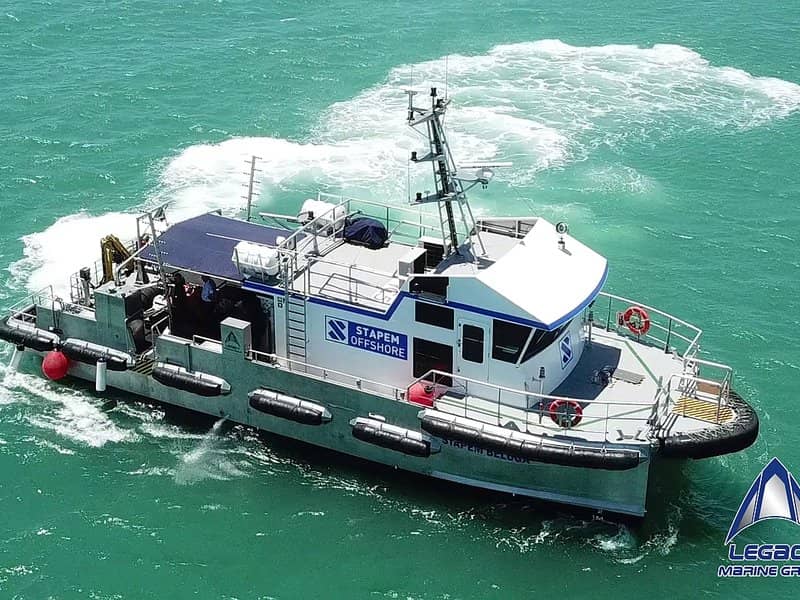
John Rushworth • 20 September 2018
Bakker Yachting Electronics: Victron equipped Jet Cat
Anytime Peter Bakker of Bakker Yachting Electronics gets in touch with me, I know it’ll be about a high quality design and installation. Previously it was about luxury sailing catamarans. This time though I got even more excited, as Peter’s most recent project is a 19.5 m DSV (Dive Support Vessel) Jet Cat.Why so excited you may ask? These days I’m a leisure sailor, but in earlier times I was a Jet Cat Workboat Master and dive support ROV Pilot. So it’s not surprising that this Incat Crowther designed 1900 DSV Workboat you see pictured above, built by Legacy Marine South Africa for Stapem Offshore , takes me right back to my offshore commercial working days. Be it above or below the surface those professions have to be the most fun times I’ve ever had at sea. Mind you off the Beaufort scale winds with 60 ft waves, in a Cod war, in my youthful Royal Navy steam engineering days bordered on fear, more than fun! Back to the present. Anything to do with diving is all about safety and system redundancy – where systems have to be to a quality specification and to standards that ensures the safety of the vessel, vessel crew and the divers they work with. The Stapem Beluga Cat is such a beast, being the first of two built by the Legacy Marine Group, certified to American Bureau of Shipping (ABS) standards for this class of vessel. Why not take a look at this video of the Stapem Beluga, before we investigate the Victron kit onboard. Stapem Beluga We’ll get to the Victron kit in a moment (honestly!) but for old times sake I can’t help but post these photos. Engine or bridge first? Always the engines… In build – One of the Inboard MAN 560HP main engines/ ZF gearboxes / HJ403 Waterjets. On the water – Bridge with elevated view. In build – Dive station with multiple video monitors, DVRs and comms to direct underwater operations. Victron onboard Peter Bakker explains a little about the Victron Energy system and some of the safety features he designed into it: “With this build we couldn’t use any extra alternators for charging the service batteries and therefore had to come up with a different plan. Normally there’s always a generator running (main or back up) and this will supply enough AC power to the Quattro to maintain a healthy state of charge and to supply 24 Volt power without draining the service batteries. If however – and for whatever reason – the generators fail, you would discharge to empty pretty quickly as charging would stop. By using two Buck Boost converters, one per engine, this can be prevented. In total this gives about 50 Amps charging power to the service batteries. Each Buck Boost only kicks in when there is no AC power available on the Quattro’s input and the engine to which the Buck Boost is connected will then run. This has been done by updating the Quattro’s firmware to Assistant usage – and by using both relays inside the Quattro as so called Event relays. There is a UPS system onboard for the entire Dive Distribution Board, but the Quattro gives extra security as a double back up power source in case of emergencies, even if both generators fail. The installer for the Victron equipment is Ebrahiem Slarmie along with his crew from Mega Marine.” Victron equipment list: 1 x Quattro 5kVA 24 Volt 1 x Color Control GX 1 x Digital Multi Control 2 x Battery monitor BMV-700 1 x Phoenix 25A/24V charger 2 x Blue Power charger 24V 8A 2 x Blue Power charger 24V 5A 1 x Orion 24V/12V converter 70A 2 x 50A Buck-Boost DC/DC converters 4 x 12V/220Ah AGM Deep cycle battery 2 x 12V/90Ah AGM Deep Cycle battery 1 x Isolation transformer 7000W 230V 1 x Power inlet stainless steel with cover 32A 1 x Shore power cord 25M / 32A Several small items like cables and fuse holders from Victron Energy A few install photos of some of the items above: Distribution with the two Buck-Boost DC-DC Converters – the two grey units, bottom right on the distribution board. Blue Power IP65 charger 24V 5A. Isolation transformer 7000W 230V and 5kVA 24 Volt Quattro. Blue Power IP65 24V 8A Charger. Conclusion A quality design and install I think you’ll agree. I would have liked to have included the full engineering wiring diagram that Peter did for this project, as it too is to a very high standard. However that is proprietary client information, so hopefully the photos in this blog have done the talking instead. We look forward to hearing about the second vessel in this series – the Stapem Narwhal. John Rushworth Credits & Links My thanks to Peter Bakker of Bakker Yachting Electronics and Julius Hess of Legacy Marine Group for the information and images used in this blog. Bakker Yachting Electronics website – http://www.bakkerjachtelektro.nl Legacy Marine Group website – http://legacymarinegroup.co.za
Justin Tyers • 06 September 2018
Solar Power in Industrial Quantities
Electronics company Bosco Printed Circuits, who are located in Johannesburg, were used to seeing production come to a halt on their shop floor as often as twice a week – caused by power cuts. Sometimes the outages were scheduled, sometimes they just happened. Every time there was an unexpected power outage the electroplating machines would freeze half way through a job, and all materials would have to be scrapped. It was time to act… Bosco Printed Circuits was established over 60 years ago and had learned to minimise their losses – but delayed delivery times, and reputational damage was much more of an issue. Company Director Philip Verheul began to wonder if it was possible to meet the significant electricity demands from his factory, and offices using battery-stored energy, and called in the expertise of Specialized Solar Systems. Because local energy prices increase by a factor of 3 or 4 during peak periods, money could be saved by using stored electricity during peak periods, and taking power from the grid – if needed – overnight. I say ‘if needed’ – Bosco decided to ‘go green’ and generate their own solar energy. As a result they installed a total of 300kWp Solar Panels …which is quite a lot. All that solar power needs to be stored in a battery bank with huge capacity …batteries which are capable of being cycled day-in, day-out, for years. For this he chose Redflow’s zinc bromine flow batteries. Each battery has a capacity of 10kWh; Bosco uses 14 of them. Redflow batteries can be worked hard everyday without loss of capacity – even more reassuring for Bosco is the fact that this duty cycle is guaranteed, for ten years. To meet the 230VAC power demands of office and shop floor, ultra-reliable high-output inverters would be required. They would also need to work seamlessly with zinc bromine battery technology. Six Victron Quattro’s – 48V/10kVA – work in parallel to deliver the power required. Not only do they have invisible switching times when there is a power outage, but their unique PowerAssist function will meet huge peak-power demands when electricity from the grid (or from a generator) cannot cope. They do this by adding power stored in the battery to the current AC source. Finally, a Victron CCGX acts as the communication gateway – through it, automatic switches can be programmed, and the whole installation can be remotely monitored and tweaked to ensure Bosco’s power plant is always running at its optimum performance. Philip Verheul has been really pleased with the results of his decision. His system is programmed to take advantage of off-peak electricity, and utilise the power of the sun. Power outages no longer cause downtime – helping to keep to a busy schedule – and Bosco’s reputation for innovation and sustainability is enhanced. Justin Tyers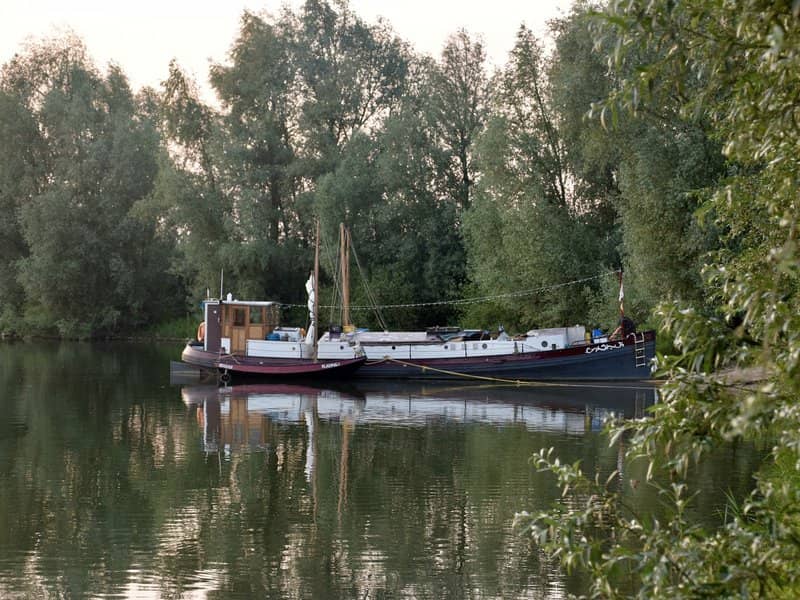
John Rushworth • 04 September 2018
Solar powered Sea Scouts
Scouting, including the Sea Scouts is a wonderful way to develop and mature as a young person. It certainly helped me and it seems Victron Energy Sales Manager Margreet Leeftink in her youth too – to the extent she still stays in touch with her old group. One of Margreet’s old Sea Scout group (Jesse Berends) takes up the story of how maintaining contact has been of benefit to all. Never a bad thing! Thanks must go to Jesse for his hard work in putting this guest blog together and Roos van Belle for her photographs, without which this blog would be incomplete. John Rushworth Scouting connections In the past few years we have fantasised many times about installing solar panels on our boat (we like to call it a ship). In those same years, it always ended with ‘it has no priority at the moment’ and at the end of 2017, the same thing was going to happen. But then Victron Energy employee Margreet Leeftink , who is an old member of our scouting club, visited us for a cup of coffee to take a look at our broken secondhand Victron MultiPlus 24/3000/70. As a consequence she said she could arrange a good deal for us on some solar panels and some extras. This was our chance to finally be able to install solar panels on our ship! Before I go further, l shall explain some things. The ship on which the solar panels will be installed is called Clasina, being the mothership of the Sea Scouts in the Dutch city Deventer . Clasina is a 90 year old vessel that has been used until the late 1950s to maintain the waterways in Holland. She is a 17 metre long and 4.2 metre wide (58 x13 ft) vessel, maintained by a handful of volunteers on a tight budget. Kids can start sailing with us from the age of 7. In total, we have around 35 youth members, divided into groups aged 7 to 11 and 11 to 16 years old. The kids sail in small sailing boats. A few times a year we go on a sailing camp with our boats. On our longest camp, we sail through a water rich area (Friesland) in the Netherlands for more than two weeks. On those camps we use Clasina as a mobile clubhouse. Quiet consideration and failing batteries There is no power at the places where we stay overnight. So as not to disturb other people, we try not to use our generator and so to keep our large 230-volt refrigerator running we are depending entirely on our batteries. We only charge them while driving the ship to another campsite. But that’s not enough to top up our batteries every day. We solved that problem with a large battery capacity, but unfortunately due incorrect use and a faulty electrical installation our batteries always fail within a few years – resulting in buying expensive batteries again and again. In 2017 we thought that it was getting ridiculous to buy those batteries every few years, so we decided to overhaul our electric installation so that the batteries would last longer. This meant that we had to remove all the old do-it-yourself projects of all the previous volunteers and built the whole installation up again. In the spring of 2017 we overhauled the 230-volt installation and now it’s time to do the same for our 24-volt DC system. Old (wires everywhere) installation The old installation can be seen in the photo below. Left of the picture is the Victron MultiPlus 24/3000/70. It charges our batteries when connected to shore power and gives us AC power when we are not connected. On the right of the MultiPlus the (already overhauled) AC circuit breaker box can be seen. Before the shore power enters the MultiPlus, it goes through an earth leakage circuit breaker (small box on top). Behind some wires, the Victron VET can be seen. This allows us to charge both the engine and domestic battery with the alternator on the engine without the battery packs interacting with each other. The box held by the strings below holds the fuse for the MultiPlus and holds a shunt for the battery monitoring. The large box at the far right is the 24-volt fuse box with the main switch. The fuses inside are for home installations and are not tripping as fast as they should. Work in progress Our current installation is already beginning to look much better. The DC fuse box is replaced with a better one and our two shunts (one for the battery monitor and one for the ampere meter) are placed in a dedicated box as well. Also, we replaced all the wires that distribute the power through the boat. With most of the work out of the way and a 15 day summer camp around the corner, we decided that the solar panels should be installed. Solar silence The wheelhouse roof was the best place to locate the 2 x 150 watt panels. There’s no shadow and a low risk of damage. Also the roof is close to the engine room, the only area not accessible to the kids. After we had removed the braces for the navigation bar and the bar itself, we had a large unobstructed flat surface to put the panels on. First we bolted the corner pieces on to the panel frames. After they were bolted tight we secured the panels on the wheelhouse roof. To avoid leaks we only used glue to secure the panels to the roof. We are aware of the fact that it is not possible to remove the solar panels anymore, but as we leave the boat unattended most of the time it is nice to know they will not come off easily. During the installation we kept the top of the cardboard on the panels. This way they were not generating power during the installation. After we had put the panels on the roof, we ran the wires through the boat to the engine room. The solar panels are connected in series to create a 24 volt system. To protect the connection from the weather we used a junction box, also glued to the roof. The MPPT 100/20 was placed in the engine room near the batteries. The negative wire coming from the roof was put directly to the MPPT. The positive wire is connected via a switch. This way we are able to isolate the panels from the system when needed. Once we were ready to turn the switch and engage the solar panels the darkness fell in. We had to wait until the next day to see the result… We didn’t have to wait long to test the system. Just a day later, we set sail to Friesland for the summer camp. With a historical hot summer in Holland we already had a sense that not having enough power was not going to be an issue anymore. The biggest test was at the beginning of the camp. We stayed on an island in Het Tsjûkemar for four days without running the engine and with no access to power. The weather was warm and we had to run the refrigerator constantly (also overnight) to keep the food for 20 people fresh. With a battery capacity of 225 Ah we would not be able to keep everything running. Fortunately, with the solar panels we managed to keep the refrigerator running for three days though, without starting the engine or generator. Also we didn’t have to worry much about using the lights onboard and charging our phones. On day 4, our batteries were (finally) at a point that we really had to charge them. However, for the rest of our camp we didn’t need to worry about power or generator noise now we have solar. Our estimate of solar harvest and use has proved correct, allowing us to keep a silent ship! Shown below is Clasina on a pontoon berth with the completed solar installation keeping the batteries topped up between trips – and not having to use any of the connected shore power you can see – whilst we dream of our next adventures on our scouting mothership Clasina. Without Margreet’s and Victron Energy’s support none of this would have been possible and for that we would like to say a big thanks to you all. Jesse Berends Deventer Sea Scouts.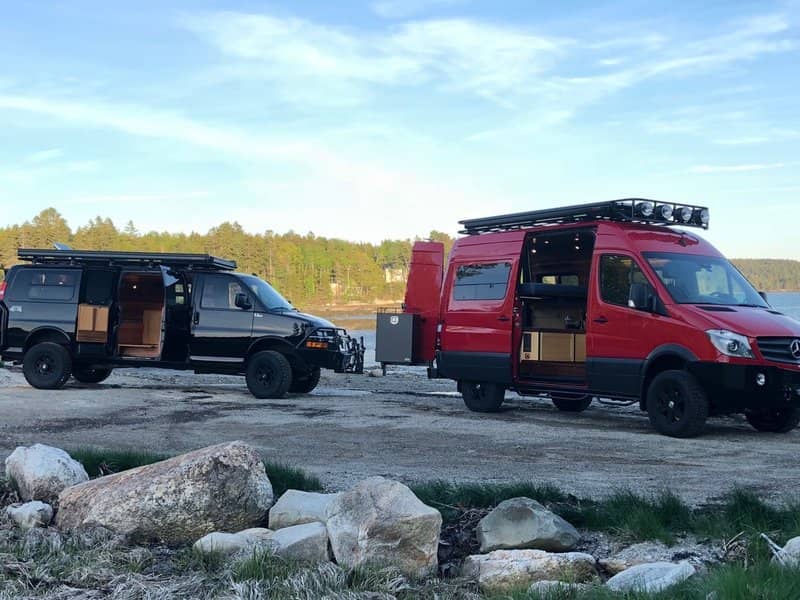
Justin Tyers • 27 August 2018
Adventures in comfort.
I don’t know if it’s our sense of Maritime History – those great timber sailing ships from the age of exploration – but whenever we climb on board a yacht the first thing we look out for is the quality of the woodwork …then run our hands along wood which look as though it’s coated in glass. Shore based explorers climbing on board a Camper Van haven’t been able to experience the same pleasure …until now. Eli Ellis and Tyler Vroman bring a lot of experience to the luxurious van-conversions they create at AWOL Adventure Rigs for discerning clients. Not surprisingly they count boat-building, and cabinet-making among their skills. Working in those disciplines you get pretty familiar with curved surfaces …that’s where construction meets art. In fact, they like to think of their build-projects as the Art of the Possible: A client buys him/herself the van they’ve been dreaming about and then wishes to have it fitted with the comforts of home; the convenience of electronics; and perhaps the provision of some ‘workshop’ equipment so they can recharge dive bottles; or repair a bike. The challenge is to sit down and design an arrangement which includes everything on the wish-list; within the space allowed …without excessive weight; and which is also a pleasure to ‘live’ in – hot or cold. Does that sound like it’s asking too much? Well, both Eli and Tyler are themselves seasoned adventurers so they have first-hand experience of the things which can make van life as much fun after a month as it was on the first night. Perhaps the most important ingredient there is that as well as being practical – the Van should have a living space you’re proud to call ‘home’. That’s where a conversion which has been crafted with meticulous attention-to-detail makes all the difference. Quality shows… There’s quality behind the scenes, too. The provision of remote electrical power – for induction hobs, refrigeration, lighting, laptop recharge, diving bottle refill, and entertainment systems – relies on Victron equipment. Robust, energy-intense Lithium batteries store power provided by up to 600W of solar PV , efficiently harvested by an MPPT solar charger . That power is converted to domestic voltage (of either 110VAC/230VAC) by inverter/chargers capable of meeting high peak power demands and handling the formidable 230 amps which a Dual Alternator might be providing. AWOL Adventure Rigs is situated on the East Coast of America – but if you’re reading this in Europe, or elsewhere, and would like Eli and Tyler to create the Mobile Home of your dreams …good news: Eli says they’re able to container-transport your van to anywhere in the world! Justin Tyers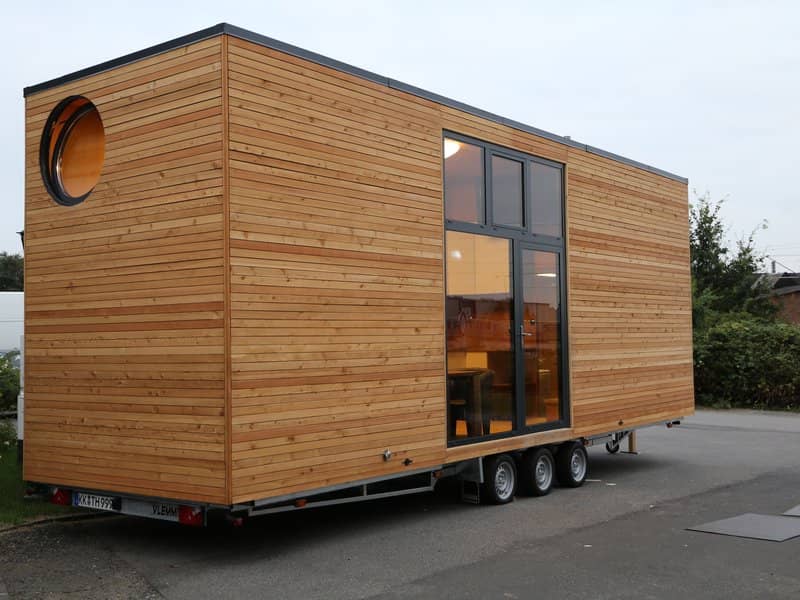
John Rushworth • 21 August 2018
GreenAkku – Victron Energy powered Tiny House
Victron Energy dealer Bosswerk GmbH & Co. KG or GreenAkku as they are usually known are based in Nettetal, about 30km West of Düsseldorf. They have developed the Tiny House you see in the photo above. GreenAkku will be attending Caravan Salon Düsseldorf 2018 in FG Hall 11/11-03 later this week, between Aug 25th – Sep 2nd, where their Victron Energy powered Autarkes Tiny House will be on show. Additionally Victron Energy’s display will be in Hall 13/D82 and Victron Energy dealer Accusysteme Transwatt GmbH will be in Hall 13/E64. If you are not familiar with the tiny house movement then I’d like to refer you to an earlier blog which explains all: At home with Victron Energy – The Tiny House revolution If you are familiar with Tiny Houses then why not jump right in and check the spec of GreenAkku’s fully loaded Autarkes Tiny House. Self-sufficient Autarkes Tiny House – micro living without loss of comfort Exterior construction & weights Wooden clad exterior in Siberian larch, natural untreated. Insulated with 70mm PUR. Interior ceilings and walls in beech plywood sliced veneer. Floor in bamboo parquet. Supporting beams made of Paulowinia wood which is 30% lighter than spruce-fir for the same strength. This lightweight construction method ensures a payload reserve for the installation of furniture and technology, without exceeding the maximum permissible payload of 3.5t. The permissible gross weight of 5.4t ensures a safety reserve even with full tanks, by utilising 3 axles rated at 1,800kg each from Knott GmbH. Exterior & interior dimensions 9.50m long x 2.55m wide x 4.00m high. Total living space including 2 sleeping lofts is circa 30m². Interior accommodation & facilities Bathroom with bathtub, shower, macerator toilet, Japanese bidet. Hot water boiler, fully automatic washing machine, heat-pump tumble-drier. Kitchenette with 335L fridge-freezer, oven with microwave, induction hob with 3 hotplates totalling 5.6kWp, dishwasher. Living room with 55″ Smart TV and mini woodstove. Spare room with door closed at the rear is universally usable e.g. as a walk-in closet or children’s room. 1 x sleeping loft at the front above the bathroom with a double bed and 43″ Smart TV. 1 x sleeping loft at the rear above the spare room with a single bed accessible via wooden stairs. Water External water connection as standard with optional additional self-sufficiency package consisting of: 500l fresh water tank, pressurised water system and rain collection system – where rainwater landing on the roof is passed via 2 pipes into the tank. Black & grey water 250l blackwater holding tank. 250l greywater holding tank. Heating & cooling 3.5kW air source heat pump. Canadian mini woodstove 2kW. 4kW air to air heat pump air conditioning. Solar Power 46 PV modules totalling 4,900Wp comprising: 30 x 110Wp on the roof. 16 x 100Wp on the upper sidewall. Victron Energy equipment 1 x Victron MPPT Solar Charge Controller 250/100. 1 x Victron MPPT Solar Charge Controller 250/60. 3 x Victron Multigrid inverter/chargers. 24V/3000/70 for 7.2kW continuous power and 18kW peak power. 3 x Victron lithium storage batteries. 24V – 200Ah 5kWh each giving 15kWh in total. 1 x 1000A Victron Battery Management System (BMS). 1 x Victron Color Control GX. (A Multi Energy Management and Communication System). 1 x Victron BMV-712 Battery Monitor. 1 x Victron VE Transfer Switch 5kVA for shore/generator power. 16 x 230V power outlets. 2 x Protective safety switches. 1 x Honda emergency generator 2.2kW. Communications Huawei Mobile LTE WIFI Internet router with 2 external aerials. Miscellaneous 4 mechanical jacks operated by a cranking handle with 1.5t fittings. These are integrated into the Tiny House allowing the house to be easily separated from the trailer. Window glass made of WSG safety glass. Conclusion It’s clear that if you can manage to get along to Caravan Salon Düsseldorf 2018 there are multiple stands showing Victron Energy products and interesting implementations of those products, for exciting leisure activities – such as energy self sufficiency in a Tiny House. Worth a visit I’d say. John Rushworth Credits & Links My thanks to Wolfgang Felzen of GreenAkku, also Uwe Dräger and Marianka Pranger of Victron Energy for the images and information used in this blog. Caravan Salon Düsseldorf 2018 – http://www.messe-duesseldorf.de/caravan/ Bosswerk GmbH & Co. KG – http://www.greenakku.de/ Transwatt – https://www.transwatt.de/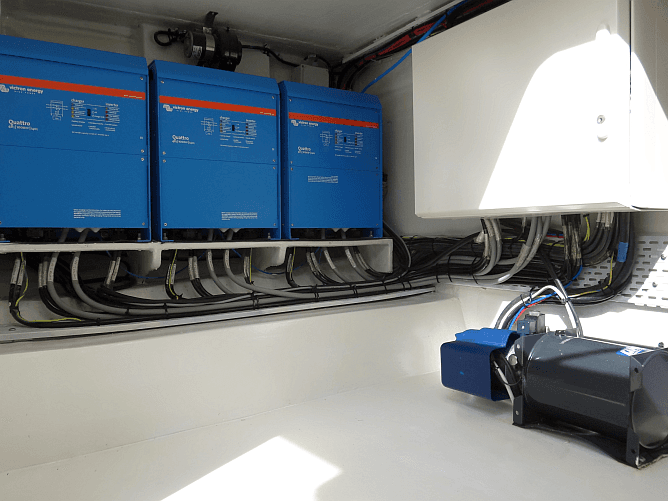
John Rushworth • 15 August 2018
Silent-Yachts: A new breed of cruising yacht
Bang! Any sailor will tell you that an explosion at sea due to onboard propane gas is often one of their worst fears. Yet in this day and age there’s no need for it. Indeed Victron Energy’s owners have been using induction cooking battery power as the safe alternative for many years on their family yacht. And of course that means having high power inverter/chargers onboard. No problem when you own the company and make the ever popular MultiPlus & Quattro range! It seems Victron are not the only company to think this way – yet Silent-Yachts have gone a stage or indeed many stages further and completely re-imagined the whole sailing and cruising experience utilising a range of Victron products including the 3 paralleled Quattros in the image above, fitted to one of a ‘new class’ of cruising yacht. What kind of sailor are you? Ask yourself this one simple question: How much time do you actually spend sailing or to put it another way – how often are you waiting for wind, from the right direction to get you directly to your destination at a reasonable speed in comfort? As most sailors will tell you that can be often and of course as sailors we are reluctant to admit it and loathe to start that diesel. What then if there was a quiet, luxurious way to cruise that minimised the use of fossil fuels yet still afforded you as much electricity onboard as you’d expect at home. That’s where Silent-Yachts come in – offering vessels just below the designated Superyacht length of 24 metres, yet with all the amenities you’d expect of such a vessel. And it doesn’t matter if that be sail or power – there’s a solution for all. Cruising re-imagined Just as Tesla have re-imagined the car, likewise have Silent-Yachts re-imagined (and proven) this new class of production cruising yacht. Admittedly you need a few bob to own one as we say in the UK. Yet, if you’ve reached a certain income and you want to really enjoy your family time together at sea (in the limited time you likely have available) and actually get to where you want to go to in a timely manner, quietly and in luxury – then one of the offerings from Silent-Yachts may just be for you. Silent 64 Silent-Yachts currently have 3 models in their range: Silent 55 Silent 64 Silent 80 Options include range extended electric propulsion or diesel-electric propulsion, with power and sail options – all with an incredible amount of solar-hybrid silent power that only a catamaran design can offer. Here’s few photos of the Silent 64 to give you a flavour of the design and layout. Pedigree & Proof You only have to look at the Silent-Yachts team and their range of experience and qualifications to realise these folks are very serious sailors with literally hundreds of thousands of cruising miles under their belts. Add to that five years of testing plus an Atlantic crossing to prove their systems – well it seems to me that this is a company and team you can have faith in. Here’s an extract from that Atlantic crossing: “Crossing the Atlantic with solar hybrid power had already been accomplished with two other boats, but these were either spartan equipped self-builds, or high-tech multi million prototypes. The Solar-Wave 62 by Silent-Yachts was the first solar production boat, which succeeded in doing so without giving up the conveniences of luxury yachting. She made the trip with about 0.12 litres of diesel per kilometre. This corresponds approximately to the content of an espresso cup. The cooking, which is usually done with gas, was done as at home – by an induction cooker. Even air conditioning was not lacking on the luxuriously equipped catamaran, which – amongst other amenities – features four cabins with two beds and four bathrooms, a high-quality kitchen, a washing machine, an ice maker and a desalination plant which all allows virtually unlimited, self-sufficient travel.” Back to the question Coming back to introductory question: How much time do you actually spend sailing or to put it another way – how often are you waiting for wind, from the right direction to get you directly to your destination at a reasonable speed in comfort? As most sailors will tell you that can be often and of course as sailors we are reluctant to admit it and loathe to start that diesel. Silent-Yachts decided to look at the reality of cruising. Here’s what they found: “After several years of testing we found out, that the overall energy balance of solar-panels is much better than of a sail. In an average application – holiday boat or world traveller, the energy produced by the solar-panels – which are specially designed for this purpose – exceeds by far the energy produced by the sails for propulsion. It is a simple fact, that you use a sail only a fraction of the time, whereas the solar-panels produce energy every single minute of daylight, energy you can use for propulsion AND for cooking, cooling the boat, refrigeration, washing-machine, water-maker etc.” Taking all that into consideration here’s a video showing an overview of a realistic average day on a Silent-Yacht, showing the energy consumption and energy generation. Handling all that solar energy is done using Victron Energy products. Rendering of the brand new SILENT 79 (2019 – now the Silent 80). Energy production and storage of the SILENT 79 (2019 – now the SILENT 80 ): 70 high-efficient solar-panels in total for propulsion and household, total approx. 115 m² 25 kW peak solar production – powered by Victron MPPT solar charge controllers Range-Extender 100 kW to recharge the batteries if necessary High Voltage DC Battery for main storage capacity of >300 kWh 24 V service batteries Charger 250 A Inverter 30 kVA – sufficient for all household appliances Conclusion Whilst catamarans as opposed to monohulls or indeed power as opposed to sail are not for all – it seems clear to me after converting my own modest sailing monohull 7 years ago to range extended electric propulsion, with some solar power, that serious consideration needs to be given to how we actually cruise rather than what we hope to or imagine we do. If you have come to the same conclusion as me – you may well decide that a solar hybrid and range extended yacht is right for you, using Lithium-Ion batteries as opposed to AGM . That being the case then it’s reassuring to know that Victron Energy can offer all the ancillary products (apart from the actual electric motors) required for these kinds of vessels. I know I’m personally delighted with all the Victron kit I have on Elektra . It’s been totally reliable over the last 7 years and simply works. It does take time to get use to the systems if you’ve been use to just diesel and a few leisure batteries – but once you do I’d be surprised if you would go back to the ways of the past. If you like these kind of ideas why not get yourself along and check out a Silent-Yachts hybrid powered catamaran at the Cannes Yachting Festival or one of their tour stop-off points shown in the poster above. Credits & Links My thanks to Mathias May of Silent-Yachts for the images and information used in this blog. Silent-Yachts website – https://www.silent-yachts.com/ Silent-Yachts on Facebook – https://www.facebook.com/silentyachts/ Victron Energy Whitepapers In particular see the Energy Unlimited PDF Whitepaper at: https://www.victronenergy.com/support-and-downloads/whitepapers John Rushworth
Justin Tyers • 02 August 2018
Digital TV in Fiji
If you are a state broadcaster, Fiji is a difficult region. 900,000 Fijians live on 110 of the nation’s 330 islands …which are sprinkled over a huge area of the Pacific Ocean. Staying in touch with island news, or enjoying the region’s entertainment programmes, has always been challenging – often marred by weak signals and power outages. That’s all changed. Fiji now has ultra-modern Digital TV available to 97% of the population. How has this been achieved? Fiji is well organised and has one of the best-developed economies of the Pacific region, based mainly on tourism and sugar. Yet the Fiji Broadcasting Corporation struggled to provide a reliable service owing to the mountainous topography, and difficulties of getting power to offshore repeater stations using fragile infrastructure, dogged by extreme weather events. Derek Gaeth, container installation complete. New Zealand based Hi Tech Solutions were the company chosen to provide the infrastructure for a major installation which would allow for the Digital switch-over. The key to the success of the project, says Hi Tech’s Derek Gaeth , lay in their decision to install all components inside 20 foot shipping containers. This allowed for the system-build to take place in the controlled environment of Hi Tech’s own workshops; and greatly simplified transportation to the often remote sites of the transmission stations. Equipment for the larger sites required 5 containers to house batteries, inverters, generators and fuel tanks; together with all the switching gear required for Digital, FM, and Data Transmission. The ‘container’ solution also allowed for short on-site build times – where arrival at bare site to sign-off could be achieved in less than 7 days. Clear site to sign-off – 7 days. Grid electricity is unreliable, so provision has been made in all locations to include solar power …virtually guaranteeing 24 hour continuous operation under any circumstances. The power demand at the larger sites is around 12kWh – though this can be reduced in abnormal circumstances and still provide essential services. Apart from reducing the carbon footprint – most power is diesel generated – the solar power provision also reduces cost: The largest site alone is projected to save FJ$1.3 million over three years. Power from the solar panels is stored in Redflow’s Zinc-Bromine flow batteries. These have been chosen for their long life (10 years – guaranteed); their ability to withstand 100% depletion – without damage, and full recovery; and also because they have proven to operate flawlessly in the high tropical temperatures for which the islands are so popular as a tourist destination. These large-format 10kWh batteries can be paralleled into huge capacity storage – 600kWh in the largest Fiji installation – though even larger banks have been built elsewhere in the world. An added advantage is that their very weight (of 240kg) is a deterrent to theft in remote locations which cannot be ‘policed’. The Quattro – scalable to 180kVA Victron 10kVA Quattro Inverter Chargers – configured in both single- and three-phase – were chosen to partner this battery storage for several reasons: Victron technology has been built to work seamlessly with many battery technologies – Zinc Bromine being well-proven; also the Quattro is able to work with two power sources – if the weather turns gloomy for an extended spell, batteries can be recharged with power from a diesel Generator – with automatic switching. Peak power demand or unstable grid conditions will cause the Quattro to patch-in with power assistance – with invisible switching times of 20ms …and also Victron equipment can be remotely monitored and controlled using the Victron Remote Management portal. The Venus GX has been chosen for this part of the operation. The specification for the largest full off-grid site is impressive: Designed to supply 24kW continuously it features a 192kW solar array controlled by 15 MPPT solar chargers ( Victron 25/100 ); 600kWh battery storage; 12 x 10kVA Quattro’s – configured for three-phase operation; and 24 Fronius Primo inverters. Across the network power provision totalling 1.2 megawatts has been built to withstand winds of 350kph. Hitech is a New Zealand headquartered company which provides infrastructure for the commercial generation of solar power – creating sustainable micro-grids for telecoms, remote communities, broadcasting and connecting the IoT. It’s a credit to the team that not only were they the only company able to provide the Government of Fiji with a plan and costing for this major national installation – but they were able to deliver it, on time, as promised. With their state-of-the-art digital TV transmission infrastructure, Fijians can now catch up on the latest news from almost anywhere. Credit: The image used at the head of this article is by Nick Hobgood . Justin Tyers
Justin Tyers • 26 July 2018
Power to the Pupil …off-grid education
Grid electricity can’t be taken for granted when you happen to live in one of the most sparsely populated countries on the planet. If you live in the rural part of any country ‘public services’ have a habit of passing you by; but in Botswana – with its half-a-million square kilometres of rural land – most of the country is ‘off grid’. The Government is making one of its biggest investments to make sure children don’t miss out on a modern education… The Ministry of Education and Skills, together with installers Energy Systems Group have embarked on an ambitious project to provide 20 rural schools with state of the art off-grid Solar Power plants – each providing an impressive 90 to 150kVA. That’s enough for the School’s pupils, office block, kitchen and up to 10 associated ‘staff houses’. A micro-grid. Energy Systems Group have been providing off-grid electrical solutions to industry, education and the domestic market since 1998. And given Botswana’s sunshine, their PV and Solar Water heaters are highly productive. The government recognises the importance of education and seeks to offer an equal opportunity to all Botswanan children -regardless of whether they grow up in the city – or remotely. No electricity means no computers – and without learning computer skills a child becomes part of a lost generation …unable to reach his/her full potential. For that reason the Government have signed off this initiative which represents one of their biggest, newest investments. A long way from the cities, the sophistication of these electronic installations is an unfamiliar sight – but no short-cuts have been made in guaranteeing the future of electricity provision, with state of the art power plants which may comprise of up to 12 Inverters – 48V Quattro 10kVA; and BlueSolar 150/70 MPPTs. There’s no shortage of sun, of course, to fire-up the BlueSolar PV Panels in arrays of up to 47kWp which harvest the power into OPzV Batteries banks as large as 288kWh. Now the very latest technology is available to these children as an educational tool. No matter that their school is far out of town, increasingly rural children can enjoy the same advantages as children in the cities. By taking a long-term view the power needs of remote schools, villages – even towns – can be met through installing Solar Powered Micro-Grids. The power used by these far-sighted schemes is cleaner; uses less infrastructure; is more easily maintained; and is more secure from acts of god …or civil unrest. Not only that, they have their costs under control …and the price they pay for their power, over the lifetime of the installation is a fraction of the price paid by those of us who are grid-connected. Think about this: In the UK the average annual bill for electricity today is £600. The average annual electricity price-rise is 8%. In 25 years time (the lifetime of a solar panel) the average annual bill for electricity will be £4,100. The economic argument for generating your own electricity from Solar Power has been won – it’s cheaper. In many ways – the Botswanan Government, and Botswanan schoolchildren are showing us the way ahead. If you live or work in Botswana and want to know more about reliable electricity provision, get in touch with Felix Chavaphi of Energy Systems and let him show you the work they’ve been involved with. Justin Tyers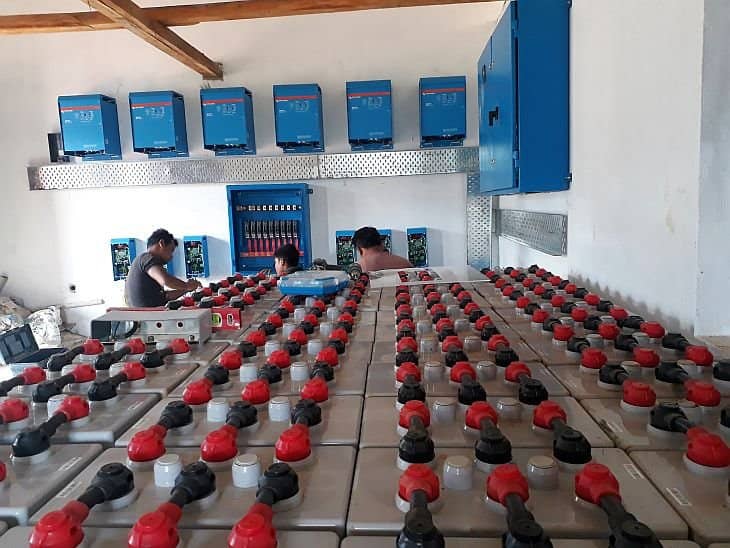
John Rushworth • 24 July 2018
Peak Power – Olane Community Microgrid
Aptly named Peak Power Pvt. Ltd., based in Kathmandu, Nepal, certainly take top honours for the most challenging of Victron Energy equipped installations. Last time they hand carried: “…3 x 30 Kg Victron Mutiplus inverter/chargers up a 2,000m mountain before even beginning to read the manuals…” This time their project includes 120 electricity poles before we even start with the 6 x 8kVA Quattros and batteries – but at least on this occasion there was 4 wheel drive assistance for part of it. Getting to Location Olane Community Microgrid Olane [oh/lane/ee] is a remote community of 65 families in the Eastern mountains of Nepal. The village has no connection to the national utility grid. However – from April this year, the village has been operating on a solar-based micro-grid providing all the households with access to clean and reliable energy, via four kilometres of overhead lines to distribute the electricity throughout the village, not to mention all those batteries that needed to be carried! Residents of Olane Village are now able to utilise clean and reliable energy during the day or night for productive use – such as lighting, cooking, communications, education, water pumping, water treatment, health care and medicine storage. Energy consumption and billing is carried out via smart meters installed at the service entrance. Equipment 6 x Victron Energy Quattro 8 kVA inverters stacked to provide 39kW nominal capacity. 6 x Victron Energy MPPT solar charge controllers provide 510A of charging. 1 x Victron GX Color Control for System monitoring and control. 120 electricity poles for 4 kilometres of power lines. 81 x Trina solar 315PD-14 solar modules provide 25kW of energy generation. 4,000Ah of 2V industrial VLRA batteries. 1 x 3G internet communications via the local provider. Switch boards and the balance of system components designed and built by Peak Power. Conclusion Power it seems brings lots of smiles! My thanks to Rakesh Shrestha/Joel Basham of Peak Power Pvt. Ltd., Kathmandu, Nepal for the images and information used in this blog – have any of our readers matched his project for the sheer difficulty of logistics? If you have we’d love to hear from you. John Rushworth Links Peak Power Pvt. Ltd. Peak Power on Facebook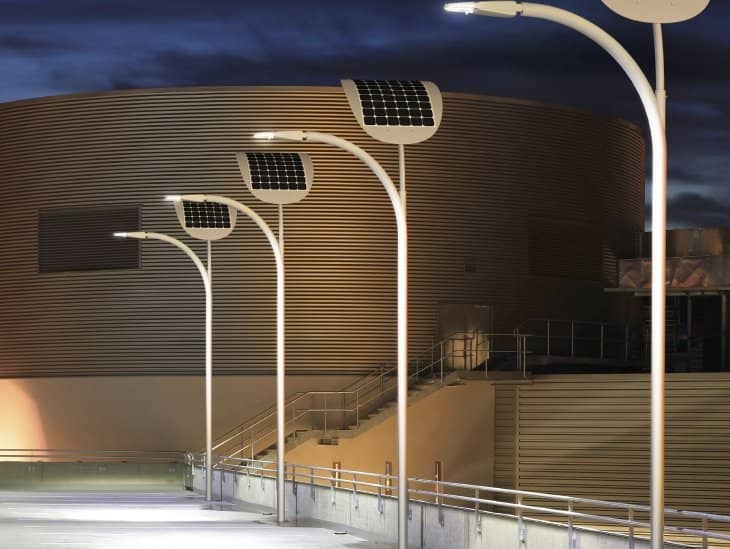
John Rushworth • 12 July 2018
Smart Solar Street Lights – Lighting up Kuwait and Caribbean islands
It seems ironic that a company whose main role is to explore, develop and produce hydrocarbons should choose solar power for lighting at their headquarters. That is however what the Kuwait Oil Company has chosen to do, as their goal as one of the largest oil producers is to become a more sustainable and energy efficient company – a theme that seems to be growing. Smart Solar Street Lights EnGoPlanet Inc., is headquartered in New York. Their Smart Solar Street Lights are used in the Kuwait project, where 140 units have been installed. Petar Mirovic, CEO of EnGoPlanet tells me that the success of the project has interested other oil companies too, such as Saudi Aramco who are considering an installation of over 1,000 units in the coming months. The lighting units use quality components. The solar panels are 24% efficient (about as good as you can get commercially) and the LED lights are among the best at 160 lumens per watt (lm/W). The more lm/W a lamp produces the more efficient it is. A traditional incandescent light is around 15 lm/W, an energy-saving fluorescent bulb is around 60 lm/W. Easy then to see the attraction of solar power for free and lamps that are over 10 times as efficient as old fashioned bulbs – all which nicely meets companies requirements for improvements in sustainability and efficiency. Add in EnGoPlanet choosing to use Victron Energy’s highly efficient, ultra fast MPPT Solar Charge Controllers , plus Victron batteries together with lighting options such as: Wireless internet connection for remote control and management. Smart Cameras. Sensors for collecting various environmental data. Mobile phone charging stations. Well – that all sounds to me like a recipe for success! Smart Solar Street Light installation in Antigua and Barbuda Disaster and lighting relief Hurricane Maria was the deadliest storm of the 2017 hurricane season and many places in the Caribbean were without power for months. In fact we’ve previously blogged about this where Victron products have been used to help these not so fortunate folks: Powering up after Hurricane Maria . And now we discover even more Victron products have been used in the aftermath of Hurricane Maria, this time with EnGoPlanet’s Smart Solar Street Lights. Antigua’s street light network was completely destroyed and EnGoPlanet, together with their partner, installed 30 of their Smart Solar Street Lights at the beginning of redevelopment – making them more independent from the power grid with lighting that will work during power outages and hurricanes. As Caribbean islands such as Antigua have so much sun during the year the units can be completely powered independently from the grid. Smart Solar Street light installation in Las Vegas Conclusion It’s always a pleasure to see Victron products being used in sustainable and meaningful projects. Speaking to Petar Mirovic, CEO of EnGoPlanet he too seems to feel the same way and also tells me: “We see large potential for growth in both the Caribbean and Middle East markets – and since we are using Victron Energy products we believe this will be a great opportunity for our companies to further develop our business cooperation.” John Rushworth Credits & Links Thanks to Petar Mirovic for the information and images used in this blog. The headline image of this blog is a Solar Street Light installation in Oman. Others per their caption. EnGoPlanet Website – https://www.engoplanet.com/ EnGoPlanet on Facebook – https://www.facebook.com/engoplanet/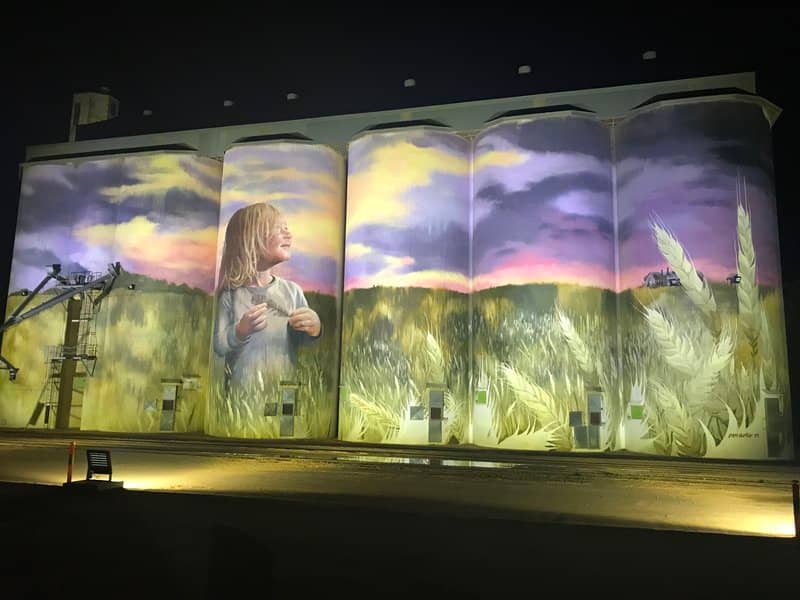
Justin Tyers • 05 July 2018
Kimba’s Fields of Gold
Kimba is a small town with big ideas. Lying near the south coast it marks the half-way point between Australia’s East and West. It’s a modest wheat growing region with around 600 inhabitants. That’s until now. If you visit Kimba today you’ll find it hosts an art installation on a phenomenal scale. …Fifteen hundred square metres to be exact. In order to create his artwork, Cam Scale spent 26 days working in the basket of a tele-lifter, applying 200 litres of paint (that’s nearly a quarter of a ton) to half-a-dozen grain silo’s 25 metres high, and 60 metres wide. The result is quite literally spectacular. It attracts visitors from far and wide and has put Kimba on the map. The community feels the image – a young girl in a field of wheat – is an expression of themselves: Amongst the suggestions from the artist, working in collaboration with residents, it was agreed that the elements of this image: Youth, Agriculture, and a sunset which promises great weather for tomorrow – expresses the community’s culture …and their Hope for the future. Igniting Kimba Arts Program – the local group of volunteers who worked with the artist and residents to conceive the idea – is itself a testament to the can-do attitude of the people of Kimba. It took just eleven months between their first conceptualisation meeting – to ‘unveiling’ the completed artwork. Their work included raising A$90,000; reaching all necessary agreements with Viterra – the corporate-owner of the Silo’s; public consultations were held on a regular basis to gain consensus of what the image would actually be, and as soon as decisions were finalised, the idea was put into action, and reached its perfection. The image perfectly captures the extraordinary Kimba sunsets – a region which receives little more than a foot of rain per year. The installation was finished last September to such applause that it was decided to illuminate it at night. A A$30,000 custom-built lighting system has just been completed by Eye Energy Systems which consists of four 450W LED floodlights – all custom built. The energy for the bulbs is provided by – well – the Sun, of course. That’s where we come in… At the heart of the 24 volt 16kWh/3.48kWp solar installation there is a Victron Energy EasySolar unit 24/3000/70-50 with a Colour Control providing remote monitoring via our VRM . As an added bonus for those of us who admire artists and the way they produce their stunning works, the project fund-raising has allowed for the time-lapse camera footage of the month-long process to be sent away for professional editing. If you wonder how Cam Scale achieved his incredible image, layer by layer, this video reveals the secrets of its creation – 4 weeks in 4 minutes! Justin Tyers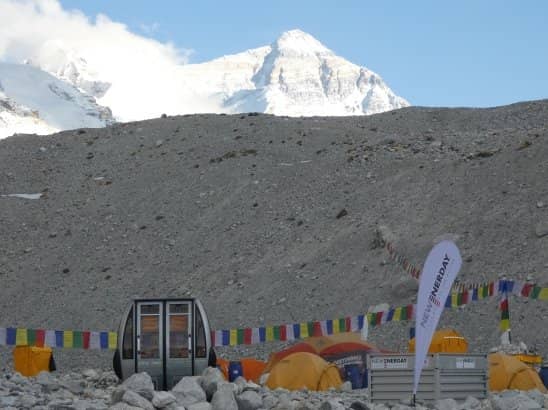
John Rushworth • 21 June 2018
Getting warmer at Mount Everest
Don’t worry, Mount Everest isn’t melting – but a small part of its northern base camp has certainly got warmer. Thanks to New Enerday GmbH and one of their Powerbox systems, mountaineers can now warm themselves after their exertions in a Physiotherm infrared cabin. Apparently such cabins can “improve circulation, blood flow to organs, muscles, connective tissue and the skin”, thereby stimulating the climber’s metabolism. New Enerday SOFC fuel cell system To power the Physiotherm infrared cabin New Enerday (along with their partner Furtenbach Adventures) have put into operation the first solid oxide fuel cell (SOFC) system at Mount Everest basecamp, at a height of around 5,300m. This fuel cell is an environmentally friendly, quiet power generator which combined with their Powerbox supplies electricity to the infrared cabin. Powerbox system The New Enerday Powerbox contains an EN400 fuel cell system, a battery buffer bank, a solar charge controller and two high-power Victron Energy inverter-chargers. At the beginning of April the Powerbox was shipped to Kathmandu. From there a truck carried the equipment directly to the base camp, where the Sherpas were able to unload it simply due to all the components being contained within the aluminum Powerbox. New Enerday’s development engineer Dr. Arne Sommerfeld followed the Powerbox to base camp, taking a small detour over Lhasa, Xigaze and Tingri. On the 16th of April he commissioned the system and naturally was one of the first to ‘test’ the infrared cabin! The Powerbox will supply power until the middle of June, ensuring Furtenbach Adventures expedition members will be able to benefit from the infrared cabin and its breathtaking panorama. After this project, the Powerbox will become a part of New Enerday’s rental fleet at lower and less challenging elevations in Germany and Europe. Victron inside New Enerday’s Powerbox system comprises the fuel cell, solar controller, battery buffer bank and power electronics. The Victron Energy components used are: 2 x 3kVA MultiPlus inverter-chargers 8 x 165Ah AGM batteries 1 x BlueSolar MPPT 75/10 solar charge controller 1 x Battery Balancer 1 x BMV-700 series battery monitor 1 x Color Control GX Conclusion It’s flattering to know that New Enerday chose Victron Energy for their power electronics – and they are not the first to have that confidence – they are in good company! Victron products are often used in challenging locations and have featured on this blog a number of times – here’s a few more examples of such locations: Peak Power: Nepal Microgrid Extreme Solar: Higher power December Solstice 2015: What are you doing? Victron powered sanctuary in the Alps: Refuge du Promontoire John Rushworth Credits & Links Thanks to Bob Hopman of Victron Energy for making me aware of this project and Marcel Dee of New Enerday GmbH for the information and images used in this blog. New Enerday website – https://www.new-enerday.com/en/home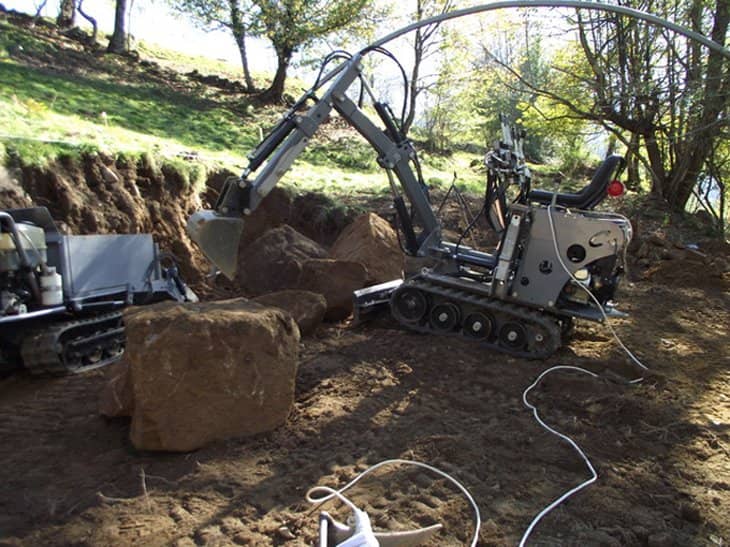
Justin Tyers • 12 June 2018
Electric Earth Moving
You know what it’s like – you’re sitting on the sofa with a glass of something warming in your hand when suddenly you have a Eureka moment. Four years ago Benoit Buys , who advises on and installs PV off-grid installations in the South of France – and who is an inventor in his spare time – decided to remove the power-steering ram from his wife’s Golf GTI and install it instead under the box of his trackbarrow (one of those mini dumper trucks you see on building sites) …so that the box had an hydraulic tilt. One thing led to another… Seeing more possibilities, he bought another trackbarrow and, using its chassis, built an hydraulic bucket arm to turn it into a very neat mini-digger. The remarkable thing about this small excavator is that although it has ‘dual fuel’ (electric and petrol (gas)) – it is designed to run on Sunlight alone. Using a 2800W motor on a sunny day the unit is effectively powered in ‘real time’ by 18 PV panels . Never-the-less it has a battery capacity of 600Ah / 24V; an MPPT SmartSolar charger 150/85 ; and the 230V output is supplied by a 5kVA MultiPlus Inverter . This arrangement allows the unit to operate for between 5 and 7 hours without any sunlight – after that you can switch to petrol-power if you’ve still got some fight left in you. If at any time during the day you wonder how much power you’ve got left; how much power you’re using; and how much the sun is providing – a glance at the CCGX will tell you. Information accuracy is guaranteed with the BMV 702 . Confounding the prognoses of doom – the advantages of this mini-digger are that having a track width of just 72cm it can be driven through the doorway of any house. With zero emissions, it can be used indoors. It is able to excavate to a depth of 1.7m; and the addition of stabilisers allow it to be operated on sloping ground of up to almost 1 in 3 (30%). To date it can be fitted with buckets of 20 / 30 and 50 cm – all of which are quickly interchangeable. Benoit has been testing the device since 2016 – clocking up over 150 hours of use: Working on his own construction project he recorded that he was able to remove 55 cubic metres of soil (that’s about 100 tons) in 48 hours of operation – using 38kWh of free electricity in the process. Benoit – who lives off-grid, himself – constructs all his equipment using solar energy …powering his welding machine and grinders. He also has an electric chainsaw and log-splitter for home use. He now offers his invention for sale as the Permawatt Micropelle , and plans to develop a lithium version. You can get in touch with him here . Characteristics of the autonomous photovoltaic mobile unit: – installed PV power 1200 to 2400W – battery storage 500 to 700Ah 24V opzs or opzv – DC / AC conversion MultiPlus 24/3000 or 24/5000 – SmartSolar MPPT control 100/50 to 150/85 – Monitoring BMV 702 & CCGX Benoit’s silent excavator is truly ground-breaking… Justin Tyers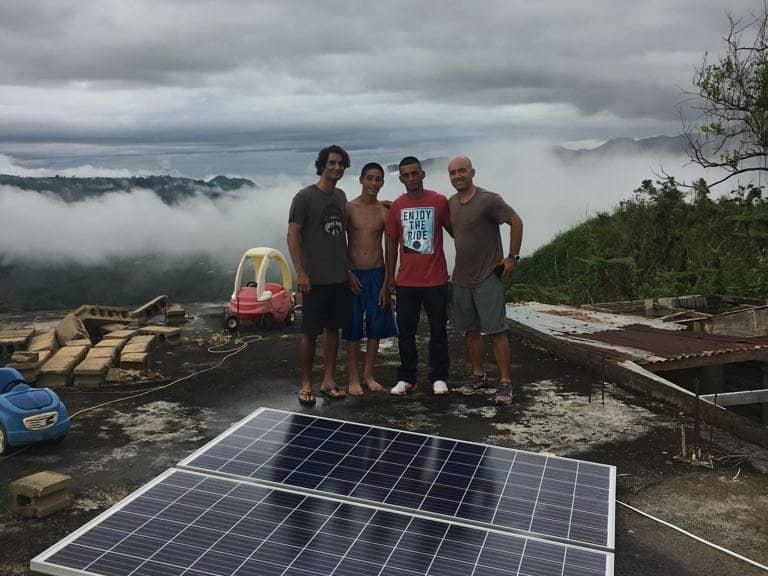
Justin Tyers • 05 June 2018
Powering up after Hurricane Maria
Hurricane Maria – the deadliest storm of the 2017 hurricane season – made landfall in Puerto Rico, on September 20th last year with winds of up to 155mph. In addition, almost 40″ (1 metre) of rain fell. The wind and storm surge destroyed 80% of the buildings in some townships, and killed 64 people on the island of Puerto Rico alone according to official records (Harvard University estimates the figure was actually 4,600 ) together with many more throughout the Caribbean region. Aid agencies responded with food, clean water and medical care – but with an estimated 3.4 million people without electricity we tell the story of one organisation trying to make a difference to the rural families who need power, but are least likely to get it. Frustrated with the slow pace of repair and the inconvenience of living without electricity Alberto Casas even thought of leaving his native Puerto Rico to begin a new life elsewhere. He and his partner Kamil Rivera decided to install solar electricity and the relief he found from being able to come home and carry on a normal life – cooking, charging a cell phone, helping the children with their homework …but mainly just having a light – made a tremendous difference to his mood, and his optimism for the future. Having solved his family’s own immediate problems they decided to head out to the countryside to help with the now widespread humanitarian effort of handing out food and water …but found that they were simply duplicating the efforts of others. One experience changed their thinking: An elderly man in a wheelchair, noticing that they had a candle, asked if he could have it in preference to food …explaining that once the sun had gone down, he had no light. Alberto realised that this was the next stage of the island’s rehabilitation. He and his partner – together with a tour guide who has an intimate knowledge of the island’s rural areas – formed a team called Off Grid Solar to build simple domestic solar electricity kits with money donated through a GoFundMe account, set up for the purpose. Off Grid Solar is a local self help organisation whose small scale Solar Power installation provides the basic power needs for rural families. Although these houses and farms expect to be re-connected to the national grid in a year or so …the benefits of the off-grid installations will last long after they get re-connected, because the electricity grid wasn’t reliable in the first place. The initiative brings electricity to those in despair, struggling to return to something like a normal life – it brings immediate improvement to the lives of those who have suffered and lost so much. Yet it does more – Kamil, Alberto & Andres are inspiring others – showing that the best way out of difficulty is through helping yourself. And they are also demonstrating that there is a greener way to provide the island’s power. The kits they are installing comprise: 2 x Solar Panels offering up to 600w MPPT Solar Charger 100/30 Inverter 800VA AGM Battery 12V/230Ah Super Cycle …which provides enough power to run most domestic equipment – a television, food mixer, fridge, lights – which don’t provide ‘heat’. Alberto and Kamil, pictured right, brightening people lives. Colleague Andres Carrero from Atabey Tours is on the extreme left. If you would like to support Alberto, Kamil and Andres in their effort to bring disaster relief to the most vulnerable click on the GoFundMe link above. Here is a short video of the work they are doing: Justin Tyers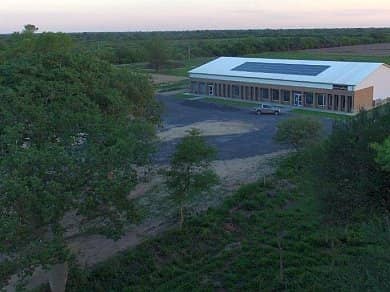
John Rushworth • 24 May 2018
Enersoltec S.A. – Off-Grid business in Paraguay
If your business is solar energy then what better way to promote and demonstrate the competence of solar than by running an off-grid solar, battery, inverter-charger backup system to the AC grid. This is what Victron Energy dealers Enersoltec S.A. have done at their premises in Filadelfia , in Paraguay. Benefits Enersoltec’s system has been up and running for a year and a half now, allowing them to demonstrate to potential customers the opportunity of running their home or business totally off-grid. Continuity of AC electricity supply for their business is also important, as power cuts are not uncommon with their mains grid supply. Power continuity and indeed the ability to be totally off-grid is now assured by using Victron Energy Quattro inverter-chargers and MPPT solar charge controllers. Quattro Power Installation & components It took two days to install all 80 solar panels on the roof of their building and another three to get the system fully commissioned. The power system is installed in a small cooled room and is monitored locally with a Color Control GX and remotely via the VRM . During the day Enersoltec run five Samsung air conditioning units at the same time, some machinery and low energy lighting. At night there are always two air conditioning units running. During the night the battery bank goes down to around 75% SOC, but fills up pretty quickly and is often back to 100% by 11:30AM. The installation comprises: 2 x Victron 10kVA Quattro Inverter-Chargers . 4 x Victron BlueSolar MPPT 150/85 solar charge controllers (MPPTs paralleled using CAN bus ) 1 x Victron Color Control GX . 1 x Victron BMV-700 series battery monitor. 80 x 270Wp solar panels, giving 21.6kWp in total. 24 x OPzV 2V/900Ah cells in series, giving a 48V/900Ah bank. Cool and Compact Conclusion As a Victron dealer, Enersoltec are delighted their business premises are totally off-grid now, with power cuts being a thing of the past – and what better way to demonstrate Victron Energy products than that! John Rushworth Credits & Links Thanks to David Martens and Boris Balzer of Enersoltec S.A. for the information and images used in this blog. Enersoltec S.A Website – http://www.enersoltec.com Enersoltec S.A on Facebook – https://www.facebook.com/Enersoltec-SA-1699840310096704
Justin Tyers • 15 May 2018
Grain South Africa – NAMPO Harvest Day 2018
NAMPO 2018 is an agricultural exhibition on an epic scale which opens today and runs until May 18th. It is held annually in South Africa near the town of Bothaville. It began life over fifty years ago as an opportunity for Maize growers to get together to discuss and view the latest technologies then available – but soon outgrew its own venue. The focus on Maize-growing expanded, too – until every avenue of agriculture was represented. Today, the 200,000 m² exhibition area allows live demonstrations of Tractors, agricultural machinery, commercial vehicles, irrigation equipment, materials handling, chemical products, feeding systems. There is livestock …and there are forums and seminars on policy, politics and maximising food production by speakers who are experts in their field. (Groan.) With over 700 exhibitors – a figure which increases year on year – and a projected 80,000 visitors spending $100m(US), the show is tremendously successful. We thought we’d mention two of the more unusual exhibitors who use Victron Energy components in their product – the first being ABBA Campers who, building on a lifetime experience of camping, have developed a luxurious camping unit which attaches to standard off-road vehicles which are so essential in the African bush. Hand made from robust composite materials – yet lightweight – the camper incorporates facilities such as an electric flush loo, 360° viewing windows, and carpets to cut down condensation. Each built to owner-specifications one of the options includes a roof-mounted PV panel to further augment the electrical system for those who like to travel with all the comforts of home. With serious off-roading in mind, weight-saving has been considered throughout manufacture in order to preserve vehicle stability. The package is so good that Victron Sales manager for South Africa Gerrit Tromp uses one for overnight accommodation as he drives around his extremely large patch. On board he has a 1200/50 Multiplus Inverter; PV panel connected to a Solar Charger 75/15; Venus GX – so that he can use his phone to see how his electrical system is performing; and a BMV battery monitor. He will be at the show demonstrating how it all works. ABBA Campers also offer European on-road conversions from Reimo with their high-spec finishes and thoughtful detailing. Also attending the show Solar Eff specialise in the installation of medium and large-scale PV projects – both ground and roof mounted. From Wine Estates to Shopping Malls, no project is unfamiliar to the 30+ staff of Solar Eff whose installations are currently providing over 30MWp ! Seen here at the Graham Beck Wine Estate is a grid-tied installation of 312kWp which gives an idea of the scale of projects in which Solar Eff specialise. They installed the record-breaking rooftop solar PVs at Clearwater Mall, Strubens Valley, Roodepoort, SA – which was the first commercial installation to break the 1MWp barrier for own-consumption. It is rated at 2.9MWp. Since 2010 Solar Eff have accrued a track record of over 200 complete or current installations, and is a member of the Green Building Council for South Africa which is committed to sustainable energy, and supporting environmentally sound building. All set up, and waiting for the crowds. Using Victron equipment as part of their installations allows Solar Eff to build-in control and monitoring of the entire system in order to identify performance glitches before they become problems. NAMPO 2018 runs until May 18th, showcasing South Africa’s Agriculture and Technology sectors …for people who use the land for work, and for pleasure. Justin Tyers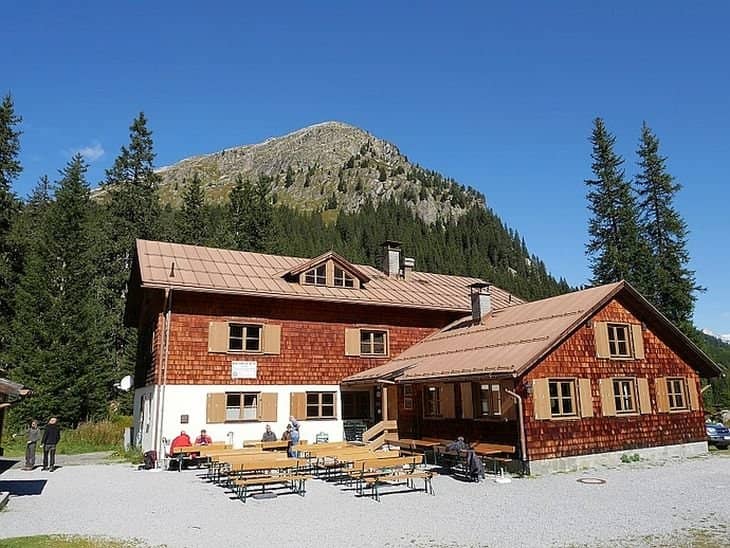
John Rushworth • 26 April 2018
Konstanzer Hütte – Power by necessity with Victron Energy
A change in this chalet’s water supply meant their primary hydro power energy source became intermittent. The diesel generator – intended only as a backup – now becoming the sole energy source in the summer months, after the winter snow meltwater had gone. The silence of the place disappeared, diesel emissions polluted the air and the costs for the owners rose. What to do, who to call? Victron dealer and installer Elektro-Mechanik Meisl GmbH came to the rescue. More of that in a moment – but first a little about Konstanzer Hütte. Konstanzer Hütte is a German Alpine Club (DAV) off-grid chalet in the very heart of Europe, amongst the Tyrol , Austria. Due to its remote location there is no public grid electricity supply. 15 kW hydro generator – summer power demand higher than it could supply. Konstanzer Hütte is 1,688m above sea level. A traditional mountain refuge with gemütlich (pleasant and cheerful) accommodation for 90 guests. A popular stop for hikers following the Verwall trails (about 178 trails) around the St.Anton/Arlberg region. Alternative power by necessity After last summer’s intermittent hydro power and extended diesel generator running, the chalet owners made the decision to seek a more reliable and quieter power source. Victron Energy dealer Elektro-Mechanik Meisl were chosen to realise the project, based on their 20 plus years experience in off-grid system integration. Production and load data were evaluated and a new custom designed system evolved, to serve the varying needs of the chalet. This resulted in a combination of hydro and PV power, together with a large scale lithium battery in a 3-phase Victron Energy inverter system. PV compliments intermittent hydro power. The core of the installation consists of three 48V/10 kVA Quattros and a 32.4 kWh Meisl battery. The pairing of the Quattros and Meisl battery provides enough power for Konstanzer Hütte in any situation. The PV directly powers the loads with any excess energy being used to recharge the batteries. The hydro generator connected to the Quattros now works in its ideal power range. Additional peak demand is covered by the battery and the overload capacity of the Quattros. If more energy than needed is produced, any surplus is used to heat water. The Quattros have therefore been integrated into an efficient energy management system, co-designed by the Meisl company . The battery system uses lithium iron phosphate technology developed by Sony which is characterised by unique thermal stability, being one of the safest and most durable batteries currently available. As a standard in energy storage under extreme conditions it powers e.g. the German Antarctic research station Gondwana in Terra Nova Bay (74°South). The high cycle stability of the battery system allows it to be charged/discharged more than 8,000 times to 100% DOD without a major capacity reduction. Monitoring and data evaluation in real time is by a Color Control GX and smart1 display, the screens of which have been combined into the composite image below. Comprehensive monitoring & management. – click to enlarge image. The composite image above includes the smart1 display showing management of the heating elements, the electrical heating devices in the bathrooms and the staff rooms – which is surplus energy from hydro or PV power. Not forgetting of course the Victron Color Control GX for local and remote monitoring/management too. System components 3 x Quattro 48/10000 1 x Color Control GX 32.4 kWh Meisl Battery (Murata/Sony technology) 9.54 kW P PV-modules 1 x Fronius Symo 10.0-3-M PV inverter 1 x Smart1 energy management 1 x Hydro generator 15 kW Conclusion The daily experience of the owners in the first months with the new system reveals a total success story: “The system automatically provides the energy that is needed, with almost no interaction and maintenance necessary.” In conclusion the diesel generator now has a quiet life, only once in a while is it switched on to check its function for emergency purposes. The rest of time the guests of Konstanzer Hütte enjoy the fresh air, peace and a tremendous alpine panorama on the large terrace – without even realising where the energy for their delicious food comes from. The way an energy system should be! John Rushworth Credits & Links Our thanks to Agathe and Hubert of Elektro-Mechanik Meisl GmbH for most of the words, information and images used in this blog, also to Bob Hopman of Victron Energy for making us aware of this project in the first place. Elektro-Mechanik Meisl GmbH – https://www.meisl-elektromechanik.de Meisl GmbH – Wholesale – https://www.enerflex.de/en (English pages) Konstanzer Hütte – http://www.konstanzerhuette.com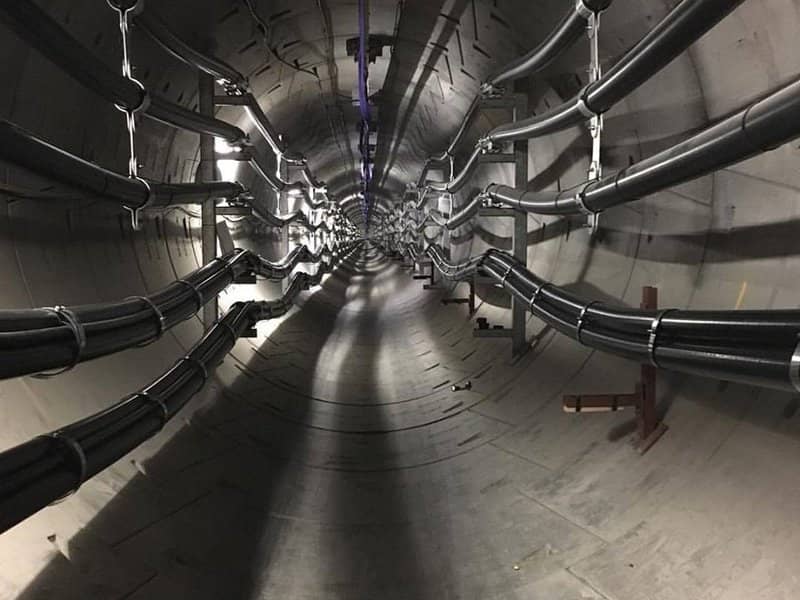
Justin Tyers • 17 April 2018
Shining a light into some pretty-dark places…
The Victoria Line – part of The London Underground Rail Network – was opened 50 years ago this year …so it’s time for a spot of re-wiring. The trouble is when you’ve turned the power off, 250 metres down a hole, things get pretty dark. The Victoria Line is one of the more ‘recent’ arteries of the London underground network – which began life in the 1860’s. Back in those days steam engines pulled gas-lit carriages under London’s streets in order to provide a connection between the main termini of overground railways. It’s grown a bit since then – today the network covers 400 km (the third longest in the world); and serves 270 stations. All that infrastructure takes a lot of maintenance – with the power turned off! Power Saving Solutions have got this one nailed: When the wiring loom needed to be replaced between Highbury and Islington and Kings Cross St Pancras, for example; the problem was to provide sufficient power to illuminate a couple of miles of tunnel, and to run power tools – without choking on the fumes of a generator! Power Saving Solutions have developed a range of mobile power units they call Hussh Pod . Their Hussh Pod 5/15, for example, is capable of powering substantial lighting and driving power tools for an extended period of time. It offers up to 5kVA and stores 15kWh of usable power in its lithium batteries. That particular unit is small enough to allow its deployment down a ventilation shaft! …where it was then mounted on a trolly to provide the workforce with the power they needed, where they needed it – whilst enjoying, of course, zero emissions. Power Saving Solutions provide ad hoc power solutions for all main service providers in the Telecoms, Utilities, Construction and Rail sectors. Their Hussh Pods are available in a number of sizes with stored power of between 2kWk – 90kWh. These smaller – emissions-free – units comprise stored electricity in a bank of stable and compact Lithium Iron batteries ; and a Multiplus inverter ; with recharge being carried out back at the depot. How do you know when the unit needs to be recharged? One of the things Power Saving Solutions really appreciate about equipping their Hussh Pods with Victron electronics is that they can monitor them remotely, using the free-to-use VRM remote management portal. Not only does this provide them with full monitoring of on-hire units, it allows them to continually check that the solution they have provided for their clients is the right one for them. Only if you’ve got the power you need, where you need it, can you complete the job on time. And with 5 million passengers a day and a train every two minutes – the less time the contractors have to spend 250m down a hole the better they like it. Justin Tyers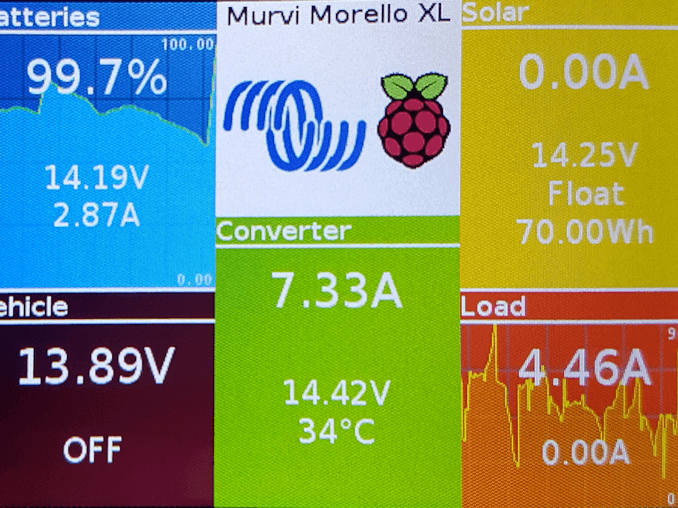
John Rushworth • 11 April 2018
Homemade Pi: Open source Raspberry flavour
At Victron we really like Open Source projects. Here’s one recipe from Alan Major, for his desirable camper van. Inspired by Izak Burger and his successful porting of the Venus software to a Raspberry Pi, Alan decided to investigate Victron’s open source software and communication protocols – to see what he could do to address his specific needs. In his own words, this is how Alan baked his homebrewed Pi. The origins of victronPi “In our first 7 years of retirement my wife and have been fortunate to be able to travel extensively in our Murvi campervan including visits to the Orkneys, Shetlands, the Faroe Islands and Iceland. During this time we developed a love of remote areas. Our ‘van is a ‘panel van conversion’, i.e. the standard steel van body is retained with cut-outs made where necessary for windows, hatches and skylights. This approach has amongst its advantages the fact that original vehicle dimensions and body integrity are retained, both of which are useful considerations given the nature of the roads in the areas we prefer to visit. When the opportunity came to replace our ‘van we decided without hesitation that it would be an almost ‘like for like’ replacement but with an updated specification taking advantage of the technological advances that had occurred since the purchase of our first ‘van. One such advance was in battery technology and more particularly LiFePO4 (LFP) batteries. Victron LFP batteries The benefits offered by LFP batteries seemed to match exactly what we needed if we were to enhance our ability to travel to and enjoy remote sites. The deeper discharge ability, more efficient recharging and lower weight helped greatly alleviate the compromises on space, weight and power reserves that were needed when deciding on the specifications for a campervan. We were lucky in that Murvi , a small independent UK based converter of panel vans, are very flexible when it comes to accommodating owner’s requirements. They were using Victron equipment within their battery systems and I had previous experience of the brand from our days of yacht ownership. So I began my research on the website of Victron Energy and very quickly concluded that they would be my preferred equipment manufacturer as the range of components offered seem to include everything I would need for my proposed installation. I felt that it was important that the system should comprise of components from just one manufacturer to avoid any conflicts which could occur if problems arose with components from multiple suppliers. On their website Victron publish datasheets, manuals and technical papers covering their equipment and data communication protocols. Using these reference sources I was able to design a system that I felt would be suitable for our ‘van. Ferry Meadows Caravan Club Site, Peterborough My requirements for the system were that it should be adaptable and easily serviced so as to reduce the inconvenience should a failure occur, have low self consumption and support our desire to be as self sufficient as possible. Particular challenges were the maintenance of the vehicle battery when in store while at the same time respecting the different charging profiles recommended for lead acid and LFP battery technologies, the control of cold weather charging and the minimisation of self consumption. I was able to find a way of addressing each of these requirements by exploiting the flexibility of the features offered by the Victron components. Although strictly speaking the approach I have taken has resulted in a certain amount of inbuilt redundancy I am happy to accept this and as a bonus it may even help prevent a trip being abandoned should a fault occur. Murvi were asked to install a system which comprised of: 2 x 12.8V 90Ah LFP-BMS batteries 2 x 100W solar panels BlueSolar MPPT 100/30 solar charge controller Blue Smart IP22 30A mains charger BMS 12/200 battery management system Buck-Boost DC-DC Converter 50A Cyrix Li-ct 12V/120A battery combiner BMV 702 battery monitor MPPT Control solar monitor Victron components For some a noticeable omission from this list is an inverter but we have learnt not to rely on mains powered equipment. In practice our most demanding power consumers are our 85 litre compressor fridge and diesel powered water/cabin heater. Over the course of our first year (132 nights away) with this system we have found that our power needs have been satisfied without recourse to additional mains or alternator charging in all but two situations. On both these occasions we had been stationary for 4 days or more and in the first we had sought shade to gain relief from the high summer temperatures in Spain and the second we needed heating to beat the cold of dull winter days in the UK. In each case our power needs were far in excess of our battery capacity and ability to harvest power from our solar panels so the convenience of an EHU (mains electric supply) was utilised rather than rely on the vehicle alternator. As time passed I grew frustrated by the inconvenience of the single line displays of the battery and solar monitors when trying to get an overview of the system’s performance so started to research what alternatives were available. The obvious choice was the Color Control GX but in the context of my system I felt this was too expensive and offered far more functionality that I needed. I then discovered the Victron supported Open Source project to port the Venus GX software that was at the heart of the Color Control GX to the inexpensive Raspberry Pi single board computer. After following the work of Izak Burger on the porting of the software through the victron-dev-venus forum and inspired by firstly Jan Inge’s recipe to connect a touch screen to the Raspberry Pi and Stefano Massone’s pictures of his Raspberry Pi running the Venus GX software installed in his campervan I experimented with a similar set up. However even with this setup I was still missing some data from my system. I wanted to be able to capture data from the Buck-Boost DC-DC Converter so I could have a complete overview of my system. Unfortunately this was the one area where Victron resources was not able to provide the information I needed, so I resorted to my own devices to find a solution. Thankfully the internet can be a great resource and some patience searching produced the guidance I needed to access the data produced by the Converter. So armed with this, Victron’s documentation on its VE.Direct protocol together with various other tools from the internet I was able to assemble a ‘victronPi’ to produce my desired complete system overview on a single display. The recipe link below for victronPi sets out the details of how I achieved this.” Fully baked Pi panel Alan Major Conclusion & Credits We thank Alan for the information and images used in this blog and wish he and his wife many happy travels in their Victron enhanced campervan. Maybe you’re inspired to create your own Pi recipe? If so here’s another to whet [ sic ] your appetite, maybe even literally – Markus Pauritsch and his Hydro Power Pi . Added to that – in the coming months I’ll be attempting an Open Source Pi project of my own with Victron products, utilising Signal K on my boat. Watch this space… More about Victron Energy & Open Source . More about battery choices: Lithium-ion vs AGM If you have an open source project you’d like to tell us about, please leave a comment in Disqus below. We’d love to hear from you! John Rushworth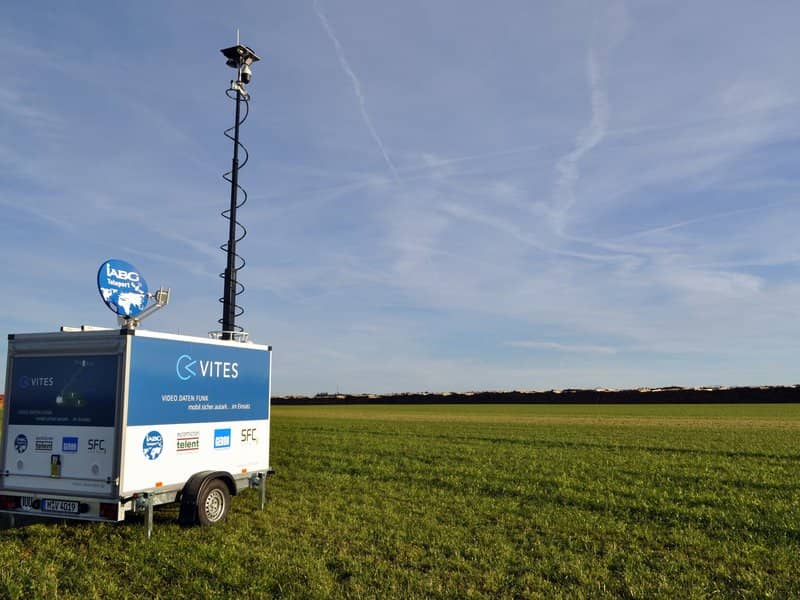
Justin Tyers • 04 April 2018
No comms? No problem.
SFC Energy provide ready-to-go mobile and static power plants for all kinds of interesting applications incorporating EFOY fuel cells. The Vikomobile , for example, is a communication hub mounted into a standard vehicle trailer. It has been designed to provide surveillance; data-transmission; mobile broadband; satellite communications; mobile telephone; and/or as part of secure/military communication nodes. The Vikomobile can be connected to the grid – in which circumstance, of course, it is able to provide itself with an uninterrupted power supply in case of grid failure. But these units are principally designed to provide their Rx/Tx equipment either with a combination of solar power with fuel-cell generator back-up – or else they run on fuel-cells alone …with long maintenance intervals being possible where the power draw is relatively low, and more than one fuel cartridge is installed. This is how a grid-connected installation with fuel-cell back-up might work: A Multiplus charges the Lead/Acid batteries in normal circumstances. In the event of power failure, the Multiplus provides uninterrupted power to on-board services; and if the battery voltage falls below a pre-set level, the Multiplus automatically starts the generator – which in this case is the fuel-cell. Fuel-cells are power generators …but not in the noisy diesel sense: At a distance of 7 metres EFOY claim their smaller fuel-cells have a noise level of 25 decibels – that’s a bit louder than the sound of rustling leaves. The exhaust is not too troublesome either – it is mainly Carbon Dioxide and Water. And these fuel-cells can ‘run’ for a very long time: Twin cartridge models (2 x 28 ltr) are able to meet a 25W demand for 15 weeks. Or where their role is to sit in the background – waiting to automatically provide essential power on-demand, it’s handy to know that they have a shelf-life of several years. Another advantage to these fuel-cells is their small size which can be achieved because Methanol is a high energy-density fuel: SFC Energy say that with the maximum 4 x 60 litre cartridges fitted to single cell a total of 264kWh of power is available. EFOY’s direct methanol fuel-cell. This model delivers up to 500W – in operation it’s as ‘noisy’ as a Library. SFC Energy’s mobile and stationary installations have a supreme advantage over remote power units which rely on PV panels alone for their power generation. By having fuel-cell back-up their units continue to operate normally when there is one of those inevitable periods of extended bad weather and the PV panels just cannot cope with daily demand. SFC Energy are particularly enthusiastic about how the Victron CCGX provides their units with a remote controlling ability – via VRM – and also the way Victron equipment ‘drops in’ to the system without any compatibility issues. They also appreciate the fact that there is a Victron-module sized for every requirement, available off-the-shelf, with short lead times. And as SFC Energy are a leading provider of fuel-cell technology – with over 39,000 units sold – it’s great to be part of their success story! Justin Tyers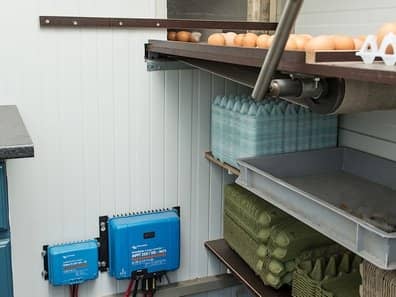
John Rushworth • 29 March 2018
A Chicken & Egg situation: Happy Blue Easter!
Do you like chocolate? It’s what Easter seems to have become synonymous with, yet there is a healthier option. The trouble is chocolate tastes so good – it’s a chicken and egg situation. One company has come up with a neat alternative to all that sugar in chocolate, for those that live close to the Green Corridor in the Netherlands. It’s called ‘Adopt a Chicken’ giving people access to a year round supply of fresh, free range eggs from their Green Forest egg business, Het Groene Woud-ei . All of which sounds like a viable, healthy alternative to chocolate and assists in letting the hens live in their natural environment as well. Healthy living in the Green Corridor The Het Groene Woud-ei initiative It all started with Peter and Esther van Agt (of the Fladderfarm in Oirschot) and a design for a mobile hen house. Additionally Erik van den Oord from Ivanhoe Management, who specialises in new business models, along with Carlos Faes of the Philips Fruit Garden in Eindhoven have also been involved from the start of the project. In fact Carlos will make his orchard available in the summer months as one of the locations for the Het Groene Woud-ei mobile hen coop. Eggs for sale The unit is moved every two to four weeks to a different location in the Green Corridor – a sort of chickens go on holiday scenario – ensuring a variety of locations where people can buy the eggs. Off-grid eggs Moving around the Green Corridor meant being able to be as self sufficient as possible. Peter and Esther van Agt achieved this with the assistance of Victron Energy distributor Top Systems and Victron installers Elektro van Heerdt . Hens on ‘holiday’ Het Groene Woud-ei mobile hen home has solar panels on the roof and uses a Victron SmartSolar MPPT 250/100 and Orion DC/DC converters (see blog headline image) to keep 240 hens and 9 cocks in the manner they have become accustomed to. Not only is electricity provided by solar for lighting, but there is also a water collection system (via the guttering) to collect and purify rainwater. Happy hens Conclusion Peter and Esther van Agt of Het Groene Woud-ei have clearly come up with a winning formula, having received the ZLTO Initiative Prize Audience Award 2017, for their vision. Their award is based on – “members who work on innovative, original or sustainable initiatives to improve the market or the social position of entrepreneurs in the green space.” If you’re in good Easter spirits and fancy some quality eggs throughout the year – then why not ‘Adopt a Chicken’ from Het Groene Woud-ei ? However, maybe one should invest in chocolate this Easter as well – it comes but once a year after all. 😉 John Rushworth Photography Credits Blog headline image: Serge Duursma All other images: Marc van den Hout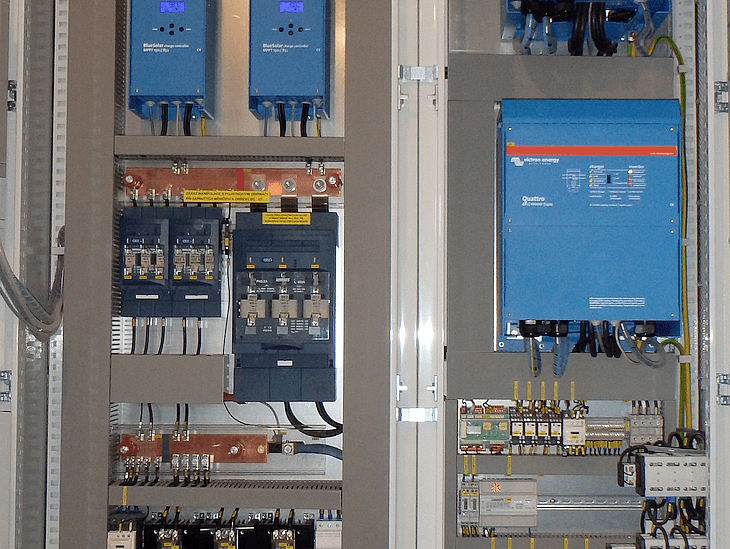
John Rushworth • 13 March 2018
Victron enhanced off-grid system
A guest blog by Victron Energy dealer Neosolar & Asolar, who are based in the Czech Republic. This off-grid system was designed with high reliability and innovative functionality in mind – using Victron Energy products to assist in achieving these goals. The system has proven itself operationally, having been originally commissioned on 12th February 2016. Unique design Czech companies Neosolar and Asolar implemented a unique off grid system for a family house in a permanently inhabited secluded newly built duplex. The building is not only a classic family house, but also the background for a small family farm. The main reason for building the system was the absence of a distribution network and high costs of its eventual construction. The investor’s requirement was straightforward: implement a sophisticated system with high operational reliability, low demands on operation and ease of use for all family members. It is a system with high operational reliability, minimum demands on operation and ease of use. It is a so-called DC-coupling with Victron MPPT solar controllers and hybrid Quattro and MultiPlus convertors and a lead-acid battery. The system is 230 V AC single-phase. Solar energy primarily powers appliances; the second priority is to recharge the battery, and the third is hot water. Main DC circuits of the PV off-grid system. Key: POLE PV1 PV1 SEGMENT MONITORING MONITORING MĚNIČ/NABÍJEČ CONVERTER/CHARGER OHŘEV TV HOT WATER HEATING KOTEL PELETKY PELLET BOILER DC OHŘEV DC HEATING AC OHŘEV AC HEATING ON/OFF DLE SOC ON/OFF ACCORDING TO SOC BATERIOVÝ MONITOR BATTERY MONITOR MANAŽER SOC SOC MANAGER PV segments and MPPT chargers The PV array consists of 36 pieces of polycrystalline panels with a total output of 9.9 kWp. It uses two Victron BlueSolar MPPT solar chargers 150 V/85 A. Their data link optimises common operations, but can also work independently. There is a possibility of their easy functional inactivation (DC-manual bypass) with direct connection to panels, and a battery with solar emergency battery charging without MPPT controllers for non-standard situations. Photovoltaic array of the island system consists of 36 modules with a total nominal output of 9.9 kWp. Concept of two independent converters Reliability is ensured by a pair of mutually independent converters. Main is the converter / charger Quattro 48 V DC/VA 10000/140-100/100 A. It is complemented by a converter/charger MultiPlus 48 V DC/5000 VA/70-100 A. That represents major converter when needed, and allows for reduction of operational energy during periods of low power consumption. Both converters can be output-united with a common power output of 13.5 kW in extraordinary consumptions. And that’s not all! The joint performance can be added to the main generator power of 5 kW (PowerAssist functionality). Permanent consumption can therefore be up to 18.5 kW. The “Select converter” option selector switch makes possible to manually select the converter (reduce operating power, fault), power their mutual affinity (increased consumptions), or shut down without the need for complicated parameterization. Single-line diagram of the “Select converter” switch; the building powered by the main converter. Key: PŘÍVOD EC EC SUPPLY HLAVNÍ MAIN ODVOD DŮM DISTRIBUTION HOUSE ZÁLOŽNÍ BACKUP Two generators – backup power security in every situation (concept of two independent sources) The main source of additional electricity is a single-phase generator with output power of 5 kW and automatic start controlled by the rate of battery discharge (lack of solar energy, protective charging of the battery). If necessary, there is a possibility of easy manual start by the switch regardless of the state of the system. The operation of the exchange is only allowed in the daytime to eliminate night time rush except in emergencies. The system is equipped with a backup generator with an output of 2 kW in case of failure of the main generator. It is started manually. Supplemental energy source is selected using the “Source selection” switch that allows you selection of the option “Off” – house wiring disconnected from both generators; options “Power by main generator” and “Backup generator power” are used for direct power supply of the house wiring from the generators in case the converter need to be disabled; options “Main generator + converter power” and “Backup generator + converter power” are standard options combining common functioning of the converter and the selected generator. Main generator Kipor IG 6000 Sinemaster including automatic start (switchboard) and possibility of connecting backup generator Kipor Sinemaster ID 2600 (black cable). Single-line diagram of the “Source selection ” switch. Key: VOLBA ZDROJE POWER SUPPLY SELECTION VOLBA MĚNIČC CONVERTER SELECTION EC1 – ZÁLOŽNÍ EC1 – BACKUP MANAŽER SOC SOC MANAGER POZICE PŘEPÍNAČE SA1 SA1 SELECTOR SWITCH POSITION 0 – NAPÁJENÍ DOMU VYPNUTO 0 – HOUSE POWER OFF 1 – ZÁLOŽNÍ CENTRÁLA EC1 (ZDROJ1) 1 – BACKUP EXCHANGE EC1 (SOURCE1) 2 – ZÁLOŽNÍ CENTRÁLA EC1 + MĚNIČ 2 – BACKUP EXCHANGE EC1 + CONVERTER 3 – HLAVNÍ CENTRÁLA EC2 (ZDROJ2) 3 – MAIN EXCHANGE EC2 (SOURCE2) 4 – HLAVNÍ CENTRÁLA EC2 + MĚNIČ 4 – MAIN EXCHANGE EC2 + CONVERTER POZICE PŘEPÍNAČE SA2 SA2 SELECTOR SWITCH POSITION 0 – OBA MĚNIČE ODPOJENY OD ROZVODŮ DOMU 0 – BOTH CONVERTERS DISCONNECTED FROM HOUSE WIRING 1 – DŮM NAPÁJEN MĚNIČEM INV2 (4,5kW) – ZÁLOŽNÍ MĚNIČ 1 – HOUSE POWERED BY CONVERTER INV2 (4.5kW) – BACKUP CONVERTER 2 – DŮM NAPÁJEN MĚNIČEM INV1 (9kW) – HLAVNÍ MĚNIČ 2 – HOUSE POWERED BY CONVERTER INV1 (9kW) – MAIN CONVERTER 3 – DŮM NAPÁJEN OBĚMA MĚNIČI INV1 A INV2 (9kW + 4,5kW) – POSÍLENÍ VÝKONU 3 – HOUSE POWERED BY BOTH CONVERTERS INV1 & INV2 (4.5kW) – POWER SUPPORT Energy storage Energy storage provides OPzS lead battery with a capacity of 1520 Ah/48 V with a total of 73 kWh of storable energy. Lead technology requires regular protective recharging to prevent battery degradation. SOC Manager in case when the battery is not sufficiently charged with solar energy for some time starts automatically forced charging from the generator. Energy is stored in lead traction batteries with a total capacity of 73 kWh. PowerGen function – maximum use of the generator The system has exploitative feature to maximize the run of the main generator. The run of the generator is costly regardless of the degree of its energy utilization. Primarily, the generator charges the battery. In the final charging phase the absorption capacity of the battery is limited, and at that moment the surplus energy produced is redirected to water heating. The function is selectable via switch. DC and AC water heating After powering AC appliances and battery charging, the surplus solar energy is used to heat hot water. A unique direct-current 60VDC solution is used – connecting a heater directly to the main DC battery bus. Switching DC heating is governed by the current state of battery charge calculated by BMV700. If the battery charge rate is greater than 95%, DC water heating activates. If the battery charge rate drops to 94%, the heating switches off. If the current production of energy is higher than the common consumption of the AC appliances and the heater, the battery is charged to full state. If the production is lower than the consumption, including water heating, the battery is briefly discharged to 94% charge followed by turning off the DC water heating. The system is equipped with a selector switch that allows permanent shutdown of the DC water heating, or conversely activation of the heating even at the expense of deep discharge of the battery. Regulation to constant SOC value . Sample regulation of HSW (hot service water) at a constant SOC value. The advantage of water heating by DC current is zero wearing of the Quattro converter / charger and maintaining the power capacity for other AC household appliances. There are no energy losses by energy conversion from DC to AC. DC water heating engages MPPT solar chargers that maximize solar gains. The planned expansion of the system by a wind power plant will allow conversion of the excess wind power also to water heating. The system is also equipped with supplemental AC water heating with a separate heating element. In case of lack of solar energy, a switch can be manually use to activate AC water heating at the power of 0.5 kW or 4 kW for heating part of the water volume. Energy is pumped through the converter from DC sources (PV array, battery) or from the main generator. Compact design The internal technology is housed in a compact electrical switchboard. Outside the cabinet there is all the above described control equipment + warning lights of the system operation for fast selection and controlling the functional status. The precondition for reliability is also the clear visualization of the operational status, and the ease of operation (the “Select source” and “Select converter” switches). The internal technology is housed in a compact electrical switchboard. Detailed project preparation – precondition of reliability and future repairability of the system. Credits This guest blog and images are courtesy of Neosolar and Asolar.
Justin Tyers • 23 February 2018
Rhino Poaching Surveillance in the Kruger National Park
The Kruger National Park is home to a third of the world’s remaining Rhino – a fact which makes the park attractive to poachers who kill Rhino just for their horns. In order to try to prevent the Rhino from becoming extinct – Park Rangers have to be constantly on the lookout for poachers in a wilderness which extends to 2 million hectares. That’s an area equivalent to a box whose sides measure 140km/90miles – you can’t be everywhere at once, so the Rangers have installed some discreet technology to help. Saving the Rhino is a race against time because the growth in poaching has been alarming: In 2007, 13 Rhino were poached in South Africa …by 2014 that figure had increased 9000% – 1215 animals were illegally slaughtered in that year alone. Powdered Rhino horn has become more valuable than cocaine – fuelled by the misguided belief, particularly in the East, that it has medicinal value. When prices rose recently, Rhino became a target-interest of international organised crime – turning what was then localised illegal activity into something of global industry. In order to maximise their policing, Kruger National Park Rangers have set up a number of radar detection systems, strategically installed to offer wide area surveillance, both day and night. Three or four units allow them to cover half the park area. The radar detects movement and plots it on a map. Remotely operated camera’s allow the operators to distinguish between ‘Animal’ and ‘Human’ movement. Suspicious activity is then intercepted by truck or helicopter. Financed mainly by charitable donations the surveillance installations are highly mobile, frequently moved, and can be packed for deployment by truck – or even slung under a helicopter and flown-in to new surveillance sites. These mobile installations need reliable off-grid power source – for which Lithium battery specialist BlueNova located in Cape Town led the system design. Lithium Batteries are an ideal solution to frequently-relocated installations – amp for amp they’re almost 80% smaller and lighter than their Lead/Acid equivalents. And amongst a topography of scrub and boulder, PV panels offer discreet power-generation. They do not impinge on the visual amenity which is so important to wildlife tourists on safari; and they remain undetected by would-be poachers. The power plant features 26V-8kWh BlueNova Lithium Ferro Phosphate battery (LiFePO4) 24V 3kVA Victron Multi-plus 2 x BlueSolar Victron MPPTs Solar Chargers to regulate the six-panel PV array. Currently, three Rhino’s are killed illegally every day. At that rate the animals will soon face extinction. All that can be done to slow the decline should be done. Against armed poachers, the Kruger National Park Rangers are carrying-out a dangerous job with utter commitment to conservation – this technology helps them reduce the slaughter. The photograph used at the head of this article is by Esculapio . Justin Tyers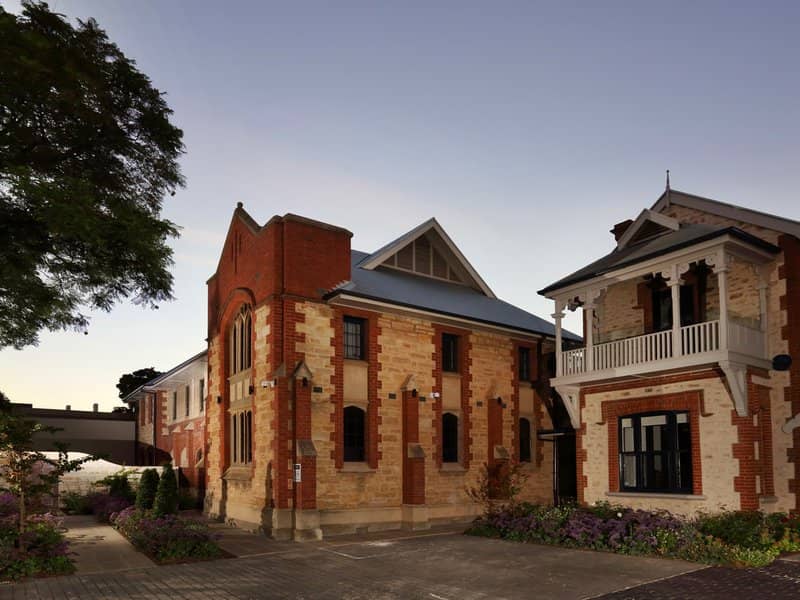
Justin Tyers • 20 February 2018
Heritage Mansion storing 450kWh solar energy
Built in an era when tradesmen were paid to create ‘a thing of beauty’ – large heritage buildings have to either find new purpose or fall into disrepair. 150 years after it was built, a mansion in Adelaide, Australia, has been repurposed as a technology HQ for Zinc Bromine Battery manufacturer Redflow , together with offices for a number of other high-tech companies. The challenge was to give the building a make-over, suitable for ultra-modern offices – powered by solar energy …and yet change nothing of the building’s fabric. Here is the A$7M result: Indoors, an informal and inclusive atmosphere has been created by using light colours; modern lighting schemes; making the most of the building’s contours; and taking advantage of the large rooms for open-plan office arrangements. Renamed Base 64 outside it is a requirement that the architecture of the building be changed as little as possible, or not at all. So when it comes to sustainable energy production the problem was where to site the substantial 70 kWp solar array – especially as the roof of the building was not an option. Simon Hackett, Redflow Entrepreneur, came up with the idea of investing in an architecturally pleasing steel ‘tree’ – four trees really – which provide a canopy over the car parking area, on which to mount the solar panels. All that power has to be stored somewhere – that’s where the scaleable ZBM2 batteries come in: Zinc Bromine batteries are a safe, recyclable technology offering a 100% power cycle everyday for ten years, and can be configured into large scale banks – as evidenced by the planned 450kWh storage at Base 64. That kind of energy transfer – from panels to DC battery; from battery to AC offices – requires a lot of command and control …a first attempt at this was not a success. Simon Hackett turned to Victron Equipment – which is also scalable. By installing 6 x Victron Quattro 48/15000 the Base64 office suite is provided with 72kWp power on-demand and offers at-a-glance monitoring via the Victron CCGX – delivering a PV-based energy system which is available off-the-shelf, tried and tested, and without making guinea pigs out of large-investment installations: Notice in the photo below that the networked inverters are quietly meeting a 64kW power demand! Simon Hackett couldn’t be more pleased with how Victron equipment has solved the control and management of his energy project; he says: Swapping the Victron Energy gear in has turned out far cheaper and far better than the bespoke software exercise would have ever been. It has also created a signature example of a large scale Victron Energy deployment running a decently sized multiple building site. There, that should keep the lights on. Justin Tyers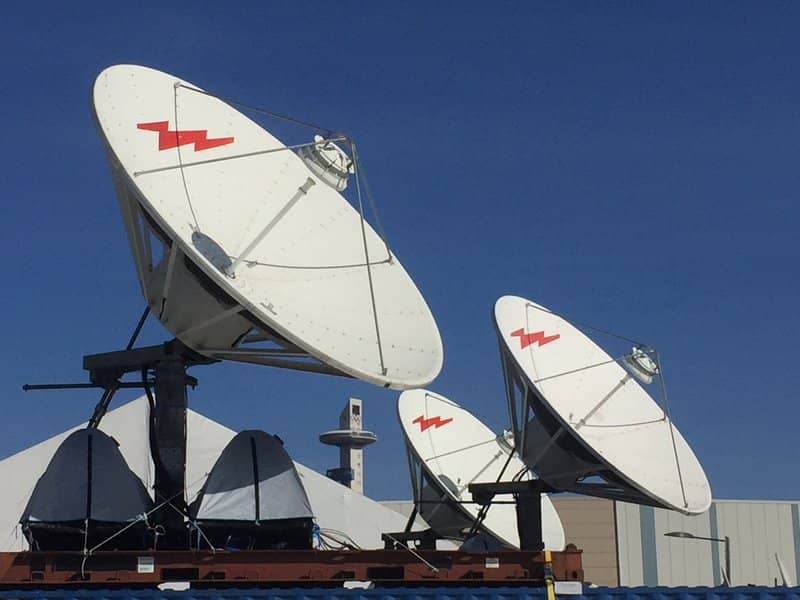
Justin Tyers • 16 February 2018
The world is watching – Olympics without dropouts!
TV broadcast engineers know that when something can go wrong, it will. And because you only get one chance to transmit the latest Winter Olympic news, as it happens, you need the best engineers, using the most reliable equipment. Let’s have a look behind the scenes at the International Broadcast Center in Pyeongchang… Four cabinets of switching gear and satellite modulators are backed up by 4 Multiplus inverters, each having 24V/200Ah battery storage, to provide uninterrupted power. Multi-Link Holland – is a Dutch company which has been providing satellite up-link communications for reportage and sporting events to Broadcast Networks for almost 20 years. Marco van Uffelen, one of Multi-Links engineers, says that the key to success is portability and an ethos that no problem is insurmountable. Their equipment is ready to go at a moment’s notice by road, air or sea – and when you think about the hurdles to providing remote outdoor broadcast, from anywhere – you can see why experience counts. Interestingly, one of the first things they do – having arrived in the country of deployment with a cargo of technical wizardry – is to buy some truck-batteries! Too heavy to lug half-way around the world, lead/acid batteries are available anywhere and work reliably and predictably. Even when grid electricity is available, you must be prepared for the possibility of it failing – hence the provision of an ultra-reliable uninterrupted power supply for the dazzling array of satellite amplifiers, audio/visual monitors, satellite modulators and switching gear – as seen above …secured by 8 x Victron Multiplus 24V units which will guarantee an Uninterruptible Power Supply. 3.7m ‘Flyaway’ Antenna This huge 3.7m ‘Flyaway’ Antenna can be loaded as air freight. Installed near the Gangneung Oval – where the Speedskating has been taking place – the antenna has high-power satellite amplifiers backed up by a 5kVA Multiplus Quattro with two 250Ah Truck Batteries. You can probably catch a glimpse of the ‘tents’ which have been installed over the amplifiers to protect them from the snow. Acting as back-up this van follows wherever the action is taking place to beam broadcast data back to the International Broadcast Centre in Pyeongchang. Multi-Link’s mobile Digital Satellite News Gathering van – in the image above – sends ‘footage’ back to the International Broadcast Centre, where it can be re-transmitted using the main amplifiers and dishes at the Satfarm. At the Winter Games the van is always in attendance as backup… regardless of whether a fibre optic connection to the IBC is available or not. Inside the Digital Satellite News Gathering Van… The mobile ‘Digital Satellite News Gathering’ van is capable of generating 6kW/230V from its own engine – Two Multiplus 12/3000/70 units are on standby to provide uninterrupted power. We’re rather pleased to see that when Multi-Link and the best broadcast engineers in the world know they mustn’t fail – they depend on Victron to keep the shots rolling! And it’s nice to know that in our small way we are helping bring the Olympic action to a screen near you… Justin Tyers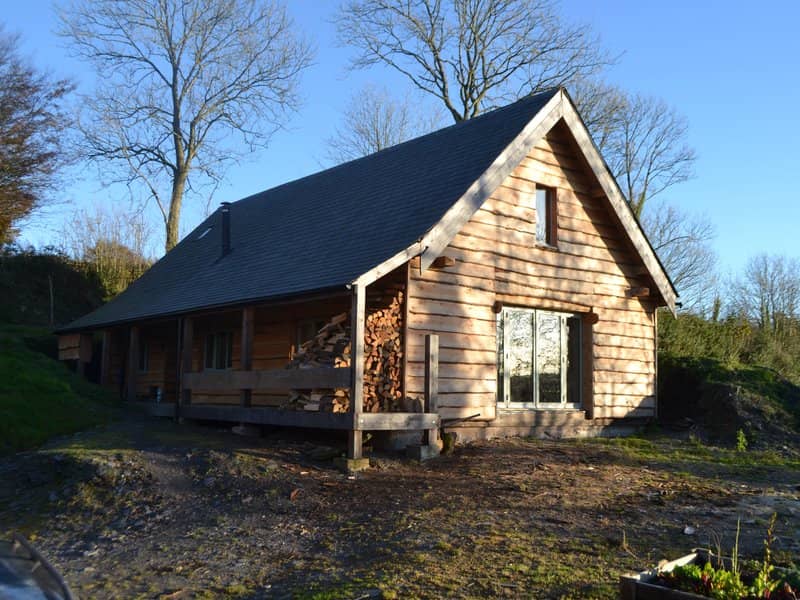
Justin Tyers • 29 January 2018
Straw Bale House – Off Grid for everything
It’s been a year since we went ‘off-grid’ for electricity – so I thought it might be useful to take a long view of our experience. Mains (utility) electricity goes right past our house, but when we discovered that it would cost £10k for us to connect to it, we decided to spend the money on a 4kw solar array, 48V/440Ah batteries, Multiplus 5000VA, and MPPT 150/100. Quite a lot of hand-wringing went into that decision: My wife and I had lived on board a sailing boat for seven years and, to be honest, had grown tired of managing our resources – water; electricity; fresh produce; and money. We dreamed that when we lived in a house again, it would be connected to the electricity grid and we’d be able live like ‘normal’ people …turning on a light without having to check the battery voltage. Our on-board electricity capacity is 12V/210Ah …and it’s a sailing boat, so we don’t generate electricity when we’re travelling. We do have an engine – a 1956 Perkins P4 – but prefer manoeuvring under sail because it’s more fun. Consequently electricity is always scarce. So, contemplating going off-grid in the (straw-bale) house we were building gave us a feeling of ‘…here we go again’. We needn’t have worried – excepting a period of about one month, back in the summer, when something was clearly ‘wrong’ (of which more later) we have been fairly amazed at how well our installation converts sunlight into glorious power. Lashings of it. To put things into perspective: We have a 5kVA generator for back-up …during the last 12 months is has been run for just 20 hours. We aim to use no more than 20% of our battery capacity (SOC = >79%). We always use domestic appliances according to circumstance: Washing machine on sunny days. Fridge/Freezer off in winter. Because our battery SOC is always relatively high, power produced by our solar panels is often attenuated by the MPPT. Typical daily power consumption is 8KWh in the summer; and 3KWh in the winter. (In the winter we turn the fridge-freezer off; and domestic hot water is heated by a wood-burning appliance.) I mentioned a moment ago that something went wrong in the summer: Back in July (we’re in the northern hemisphere) we noticed that our 4kW PV array was producing a maximum 1200W. Consequently the battery charge rate was permanently in ‘bulk’, and we were never achieving a full-charge. (It’s worth mentioning here that they’re not Victron supplied panels …and in any case the problem wasn’t with the panels). One problem was easy to diagnose – there’s an Ash tree growing to the South-East of our rooftop array, just ten metres away. Ash trees tend to come into leaf quite late in the spring. Their leaves are ‘spare’ at first, but fill-out as the summer progresses. When the tree is bare the panels get full-sun by 13:00. …but in late summer, that doesn’t happen until 14:30 – after peak power generation opportunity has already passed. So this winter we’re going to take the tree down. Checking the voltage of each of the 15 individual panels from inside the house I noticed that although twelve of them were reading 29V – 32V (the polycrystalline panels have 60 cells); three of them were reading 14V – 19V …and the reading was constantly fluctuating. On the roof the suspect panels read a full 30V – regardless of which side of the MC4 connectors I shoved my voltmeter probes. That suggested there was a fault in the new and unbroken wiring – which seemed unlikely. I was so baffled I did nothing for about a fortnight. Then an electrical engineer friend of mine said; Oh well, go up and change the connectors anyway, and then you’ve eliminated them from the enquiry . Fitting new connectors brought the ‘suspect’ panels straight back to circa 30V…and solved the problem. I noticed that the connectors I removed were damp and corroded – then it occurred to me that when I had tested them, and the voltmeter readings seemed OK. it was because the force I used to invaded the cable sheath with the sharp probe of the Voltmeter, actually improved the MC4 terminal contact – so they they read a full 30V. Some people recommend ‘Denzo’ tape to prevent corrosion – that stuff that looks like bandage soaked in toffee. But having had the connector problem, I’m tempted to go back on the roof and hardwire all MC4 connectors. After all, the panels are supposed to have a 25 year life. We’re off grid for everything: electricity, water, sewerage – and we burn wood for heating, cooking and hot water. The freedom of that goes way beyond just being ‘bill-free’. I could write a whole blog on the misery of billing errors; supplier-switching; comparison sites – but no one would read it …including me! So if you, who read these words, are thinking of going off-grid for electricity – but hesitating – here’s my advice: Go for it! Our Victron system comprises: MultiPlus 48|5000|70 inverter/charger Soar charger is a MPPT150|100 CCGX 8 X AGM/220Ah Batteries If you’ve ever wanted to look inside a Straw Bale house – here is a video made by Home Building and Renovating Magazine who awarded it Spirit of Self-Build category winner. Previous instalments of this Straw Bale blog – oldest first: Justin and Linda Tyers -Off Grid Journey Winter Solstice Emerging from the Dark Ages Sun God Ra Hazy Days of Summer By : Justin Tyers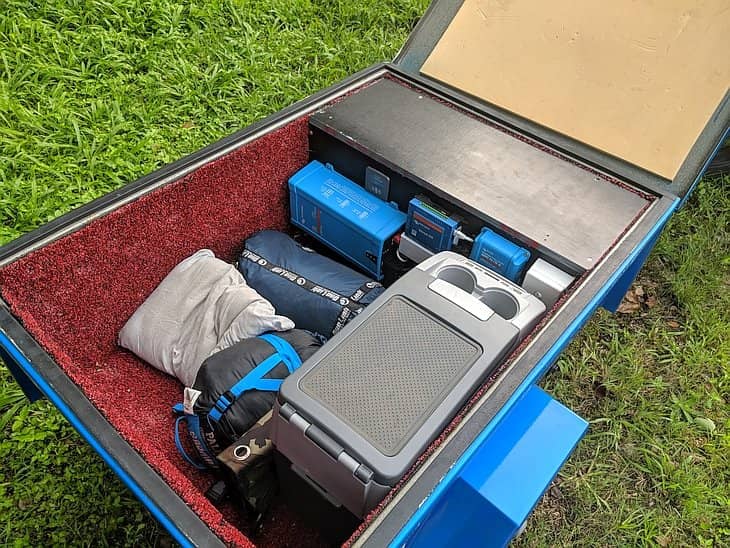
John Rushworth • 23 January 2018
Cold Tinny Cobber?
Confused by the heading – it’s informal Australian for would you like a cold beer my friend? Aussies like their cold tinnies, but what to do when camping in the wilds away from a fridge and even worse what if you are travelling by a luggage space restricted motorcycle – or to put it another way – not enough beer room! That wasn’t going to stop thirsty Mike Haydon of 24 Hour Solar Power and his riding buddy. Besides liking beer, Mike is also a Victron Energy dealer/installer based in Byron Bay , Australia. He’s passionate about renewable energy and electric transportation, as you can see in an earlier blog: The life electric: Trials, tribulations and riding on sunshine Back to beer in the outback. Like me, Mike is mad about motorcycles and whilst moving from an internal combustion engine to an electric motorcycle remains a dream for me, he has already bought one – a Zero DS. The DS stands for Dual Sport, meaning it is both an on-road and off-road motorcycle. Not unsurprisingly it doesn’t come as standard with decent sized camping storage, let alone room for cold beer – so a multipurpose trailer idea evolved. Solar powered beer trailer Mike takes up the story of his trailer build: “The trailer build started when a mate and I planned to ride around the country on our trail bikes for a YouTube channel called Adventure Riding TV. Visit Adventure Riding TV – or to see some off-road action of my electric Zero DS why not check out this video . The biggest ‘problem’ we thought we would have is if we ended up in a camp spot for an overnighter and found ourselves with no cold beer. And of course we wanted to carry a few extra things in the trailer besides beer – maybe wine 😉 I went online to source a trailer and found a local used motorcycle trailer at a ridiculously cheap price, but was told there were a few things that needed sorted. I jumped in the car and went to take a look. In fact it was just fine, a bit of air in the tyres, a quick paint job and we were ready to install some system components. Limited by size we knew we required quality and space efficient components to get the maximum solar yield from a small solar panel, using minimal installation space inside the trailer whilst still leaving a reasonable storage volume. The goal was to run a 35 litre Waeco cooler which would fit perfectly in the space and components to charge all our camera gear and laptops at night. Energy required for that worked out to be about 250 watt hours of usage per 24 hours. Victron Energy compact components fitted the bill perfectly to achieve this. The completed trailer uses a Victron SmartSolar MPPT 75/15 solar charge controller which makes sure we are maximising everything we can from the trailer’s lid which is fitted with a 100 watt SunPower flexible panel. We also added a 140 watt ground array foldable panel that we can add in when parked up to give us some extra solar production. For the battery we chose to use a Victron lithium-ion Peak Power Pack as I couldn’t see a better product for this application, having an inbuilt BMS, battery charger and Bluetooth control, whilst still giving 512 watt hours of usable energy in a very compact size. This was twice the storage we required for our 24 hour energy requirements. The fridge would mostly run during the day and we would only be using the energy stored at night to charge camera gear and some LED lights from the battery, when away from a grid power supply. I then decided to install a Venus GX and a Battery Monitor, realising in fact that it is everything we use to install in a house when going mostly off grid – albeit on a smaller scale – so it makes an ideal demonstration unit too. You can view the trailer on VRM World by searching for Victron Trailer or by zooming into Byron Bay, Australia as the location. This is the direct link . The next challenge was deciding on the inverter size. What I love about the Victron inverter/chargers are the seamless ease of the included automatic fast transfer switch capability. We went with a 12V 500VA MultiPlus inverter/charger, which allowed us to simply plug into a power socket on the side of the trailer for AC off-grid power (if available) and battery charging, whilst still being able to leave all our gear locked inside the trailer. We’ve not used the Uninterrupted AC power (UPS function), which if the AC in supply fails then the inverter within the Multi is automatically activated and takes over the supply to the connected loads. This happens so fast (less than 20 milliseconds) that connected equipment will continue to operate without disruption – due to that 16A fast transfer switch which kicks in the inverter automatically and seamlessly. Most of our gear is low power AC to DC charging (which helps reduce the load on the inverter when not using the AC in) and therefore a larger rated unit would have been a waste in this instance, as 500VA of rated power via the installed battery is plenty for our needs. If you want larger than 500VA then the larger Multis come with even more features such as PowerAssist and PowerControl. See the datasheet for an explanation of these terms. During the build of the trailer I wondered if I could also use the AC power out from the Multi to charge my electric motorcycle. The reality is there is not enough solar array area to do that via the Peak Power Pack and inverter, so it would be more beneficial to buy the optional extra battery for the bike to increase riding range. My Zero DS with solar trailer. I get asked every day if my motorcycle is actually solar powered. Technically it is, as in fact I charge it from our solar system at work or home but not from the trailer. The trailer would take about 20 days to charge the bike if we installed a big enough inverter via the trailer battery and integrated solar panel. Most people really don’t appreciate the area of solar panels needed for high energy use and the amount of battery storage required. So how has it been towing a trailer behind an electric motorcycle – it’s been great as I also use it for work to design and consult on our solar jobs. I can even fit a collapsible ladder inside the trailer for site inspections. Out of interest the Zero electric motorcycle uses about an extra 20% of energy from its own battery when towing the trailer. Even though towing has therefore reduced the bike’s range the important things are still taken care of – as with trailer battery power there’s always a cold tinny to hand after a hard day’s work! I hope the above gives some insight into my trailer build.” Mike Haydon Solar Trailer components SmartSolar MPPT 75/15 Peak Power Pack PPP-40 BMV-712 Venus GX MultiPlus 12/500/20 Any suitable solar panel can be used. In this case it was a 100W SunPower flexible solar panel, although of course Victron Energy have their own range of BlueSolar Panels which are solid panels and are usually more affordable than flexible. Much will depend on available area and weight as to what you choose. Conclusion What a fun project – it’s amazing the lengths some folk will go to for a cold beer and quite rightly so 🙂 Thanks to Mike Haydon for the images and information used in this blog. John Rushworth Links http://www.24hoursolarpower.com/
John Rushworth • 03 January 2018
Victron power improves student learning time
It’s always good to start a new year with a positive story. In developing nations education is often key to improving the society. Recently Alp Tilev, Managing Director of Great Lakes Energy in Rwanda, got in touch with me about an educational project for which they were fortunate enough to win the bid – to install a 4kWp off-grid system for the Kepler university’s program in Kiziba Refugee Camp in Rwanda. The project was funded in part by a grant from the Humanitarian Education Accelerator, a project of DFID, UNICEF, and UNHCR to promote successful scaling of promising education initiatives for refugees. Based on the above that sounds a particularly worthwhile project I’d say to kick us off into 2018 – and one that Alp and his business have clearly enjoyed doing. Kiziba Refugee Camp in Rwanda. Generator downtime Kepler is a nonprofit university program based in Africa, designed for the developing world. Up to the point Great Lakes Energy got involved with them much of the off-grid power required for the university program (located in the Kiziba Refugee Camp shown above) was provided by an unreliable generator. The students therefore received somewhat time limited online learning, whilst working toward their U.S. accredited degrees. With Kepler’s goal to create a global network of universities, beginning in Rwanda, to deliver the skills that emerging economies need, at a price that all talented students can afford – well it almost becomes a futile exercise without reliable power. The suspect generator replete with dodgy wiring… Quantifying the loss of learning time The students have access to the campus for 89.5 hours a week, but due to the old generator and solar system which powered the internet server – this resulted in only 44 hours of available learning time. That figure included the duration the student’s laptops could run on their batteries after the generator was turned off. A study document here explains the reasoning behind the loss of learning time. The bottom line was 45.5 hours of learning time was lost where students could have had both electricity and internet access to conduct their academic activities. Additionally the generator was costing 500 USD a month in fuel. Clearly something had to be done, hence this project came to fruition. Victron power Improved learning times with Victron Energy… The system installed by Great Lakes Energy comprised: 2 x 24V MultiPlus 5000VA 1 x SmartSolar MPPT 250/85 1 x BlueSolar MPPT 150/70 1 x Color Control GX 1 x BMV-700 12 x OPzV batteries giving 1,350Ah Solar studying… Conclusion Power to the people never felt so good – as this historic VRM screenshot below shows. Power to the people… My thanks to Alp Tilev of Great Lakes Energy for the information and images used in this blog. Other notable names from Alp’s team that ensured this project came to fruition are: Honore Basazababo (Lead Engineer), Jean Aime Niyonsenga (Head of installation), Sam Dargan (CEO) and the GLE tech team. I understand all involved with the Kepler Kiziba campus are very pleased with the result. May such improved learning opportunities continue into 2018 and beyond. John Rushworth Links Great Lakes Energy – http://gle.solar Kepler – http://www.kepler.org Kepler on Facebook – https://www.facebook.com/kepler
John Rushworth • 18 December 2017
DIY ingenuity: Hydro Power in the Austrian Alps
You could be forgiven for thinking Markus Pauritsch is a fireman in his day job. In fact he’s been an IT professional for the last fourteen years, working in their ten employee family business . In my experience IT types like to tinker in their spare time and Markus is no different. His DIY tinkering has led to an off-grid project which has inspired him to get more involved in renewable energy themes and hopefully expand their business into that area. If ingenuity is anything to go by he’s certainly moving toward that goal – and to my mind takes first prize when it comes to using Victron products in unusual ways. Now, what about those fire hoses? An explanation Let’s take a step back before we get to the test phase shown in the video above and the fully powered off-grid cabin. There was connector waterproofing and a lot more besides to be done before this gemütlich retreat could be enjoyed to the full. Gemütlich is a german word defined as having a feeling or atmosphere of warmth and friendliness – the classic cosy cottage – or in this case a log cabin in the forests of the Austrian Alps. Cosy off-grid cabin although there can be up to a metre or more of snow in winter – a good job there’s a full hot water system and log fire to keep it all toasty. Solar power. The sun angle is not optimal during winter but yield in the summer is okay. Access to the log cabin (even in summer) requires a 4 x 4 – and after that challenging drive why not relax in the cabin’s sauna. Summer tidiness and winter logs preparation. Austrian alps retreat Markus bought the cabin from his grandfather in 2008, who originally bought it from some lumberjacks in the 70s. Over the years it was fully electrified, being powered by a Jenbach stationary diesel engine attached to a 5kVA generator. Flowing water from a spring (with that water heated by bottled gas) provides for a fully functional bathroom. Besides the Jenbach generator, Markus built up a 12V uninterruptible battery power supply for radio, 4G internet (formerly Astra2Connect), SAT TV, charging mobiles and laptops, a water pump, and some lighting. Victron solar – and hydro power? To charge the UPS batteries Markus installed 700Wp of Victron Energy solar panels with a BlueSolar Charger MPPT 100/50 . Solar needs MPPTs… It was naturally at this point that Markus got to know Victron Energy products and in particular their MPPT solar charge controllers. See this blog for matching solar modules to MPPT charge controllers and how they work. That got him thinking. As Markus relates: “I was amazed, how the Victron MPPTs worked – which prompted the question – could I get some Watts out of my stream? Getting useable power from a water wheel became a very interesting possibility, but there was no information or knowledge available if anyone had done this with a Victron MPPT before. I thought I’d try and after some research I ordered a wind turbine generator (via Ebay) and a Pelton wheel water turbine. Wind turbine generator connected to a Pelton wheel water turbine. I decided not to go the scientific way and calculate whatever needed to be calculated, instead I decided to go the ‘suck it and see’ way. First I got some fire hose from a friend of mine, over 200m of it! From the point where I wanted to place the wheel (200m upstream) I measured, with the help of digital geo services, a fall height of 40m. Rule of thumb calculations, along with hose losses, indicated a pressure of 3 to 3.5 bar and the real world pressure tests proved to be pretty good as you can see. The fire hose supply and setting the discharge proved to be tricky though. You have to have a static large volume supply and head to keep the hose filled and maintain the pressure. A cut up plastic water container collector was the cheapest and most effective solution to feed the hose. It has not moved an inch for many months now, even with heavy rain. When the water is high in the stream it simply flows over the edges as you can see. After playing around with nozzle settings using washers, I got a stable water flow. After rectification of the 3 Phase AC coming out of the generator, I measured up to 135V DC with maximum water pressure applied to the Pelton wheel, with no electric load. Based on this I bought a BlueSolar Charger MPPT 150/35 and 2 big ripple capacitors of 160V 12,000 microfarads (μF) each. I did not test if they were needed or not as I just thought ‘hüfts nix schads nix’, which means if it doesn’t help it doesn’t make damage. In fact I think the caps are good for the Power Point Tracker circuit, as I would not like to receive much ripple voltage if I were a solar charge controller. Testing DC output after generator rectification. Capacitors used with the MPPT. Components boxed up and ready to go. Note 65A BatteryProtect bottom left. The results of this combination of components works great – with almost 200W continuous 12V charging power. Here’s the hydro generator in operation. I was very impressed once in full operation as you can see and hear how the MPPT works and searches for its power point when it is connected to the hydro generator. It works so smoothly and so fast, witnessed by the RPM being completely stable when the current draw is constant.” AC power, components and system monitoring To feed the AC loads Markus installed a MultiPlus inverter/charger (12/3000/120-16) . Conventional lighting was changed to LEDs, decreasing the power used from 700W to 170W whilst providing far more useable light. To monitor the battery a BMV-700 was installed. After thinking about how to monitor the Victron devices, Markus came across the Venus Raspberry Pi project. With the support of the super helpful Venus Dev Mailing list he got the Pi running with Venus and local touchscreen, thanks to Izak Burger and Jings. You can read more about Izak and his project in this blog post: Raspberry Pi running Victron’s Venus firmware . Raspberry Pi running Venus and local touch screen shown in demo mode. The Raspberry Pi with Venus and local touch display connects to Victron’s VRM via a 4G connection using a Huawai Modem/Router which is so stable and reliable, that it is just scary I’m told. It has been online 24/7 for months with no interruption. It has a Li-ion battery, so it is independent from the power source for a few hours in case of interruption. Markus certainly had some luck with local LTE coverage as the A2 motorway is but 2km away and LTE is supplied to the motorway – so he doesn’t even need external 4G antennas to connect to it. Previously he had Astra2Connect, but it was very expensive and the latency was particularly bad. Enhancements and the future It’s important to note this is not the final stage of the project, as the above is primarily proof of concept. For instance, a vacuum stable hose is far better for this application as it will get far more water flow in comparison to a firehose, and as a result more Watts out. However that is also a matter of cost as a vacuum stable, freeze capable, 80mm hose is around 4 to 5 Euro per metre – and with 230m required you can get a firehose by comparison very cheaply, as they get sorted out and retired by the fire departments after a time. Decisions, decisions. Here’s some future enhancements that Markus has planned: Use a better, vacuum stable hose. Improved ‘dirt management’ at the water feed barrel as leaves and small stones are problematic. Improved housing for the Pelton wheel and ‘wind’ generator. Improved cable management. Generator integration or maybe the Jenbach needs to retire as a standby solution, after a period of over 60 years of good service! Dashboard for Touch VenusPi and BMV and much more… Conclusion This hydro power solution all works beautifully, using ingenuity to keep the costs down and prove that BlueSolar Charger MPPTs can equally be called BlueHydro Charger MPPTs! My thanks go to Markus Pauritsch for the information and images used in this blog – we salute his ingenuity and passion for getting his project up and running. If you have any questions for him do leave a comment in Disqus below. I hope this pre festive season blog seeds ideas of how you might use Victron Energy products in 2018. In the meantime we wish you a fun and festive holiday. John Rushworth
Justin Tyers • 27 November 2017
The trouble with generators…
We are greatly indebted to Guy Stewart – a Victron user and installer – for his contributions to our online documentation. It’s always interesting to get to know the extended Victron family a bit better …so we’re especially pleased that he has written a guest blog: My name is Guy Stewart and this is my first time writing for the Victron Blog. I have lived with a stand-alone power system for over 10 years, and now also design and sell off-grid systems for the Rainbow Power Company , a Victron Distributor in Australia and the South Pacific. For many years, when I first had my own power system, I resisted getting a backup generator. However eventually, during an extended wet season, I needed to get one to avoid damaging the batteries by leaving them flat. I already had an inverter at that stage, so I purchased a separate Victron Skylla battery charger. This 24V 50A multistage automatic battery charger was actually a bit too big for my Honda EU20 petrol generator, so I needed to make a slight adjustment inside the unit to reduce the amount of current that it drew and prevent the generator from overloading. While we have now moved on to using combined Victron Multiplus inverter/charger units, this issue of compatibility between generators and chargers has not gone away. It is always best to buy a combination of generator and charger which has proven itself to be reliable – though this won’t always be possible given your existing equipment; or if there is limited local availability of new equipment. A Recent example of a job I was called out on… A Victron customer had purchased the 48V Multiplus unit with the massive 120A battery charger. The Multi wasn’t purchased through us, but I was referred on as a support consultant to tease out some niggling issues. Despite this customer having a 7 kW generator he was never seeing more than 72A of charge current. There are several possibilities for this: First I checked the AC input current limit. This was set to 20A which for our 240V supply is enough for 100A. Next thing was to check the DC current limit, this was also set to the maximum 120A. So what is left? The ‘Weak AC’ setting. This function – disabled by default – allows for the connection of poor-quality power supplies …at the expense of efficiency. It is sometimes used by suppliers as a ‘safe bet’ because it means generators are more likely to be accepted than rejected. In this case the DIY client had a good quality generator and the power factor efficiency reduction in this case was about 35%. I disabled the weak AC setting, the unit synced up quickly and began to charge his lithium bank with 110A. Inverter Generators The issues of generators and inverter/chargers is common across inverter brands. It is actually a credit to Victron that their units are flexible enough, with the right programming, to accept charge from a wide range of generators. We had an example of a competitor’s battery inverter/charger from a major German manufacturer that refused to stay connected to the very common Honda EU30. While we do not advise our Victron system customers to buy inverter-based generators – if they already own them, we are able to make them work. OLYMPUS DIGITAL CAMERA For our nautical friends, this can be further complicated by variable shore power supplies. So what do you do if you are having issues with your Victron Multiplus and generator? Firstly you should contact your local Victron Service agent. They will have advice and technical expertise to trouble-shoot common problems. If you are an advanced technical user it is possible to use the software that Victron has made available to make some changes to improve compatibility with a wide range of generators. To make these changes will require access to a computer with the VEConfigure software installed, and either a VEbus to USB adaptor, or a CCGX connected with internet access. This allows you to change advanced-installer level features and should only be used after some technical training and understanding of what you are doing. Using Victron Live, I have been working on a Live MultiPlus Generator FAQ. https://www.victronenergy.com/live/multiplus_faq This FAQ page provides the necessary information to resolve nearly all generator compatibility issues that I have come across. I will continue to update it as new cases arise, and encourage you to make comments or edits if you can help further. If you have had a learning experience with other Victron equipment and think that you could help others I also encourage you to consider contributing to the Victron Live project too. Victron Live is an online platform that allows people like you and me to contribute what they have learned about using Victron equipment to help others. Victron makes excellent products, and it is very big job to document and explain all the features that are available. If we can contribute what we have learned by using the equipment it allows the Victron technicians and service staff to focus on making new products and developing further feature requests to improve the experience for everyone. Guy Stewart I hope this helps some of you out there. I am also working on further technical documents for the Victron Multigrid, lithium batteries and ESS system, so keep checking this blog for more articles from me in the future. ( Article posted by: Justin Tyers )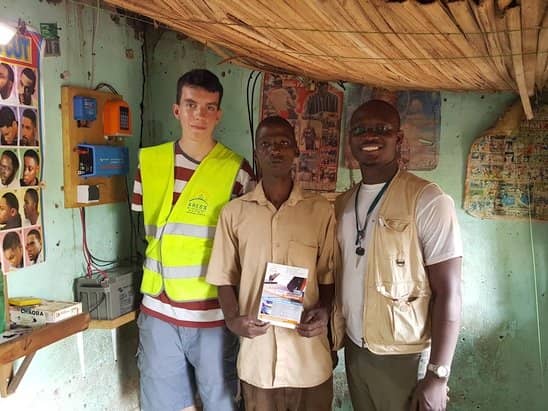
John Rushworth • 20 November 2017
Victron Energy Pay As You Go solar power
In this guest blog Pierre-Paul Bermingham explains how Victron Energy’s Pay As You Go (PAYG) solar power systems are allowing lower income customers to take advantage of high quality products, whilst at the same time improving energy provision and local employment. Here are 3 examples of the kind of systems offered for the PAYG market – and importantly this guest blog below – showing how such systems have worked out in the field for the customers and the companies installing them. My thanks to Yoann Le Fol (Victron Energy Sales Manager for West and Central Africa, Madagascar, Comoros) for making me aware of these installed systems in Benin. John Rushworth Bringing solar power to Benin with Pay As You Go For three weeks now, I have been driving up and down the small West African Republic of Benin , as part of an internship with a solar company called ARESS. The aim of such comings and goings? Selling, delivering and installing solar energy kits of various sizes to a population hungry for a stable source of electricity. Those of us who have lived with electricity all our lives may easily forget the significance it can bring to bear on one’s life. During my travels the most memorable interactions with the Beninese will remain for me the excitement shown by clients at the prospect of lighting their house at night, watching television, or having a refrigerator; as well as the curiosity of neighbours and villagers seeing a yovo (foreigner) fitting panels on a roof. Electricity in Benin is a fickle thing. Many areas, particularly in rural environments, are not covered by the national grid. Unpredictable power cuts and a sometimes questionable billing system plague those that have power. The most popular solutions are inconvenient at best: power generators are noisy and their fuel consumption excessive, and the solar equipment found in small shops along the roads have lifespans indicative of their poor quality. Enter ARESS, the company I’m working with. Specialised in solar energy, they have in the last few years gained a reputation built on the reliability and efficiency of their systems. At the heart of this success lies the use of quality equipment, for which Victron Energy can be thanked. In the picture below, you can see the newly-launched basic solar kit we installed, with the iconic blue of Victron highlighting the use of an MPPT controller and a 375VA inverter, in addition to the 90Ah battery. Depending on a client’s needs, further kits provide for more powerful equipment. With such equipment ARESS has received very positive returns over the past couple of years. However one difficulty remained, hindering our ability to offer solutions. The costs for solar energy have been falling for decades, but for many in Benin it remains a major investment. The key to surpassing this difficulty lies in that orange box you see in the picture above. Designed by French start-up MyJouleBox , this mini-computer is key in helping us convince new customers. It has allowed the creation of a “pay-as-you-go” system, consisting of spreading the payment over three years. Clients no longer have to pay the whole sum in one go but are still obliged to pay every month lest they see their system shut down. With every payment they receive a code by SMS to unlock the system for a corresponding amount of time. Inspired by payment technologies used in Kenya and Tanzania, this has facilitated the capacity to bring the most functional and efficient solar equipment to Benin. By spreading the financial burden over a period of time to make it more manageable, a better solution is available to those seeking energy. In fact a new challenge has been posed in my time here. I mentioned being startled at the enthusiasm our arrival could cause in a village. This enthusiasm has turned into a growing demand for the energy kits that has us racing back and forth in our 4×4, stressfully attempting to quench the clients’ thirsts for electricity! It is with pride that I have taken part in this adventure like no other, conscious that our actions echo two of the greatest challenges the world faces in the present-day: development and environmental protection. The fashionable and efficient results of our actions on a local scale have given me confidence for the global fights against poverty and climate change. Pierre-Paul Bermingham Further information ARESS (African Renewable Energy Systems Solutions), Cotonou, Bénin: contact@aress-group.com Website: http://www.aress-group.com
John Rushworth • 30 October 2017
Reserva Nacional do Gilé – when off-grid meets off-road
The Dakar Rally off-road race is quite something, yet it seems building an off-grid system in remote parts of Africa is equally daunting – 8 tons of equipment needed to be transported to the Reserva Nacional do Gilé , over ‘roads’ like those shown above. The reserve is located in the province of Zambézia, in Mozambique . With national protection status this gem of an area protects various species of fauna, along with rhinoceros and elephant, not to mention, pangolins, striped jackals, spotted hyenas, lions, leopards, wild cats, reptiles and various species of birds. To continue to manage and protect the reserve its headquarters needed to be refurbished – and that meant a new off-grid power plant for 22 buildings. Who you gonna call? Grid Busters It was Victron Energy specialist SMART Energysystems International based in Karlsruhe, Germany that got the call from their partner SwissSolar Lda in Maputo, Mozambique – and as Martin Hauck of SMART Energysystems told me: “We knew the challenge was multifaceted, not least the logistics of getting 8 tons of equipment to site, then there was the installation itself – in the middle of nowhere – plus the fact that the client asked for local involvement. All this combined didn’t make our task any easier! In order to have no surprises on site, our partner decided to get the equipment to Mozambique’s capital Maputo first and make a virtual installation of the entire project, together with his team, before transporting it all to the reserve. Once the virtual install was done it then took the lorry four days to reach Mocuba , the last town before entering the reserve. From there it was a 15 hour, 270km off-road drive to reach the installation site.” Installation A local civil engineering company was commissioned to construct the equipment building and solar array support. The building was sited beneath the solid wooden support structure, with the solar array mounted on top of that. The installation and commissioning of the off-grid power system was done by Mr. Ziegler from SwissSolar Lda. The solar system was installed quickly within a few days, with power to the 22 buildings via 1,100m of cabling being completed over the next few weeks. System design The solar array is 12.6 kWp and feeds a VRLA battery storage bank from Hoppecke, which has 60kWh of total energy storage. The power system is designed for 3-phase, which includes a pre-wired plug’n’play control cabinet utilising: 3 x Quattro 8000 inverters 3 x BlueSolar MPPT 150/85 charge controllers 1 x BMV with 2,000A Shunt 1 x Color Control GX Conclusion It never fails to amaze me with the remote locations and challenges that go into installing Victron Energy systems. This project was clearly no exception and they didn’t even have mobile phone use on site, so it’s testament to the companies involved that their prior planning paid off – in what is clearly a successful project. Mobile phone use or not, apparently the Welotec GPRS router is managing to connect to the VRM portal. You can check it out here: https://vrm.victronenergy.com/installation/12959/share/b3b43237 John Rushworth Credits Thanks to Bob Hopman of Victron Energy for making me aware of this project and to Martin Hauck (T echnical Director of SMART Energysystems International AG ) for the information and images used in this blog. Links SMART Energysystems International SwissSolar Lda(Project partner)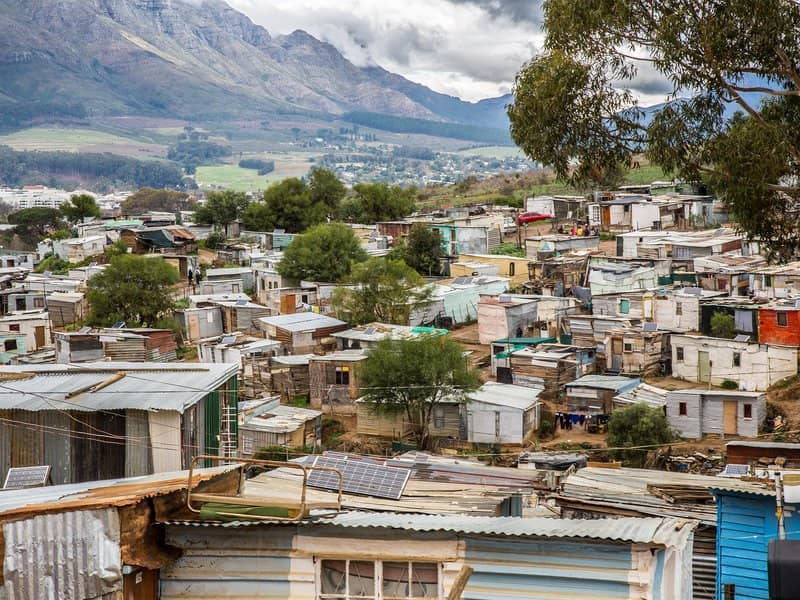
Justin Tyers • 23 October 2017
Shining lights…
Specialized Solar Systems , based in South Africa, have set themselves an ambitious target: To become the Electricity utility provider for disconnected rural communities all over South Africa. The national electricity grid system simply does not supply electricity to many remote and outlying areas – the cost of infrastructure being prohibitive. Specialized Solar Systems – or Triple S, as they like to be known – are implementing a plan to provide overlooked communities with the electricity they need. Their plan will change lives. Lack of electricity places communities at a disadvantage – it denies them an equal footing with towns and cities when it comes to education, work opportunities, and as a result; financial security. Providing electricity to these communities accelerates equality; it enables economic transformation by allowing rural communities to produce and sell goods; it enhances education by providing light so that school children can continue to study in the evenings; and for parents it offers the chance to be involved …to become informed about South Africa’s (and the World’s) current-affairs via the medium which most of us take for granted – television. The simple convenience of charging a mobile phone – allowing people to stay in-touch – suddenly becomes possible. And television entertainment enhances quality of life. Triple S offer packages which include not only the micro-infrastructure to produce solar electricity, but will also supply and install ‘packages’ of equipment which include the domestic wiring and sockets, together with 12VDC pendant lights, fridge and television – according to the consumer’s choice, making it simple for a household to choose a package of utilities which will work for them and their lifestyle, without the need to source electrical consumables. Triple S then sell the electricity to consumers per unit. The economic argument for their investment is sound. At the moment a rural household wishing to have electricity produces it from a generator which – in addition to the initial outlay – consumes between 1 and 2 litres of petrol (gasoline) per hour. The monthly cost of running the generator for, say, 5 hours per day is between 1,000 and 3,000 South African rand. To purchase the same five hours/day of electricity produced from Triple S’s solar installation will cost the consumer less than 150 rand per month. Not only is this clearly much less expensive than running a generator, but it’s quieter, doesn’t produce fumes right outside your door, and the affordability of electricity provided in that way places it within reach of a greater number of households. As a contribution to ‘social’ improvement, Triple S also install a streetlight, free of charge, in the vicinity of each new hub. Another social dimension to the company’s vision, when recruiting installation engineers, is to offer jobs to unemployed people who live in these rural communities – training them over a three-month period. This vision brings with it some unexpected benefits: Triple S found that by recruiting staff from the communities they are trying to serve their products gained greater acceptance. Because their new recruits already had a unique understanding of the needs of new customers, an understanding of their concerns, together with an ability to ‘talk the language’ of the customer-base – new business was found easily and the offer was taken up readily. The benefits didn’t stop there: For the new recruits, hopelessness was turned to opportunity, they found that their status within their communities was elevated, they became educators …able to answer questions about these new infrastructures, their commitment to their work is very high, and sick leave very low. In addition to the mission to provide electricity to remote communities Triple S, of course, also provide off-grid/grid-tie, single-phase/three-phase systems of any size for commerce and private users with or without remote properties, and/or a sustainable energy ethos. They’re a distributor for Victron Energy and a typical large house installation in South Africa incorporates: 2 x Victron Smart Solar 150/85-TR MPPT 15kVA Victron inverter |charger/controller 7.95 kWp (30 X 265W) PV Solar panels array delivering an average of 43kWh per day 48 x 2V Lead acid storage cells in crates with additional water. Victron CCGX Color Control with battery monitor and Wi-Fi dongle for remote management Wi-Fi router for GPRS communication Together with all cabling and control that’s quite a lot of kit – but just wait until you see how quickly they can install it!: Justin Tyers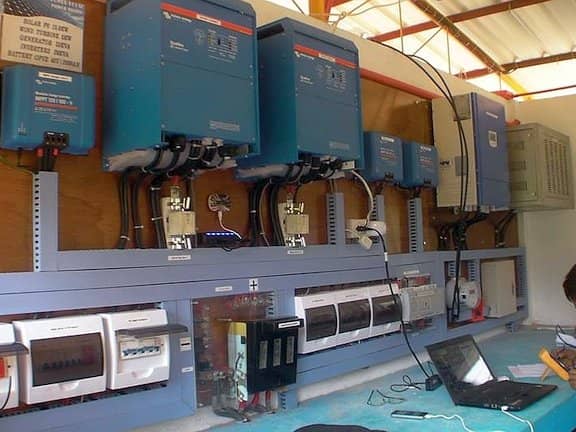
John Rushworth • 16 October 2017
Another Shell Foundation-Victron Energy microgrid
In December last year we reported on the first ‘Access to Energy’ Shell Foundation – Victron Energy microgrid in Ligad, North of Palawan island in the Philippines. Thousands of people still live in such areas where there is no access to electricity and the likelihood of any utility grid connection is aeons away. The Shell Foundation however set about changing that with the advent of that initial Ligad microgrid using Victron components. Now there is a second – and as I write this blog a third is also on its way. Power for the powerless is certainly becoming a reality. Palawan island Let’s just remind ourselves of the area for these projects. Palwawan island has been chosen several times as the most beautiful island in the world. Not surprising really as the Province of Palawan is an archipelago in the Philippines which includes two UNESCO World Heritage Sites plus breathtaking endless white beaches, wild forests and rugged mountains – all of a pure and untouched nature. The Puerto Princesa Subterranean River National Park for instance is classed as one of the New7Wonders of Nature . Microgrid No 2 Like the first microgrid this second one is situated in the North of Palawan island, but this time it is the village of Sitio Binaluan, Barangay (meaning rural district) Liminangcong , in the municipality of Taytay . Victron Energy equipped once again, this microgrid is for 95 houses and has been up and running since February this year. Up and running. Challenging logistics Once again it was Koos and Josie Mulder of JK Solar Power House and their team who did the impossible. It might not be the correct photo size ‘exactly’ for this blog of the team – but as you’ll see there were far greater challenges than pressing a camera button and sending me large format photos – so it would be remiss of me not to include the photo of these stalwarts! JK Solar Power House team pose with the Victron Energy system components. So, back to challenging logistics? Besides the Victron kit above – how about a 1,200 kg generator, 3,750 kg of batteries, 1,200 kg of solar panels, a 200 kg wind turbine, plus all the electricity posts, wires and ancillaries to transport and install. I’ll let the photos explain… The sea journey almost over A short boat hop The land journey begins – replete with Victron Energised hats! In the absence of horsepower, cow power rules. A long way up Solar array coming together Generator in place – not the easiest of items to get up the hill! System stats The solar system can supply an average of 60kWh/day, in summertime even a little bit more. In the rainy season or during a typhoon there is the genset as a backup, in case solar and wind production should not be enough. System Components: 2 x Quattro 10kVa units in parallel 4 x BlueSolar 150V/85A MPPTs in parallel 1 x BMV-700 Series battery monitor 1 x Color Control GX 60 x 260W solar panels giving 15.6kWp 1 x 5kW Wind Turbine OPZV 48V/2,000Ah battery bank 33 kVa Diesel genset with automatic start/stop The microgrid can be monitored via the Victron VRM website, but is unfortunately not always online. Whilst a good electricity supply has been achieved – it seems a solid internet connection is still on the wish list! Check to see if online here: Victron Remote Management (VRM): Binaluan Micro Grid (95 houses) Conclusion What a delight to see power being brought to yet another community and who better to sum up than Danny Maesen of PhilSolar, who said: “Again, a whole community has access to basic electricity and they can only benefit from it, for education, computers or laptops, for comfort such as some fans or a few freezers for ice making, streetlights, TV – the simple things which will change their lives forever. Many thanks to the Shell Foundation for choosing Victron Energy equipment supply and my personal thanks to Koos, Josie and the team, for their efforts, commitment and enthusiasm for Victron Energy products.” My own thanks to all the parties mentioned above for the information and images used in this blog. John Rushworth For further information see: Shell Foundation http://www.shellfoundation.org/Our-Focus/Access-To-Energy JK Solar Power House – System design and installation. Facebook – https://www.facebook.com/JKSolarPowerHouse Contact Koos and Josie Mulder: koossolarpowerhouse@gmail.com or jksolarkoos@gmail.com PhilSolar Equipment and Trading Corporation – Supply, import, logistics and Victron support. Website – http://philsolar.ph Contact Danny Maesen: danny.maesen@me.com or danny@philsolar.ph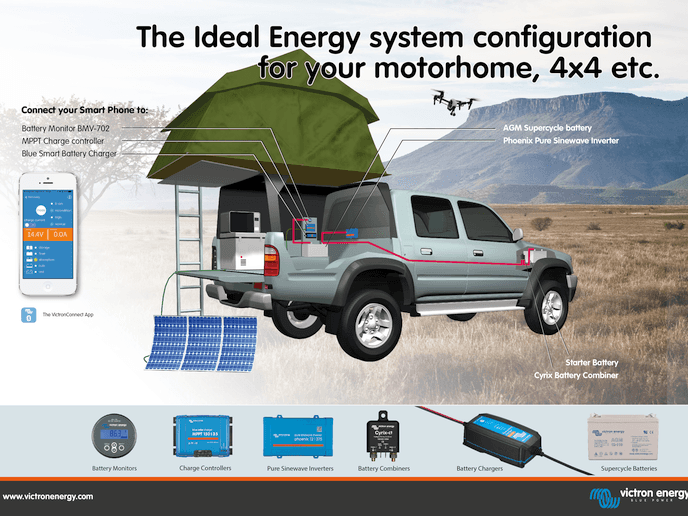
John Rushworth • 02 October 2017
Jeff Sherman’s neat BMV, MPPT installation and review
When it comes to Truck Campers or indeed Motorhomes, RVs, Campervans or Caravans they all have one thing in common – the great outdoors and increasingly these days a requirement for more on and off-grid power, be it just DC or DC and AC. That means more of everything – likely solar, a generator, an inverter and of course batteries. As you can see in the headline image above Victron Energy make a complete range of products to cater for this market, just as they do for the boating world and other markets. Choosing what you need and figuring it all out can be quite tricky for the end user. That is of course where Victron dealers and accredited installers come in. Some end users though, like Jeff Sherman, want to do it themselves – and I have to say Jeff’s completed installation is one of the neatest I’ve seen. Maybe his will give you inspiration to have a crack at a DIY installation too, with of course support from your Victron Energy dealer . Jeff’s Bigfoot 25C9.4SB Truck Camper Jeff Sherman lived in Alaska for 42 years working in the construction industry and recently retired. Having since moved to the ‘Lower 48’ he and his wife are now looking forward to exploring the American West in their Bigfoot truck camper pictured below. DIY – where to start? The first place might be here on the Victron blog, along with a browse on the main website . Added to that you’ll likely want to deal with people you can relate to. In Jeff’s case he chose PKYS Inc and AM Solar. Here’s what PKYS Inc owner Peter Kennedy has to say about his company: “PKYS are based in Annapolis, Maryland and we sell Victron equipment online . Most of our experience comes from the boating world because the Chesapeake Bay area is one of the prime boating areas in the US. RVs are relatively new to us but recently they have become a much bigger part of our business because Victron equipment is so suitable for RVs. Most of our recent enquiries centre around using Lithium batteries in such vehicles because of their compact size, weight and superior performance”. AM Solar also supplied Victron equipment, namely the Bluetooth Smart dongle and MPPT controller. Roger Carroll of AM Solar provided Jeff with technical advice and reviewed the proposed system, to ensure everything was compatible with the BlueSolar MPPT 100/30 . Jeff tells me they are great company to deal with as they specialise in RV solar. Whilst they often fit systems, Jeff found them very helpful for his DIY install too. Energy & Monitoring Rather than spoil Jeff’s, independent, comprehensive customer “Review of Victron Battery Monitor and MPPT Controller with Smart Phone Display” – here are a few teaser photos showing the standard of installation he’s achieved. BMV-700 battery monitor with VE.Direct Bluetooth Smart dongle – showing data output via Bluetooth to a Smartphone using the VictronConnect app. BMV shunt housed in Blue Sea Systems holder. Jeff tells me: “I did have to do a lot more work than is obvious to get the shunt in, having to ‘move’ my battery posts to a more accessible location by using bus bars. My battery box is really small and having so many cables going to them and the shunt inside the box would have been be impossible. Installing busbars as shown below is uncommon in a truck camper RV. But once I had them in it made it so easy to route and terminate cables.” Keeping those cables tidy. Conclusion & Credits This blog and Jeff’s review will hopefully give you some ideas of what can be achieved with your chosen adventure vehicle using Victron Energy components. If they are all as neatly installed as Jeff’s – so much the better! My thanks to North America Victron Energy Sales Manager Justin Larrabee and Peter Kennedy of PKYS Inc for making me aware of Jeff Sherman’s installation and of course Michael Smith (aka Mello Mike) of Truck Camper Adventure Magazine for publishing Jeff’s review. Credit for the explanatory headline image goes to Andre du Rand . Thanks must also go to Victron dealer AM Solar for equipment supply and installation advice to Jeff. John Rushworth
Justin Tyers • 25 September 2017
Flower Power …from Smartflower
As wonderful as conventional solar panels are for silently producing abundant renewable electricity, let’s face it – they’re not very pretty. Those who love traditional buildings and who recognise the need to live ‘sustainably’ in the 21st century notice a ‘clash’ every time those two ideas come together. In an historic village, for example, where hand-crafted vernacular buildings lean toward each other with age, our senses are outraged by the sight of a neon sign, satellite aerial, or a Solar Panel. …And in any case, in these areas residents are often prohibited from mounting Solar Panels on their Olde-Worlde roofs. If you can’t mount PV panels on your roof, thoughts naturally turn to installing them on the ground. Yet even there, if you’re a keen gardener, or live amid unspoiled countryside – you probably won’t! Enter the SmartFlower: The multi-award winning SmartFlower is a photovoltaic array so pretty that people who own them give them names. The SmartFlower is a self-contained electricity generation unit which – like a Daisy – opens up in the morning and folds itself away at night – cleaning its ‘petals’ as it does so. To maximise the energy it can harvest the SmartFlower uses a two-axis motor which allows the PV panels to track the sun. The result is a photovoltaic array as much as 40% more efficient than static panels of the same potential. And it looks so good that it becomes a feature of the garden! To prove the point, the latest of over 1000 installations to-date of the SmartFlower is at Lavender Pond Farm in Connecticut USA – a picturesque 25 acre Lavender farm-business which is open to the public. And here’s another advantage: Because there’s no drilling of holes through the roof, running cables through walls, or installing boxes of electronic wizardry inside precious indoor cupboard space, the SmartFlower can be up-and-running within an hour of delivery, requiring only a modest foundation on which to stand – which could be a concrete pad, or four earth-screws driven into the ground. That’s it! …everything needed to provide an average household with virtually all the electricity it requires during the unit’s 25 year warrantied service life is contained in the ‘box’. So what’s in the box? The SmartFlower POP is available as an electricity grid-connected unit provided with: A Victron MultiPlus inverter/charger offering 3kVA continuous power, and capable of delivering 6kW Peak Power. A Victron BlueSolar Charge Controller handles incoming panel voltage of up to 150 volts, a charge current of 70A 0r 85A. These units, of course, feature the very latest Ultra-fast Maximum Power Point Tracking (MPPT). The SmartFlower POP+ has been designed as an off-grid/hybrid system and is further provided with Lithium battery power storage of either 2.3kWh or 4.6kWh, and is available with the 5kVA version of the MultiPlus inverter. Being modular, virtually all the decision-making has been done for the customer who isn’t burdened with having to learn about, and select, combinations of electrical units to supply their household needs. The choices are simply between on-grid and off-grid models …and for the off-grid version, how much battery storage will suit their household need; and how much electricity the household might demand at any one time. Outside the domestic market, Businesses will be interested to hear that the SmartFlower POP-e has been designed to work specifically as a high-performance charging station for electric cars and bikes. The POP-e is capable of delivering up to 22kW of charging power which – together with the striking design and colour range of these units – makes it the ultimate statement for any company wishing to establish its ‘green’ credentials. Because the SmartFlower charging units occupy an area equivalent to a single car-parking space – they can be permanently established in existing locations such customer-parking areas. Here’s a promotional video which imagines the POP-e in use: It’s reassuring to know that – in keeping with all the world’s best innovations – SmartFlower’s founder, Alexander Swatek, working with his two partners over a glass of wine, drew the design concept on the back of a serviette! Their ambition was to make technology beautiful; to combine all necessary components into one stylish package, thereby making it an attractive proposition for house-proud consumers. The units are built in Austria from quality materials to ensure a long hassle-free product life. Customer service is provided by working with an expanding network of dealerships all over the world to ensure that both their product – and plenty of good advice – are always close to hand. In closing, as a way to combat stress, may I suggest we all take a minute to watch the SmartFlower unfurl …accompanied by some stirring music? Justin Tyers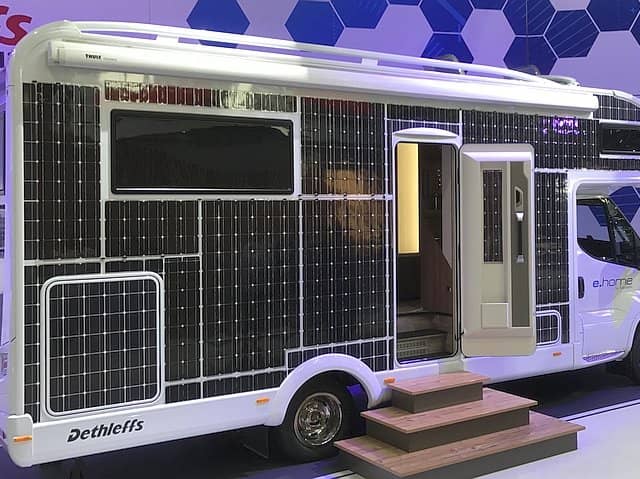
John Rushworth • 26 August 2017
Dethleffs electric drive motorhome with Victron onboard
Electric drive cars, lorries, motorcycles, aeroplanes, bicycles and boats – and now motorhomes – the world of transportation and leisure is changing with Victron Energy being a natural part of this revolution. Exhibiting at Caravan Salon Düsseldorf 2017 until Sunday September 3rd is the new concept motorhome by Dethleffs (called the e.home) which utilises Victron Energy products inside for the e.home domestic services. Besides being able to see the Victron products used in the Dethleffs e.home on their stand, Victron also have their own stand (Hall 13, Stand D82), as does Victron dealer TransWatt (Hall 13, Stand E64). Tickets for the show can be requested by dropping a mail to sales@victronenergy.com Setting up the Victron Energy stand in readiness for the show. The Dethleffs e.home concept Dethleffs are the first well-known motorhome manufacturer to present a concept study of a fully-electrically driven motorhome. Their developers are convinced, stating that: “Electric drive for motorhomes will play a great role in the future even if the implementation won’t be as quick as in the car sector”. This is why they are actively facing up to the concept of ‘Electric Mobility’ by creating the e.home study vehicle. For this reason it is important to be a pioneer in this sector, as Dethleffs Managing Director Alexander Leopold explains. “Dethleffs know this means a lot more then just putting bodywork on an electrically driven chassis. By implementing a fully-electric powertrain there are many challenges and equally opportunities for the entire vehicle. One significant opportunity is to do without any additional type of energy sources for the vehicle. This means that a motorhome with electric drive will also supply all the onboard services with electricity for the living area instead of gas, for example – and that is why solar power production becomes very important. At the same time there are also a number of new technologies which will change the comfort, quality of life, plus the safety of future generations of motorhomes. Through this evolving process, systems will be further developed – and we expect rapid progress over the coming years for our e.home concept.” Electric powertrain The e.home is based on the Iveco Daily Electric chassis with a liquid-cooled three-phase AC motor with a power of 80kW, utilising modern FIAMM Sodium Nickel Chloride batteries with a capacity of 3 x 76 Ah at 400 V. These can be recharged up to 1,500 times equating to a mileage of circa 250,000 km. Of particular interest are the special installed ‘Supercaps’. These high-power capacitors allow a faster recharge and delivery of the electrical energy in comparison to the usual batteries – and so increase the performance of the vehicle as well as the lifecycle of the batteries apparently. Solar power When operating the vehicle using electricity (for driving and living) the harvesting of solar energy becomes ever more important. For usage in a motorhome that requires high specification photovoltaics. The Dethleffs e.home is equipped with 31 square metres of modern and optimised thin layer solar cells, giving around 3,000 Watts of peak power. Victron inside Victron Energy system components for the Dethleffs e.home are shown and detailed below. Key components are: Solar charge controllers to harvest all that solar energy. A combined inverter/charger for onboard AC electricity and the charging of the Lithium domestic power storage batteries. Required ancillaries which include battery safety protection, system monitoring and the e.home heating power supply. Not forgetting a DC-DC converter to ensure all those 12V, USB accessories, tablets, smartphones etc., can be supplied and charged! Products and part numbers 1 x Quattro 24/8000/200-100/100, Part No: QUA248020010 2 x LiFePO4 Battery 12.8V/300Ah – Part No: Smart BAT512130410 1 x Skylla-TG 48/50 (1+1) – Part No: SDTG4800501 (Power supply for heating system) 1 x Battery Management System VE.Bus – Part No: BMS BMS300200000 Left to right – Quattro, Lithium batteries with BMS above them, Skylla-TG. (note grills shown are for show display purposes – presumably to keep errant fingers out!) 1 x Color Control GX – Part No: BPP000300100R (Acts as a Modbus-TCP gateway) 1 x Battery Monitor BMV-702 – Part No: BAM010702000 Color Control GX & BMV-702 Battery Monitor (note grills shown are for show display purposes – presumably to keep errant fingers out!) 3 x SmartSolar MPPT 150/85-Tr – Part No: SCC010085210 SmartSolar MPPTs with Bluetooth built-in (note grills shown are for show display purposes – presumably to keep errant fingers out!) Other installed system components are: 1 x Orion DC-DC Converter 24/12-70 – Part No: ORI241270020 1 x BatteryProtect 12/24V-220A Heating, cooking & refrigeration Heating is often the most energy intensive use of energy in a motorhome. When changing to an electric heating system it was mandatory that the Dethleffs developers find a new, even unconventional solution to generate a pleasant warm feeling with as little energy use as possible. To achieve this a number of latent heat accumulator plates made of PMC (phase change material) were installed in several places. The heat accumulators absorb energy at temperatures over 26 degrees and deliver it when the temperature goes down in the evening hours. Additionally heating elements are also mounted in the floor, sidewalls and furniture which then heat the interior via infrared warmth sources, but only the objects they reach – not the air. This is efficient yet still creates a cosy warm feeling, although the general room temperature is at 2-3 degrees lower than with traditional heating systems. Infrared warmth though is available without any pre-heating time. A ceramic stove with three cooking hobs as well as an energy efficient compressor fridge are installed in the e.home. Comfort and privacy In looking to the future of motorhomes Dethleffs installed some technologies to increase comfort and the quality of life. Amongst these is a special foil technology which can be used as a mirror and when switched on it spreads a bright, planar light. Another interesting feature is the electric window blind. This is a foil, that is set between the window panes of the insulated windows, which can be electrically dimmed as a protection from the sun and intense heat, as well as being able to be used as privacy screen too. Connectivity Dethleffs place great importance when it comes to connectivity. Smart homes and the internet of things (loT) are fast evolving trends of the present, which are having more and more impact, offering new possibilities for comfort and safety. The basic prerequisite for the ‘Smart Motorhome’ therefore is the digitisation and connection of the installed components in the vehicle. CampConnect The Dethleffs e.home has an integrated system installed called CampConnect, which enables connectivity of general components and is able to digitalise almost all components in the motorhome. This connectivity can be operated by an installed app on your tablet. The operation and display possibilities are there for heating, light and power as well as central locking. Safety Dethleffs have installed an innovative safety system in the e.home. This so called ‘Mobileye’ supports the driver in the form of a ‘Third Eye’ in order to keep track of situations in front of the vehicle. It identifies potential dangers on the road and forewarns the driver by acoustic and optical signals. Conclusion It’s great to see pioneering projects choosing and using Victron Energy products. We wish Dethleffs every success for their e.home project and look forward to hearing more as the system evolves. We hope readers get a chance to visit Caravan Salon Düsseldorf 2017 ; if not I trust this blog gives you an insight into Victron Energy’s products and how they can be integrated into exciting projects such as the e.home. Thanks to Dethleffs staff and Uwe Dräger of Victron Energy for the information and images used in this blog. John Rushworth About Dethleffs With the invention of the first caravan in Germany – called ‘Wohnauto’ – the company founder Arist Dethleffs laid the foundation of caravanning in Germany. Today the Dethleffs GmbH & Co. KG with its site in Isny in the Allgäu is the largest manufacturer of motorhomes in Europe. In one of the most modern production facilities about 1,000 employees manufacture up to 10.500 motorhomes and caravans per year. With annual sales in the amount of about 314 million EURO Dethleffs is one of the major manufacturers of motorhomes and caravans worldwide. Dethleffs is a company of the Erwin Hymer Group. Erwin Hymer Group The Erwin Hymer Group unites leading motorhome and caravan manufacturers as well as motorhome and caravan accessory specialists, hire and financing services under one roof. The Group had a turnover of 2.1 billion euros in the 2016/17 financial year. It sold around 55,000 recreational vehicles and employs more than 6,000 people worldwide. The motorhome and caravan brands Buccaneer, Bürstner, Carado, Compass, Dethleffs, Elddis, Eriba, Etrusco, Hymer, Niesmann+Bischoff, Laika, LMC, Road-trek, Sunlight and Xplore, as well as Europe’s largest motorhome hire firm McRent and the motorhome hire companies Best Time RV und rent easy, and also the chassis specialist Goldschmitt, the accessories specialist Movera, the trailer tent manufacturer 3DOG camping and the touring portal freeontour all belong to the Erwin Hymer Group.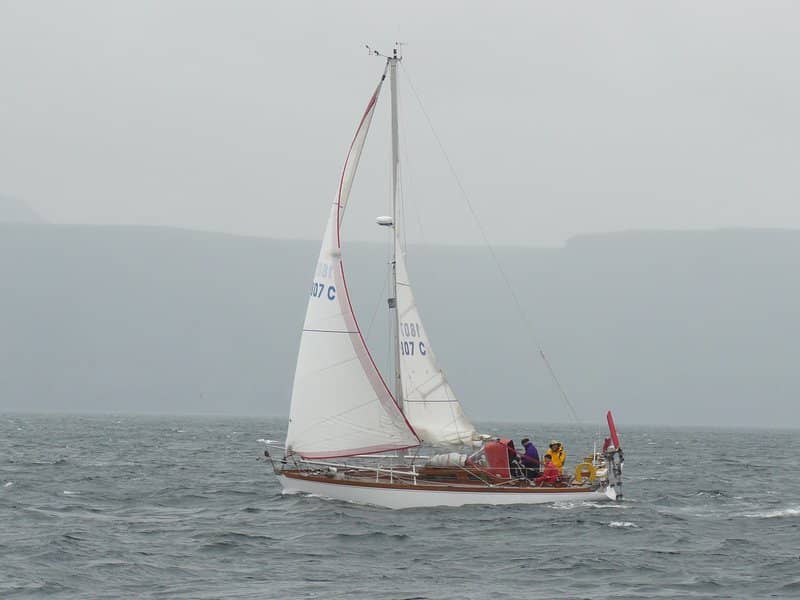
John Rushworth • 14 August 2017
Solar Panels – the quiet sailing solution
Introduction This guest blog is by Gordon Buchanan, yachting journalist, writer and photographer. Gordon has been working as a yachting writer for over 20 years, with countless magazine articles and two books to date. Gordon’s yacht Tantina II is pictured above rounding Cape Wrath . She was designed by J. Francis Jones as a cruiser racer under the old RORC 7TM rule and won Yachting World’s design competition in the year she was built in 1961. All wood, but substantially upgraded from her early days, she is 31 ft overall, sloop rigged and fast for her size. Gordon has sailed her from the Shetland Isles to Europe and even one trip to the Azores. We hope Gordon’s end user article below helps and encourages others to fit a simple solar, quiet energy solution to their own vessels. John Rushworth Fitting solar to Tantina II It was during a rare quiet moment during a race to the Azores that my thoughts turned to the overly regular routine aboard that meant starting the engine every few hours just to keep the batteries charged. Surely there must be a better way. On a thirty-foot boat, there is only so much room for additional equipment so although charging depended solely on the engine alternator and its vulnerable drive belt; I chew these up with monotonous regularity, a better way had to be found. My search led me to wind chargers and solar panels. As I use a wind vane self-steering gear the stern of the boat does not lend itself to mounting a wind charger without causing major complications, and although wind chargers do potentially have a greater output than solar panels they can be noisy. Solar panels seemed a better alternative, albeit overcoming the problem of the space required took considerable thought. In any event, at that time the available solar panels did not seem to offer much in the way of charging current for any given size, so the project was postponed; for postponed, read laziness on my part. It was only after looking at a couple of Victron Energy panels on another yacht that I realised that solar panels have improved dramatically. Click image to view additional information about yacht Elektra If I could fit a couple of the small ones I would have an additional method of battery charging, a great feature for peace of mind when well offshore, and there would be less wear on the engine as well as my ears. Due to the limited space available the maximum area that could be allocated restricted me to two of the smallest panels to be mounted on top of the pushpit rails. The panels chosen are the slightly more efficient monocrystalline ones, thus making best use of space. In the early days of solar energy capture I am sure that some solar panels were merely connected direct to battery terminals, a practice that is both inefficient and dangerous. Nowadays technology has improved and the installation of a charge controller is deemed essential. In Victron’s case their smallest unit is more than capable of handling my two panels. Furthermore, it encompasses MPPT technology that makes absolutely maximum use of available energy. Small and compact the charge controller fitted easily below decks with wiring connections obvious even without referring to the vast information backup available in the included documentation and online. In order to identify the benefits of the new solar panels and as an upgrade to the existing battery charging arrangements on board I decided to fit a battery monitor. This provides a constant display of battery usage, and at the push of a button, information on the state of charge, amps used, and output from the solar panels. There are numerous additional parameters that can also be monitored, and as if that is not enough, by adding a simple dongle, all these readings are available on my mobile phone. Installation The components that form the system include a charge controller, in my case the smallest one is quite adequate, a battery monitor that also included a shunt (top right in the picture below) and a Bluetooth dongle. The solar panels comprised two of the 30 Watt monocrystalline versions. These I wired in series, as the charge controller then converts the panels’ available voltage to that of the battery system. The cables supplied by Victron Energy are at first sight quite substantial but have been sized to ensure that there is a minimum of voltage drop between the panels and the batteries. During the installation, I was delighted to find that these cables were of the highest quality fully tinned marine grade. The one problem that solar panels pose on small boats is one of space. Not only does space for mounting them need be found but that space needs to be as free of shadows as possible. At first glance, the cabin top was an obvious choice but in my case I regularly stand there when deploying the mainsail, and the boom and folded sail would create a rather large shadow thus affecting the efficiency of the panels. The area furthest from overhead items on my boat was at the stern, already in use for numerous items, but after some considerable thought a solution was found. An extra rail across the pushpit rails was installed using hinged clamps and bar connectors along with a length of stainless steel tube that matched the existing rails. Then it was a simple matter of making a platform onto which the solar panels could be bolted. The backstay on my boat is split and fortunately the panels just fitted between the stays. Each boat is different but there is often some space that is not heavily used which can be put to good use as in this case. The panels themselves come prewired with a waterproof junction box glued to the underside, and onto which the cable connections fit. Fortunately the box is clearly marked with both positive and negative terminals so wiring is quite logical. Connecting the cable ends to the junction box proved quite straight forward although tightening the seals at the cable entry glands required strong fingers. My two panels are interconnected via a 1 metre cable that came with pre assembled plug and socket. I cut the cable in the middle which allowed the bare ends to be inserted into the terminals in the junction box. This meant that the plug and socket then fitted together to connect the two panels, whilst being removable for maintenance. The aluminium frame is predrilled with holes for fastening it. I used 6mm machine screws to attach them to the plywood base that I made. The cables from the solar panels were led through a deck gland to a position close to my electronics panel. After mounting the MPPT 75/10 charge controller the cables were duly connected, but before I made the connection to the solar panels themselves. There is the potential for substantial currents to flow from the panels, especially when connected in series. I kept the panels covered to stop any generation of electricity during the installation as a precaution. Fortunately there was enough spare cable to lead the charger output to the batteries. The positive cable leads to the domestic battery bank, while the negative leads to the output side of the shunt that is part of the BMV-702. The BMV-702 is a battery monitor but is considerably more sophisticated than some, being able to monitor two battery banks as well as providing output of data via Bluetooth to a mobile phone or similar device. Comprising the readout dial and a 500amp shunt, it is simple to fit although I did have to scratch my head a bit about the best location for the two components. The readout I installed on the boat’s instrument panel at the chart table, and although it is installed as a round dial, a square bezel is also supplied as part of the kit. The shunt itself is quite neat but it is necessary to connect battery cables to it so it does require a bit of space. I overcame the problem of where to put it by buying a project box from a well known electronics shop. This allowed me to fit the shunt in a relatively accessible place close to the batteries. As my batteries are mounted under the main cabin floor, positioning the box on the floor under the settee edge, kept the cables and wires clear of errant feet. The thin red wires are the sensor connections from the positive terminals on the battery banks and are simply plugged into the spring loaded terminals on the shunt. The grey cable is the data feed. If only one battery bank is installed the BMV-702 has the ability to measure battery temperature using the second small input terminal. The last part of my installation is the VE.Direct Bluetooth Smart dongle. Mounted close to the BMV-702 it is simply plugged in using the attached cable, and powered via that lead. The App for mobile phones is readily downloaded from Victron’s comprehensive website. Note: the dongle can be connected to the BMV or the MPPT, as one desires, and can provide automatic firmware updates besides monitoring multiple parameters. The system in use Having overcome the complications that installing almost anything on a small boat entails, I am delighted to say that the system works very well. Even on a dull day there is a constant charge going to the batteries, and when the sun does shine, albeit that is occasionally in Scotland, the charge level increases dramatically. The benefit of the MPPT technology in the charge controller is that it does make best use of whatever available current is coming from the solar panels. Being a multi stage charger, in my case it only took about 24 hours for the batteries to reach a full charge, thereafter the charger went into its float charge mode. The yellow light on the picture of the charge controller indicates the float charge is in operation. Many of the electrical systems on board are quite power hungry, such as the refrigerator and various pumps as well as instruments. I also like to listen to music when aboard myself; the stereo system draws almost a full amp on its own and with all these electrical demands it is wonderful to be freed from the ever constant need to run the engine. So far the engine charging has been limited to those times when it is needed for propulsion, a very welcome change. This smallest of the Victron Energy systems has proved to be both highly effective, and extremely well made. If I was to criticise anything it might be the print size of the instruction booklet for the MPPT 75/10, or perhaps that is a criticism of my aged eyes, but otherwise all the components appear to be of the highest quality. Thoughts after my annual cruise After fitting two of the 30 watt monocrystalline panels at the beginning of the season I was looking forward to a summer of long sunny days and constant electrical input. My annual cruise this year lasted some six weeks and although one expects some variations in the weather, a series of gales and almost constantly rain filled skies were not on the desired list. To say that conditions were not likely to show solar panels at their best would be an understatement. Sheltering below decks for lengthy periods gave me plenty of opportunity to monitor the output from the solar panels and the charge state of my batteries. I was amazed at the results. Even on the dullest of days, and there were many to choose from, my batteries were receiving a healthy charge, and with the now much more occasional use of the engine – never during the whole six weeks did they fall below a 95% state of charge. It was fascinating to watch the battery monitor as the batteries went from their partially discharged state in early morning, my fridge and domestic equipment is on 24hours a day, to a full charge later on. I am sure the MPPT controller is at least partially responsible for the overall success of the installation, it allowed the solar panels to charge quite hard when the batteries were at their lowest, the rate of charge gradually reducing over the course of each day as the batteries neared capacity. Before installing the Victron Energy solar panels I was a little doubtful if such small units would make much difference, but having used them for half a season I am completely converted to the joy of silent energy. One of those joys is being able to return to the boat after a break knowing that the batteries will be fully charged. Solar power means not having to disturb this peace and quiet! Gordon Buchanan Helpful videos Instructional video: How to connect the BMV-700 battery monitor Instructional video: How to optimise the BMV-700 series sync parameters BlueSolar MPPTs: VictronConnect instructional videos Useful blog/manual Matching solar modules to MPPT charge controllers VictronConnect manual System components 2 x SPM030301200 (30W Mono) – BlueSolar Panels 1 x SCC010010050R (75/10 MPPT) – BlueSolar MPPTs 75/10, 75/15 & 100/15 1 x BAM010702000R (BMV-702) – BMV-700 series 1 x ASS000100000 (BMV Temp sensor) – Temperature sensor for BMV-702 (Note not used for this installation as starter battery wired instead). 1 x ASS030536010 (Bluetooth smart dongle) – VE.Direct Bluetooth Smart dongle 1 x SCA000100000 (Solar cable 1m/4mm²) – See Pricelist 2 x SCA001000100 (Solar cable 10m/6mm²) – See Pricelist All components supplied by Victron Energy distributor Barden UK Ltd. For further information contact: Philip Smith Technical Sales Manager T: +44 (0)1489 570770 www.barden-uk.com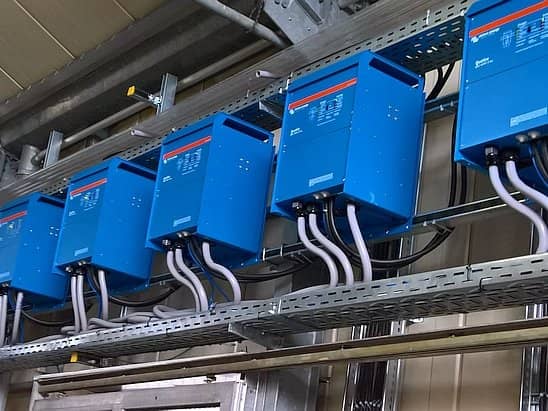
John Rushworth • 26 July 2017
Energy Storage System (ESS) upgrade
System upgrades are a fact of life and it’s always encouraging to see clients choosing Victron Energy components in preference to others. And so it was with an EnerWit and SERVICE TEAM Döbeln project in the Südschwarzwald (Southern Black Forest) in Germany. Much of Victron Energy’s high volume market in Germany is residential, but in this case the system upgrade to a Victron based ESS was more on an industrial scale, consisting of 6 x 48/8000/110-100/100 Quattros (to replace the original components), combined with 100 kWh of Lithium-ion battery storage and 180kWp of solar. Out with the old… The heading speaks for itself, as blue becomes the colour of choice. Energy Storage System (ESS) An ESS is used to optimise the self-consumption of a building by storing surplus energy throughout the day, whenever possible, and then using that stored energy during the night. Here is a screenshot from the project – showing instantaneous solar harvest of over 91kW – using Victron’s Remote Console via the VRM portal and Color Control GX , or CCGX as it is commonly known. The installer for this project was EnerWit of Donaueschingen, who have an excellent reputation and network. Support and programming of the ESS used the expertise of one of Victron’s top distributors in Germany – SERVICE TEAM Döbeln GmbH together with Mr. Prag from that company. Upgraded installation If you aren’t familiar with an ESS, Victron have a number of Webinars in the video section of Victron Professional. An ESS Design & installation manual is also here . Please note all our blog readers are welcome to sign up for Victron Professional , as it’s not just about ESS – there’s firmware downloads, news and more. Conclusion Thanks to Uwe Dräger and Bob Hopman of Victron Energy for making me aware of this project. Considering an upgrade – isn’t it time you changed to Blue Power! John Rushworth Links SERVICE TEAM Döbeln GmbH – https://www.service-doebeln.de EnerWit – http://www.enerwit.de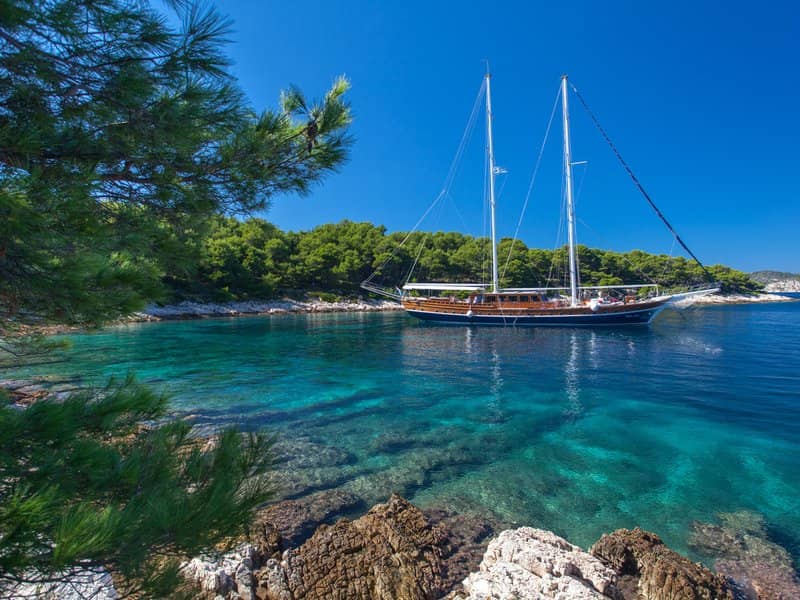
Justin Tyers • 12 July 2017
The sound of silence…
The holy grail of Mediterranean sailing is finding a deserted anchorage in paradise – azure sea, unspoiled island in the background, cocktail-in-hand, and the setting sun pouring out its gold onto the water. What a lot of photos can’t tell you is that the noise of the ship’s generator is echoing back to you from the rocky shore, and no one can hear themselves think! Not so with the Gulet Stella Maris. Gulets are large wooden sailing vessels native to Turkey. Anyone who has sailed the Aegean sea will have enjoyed the quiet timeless nature of the coastline, steeped in social history. And sailing by Gulet is the best way to see it …the wind obligingly begins blowing soon after breakfast, and has finished for the day by tea time – long enough to waft you to your next silent anchorage. Even if you happen to arrive at your destination by motor, the growling of a generator in paradise is a travesty. Ante Lozic, owner/skipper of the beautiful vessel Stella Maris realised that he could offer his holiday guests complete paradise by avoiding the need for running a noisy generator whilst still being able to offer electrical on-board entertainment: a DVD/Music Player, Internet, charging facilities and all the usual domestic ‘mod-cons’ one expects such as refrigeration and pressurised water systems. In addition, a vessel of this size working commercially uses a considerable array of electronics for her safe navigation: She will have electronic charts, global positioning systems, radar, radio communications, weather and navigation information systems, together with real-time vessel identification/course/speed – and the norm is to have them working twenty four hours per day. The Stella Maris can accommodate 16 guests in 8 cabins, and is sailed by a crew of 7 – so the demand for power can be substantial. PV panels on awning… Skipper Lozic asked Boris Tudor, director of the remote energy specialist Solar Projekt d.o.o . to design and install a system which would provide ample power for guests without spoiling the beautiful appearance of his vessel. Solar Projekt, who have considerable maritime experience, came up with 10kWp system supplied from 34 Photovoltaic panels. discreetly placed on the vessels substantial awning – which provides shade for the guests – and is an ideal location for panels being almost fully exposed to the sun, yet practically invisible to the observer. …the panels are almost completely invisible to the onlooker. Four MPPT (150/45) maximise the solar energy obtained to charge the OPzV tubular plate battery bank. You can’t very well ask paying guests to be miserly with their power consumption in times of scarcity – hence the use of Tubular plate batteries which have a life expectancy of up to 20 years and can be cycled to 80% discharge, 1200 times. The batteries are also compact for their capacity – which even on a 38 metre vessel like the Stella Maris is important when you have 23 people living on board. Tubular Plate Battery Bank. 15 kVA of user-power is available from three Victron Multiplus inverter/chargers, which also allows for generator/shore power battery charging at up to 70A each from each unit. 3 x Victron 5000/48 Multiplus offer a massive 15kVA If you fancy a week or two floating on a turquoise mirror, cocktail in hand, surrounded by unspoiled scenery, lost in your own silent thoughts – it’s all waiting for you on the Stella Maris! Thanks to Victron Sales Manager for middle and eastern europe Leo Yntema for highlighting this interesting installation. Justin Tyers
Justin Tyers • 03 July 2017
SimpliPhi your life
The first SimpliPhi Power Lithium Iron Phosphate (LiFePO4) batteries in the UK have just been installed in a house in Winchester by Hampshire-based distributor Streamline Power. LiFePO4 batteries are chemically more stable than other Lithium battery technologies and are therefore perceived to be safer. SimpliPhi batteries are a drop-in replacement for lead acid batteries because battery management and safety disconnects are integral to each battery …there’s no control wiring required or software integration. Simple integration and a wide operating temperature range make these batteries ideal for off-grid solar and diesel-hybrid systems. SimpliPhi installed under the stairs… In this installation two 3.4kWh batteries are charged by a photovoltaic array on the roof. Victron Energy/SimpliPhi Compatibility 24V and 48V LiFePO batteries from SimpliPhi are compatible with all Victron Energy’s 24V and 48V Multis, Quattros, and also all Blue Solar VE.Can, VE.Direct Solar chargers, and BMV Battery Monitors. We pride ourselves on our continual research and development which ensures that we maintain our leading position at the cutting edge of remote power technology. Please refer to our Victron live page for an integration guide. All lithium batteries are efficient with low self discharge rates and can be cycled many thousands of times to a low state of charge. In practice these factors add up to a probable service life of around 10 years. The owner of the new equipment is very pleased with both the unobtrusive installation and its performance. Victron MultiPlus paired with 48V LiFePO4 battery bank Streamline Power’s Managing Director Dennis Garrison has been looking at the Winchester installation’s performance log (remote monitoring of Victron installations is available on the web, by the way, by using VRM Portal ) and is pleased with the result. Plenty of energy is being pulled from the panels to be stored in the batteries with just 10% of the household power requirement being supplied by the grid. Victron Remote Management Graphic LiFePO4 batteries are environmentally benign – when they get to the end of their long life their non-toxic chemistry won’t harm the planet – even more appropriate for households interested in a sustainable energy ethos. Streamline Power can be contacted via their website. Justin Tyers
John Rushworth • 26 June 2017
Globetrotting with Victron Energy
Introduction I stumbled across Simone Monticelli (Simo) and Lucia Gambelli (Lucy) on Facebook and was delighted to discover they are fellow motorcyclists and adventurers. Having said that when it comes to adventures they leave me eating their dust and mud with their wide ranging global travels. Looking at their photos from Royal Enfield motorcycles in the Nepalese mud to Unimogs in the Saharan dust, it was with glee I noticed that telltale Victron blue in one of their photos. I needed to know more and specifically why they chose Victron Energy products for their latest expedition transport. Being motorcyclists there is only one name, especially when you are from Italy, that you could possibly call your new expedition truck – Valentino after the GOAT – but I’m a different generation so I may dispute that Valentino Rossi is the Greatest Of All Time, it’s Mike Hailwood surely! Borders and nationalities aside, Valentino the Victron equipped expedition Unimog is I suspect a goat in her own right. Having now swapped their motorcycles for four wheels, here in Simo’s own words is a guest blog with some fantastic photos as Valentino, Simo and Lucy travel – now aboard a boat to South America having recently departed Dakar. Off the beaten track Wreck in western Sahara near Tarfaya The civilisation of a place is often measured by comparing the length of the existing paved roads: do we really want to be so limited? A small village in the middle of djebel Shago (Morocco) If we want to discover the DNA of a place we don’t have to stop where the road ends, we have to go further. Where the tarmac ends there are landscapes and people who survive quite differently to the artificial and forced contamination of the usual cliché we call civilisation. It is here that it is possible to meet with a different point of view of the same country. But mind you, not necessarily better, truer or more beautiful, simply different. Young women selling Berber handcraft (Morocco) If you leave the paved roads you can certainly get into trouble and put yourselves in complicated situations, but we think that is part of the game and these moments can offer learning and a pure contact with populations who seemingly live a harder life with apparently less. We think that the understanding of these contradictions is an important element of any journey. Wild camping in the High Atlas (Morocco) The right tool for the job Understanding places off the beaten track means understanding the difficulties of the people who live there and whilst it might seem trivial to most – one such challenge is travel on dirt ‘roads’ without asphalt which is often not feasible by any ordinary means of transport. When travelling in such challenging conditions we need to use a means of transportation purpose built for survival in all situations. Cathédrale de Roches, high atlas mountains in Morocco Sand, mud and rocks are just some of difficulties to deal with when the traveller leaves the tarmac. Often you have to travel alone for several days before getting to your desired destination – imagine then what it means if having a technical issue that can ruin your journey in such places? You can’t expect technical assistance in a place without people, or even if someone does pass by that doesn’t mean they can even help! Therefore safety, independence and autonomy becomes really important. That’s why we built Valentino. Following a Wadi in the desert in the south of Mcissi (Morocco) Life before and now with Valentino We are couple of Italians travellers that built our expedition vehicle Valentino from scratch in order to start a new life on the road. We quit our respective jobs for the road, to discover unknown parts of the world. Back in my home country of Italy I was an Internet Security Expert for a top Cyber Security Command Centre. Because of that and knowing about electronics and innovation that has helped us build a truck with a specialised and self sufficient fit-out. During the evaluation phase we had no doubt about the choice of equipment: to have the correct and stable amount of power for all our equipment the choice had to be Victron Energy. Interior of the truck, first test of our solar powered washing machine. Normally speaking with expedition vehicle owners and long term travellers it is common to hear: “what’s not there, does not break!” During a world trip the fewer malfunctions the better, especially if the travel takes place where the repairs are difficult or nigh on impossible. And yes, that’s right, personally I think that technical innovation can help the reliability of our truck and can also be useful to prevent malfunctions that could damage or significantly compromise the vehicle or indeed our budget. So we decided to take the chance to start our new life on the road with something different to a 40 year old truck to ensure and preserve our new house on wheels for many years. Here’s a blog about the build (in Italian but works well with Chrome browser and inline translation tool into English). Valentino’s interior Victron inside How can we manage our self-sufficiency? Starting from the power plant, we have installed eight Victron Energy Gel Batteries for a total of 880Ah of power at 24 Volt. With one 5kVA Quattro and two BlueSolar MPPT 150 series this gives Valentino 1.5Kw of solar power. Bin El Ouidane Lake (Morocco) With this we can use our induction stove, a microwave, a fridge, a television with automatic satellite antenna and give the power to many other things such as an internet router, video surveillance system, a 32TB NAS, etc, etc. Cooking with our induction stove a typical Italian dish: risotto alla milanese To ensure even more reliability to the entire installation we have also installed other Victron components such as a Battery Balancer , a BatteryProtect plus a lot of marine grade circuit breakers. To control the entire Victron installation we opted for the Color Control GX which is normally attached to the Internet through a router. As I alluded to before we were looking forward to system innovation, so for that reason we put in communication with all the Victron equipment to provide a home automation system. Why? For several years we had heard about home automation installed in conventional homes, so when we started Valentino’s build we thought why not use such a system to take care of and monitor our new mobile house. Upgrading our Victron installation firmware in Senegal Automation is very useful for controlling all the equipment from the console panel and also for checking any event which may prejudice reliability of the installation, for example: flooding, excessive energy consumption, rising temperatures, etc, etc. We have installed many temperature sensors that, thanks to the home automation program can actuate the vents for extraction of heat in 5 different compartments, such as the Batteries, the Quattro, the MPPTs, etc. There are also some humidity sensors that actuate vents in the shower, sensors for flooding with an alarm system and automatic block of pumps to stop water ingress. On the road along the Ourika valley (Morocco) Whilst we know that the perfect vehicle doesn’t exist, our life on the road requires capacity for adaptation because sooner or later there will be some challenges to deal with – but we hope we have anticipated scenarios at the design and build stage in order to solve problems before they can happen and cause any damage. In doing so we feel Victron Energy products have made a significant contribution toward this aim. Time will tell and hopefully in future we’ll get a chance to let you know how our travels in Valentino are going. Enjoying every moment of our life on the road in Marrakech. Simone Monticelli Conclusion It’s clear that English is not Simone’s native language yet I’ve edited very little of his words as it is perfect the way it is – so you the reader can feel that Italian passion for adventure and technical innovation. In sending me the information for this blog Simone only asks for one thing as they travel, support from Victron’s worldwide personnel should it be needed, and indeed contact with any other Victron equipped globetrotters. That doesn’t seem too much to ask, especially as they have quite purposefully bought and chosen Victron products with that global support in mind. I’d like to thank Simone and Lucia for the words and wonderful photos. Hopefully we’ll catch up with their travels and lessons learned once they arrive and travel some more on the other side of the Atlantic. For now then – Bon Voyage Simo & Lucy! John Rushworth Links Website – http://www.stepsover.com Facebook – https://www.facebook.com/stepsoverASD YouTube – https://www.youtube.com/user/smontic Twitter – https://twitter.com/stepsover
Justin Tyers • 20 June 2017
Hazy days of Summer
Because our house is powered entirely by the sun, located on Exmoor, in the UK (an area noted for its ‘weather’), I wondered if now – with the mid-summer solstice just days away – might be a good time to review how our off-grid Photovoltaic system is working-out? I’ve mentioned elsewhere that Linda, my wife, and I lived on board a sailing boat for seven years, often in the wilderness, miles from civilization. That lifestyle taught us to consume everything moderately, because everything we used had to be replaced. Importantly – and this is a seemingly small point – but importantly we consumed our stores according to their abundance …or scarcity. …miles from civilization. Linda and Justin arriving after a passage at sea. Kitchen on our boat. Years later when we decided to build ourselves a straw bale house (as you do) it seemed natural to be ‘off-grid’ for water, waste and electricity …to be entirely independent, and bill-free. And it seems natural to adjust our daily activities according to the resources available to us. I talk in a minute, for example, about using the washing machine only in conditions of bright sunlight – but I want to stress that that isn’t a hardship or an inconvenience, but a habit as automatic to us as breathing, bathing, daddy-dancing round the room when an old song comes on the radio, or talking to the dog as though he speaks English. Exmoor is hilly with some parts receiving 2 metres of rain annually – at our precise location it’s about 1.3 metres and our domestic fresh water, which is fed by a spring, seems to be holding up quite well. The initial collection point for this water, before it travels under the force of gravity down a pipe to a 2000 ltr underground tank, is essentially a fresh-water rock-pool and needs to be cleared of its choking mass of blanket weed at this time of year. In order to lift the water from the underground tank, and to supply pressure at the outlets, the water is pumped. The 1 kWh intermittent load placed on our off grid electricity supply by the pump is negligible in terms of energy usage. Exmoor. Courtesy: Ruth Sharville . Waste water goes to a private treatment plant – also travelling under the force of gravity. The treatment plant operates by pumping air into the tank and releasing it at the bottom of an open-tube which constantly refills with ‘grey’ water. The bubbles force water up the tube where it is thrown, sprinkler fashion, onto a matrix of plastic mesh – the idea being to maximise exposure to oxygen and encourage the growth of neutralising bacteria. The unit consumes 40 watts, constantly. All lighting in the house is provided by LED bulbs. If we turned all our lights on at the same time they would consume just over 300 watts – but we don’t do that because the ‘wattage equivalent’ of those LED bulbs is over 3.5 kW. We tried turning all the lights once, but found we had to wear welding masks. Typically we use 40 watts of lighting at any one time. The machine on which I write these words consumes 150 watts and is on for 8 – 10 hours daily. The largest continual load we place on our electrical system is the fridge/freezer at 100 watts. I thought the fridge/freezer would run intermittently …thermostatically switching itself off-and-on – but it doesn’t. Perhaps it’s not a very good appliance? …poorly insulated, inefficient at radiating heat from its compressed gas? If you turn the unit around and have a look at the back there’s a pipe coming from the compressor which is always covered in snow – in spite of the room temperature being +20℃. And its ‘radiator’ is too close to the sheet of insulation which is glued to the back of the fridge – it feels too hot considering that the cool compartment is less than 25mm away. The appliance draws 100 watts x 24 hours = 2.4kWh/day. So at 876kWh per year it consumes more than 4 times as much energy as might be expected from an A++ rated appliance. Also, because it’s a ‘cabinet’, when you open the door the ‘coolth’ falls out. We’re considering buying an A++ rated chest freezer (top-opening) – yet running it as a fridge by changing the thermostat to one which can be set at + 1℃ / + 4℃. Alternatively we may abandon the fridge altogether in favour of an outdoor larder – set perhaps into the always-damp excavated rock-face at one end of the house (our house is built on a very steep hill). We don’t plan to run the fridge during the winter because then the world is the fridge. The washing machine peaks at 2kWh, the water pump adds 1kWh, the vacuum cleaner another 1kWh, plus ancillary items at 300Wh – all easily taken care of by our Multiplus 5000 Inverter/Charger which can provide up to 5kVA. All these conveniences are the more easily provided with electricity from our AGM batter y bank (48v/440Ah) because, as mentioned earlier, we only use them when the sun is out. The same is true for the dishwasher – though with just the two of us we tend to wash up in the sink, by hand. In fact we find we make a lot of decisions according to the weather – so that sunny days are more likely to find us eating toast for breakfast instead of cereals; using the vacuum cleaner instead of a broom; or using the hairdryer instead of driving up the road with the windows open. So why all this fiddling around – trying to make tiny savings here and there? English summer has set in with the usual severity. Our Photovoltaic panels were commissioned during the last week of January – four and a half months ago – and since that time have yielded 440kWh of electricity …that’s an average of just 3.3kWh per day. This probably sounds very amateurish – but we try to keep the battery SOC above 90% in the belief that they will have a longer life if they’re not deeply cycled. Our panels, then, could have yielded more but because our battery bank is often at or around 100% SOC our MPPT 150/100 Charge Controller reduces the demand from the panels to prevent overcharge, and therefore our ‘total yield’ is lower than if the batteries were always partially discharged. Having said that I’ve never seen our 4kW peak panels deliver more than 2kW, and I’m beginning to wonder if they need a clean. I’m going to buy one of those telescopic water/brush things that window-cleaners use – I’ll let you know if it makes any difference. I’m writing these words on a sunny morning in June, it’s ten-thirty, three of the fifteen panels are in un-broken sunlight, the rest have shadows flitting over them – cast by the leaves of a near-by tree. That tree didn’t have it’s leaves back in January when on sunny days the panels’ peak performance was equal with the peak performance we get now summer has arrived. By lunchtime all the panels will have an un-interrupted view of the sun (if it’s still shining) and for the three or four hours after that they’ll produce their best results. I must admit I’m surprised those panels don’t perform better on an overcast day …though perhaps that’s more about managing my expectations than any fault on the part of the panels. At around lunchtime yesterday, when it was very windy and sunny at the same time, UK energy generation from ‘renewables’ – for the first time ever – accounted for more than half of all electricity generation (51.7%) at 18.7GW. Wey hey! Looking back over the last five months, our lifestyle seems to suit the PV system quite well. I notice that since January 25th we have run the generator just twice, for a total of 100 minutes. I should add that when it’s sunny we have more electricity than we know what to do with. Well – we do know what to do with it … Phil Smith from Barden UK is going to program the Color Control to ‘dump’ excess energy into our hot water cylinder. I’ll let you know how we get on when that cleverness is up and running. Inside our straw bale house. I can honestly say I didn’t understand a word of that …did you? Speaking of record breaking energy generation, have you visited the Victron Remote Management portal? From there you can try the VRM demo if you don’t already have a VRM account, plus you can get access to real-time and historic energy/generation data for installations all over the world. You can find our installation on VRM World by searching for: Straw Bale House or by simply using this direct share link: https://vrm.victronenergy.com/installation/10464/share/2218d59f You can learn more about VRM World at: https://www.victronenergy.com/live/vrm_portal:vrm_world Justin Tyers
John Rushworth • 29 May 2017
Synercom choose Victron Energy for Battca system
Synercom are based in Brno in the Czech Republic, a city where I had to go and see The Doctor and drink beer. The Doctor didn’t force me to drink beer I may add, so it’s better to let the images below explain why I was there, before I get back to the story about Tomáš Doležal of Synercom and the elegant battery storage system ‘Battca’ shown in the headline image above – allied with Victron Energy system components of course! Charity event, along with visiting The Doctor ( Valentino Rossi ) to watch the Brno MotoGP™ and drink some fine Starobrno beer… The Synercom story It seems Tomáš Doležal of Synercom and I share some passions (besides the wonderful city of Brno ) – these are renewable energy and two wheels. Whilst I still enjoy motorcycles and MotoGP, latterly it has been mountain bikes for two wheeled fun. It was at a race event, for such bikes, that Tomáš started his renewable energy journey (in practice) toward owning his own company and utilising Victron Energy products. His aim was to organise and power the race event marquee using renewable energy, which as you can see he achieved. Race event marquee with Victron EasySolar inside. Prior to this, the initial impetus to start his own company came from his dissatisfaction with the payments and operating costs in the apartment building where he lives, so Tomáš set about planning alternative solutions and measures to reduce costs, which resulted in positive results and ultimately the formation of Synercom. During this learning and testing phase Tomáš was clear he had to choose good partners and quality technologies, which as a technician he firmly believes in. Narrowing his selection of suppliers and products by focussing on quality & functionality, together with product stress testing, he soon realised that not many passed his standards. One company and their local dealer did though. That was Victron Energy and Neosolar from Jihlava in the Czech Republic. To quote Tomáš: “Victron Energy showed us that they definitely can fulfil our technical requirements and expectations. Ever since that point in time, their products have become an integral parts of our proposals and projects.” Synercom product development For various reasons when it came to solar energy storage and cost savings, Synercom decided to develop their own battery storage system. The result after consulting with would be customers and investors is the sleek and creatively designed Battca, allied with Victron Energy system components to produce an elegant, reliable, long lasting, integrated battery energy storage system. Battca specifications Actively balanced Capacity of accumulation energy: up to 3kWh Cells technology: 16 cells – 3,2 (60Ah LiFeYPO4) Voltage versions: 12V/24V/48V Peak power: up to 40kW (Max. 3s) Continuous power: up to 9kW Up to 5,000 cycles (80% – 13.2y) Up to 1,000 cycles (35% – 27.3 y) Operating temperatures: -20°C to 60°C Does not react with moisture or oxygen Without memory effect Is intended for: Hybrid photovoltaic power / Green UPS / Smart Grid Note: The doping of LiFePO4, for example with yttrium (LiFeYPO4) improves technical properties. Conclusion It’s always good to see Victron dealers and innovative companies local to them working together, to produce mutually beneficial systems that satisfy consumer demand. Thanks to David Kristinus of Neosolar and Tomáš Doležal of Synercom for the information and images used in this blog. The Brno images are from my trip there. John Rushworth
John Rushworth • 17 May 2017
ProWatt – Blue Power electric car
Electric production cars seem to becoming more popular, as are electric motive transport pleasure conversions and fun projects of many varieties – be they yachts, bicycles, boats, buses, vans, motorcycles, cars and even aeroplanes. Often it’s just for fun and because you can. One such example is my own sailing yacht Elektra , then there was Ronan’s BMW i3 with supplementary batteries some time back. My own project, based on Victron Energy products through personal choice, goes back to 2012 – two years before I started blogging here and all because there was a complete range of suitable products in one place, with good access to technical knowledge and documentation. Although as an end user I suspect Johannes, Matthijs and others have baulked at some of my ‘inane questions’, resulting (kindly I may add) in me often being reminded that is why we have a worldwide network of trained distributors and dealers! Be that as it may when it comes to ‘buying the goodies’ it seems others think the same way as me, in having identified Victron as there complete supplier of choice. Even so it still surprises me with the sheer variety of projects I come across and it’s not just end users like me. Even Victron distributors get involved in the fun in their spare time – this being the case with ProWatt’s Blue Power electric car shown in the headline image above. Here is Lucian Popescu’s brief to me on what they did to create their own fun Blue Powered electric car. Victron Variety Before a little detail about the car it’s worth reminding ourselves and taking a peek at the sheer variety of uses for Victron’s products. Now, as I look through old blogs there are products being used in all sorts of seemingly non-traditional markets – solar to recharge Mike Haydon’s Zero electric motorcycle , power for the Roompot–Oranje Peloton’s professional cycling support truck , students in Mexico with their solar race car , mountainside electric bicycle charging , plus a Victron charged Superyacht yacht tender. My point is Victron is not just about off-grid energy and its traditional markets – the reach and fun is far beyond that, limited only by imagination. Just because you can It’s always good to have something to do during those long winter nights – but where to start? Out with that old fashioned dinosaur fuelled ICE Time to recycle that messy oily ICE Hmmm…..what to do now? The build Lucian Popescu of ProWatt wanted to show that any car can be reused, so they took an older car (Dacia Solenza), from which they removed everything related to the usually powered IC engine, as you can see in the photos above. Once that relic was removed it’s only then that the conversion to electric could begin in earnest. It’s easy to whip an engine out but as I know from my own yacht project, that is just the beginning and lots of learning ensues. I suspect being a dealer they found it much easier than I did, although any journey has its hurdles. The main focus of the project was ProWatt wanted the whole system to operate at a low voltage of 48 volts, in order to use as much Victron equipment as possible. Therefore, they chose a 48 volt motor, with 15kW nominal power and a peak power of 65kW. Not much you may think, but perfectly adequate for a small town runabout. Electric motor, bottom centre of photo, just above the front battery box frame base. One of the challenges doing it this way was to manage to make a speed controller, capable of delivering 65kW at 48 volts. After many tests and many burnt MOSFETs, they managed to do it. The controller is liquid-cooled and it is able to deliver 1,600A to the motor for 10 seconds. Maybe the car backs up as a welding set in its spare time! Front batteries take up the space of the old ICE During testing 200Ah LiFePO4 batteries were used, but due to space limitation reasons they chose 90Ah batteries for the build – mounting 4 in the front above the electric motor and 4 in the boot in place of the original fuel tank. For each group of batteries, they made an aluminium box. The normal electrical system of the car remains at 12 volts and a MPPT 100/50 maintains the 12 volt AGM services battery, being charged using the energy from the 48 volt main battery system. Rear batteries in place of old fuel tank All batteries are kept in balance by using 3 battery balancers for the series/parallel bank. Note the VE.Bus BMS for the Lithiums and a MultiPlus, the AC inverter part of it which is used for the car’s heating and cooling system utilising a small heat pump. Another reason for fitting the MultiPlus is for smart charging of the car’s main Lithium batteries and for sending information to the Color Control GX. Heat pump on left during test build Testing heating and cooling Repurposed boot area Inside the finalised car a BMV-700 is responsible for monitoring the entire system and this is connected to a Color Control GX that displays local information and sends it to the VRM portal. The finalised look Conclusion The project remains as a show and ‘project play car’ for now, simply to demonstrate how old cars can be reused and as a working and fun demonstrator of Victron Energy products. Thanks to Lucian Popescu of ProWatt for the information and images used in this blog. If you have a novel use of Victron products do let us know. John Rushworth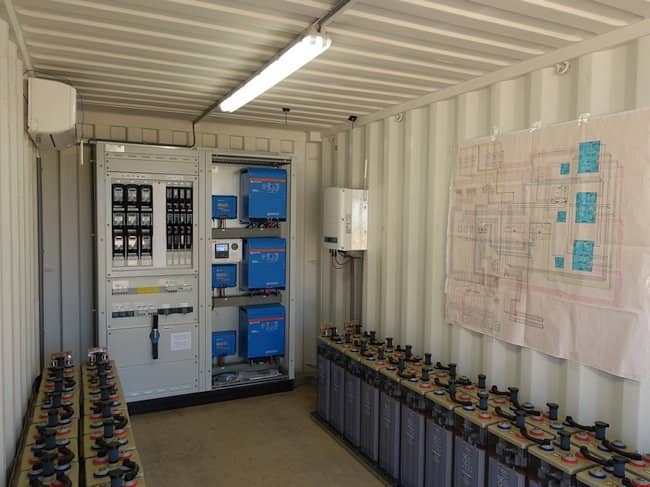
John Rushworth • 05 May 2017
Saving lives in Sierra Leone
You may recall that Matthijs wrote a blog, late last year, about building an unattended battery based energy system – in essence a containerised energy system. The idea of that blog was to serve as a primer as to what makes for the best practices when building an unattended battery based energy system . Subsequently we also asked for your own examples and ideas for such systems, in order that we could add to this knowledge base. One such example we received was about a solar powered containerised system by ERM Energies . Now I’m pleased to say that Independent Energy B.V., from Haarlem in the Netherlands, have been kind enough to respond to our request too for examples of other containerised energy systems. Here is what Symon Miedema from Independent Energy had to say about their potentially life saving system, shown in the headline image above. Lion Heart Medical Centre in Yele, Sierra Leone The medical centre was founded by the Lion Heart Foundation and commenced construction in 2010, completing the initial construction phase in 2011. The Foundation’s aim is to offer good quality and affordable healthcare to the people of Yele and its surrounding areas. Yele is located in the Gbonkolenken Chiefdom in the Tonkolili District of Sierra Leone . The aim of the Lion Heart Foundation in the coming years is to guide the centre towards sustainability and for it to become self supporting, in order to eventually hand it over to locally based management. Lion Heart Hospital The hospital part was implemented in 2012 with the construction of a ward, an operating room and a separate X-ray department and in 2013 a large maternity ward was added. The hospital now has four buildings, the first being the clinic, two examination rooms, a small laboratory, operating room, recovery room and pharmacy. The second building consists of a ward (32 beds) and an X-ray facility with the third building housing the maternity ward, lastly there is a building for the storage of medicines. In 2016 the construction of a permanent isolation ward was started. This obviously all requires a lot of energy and clearly with an unreliable grid and a manually started backup generator – this is far from ideal if an operation is in progress! Realising the critical need for reliable energy, the Lion Heart Hospital approached Independent Energy in Holland for help. Design and testing of the containerised 3 phase Solar System Independent Energy’s focus is on off-grid and solar backup projects. As they are a wholesaler and system integrator they design and manufacture in-house. At their assembly line, in the Netherlands, Independent Energy designed, built and programmed a containerised 3 phase, 30kW off-grid system consisting of 18.7 kWp PV and 2,640Ah, 48V OPZS battery storage. In choosing Victron Energy components for the build, the following were installed in the container: 3 x BlueSolar 150/85 MPPT Charge Controller 3 x 10kVA Quattro Inverter/Charger 1 x Color Control GX 1 x BMV-700 Utilising integrated PV panels on top of the container and a special insulation coating along with an air conditioning unit inside the container – the batteries and equipment are all kept at the correct temperature, which ensures a long lifetime for the system. To deal efficiently with the higher load during the daytime an AC connected SolarEdge Technologies Inc inverter was also installed. Upon completion and testing of the system in the Netherlands, all batteries, PV and mounting materials were loaded inside the container and shipped to Sierra Leone. System deployment and commissioning in Yele, Sierra Leone Upon completion the Independent Energy technical team followed the container and several weeks later installed the PV panels and connected the energy container to the hospital grid. Onsite commissioning Checking battery connections Life saving energy Since completing the installation of the system, the hospital is now fully self-supported with 24/7 power, reducing the risk to life when compared to the dangers of the power outages of the past. Power cuts and medical equipment stoppages during an operation are now a thing of the past – life saving energy indeed. Additionally Independent Energy remotely monitors the system using the free Victron Remote Management (VRM) system . If needed they can then advise the hospital technical team on how best to keep the system running optimally. Conclusion If you have any tips or comments on building your own containerised system, along with a heart warming story and some photographs – similar to that provided by Symon Miedema of Independent Energy in this blog – do let us know. John Rushworth For further information on the containerised system featured in this blog contact: Independent Energy B.V. Hendrik Figeeweg 5CNL – 2031 BJ HAARLEM Phone: +31 85 2105 400 E-mail: info@independent-energy.nl Web: www.independent-energy.nl
Justin Tyers • 25 April 2017
Off-map – Off-grid
If you own a 100 Hectare property (let’s just pretend) – so large that mains power is available only in one corner of it – you face a choice between putting up ‘telegraph poles’ which spoil the view and cost a fortune, or installing some serious off-grid power kit just where it’s needed. Alan Noble knows a bit about technology – he’s Google’s chief engineer for Australia and New Zealand. He’s also the lucky owner of a 100 hectare plot in Willunga, near Adelaide, South Australia on which he will be building a ranch over the next two years. If you live out in the sticks in an area prone to bush-fires you need to be self reliant, prepared to fight a fire yourself. It’s the policy of the grid-power provider in that region to cut power on days when the risk of a bush fire is high – yet if you rely on grid electricity, and it gets cut, how will you pump fire-fighting water, or operate the sprinkler system? For that Reason alone Alan Noble would have chosen to go off-grid. Bushfire (photo credit: bertknot ) Phil Crotty , Victron’s Sales Manager brings our attention to the interesting solution to Alan Noble’s needs: The installation was undertaken by Off-Grid Energy Australia whose Energy Storage consultant, Mark Constable, chose Zinc Bromide flow batteries for energy storage. Essentially these batteries are zinc-plating machines; during the charge-phase bromide is caused to flow over thin plastic sheets plating them with zinc, during discharge the zinc is reabsorbed. 100% cycling is possible with no loss of performance. Yet even that wasn’t the biggest attraction in this installation: The primary reason for this choice is that the temperature in the installation shed often rises to over 50°C – which could lead to thermal runaway if Lithium Batteries, for example, had been installed. The two Redflow ZCell batteries chosen are each capable of delivering 10kWh of stored energy per day; they have a long service life (expected to be in excess of 10 years); can be hibernated – even withstanding extended periods at 0% SOC …then recharged straight from PV panels back to 100% with no loss of performance; and bromide is itself a fire-retardant, making this form of energy storage particularly safe. (You may remember we hosted a guest blog from Redflow’s Simon Hackett last August .) Alan Noble with his Zinc Bromide batteries This is not the first time Victron inverters have been paired with Zinc Bromide batteries and their successful track record was the reason Mark Constable chose the Multiplus 48/5000/70-100 . Alan Noble acknowledges Victron’s investment in their products, constantly working to ensure compatibility with new technology, and he’s pleased with the inverter at the heart of his system. When his ranch is built and power demand is higher he will be adding a second identical inverter. To complete the pictur: a 6.24 kW PV array is wired to two Blue Solar MPPT 150/70 and a Color Control GX – Mr Noble being particularly keen on the facility to remotely program/monitor his system. 24 PV’s, and a view over the 100 Hectare plot. The cost of domestic-sized Zinc Bromide flow batteries doesn’t come cheap being higher than equivalent Lithium batteries – but it’s a new technology and costs are expected to fall sharply as the product is taken-up. Alan Noble sites rising electricity costs as a justification for the $40,000A price-tag of his long-lived 20kWh battery storage system; ‘in the long term it’s going to be worth it’. He’s right. Today, in times of global low-inflation we see energy companies announcing double-figure percentage price hikes – in the UK (from where I write) the seven major energy suppliers have recently announced price increases of as much as 15%. They blame wholesale prices of electricity which they say have risen by 36% in the last year. Time for householders to consider their own energy security, perhaps? The first test of Google’s Engineer’s installation came unexpectedly early – on 28th September last year, after a severe storm, which wiped out electrical supply to the 1.7 million customers in the South Australia Power region, Mr Noble’s property was unaffected. The Headline Photo is an image of Port Willunga Jetty and Rocks by Marek who generously makes it freely available on Creative Commons. It has not been altered – all blending is by the owner. Thanks Marek. Justin Tyers
Justin Tyers • 18 April 2017
Art-ificial Microclimate
April 8th saw the opening of the most ambitious exhibition ever staged by the ARoS Aarhus Art Museum in Denmark. Occupying 3000 square metres of artwork distributed on two floors it marks the beginning of a narrative about 400 years of human interaction with nature. The first part of a three-part exhibition, The Garden – End of Times, Beginning of Times comprises more than 100 artworks (paintings, installations, video art, and sculptures) from over 400 years of art history. Here at Victron Energy, one installation particularly caught our eye – or at least, the eye of Niels Kaarill , sales and technical adviser covering Scandinavia – who carried out the programming of the electrical installation which powers one of the displays. Before… During… After!! It was a work by Meg Webster – a sculptor from San Francisco who is interested in natural materials. Her installation features four troughs of plants growing under lamps whose purple light is of a spectrum which feeds and nurtures the plants providing them with the energy they need. For me, the most striking thing about Meg Webster’s installation is that it’s flooded with an almost eerie light, compelling you to look more closely at the shape and variety of the plants which grow there. It fascinates the imagination, creating a sense of transformed reality – particularly as the whole work is reflected back to you distorted by sheets of Mylar which are draped around the troughs like a warped mirror. In spite of its appearance of other-worldliness – the plants grow vigorously. Fundamental to Meg Webster’s message in her artwork is that the lights which provide life for these ‘indoor’ plants are Solar-Powered. In her work she presents the natural world around us in a way which makes us take notice. I want you to care . She says. Not part of the artwork – but also interesting to us – is that the control and storage of the solar power is managed by: EasySolar 24/3000/70 BlueSolar MPPT 150/100 Color Control GX 8 x AGM Batteries 12/165 The works presented in the ARoS Museum Exhibition tell a story about man’s interaction with nature, past, present and future – through art. It runs until September 10th. Justin Tyers
Justin Tyers • 04 April 2017
Smelling Good…
Man’s best friend is not always his best companion. It’s that canine habit of trying to blend outdoor interests of muddy fields, rotting sea-weed, and chasing furry animals through hedges with those indoor luxuries he allows himself: a good shake on the Persian rug followed by a lie-down on the soft furnishings, which cause most domestic stress. That’s why doggy parlours have become popular – even more so if the parlour can come to you . Mobile Doggy Parlour Mobile dog grooming salons only really work when they’re entirely self-contained with no need to connect to a hot water supply or plug into mains ‘hook-ups’. Trouble is, the list of on-board electrical equipment is quite long: Hair Dryer Electric Grooming table Pumps Lighting (LED) Music Vacuum cleaner Clipper Laptop/Phone charging Work space Energy Solutions – who work with K9 Mobile Grooming Supplies to design and build mobile parlours – prefer to meet that electrical demand by building their solutions around Lithium batteries : They’re substantially smaller and lighter than an equivalent gel battery, and they deliver exceptional power returns and life expectancy. In the K9 situation this allows more space for work apparatus and longer intervals between batteries needing replacing. Energy Solutions typically specify an on-board installation which comprises: 1x Victron Phoenix MultiPlus 12v 3000vA 120A 230V 1x Victron LiFePO4 Battery 12.8V/200Ah 1x Victron VE.Bus BMS 1x Victron BMV-700 Battery Monitor 1x Victron Cyrix-Li-Charge 12/24V-120A intelligent charge relay Three Lithium batteries form the power base for this installation Since it’s establishment in 1996 Energy Solutions have grown from 4 to 38 employees. By choosing quality components and paying attention to detail in the design of their off-grid systems they now work in industries as diverse as Outside Broadcast; Humanitarian Aid; Farming; Marine; and ‘Glamping’. And they’re committed to continuing their work to promote harmony between man and his best friend. Friend and Companion Justin Tyers
Justin Tyers • 27 March 2017
Cradle of Civilisation
Image: Carlos Delgado; CC-BY-SA At the same time as looking back on the region’s monumental cultural heritage (the image above is the ‘Tetrapylon’ gate to the Temple of Aphrodite) modern day Turkey embraces the future. South of the Madran mountain in Turkey’s Aegean region, near the town of Çine, a 12MW PV Solar Array is under construction. It is one of a number of sustainable energy projects being built and planned. Before the current site begins to produce electricity, during the long build phase, there is much work to do – and what better way to power the construction tools than with a smaller solar array? The district of Aydin, where construction of this installation is underway, is traditionally a mining area – in addition to Marble used to build it’s monuments the area is well known for Quartz and Amethyst. And Percussionists will be familiar with Turkish Cymbals made from alloys of Copper and Tin. They, too, have a long history – crashing Cymbals were a strident announcement of the arrival of the Janissary military bands forming the Sultan’s guard during the the Ottoman Empire of the 14th Century. Islam Varol who is Victron Energy’s Sales Manager for Turkey and Caspian – sends the attached photos of a 14kWp solar system he has installed connected to three MPPT Charge Controllers, and a 48V 1100Ah battery bank. The solar array also makes a handy car-port! Car Port At the heart of the system is the Quattro. When there is insufficient sunlight to keep up with demands the Quattro automatically starts the generator; and also – when the generator is running and demand exceeds the power available from it, the Quattro provides extra power to cover that demand, with its ‘Power Assist’ function. Quattro 48V/10000VA BlueSolar MPPT 150V/85A (2x) and 150V/70A 220Ah AGM (20x) BMV Battery Monitor These functions, among others, of the new solar system provide many advantages over the Generator-alone provision it replaces: Diesel use is dramatically reduced; Fuel deliveries to a remote area are minimised; The site generator has been significantly downsized and is now a much smaller unit; The new system provides an uninterrupted power supply. And best of all – the whole ethos of Turkey’s transitioning to clean energy is preserved by choosing renewable solutions at every stage. The region’s juxtaposition of old and new adds interest to the traveler with a philosophic turn of mind …and whilst most of us wouldn’t have the room in our gardens for the 12MW array – we’d surely be able to squeeze-in one of those Tetrapylon gates? Justin Tyers .
Justin Tyers • 24 March 2017
The Sun God, Ra
The Sun – our past, our present, our future. It was the sun, shining into one of Scotland’s beautiful glens which produced the tallest conifer in Europe – at over 64 metres. And it was the sun that nurtured the Scottish Douglas Fir we used for the latest ‘build’ project in our Straw Bale house – the stairs. It nurtured the Straw Bales and Frame too – but it’s those stairs I want to say a word or two about… Douglas Fir with Silver Birch, Scotland Building an Off-Grid house from Straw Bales at a price we can afford has taken us far from the beaten track – both in terms of learning new skills, and developing our ideas of what is possible. In the words of William Hazlett. The more you do, the more you can do. The bottom of our stairs… Those stairs – I’ve never imagined myself capable of building a flight of stairs – but when you think about it the joinery needed to make them is no more complicated than building a bookshelf! So Linda and I – in our time rich, cash poor economy – had the time to give it a go! Now that we have clean, renewable energy, sufficient to run light industrial workshop tools, I enjoyed watching The Sun power the tools that cut, planed, sanded, and screwed the stairs together. You see – it was really The Sun that built our stairs. …the bottom of our stairs. Linda and I lived with a tiny sustainable energy generation installation (wind and solar) for many years when we lived on board our boat . But now that we’ve set up a serious off-grid system on dry land, designed to fully meet our needs, we’re amazed at how easily the power we require is generated. Since the day we turned the system on in January – the dullest of months – we haven’t used our 5kVA back-up generator once. Part of the reason for that is the way we manage our energy use – and I can’t sing the praises of going ‘all LED’ for lighting highly enough – but mostly the reason is that the technology just works. Tailoring the software Phil Smith from Barden – whose office is three hours drive away – offered to guide me through all the settings we need for our installation. He talked me through the menu settings over the phone and when the basic configuration was complete, took control of our system via the Remote Management utility (VRM). When we got to the settings for remotely starting the generator according to the Battery State of Charge % , I noticed that the menu offers a second field which allows you to make alternative settings during a Quiet Period (e.g. at night). It was then that it struck me how well everything has been thought through. It doesn’t really get much better than that. When I’ve laid extra cabling to the Hot Water tank, Phil Smith is going to show me how the system can be programmed to shunt surplus PV power into our Hot Water Tank. Oops! – it just got better! (Image, Sun God Ra:by fi:Käyttäjä:kompak ; improving by User:Perhelion ) (Photograph ‘Glencoe Forest’ is by Mathieu Bouchard ) Read earlier Straw Bale blogs: Emerging from the Dark ages . / Winter Solstice . / Our off grid journey. / Introducing Justin and Linda. Read: Justin and Linda sailing to remote places .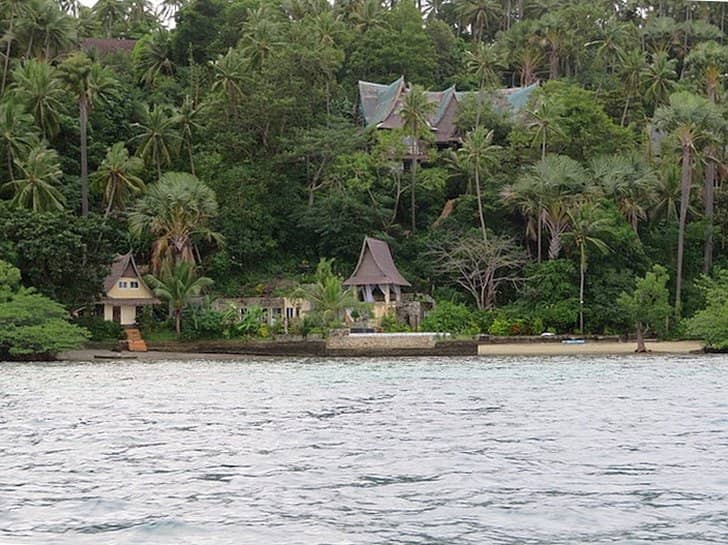
John Rushworth • 08 March 2017
Halcyon days: Moving on from diesel
Villa Halcyon is situated on Boquete Island, one of the many islands of the Philippines , in the Puerto Galera municipality. Puerto Galera is the most north-westerly municipality in the province of Oriental Mindoro, Philippines. Such locations present many challenges – primary ones being the location, installation and supply of electricity – as we’ve seen in previous blogs where Victron Energy equipment supplier PhilSolar Equipment and Trading Corporation has supplied equipment and provided technical support for clients in Palawan island and Pangatalan Island . This latest project on Boquete Island has helped the villa owners move on from the hassles of diesel fuel delivery to the onsite noisy and fuel thirsty generator – all 120 litres of it for every 24 hours of use, with all fuel being delivered by sea. There had to be a better solution. Here then is how Villa Halcyon has moved on, to less expensive, quieter and mostly diesel free days. Keeping it simple The Villa Halcyon owners contacted Danny Maesen of PhilSolar, along with design and installation specialist Patrick de Backere, to conduct a site visit and advise on the best way forward for their electricity needs. After the site visit the initial advice was simple – replace old type lightbulbs with LED lighting, old refrigerators and other energy consuming appliances with new energy friendly ones, plus newer and better electrical cabling. The result, lower fuel consumption. Naturally to reduce this further the logical step was solar. But before going into that I’ll let the following before and after photos sum up the above. Before After Solar solutions The next challenge was to find a place to mount the solar panels as the residence is situated in an oasis of exotic plants, palm and coconut trees and naturally the owners wanted to keep it that way. The decision then was taken to install the solar panels on both sides of the landing jetty, high enough above the water for materials safety and security and still easy to access for cleaning. That presented another challenge – the distance from the panels to the inverter/generator room which is around 70m from the 27 x 260W Jinko Polycrystalline panels. The solution was to mount an enclosure with the busbars as close as possible under the panels and from there to use 25mm cables to connect to the Victron MPPT Charger. A downside though is the voltage drop (which is substantial) but that was better than damaging the onshore environment. However to my mind there is also an upside, likely lower panel temperatures due to the proximity to water when compared to hot land – every cloud has a silver lining . In fact it’s always a good plan to properly quantify such matters and that can easily be done with the Victron Energy MPPT Calculator Excel sheet , read in conjunction with the excellent blog – Matching solar modules to MPPT charge controllers , by Bob Hopman . In the scenario above, by using the spreadsheet, you can easily see how cable distance and size and panel temperature affects output. In fact in one extreme case with an old friend of mine who has retired to Cyprus to grow Olives – we cooled his panels with water. The gain surprised him, but I have to say had he been using a decent MPPT and a differing combination of wiring and higher panel voltages he’d have likely done just as well. Try the sheet and surprise yourself! Don’t forget the Victron Toolkit App also, which will calculate cable size and voltage drop, along with other handy tools. Rock the boat One of the last hurdles to conquer was equipment transportation to site. It wasn’t an issue for the basics but transporting a 169 Kg lithium battery in a small boat was ‘exciting’ to say the least! Getting the Freedom Won battery there safely and installed was quite epic. It took a number of Mangyans to get this job done. The Mangyan people are the original inhabitants of Mindoro who live in the mountains around Puerto Galera. They are strong, very strong, apparently. Having said that and from what I’m told, Danny was very relieved nonetheless when the battery arrived safely onshore and was carried confidently up to the powerhouse. Victron compatibility As many of you will be aware from using a Color Control GX , there are all sorts of compatible non Victron products and batteries that integrate with Victron systems, so it was heartening to hear PhilSolar’s Danny Maesen comment: “It’s always a challenge and exciting when new products are compatible with Victron Energy products and as technology is improving every day, we decided to offer the latest new lithium storage system from South Africa – a Freedom Won 48V/300Ah lithium battery, used in combination with a Victron EasySolar 48/5000/70-100 MPPT150/100 and Color Control GX.” Typhoon To add to the anxiety of installations in such locations – and whilst the system was up and running in December 2016 – a typhoon hit the day after Christmas! It’s testament to the system that nothing got damaged and that it has continued to run well, although the generator is still an old one which has to be switched on manually. That will soon be replaced by a much smaller one with auto start/stop functionality linked into the Color Control. Whether the Typhoon has anything to do with the variable internet connection on the island I don’t know, but until such time as it is improved (which it is scheduled to be) there is little point in posting the Halcyon site link on VRM World, although there are plenty of others online now to choose from at: https://vrm.victronenergy.com/world/ If you want to include your site on VRM World see: https://www.victronenergy.com/live/vrm_portal:vrm_world Conclusion My thanks to Danny Maesen for the information and images used in this blog. Here’s hoping his next installation is a little less water and weather challenged! John Rushworth Links PhilSolar Equipment and Trading Corporation: http://philsolar.ph Danny Maesen: info@philsolar.ph Design and installation for Puerto Galera area: Patrick de Backere and his team: debackere.patrick@gmail.com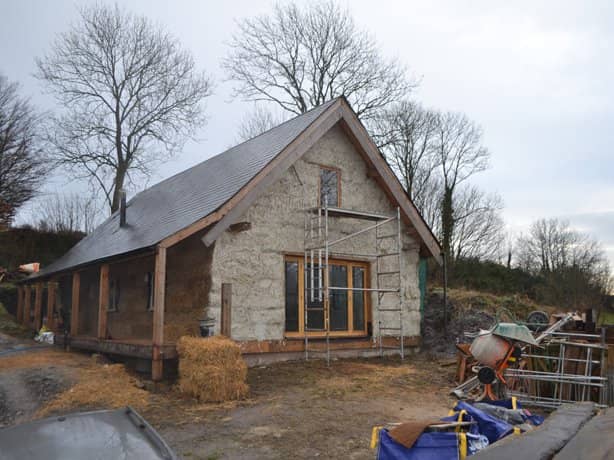
Justin Tyers • 15 February 2017
Emerging from the dark ages
Flies They don’t tell you about the flies when considering building a house using Straw Bales. Because crops are harvested in August or September, before we got our house wind and weather tight we could only watch as flies – by the thousand – swarmed in during the late autumn sunshine to settle in the nooks and crannies of our stacked-bales and made themselves comfortable for the winter. We didn’t hear a buzz out of them until last week when our friends arrived – the first people to sleep in the house-in-build. Intending to make them welcome – our friends, not the flies …one of whom is an electrical engineer who’d arrived to install our Victron off-grid kit – we lit the fires to warm the house for the first time in their honour. Within an hour flies, emerging from hibernation early in the belief that spring had arrived, began to rain down from the rafters onto their heads, into our wine glasses, or simply to hit the floor with a soft ‘Pat’ whilst we sat chatting with one hand covering our glasses. There are only so many times you can apologise. Gary got to grips quickly with the kit, designed a layout for them, and began a three-day read-the-manual, then-wire marathon. Gary, on a journey of discovery. Our solar panels were installed on the roof almost six months ago (you build the roof before the walls with Straw Bale houses) and somewhere along the way the labels had come off three of the fifteen pairs of wires arriving in the house from the roof. We identified them by shading each of three unlabelled panels (using a foam insulation board lifted onto the roof with a long stick) and when we detected a big voltage drop on the anonymous wires – we knew we’d identified the panel to which panel it belonged. The batteries have been installed under the stairs (I reinforced the floor-joists to take the 500kg weight), and the clever bits (Inverter, MPPT, Color Control) have been installed the other side of the wall, with all the cabling running within the wall void. Realising that a bit more ‘house’ would have to be built to accommodate the electronics, I quickly built the stairs ‘half-landing, and the wall: Before… batteries and wizardry where they will be installed – but nothing to attach them to. After… the batteries are under what will be a stairway ‘half-landing, wizardry is the other side of the wall. Sunburst I knew that Gary – who used to work for Cable and Wireless – was impressed with the Victron equipment because he kept emerging from the manual to tell me something else it could do! By day two he’d decided to buy himself a Victron solar installation. When he’d got everything connected there was quite a ceremony as he threw the switch. Linda and I spent the first two days running up to the Colour Control information display every time there was a sunburst. We haven’t completed the installation through to programming it, but having survived an electricity desert for almost a year it’s proved too tempting not to use the system on its factory defaults. Now we’re getting somewhere… Only if you haven’t had a bath for a year can you understand the pleasure of filling the bath with hot water – silently pumped by the inverter, and heated free of charge by the wood-fired range – and then lowering yourself into it’s steamy vapours. I mentioned in a previous blog that Linda and I lived on board a sailing boat for seven years. Everything we consumed then – water, food, electricity, diesel, firewood, wine – had to be replaced. We were fairly blasé about running out of the first five because if we ran low we could adjust our rate of consumption. Carelessness in our early sailing days taught us a lesson necessary for our comfort which our ancestors would have depended upon for their very survival: When resources are finite (and they all are) use them wisely. Eventually we became quite good at managing our resources. But in order to make good decisions you need good information. Our new solar power installation is already providing that information: For the first time in our lives we know exactly how much energy our domestic appliances consume; how much energy our solar panels are generating; and what the difference is between the two. And by looking at the weather forecast for the week ahead, we know the prospects for replacing any deficit, renewably. Flexibility We can plan our electricity use for the week ahead in the same way: On dull winter days the output from our solar panels will be limited. By looking at the long-range forecast we can plan to run the generator on a day which will be dull and at the same time take that opportunity to do the weekly washing, vacuum up the dead flies, and machine a load of timber – power from the generator all-the while topping-up the batteries. Since turning our installation on a week ago we’ve been dogged by February fog. In the next blog we’ll have completed the installation, programmed with remote help from Phil Smith at Barden. The sun will have started to shine by then. I’ll let you know how the system matches our expectations. Justin Tyers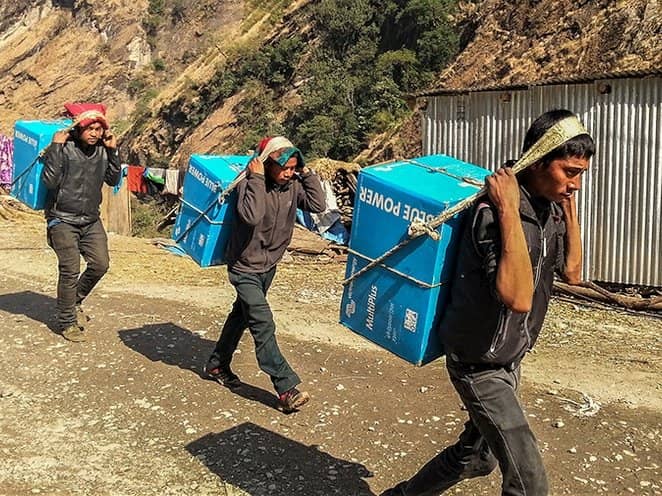
John Rushworth • 08 February 2017
Peak Power: Nepal Microgrid
I’m very much looking forward to Justin’s next blog installment ( about his Victron powered off-grid Straw Bale home ) when he plans to open the Victron boxes and carry on with equipment installation. In the meantime I just received email about another fascinating off-grid project. The clue is in the headline image. What a contrast! The Tyers family had a shiny courier van deliver all their equipment direct to their doorstep and home, where they could open the boxes amidst wood burning stove warmth. Maybe Justin & Linda have it easy after all – just imagine instead carrying 3 x 30Kg Victron Mutiplus inverter/chargers up a 2,000 m mountain before even beginning to read the manuals… That is what it takes for the aptly named, Kathmandu based company, Peak Power just to deliver some of their project equipment to site. On that breathless note I’ll let guest blogger Joel Basham, Managing Director, of Peak Power Pvt. Ltd. take up their story. John Rushworth Simigoan Simigoan is a village in the Nepal Himalaya, at around 2,000 metre s elevation. It is situated above the Tama Koshi River along the trekking route to the Gaurishankar base camp; a common route and area that is used by mountaineers to practice and train before tackling serious climbs. The locals believe that the village was established when nomadic people from the ‘Tibetan side’ crossed over into Nepal to hunt in the rich valleys, and on the way dropped some of the dried beans they carried for food. On the return they found the beans (simi) had grown into a thriving field of bean plants, so their ancestors decided to settle and establish the village (goan). Today Simigoan is a small village of Sherpa and Tamang peoples, just a few of the many ethnic groups in Nepal. Here people earn a living from guiding, climbing or hauling during the trekking season, some operate small guest houses for the tourists going in and out of the GS base camp. Others have sons and daughters abroad in countries like Qatar and UAE who work as construction workers, nannies and maids. Everyone in Simigoan is a farmer and tends their own fields. Life here is tough, with no roads; everything must be carried up and down, but it is also simple, peaceful, and beautiful. The food is naturally organic, the water is pure spring water, and there is a wonderful absence of screens and distractions, life is very eco-friendly. Earthquake Back in 2007 the village installed a micro-hydro; they connected up around 120 households to power lights and key appliances in the community, clinic and school. There is around 1.5 kilometres of aerial cable traversing the village to distribute the 3 phases everywhere. Over the years, the system has degraded and the village turns on the power only at night, as it no longer does the job that the village needs. The 2015 earthquake hit the village pretty hard, most of the buildings collapsed, the tourists stopped coming, and the only clinic in the village collapsed with the stone and concrete walls destroying the equipment. The brand new school, which had literally just been completed, collapsed during the inauguration event. Luckily everyone had gone for lunch when the earthquake struck, so no one was injured. The micro-hydro still worked, but significant repairs needed to be carried out. More than a year later, the village is getting back on its feet. People are reconstructing with new earthquake withstanding techniques, the school has been rebuilt entirely and a temporary clinic has also been rebuilt. The hydro is back on, but is providing power at night-time only. Microgrid To supplement the village electrification program, a 3 phase solar system with battery backup was planned which would feed in power during the day and support the micro-hydro at night. This system was designed and executed by Peak Power, a local renewable energy specialist and Victron Energy partner based in Kathmandu. Peak Power designed and installed a three phase inverter stack using three 5 KVA Victron Multiplus inverter/chargers along with two MPPT charge controllers, 600 Ah of AGM batteries and 7 kWp of Trina Solar PV modules. The system has a BMV-702 and Color Control GX for management and system control. Logistics & commissioning Logistically the install was challenging, everything needed to be carried from the access road and trail head to the village, which is 3 hours of non-stop up. A new building to accommodate the system components and batteries needed to be constructed, significant changes had to be made to the distribution network with new poles and overhead conductors, which were changed to rectify some design mistakes with the hydro. Now the voltage drop is within tolerances. The system was installed in early January 2017 but the official commissioning and startup happened late in January. The village now has power during the day and night by having an energy mix of solar and hydro which gives them additional resilience to catastrophic events such as extreme weather and earthquakes. With the trekking season about to kick off again for 2017 the village once again is looking forward to welcoming back guests – and we trust to more and much deserved prosperity. Joel Basham Peak Power Pvt. Ltd. , Kathmandu, Nepal. Peak Power on Facebook
Justin Tyers • 13 January 2017
Winter Solstice
Iron Age I remember late one night, years ago, walking up to Cissbury Ring, in Sussex. It’s an ancient monument with an Iron Age Hill Fort at the top containing sixty-acres of grassland kept bowling-green-short by the constant nibbling of Southdown sheep and rabbits. Back then the pubs used to ‘call time’ at ten minutes past eleven. Drink-up and shove-off! the Landlord would shout into your face in the classy establishment in which I drank. So we drank-up and were just about to shove-off when, because it was such a lovely evening, my friend and I thought we’d try to climb up to Cissbury Ring in the dark. Anything seems possible after five pints of Ruddles County. Coronary arrest When we got near the top, slipping in and out of consciousness, all we were aware of was how thin the air seemed, and how close the stars. So imagine our surprise on the summit when we stumbled into the orange glow from a huge wood fire and noticed for the first time hundreds of Druids wandering about wearing white robes …unbeknown to us it was the summer solstice. Although that evening was the slowest I’d ever climbed up the hill, it was the quickest I’d ever come down it. It was the Druids that first got me thinking about the importance of the Sun – the longest and shortest days; and the equinoxes. Now, each winter, I count the days to the Winter Solstice. I don’t wear a sheet, or howl – but it’s good to know that after 10:44 AM (London) on December 21st 2016, summer was on it’s way. December 22nd, for example, already boasted a full 3 seconds more daylight than its predecessor. Having spent my money and ordered my photovoltaic off-grid power supply equipment from Victron’s distributor Barden UK Ltd – I found it completely appropriate that they chose to deliver it on the 21st December, at 10:45 am …just as the sun was beginning its journey back to us. Just think: if I get my act together, each tomorrow for almost six months will give me slightly more free electricity than I had yesterday! Solar Panels on Straw Bale House. In my first blog I worked out how many kilowatt hours of electricity we use, in order to meet that demand with our off-grid PV system. What I discovered was that meeting the demand is no problem – but meeting it with the available budget requires thought. I drooled over the Lithium Ions; recognised the sense of investing in OPzS long life flooded tubular plate batteries, for their thousands of cycles …but, because my budget is quite limited, in the end I chose Gel on the advice of Victon distributor Phil Smith of Barden UK . The final battery choice was between Gel and AGM and Gel won on the grounds of economy, and slightly longer life. My batteries are not the Gel long life type …though having said that they’ll last until I chuck them out – and in my possession that will be a lot longer than you think. We’re installing a 48 volt / 440Ah battery bank which should last three years – five if we avoid ‘deep’ cycling. In five years’ time I’ll be rich and famous; able to splash out on a Lithium Ion battery bank …which won’t mean renewing the whole system – the MultiPlus charges both lead acid and Lithium. The kit is future-proof, you see? Reducing energy usage I’m going to try to find ways of economising on our use of energy. The biggest day-in day-out power draw we have will be the fridge-freezer. I wondered if I might reduce the power consumption by siting the fridge-freezer outdoors on the north-facing verandah? Exploring that idea online I discovered that less expensive fridge-freezers – which is bound to include ours – have only one thermostat, sited in the fridge part of the unit …the part which has its door most frequently opened and closed. The thermostat is adjusted to turn the compressor on when the temperature in the fridge rises above 3°C or 4°C. When the compressor is operating, both the fridge and freezer begin to chill. The problem with keeping the fridge-freezer outdoors is that in the winter when ambient temperature falls, the compressor comes on less frequently, and when the temperature outside falls below 4°C it doesn’t come on at all. All of that is fine for the fridge, but without the intermittent firing-up of the compressor the freezer compartment will steadily warm up from it’s norm – which will be between minus 12°C and minus 20°C – until (if the outside temperature remains at 4°C for a long period) it too has reached plus 4°C. I will try the fridge-freezer on the verandah but in the words of Dick Strawbridge – it’s not easy being ‘green’ – you have to take more responsibility than with plug-in-and-forget systems in order to obtain the most benefit. There are savings to be had – but there’s also more scope for disaster. Just thinking …I imagine our frozen produce might be better guarded against outside temperature fluctuations if we keep the freezer choc-a-bloc. Straw Bale Volunteers Every little helps… I notice that my router runs on 12 volts DC. Rather than waste energy by feeding its transformer 240 AC it occurs to me, in spite of the fact that my batteries will be configured into 48 volt banks, that it might pay to take a dedicated 12 volt power feed from all eight batteries just for my router? The losses from the router’s transformer are probably tiny, but multiplied by the number of hours in a year – 8760 – they mount up. Many a little makes a mickle …as they say up North. A helicopter hovered up the road yesterday. My neighbour, Roger, said it would. It was the electricity board looking for a line fault. Roger says he’s counted 16 power cuts this month, usually only lasting for a couple of minutes. I told him we’d only had one power cut and it started last February. Now we’ve got our off-grid kit, power cuts will be a thing of the past. In my next blog, I’ll open the boxes, and see where we go from there. I wish you a very Happy New Year. Justin Photo of Cissbury Ring courtesy of Alan Simkins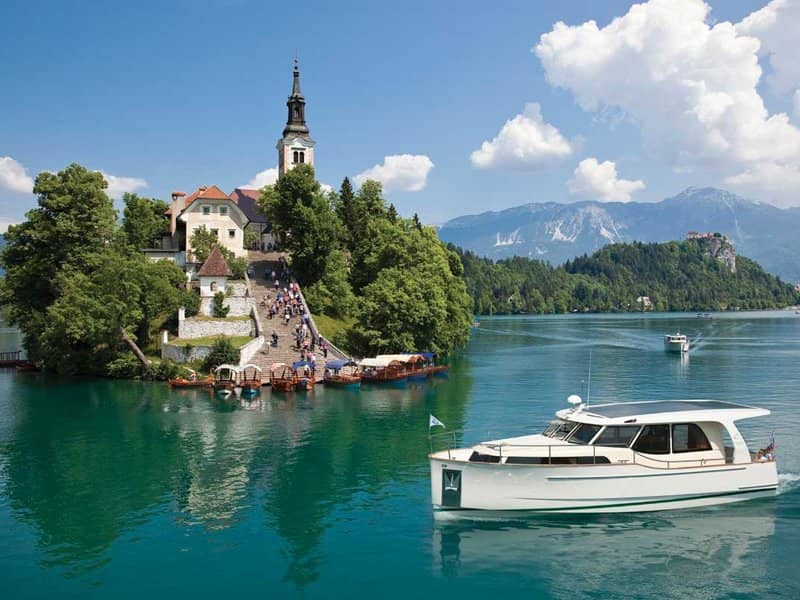
John Rushworth • 05 January 2017
Elektro Stumpfl: Enhancing hybrid marine propulsion
All the best to our readers for 2017. Here’s the first blog of this New Year in this fast evaporating decade. Like Victron Energy, Elektro Stumpfl have been in business for over 40 years. As a valued Victron distributor this enduring relationship has resulted in a high level of technical expertise across a range of markets – something you’d expect from such a long term relationship. Based in Slovenj Gradec , in northern Slovenia , Elektro Stumpfl are ideally situated in Europe to deal with the marine market, amongst other sectors. One such area (which is of particular interest to myself as my electric propulsion sailing yacht is Victron enhanced ) is hybrid marine propulsion. Marine electric propulsion There are many boating variants that utilise electric propulsion in the marine world, but before looking at Elektro Stumpfl’s expertise in that area it’s worth noting and realising – this is nothing new. It is however only in this decade that we are seeing more and more sea going leisure boats with some form of electric propulsion, due in principal to battery technology and improved power electronics. But where did it all start? If you want to read more about the history of how electric propulsion pre-dates the diesel engine and the variations in electric boat technology, here are a few pointers. Classic boat – Gustave Trouvé: Inventor of the outboard re-discovered The Electric Boat Association – Over 100 Years of Going With the Current Wikipedia – Electric boat: Electrically powered boats Hybrid technology Whilst Victron partner Oceanvolt focus primarily on electric propulsion sailing yachts, Elektro Stumpfl’s focus is in providing turnkey power electronic systems for the award winning Greenline range of hybrid motor yachts, shown in the headline image above and in the schematic and images below. Greenline Here is what Jan Podgorsek of Elektro Stumpfl has to say about their customer Greenline: “Greenline is one of the pioneers in hybrid yachts and probably number one in the world when you look at hybrid boat models and sales. We supply them with fully preconfigured kits in a modular boxed format, including wiring looms, which of course have ‘Victron inside’. For example: Chargers Inverters Battery Protect Color Control GX And more…” Conclusion As I really like all things electrically propelled, I’ve been to look at a secondhand Greenline as an option. These days I find hybrid far more appealing than pure diesel power. There’s nothing quite like the ‘silence’ of electric and hearing the wildlife ashore as you pass close by remote Scottish islands. The Greenline would have suited me and that kind of ‘sailing’ perfectly – but unfortunately it was outside my price range. I guess I’ll have to stick to jaunts on friends’ boats, my electric mountain bike and a motorhome funded from the sale of Elektra instead – Victron enhanced of course! My thanks to Elektro Stumpfl and Greenline for the information and images used in this blog. John Rushworth Links Elektro Stumpfl Greenline Elektro Stumpfl on Facebook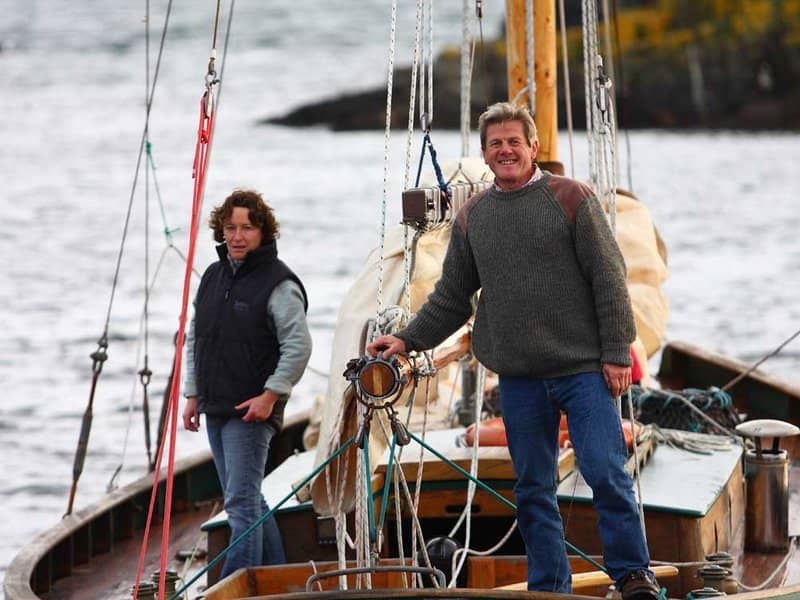
John Rushworth • 12 December 2016
Justin and Linda Tyers: Our off-grid journey
At first glance, remote power specialist Victron Energy’s offer to host a series of blogs from me – that knows nothing about electronics – seems like commercial suicide. We’re building a Straw Bale house which has a medieval-style frame – the sort where the timber joints are held together not by glue, but by wooden pegs. The 600 year-old technology used in pegged-joint timber-framing is right up my street. Our house-build is taking place within the Exmoor National Park, in the United Kingdom, and its rural location is one of the reasons we’ve decided not to connect to the National Electricity Grid. So I wondered if a blog about our amateur installation of a cutting-edge off-grid power system into a medieval-styled house might not go amiss? Medieval Frame As a prelude to this series of blogs, a bit of background about Linda, my wife, and I might be helpful: We used to live on a 15 ton wooden sailing boat which we built ourselves – starting with the trees. We’re not trained as boatbuilders – it was just one of those mad ideas you wake up with one morning. The boat build should have gone badly wrong …but it didn’t. During the 2 years and 9 months it took to build our boat part of me never really believed it would float …or at least, not the right-way-up. Our Boat We lived on board for seven years, sailing between the Celtic coasts of France, Ireland, Cornwall and Scotland – choosing to stay in remote sea lochs amid stunning wilderness landscapes; just us, the deer and the birds of prey. Being some distance from civilization taught us that what we consumed (water, electricity, food, firewood) had to be replaced, and in some places it might take up to three days to get to a tap, or to the shops, and drop anchor again back in our chosen spot. So we fell into the habit of minimising waste; and making decisions about whether our use of something was really necessary – without causing ourselves misery or hardship, of course …after all we’re only human. Taking responsibility for what we consumed wasn’t as tedious as we imagined it might be, and we discovered what many people already know – less is often more. Not only that but we saved an extraordinary amount of money by cutting down on waste, which meant we didn’t have to work so hard, and so could spend more time roaming around. As Benjamin Franklin [American Statesman] said: Few people realise what income there is in economy. I’ll be honest, one of the things we were looking forward to when we lived in a house again was ‘real’ electricity …at the flick of a switch. But when the electricity board explained that a connection to the grid, underground, through a field we don’t own would cost around £7,000 – followed of course by monthly bills, we decided that we had sufficient experience of ‘sustainable’ living to spend the money instead on generating our own Photo-voltaic based electricity. I’m not at all ashamed of my lack of knowledge of electronics – I put it down instead to a long standing medical-condition which, funnily enough, my Physics tutor diagnosed back in my school days. The class was discussing Faraday, Ohms law and how many volts you got if you stuck an iron rod into a jar of Pineapple juice whilst I dreamily busied myself by making a dead short between the positive and negative terminals of a traction battery on the bench in front of me using the metal clip of my fountain pen …to see if anything would happen. As I fiddled I was sure I heard Mr. McCloud, our tutor, pose a question to the class which I could answer – and found as I raised my hand that I alone could answer it. Seeing that mine was the only hand he reluctantly picked me, and my answer, when I had delivered it, was followed by a long silence. Mr. McCloud fixed his eyes on me and leant heavily against his desk using both arms for support, his head hanging low between them like a Galapagos tortoise. That’s when he made his contribution to Medical Science …as soon as he had regained the power of speech he gave me my diagnosis: Tyers, he said; you are a congenital idiot. And at that moment my pen burst into flames. What I am ashamed of is that I’m not very ‘green’. Whenever I hear of someone building themselves a Straw Bale house part of me dies. I imagine they must be eco-warriors, born to save the planet. The very last thing I thought was that one day I would build one. But our reasons for building a house from straw, and our reasons for going ‘off-grid’ are the same – we want to take back control …of our bills. We’re none of us getting any younger – as my Gran said just before she died – and the treadmill I’m on …working by day to pay bills at night seems if anything to be speeding up, whilst at the same time my stamina to keep treading is in decline. So we’ve decided to step off …do the full Monty: Private water supply, Private sewerage; Hot Water fired by the fallen wood we pick up on our country walks (surreptitiously assisted by our chain saw); and our own Electricity from photo-voltaic panels. We’re building our house near Hinkley Point – the Nuclear Power Station which has just received permission to construct a new reactor. If I remember correctly the Government has agreed to buy electricity from Hinkley for 50p per unit when it’s operational – in 12 or so years’ time. That’s nearly 4 x today’s cost-per-unit. So there’s a hint – if ever I heard one – that energy will soon be much more expensive. Imagine, with our Goblin Whisper vacuum cleaner consuming 1400 Watts, it’ll cost us 75 pence every time we want to clean the house! Which admittedly isn’t very often. This evening – right now, I mean – I’m writing these words on a lap-top …there are five hours remaining on the battery. When it needs recharging, or if I want to access the internet at any time, I have to start our 5kVA diesel generator. And during these long winter’s nights when Linda cooks our supper, she cooks – and we eat – by candle light. We’re usually in bed by 8:30, then we read for a couple of hours using head torches. So we’re quite looking forward to having electricity. We haven’t chosen any of the electronic kit which will provide our house with 240 AC electricity except for the 15 Photovoltaic panels which I installed on the roof a couple of months ago. If I was to go in the house right now I’d see their wires dangling idly down, waiting to provide us with 3900 watts of oomph. Because I’m a novice I’m not even sure how many cups of tea I’ll get for my 3900 watts – and of course I’m afraid of making a mistake with the components I choose for our off-grid system …buying the wrong gauge wires, wasting precious money on stuff I don’t need, or buying stuff that is just ‘wrong’ for my circumstance. Whilst researching off-grid systems a number of people recommended Victron Energy kit for its quality. It’s time to discover, using the tools and assistance available from Victron’s website and employees and agents, how easy or hard it is for the lay-man (who has no interest in becoming an expert) to choose the appropriate equipment for his or her own lifestyle. Step one when designing your off-grid system everybody tells me, is to make an inventory of your electricity-consuming appliances, work out how many hours-per-day they’re in-use, and from that information derive your daily electricity requirement. Of course, some appliances don’t get used every day – our Breville sandwich toaster, for example, didn’t come out of its box until the guarantee had run out, and when I opened it I found a toasted sandwich in it – so I must have used it at some stage. Unless it was an ex-demonstration model. But I thought it might be wise to calculate our electricity requirement for one of those busy spring-cleaning sort of days when all is right with the world and the dust seems to get blown off every appliance you own. If we install a system which can look after us through the madness of a top-to-bottom spring clean of the house and its occupants, then we won’t be forever running to the controls to see how much power we’ve got left on our couch-potato days. Appliance Power W Daily energy Wh Comments Fridge / Freezer 33 800 Microwave 800 66 Kenwood Chef 600 100 Healthy-Living Vegetable Juicer 1200W 0 0 Annual consumption, also nil. Deep Fat Fryer 1200 10GW Gigawatts. Washing Machine 2000 500 Every few days. Dishwasher 2000 1000 Every other day. Computer 150 1200 Lighting 150 450 All LED. UV water treatment 40 480 I know, you’re meant to leave them on all day. Water Pump 1100 100 Immersion Heater 3000 0 Summer use, only as an excess solar power dump. Iron 1000 250 ‘Hoover’ 1400 1400 Hi fi 60 120 Wi fi Broadband Router 8 192 24/7 for data logging? Kettle 3000 0 Emergency use if we run out of gas and the wood-burning range isn’t alight. Hair Dryer 1500 150 Total 6818 Wh daily After living on the boat we lived on a Hebridean Island for eight years. No one comes to read your electricity meter if you live on a Hebridean Island – it’s not worth the rough ferry crossing just to read meters in a handful of houses. What the Scottish energy providers do instead is quite clever: They post you an ‘Estimated’ bill which is so exorbitant that as soon as you open the envelope you faint clean-away on your doorstep …once you’ve been ‘brought round’ with smelling salts and have been helped back to your feet you run – yes run! – to the meter cupboard to read the meter for them. At length you become familiar with your power usage …ours, I noticed, as I shone a torch through the cobwebs was about 16.5 kWh/day. My inventory (above) for our projected off-grid usage is less than half the energy we know we used last time we lived in a house – surely the inventory is wrong? Partly the difference is explained by the fact that in the Hebrides we were ‘all electric’ …and although we made fairly stingy use of our storage heaters, we used a ceramic hob to fry our chops, an electric oven to bake plump loaves, and boiled an electric kettle to make my 20 cups of tea each day …and when we bathed in our freezing cold blockhouse bathroom we bathed in water which was heated electrically. And another thing, in the south of the United Kingdom dark winter’s nights begin around 5 in the afternoon and end shortly after 7 the following morning; in the Hebrides night-time begins in late October and ends in March. Over the next week or two I shall be choosing and ordering the components for our off grid system – then I’ll write again to tell you what we’ve got …how we’re getting on with wiring it all up …and all the interesting discoveries we’re making as we prepare to power our house from the sun. Now it’s turned colder we’re sleeping in the workshop where we’ve installed a wood-burning stove which is throwing a cheerful red glow over the dog, lying at me feet. On the table a solitary candle burns bright. Linda has just put down her book and turned her head torch off …it must be time for bed. If you’re considering installing your own system, follow our journey. And please leave a comment …or advice …or get in touch just to let me know whereabouts in the world you are. I like knowing where people are. P.S. I meant to tell you – I do have a plan B …if it all goes belly-up we’re going to cut niches in our medieval frame to support torches which we’ll make from old rags dipped in tallow. Justin Tyers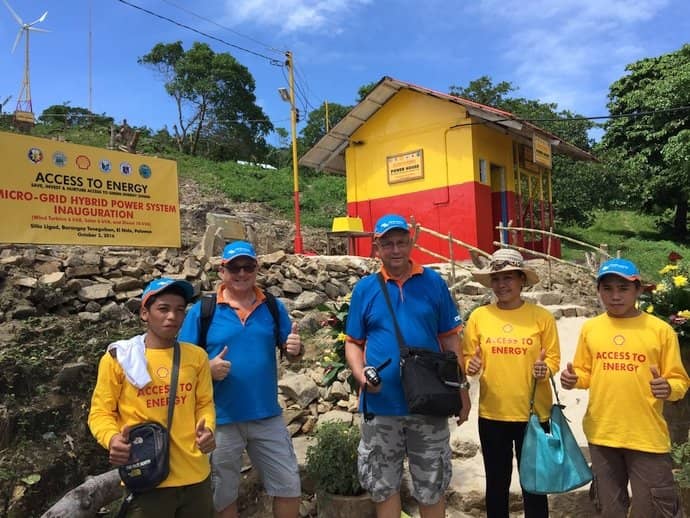
John Rushworth • 05 December 2016
Access to Energy: A Shell Foundation, Victron Energy microgrid
Palawan island has been chosen several times as the most beautiful island in the world. Not surprising really as the Province of Palawan is an archipelago in the Philippines which includes two UNESCO World Heritage Sites plus breathtaking endless white beaches, wild forests and rugged mountains – all of a pure and untouched nature. But, even beauty can have a downside. Powerless Thousands of people still live in such areas where there is no access to electricity and the likelihood of any utility grid connection is aeons away. The Shell Foundation however set about changing that with the advent of a microgrid in Palawan , ably supported by products from Victron Energy. Whilst the Shell Foundation Access to Energy project has been involved with microgrids for some time, this is the first microgrid with Victron Energy in the Philippines – ensuring power for the powerless became a reality. The inauguration of this initial project, in the North of Palawan, took place on October 2nd 2016. Here’s the story of how that came about. Village Microgrid Ligad is a small beach village miles away from any mains electricity grid in Barangay Tineguiban, part of the beautiful El Nido area. The Shell Foundation chose to electrify this village by building a microgrid to ensure every home would have basic access to electricity. For the microgrid design and installation Shell contracted JK Solar Power House, who are based in Puerto Princesa . For the supply of the off-grid system Josie and Koos Mulder (the J&K in the design and installation company name) chose PhilSolar Equipment and Trading Corporation, who are the the official distributors and importers for Victron Energy products in the Philippines. Logistical challenges The logistical challenges were enormous as many tons of materials had to be transported from Manila to Puerto Princesa, then it was an 8 to 10 hour truck drive, partially over dirt roads. After that it was from Teneguiban to Ligad village on small bangka outrigger boats. No mean feat! When you start to see what was transported it puts the challenges into perspective. 70 electricity posts with street lights were placed around the village. The Naier 5kW wind turbine was installed on a hill above the village. A special powerhouse for the Victron Energy equipment was constructed, along with the adjacent standby diesel generator plant room. The 7.8kWp solar array was mounted on the Ligad elementary school building. Each home has their own kWh electricity meter and power outlets. The meters are intentional as many people will add extra appliances over time; hence the Ligad Electricity Association (LEA) has been formed to control and manage this. Plus of course the electricity needs to be paid for by the inhabitants, in order to have the funds to maintain this marvellous microgrid system. Victron Pay As You Go Whilst the Ligad community now have their own microgrid and their own arrangements to ensure ongoing funding through PAYG energy usage, Victron Energy also have a range of similar systems available to distributors and system integrators that are suitable for solar home systems and mini-grids – which can be used in a similar PAYG affordable manner. You can learn more about these systems here: https://www.victronenergy.com/markets/payg Victron Powerhouse A the heart of the Ligad system is a powerful 10kVA Victron Energy Quattro inverter/charger and two 150V/85A MPPT Solar Charge Controllers . These, along with the 48V/1,110 Ah battery bank, are all monitored and controlled by a BMV-700 Battery monitor and a Color Control GX (CCGX). The CCGX logs all the data to its Micro SD card which can (if needed) be taken away and used for analysis once the data has been uploaded to the VRM portal . This method is because in this remote area there is no internet or mobile phone access. Usually of course the CCGX would be connected in real time via an appropriate internet router to the VRM portal, where information monitoring and even remote control of the system could be done in real time. Smiles all round If the inauguration event smiles are anything to go by, this project is already a major success! Hitting the ceremonial power button, with Danny Maesen (PhilSolar) on the left and Koos Mulder (JK Solar) on the right. Marvi Trudeau, a principal from the Shell Foundation, unveils the commemorative plaque. Celebrating Access to Energy. The Access to Energy smile. The future It seems that the project has been a great hit as a second one (larger 15.6kWp solar array) is already underway with the contract having been awarded to JK Solar Power House. We have also heard that Victron products will once again be supplied by Victron distributor PhilSolar Equipment and Trading Corporation. More on this next project as the news rolls in… Conclusion What a delight to see power being brought to such communities and who better to sum up than Danny Maesen of PhilSolar, who said: “We are very proud to have helped in bringing this project to fruition and have so enjoyed seeing the happiness this has brought to the Ligad community, both young and old. As a result we trust education will improve, as we hope will the quality of life. Hopefully this all means more children will get better access to study and find better jobs in the future. A big thank you must go to Koos and Josie Mulder of JK Solar Power House for their immense efforts in bringing this project to a successful conclusion.” My own thanks to all the parties mentioned above for the information and images used in this blog. John Rushworth For further information see: Shell Foundation http://www.shellfoundation.org/Our-Focus/Access-To-Energy JK Solar Power House https://www.facebook.com/JKSolarPowerHouse Contact Koos Mulder: koossolarpowerhouse@gmail.com PhilSolar Equipment and Trading Corporation http://philsolar.ph Contact Danny Maesen: info@philsolar.ph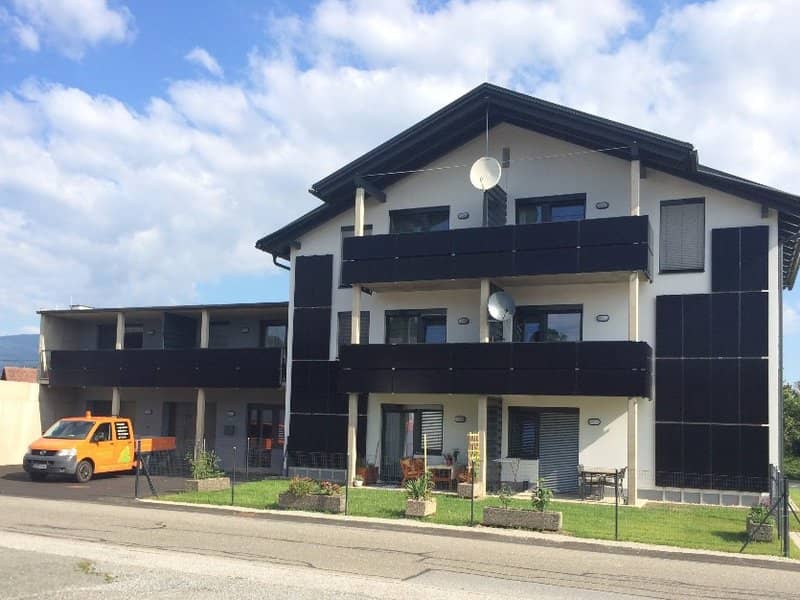
John Rushworth • 10 November 2016
BlueSky Energy: Energy Storage systems & compatibility
In recent blogs you will have noticed an ever increasing range of battery makes and technologies that are catered for and which integrate well with Victron Energy products. Examples of such products are Victron Quattros, Multis and MPPT solar charge controllers. An interesting compatible battery technology is Aquion Energy’s Aqueous Hybrid Ion (AHI™) chemistry: Aquion – safe and sustainable saltwater batteries The Aquion AHI batteries are 48V, and according to the manufacturer the safest batteries in the world; non-flammable, non-explosive, non-hazardous, and touch-safe. There are no heavy metals or toxic chemicals involved, making them very suitable for Energy Storage. Details of Victron Energy & Aquion AHI products and their compatibility are listed here: https://www.victronenergy.com/live/battery_compatibility:aquion_ahi Why add energy storage to a grid connected solar system? Countries around the world have many differing reasons and incentives to add Energy Storage Systems. This might be due to an unreliable grid, the opportunity to feed back to the grid with some countries being worthwhile financially to do so and others not. It can, therefore, make sense to utilise as much solar power as possible locally and not feedback or indeed draw from the grid, due to solar becoming more cost effective and more stable than grid energy. Consequently, if there is an excess of solar power it can effectively be wasted if not stored and used locally, rather than being fed back to the grid. This, of course, is where an Energy Storage System comes in. Two Energy Storage integration examples In considering the above we recently heard from BlueSky Energy, an Austrian company that have carried out various installations, integrating Aquion batteries with Victron Energy products. Here are two such examples. Apartment building in Frauental This 8 apartment building is in Frauental in the Austrian region of Styria and it is shown in the headline image of this blog, where you can see that the PV system is placed on the roof, the facade, and even the balconies of the building. This project is a showpiece in terms of self-consumption and increased self-sufficiency. The installed 30kWp photovoltaic system generates enough energy to heat and produce hot water for all of the 8 apartments, as well as enough to charge the Aquion batteries to ensure that all consumers are supplied by the battery stored solar power during the night hours. The project was implemented by BlueSky Energy and their partner Langmann Consulting. The energy storage system comprises: 3 x Victron MultiPlus inverters for 3-phase operation. Victron Color Control GX for system monitoring. DC fused switchgear. 12 x Aquion S30 batteries with a power of 8.1kWp and a storage capacity from 21.6 to 25.9 kWh (depending on charge/discharge power). Family home The installation shown below is a family home energy storage system in Groß St. Florian in the Steiermark region of Austria. Initially, this was a grid connected solar system but recently energy storage was added. The reasons for doing so become apparent when we look at the graphs below, taken from Victron’s VRM portal . Solar yield The graph in the example below is taken from this home system, showing solar energy production or yield and where that goes over a 24hr period, in 2 hour time slots. You’ll note that around a combined 92% of the yield is used directly by the home (yellow bars) and stored in the batteries (blue bars) for night-time use or times of low solar yield. Energy usage or home self-consumption and energy storage are therefore maximised, with only around 8% being fed back to the grid for the reasons discussed previously – such as poor grid feed-in rates or tariffs for example. Energy consumption In this graph below we can clearly see the benefits of adding an energy storage system. All the blue in the bars show that the house has been powered from the batteries. The self-sufficiency level of the house has increased to 70%, whereas without an energy storage system it would only be around 35%: the hours where PV production overlaps with demand. All in all the above graphs demonstrate very good reasons for installing this home energy storage system, the components of which are shown below. The energy storage system comprises: 3 x Victron MultiPlus inverters for 3-phase operation. Switching device so that the PV system continues to operate during a power failure. DC Protection & Combiner Box. 5 x Aquion S30 batteries with a power of 4kWp and a storage capacity of 8 to 13.2 kWh (depending on charge/discharge power). Conclusion It’s good to see more and more Victron Energy products being used with differing battery energy storage technologies, along with confirmed product compatibility on both sides. Our thanks to Wolfgang Burgstaller of BlueSky Energy for the information and images used in this blog. To learn more about BlueSky and what they can do for you contact: BlueSky Energy Fornacher Straße 12 4870 Vöcklamarkt Austria Tel: +43 (0) 720 0101 88 Email: office@bluesky-energy.eu Web: www.bluesky-energy.eu Facebook: www.facebook.com/blueskyenergy.eu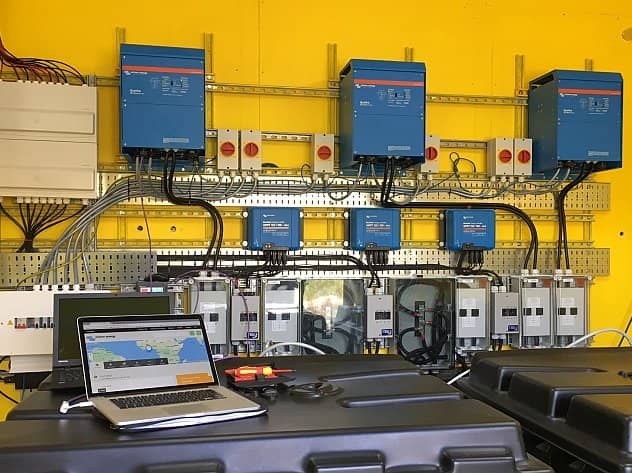
John Rushworth • 12 October 2016
Solar Plants Ltd: Visionary classroom?
Surely there is no better learning environment than a building which generates, stores and releases solar energy within the fabric of that building; a building that is its own power station utilising advanced materials and concepts. A visionary classroom – isn’t that the kind of place you’d like your offspring to be educated in? Partners Such a place now exists. This Active Classroom, as it is known, is at Swansea University’s SPECIFIC Innovation and Knowledge Centre in Wales. SPECIFIC is an academic and industrial consortium led by Swansea University with BASF, NSG Pilkington, Tata Steel and Cardiff University as principal strategic partners. But it takes more than major companies and academic institutions to bring a project to fruition. This is where the additional wide range of business and academic partners come in. Victron Energy connections Victron Energy are delighted that Solar Plants Ltd (Victron installers) and Wind & Sun Ltd (Victron distributors) are key partners in this project and it’s thanks to Ian Hewson of Solar Plants that we are aware of this project. Solar Plants Ltd is an award winning family business that has quickly grown into one of UK’s largest independent domestic and commercial renewables installers, employing nearly 100 staff from three offices. Ian Hewson, Off-grid Engineer for Solar Plants, said: “We are proud to be involved with this game-changing project, this classroom challenges commercial property design norms, and if successful will help shape the way buildings are designed going forward. Working with engineering giants TATA Steel and innovators SPECIFIC has been an incredible experience and has helped Solar Plants develop market leading knowledge in this new technology.” The Active Classroom The Active Classroom provides teaching space and a laboratory for Swansea University students at the new Bay Campus, as well as a building-scale development facility for SPECIFIC and its industry partners. The building includes a solar air collector on the south façade which draws solar-heated air through tiny perforations to provide heating and warm water, whilst computers regulate the output according to weather forecasts and the number of people in the classroom. Electricity generated by building integrated photovoltaic panels (which are laminated directly onto the roof covering) power an electrically heated floor coating. Architect Jo Morgan said: “The SPECIFIC national innovation centre is very much focusing on the scale-up of research from the lab to buildings. Some of the technologies are new – such as the solar panels embedded onto the steel cladding – but much of our work is about integrating existing technologies into buildings in the most efficient ways and working with collaborative companies to help us to do this.” Victron Energy equipment Solar Plants’ off-grid team were involved with the design and installation of the solar to storage connectivity, working with Victron Energy products and 60 kWh of Aquion Salt Water battery technology. 3 x Quattro 8000VA 48V inverter/chargers 3 x Bluesolar MPPT 100A/150V charge controllers 1 x Victron Colour Control GX / Monitored on VRM portal From left to right: Ian Hewson (Solar Plants Ltd), Richard Lewis (SPECIFIC), Daniel Crossland (Solar Plants Ltd), James Ford (Wind & Sun) Conclusion In researching this blog it soon became clear that SPECIFIC and their partners have created something very special. Their reach and diversity are quite incredible, so if you’d like to learn more then a good place to start is here: http://www.specific.eu.com/ However, as pointed out earlier it takes more than one organisation to make things happen. From a Victron Energy point of view many thanks to Ian Hewson of Solar Plants for making us aware of this project. By the same token, Ian would like to thank the following. Joanna, Richard, Bruce & Ben from the SPECIFIC team James Ford from Wind & Sun Daniel Crossland of Solar Plants Dr. Diana Montgomery, Chief Executive, SPECIFIC If you too have an interesting project utilising Victron Energy products – do let us know. John Rushworth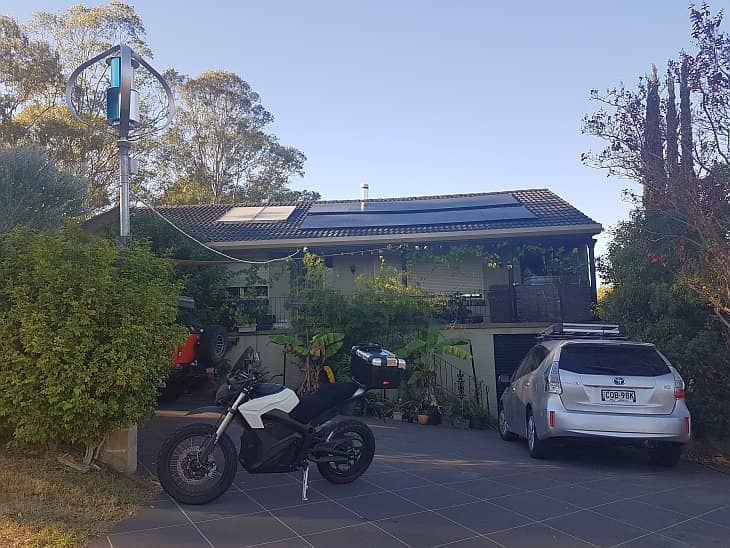
John Rushworth • 06 October 2016
The life electric: Trials, tribulations and riding on sunshine
Urban Tilba is the name of the Haydon family home in the middle of Sydney, Australia; a home with the desire to be a demonstration site for sustainable living and grid independence within the city. That was the original plan. However, plans have a habit of working against you sometimes – even if they work out in the end. There’s a moral to this story though; you be the judge. All is not as it seems The Haydons ordered what they thought was a quality solar system. Nickel-Iron batteries CIGS solar panels Victron MPPT solar charge controller Victron inverter/charger Everything turned up except the Victron inverter/charger. In its place was another make, which the salesman said was ‘just as good’. Reassured Mike Haydon set about installing and commissioning the system. He freely admits it was a terrible experience as the non-Victron inverter/charger was not doing what he was told it would do and the system was not performing as it was claimed it would on paper. After months of testing and frustration, Mike discovered the inverter/charger was using more than 50% of their daily energy production! An additional problem was the inverter/charger low voltage setting, which was not low enough for the Nickel Iron battery technology. Mike decided the best way to solve the problem (in the short term) was to add more solar panels until the inverter/charger issue was resolved. Out with the old After months of negotiating with the salesman, Mike finally got the company to supply the Victron Multiplus which had been ordered in the first place. After swapping out for the new Victron unit (shown above) here’s what Mike had to say: “ Life changed forever at that point, what a difference! The Victron Multiplus has a very wide voltage range of 9.3 – 17 volts for the 12-volt system, which then allowed us full access to the battery capacity. Added to that the inverter itself was no longer consuming all the energy just to run the lights, as it had with the other make. From struggling to keep the lights on each week, we then had so much extra energy we needed to find a way to use it – so we purchased an electric motorcycle. ” Riding on sunshine The Haydons now have around an extra 5-10 kWhs per day so Mike’s Zero electric motorcycle (shown in the headline image above) is used to store that extra energy when the domestic batteries are full, rather than feeding it back to the grid. Now the Zero (and Mike!) can travel around 400 kilometres per week purely from their home generated solar energy. In fact, as all that riding is powered by the sun maybe Mike’s Zero should be painted yellow, just like this 2016 Zero S model shown below… System components and testing The Haydon home is a normal house which is full of energy efficient appliances plus air conditioning, a dishwasher and even an electric welding unit which can run from the system. When going off the grid these latter items are often run from a generator, but in this case the house runs through the Victron MultiPlus with the exception of one aircon unit and the electric oven which are connected directly to the mains grid. The system (at present) has 5kWp of CIGS solar panels on the roof, two Midnite solar charge controllers, a 3,000VA Victron Multiplus inverter/charger and 17 kWh of storage in the Nickel-Iron batteries. Mike has been testing numerous products in the house to see which products work the best with the Nickel-Iron Batteries and so far he’s satisfied that: “ The Victron products have outperformed the rest.” Other Victron products Mike has been experimenting with include a Victron MPPT solar charge controller, a Color Control GX and a BMV-702 battery monitor with Bluetooth Smart dongle. In addition to the Nickel-Iron batteries there is a further 10.4 kWh of energy storage in the Zero motorcycle. Mike says: “ It’s a great feeling to travel around on the electric Zero, it’s a whole new level of the feeling of energy independence .” Limits and upgrades This system has its limits and requires to be organised when using heavy loads at the same time, but it works just fine for the family right now. They only use 365 kWh a year from the grid and that is mainly to charge the electric Zero motorcycle when the weather is bad. Mike’s plan is to upgrade his system to 24V in the not too distant future using a Victron 5000VA Quatro and two 150/100 Victorn MPPTs. Once this upgrade is done, the Haydons plan not to use any energy from the grid in 2017. Conclusion It’s great to see that Victron Energy products have proved the way forward for Mike and his family. From my own point of view as an avid motorcyclist, it’s also great to see an electric motorcycle powered via solar. As much as I’d like an electric motorcycle; until I’ve sold my electric propulsion sailing yacht I’ll have to stick with my electric mountain bicycle – but thanks to Mike he’s got me thinking about autonomous Victron solar charging for that! Maybe something similar to that which I wrote about in an earlier blog – Sunwind Design: Autonomous Solar Charging . If, like the Haydons, you have an interesting story or idea as a user of Victron Energy products – do let us know. John Rushworth Credits & links Thanks to Mike Haydon for the images and information used in this blog, also Zero Motorcycles for the use of their press image. For videos and links to Mike’s home and projects do take a look at: http://www.24hoursolarpower.com/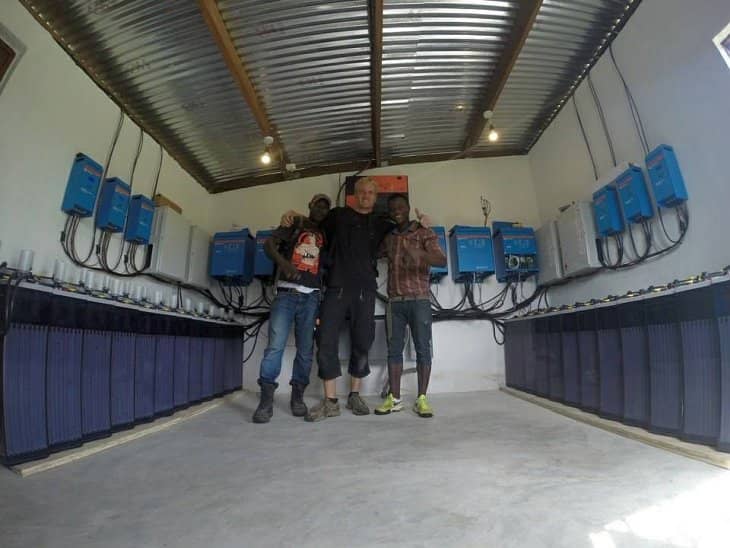
John Rushworth • 29 September 2016
Sierra Leone: Masanga Hospital Rehabilitation Project (MHRP)
Masanga Hospital, Tonkolili District Coordinates: 8°44’56.3″N 11°50’17.8″W The Masanga Hospital Rehabilitation Project (MHRP) is in Sierra Leone. The project has been driven by the Danish voluntary organisation Masanga DK , with the hospital solar system itself having been built by Thorbjørn Villesen of ABK Solar Tech and an on-site trained Sierra Leonean team. System facts at a glance The solar system supplies power to all of the hospital wards, laboratory, and health staff living quarters. System type: Off-grid + Minigrid Electricity output: 3 phase, 70kW (continuous), 140kW (peak) 6 x Quattro 48/8000 Solar capacity: 35 kWp 6 x MPPT 150/85 solar charge controllers Battery capacity: 120 kWh (wet type solar batteries) In operation since: July 2015 Estimated power produced to date: 52,000 kWh About the solar system It was a long-standing wish for MHRP to become a carbon neutral hospital by having as little a negative impact on the surrounding environment. Since the hospital is completely cut off from the sparse national grid, it was previously completely dependent on costly power from diesel generators. With this in mind Thorbjørn Villesen, Danish energy Engineer and PhD in sustainable energy solutions (now owns and runs the company ABK Solar Tech in Freetown) started fundraising for the establishment of a large solar system for Masanga in 2012. With the help of two large donors, the project was started in 2014 but was then prematurely put on hold due to the Ebola outbreak sweeping across the country. In 2015 the solar system was finally finished and has since been powering the hospital 24/7. The solar system was built with minimal resources. Foundations were dug by hand. Sand for the foundations was sourced at the local river. Mounting racks were built from scratch. A makeshift concrete shed was constructed to hold the batteries and inverters and is shown in this blog headline image. Double metal sheet roofing effectively keeps out the fierce heat, and passive circulation efficiently keeps the temperature low in the battery house. The solar system is an off-grid 35 kWp solar park, with 6 Victron MPPT 150/85 solar chargers and an AC coupled Fronius Symo 10.0-3-M grid inverter. The 120 kWh wet battery provides power for the smaller standby needs of the hospital through the night. 6 Victron Quattro 48/8000/110 inverters are set up for three-phase parallel operation and provide plenty of power to cover even the peak loads of the hospital’s autoclaves and waste disposal units. The original generators are used for emergency backup and controlled automatically by the Victron Color Control GX and BMW-702. The solar system is amongst the 5 largest solar systems currently installed in Sierra Leone. Project background MHRP is an agreement between two European NGOs (Masanga DK and Sierra Leonean Adventists Abroad) and the Sierra Leonean Ministry of Health and Sanitation (MoHS), which was established in 2006 to rehabilitate and manage Masanga Hospital for a twenty-year consecutive period. Today, three other NGOs (CapaCare, Masanga UK and Masanga NL) support the original organisations with running costs and expertise. MHRP is a three-legged project which comprises the provision of health care services in the rural district of Tonikolilli, health care education and entrepreneurship. As such the medical diagnostics and treatments provided at the hospital serve as a teaching platform for the many students enrolled at the facility. Businesses within the project are gathered under the umbrella of Masanga Hospital Sustainability Enterprises and are established within the project to create local growth, jobs and development as well as co-financing the project activities. MHRP’s mission is to manage the hospital and to support the transformation of this former leprosy hospital into a governmental medical training centre of excellence, with a strong focus on surgical and nursing capacity building. The intention and exit strategy is to hand over a well-functioning facility to the Ministry of Health and Sanitation that is self-sustaining and has essential spearhead functions which will guarantee its continued necessity and existence, after the change of management. Masanga hospital In 1964 the Government of Sierra Leone established Masanga Leprosy hospital in Tonkolili District. Soon after opening, the hospital developed an international reputation for treating Leprosy; it owes its isolated jungle location partly to the fear that leprosy could engender half a century ago. Until 1997 the Seven Day Adventist Church ran the hospital as Leprosy institute. During the civil unrest, the hospital was occupied and heavily damaged by the rebels. In 2006 the hospital re-opened with the support of the Danish organisation, Association Friends of Masanga (AFOM) and the English based Sierra Leonean Adventists Abroad (SLAA). The two organisations signed a memorandum of understanding (MoU) with the GoSL on Thursday the 13 th July 2006. In the MoU both NGO’s were held responsible to rehabilitate and manage Masanga Hospital. Since then, permanent and rotating staff – both national and expatriate – have been working to do exactly this. Since 2006 Masanga Hospital has provided medical care for nearly 300,000 patients. The former leprosy health facility has now been transformed into a 100-bed general hospital and established itself as a teaching platform to build the medical expertise of health care workers. Tonkolilli District College of Health Sciences The attached college, Tonkolili District College of Health Sciences (TDCHS), has enrolled nearly 300 State Enrolled Community Health Nurse (SECHN) students since the opening in 2012 and the first class graduation in October 2015. Furthermore, Masanga Hospital provides the first six months of Norwegian’s CapaCare two years task shift training program of medical doctors and community health officers (CHO’s) into surgically trained CHO’s. Masanga Hospital is the main training site for this innovative, highly needed – and rewarding – surgical training program. Currently, TDCHS is developing the first national curriculum for training physiotherapists. It is also the ambition to train State Registered Nurses, midwives, lab technicians and hospital administrators. Masanga Hospital Sustainability Enterprises Masanga Hospital Sustainability Enterprises comprises of a bike shop, a tailor shop, a piggery and agriculture. These enterprises form alliances with foreign partners and product from the tailor shop are sold in Europe as fair trade. Besides creating jobs locally, the surplus generated by MHSE co-finances the running costs of the hospital. Conclusion It’s always great to be associated with laudable professional projects such as this. Thanks to Niels Kaarill , who is the Victron area sales manager for Scandinavia , for making me aware of this project. Thanks also to the enchantingly nicknamed ‘Professor Solar’ (Thorbjørn Villesen of ABK Solar Tech) for the images and information used in this blog. And lastly and not least Masanga DK, without whom this project would not have even got started. John Rushworth Project link: Masanga DK – http://www.masanga.dk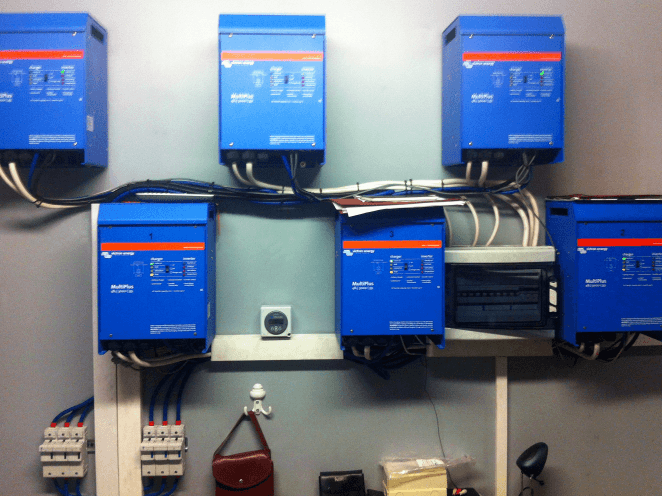
John Rushworth • 12 September 2016
TRITEC & TUGE Energia: Multipluses with grid connected wind turbine
TRITEC is an international group of companies specialising in photovoltaic systems. With over 5,000 solar projects every year they are obviously a valued Victron Energy customer. Solar it seems is not their only specialisation either as they have, together with TUGE Energia, integrated a number of Victron Multipluses into a grid connected TUGE ® wind turbine system. Simon Schmidt of TRITEC kindly put us in touch with Sergei Melentjev, the CTO of TUGE Energia who are based in Tallinn , Estonia. Under the TUGE ® trademark, Sergei and his team have developed and manufactured a range of small 10 and 20 kW wind turbines. The headline image above shows a number of Multipluses integrated into a grid connected wind and solar system installed in the grounds of Pühtitsa Convent , which is an orthodox women’s convent in the eastern part of Estonia. Pühtitsa Convent and livestock farm The convent itself has two 20 kW wind turbines installed, with a further 20 kWp of solar planned at the end of the year. The convent though has no need for battery storage, as power outages don’t affect the lives of the inhabitants that much. However, there is also a livestock farm nearby (where some of the nuns work) where reliable power is far more important. At this location it is in fact crucial that grid power is supplied with battery backed AC electricity. This is achieved with a TUGE ® 20 kW wind turbine, 15 kW of TRITEC solar panels, Victron Multiplus inverters in a three-phase configuration with two strings which gives 18 kW in total plus 1,300 Ah of battery backup capacity. This all allows 20-22 hours of autonomous operation, further backed up by a diesel generator (should the batteries become empty) which is started automatically by the Victron Multiplus system. Praise for Victron Speaking to Sergei this is what he had to say about the Victron Energy products used: “What we found really good about the Multiplus is that it provides grid synchronisation – the wind turbine we have there is an on-grid variant, so it needs to be connected to the grid to operate. In case of grid failure, the Multiplus provides a grid reference signal for our turbine, so it doesn’t detect that there is no grid and continues to work in normal operation”. Solar/Wind system schematic A general Multiplus system schematic with grid connected converter for solar and/or a wind-turbine looks like that shown below. A larger size PDF of this schematic is here . The only difference with the project above compared to the general schematic below, is that they have a grid connection on the load side and during normal operation the load is not supplied through the Multiplus, but directly from the grid. Also the PV array and wind turbine can sell energy back to the grid. Conclusion Thanks to Bob Hopman of Victron Energy for making me aware of this project and Sergei Melentjev of TUGE Energia for the information used in this blog, not forgetting TRITEC who supplied the Victron Energy products that made this installation possible. John Rushworth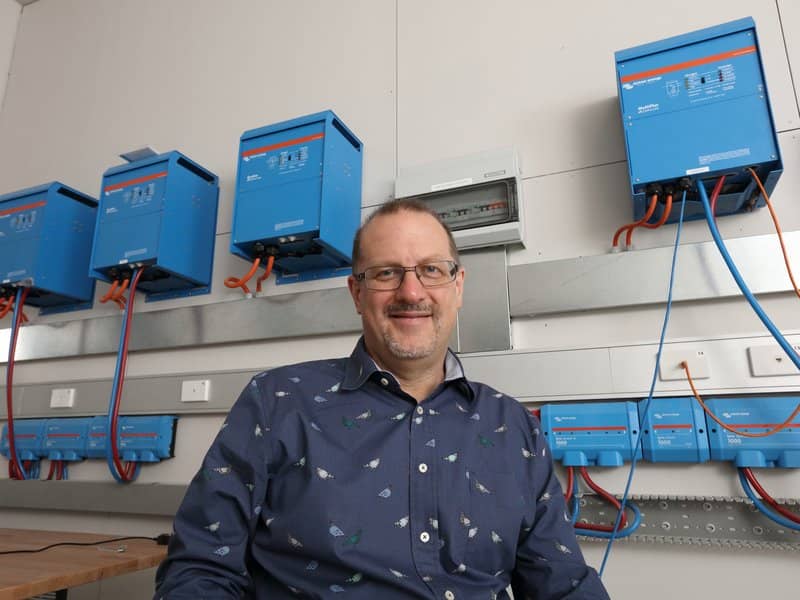
John Rushworth • 31 August 2016
Energy storage disruption with Redflow & Victron Energy
There is far more to Victron Energy’s Color Control GX than immediately meets the eye. Whilst browsing the ever expanding capabilities of the Color Control , I became curious about some of the more elusive options. Digging a little further I discovered a company rated in a top 20 list of ‘Energy storage disruptors’, that uses the Color Control in innovative ways. That rated company is Redflow and they are avid integrators of Victron Energy products, which includes using the Color Control GX and other products such as the Quattro and Multiplus with their flow battery systems. Product integration Whilst Victron products work with many common battery technologies, energy storage disruption technologies (such as flow batteries) often require a deeper integration and communication between their power electronics and battery management hardware. You can learn more about Victron/Redflow integration at Victron Live , but maybe the best way to discover more about a top energy storage disruptor is to start with a guest blog from Redflow themselves. First though here is what Redflow had to say about Victron Energy’s products when asked: “When Australian battery company Redflow Limited launched its ZCell zinc-bromine flow battery this year, the first compatible inverter brand it announced was Victron, which Redflow’s Executive Chairman Simon Hackett describes as ‘an innovative and technically capable product that works brilliantly’. Indeed, Redflow has a wall covered by Victron inverters at its battery lab in Adelaide”. Guest blog This guest blog content, in its edited form, was first published in Solar Nexus Today under the title, ’20 energy storage disruptors’. Going with the flow: Looking beyond lithium batteries By Redflow Limited Executive Chairman Simon Hackett “After embracing photovoltaic solar panels to generate their own power, householders globally are now looking to take the next step by using batteries to store that energy for when it’s needed. Although many companies, including Tesla, Enphase and Panasonic, have chosen lithium-based chemistries for their batteries, it’s important to recognise that not all batteries are created equal. I’m the proud owner of multiple Tesla electric cars and believe that Tesla’s lithium-based pack is the ideal battery for automotive applications. However, I believe there are more compelling chemistries, such as zinc-bromine flow batteries, for stationary battery applications such as residential, commercial and grid-scale energy storage. To understand why, it’s necessary to recognise the distinction between “power” and “energy” batteries. A “power” battery is a sprinter, able to serve short sharp bursts of power when required, whereas an “energy” battery is more of a marathon runner, delivering energy consistently, day in and day out. An example of a “power” battery is found in Tesla’s Model S P85D electric car. a lithium-based battery that stores 85 kilowatt-hours (kWh) of energy. While that equates to drawing one kilowatt for 85 hours, the outcome is quite different when a driver mashes his foot to the floor – launching this big luxury sedan like a railgun as its twin motors draw more than 500 kW from the battery pack. But maintaining the power-draw rate at that huge level would exhaust the battery in minutes and make it very hot, perhaps dangerously so. Thus, a “power” battery fits a light duty cycle, with occasional bursts of activity, plenty of rest time rather than active charging/discharging, and a small average depth of discharge, suited for typical daily driving cycles. In order to provide the long-term, relatively constant power supply that emulates a baseload power generator and to combine seamlessly with renewable energy sources, you need an “energy” battery. An example of this is the flow battery , such as the zinc-bromine flow battery made by Redflow , which offers a distinctly different approach to energy storage. Redflow’s flow battery contains about 100 litres of a water-based zinc bromide salt solution circulating through two separate hydraulic circuits. When charging, zinc is extracted from the zinc solution and stored on a plastic membrane. During discharge, zinc is released back to the solution. With flow batteries, this process is completely reversible, with no damage to the battery through each discharge cycle. This process delivers some unique benefits to flow batteries including: 100 per cent depth of discharge without battery degradation or damage. The harder you work a flow battery, the better! Prolonged standby: Flow batteries can be fully charged, then shut down and left in standby mode for months or even years. Virtually all this stored energy is available within 30 seconds of restarting No reserve power requirements: Flow batteries can be completely discharged to zero volts without suffering damage and can stay fully or partially discharged for prolonged periods Robust performance: Flow batteries are extremely tough, able to handle ambient temperatures as high as 50°C / 122°F without active cooling No risk of thermal runaway or fire if physically damaged or shorted out as the battery’s electrolyte is inherently fire-retardant. Redflow has designed the world’s smallest flow batteries – one fifth the size of previous flow batteries – which are installed in the US, Europe, Asia, Africa and Australia. Redflow energy storage systems range from its ZCell home battery and ZBM commercial batteries to its grid-scale LSB (Large Scale Battery) solutions. Flow batteries are proven to deliver unique advantages over lithium-based batteries, which makes them well worth evaluating if you are choosing an energy storage system for your home or business”. Conclusion It’s always a pleasure to host a guest blog and read about fascinating technologies. Our thanks to Simon and Redflow for the content used in this blog. If you want to learn more please see the following links: http://redflow.com https://www.facebook.com/redflowenergystorage https://www.zcell.com https://www.facebook.com/ZcellAU John Rushworth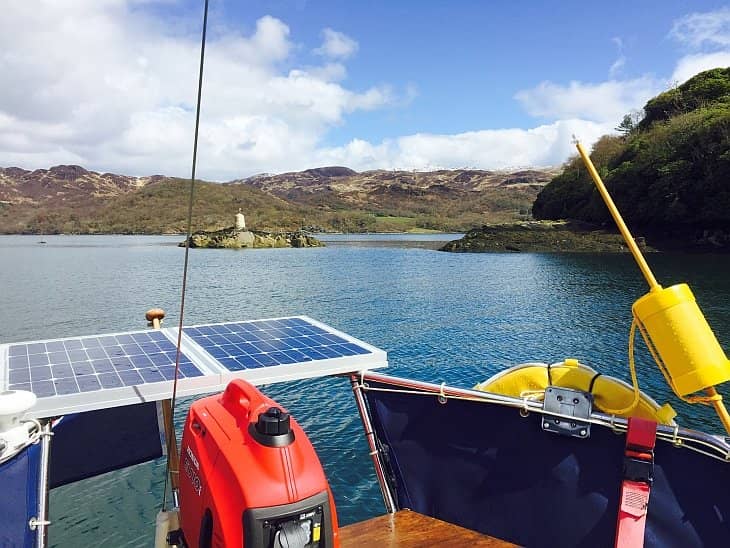
John Rushworth • 29 August 2016
MultiPlus magic: Small generator, big power
Have you ever tried to explain to an end user or friend what a Victron Energy MultiPlus is? When that happened to me, it was quite some time before I realised the true value and capabilities of one integrated product that combines both a battery charger and inverter – a product I may add that is far more than the sum of it’s parts. Up to that point I had simply assumed I would add a separate charger and inverter to my sailing yacht as funds and needs dictated. How wrong I was. Of course the same can be true for other off-grid/sometimes grid connected situations. It might be a campervan, motorhome, RV, canal barge, Tiny house or a cabin in the woods. Victron and RV aficionados Chris & Cherie of Technomadia describe the MultiPlus best I think, calling it a ‘Hybrid Inverter’. In fact they have produced some excellent videos about their own projects which describe the Multiplus well, and how they use it. More about that later. First a bit about how I came to integrate a MultiPlus into my boat and what I mainly use it for, including using it as a short term electric propulsion booster or range extender. If that depth of reading detailed below is not your particular interest, then maybe skip to the videos at the end of this blog for a quicker insight into Multiplus magic. End user choices I’m initially a retail customer that chose to use Victron products long before I started maintaining this blog. That choice was because Victron had a complete range of the products I needed (along with good online technical information and support) without having to go to multiple suppliers. I also liked the idea that their products integrated and I could easily add/combine them as my personal boat project progressed and funds permitted. A modular, progressive build. First a bit about that, then more about my favourite components: the MultiPlus and Color Control GX combined with the terrific performance of Lithium Ion batteries . Then and now What started off as a few large AGM batteries at 24V, a charger, a battery monitor and a DC-DC converter (for 12V house loads) when converting my sailing yacht to electric propulsion – has over the last five years expanded into a comprehensive solution. Here’s a photo of the old diesel engine space as it is now. There’s a lot of Victron blue. The photo shows 2 x 12.8V 200 Ah Lithium-iron-phosphate (LiFePO4 or LFP) propulsion batteries with cell balancing and BMS (shown centre). From front to back, starting on the left – Cyrix load & charge under/over voltage cut off relays, 200 Amp main fuse. Top left 1 x 10A and 1 x 6 A 230V shore power breaker with galvanic isolator (I didn’t realise Victron made a galvanic isolator when I bought that), then the PWM electric motor controller box with a BMV-702 shunt fitted inside and a 600 Watt Phoenix charger (for the LFPs) behind that. Right from front – 12 A extra charger for the 24V x 130 Ah AGM house bank, 16 A extra charger for Lithium propulsion bank, 75/15 MPPT Solar Charger Controller to run my 4G router which accesses the Victron VRM site, a 50Watt tube heater (behind the auto fire extinguisher) to keep moisture at bay in the propulsion space. Out of sight, behind the batteries, is the L.M.C/Lynch electric motor , controller and propulsion drive train. The project is all my own work. Not too bad I hope for an ex Royal Navy steam engineer who is mostly mystified by electrics and electronics. More power needed As I got use to my original basic system I realised I needed more battery power for house loads (a small fridge for cold beer to be precise) rather than tapping off the propulsion bank using a DC-DC converter. Space as you can see is limited but fortunately I had other space under the port and starboard bunks where the old diesel flooded lead acid starter battery and house battery use to be. To keep voltage drops and wire sizes to a minimum I decided to go 24V. My house loads system now comprises; 2 x 130 Ah AGMs in series fitted with BMV-702 temperature monitoring probe 1 x Compact 24V/ 800Watt/16Amp Multiplus 1 x BMV-702 1 x Color Control GX (which also monitors the LFP propulsion bank as well as the house bank) 1 x Orion 24/12 40 Amp DC-DC converter for house loads 2 x 30 Watt Victron solar panels (shown in headline image) to help run my 4G router 24/7 1 x 75/15 MPPT solar charge controller To bring the charge rate of the house bank up to around 0.2 C of it’s 130Ah capacity (130 x 0.2 =26 Amps) I added a Blue Power 24V/12A IP67 Battery Charger which when added to the 16 Amps of the Multiplus gave me a combined and decent charge rate of 28 Amps for the house bank, without going to the expense of a larger Multiplus than the 800 Watts output (700 Watts continuous @ 25C) I chose. This also gave me the added bonus of charger redundancy and choices for slower and faster charging. Why a small MultiPlus? Simple really, space and finances. However there is a little more to it than that. Whilst the former is true and that limited the size of the Multi and the batteries, I simply didn’t need the inverter side to be more than 800 Watts. That size also complimented the 130 Ah rating of the batteries. Keeping the ‘shrinkage’ of AGM batteries to a minimum when considering Peukert’s law is always a good idea when using an inverter for short term higher loads. I also prefer these kind of batteries in series rather than parallel for safety, not to mention that running the bank at 24V rather than 12V keeps wiring sizes smaller. For continuous house loads it is always a good idea to have the loads equal to or smaller than the 20 hour rating of the battery. In my case the continuous loads when sailing are usually no more than 4 Amps (4 x 12=48 Watts). At 24V that’s only 2 Amps being drawn from the house battery. As the 20 hr rating of the 130’s is 130 x 0.05= 6.5 Amps, I have a genuine 130 Ah bank rather than any reduction/shrinkage in Ah due to Peukert. Inverter appliances As mentioned above there were good reasons for choosing a smaller Multi, but what about the type of appliances you might run from an inverter? Some might be long term loads such as a laptop running on an AC supply. That of course does not present a problem as a laptop might only be 45 Watts. But what if you want to run a kettle for example, a larger short term load. My solution was simply to specify the appliances based on inverter size rather than have a larger inverter for typical larger sized home appliances, which would not be good for a small house bank anyhow. The ‘higher’ loads and appliances I run from and via my 800 Watt Multi are: 600 Watt travel kettle 750 Watt toaster 700 Watt George Foreman type grill Of course this means you can only run one appliance at a time – or does it? Also the AC output of the Multi can supply: 30 Watt electric blanket (it gets cold in Scotland!) 45 Watt Laptop supply 288 Watt (12 Amp) Blue Power 24V/12A IP67 (House) Charger 384 Watt (16 Amp) Blue Power IP22 (Propulsion) Charger 600 Watt (24 Amp) Phoenix (Propulsion) Charger Why on earth would you want to charge or supply the LFP bank using the two propulsion chargers from the MultiPlus house bank batteries you may wonder, by using the inverter side of the Multi? Yes, it would be inefficient but there’s a very good reason. What about the desire to have coffee and toast at the same time, which exceeds the MultiPlus inverter rating? All the above can be done with the magic of the MultiPlus and a small generator. MultiPlus magic Onboard, as shown in the headline image, I have a small Honda Generator of the silent or suitcase type. It is a 1 kVA or rather 900 Watts continuous. Honda also do a 2kVA which uses the same 50 cc engine running at a higher (noisier) speed and output. The continuous output is 1,600 Watts and as it costs 50% more than the smaller one it made sense to me to choose the latter. That’s not only because of value for money but also because I only ever have short term requirements for higher loads. There’s no point in running a larger generator if it’s not loaded to capacity, as that is inefficient. Let’s say I’m anchored and have been away for a few days and want to put some charge into my propulsion LFP bank using the Phoenix and IP 22 Charger, which combined can supply 984 Watts or more (1,100 Watts in fact in bulk) to the Lithiums. I can also adjust to a range of charge currents with the Phoenix Charger Control shown below. If I run the generator there is 900 Watts available to the Multiplus for a combination of charging the house bank from the Multi’s inbuilt 16 Amp charger (384 Watts) and/or using any of the AC appliances stated previously. So, I run the generator and it’s partially loaded by the 384 Watt inbuilt charger and 16 Amps is going into the AGM house bank in bulk charge. Clearly that leaves me power to use. But it’s the LFP bank I want to charge and not the house bank. Switching on both the LFP chargers and by adjusting the Phoenix Charger Control I can set the LFPs to use the full 900 Watts of the generator, at which point the Multi reduces it’s charge current to nil to the house bank, if the Multi’s main switch is in the ‘On’ position (inverter available) and the charge current limit is set in the Multi to 4 Amps using the Color Control. This stops overloading the generator (230V x 4 = 920 Watts). See this blog about that new overview screen . But now I want coffee and toast and still to put some charge into the propulsion LFP bank. Coffee and toast will cost me a total of 1,350 Watts, but I’m already using the full 900 of the generator. What to do, as all that totalled up is 2,450 Watts. Clearly sacrifices have to be made. I switch off the Phoenix leaving the IP 22 Lithium charger on at 384 Watts. The generator load has decreased from the full 900 Watts and now the Multi is charging the house bank too and the LFP bank (384 + 384 = 768 Watts). Time for coffee, which will exceed the 900 Watts the generator can supply (768 + 600 = 1,368 Watts). When I switch on the 600 Watt kettle a seamless fast transfer switch built into the Multi kicks in and the house bank starts discharging to supply the inverter to add to the generator power. A maximum of 900 Watts from the generator plus 700 Watts (continuous) equalling 1,600 Watts is therefore available, by combining the small generator and the Multiplus. Small generator, big power. The moral of all this is to size your generator to take care of longer term loads, which allows you to fully load the generator for efficiency. And when short term higher loads are required – simply use an appropriately sized battery bank and Multiplus which gives the additive power of a generator and the inverter part of the Multiplus. That’s Multiplus magic. MultiPlus with a Color Control GX These two products really are perfect partners and they allow me total control and monitoring in a way I only dreamt of a few years back. Say I’ve returned from a weekend away sailing and both my house and propulsion banks are quite depleted. Plugging into the marina 230V/16A shore supply; all my chargers go on. Around 1,100 Watts to the propulsion bank and around 700 Watts to the house bank, run from a 10 Amp/230V breaker supply via the Multiplus and a bank of AC sockets . The Multiplus and chargers are using a total of 1,800 Watts leaving around 500 Watts spare. As this is a Multiplus there’s still room to boil that 600 Watt kettle, make a toasted sandwich and plug the laptop in! That’s the beauty of the ‘Power Assist’ feature of the Multi. To allow that I simply set the current limit in the Color Control to 10 Amps so that the 10 Amp breaker supply will not get exceeded and trip that breaker. That all leaves a separate 6A breaker and sockets for a straight AC supply of around 1,380 Watts for a small fan heater and/or power tools. Quite often by the time I’ve done some chores the propulsion bank is fully charged and the house bank is still labouring in absorption charge. That is one of the joys of Lithiums; fast charging to around 98%, whereas the house bank will have slowed it’s charge rate down at around 80% SOC and gone from bulk to absorption. There will be quite some time that will need to elapse before float and storage are reached; one of the downsides of lead acid technology such as AGM. Not so with Lithiums as they charge fully quickly and/or they can be left in pretty much in any state of charge. However with a Multiplus, Color Control GX and an internet connection there is simply no need to concern oneself about battery SOCs, as you can leave the boat at any point and control the system remotely via a Smartphone or Laptop. This is called ‘Remote Console’. To achieve that I have a D-Link DWR-921 4G LTE router as shown below, which ensures 24/7 connectivity and data logging via the VRM. It runs from a 12V DC supply, rather than the 230V supplied transformer. Tips & tricks As the Lithiums are often fully charged by the time I leave the boat (having taken them from 98% to 100% for around an hour which ensures cell balancing) I simply switch off the BMS as the Cyrix load relay takes a few Watts and would discharge the bank a little before the next sail. I have also wired the BMV-702 & Shunt on the load side of the load relay. This means there is always a very slight current to keep the relay closed, meaning the power is always available for electric propulsion when the electric motor ignition key/solenoid is switched on. On an electric propulsion boat you always want power there immediately and not have to wait 30 seconds for a Cyrix relay to close! The bank is still protected and monitored for temperature, under voltage/over discharge and over voltage/over charge. The extra connection on the BMV-702 (as opposed to the BMV-700 which doesn’t have one) is used for temperature monitoring, rather than for a non existent starter battery or Battery Balancer that you may choose to use in a conventional system. A VRM Remote Console (via a laptop rather than the App) screenshot is shown below with the temperature of the Lithiums as I write. You’ll also notice in the top right, next to the time, a symbol. This shows that a GPS dongle is connected to the Color Control, which apart from logging your tracks can be set with a Geofence and an email alarm – just in case some opportunist decides to steal your pride and joy. If I were leaving the batteries over winter layup for many months, I’d probably leave the Lithiums at around 60% SOC. During the season though I like to have them fully charged and ready for use. You never know when the wind will blow and the sun will shine! The Multiplus has 3 switch positions on it’s front panel. By leaving the switch in the On position all control can be done directly from a Color Control GX: MultiPlus On – The charger is on and the inverter is available subject to the current limit set either via a Digital Multi Control or the Color Control. The image below shows my house batteries in ‘Storage’ and the current limit set to 10 Amps. There is a downside to this though if leaving the boat unattended. If the shore supply fails and say I had my engine space AC 60 Watt tube heater on, the inverter will kick in and over time deplete the house bank. Of course you can set email alarms to warn you of this or fit a Battery Protect to disconnect the house bank. Multiplus Off – Exactly what it says, shown in the screenshot below showing the primary Overview screen. Charger and Inverter and AC sockets are all off. Now my 2 x 30 Watt Victron solar panels in series with the 75/15 MPPT is enough, during the Summer months, to maintain the house batteries in a good state of charge with the 24/7, 8 Watts that the router takes to keep the system connected to the VRM. Here’s an alternative Overview screen shown below which gives similar information to that above plus access to Current limit settings and other information. Note the GPS speed readout in Knots. It can be set for other speed units too. MultiPlus Charger Only – I use this a lot in the marina and set the current limit to zero which stops the charger and inverter side and gives Passthru to the AC sockets. That way if the tube heater is on it will work if the shore supply is on and obviously not deplete the batteries (by using the inverter) were the shore supply to fail. Below is an example of a very good solar day. The 2 x 30 Watt panels are laid flat (see headline blog image) and in this instance I’ve harvested 320 Watts over a 24 hr period. That’s over over 5 times the panel rating harvested at 56 degrees latitude. Even the peak output exceeds the panel rating, 60 v 68 Watts. Average stored battery energy over the Summer months of May, June July usually works out at 2.5 times the panel/s rating in the UK. That of course is for a flat panel, as boats naturally move about and having an x and y axis tracker is not that beneficial in Summer, as it may only give me about 10% more harvest. Remote console via the VRM (used to get the screenshots above) is a great tool to control and monitor systems and of course there is always the option to store data locally if you are without an internet connection for your Color Control. Sure you won’t have Remote Console and other tools, but if all you want to do is see historical data after having uploaded it to the free VRM site, then no internet connection is required. Personally I wouldn’t want to be without a Remote Console connection when away from the boat. Obviously an internet connection is not such an issue when at sea, as data is stored on the Color Control internal drive or by using an inserted MicroSD card for larger offline data amounts. As soon as the boat is back within a 4G area the backlog data automatically uploads. To learn more about the Color Control & VRM, see Victron Live and why not create an account at Victron Professional: https://www.victronenergy.com/live/ https://professional.victronenergy.com/ Silent range extender One last scenario. The propulsion bank is nearly empty at sea but there’s still quite a bit left in the house bank and the generator is broken. I’ve sailed almost back to port but still need propulsion power for those last few miles. With the Multi on I can switch on the Lithium propulsion chargers; the house bank using the inverter side of the Multi will supply those chargers and therefore a short term electric propulsion boost to the empty Lithium batteries. Inefficient that might be, but to me that’s all good built in system redundancy using off the shelf products to provide a silent range extender in the event of generator failure for yacht Elektra. Of course if the generator is working then I can simply use the propulsion chargers and the full output of the generator (900 Watts) to run as a range extended battery electric boat, as opposed to a pure battery electric boat. This is my backup at sea and 5 litres of petrol is enough for 10 hours of motoring in calm waters, at around 3 to 3.5 knots. Of course the whole idea of electric propulsion is to do without any internal combustion engine, hence I invariably recharge at marinas and keep my generator as a backup for those times when a marina is not nearby. What about other users other than the marine world; such as full time RV’ers? More MultiPlus magic Earlier I mentioned RV aficionados Chris & Cherie of Technomadia and some excellent videos they have produced about their own RV, which describe the Multiplus well and how they use it. Big RV: Small Generator – Downsizing to a 2500w Propane Generator Flexible RV Electrical Systems – Running an AC Off Battery, Solar & Hybrid Inverter Conclusion If you have a story about how you’ve used Victron Energy products do let us know. Thanks to Chris & Cherie of Technomadia for letting me use their videos in this blog. John Rushworth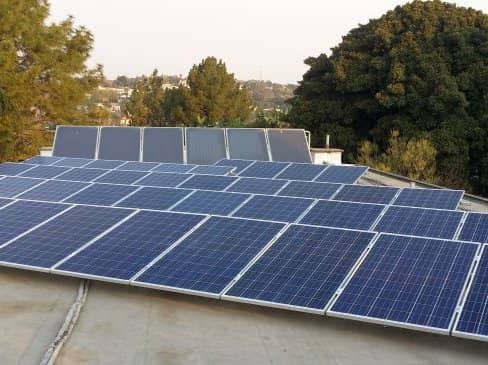
John Rushworth • 11 August 2016
KJION Energy SA: Secretive solar
It’s not often we’re unable to say who the customer is, but in this installation that will need to remain a secret. Let’s just say it’s about governments and politics. Secrecy aside this project is yet another example of Fronius and Victron Energy products working together for grid backup and supplemental energy systems; the initial collaboration between Fronius and Victron having been announced at Intersolar Europe in 2015. An example installation that resulted from this announcement was for an unnamed affluent client, who built a second home in the Kenyan bush . Here then is another collaborative project example. Saving money KJION Energy SA have installed a number of three phase systems with LiFePO4 batteries, both DC and AC coupled, for residential and commercial buildings in South Africa. During this particular project the complete distribution system was renewed to ensure the smooth working of the system, as the electrical system was over 40 years old. As you can see below that has made for a quality installation. The solar part of the system comprises of 40 x 255 Watt panels. A 45kVA diesel generator (which serves only as a backup to the grid supply) is also integrated into the system and controlled via the Victron Energy Quattros and Color Control GX. Commissioned in June 2016 this new system saves money when compared to the previous one as grid electricity prices have been rising at an average of 13% annually, from the local provider. In light of the unreliable and expensive local grid supply it is worth noting that during the Summer months the new system runs almost 90% independently from the grid – providing a robust solution with commensurate financial savings. System Components 3 x 10 kVA Victron Quattro Inverters (three phase operation) 12 x 200 Ah Victron LiFePO4 batteries 1 x Victron BMS 1 x Victron Color Control GX 1 x Fronius Symo 12.5-3-M Conclusion & credits No matter who the customer is (named or otherwise) there are clear benefits to integrating Fronius and Victron Energy products into grid backup and supplemental energy systems. Thanks to Andre du Rand of Victron Energy and Paul Fried, CEO of KJION Energy SA , for making me aware of this project. John Rushworth
John Rushworth • 12 July 2016
Sulubaaï Foundation: Off-grid protected paradise
It’s a dream of many to live on an island paradise. For a few this became reality when a of team of ocean lovers got together and created the Sulubaaï Foundation. Based on Pangatalan Island, shown above, this is where Fred Tardieu and his wife Chris live and work – protecting the island and surrounding area together, along with their colleagues and visitors. Their projects include: coral reef restoration, mangrove regrowth, re-vegetation of the island, education for local communities and schools, marine science courses and volunteer stays. But even projects of vision require electricity. More of that in a moment, but first a little background. Where is Pangatalan Island? Knowing that the island had recently installed Victron Energy products with remote management, the first and obvious place to look was VRM World . It didn’t show up, as of course VRM sites can choose to share their energy data or not, so I had to look further. It turns out that Pangatalan Island is located on the northeast coast of the Province of Palawan in the Philippines, within the Shark Fin Bay area of the Sulu Sea , which incidentally is who the Star Trek character Hikaru Sulu is named after. Please note I might be geeky, but I’m not a Trekkie – just thought that fact might interest some! Google Maps link to Pangatalan Island: https://goo.gl/maps/7PkdtWCcD392 What does Sulubaaï mean? Sulubaaï is a combination of Sulu Sea and the word bahay, which is the Filipino word for house or home. Since Fred and Chris bought Pangatalan Island in 2011 and established their foundation, they promised themselves to save and protect it – making the island their ‘home in the Sulu Sea’. More about the Sulubaaï Foundation: https://sulubaai-foundation.com Everyone deserves electricity Even off-grid visionaries require electricity and so it came to be that Fred Tardieu and his wife Chris contacted Josie and Koos Mulder of JK Solar Power House. Together with Danny Maesen of PhilSolar Equipment and Trading Corporation they organised, planned and installed a solar system with generator backup. As the project is in a Marine Protected Area (MPA), this initial phase has been planned in such a way that the system can be upgraded to more and more solar and inverter power, in order that the use of the diesel generator can be kept to a minimum, or indeed eliminated altogether. Victron integration Whilst Victron Energy can supply most if not all components for off-grid systems, diesel generators are an exception! Having said that we often find in far flung places that installers and suppliers may also, for all sorts of reasons, choose to mix and match components from various companies. Fortunately this is not an issue, as Victron products integrate very well with products from other manufacturers. And so it was in this case. A schematic of the initial system is shown below. The Victron Energy components used in the system are: 1 x Quattro 10kVA inverter/charger 2 x BlueSolar Charge Controller MPPT 150/85 1 x BMV-700 Battery Monitor 1 x Color Control GX VRM ( Victron Remote Management ) via the free VRM Portal The completed installation using these products is shown below. Conclusion & credits No matter where you are in the world Victron Energy products (whether used exclusively or integrated with products from other manufacturers) can solve your off-grid challenges. In this case that included collaboration between JK Solar Power House and PhilSolar Equipment and Trading Corporation, in order to meet the Sulubaaï Foundation’s needs. My thanks to all the parties mentioned above for the information and images used in this blog. For further information see: https://www.facebook.com/JKSolarPowerHouse/ https://sulubaai-foundation.com/ John Rushworth
John Rushworth • 25 May 2016
Materials handling with Victron Energy
Materials handling might not be an area you immediately associate with Victron Energy, however in this case Victron have proved to be an ideal partner to enable the build and implementation of the shuttle racking system pictured above. Note the Victron Energy battery monitor ( BMV-700 series ) fitted at the bottom right-hand side of the headline image above. More of that and the other Victron Energy system components in a moment, but first let’s find out what is what and why Victron products have been chosen. What is it and what does it do? In this materials handling scenario a shuttle racking system enables the loading and unloading of pallets within a storage system, by means of a special radio controlled shuttle called Mekix. The Mekix shuttle carries and moves pallets on it’s platform. The shuttle moves on specially shaped guide rails within a storage channel or corridor (of which there are a number within a warehouse) as shown in the images below. In this shuttle racking system, pallets are moved and stored in the horizontal direction on different levels, thereby achieving the maximum available use of space in both the horizontal depth and vertical height directions. This type of semi-automatic storage and retrieval system (referred to as shuttle racking) is often the preferred materials handling system for cold storage and product warehousing, where high density storage is required. Mekix in action A forklift moves and carries the Mekix shuttle to the warehouse channel or corridor area where the pallets are to be stored. The forklift then places the shuttle onto the channel guide rails. Pallets to be stored are then placed on top of the Mekix shuttle by the forklift. The shuttle then moves (powered by Victron) in a horizontal direction until it reaches the first available empty space, where it sets down the pallet. Next the shuttle returns along the guide rails of the storage area channel and repeats the process until the storage area is full – bar one pallet. Before this last pallet is placed into the storage channel, the forklift retrieves the shuttle from the channel and places it into a new empty channel area to commence work there. The remaining pallet and space to be filled (in the previous storage channel) is put in place by a forklift. The operation continues on this basis. To unload the pallets from a storage channel area the operation is simply repeated in reverse. Here’s a video to show the Mekix shuttle in action. Victron Energy system components 1 x LiFePO4 battery-BMS 12.8V/60Ah 1 x Orion 12/24-20 DC-DC converter 1 x BMV-700 1 x BatteryProtect 12/24V 65A 1 x Blue Power IP65 Charger 12/15 Conclusion & links There are clearly a number of factors as to why Victron products were chosen in this build. The Mekix shuttle itself is small and thin, which makes the size and energy density of the Victron LFP battery ideal for this application. The BMV-700 provides warehouse staff with an audible and visual battery pre-alarm, which allows a worker to complete a storage task before removing the battery from the shuttle and replacing it with a charged one. A depleted battery is safely recharged with the Blue Power IP65 rated charger and LFP charge profile. The BatteryProtect prevents damage to the lithium cells, by disconnecting loads before critical low voltage levels are reached. The DC-DC converter is essential to up the voltage from 12 to 24V for the shuttle’s drive motors. It’s great to see Victron products being used in innovative ways. The current Mekix shuttle can handle 1,500kg and now after having been tested and proved, a small series production run has commenced. AC motors are also being used, with the DC-DC converters being replaced by a Victron inverter, as peak AC power is needed for that. Two of these systems, using an 800VA inverter each, a BatteryProtect for visual/audible alarms and use of it’s alarm relay (to communicate with the shuttle’s PLCs) are currently in build. The next step is a larger shuttle with up to 15 tonnes carrying capacity – which of course we hope Victron will be a part of too. We wish Robotas and Rafex (part of the Çemesan Group ) every success with their system. System R&D and build – http://robotas.com.tr/ If you have an interesting application such as this – do let us know so we can report on it here. John Rushworth Credits My thanks to Islam Varol (recently featured here on the Victron blog) for the information and images used. Victron Energy people: Who is Islam Varol?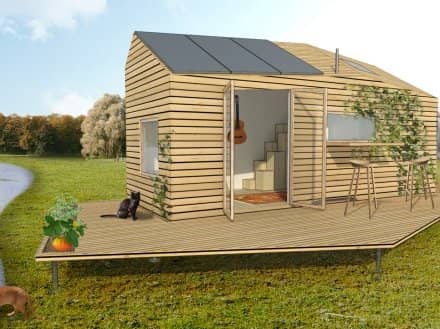
John Rushworth • 10 May 2016
At home with Victron Energy: The Tiny House revolution
The Tiny House movement was borne out of necessity in America, partly in response to natural disasters and also a burgeoning desire to live economically and sustainably. Slowly but surely this small movement has morphed into a Tiny House revolution across the globe. One such person that has the desire to live in this way is Marjolein Jonker from the Netherlands. Her dream started in February 2015. On the way to realising her dream she has been blogging at ‘ Marjolein in miniature ‘, educating others about her journey and the growing Tiny House movement in the Netherlands. Marjolein’s dream, which includes her cats Jack and Hella, is shown in the headline image above. The design was created by Ontwerpstudio Walden and Dimka Wentzel of Tiny-House.nl Marjolein is pictured in the photo below outside Dimka Wentzel’s Tiny House. Photo by Phil Nijhuis . What is a Tiny House? Whilst the exact size and construction can vary due to legal requirements from country to country; in Marjolein’s own words Tiny Houses are: “Sustainably built homes, no larger than 28 square metres and meant to be lived in throughout the year. They can be built on a foundation, or on a trailer. Usually they are made entirely of wood, although nowadays sometimes with aluminium frames. Tiny Houses come in all shapes and sizes and there is a lot of creativity and craftsmanship built into them. A Tiny House is for and often built by the owner, from start to finish, to his or her own taste and is invariably a bespoke design. The focus of a Tiny House is one of a simple and environmentally conscious lifestyle that creates more freedom”. At home with Victron Energy The build started in February 2016 and is now all but complete. One of Marjolein’s goals was to be self-sufficient in her electricity needs. Just like all off-grid requirements, the first step was to carry out an energy audit and to see how and if solar panels would meet her goals. You can read more about this in her blog where she details her solar power needs and decisions . The blog is in Dutch but if you use Google Chrome the translation works well, if needed. Suffice to say her off-grid needs have been met with Victron Energy products. Here is what Marjolein had to say: “To be self-sufficient in energy the Tiny House features a solar energy system from Victron Energy. Victron has everything that an off-grid installation needs and all equipment is perfectly matched. With the products and services of Victron I am assured of a professional installation of high quality, provided by a company that is constantly working on innovation in the field of solar energy. My installation consists of: 3 x 300 Wp solar panels 1 x EasySolar 24V 1600VA : MPPT Solar Charge Controller, plus inverter/charger with AC distribution, all in one enclosure. 2 x LiFePO4 lithium battery 12.8V In addition, a battery monitor , Color Control GX and Victron USB Wi-Fi dongle are fitted, so I can see remotely what my consumption is via the VRM portal . Such a luxury! But not only luxury, as by changing my behaviour I might manage with solar energy alone – so it certainly helps being able to properly monitor my usage. It is almost a sport to manage for as long as possible with only the power of the sun!” Tiny House nearing completion Victron installation “The installation was carried out by Frans ‘ the Pittenspecialist (DPS)’ , in cooperation with Johannes Boonstra of Victron Energy. Frans has many years of experience with Victron Energy products and similar types of installations. He also thinks Tiny Homes are just great. I feel so blessed having the help of Frans and Johannes!” Conclusion Owning a boat myself which is fitted out of with Victron Energy equipment that also allows me to be off-grid (albeit at sea) has many similarities to a Tiny House, so in that sense I can totally relate to Marjolein’s desire for “a simple and environmentally conscious lifestyle that creates more freedom.” We wish her well with her new home and look forward to hearing how the cats Jack and Hella are settling in too! John Rushworth Links To learn more why not visit the Marjolein in Miniature links below: Website: https://www.marjoleininhetklein.com/ Facebook: https://www.facebook.com/marjoleininhetklein For further information about Tiny House systems see Aquasolar: http://www.aquasolar.nl/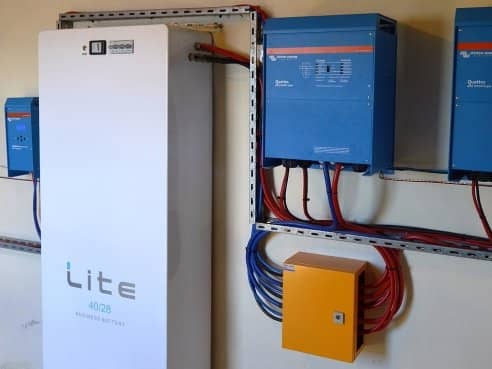
John Rushworth • 25 April 2016
Mukambi Safari Lodge integrates Freedom Won LiFePO4 battery
Freedom Won has been supplying class leading lithium iron phosphate (LiFePO4) batteries to the residential and commercial renewable and backup energy sector since February 2015. The company has supplied more than 100 of its Freedom Lite lithium batteries in the last 12 months, ranging from 5kWh to 40kWh. Amongst these was a Freedom Lite Business 40/28 model, integrated with Victron Energy equipment, for the Mukambi Safari Lodge in the Kafue National Park in Zambia, Southern Africa. The lodge owner, Edjan, had done his research to find a longer lasting more efficient energy storage solution after having experienced disappointing performance from his lead acid cells. Edjan was comforted by Freedom Won’s track record and positive references from clients that use Freedom Lite batteries and Victron Energy products. System components The new system, commissioned in December 2015, was upgraded to eliminate the need for a diesel generator and now comprises the following: 21.6kWp solar power from 72 x 300W polycrystalline photovoltaic panels 3 x Victron Blue Solar 150/85 solar charge controllers 2 x Victron Quattro 10kVA inverters 1 x Freedom Lite Business 40/28 LiFePO4 Battery Diesel generator freedom The 14 bed luxury Mukambi Safari Lodge along with staff accommodation and all facilities operates entirely from the sun and the Freedom Won battery. The battery is guaranteed for 10 years but it is expected to last more than 15 years with zero maintenance. The battery can withstand the high ambient temperatures in Zambia with no related concerns about lifespan. The battery is also fully charged from the three Blue Solar 150/85 units, on most days, before midday with a combined charge power of 14kW which ensures maximum system efficiency and a margin for the impact of cloud cover. The Freedom Lite Business 40/28 battery has a maximum capacity of 40kWh, of which 34kWh (85% DoD) is usable in terms of the 10 year warranty with 28kWh (70% DoD) being recommended for the average night time discharge depth. Victron integration The Freedom Lite range is fully integrated with the Victron Quattro using the versatile ‘BMS Assistant’ and the Auxiliary Inputs for charge and discharge enable signals from the Freedom Lite BMS. The charge controllers are also enabled by the BMS using the remote enable feature on these Blue Solar models. For compatible Victron Energy products using Freedomwon batteries see this page on Victron Live: https://www.victronenergy.com/live/battery_compatibility:freedomwon Conclusion Once again it seems companies are recognising the value of integrating Victron Energy equipment into their systems. Long may it continue. For more information on a Freedom Lite battery installation for your Victron Energy system please visit: www.freedomwon.co.za Our thanks to Antony English, co-founder of Freedom Won, for the information and images used in this blog. John Rushworth
John Rushworth • 03 March 2016
Ecolek Wales Ltd: Welsh Energy Efficiency Awards
Update January 2018: Ecolek Wales Ltd is currently in liquidation and this blog is kept merely for posterity. Update March 2017 : Ecolek Wales Ltd have recently launched a new website which can be found here www.ecolekenergy.co.uk . They are currently working on several existing projects using Victron Energy equipment which includes Passiv Housing, Wind Turbines and even disconnecting from the electricity grid. For any information or help with your project please contact info@ecolek.co.uk Last year we reported on two innovative projects by Victron Energy installers Ecolek Wales Ltd. One was an off grid farm and the other an energy positive house. The Ecolek team are renewable energy specialists carrying out the design and installation of systems. Now their efforts have been recognised in the recent Welsh Energy Efficiency & Retrofit Awards. Pictured above are Ecolek directors Ian Hewson and Andrew Youren receiving their awards, which you can read more about at WalesOnline . Thanks to Mr Jason Mitchell for the photograph. Working together Whilst Victron Energy can’t claim credit for Ecolek’s hard work, it is clear from speaking to them that Victron products play a key role. Here’s what Ian Hewson had to say, “With the UK’s battery storage sector set to expand rapidly, Victron Energy systems allow us to pair emerging battery technologies seamlessly, which is unique. One example is a renewable energy installation we’ll complete this week for a client in Carmarthen; all monitored with VRM world .” Congratulations to Ecolek on their awards; if their installations are anything to go by I’m sure there will be many more to come for this small but passionate and growing Welsh company. With a £26 million pound investment in their local area announced a few days ago, ‘to drive forward the solar energy industry’ – it looks as though Ecolek Wales Ltd are on the right path! Example installation The installation below is from the Parc Bach farm project, showing the Li-ion Battery Towers with one front panel removed to demonstrate how 4 of the 8 x 90 Ah Lithium batteries fit inside a tower. The Quattro shown is a 5 kVA one, next to a BlueSolar MPPT 150/85 charge controller with a BMV-700 series in an enclosure beneath it. Further on and off-site monitoring is carried out using a Color Control GX connected to the VRM portal, which is also shared on VRM World . Here is the shared site: https://vrm.victronenergy.com/site/share/token/39249929 Battery storage benefits To demonstrate the benefits of battery storage using PV in this case, a report has been prepared by Ester Coma from the Welsh School of Architecture, at Cardiff University, on behalf of Ecolek Wales Ltd. The predicted modelling data used is for one year using local weather data. The image below shows part of that report, giving the monthly integrated supply and storage demand. As you can see this results in reduced generator runtime. Apart from less noise and the cost savings in not having to run a generator so often, Ester also calculates that the battery storage/PV system gives an 87% reduction in CO 2 . We’d like to hear from you If you have a similar success story or an interesting installation using Victron Energy products – do let us know. John Rushworth.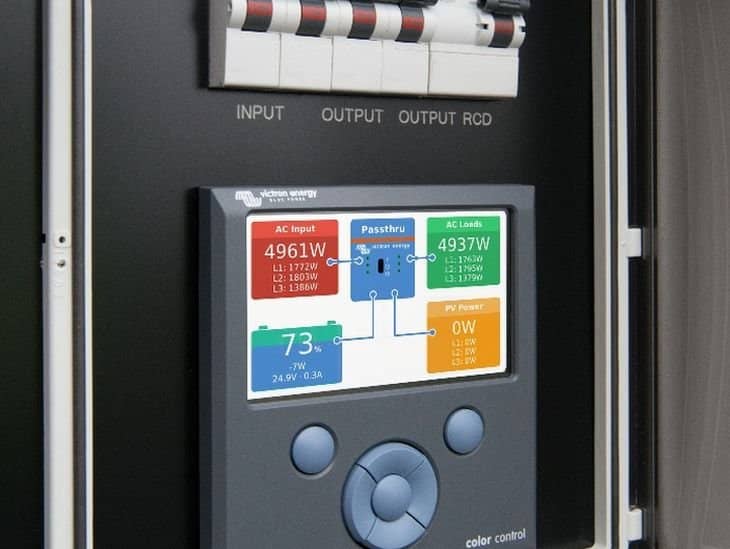
John Rushworth • 11 February 2016
EasyGrid now fitted with Color Control as standard
EasyGrid was launched in 2015 by Energy Solutions after 18 months of research and development – and now for 2016 it includes a Color Control GX as standard besides the other Victron Energy products which were chosen at the outset ‘to offer customers reliability and compatibility’. What is EasyGrid? EasyGrid is a range of integrated solutions to bring off grid power to homes and businesses without a mains grid connection at a reasonable cost. Explains Energy Solutions MD Paul Holland: “Rather than having to source separate components and have a bespoke system designed, the EasyGrid series offers customers a pre-configured, self-contained unit; built from durable, high quality components; fully tested and ready to install. We knew from our on-going work with off grid customers that the market is moving towards a more plug and play approach. People want functionality and continuity but do not want to have to become experts in electrical power just to run their homes.” Example system schematic Victron inside & out Here is what Energy Solutions had to say about the 2016 Color Control GX upgrade: “With the addition of this control the EasyGrid has made a significant step forward in functionality. The system now enables full online monitoring via the Victron VRM website (internet connection required). Owners can see all relevant parameters and historic data including battery capacity, power usage and solar input along with many other selectable options. The owner can also set alarms to ensure that the whole system operates at its optimum performance at all times. With most off grid situations using a generator as well as solar, the benefit of the Color Control is the new sophisticated generator control and monitoring, with owners able to see: Generator state: Condition that is currently keeping the generator running. Runtime: Generator runtime since last start. Total run time: Accumulated running time since the first start. Time to next test run: When the test run condition is enabled this item shows the time remaining to the next test run. Daily runtime: Page with the running times of last 30 days. The generator can also be set to run based on the conditions below to ensure that those living and working off grid are never without power: Manual State of charge (SOC) of batteries AC load Battery current Battery voltage For those living without a mains connection there are additional features the control system offers which can enhance their living conditions – quiet periods can be set which will reduce the chance of the generator starting – particularly at night. Most importantly periodic test runs can be set which ensures that when you need the generator it will start!” Conclusion and credits Energy Solutions have supplied over 135 off grid power solutions in the UK and many more overseas and believe this upgraded version of EasyGrid with the Color Control functionality will make power for those with no grid connection even more accessible, affordable and functional. As Energy Solutions MD Paul Holland says “Customers have been happy to wait a little bit longer to get these units with the Color Control – we are delighted with the response so far and know that this will enhance their off grid power solutions.” Please also note that even if you already have an EasyGrid unit, a Color Control can be retro fitted to bring your system up to date. Many thanks to Melanie Lay of Energy Solutions (UK) Ltd for the information and images used in this blog. John Rushworth Links http://energy-solutions.co.uk/products/easygrid https://www.facebook.com/EnergySolutionsUK https://plus.google.com/+energysolutionsuk https://twitter.com/energy1es https://www.pinterest.com/energysolut0229/
John Rushworth • 05 February 2016
EnerTek Global: Solar powered education in Peru
That’s a lot of green and sunshine in the photo above! And in the small green cabinet is Victron blue – providing the clue as to what makes this site special. Solar in Peru Peru uses fossil fuel for around half of its total energy generation. In order to limit this trend companies like EnerTek Global , who have their headquarters in Lima , have become instrumental in changing attitudes towards energy and its use. EnerTek Global is a Peruvian environmental engineering company which provides services in the areas of renewable energy systems for hydrological, wind and solar projects. They are also Victron Energy distributors. As Peru receives approximately 2.5 times more solar energy than Northern Europe, this makes it an ideal location for the installation of solar photovoltaic systems (PV). In such a location solar PV systems together with batteries are capable of providing a reliable power supply both day and night. In addition, PV is often more cost effective than diesel generators and means less CO 2 emissions. That has to be good news. Colegio Franklin Delano Roosevelt Last year EnerTek’s team of international engineers installed a full Victron Energy PV system to power a large classroom in the Colegio Franklin Delano Roosevelt . The system is a pilot with the aim of demonstrating the capabilities of solar PV, as well as educating students and staff as to how solar works. If the statistics toward the end of last year (over a seven month period in 2015) are anything go by the system is already a success. Below is a screenshot from the VRM (Victron Remote Management) Portal showing the school’s first megawatt milestone. You can view live system information here: https://vrm.victronenergy.com/site/share/8f0a7806 System installation Here’s a one minute timelapse video of the installation. Installation and testing of the system took two days in total. System components The system has an installed capacity of 2.8 kWp consisting of 10 x 280W-24V Polycrystalline BlueSolar panels using Victron solar charge controllers . Battery storage consists of 220Ah of Victron Energy AGM batteries (4 X 12V/220Ah), a MultiPlus 48/5000/70-100 Inverter/Charger with a BMV-700 battery monitory and a Color Control GX for on and/or offsite system monitoring and control. Education As part of this project is about education, for the students and staff of the school, here is how it works: The photovoltaic cells capture the sun’s energy and convert it into electricity. The solar charge controller converts this energy from a high to a low voltage so that it is ready either to go to the batteries or the inverter. During the day, the inverter takes the electricity from the sun, changes it from DC (direct current) to AC (alternating current), and sends it to the classroom. At night, when there is no solar energy available, the inverter provides electricity to the classroom from the batteries. These are charged using excess solar energy in the daytime. If there is a prolonged period of heavy clouding or higher than normal electricity use in the classroom, the grid will be used to supplement the solar energy. Conclusion & Credits I have to say personally I’m a great fan of practical and educational projects such as this. It can only be a good thing. Thanks to Gerrit Jacobs for making me aware of this project and Alan Clarke of EnerTek Global for the images and information used in this blog. John Rushworth Links http://enertekglobal.com https://www.facebook.com/pages/Enertek-Global/297039260431234 https://plus.google.com/+Enertekglobal https://www.linkedin.com/company/enertek-global https://twitter.com/enertekglobal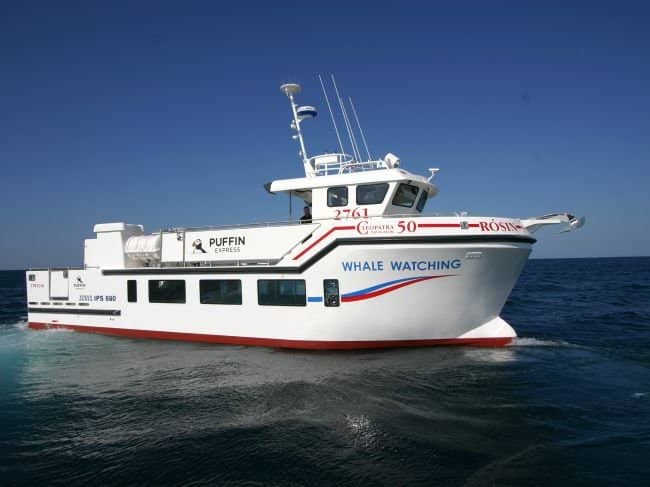
John Rushworth • 02 February 2016
Icelandic boat builder fits Victron Energy equipment
Trefjar Ltd was established in the town of Hafnarfjörður in Iceland in 1977. Since then they have grown considerably. They are now the largest and by far the leading manufacturer of their kind in Iceland. The company has two factories manufacturing fibreglass boats, aquaculture equipment and acrylic parts. Cleopatra boats is their boat building operation and we are delighted to note that they have chosen to fit Victron Energy equipment to their range of vessels. Equipment fit includes Quattros , Isolation transformers , DC to DC converters and more. Boat types The Cleopatra boats range includes tourist boats for whale watching in summer and trips to view the northern lights in winter. Iceland must certainly be one of the best places for that and if you find yourself there why not try a trip on Rosin (shown above) with Special Tours of Reykjavík. Other builds include fishing boats and ferries. All are fitted with Victron equipment. Below are examples of some new builds. Gisli Sursson Gisli Sursson is a Cleopatra 50 fishing boat. Pandanassa Pandanass is a 33ft ferry used by a Greek monastery and forms part of the Cleopatra passenger range of work boats . Tranoy Tranoy is 36 ft in length and forms part of the Cleopatra fishing boat range . Conclusion & Credits Dare I say it? I was in the third of the so called ‘ Cod Wars ‘ in 1976 aboard HMS Rhyl just before Trefjar started building their boats in ’77. The seas back then were 60ft and the winds were off the Beaufort scale which stops at F12 Hurricane force; maybe that’s why companies like Trefjar build such seaworthy looking boats! My thanks go to Ulfar Thor Vidarsson, project manager of Trefjar Ltd., for the images in this blog and also thanks to Niels Kaarill of Victron Energy for the heads up on these sturdy boat builds. John Rushworth Links Trefjar: http://trefjar.is/cleopatra-boats Cleopatra Boats: http://cleopatra.is Facebook: https://www.facebook.com/Cleopatra-boats-1542675665982925/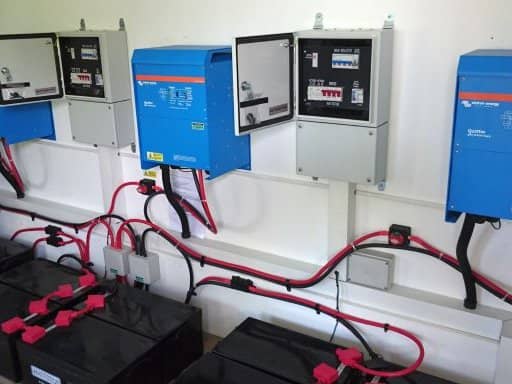
John Rushworth • 26 January 2016
Wattstor Energy Storage with Victron Energy
A catchy company name indeed, but what exactly is Wattstor? It is a Smart Energy Management System to help people make the most of their renewable energy installations by supplying battery energy storage systems and energy management devices to installers across the UK via an accredited installer network. To help achieve this goal, Wattstor chose Victron Energy products. Here is what Operations Director, Michael Danes had to say about that decision. “When Wattstor was first set up as a business it became evident early on that in putting together a durable, scalable and affordable battery storage system Victron Energy were going to become a key partner in helping us to achieve our aims. We have now been working with Victron for nearly four years and look forward to continuing to work closely with them as the UK’s renewable energy storage market continues to grow.” Wattstor Energy Storage Below is a basic installer schematic which includes a Quattro Inverter/Charger. Typically such a system also includes a Color Control GX connected to the VRM Portal for both onsite and offsite remote monitoring, plus system configuration and remote firmware updating for VE.Can products. System monitoring and more If you are not familiar with the system monitoring and all the features described above, it’s worth revisiting this to understand just how powerful that can be. First we need a Colour Control GX (CCGX) connected to the VRM Portal. To do that follow the instructions detailed under the Colour Control GX and VRM (Victron Remote Management) Portal headings on Victron Live . Once connected, and running the latest firmware which is always detailed on the Victron blog by searching on ‘Firmware’ , you will then be able use some of the more recent and very cool features. Remote Console With this feature you can remotely control a CCGX from anywhere, be that via your phone, tablet, laptop/PC or straight from the VRM Portal! No special software is necessary as a modern browser and a good internet connection is sufficient. To configure this there is menu called Remote Console on the CCGX, which besides setting a password will give access to the two main on/off functions: Enable on VRM: remote control is possible via the VRM Portal. Look for the new green icon, on the top right of the page. Enable on LAN: navigate to the Local IP of your CCGX in a web browser: you’ll be able to remote control it! When saving the Remote Console password on the VRM, note that it is saved for all users that are set to Full Control for that site. Also only those users can access the Remote Console feature. Other users, set to ‘Monitoring only’ cannot. When enabling this for the first time, make sure to either set or disable the password. And then reboot the Color Control after all is set as you want it to be. Here is an example from my electric propulsion sailing yacht via the VRM. The screen shows the current state of my Victron LiFePO4 electric propulsion batteries as would normally be seen onsite at the CCGX. Below is another example, viewed in Safari on my iPhone, where I can remotely switch the charger only on, or the inverter/charger on, or I can set it to Charger Only and adjust the current limit to zero (Passthru) which allows AC to pass through to the onboard AC sockets bypassing the inverter/charger. Also I can set or alter the current limit based on the grid/shore/generator supply available. Handy if there is a limited supply or you are running only a small Honda portable generator for example and need the inverter to kick in to handle the increased load above the generator’s rated output. My own generator is a Honda EU10i with a continuous rated output of 900 Watts, so when using that with the Mutiplus switch set to On, I set the current limit to 4.0 A which prevents overloading the generator (4.0 x 230=920 Watts). If I’m using the full 900 rated Watts output for an AC supply and want to boil a small 600 Watt kettle too – the Multiplus fast transfer switch seamlessly kicks in and the inverter supplies that extra load. As my compact Multiplus is a C 24/ 800/16 it can supply 800 Watts (700 continuous @ 25°C) of inverter power added to the 900 Watts of the generator. This feature is called PowerAssist®. My Multiplus is a 24V/16 A charger too. Obviously such features could be accessed with a Wattstor system but as I don’t have access to such private systems I’ve chosen to show my own. The principals remain the same. Other cool stuff If your battery storage site is mobile such as the VIMTEC – Video.Monitoring.Technology unit and has a USB GPS inserted in the CCGX , you can set a Geofence and receive an email if the unit moves outside a set limit. Equally applicable to boats and mobile homes/RVs. On my boat installation I use the CCGX USB socket in conjunction with a standard USB printer cable and a Neutrik NAUSB-W-B Reversible USB gender changer (type A and B), black D-housing This is handy if you wish to move your USB GPS for easier access or to a better reception area, for instance. Remote VEConfigure By using VE Power Setup I can login remotely to my Inverter/Charger and get and save the settings. Then by using VE Configure I can locally open the battery charger settings for example by getting the setings using the VE Configuration tools for VE.Bus Products software. I can then change the settings if desired (in this case for a Victron AGM battery storage bank) using VE Configure and send the new settings to the remote site using Remote VEConfigure from within VE Power Setup. By choosing the saved/altered file above, in this case Yacht_ELEKTRA_2016-01-26_13-05.rvsc, I can then send the settings to the remote site using the screen shown below. Remote Firmware Updates For both Remote VEConfigure described above and Remote firmware updates it is important that installers read the CCGX Remote VEConfigure and firmware updates manual on Victron Live first. VRM World Once your battery storage system is up and running you may choose to publicly share that information via VRM World . In order to do this see the VRM World manual on Victron Live first. Here is a publicly shared example of Lackan Cottage Farm’s battery storage, solar and wind energy site: https://vrm.victronenergy.com/site/share/token/3b08d1c1 To read more about Lackan Cottage Farm please see the recent blog . Wattstor case studies The commercial site uses three 10kW Quattros (also shown in the headline image of this blog) whilst the domestic install uses a 5kW Multiplus as shown below. Commercial Domestic Battery storage report Below is another Wattstor domestic installation using a Victron Mutiplus. A 6 Month Battery Storage Report, in PDF format, for this site is available for download here . Conclusion & credits It is clear that battery storage systems with local, remote management, monitoring and configuration are becoming ever more popular and hotly contested! It is therefore pleasing to know that partnerships with companies such as Wattstor and Victron Energy can provide much more than just simple battery storage. Thanks to Michael Danes of Wattstor for providing the images and information for this blog. To learn more about Wattstor please visit the following links: http://wattstor.com/ https://www.facebook.com/wattstor/ https://twitter.com/wattstor https://www.linkedin.com/company/wattstor John Rushworth
John Rushworth • 21 January 2016
Service Team Döbeln: Innovation with Victron Energy products
It’s good to hear from Victron distributors about the innovative projects they get involved with using Victron Energy products. In this case Jens-Uwe Prag, Managing Director of Service Team Döbeln in Germany, got in touch with us citing such an example. VIMTEC – Video.Monitoring.Technology GEMTEC GmbH , a customer of Service Team Döbeln, are a mid-sized, family-owned firm specializing in security and communication systems. Over the years they have grown steadily to become one of the largest providers of security equipment in Saxony . In their quest for new solutions, GEMTEC have devised a totally new product which uses Victron Energy products supplied by Service Team Döbeln. This product is called the VIMTEC MBE, which is a mobile and autonomous surveillance unit. This highly versatile system is designed to monitor construction sites, large events, traffic, and much more besides. Hybrid autonomy with Victron Energy Standalone power for the VIMTEC MBE is provided by a hybrid system consisting of a diesel generator with Victron Energy battery storage. This enables the unit to operate in isolation for up to 120 days in areas where no currently installed surveillance infrastructure exists. At the heart of the unit, within the tamper proof body which incorporates its own system security, is a pneumatic mast that can extend up to 15 m in height with 360 degree cameras and lighting on the masthead. A range of surveillance fitment options exists which can include thermal imaging, IR lighting, motion detection, access control, perimeter surveillance and alarm verification from a distance. The units can also allow verbal contact via loudspeaker along with video recording, management systems and image analysis software. The commissioning of the specific detection and evaluation techniques can even be carried out remotely. Assisting this level of sophistication and to make this all possible are Victron Energy gel batteries, a Multiplus, BMV-702 battery monitoring along with the offsite remote control and monitoring made possible by a Color Control GX and the Victron Energy VRM portal . You can see this, all expertly installed, in the headline image of this blog. Conclusion Once again it is great to hear of innovative design incorporating Victron Energy products. Congratulations to those involved in producing a highly professional surveillance system. If you have an interesting project such as this – do get in touch with us so we might feature it here on the Victron Energy blog. Credits Thanks to Bob Hopman for the heads up on this project and of course Service Team Döbeln and GEMTEC GmbH for the information and images featured in this blog. To learn more about the VIMTEC MBE visit: http://www.vimtec.eu/en/ John Rushworth
John Rushworth • 05 January 2016
Lithium-ion power for the V&A’s ‘India’ Concierge Stations
If you have visited the Victoria and Albert Museum in London recently you may have seen their new Concierge Stations, offering hot chocolate and Indian-inspired snacks to visitors. What you might not know is that they are Victron Energy powered. The stations were designed as mobile units that can be moved as and where required; providing unique hot refreshments without the need to connect directly to the mains. Victron Energy distributor, Energy Solutions got involved in the project when the fabricator of the units, Random Products in Brighton, called on their electrical system design skills to help them specify and supply the electrical components to power the hot drink and food warmer. Specifications The technical sales team at Energy Solutions liaised with Random to establish the exact needs of the units. The final specification and system design features: 24V Lithium 200AH battery pack Phoenix 24V 25 Amp battery charger BMV 700 battery monitor , ancillary equipment including fuses Conclusion Already the unit has proved a great success and it is hoped more will be in production this year. It’s great to see innovative use of Victron Energy products and many thanks to Energy Solutions for the information and images used in this blog. If you want to know more about their project, do give them a shout by contacting the Energy Solutions Technical Sales Team on 01634 290772 or emailing them at sales@energy-solutions.co.uk If you too have an interesting project – do let us know about it. John Rushworth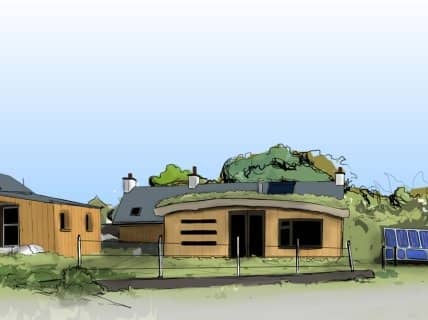
John Rushworth • 10 December 2015
Living off-grid in the UK: Lackan Cottage Farm
It seems only fitting that as the 2015 United Nations Climate Change Conference takes place in Paris, that we look at how a typical family, using Victron Energy equipment, is making a difference to this world. Recently I was in touch with Victron Energy customer Steve Golemboski-Byrne. Steve and his family live at Lackan Cottage Farm, which is a smallholding in the beautiful patchwork quilt countryside of County Down , near the east coast of Northern Ireland. It is three years since the family moved there with the expressed aim of demonstrating low impact and off-grid technologies, to visitors from all over the world. Technologies for living off-grid The technologies used range from the use of natural building materials and techniques, to composting toilets, greywater treatment, food growing, solar heating and biomass. At the heart of the project though is the all essential renewable energy installation. Although totally off-grid the family’s aim is still to demonstrate that a family can live comfortably in a less than sunny climate without making huge sacrifices, by using renewable energy. Whilst the use of low energy devices and LED lighting reduce that electricity demand, there is still the desire to run many of the normally grid connected, yet power hungry, appliances. These include a washing machine, fridge, freezer, induction hob, tumble drier etc. This may surprise many people that in such a climate as the UK, that it is possible to live effectively in this way. Here then is how Steve and family have achieved that. Renewable energy systems A 4.5kWp (in total) polycrystalline PV array is installed. This comprises mainly of previously used solar panels from a church that upgraded their solar installation. The array is sub divided into 4 arrays, each of which feeds into a solar charge controller. These Victron BlueSolar MPPT controllers range from a 150/70, a 100/50 and 100/30 to a 100/15, with the solar sub arrays varying from 1.5kWp to 500Wp. These arrays are angled to maximise output in the winter months. The Victron solar charge controllers feed a 1,000Ah Exide Marathon tubular plate battery (12x 2v cells) which is connected to a Victron Energy Color Control GX (CCGX). Image copyright Rob Durston 2015 Additional power is provided by a Bornay Inclin 3000 wind turbine, which feeds an Aurora 3600 grid tie inverter, the output of which is AC coupled to the output of one of a pair of Victron Energy Multiplus 24/3000/70 units which are connected in parallel. Although the turbine has a fail-safe dump in case of ‘grid’ failure, excess power dumping is managed on the Multis using the programmable relay assistants to control the AC2 Out relay to switch storage heaters on and off, based on voltage triggers. Having one on each Multiplus allows a staged load to be applied. Additionally a wired AC Current Sensor attached to the AC output of the Aurora wind inverter is connected to one of the Multis to provide the CCGX unit with data. Why Victron? Speaking to Steve I was curious as to why he chose Victron Energy equipment. Here is what he had to say: “In the first instance we were very fortunate to have the advice of Philip Gordon of Leisure Batteries Ireland, who are a Victron Energy distributor. This, along with them supplying the Victron equipment, proved to be invaluable in the success of our energy system. Added to that support was the flexibility of the Multis themselves, which makes them such powerful tools.” “We have experimented with various ways to manage the wind turbine inverter – initially through the ‘PV Inverter Support Assistant’ to shift frequency, and then using the relay based method which allows us to use the two dump loads. We make data from our Victron VRM site publicly available to encourage others to consider the viability of such a setup, and also used the Webservice API to display live information directly on our website. Plans for the future include the restoration of a second cottage to off-grid holiday accommodation, where we’ll be using VRM data to inform visitors about their consumption, and we look forward to continued software developments and functionality.” Web service API Here’s a screenshot below to show how the web service API is used to display live data taken from the VRM (Victron Remote Management) portal by embedding that information in the Lackan Farm Cottage website. Conclusion We’d like to thank the Golemboski-Byrne family for the information and images used in this blog. Naturally we are also delighted they chose Victron Energy equipment too. In fact we’d love to hear from other customers also, about how they are using Victron products to empower their own off-grid living and installations. As the Paris talks on climate change draw to a close this Friday, it is my sense that pioneering projects like Lackan Cottage Farm can only be a good thing for this world. We wish them every success. John Rushworth. Further information Lackan Cottage Farm – http://lackancottage.co.uk/ Facebook – https://www.facebook.com/lackancottagefarm Twitter – https://twitter.com/lackancottage
John Rushworth • 07 December 2015
Discovery Yachts: Energy systems and choices
Imagine you’ve reached a certain age, you’ve worked hard all your life, you’ve built and sold your company in that time and your children have flown the nest. What would you want to do next? For those of us that love sailing, I can only think of one thing a sailor or sailing couple would want to do. Sail to exotic places. Given this scenario you can be forgiven for thinking all that previous hard work is behind you as the next choices you make are going to be hard too – but likely much more enjoyable! So what sailing yacht would you choose? This was the dilemma that John and Caroline Charnley faced towards the end of the 1990s. They started looking for a perfect short-handed cruising yacht to indulge their passion for sailing, while allowing them to enjoy a level of comfort that few performance sailboats could deliver. Having failed to find the exact solution to meet their needs, they commissioned renowned designer Ron Holland and the Discovery 55 was born – all designed to take two people around the world on the ultimate journey of discovery. Now nearly two decades on since the birth of their boat and Discovery Yachts in Southampton in the UK, this has resulted in a thriving business with a team of over 100 people and a growing family of over 120 like minded Discovery owners, all sharing in the dream that is bluewater sailing – be they the sailors or the builders. When such a family of folk feel that way, only quality results. Such quality can be seen in all their yachts including the enhanced version of their original 55, the Discovery 58. Discovery 58 Here are a few images to give you a flavour of the 58. Luxury onboard Okay, so you’ve chosen and ordered your dream yacht. Now the hard work starts with refining the specification to your exacting needs, be that colours internal and external, choices of fabric types and styles, push button winches, the sail plan, fridges, air conditioning, a washing machine and the all essential ice maker for your G&T. From a Victron Energy point of view this all means a lot of stored battery energy required and the customer’s expectation that there will be plenty of it, needs to be met. Running out of ice for your sundowner in that quiet anchorage and having to start a generator is simply not on. How then to achieve that peace? Energy system choices Previously delivered Discovery 55s & 58s have been offered with a choice of either 12 x 2V Gel cells of 500 Ah (10hr rate) or 700Ah as an option, along with a 5 or 7 kVA generator. The latest build Discovery 58 is to be named Karibu which means ‘Welcome’ in Swahili, based on some wonderful safari experiences her owners have had in Africa. Karibu has been highly specified by her owners and is due for delivery in Spring 2016. First things first though; an energy audit for Karibu. In doing so you can do no better than follow Reinout Vader’s advice in the book ‘Energy Unlimited’. It’s available as a hard copy and for download in a number of languages here: https://www.victronenergy.com/orderbook Once you’ve carried out an energy audit, discussed how often and for how long you want or have to run the generator each day, it becomes clear with the advent of ever increasing energy demands that a large battery bank and generator is needed, hence the options offered by Discovery. It’s not just the Ah of the pack though as we’ve learned in an earlier blog – Batteries: Lithium-ion vs AGM Initially when Karibu’s owners and Discovery Yachts looked at the size and type of energy storage they were quite keen to just go with the standard options. This is in part the conservative nature of Discovery where they tend to stick with what is and has been known to work for other owners. However times move on and with the advent of others fitting Lithium-ion systems it soon became clear there were a number of benefits. More of that in a moment. First there were other boats and companies to look at, which is always reassuring when considering a later technology system, They included: TAG Yachts , Morris Yachts and their award winning 48GT , X-Yachts and even the electric propulsion Arviro 10. With the help of one of Victron Energy’s principal distributors in the UK ( Barden UK Limited ) plus input from Victron’s technical department and various meetings with Karibu’s owners and Discovery Yachts it was eventually decided that a Lithium-ion energy system was preferable. Naturally Victron Energy are delighted and we commend Discovery Yachts and Karibu’s owners for making this technological step change. Switching to Lithium-ion Let’s recap on some of the benefits of Lithium-ion, and in particular Lithium-iron-phosphate (LiFePO4 or LFP) which is the safest of the mainstream Li-ion battery types and the preferred choice for marine systems. Some of the advantages of a Lithium-ion battery over lead acid batteries such as Gel and AGM are: High energy density: more energy with less weight and volume High charge currents (shortens the charge period) High discharge currents (enabling for example electric induction cooking or stern thruster use) Long battery life (up to six times the battery life of a conventional battery) High efficiency between charging and discharging (very little energy loss due to heat development) Higher continuous power available Added to this are a number of other benefits which people quite often miss when looking at a large cruising yacht that may not visit marinas often or even be too large for some marinas. With Gel & AGM batteries there is also the slow charge rate once they hit the absorption phase around 80% SOC. In fact it can be even worse with large gel banks that can hit this phase at 60% SOC. This all means longer generator run times and associated costs, not to mention noise. And of course a good 100% charge needs to be done every week or two for longevity of the batteries. In such cases you might only end up with around 30% of the bank capacity that can be cost effectively cycled, whereas with Lithium that can be as much as 80% of the stored capacity available. In a nutshell it’s not all about the stored Ah available, it is what is actually useable too. A few final points that people also miss is the lack of Peukert effect with Lithium when compared to Gel/AGM, plus the incredible voltage stability that Lithium offers. No voltage droop issues here or in fact any major concerns about the SOC you leave a LFP battery in, when compared to Gel and AGM. Karibu’s energy system Here is a diagram of the system concept. A larger format that is easier on the eye is available as a PDF: System concept Discovery 58 The finalised and delivered bill of materials follows, which includes some alterations to the above, not least of which is a 4th battery. The nominal voltage of each 180Ah battery is 26.4V. In this case that gives a 24V 720 Ah bank of 26.4 x 180 x 4 = 19.008 kWh of stored energy of which 80% is useable, which gives Karibu 15.22 kWh of useable energy. System components delivered 1 x Quattro 24/8000/200-100/100 2 x Lynx Distributor 1 x Color Control GX 1 x Digital Multi Control 200/200A 4 x Victron Lithium-Ion Battery 24V/180Ah 1 x Lynx Ion + Shunt 600A 1 x Isolation Transformer. 7000W 230V 1 x Shore Power Cord 25m 32A 1 x Power Inlet 32A S/Steel 2 x Orion 24/12-5 1 x Orion 24/12-70 1 x Skylla-TG 24/50 (1+1) 90-265VAC 1 x Skylla Control Karibu’s lithium-ion energy system installation Below is an overhead photograph of two of the four batteries installed, along with a Lynx Distributor and Lynx Ion + Shunt. In recognition of the fact that at some future point in time batteries may need to be lifted out for one reason or another, Discovery Yachts have thought ahead and fabricated a lifting tool to fasten to the batteries in turn. This will make lifting each battery easier, as they weigh 55 kg each. A lifting eye will be provided above the headlining, over the battery bins, for a block and tackle. Conclusion & Credits As the build of Karibu progresses we hope to bring you updates and pictures of that, plus information on the initial cruises and how this first Victron Lithium-ion system for Discovery Yachts performs for all concerned, when compared to the old Gel system. My thanks in compiling this blog goes first and foremost to Karibu’s owners and Richard Andrews of Discovery Yachts . My thanks also to Johannes Boonstra of Victron Energy and recent Victron Energy distributor award winner Barden-UK . Feel free to comment or ask any questions you may have in the Disqus comments section below. John Rushworth.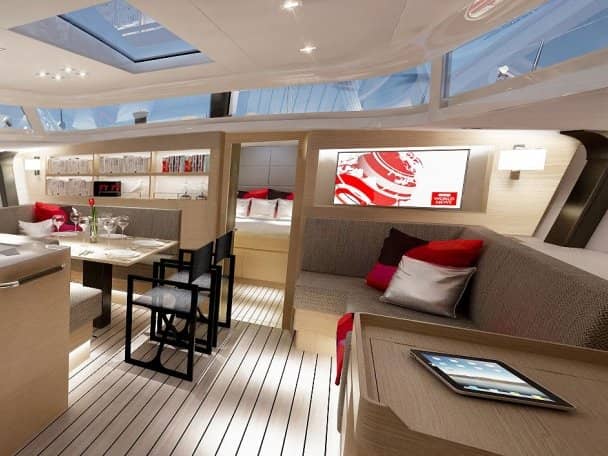
John Rushworth • 16 November 2015
X-Yachts choose Victron Energy Lithium-ion energy system
X-Yachts are no strangers to the world of performance sailing and their pedigree is easily warranted, as over the last 35 years the company has been synonymous with high performance yachting, winning nine official World Championship titles, and delivering almost 1,000 ISAF recognized one-design class yachts. Race victories in prestigious regattas like the Admiral’s Cup, Sardinia Cup, SORC, Rolex Giraglia Race and Rolex Middle Sea Race all show testament to the X-Yachts heritage of building world class performance yachts. However since 1990 X-Yachts have increasingly focussed on making offshore performance orientated cruising yachts over 50ft. More than 200 X-Yachts between 50 and 73 ft are sailing around the world, many of them making circumnavigation voyages. The all-new X6 Building on this success X-Yachts have now developed the all-new X6 to provide ultimate luxury, without sacrificing the renowned X-Yachts sailing performance. The X6 has been designed to take her owners and crew anywhere in sumptuous style and comfort as demonstrated in the headline image rendering above and the one below. These images are based on advanced 3D design technology and showcase just some of the offerings and possibilities. Lithium-ion battery systems Performance, cruising ability and luxury in a modern 66ft yacht such as the X6 cannot exist these days without a performance energy system to match. This being the case Victron Energy are delighted to announce that X-Yachts have chosen a Victron Lithium-ion energy system as the optional enhancement for Hull No.1. The older technology of AGM (lead acid) is currently offered as the standard fit, but that is heavier with a lower charge acceptance rate, less cycling ability and a shorter lifespan. For an in depth comparison of the two technologies see the blog: Batteries: Lithium-ion vs AGM This all adds up to a growing list of prestigious yacht designers and builders who have chosen such Victron Energy systems. In fact in the coming weeks we also have another high-end yacht company to add to the list, besides Morris Yachts and TAG Yachts who have already fitted such systems. X6 equipment specification The chosen products for the X6 optional energy system include: 7000VA Isolation transformer Quattro 24/5000/120-100/100 Skylla-i 24/80 Color Control GX BMV-700 battery monitor Lynx Ion + Shunt 600 and see an earlier blog post Lynx Distributor 4 x Lithium battery 24V 180Ah Ancillaries such as DC-DC converters and Panels and system monitoring Why choose Victron? In writing this blog I was curious to know why X-Yachts chose Victron Energy components, so I asked them. Here is what John Morsing who takes care of all their technical and electrical installations had to say: “We chose Victron ‘s system because they were able to deliver a complete system where the individual components are all from one supplier. Moreover, in being our primary supplier of these components, we have historically had good cooperation, service and support, both locally and globally from Victron Energy.” Interestingly these are almost the exact same reasons I chose Victron for my private conversion to electric propulsion and a lithium-ion system on my own 26ft sailing sailing yacht. It would appear I’m in good company! Conclusion It seems barely a day goes by now where I don’t hear of some company or individual choosing a lithium-ion system over older lead acid technology energy systems. Large, small, leisure or commercial it seems Lithium systems have come of age in the marine world. Credits Thanks to X-Yachts for the information and images used in this blog. Thanks also to Niels Kaarill for making me aware of this project. Niels is Victron Energy’s area sales manager for Scandinavia. Links Learn more about X-Yachts: https://www.x-yachts.com/en/ John Rushworth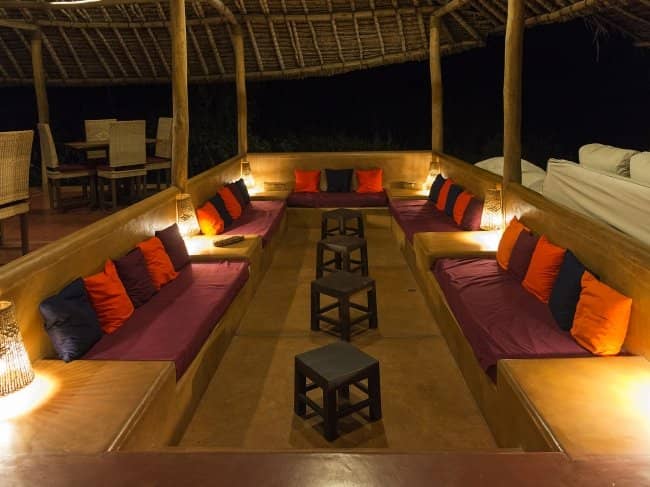
John Rushworth • 30 October 2015
Nuarro Lodge: Sustainable and responsible tourism in Mozambique
Behind the scenes, powering the Nuarro Lodge lighting shown above, is a newly upgraded Victron Energy hybrid-30kVA, 3-phase system with 38kWp of solar power. The Lodge though is but one part of the Nuarro project that Victron Energy and their partner companies are involved with. Pristine, off-grid and remote Nuarro Lodge, its associated chalets, activities and community based projects all form part of this award winning complex. Situated beneath the aqua blue skies of northern Mozambique, Nuarro is adjacent to unspoilt sands and the warm crystal clear coral reef waters of the Indian Ocean. Nuarro is built from natural materials (by the local community) in an 800 hectare (8 sq km) environmentally sensitive concession area of the Baixo da Pinda peninsula. In the words of the company – working in and being considerate of such an area is all about friendly people, top-class activities and fantastic food, whilst showcasing a spectacular, pristine environment in the most responsible way possible. Activities at Nuarro include: Recreational diving Dive courses Snorkelling Kayaking Whale watching Dhow sailing Mountain biking Bird watching Massage Beach picnics Local village tours Even though it is off-grid and remote, Nuarro generates its own electricity and clean water using renewable energy which helps bring sustainable tourism to the area without compromising the basic needs and comforts of guests. This ensures the local people and community benefit also, by bringing work to the surrounding area. Engaging with the local community in this way ensures they benefit from the growth of responsible tourism at Nuarro. This is achieved directly through donations and indirectly through the creation of jobs for the local population. From each overnight stay, $5 is donated to the local community and $2 from each activity. Several projects have been funded from these donations including the building of a community centre and medical post – plus various projects in the field of medical care, hygiene and agriculture are also being developed. Apart from donations, Nuarro has a significant impact on the development of the local economy as it employs a total of 80 local people. Added to that are approximately 1,000 family members who are dependant on the income from these jobs. Upgrading Nuarro Lodge’s energy systems Building of the lodge started in 2007 and the owners of the lodge have over the years upgraded the renewable energy and water system to fit the needs of the guests, community and employees. The best choice for this being a hybrid-system for the reliable generation of electricity with the lowest carbon footprint, with hot water being supplied by solar geysers directly to the buildings. During the recent upgrades Nuarro’s owners decided to install a new inverter and solar charge system. Reliability and remote monitoring have been missing for years and the decision was therefore made to invest in Victron Energy products for their known reliability in off-grid applications in harsh and remote environments. Energy system configuration The off-grid system consists of a three phase 30 kVA system with 38kWp solar power, 2,400 Ah battery bank with a 40kVA back-up generator. Three Victron 10kVA Quattros in a 3-phase configuration and nine DC-coupled 150/85 MPPT Victron Energy solar charge controllers are all installed in/on one cabinet, including two battery monitors and a Color Control GX . The 38 kWp solar power is generating an average energy of 180 kWh per day, which is partly used by the lodge during the day and also stored in the battery bank for night use. During overcast days and high night loads the generator automatically starts based on the SOC (State of Charge) setting in the BMV battery monitors. The Color Control GX is connected via long range Wi-Fi to the Wi-Fi satellite router which connects to the internet for remote monitoring and management. The entire lodge can run from solar including the borehole pump, water treatment plant, the diving compressor, the cold and freezer rooms, fridges and other restaurant and bar equipment. During the night the load is minimised by using timers switching off non-essentials to minimise the use of energy from the battery bank during the night. Sustainable and responsible As mentioned previously community engagement and benefit is a key part of sustainable and responsible tourism. Based on this Anan Clinica, a Dutch Foundation, donated a small solar system to the school and clinic with the help of Victron Energy and involved suppliers. This allows the community to have access to electricity on a small scale for enhancing education and health care in the community as part of the community based and sustainability drive of the project. This part of the project was managed by Sheldon Brown of Tytech with the assistance of Power Electric and Battery Power Hub from Durban and Empangeni in South Africa. For the installation and commissioning on-site, Tytech used its subsidiary Technical Solar from Imhabane in Mozambique. Conclusion Having been involved with a community based renewable energy project myself here in the UK – it’s great to see such like minded thinking which benefits a local community in Africa whilst still running the core business sustainably at profit. Personally I think we need more of these responsible businesses like Nuarro. In writing this blog I found myself singing Mozambique which is a song written by Bob Dylan and Jacques Levy that was originally released on Dylan’s 1976 album Desire . I think it captures some of the essence of Nuarro Lodge. Here’s the last verse. And when it’s time for leaving Mozambique To say goodbye to sand and sea You turn around to take a final peek And you see why it’s so unique to be Among the lovely people living free Upon the beach of sunny Mozambique. John Rushworth Credits Thank to Peter de Wit of Victron Energy for making me aware of this project. Thanks to Nuarro and Victron Energy for the images used. Listed below are the partner companies involved without whose expertise these projects would not have been completed: Tytech Solar of South Africa : www.tytech.co.za Victron Energy customer. Energy analysing, engineering, installation and commissioning of Victron Energy equipment and solar arrays. Supplied and installed ‘blue Victron Energy cabinet’ with 6000A bus bar and incorporated Victron Energy equipment into cabinet. Supplied and installed Wi-Fi system at the lodge for CCGX. Technical Solar of Mozambique : Victron Energy distributor in Mozambique. Linked to SA mother company Tytech. Removed old installation (2 x MLT-inverters and 7 x Outback solar chargers) in a two-days change-over of electricity supply to the lodge with hardly any interruptions to the energy supply to the lodge. Installed new solar arrays and did upgrade of solar cabling and connection boxes. Power Electric from South Africa : www.powerelectric.co.za Manufacturer of cabinet and support to Technical Solar for installation and commissioning on site. Victron Energy distributor in SA ( KwaZulu Natal province area). Supplier of 42 x 230Wp solar panels for latest upgrade and some Victron Energy products. Assisted with technical engineering. Project components Nuarro Lodge: Solar Panels: 38 kWp solar arrays; 7 of 20 x 200Wp Tenesol PV-modules and 2 of 21 x 230Wp BPH PV-modules Solar chargers: 43.6 kWp: 9 x Victron Energy MPPT 150/85 replacing Outbacks Battery bank: 2 x 1200 Ah/48V tubular 2V cells (First National Batteries made in SA) Inverters: 30 kVA; 3 x 10 kVA Victron Energy Quattros in three phase configuration. Replacing 2 x 18kW 3 phase MLT-inverters. Back-up generator: 40 kVA 3-phase diesel generator John Deer. Monitoring: Victron Energy 1 x Color Control GX and2 x BMV-702 battery monitors. Community school & clinic Solar panels: 2.8 kWp; 14 x 200Wp panels Solar charger: 1 x Victron Energy 150/70 MPPT controller Battery bank: 1 x 430Ah/24V 12 x tubular 2 V cells Inverter: 1200VA: Victron Energy 24/1200 Phoenix compact.
John Rushworth • 15 October 2015
Land Rover & Victron Energy: The Experience Tour Australia 2015
For six lucky winners from Germany, a Land Rover Experience tour will start in but a few days time on October 19th in Australia’s Outback. The Experience Tour Australia 2015 commences in the Northern Territory and participants will be using the new Discovery Sport as their tour vehicle, shown in the headline image above (© Land Rover). Each Land Rover Discovery Sport is fitted with a small Victron Energy inverter for AC power onboard. Victron Energy equipment does not end there though, as every tour needs a backup vehicle with off-grid power. To coin the Victron motto, that means: Energy. Anytime. Anywhere. And there is plenty of it – with over 20kWh of Lithium-ion stored energy. The Victron Energy equipped Land Rover Backup Truck Inside the driver’s cab with a Color Control GX for system monitoring What’s inside the rear of the truck? The system build for the backup truck shown above was designed and installed by Victron Energy dealer Accusysteme Trans Watt , who are based in Germany. Here is their system schematic as a PDF: Systembild Land Rover Experience Germany The equipment build list is as follows: Article code Description Quantity PIN024181200 Phoenix Inverter 24/180 Schuko outlet – 230V 19 QUA245021010 Quattro 24/5000/120-100/100 230V +50A aux. Inv./Ch. 2 BPR000200100 Battery Protect BP-200i 1 ASS030520100 VE.Bus to NMEA2000 interface 1 BAT512201400 Victron LiFePO4 Battery 12,8V/200Ah – BMS 8 ASS030560200 M8 circular connector Male/Female 3 pole cable 2m (bag of 2) 4 CYR020230430 Cyrix-Li-charge 24/48V-230A intelligent charge relay 1 BPP000300100R Color Control GX Retail 1 ASS030530310 VE.Direct Cable 10m 1 REC020005000 Digital Multi Control 200/200A 1 BAM010702000 Battery Monitor BMV-702 1 BMS300200000 VE.Bus BMS 1 ASS030550200 Non-inverting remote on-off cable 1 ORI241240020 Orion 24/12-40A DC-DC converter IP20 3 Below you can see a compound image of the install process, showing the Quattros and Lithium batteries being installed. A short pre tour film To give you a flavour of the Land Rover Experience Tour Australia 2015, here is a short video from the pre-scouting Land Rover Experience team. They have already been to Australia twice, to scout the final route. The video below is from their first visit. A second pre-scouting video is here: https://www.youtube.com/watch?v=MCjGjqnHNwc Follow the Experience Tour Australia 2015 The tour itself starts on Monday October 19th 2015, with reports through these channels: Tip – Use the Google Chrome Browser for direct in-line translations. Facebook: https://www.facebook.com/landrover.de Facebook: https://www.facebook.com/LandRoverExp Twitter: https://twitter.com/LandRoverDE Instagram: https://instagram.com/landroverde You don’t have to be a winner to have the Land Rover Experience Whilst not as exotic as the winners route down under, if you live near Germany there are still plenty of other opportunities, as Landrover-Experience.de and their partner agency APS GmbH have two off-road centres. One near Düsseldorf and another near Paderborn, which is known as the Bilster Mountain Drive Resort, shown below (© Land Rover). Conclusion & Credits Victron Energy are proud to be associated with Land Rover as described in this blog. We look forward to reading all about the winners adventures on the Experience Tour Australia 2015. Thanks in compiling this blog goes to the following companies: Landrover-Experience.de APS GmbH Accusysteme TransWatt Make relations GmbH Also thanks to Bob Hopman and Uwe Dräger of Victron Energy for making me aware of this fabulous adventure. John Rushworth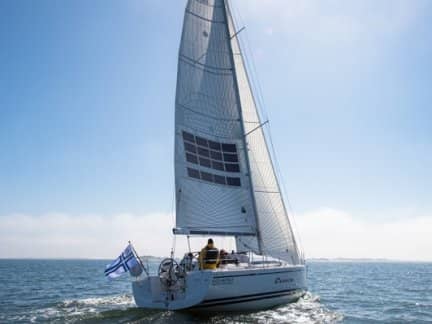
John Rushworth • 09 October 2015
Victron equipped zero emissions yacht wins yet another award
At the recent Southampton boat show the Victron Energy equipped Arcona 380Z sailing yacht, built to Victron partner Oceanvolt’s specification, picked up yet another award. This time it was the Sailing Today Awards 2015 – Green Award (in association with Astins Sailing Sculptures). This is the second award this year for the vessel, having previously won Boat of the year 2015 , at the Helsinki International Boat Show. Zero emissions What makes this boat so special is it has zero emissions, as no diesel engine is fitted. That is not to say the vessel lacks power or indeed a power plant. Far from it. The Arcona 380Z is fitted with Oceanvolt’s electric propulsion SD15 Sail Drive shown in orange (plus many other colours) below. Besides that you’ll of course also note the familiar blue colour of Victron Energy products, which is a result of Oceanvolt and Victron Energy teaming up back in 2013 . Another special partnership in commissioning the Arcona 380Z is the one with UK Sailmakers, as the mainsail of the vessel is fitted with innovative Power Sails® a solar sail developed and patented by Alain Janet, CEO of Solar Cloth System and owner of UK Sailmakers France. Add in further flexible solar panels on the deck, boom and mast plus substantial regeneration from the propeller when sailing to charge the lithium batteries – and it is only then that you begin to realise that a modern zero emission sailing yacht is now a reality. Victron onboard Besides being fitted with a BlueSolar MPPT solar charge controller, a Multiplus 48/3000/35, Orion DC-DC converter , Color Control GX and using remote monitoring via the VRM (Victron Remote Management) portal, Oceanvolt are the first to use the solar cloth Power Sails® referred to in previous blogs on a production based boat. These diverse system all need to be monitored and controlled. Below you can see the Arcona 380Z ‘s control panel which includes the Color Control GX to achieve this, along with a Digital Multi Control to manage the Multiplus. Bringing the technologies together As some of you may know I converted my own sailing yacht to electric propulsion about 3 years ago and chose to use Victron Energy products wherever possible. My own boat is a hobby rather than a commercial project, but back then I believed that electric propulsion was going to be a rewarding, quiet and particularly fulfilling experience. That has proved to be the case, yet my personal dream other than carrying out my own individual project – was that someone somewhere would make all this mainstream. Without well funded visionary commercial companies like Oceanvolt, that could have remained a personal pipe dream. In fact without Oceanvolt and their partners I doubt any comprehensive zero emissions systems would have been fitted to a production sailing yacht, such as the Arcona 380. The latest award to my mind is recognition of all this and how well they have brought the companies and technologies together. The short video below I think captures that. Conclusion In light of recent events with cars and diesel engines, this award seems timely if not an ideal opportunity for other boat builders to consider the planet and help rid the sea of diesel particulates. To my mind Oceanvolt and Arcona are pioneers in this field. Victron Energy are proud to be associated with them. And it seems zero emissions sailing does not stop there, as I also heard recently that the new J/88 Fast Family Daysailer & Racer is also Oceanvolt, Solar Cloth System & Victron equipped. Personally I think this all goes to prove there is a sailing revolution underway – what say you? John Rushworth Credits : Thanks to Christian Hallberg of Oceanvolt & Alain Janet of Solar Cloth System for the images and information used in this blog.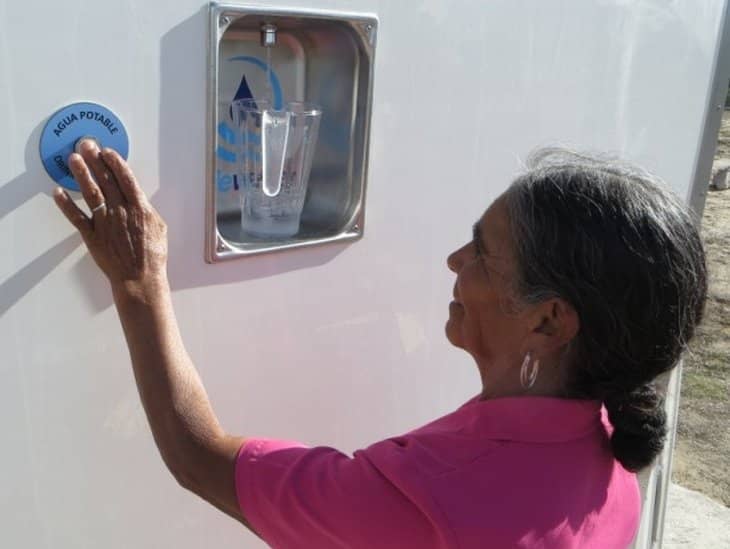
John Rushworth • 07 October 2015
Eole Water: Making water from air with Victron Energy
An atmospheric water generator (AWG), is a device that extracts water from humid ambient air. Victron Energy are delighted that Eole Water of France have chosen our products to assist in this process of making water from air, particularly in locations where other sources of water are scarce. How does it work? The NERIOS.S3 – A self consumption machine The NERIOS.S3 EVO version primarily uses standalone PV to power it. The minimum installed solar power required for self-sufficiency is 5.1kWp. Other models can also use wind power. The potable drinking water produced (which is multi stage micro, carbon filtered, UV treated and mineralised) can range from 0.5l/h to 13.2l/h subject to the power used and the temperature and humidity of the air. The water tank capacity is 1,000 litres. The EVO has three operating modes: Primary operating mode: smart standalone machine The machine only works with solar energy from photovoltaic panels. Following the curve of the sun (MPPT) during the day, solar photovoltaic energy feeds a variable speed cooling system that converts and stores this energy in an ice accumulator. During the night, a period which is cooler and damper, cold stored in the accumulator cools the outside air, which has been sucked in, down to its dew point, causing condensation and the formation of water. Secondary operating mode: smart switchable machine If a regular connection to the grid is possible, the electrical grid is used to stabilise the energy coming from the solar panels during the day (stored in the ice accumulator) and supply the energy needed at night to regulate the system. It is also possible to switch and run with only solar energy during the day and the grid during the night. In the event of an extended period without sun, the machine can be powered directly from the grid. Emergency Mode: ever ready machine In the event of a lack of water during a period without sun and without the grid, the machine can be powered by a backup generator. Victron inside and out Depending on the model, Eole Water use a range of Victron Energy products inside and out in their automatic water generators: Autotransformers Multiplus inverter/chargers Lithium batteries (with cell balancing and Battery Management Systems[BMS]) BMV-700 Series battery monitors Color Control GX (for both on & off site control and monitoring) Solar Charge Controllers BlueSolar Panels VRM (Victron Remote Management) Portal – Try the demo Conclusion & Credits Apparently today there are 150 million people worldwide who live in remote areas without any access to safe drinking water. Eole Water’s mission, using Victron Energy’s products to facilitate this, is to provide these isolated communities with potable drinking water. A laudable ambition indeed and one which we are delighted to be associated with. Many thanks to Eole Water of France and Jacques Noël of Victron Energy for making us aware of such an interesting project, and supplying us with the images. For further information on projects such as that shown above and below, please contact Eole Water SAS: http://www.eolewater.com/ https://www.facebook.com/EoleWaterSAS John Rushworth
John Rushworth • 02 October 2015
Victron Energy powered Smartflower
From space to earth, solar panels come in many shapes and sizes – but none so pretty it seems as the folded petals of the Smartflower shown above, during a rainstorm in France. Smartflower is a self stowing, self cleaning, automatic tracking, solar energy solution. Whilst they are usually connected to the grid, now there is an off grid and self consumption ready version, using Victron Energy components. Rather than explain Smartflower’s operation, it is much more elegant to see one in action. Here is Mike’s installation in France. Victron inside & out As you can see below, the off grid version uses a Victron Energy inverter, solar charge controller and Lithium batteries, plus this standalone unit connects to Victron Energy’s VRM web portal for system monitoring. Specifications of the POP+ off grid version Nominal capacity solar system 2.31 kWp High performance due to dual-axis sun tracking. 3,400 – 6,200 kWh/annum subject to region Victron Energy Inverter (230 Volts AC with HUB 1 assistant so it can be set in UPS, off grid, grid support or feedback mode) Solar Charge Controller (MPPT 150/85 MC4 charge controller) Battery capacity 4.6 kWh (4 cells) Battery technology Victron Energy LiFePO4 with integrated battery management system Operating temperature range -20°C to +50°C Output power 6,000W (peak), 3,000W (constant output @25°C) Grid compatibility 230 VAC +/-2% / 50 Hz +/-0.1% or 120 VAC +/-2% / 60 Hz +/-0.1% Weight of total system approx. 800 kg 1 AC connection (AC output) Monitoring System using Victron Energy BMV-700, Color Control GX, VRM, LAN/WLAN/web interface Operation Conclusion In recent times, due to the falling cost of solar panels, there has been a move toward fitting additional easterly and westerly panels (space permitting) in addition to the ideal southerly facing panels. This alters the shape of the generation curve, generating energy earlier and later in the day. Smartflower with a smaller footprint manages this in an attractive and elegant way and due to the design further benefits are realised. To quote Smartflower: “Thanks to the astronomical control system, the solar modular fan moves horizontally and vertically along with the sun’s position, even when it’s cloudy. This guarantees optimum alignment with the sun and an exact 90° angle – during the entire course of the day, even when the sun is low on the horizon in the winter. The result: despite the lower space requirement, up to 40 % more output when compared to that of a conventional rooftop system, which is only ideally positioned towards the sun for a few hours per year. And thanks to smart cooling and smart cleaning, common losses in output due to heat and contamination are prevented by up to 15%.” Credits We are delighted Smartflower have chosen Victron Energy components for their systems and thank them for the information and images used in this blog. To learn more about this innovative Austrian company go to: https://www.smartflower.com/en/ Also on Facebook at https://www.facebook.com/smartflowerTM/ John Rushworth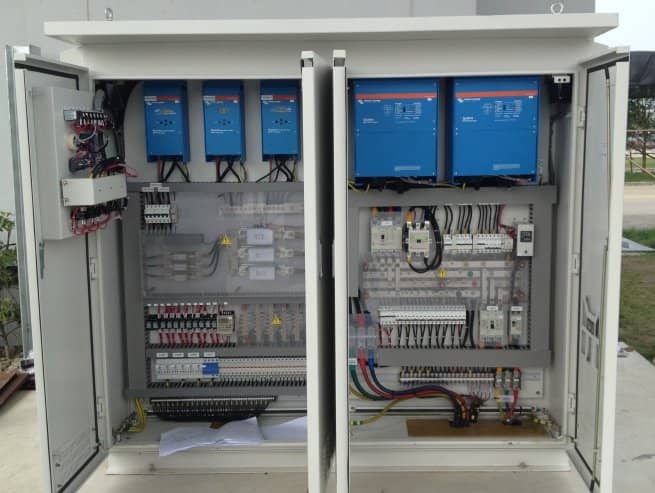
John Rushworth • 25 September 2015
Victron Energy power: Toyota EV charging station
Alan Peng of Shenzhen Royal Technology Co. Ltd., who are Victron Energy dealers in China contacted us recently, having installed an EV charging station for Toyota using Victron Energy products. The headline image above and the photos below show the installation. Jan Klumpenaar, who is the Victron Energy Sales Manager for the region, informed me that: “The Toyota EV charging station project was installed at the end of August. The customer and the partner are very satisfied with the HUB-1 solution for PV generation and power supply, for EV charging. The project was installed at the premises of the Toyota EV research center, which hopefully will provide further sales opportunities for renewable energy EV charging stations such as this.” EV Charging Station System Components Victron Energy products used are hyper-linked below. 2 x Quattro 48/10000/220 parallel 24 x 2V/800 Ah battery 72 x 188 Wp solar panels 3 x BlueSolar MPPT 150/85 charge controllers 1 x BMV-702 Battery Monitor 1 x Color Control GX Color Control GX & BMV-702 installation Conclusion & Credits Based on the above it is clear that prestige clients such as Toyota have a positive effect on sales, as this has already resulted in another similar off-grid system (3x 5kVA Multis in 3 phase) scheduled for commission this month. Many thanks to Alan Peng of Shenzhen Royal Technology Co. Ltd for the images and information. John Rushworth
John Rushworth • 02 September 2015
Woodstock: Greenpeace powered by Victron Energy in association with Mikrogeneracja
Woodstock, 1969 and The Who were playing, just before Jefferson Airplane . At that time I was sadly still under parental control. It took a further eleven years before I finally saw The Who in California. The ’69 festival’s official title was Woodstock Music & Art Fair and it was billed as ‘An Aquarian Exposition: 3 Days of Peace & Music’. I’ve still no idea what an Aquarian exposition is, but the bands were certainly singing about ‘My Generation’. Times have definitely moved on though – and for the even younger festival goer it seems, as the photograph above suggests. Surely we’ve found the youngest ever BMV-700 series and Color Control GX operator? Time to find out more. Another Woodstock? Recently I received an email from Leo Yntema who is the Victron Energy Sales Manager for Eastern Europe, The Balkans and Luxembourg. In that email was a forwarded email from a Marek Klonowski of Energy Freedom in Ireland and Mikrogeneracja in Poland – and then I discovered that the original email was from Greenpeace , in Polish, telling me all about Woodstock. Phew! This was proving to be quite a detective story. Had the real Woodstock started up again? Were the heroes of my youth going to be there? Sadly it seemed not and it became clear from the email and various websites (once kindly translated using the Google Chrome browser) that we have moved on a long way from the ‘peace and love’ days. Now in the 21st century it is all about the environment. My generation may have sowed those seeds but it took the formation of organisations like Greenpeace (founded in 1971 in Vancouver, Canada) to turn words into action. Victron Energy powered education The words in the email were from the EU Energy Powershift Project Officer of Greenpeace, Poland. With a job title like that, something impressive had to be happening. And it did, as it turned out that from July 30 – August 1 in Kostrzyn in Poland, there was a 21st Woodstock festival with Greenpeace using Victron Energy power in their Ecovillage and in a nearby educational solar panelled shelter, where people could charge devices, learn more about renewable energy and the operation of the equipment itself. If you don’t speak Polish you can use the Google Chrome browser to directly translate and learn more about Greenpeace’s involvement at the festival, which also champions the development of distributed renewable energy sources in Poland. If you’ve not got time for that, then there is a good overview of the festival, with an impressive solar tracker in this video: Victron Energy equipment In the image below you can see the equipment being installed by Mikrogeneracja, which included: 4 x 160 Ah Lithium batteries 1 x VE.Bus BMS 1 x BMV-700 series 1 x Colour Control GX 1 x Multiplus 48/5000/70 Charging devices, power supplies & solar yield Once the equipment was installed under the solar shelter, Mikrogeneracja hooked it up to 250 outlet sockets for charging devices such as phones, laptops and hand power tools, plus there was sufficient battery power for lighting for the evening party – and of course a kettle and toaster for that essential morning-after coffee and a bite to eat! The solar yield shown below is a screenshot from the event, using Victron Energy’s VRM (Victron Remote Management) portal where Victron equipment can be monitored and even updated remotely . Around 75 kWh of energy was harvested and supplied during the festival. Here is a link to the VRM site share for the festival: https://vrm.victronenergy.com/site/share/601b5fc6 To see the PV inverter yield, choose the ‘Advanced’ tab, click the ‘Custom date’ toggle (which will be on the top right of your screen) and then set the dates to 28th July – 1st August. Then click ‘Set time’. Scrolling down the refreshed screen with your chosen dates set, you will then see a graph as below. Conclusion & Credits I may have missed this Woodstock too, yet these days it is about far more than youthful angst and music it seems. Clearly renewable energy and companies like Victron Energy have an important role to play at such events, and as we’ve seen in the main headline image – they certainly start Victron installers and operators very young these days! Many thanks to Leo Yntema of Victron Energy, Anna Meres of Greenpeace and Marek Klonowski of Mikrogeneracja for the information and images that have helped put this blog together. You can view Greenpeace’s solar powered HQ in Warsaw via their Victron Remote Management (VRM) share: https://vrm.victronenergy.com/site/share/601b5fc6 For more information about the installers Mikrogeneracja see their Facebook page: https://www.facebook.com/Mikrogeneracja Or contact Marek Klonowski directly at: http://www.energyfreedom.ie/Contact Considering the events, organisations, companies and music detailed in this blog it is clear we are no longer talking about ‘ My Generation ‘, it is all about the ‘Next Generation’. In the meantime here’s what it was like in my generation, before renewables became important. John Rushworth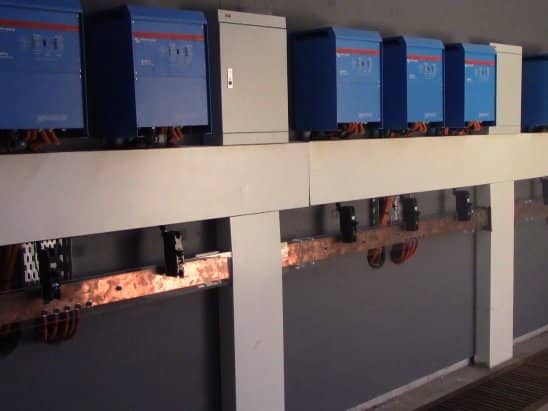
John Rushworth • 13 July 2015
Center for Alternative Technologies Ltd: Symbiosis with Fronius & Victron Energy
The Center for Alternative Technologies Ltd, or CAT as owner Nawir Ibrahim refers to his company, is based in Nairobi, Kenya. CAT are a significant Victron Energy and Fronius distributor. It was at Intersolar Europe 2015 that Fronius first publicly demonstrated their cooperation with Victron Energy and how Fronius and Victron products work together, as you can see in the photograph below. Symbiosis with Fronius & Victron Energy In 2014, Fronius and Victron had started to partner and fine tune how their products could communicate via their various communication protocols and how the battery inverters could signal PV inverters to increase and decrease power output by shifting the frequency of the AC current, based on the conditions of the load and battery state of charge. This symbiosis and the consequent partnered outcome, where Victron & Fronius products work together has been very well received by both Fronius and Victron Energy customers alike. Whilst the two companies have quietly been working together in the background last year, it is not until now that we’ve been able to publicly show a project and how the various systems dovetail. Here then is that project as designed and implemented by Nawir Ibrahim of The Center for Alternative Technologies Ltd (CAT). Kenyan project design brief to CAT The project design was for an affluent client who was building a second home in the Kenyan bush for holiday use and also for partial use by paying guests. Off-grid continuous three phase power was a requirement. The appliance list included but was not limited to: Walk in Fridge/Freezer Heated Towel Racks Spa Cinema Heated swimming pool Washer/dryer etc. Power & Energy audit The client’s advisers and architects provided an appliance list with a 24 hour, hour by hour chart. This included each item’s rated power and for how long it could expected to be on. The chart also included the total energy required for the house and its various outbuildings (guest houses, manager’s house, staff house, car park, workshop, squash court). The calculated off-grid peak power required was 60kW. Project components & design Based on the above, Nawir Ibrahim of CAT in association with Victron Energy & Fronius calculated the total size of the inverters required, PV modules and what capacity of battery storage was needed. From this consultation came the following design that provided the most efficient provision of power. Day time loads come directly from the PV inverters and the evening loads come from the battery inverters. System components 100kW of PV using Trina Solar 250Wp x 400 modules 4 x 20kW three phase Fronius Symo PV inverters 80kW of the PV panels are connected via the 4 x 20kW three phase Fronius Symo PV inverters shown below, with the balance of the PV array being connected via 4 x Victron 150/85 MPPT Charge controllers 10kVA Victron Quattro Inverter/Charger x 9 stacked in three phase The Victron Energy Quattros are the heart of the system. With the Victron Energy provided quick set up ‘Assistants’ and pre set ‘Grid inverter support’ the Quattros are easy to set up, use and fine tune. The 9 x Quattros provide off-grid power from the batteries and the Fronius PV inverters provide the current to the loads. Excess current is fed back to the batteries as the Quattros are bi-directional. At any time if the load exceeds the power available from the PV inverters, the Quattro inverters provide the difference from battery storage. Should the battery level drop below a set point or should an excess load over a set point arise on any phase, the Quattro through their built in auxiliary programmable ports can start a back up diesel generator to assist the situation, until the battery level gets to a preset level or the load situation subsides. Victron MPPT Solar Charge Controller 150/85 x 4 CAT chose the 4 x Victron MPPT Solar Charge Controller 150/85 s for the following reasons: To provide the shortfall of estimated kilowatt hours needed per day versus what 4 x 20 kW Fronius PV inverters could provide. The PV inverters were not planned to use the full 100kW that is needed to supply the energy demand, because this is limited by the total rated charging current of the 10kVA Quattros. Some current goes directly to the batteries in the early morning when the Fronius PV inverters are providing energy that is less than that demanded. Victron Color Control GX CAT chose the Color Control GX because it gives the client an onsite instant view of what is happening with the system plus the system can also be remotely monitored, if offsite, via the internet. Victron BMV-700 series CAT used two of the BMV-700 series models for battery monitoring. A BMV-700 was used to measure all the DC current passing through the negative busbar. A BMV-702 is used to monitor each battery bank’s total voltage and mid point voltage. All this can then be seen on the Color Control GX. Deviation of the mid point voltage and the total bank voltage can be seen if it exceeds a set point and investigated. Batteries For the project CAT used 72 x Sunlight OPzS 3000Ah 2V FLA batteries which provide enough energy storage for use at night and during cloudy days. Being a distributor for Sunlight batteries, CAT sourced them directly from the factory in Athens, Greece. Conclusion Nawir Ibrahim started CAT in 2006. He told me it was a natural thing to do as his previous company that he started in 1999 provided IT solutions and then started to do power solutions also, due to the demand from their IT clients, for the provision of clean and stable power through the numerous power black outs that were experienced in the region. Since CAT started, they have grown from a small service company to a leading distributor and contractor for renewable energy products, throughout Kenya and the East Africa region. About 4 years ago they became a Victron Energy distributor and in 2014 they became an authorized reseller and service partner for Fronius. Fronius were keen to use their inverters in Mini Grid setups and as CAT had successfully installed their products previously, CAT could think of no other PV inverter to use for the project described. Coupling that with the symbiosis between Victron Energy’s range of products and Fronius PV Inverters, this has all proved the perfect solution for what is – and I think you’ll agree – a very impressive project indeed. It all goes to show that renewable energy distributors such as CAT who provide products from multiple companies can provide a bespoke solution, especially now Fronius PV inverters interface with Victron Energy products. That’s symbiosis for you! Credits: Thanks to Nawir Ibrahim of The Center for Alternative Technologies Ltd (CAT) for the information for this blog and the images used. John Rushworth.
John Rushworth • 26 June 2015
UNICAT: Exceptional Expedition Vehicles
If you build a quality product, it’s worth shouting about. In this case though I’d go one step further and roar – UNICAT build exceptional expedition vehicles. In writing this particular blog I have to confess I simply did not know where to start and for that I apologize to Thomas Waas of UNICAT for the delay. First there was the sheer choice of vehicles to consider, the impressive manufacturing facility at Dettenheim in Germany, an endless list of vehicle equipment options, plus photographs and information galore of expeditions undertaken to a plethora of countries – one of which you can see in the photograph above. Add in the fact that offroad adventure is an area close to my own heart – plus I also learned from Thomas that they equip all their vehicles with one or more of Victron Energy’s products, and as you might imagine I was stuck for choice as to where to even begin. Earlier this month though I did make a start in the blog ‘ Victron Energy goes Off-Road ‘. Here then is the follow up to that blog as promised. Introduction To capture the ethos behind UNICAT I can do no better than quote another Thomas – Thomas Ritter who is one of the founders. “My desire to travel individually and my passion for technical perfection led to a decision of great importance: the design and construction of my own expedition vehicle. That was 30 years ago. Today, I am still keen about traveling. And from my passion for engineering, UNICAT evolved.” Evolved they have as you can see in the photographs below. Manufacturing & Facilities UNICAT’s facilities encompass 11,000 square meters, including a company-owned 5,000 square meter off-road area for tests, tryouts and customer training. In addition, there is a waste disposal station, a wash facility, and ample storage area for customers, particularly during lengthier breaks in their travel activities. The main building has 2,100 square meters of production and storage space with an extensive range of state-of-the-art machinery and equipment. The workspace is divided into eight chassis and body assembly stations working in parallel. This system promotes a high level of synergy in the work process. In addition, there are 3 bays for testing, training and service. A large warehouse ensures the smooth flow of materials and an adequate stock of spare parts. The remaining 580 square meters house offices, conference rooms and social facilities. Victron inside Whilst UNICAT typically fit their vehicles with Victron Energy products such as a MultiPlus 3000/70, one or more Solar Chargers (MPPT 75/50 and MPPT 75/15), sometimes a small inverter (24V/300W), BMV Battery Monitors, a Color Control CCGX and Battery Protect – it is worth detailing Thomas Waas’s own personal expedition vehicle that he used from 2006 to 2013 on a continuous trip to and through Africa – visiting Sudan, Ethiopia, Kenya, Tanzania, Uganda, Malawi, Botswana, Mozambique, South Africa, Namibia and Zimbabwe. You can also read more at http://www.auf-achse.info/ Whilst the site is in German and I can do little more than ask for a beer in that language, I found if using Google Chrome it translates well enough into English. Thomas Waas’s UNICAT Here is what Thomas had to say about the equipment fitted to his exceptional expedition vehicle: 2 x MultiPlus 3000/70/24V running when required – Gaggenau Induction cooking field (3 zones) – Gaggenau Steam Oven (the proper one for up-market kitchens) – Saeco Espresso Machine – Kenwood Washing Machine (3kg) – AC System – Blow-Dryer for The Wife – Ironing – Machines to use (Drilling Machine, Flex, Welding) – 30l Geyser (when enough Solar or Shore power is available) – up to 2 x 70A charging (if 220V are available from Shore or Generator) 1 x Victron Inverter 24V/350W running 24/7 – multiple USB-Charging sockets – MAC mini as Personal Computer, TV-Station, Multimedia Station – 27″ Screen – 2 x B&O Beolab 3 Loudspeakers (active) 1 x MPPT 75/50 connected to 800Wp Solar Panels 1 x MPPT 75/15 connected to 110Wp Solar Panels can be bridged together (at MPPT 75/50 input) 1 x Color Control CCGX including UNICAT’s own Remote Control System connected via Modbus to the CCGX, via Ethertrak to various Sensors and Switches, via Mini-Computer, UMTS-Stick, LAN-Stick, Iridium-Modem to the world. Batteries are AGM Batteries. 24V / 630Ah which Thomas intends to replace with Li-Ion as soon as there is a satisfactory solution for connecting them to multiple charging inputs (MultiPlus, Xantrex Chargers (90-260V), Solar, Alternator (second Alternator is solely for the body of the truck) and possibly a Wind-Turbine. As Thomas says: “If Victron can come up with such an integrated charging solution where all charging is integrated and interconnected, enabling the use of Li-Ion Batteries, the suite of products would be even more perfect for our application”. Victron reliability In choosing Victron Energy products Thomas points out that through all his off-road travels he has never experienced any problems with any of the Victron products. Here is what he had to say: “I went through hot climates (very hot, indeed, in Saudi Arabia I hit 53°C), very humid, very dry, I went up to more than 4,000 metres above sea level (Ethiopia), went through thousands of kilometers of extremely corrugated road (e.g. Moyale – Isiolo – Nairobi – Masai Mara), crossed deserts, forded through water 1.2m deep… We as a company are very happy with Victron Energy’s products and I personally like the Metal-Casings and the sturdy mounts and – as I said above – not a single Victron Energy system ever failed me no matter how harsh the conditions were .” Conclusion If you are going to test an expedition vehicle and its associated energy systems, then to my mind Thomas’s travels are proof indeed of the efficacy and reliability of Victron’s products. In fact such reports are why I too chose Victron for my boat. This presents a dilemma. As a total off-road expedition and off-road motorcycle fan also – I want a Victron equipped UNICAT too! Credits Many thanks to Thomas Waas of UNICAT for the information and photographs above. In closing I’ll leave you with one of my favourite photos from Thomas’s travels of a Cyprus tree – which for me represents all those travels and adventurous choices you can make. Exceptional expeditions anyone? http://www.unicat.com/en/ John Rushworth
John Rushworth • 15 June 2015
Elton’s piano runs on Victron Energy
Even Elton chooses Victron it seems! Well OK this is not the man himself but a fun lookalike spied somewhere in the French Alps last week, by Jacques Noël of Victron Energy. Victron powered Somehow and in someway this is all powered by Victron batteries, inverters and chargers. It is hard to see and tell how, but Jacques did manage to locate the batteries as you can see below. Isn’t that a Victron inverter peeking out in the middle on the right of the photo too? Red ‘n’ rocking ‘Elton of the Alps’ provides advertising and does some singing and karaoke. The synthesizer and mixing desk are fully functional. This red ‘n’ rocking piano is Victron energized in even more ways than that. Built in electric motors move this unique ensemble around the shopping mall – all steered and driven with a small joystick in conjunction with the piano pedals. Can you beat it? We hope this brief blog brings a smile to your face. So far I think this represents the most unusual and fun use of Victron Energy products yet. Can you beat it? If so let me know in the Disqus comments below. John Rushworth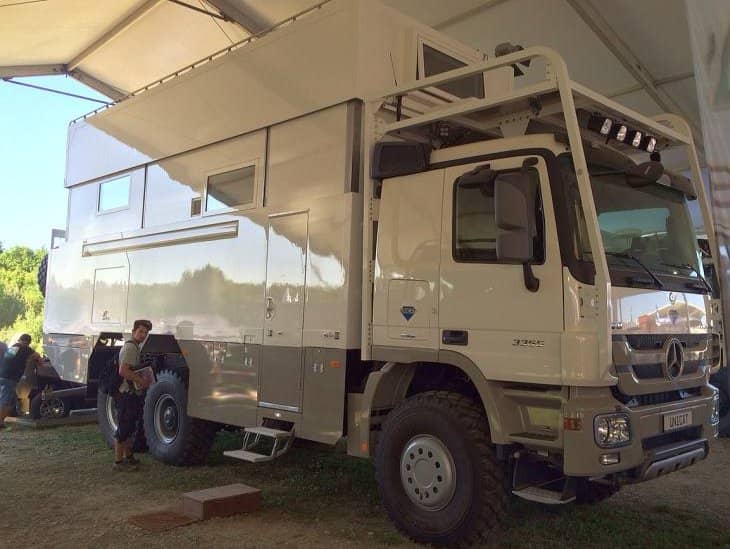
John Rushworth • 08 June 2015
Victron Energy goes Off-Road
It is not only the mainstream shows like Intersolar 2015 (München, Jun 10th – Jun 12th) that Victron Energy attend to spread the Energy, Anytime, Anywhere, word – there are also a range of niche shows that Victron are actively involved with. One such recent event is Abenteuer & Allrad . Abenteuer & Allrad Translated from German this means ‘Off-road & All-wheel’. The event covers all sorts of rough terrain and expedition vehicles. Whilst such events don’t get quite so much press as the larger shows, they are to my mind far more interesting. Ever since I was fifteen years old I’ve been an off-road competition motorcyclist and in fact even saved up enough and planned to ride the Paris-Dakar in the early 80s, but instead when it came to the crunch I spent the money on a deposit for an apartment, moving from Brazil to Scotland to accept a promotion at work. A missed opportunity to compete in the Paris-Dakar or possibly and more likely – a life saving decision? I’ll never know, but one thing that has endured to this day is a love of deserts and mountains. In those intervening years I’ve manged to ride motorcycles and drive Land Rovers in such fabulous places as Baja in Mexico, the Atlas mountains in Morocco and the Sahara desert. Over that time I’ve often pondered what would be the ultimate expedition vehicle for such terrain? Going by the headline image above and the one below, I think I’ve found it! It is called a UNICAT and she can easily carry a motorcycle on the rack at the rear. UNICAT expedition vehicles Besides being a remarkable vehicle it also turns out that UNICATs are equipped with every conceivable Victron Energy product it seems. In fact it is so extensive and the system so well proven, that one will feature in a future blog. Victron Energy at Abenteuer & Allrad (And is that a KTM on the back of the UNICAT?) Show report Here is what Bob Hopman had to say about the event, which was held near Munich last week. “The sun was shining and it was 30 degrees in the shade, providing the perfect backdrop for expedition vehicles and to explain Victron Energy’s products. This was especially so as we were located next to UNICAT who are one of our customers which meant people could see our products installed in a vehicle, besides our own display shown above. Over the two days I was there, it proved an excellent fair for us with lots of visitors and interesting conversations as to how products are used and integrated into vehicles. We are planning to expand the booth next year. I also spoke to somebody who took a Victron PV system to 6,600m+ in Chile on a truck – which must be a height record for Victron usage (with possibly the exception of the Everest expeditions) and I’m looking forward to seeing the report and photographs soon. Other customers and users like Bliss ( www.blissmobil.com ) and Bocklet ( www.bocklet.eu ), plus other installers were present too. All in all a great event and I’m already looking forward to next year.” Conclusion Thanks to Bob Hopman for the photos and information. As a result I’ve now been in touch with Thomas Waas of UNICAT and I’m looking forward to learning more of their vehicles and travels, plus which Victron Energy products are fitted and how they have performed in extreme conditions. As soon as I have all that information together, you’ll be the first to know – right here on the Victron Blog. John Rushworth DISQUS Tips To receive updates about conversations and comments on particular Victron posts, click the ‘Subscribe’ button at the bottom left of the page, in the respective blog post.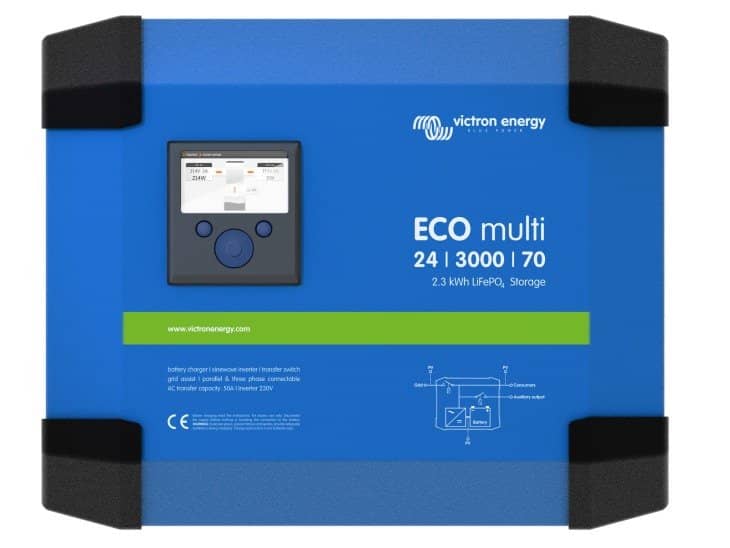
John Rushworth • 18 May 2015
SuperHomer chooses Bright Green Energy for ECO Multi installation
Today I learned that a SuperHomer has nothing whatsoever to do with the famous animated sitcom. If like me you have not come across the term previously, then the explanation given on the SuperHome website brings clarity. “SuperHomes is a rapidly expanding network of over 190 energy aware households. These pioneering homeowners are redefining green living. All have refurbished their old homes to the highest standards of energy efficiency. Eco friendly, sustainable, low energy and low carbon – the refurbished houses are at least 60% less reliant on fossil fuels. This means that SuperHome owners are really leading the way. We can learn from them.” Learn I have. Today (courtesy of Bright Green Energy) I came across SuperHomer Jill Goulder whose hard work has resulted in her Victorian cottage, on the edge of the Lewes Conservation area, achieving a 61% carbon saving. A remarkable achievement, especially if you know British Victorian buildings. Jill can be justifiably proud of her work and also that her home is part of the Lewes Eco Open Houses weekend project. The next open weekend is scheduled for March 2016, so you may have to wait sometime before you can see how she has integrated an ECO multi 24 | 3000 | 70 into her home. If you can’t wait till then, at least you can read, here and now, how Jill and Bright Green Energy got the jump on Tesla Energy. In the last few weeks many of you can’t help but have noticed the announcement of Elon Musk’s Powerwall. Don’t get me wrong I’m a great Elon Musk and Tesla fan, but it does grate somewhat that the Powerwall is not exactly new. Victron Energy have been doing this for years. It forms part of their core business and does not rely on the outsourcing of inverters or remote monitoring. With Musk’s profile though it came as no surprise that Tesla Energy’s Powerwalls are now sold out through to 2016. The good news is you don’t have to wait till then to get a home energy solution. As you can see below, Jill is already happily up and running with her new ECO multi linked to her 1.29 kWp solar PV system. The integrated Color Control GX (the LCD screen in the photo) links via her broadband router to the Victron Energy VRM (Victron Remote Managemet) portal, where Jill can remotely monitor and control her system. You can check this out yourself by clicking ‘Try Our Demo’ on the VRM Portal If you have not come across Victron Energy’s ECO multi before, here is an explanation for power on your wall, now. ECO multi 24 | 3000 | 70 The ECO multi is a simple wall mounted 2.3 kWh Li-ion (Lithium Iron Phospate- LiFePO4) battery energy storage system with a 3 kVA bidirectional inverter, to reduce dependence on power from the grid. If fact in Jill’s case with her solar panels and ECO Multi, she barely needs any grid power at all due her frugal use and attention to energy saving. Here are the various operating scenarios. Nighttime During the night the ECOmulti is disconnected from the grid. The home is powered by energy stored in the battery. The ECOmulti will reconnect the grid when the battery is discharged. Battery charging The next day, when the PV array produces sufficient power to supply the loads and to start charging the battery, the ECOmulti will regulate charge current to absorb nearly 100% of the surplus PV power. Discharging during the day When PV output is reduced by clouds or when a power hungry load is switched on, resulting in no surplus PV power available, battery charging will stop. Insufficient PV power will be supplemented by power from the ECOmulti. In case of overload, power will be imported from the grid to supplement power from the ECOmulti (GridAssist function), and system shut down due to overload will be prevented. Battery fully charged Once the battery is fully charged, additional loads (for example the water heater) can be switched on, or surplus power will be exported to the grid. End of the day The ECOmulti disconnects from the grid about 10 minutes after PV power has become insufficient to provide any charge current. In order to prevent false disconnections due to lack of sun during the day, the inverter/charger also uses an internal timer to predict the end of the day. UPS function When the grid fails, the ECOmulti will continue to power the home. Conclusion Victron Energy’s 40 years in the business of Energy, Anytime, Anywhere is a track record to be proud of – and speaking to Alex Kennedy of Bright Green Energy it became clear why he chose to install the ECO Multi for Jill, even though he has tried other companies that offer similar solutions. Personally speaking and as a Victron customer myself, I fully understand this choice. A plethora of off grid products all under one roof, with technical support to match. It is why I chose to fit Victron kit to my boat, independent of the fact I now enjoy blogging about interesting installs and products. Maybe that all makes me a SuperBoater in the Superhomer vein! But seriously you can’t go far wrong dealing with a company with a vast range of products and a track record going back 40 years. Add to that committed and enthusiastic distributors and dealers, that are Victron trained – well why wait for the new kids on the block? PS. Dear Mr. Musk I still want a Tesla Model S though;) Thanks to Alex Kennedy of Bright Green Energy for the information and making me aware of this installation. If you are in their area why not give Alex a call. Bright Green Energy Ltd 26 Woodmere Way Beckenham BR3 6SL United Kingdom Tel: 0208 650 9037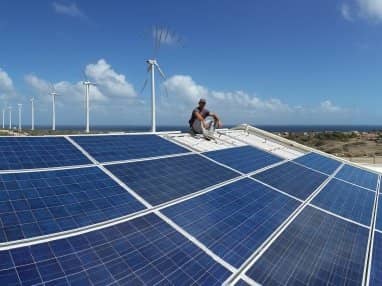
John Rushworth • 28 April 2015
Caribbean Off-Grid Solar System: Vader Piet Windpark
The Vader Piet Windpark is situated on the island of Aruba , which makes up one of the four constituent countries that form the Kingdom of the Netherlands . Aruba is located 15 miles north of Venezuela in the warm waters of the southern Caribbean. According to the official Aruba tourism authority website , “Aruba is home to beautiful white-sand beaches, 30-degree Celsius days, and some of the warmest people in the world. Our island is 19.6 miles long and 6 miles across, with a total area of 70 square miles. We’re located just below the hurricane belt, and unlike many islands in the Caribbean, our climate is dry, so we rarely have a rainy day.” Solar solution The description above sounds like a perfect place for a solar installation and indeed it is. Recently Rob Fijn, got in touch to update us on this solar project after its initial year in operation. But why you may ask was an off-grid solar system required in a windpark in the first place? Two years ago Imtech Marine Curacao NV received a request to provide a solution for an off-grid solar installation for NuCapital, to support the windpark onsite maintenance team working on the 10 x 3.0 MW Vestas V-90 turbines. The turbines have been operational since December 31, 2009, but the maintenance team office and workshop had no grid connection and it was too far away from any other grid supply. A solar solution was clearly the best option, plus the existing generator could provide back-up for the proposed solar system. Design brief The electricity supply requirements were for: An office/workshop with 3 split air conditioning units, fridge, microwave, coffee machine, printer plus small hand tools Office work to be carried out mainly in the daytime At night, batteries will be required for the lighting, fridge and one or possibly two air conditioning units This is also to ensure that the day time maintenance crew have cool drinks and ice, as the temperatures inside the wind turbines can reach 45 °C at 10:00 am Equipment specified In considering the above, 80m² of solar panels were specified and fitted to a sloping roof, as shown in the headline image above. The full list of equipment used is: 40 x 280W-24V BlueSolar Polycrystalline panels 4 x BlueSolar MPPT 150/70 Charge controllers 3 x Quattro 120/5000/70 (3-phase) Inverter/Charger 16 x 12 Volt/220Ah Victron Energy Deep Cycle GEL batteries 1 x BMV-600s series battery monitor (now BMV-700 Series ) 1 x Color Control GX for local and remote system monitoring The 40 solar panels are split into 4 groups to stay within the maximum voltage and current of the BlueSolar MPPT 150/70 Charge controllers. To learn more about this see the blog post: Matching solar modules to MPPT charge controllers , which includes the handy MPPT Calculator excel sheet to assist in system design . Based on this, the 4 groups of panels are further split into 2 groups of 8 panels (2 in parallel and 4 in series) and 2 groups of 12 panels (3 in parallel and 4 in series). The small group is also placed at the highest point of the roof, to take advantage of sunrise and sunset. GEL Battery installation Turbine maintenance requires the use of electronics that must be stored in a controlled climate. The room for this proved to be a perfect location for the GEL batteries, as a split unit inverter air conditioning unit maintains the room at a constant 24 °C, which is a perfect temperature to maintain 100% battery capacity. MPPT & Quattro installation The 4 MPPTs are shown at the top of the photograph below with the DC break switches next to them. The DC voltage positive and negative is shown in the center of the photograph, with the take off to the left going to the batteries, which are behind the partition wall. The DC supply then goes to 3 Quattros shown at the bottom of the photograph. The Quattros are connected together to provide 3-phase 120V/60Hz. System redundancy is also catered for in case the office is ever required to be powered directly from the generator, as there can be no downtime for the customer. With two manual switches, shown below, the whole PV system can be bypassed and the generator fed directly to the AC distribution panels. Victron Remote Management The Victron Remote Management (VRM) online monitoring portal has proved to be perfect for the customer, plus nothing goes unnoticed. For example, a company installed a new air conditioning unit for the office and this was noticed immediately via the VRM, as L3 showed there was negative power on that line of -93 Watts outside working hours. The air conditioning company were recalled, the problem explained and corrected. Just one of the benefits of 24/7 remote monitoring. Conclusion Over the last year and four months the system has run perfectly and proved itself as a robust and reliable solution. Even in tests to replicate a fault such as a shut down in the backup generator, the Quattros continue to supply power via the GEL batteries until such time as the batteries reach a critically low voltage. To protect the batteries the Quattros then automatically shut down the load. When the sun starts to shine, the system then comes alive again as the MPPTs charge the batteries and the Quattros automatically switch the load on again. If you have an interesting project like this, do let us know and I’ll be happy to write a blog for you. John Rushworth Credits Thanks to Rob Fijn for the technical information and photographs. Rob is based on Aruba and designed and installed this key off-grid solar system. Rob works for Imtech Marine Curacao NV , who are a Victron Energy distributor. Rob can be contacted at: rob.fijn@imtechmarine.com Thanks also to Gerrit Jacobs, Sales Manager for Victron Energy in Latin America and the Caribbean, who provided technical support. Gerrit is based in Panama and he can be contacted at: gjacobs@victronenergy.com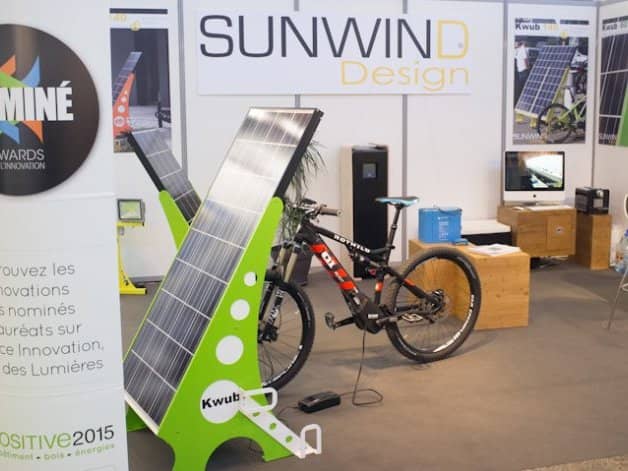
John Rushworth • 24 April 2015
Sunwind Design: Autonomous Solar Charging
Sunwind Design are a Victron Energy customer based in France. They specialize in innovative solar engineering systems design and operate across a range of sectors. Sunwind Design address solutions in areas such as: Isolated sites (shelters, mountain huts , radio communication) Electric mobility (terminals and charging stations) Solar lighting (low consumption technology, autonomy) Energy storage management (self- consumption, smart grid technologies) Victron Energy equipment A recent design of theirs that caught my eye is their Kwub range of autonomous solar charging stations. Not only is the design elegant and compact, it is ideal for charging electric bicycles in out of the way places and thereby enhancing access to such areas. Shown below are the internals of the design: This model consists of: 2 x 12.8V-90AH Lithium batteries 1 x VE.Bus BMS (Battery Management System) 1 x BlueSolar MPPT 70/15 Solar charge controller ( now replaced by the 75/15 ) 1 x 24/350 Phoenix inverter 1 x BMV-700 Battery Monitor Two charging sockets and the BMV-700 are located on the external side of the rear facing hinged door shown above and below. E-Bikes and the great outdoors Making use of this technology is ViaVercors . This assists access to the more mountainous regions in France by using E-Bikes. This is part of a comprehensive approach to sustainable development and energy efficiency research, that is common to the Vercors Plateau and the Regional Natural Park of Vercors . To facilitate the use of electrically assisted bicycles and mobility scooters in these areas the community is equipping its territory with these autonomous solar charging stations, positioned near their tourist offices. The website http://mabornesolaire.com/ is now starting to display the locations of this first network of solar charging terminals for electric bikes. Mobility and a multimedia charge points At the request of ViaVercors, Kwub units have now been upgraded to also include 2 x USB 1 Amp and 2 x USB 2 Amp sockets in order that multimedia devices such as smartphones, tablets and cameras can also be charged. Further Information & Credits Thanks to Jacques Noël of Victron Energy France for making me aware of this project and Sunwind Design for the images. If you would like further information do contact Xavier Duport or Jonathan Dupieux of Sunwind Design. SUNWIND DESIGN S.A.S www.sunwind.fr +33 (0)6 71 19 54 51 Facebook Google + Twitter Pinterest Conclusion Personally I think autonomous outdoor mobility and a multimedia charge points are a great idea and I wish Sunwind Design every success. In fact it would be good to see some of the Kwub mobility and a multimedia charge points in our own community forest here in Scotland, and on our local island cycle pathways. I shall pass the Kwub message on. John Rushworth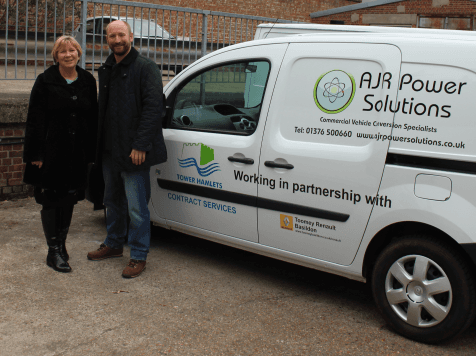
John Rushworth • 16 April 2015
AJR Power Solutions: Hot Electric Van
It might not do 0-60 mph (96.6 km/h) in around 3.2 seconds like the latest Tesla Model S P85D twin electric motor marvel, but the AJR Power Solutions Renault Kangoo Z.E. van is hot. For the last year Andrew Rich and his team at AJR Power Solutions have been working in partnership with the London Borough of Tower Hamlets and have recently delivered their new Renault Kangoo Z.E. 100% electric van conversion, with an AJR Power Solutions designed onboard power system utilizing Victron Energy equipment. Van Power But why you may ask does an electric van need Victron power? Years ago as a young man, before I joined the Royal Navy, I had a fun job delivering hot meals (by taxi) in insulated boxes to older people in my local community. The main problem was that these delightful folks just wanted to chat – and some would take rather a long time fumbling in their purse to find the coins to pay for the service. I appreciated that, having plenty of Grandparents of my own, but of course the downside was the next pensioner was likely to get a cold meal! Fast forward 4 decades or so and at last pensioners can be catered [sic] for. Cool to Hot Tower Hamlets Contract Services previously used low power food warmer boxes for their multiple drop meals on wheels service, which they run over short distances across the London borough, yet they always struggled to maintain good food temperatures for their customers. Something had to be done and a system was designed by AJR Power Solutions together with BGL Rieber to provide some new fan assisted units, which quickly recover their temperature after opening the oven door. Even so, these new Rieber ovens still have to be supplied with the correct power, in order to maintain meal temperatures for the daily deliveries. These new units (shown above) needed 800 watts each. Shown behind the two ovens there is a custom built enclosure, which houses the Victron equipment used to power the ovens. This consists of: 1 x C24/2000 Phoenix 2000 VA inverter 2 x 12V 220 Ah Victron Gel Batteries 1 x 24V/15A Blue Power Charger Added to that and for the initial system testing, AJR also installed a Color Control GX with a 3G router connected to the VRM (Victron Remote Management) Portal . This gave the engineers a good overview of the system, plus insight into the energy requirements of the system. They could also monitor and ensure the system’s batteries were fully charged every night. To complete the overall concept of electric van, ovens and Victron power system, AJR also designed a vehicle charging bollard to charge both the electric van and the onboard Victron batteries. Conclusion Personally I think this is an excellent environmentally friendly system and valuable community concept. However when I reach pensionable age, would you mind delivering my hot meal by Tesla – and taking me for a spin too 😉 John Rushworth Credits Images and information. Thanks to Andrew Rich, Director, AJR Power Solutions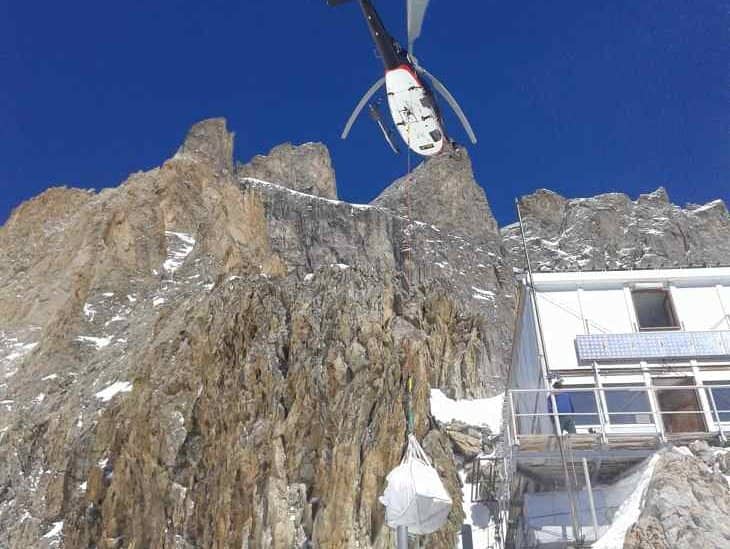
John Rushworth • 13 April 2015
Victron powered sanctuary in the Alps: Refuge du Promontoire
Higher Power The phrase ‘higher power’ takes on a new meaning in such extreme locations as the Victron Energy powered Refuge du Promontoire. But where is it and why? Refuge du Promontoire is a sanctuary for climbers and skiers in the French Alps and is located in the massif des Ecrins at an altitude of 3,092 m. The refuge is built on sheer rock in front of the South face of La Meije. It’s the usual starting point of the famous crossing of La Meije, which is highly coveted by climbers for its ridges, south and north faces and is considered by many as one of the most beautiful climbs in the Alps. The refuge is owned by (CAF) Club Alpin Français. As Refuge du Promontoire is in the Écrins National Park , any work carried out must respect the resources and assets of the area, hence there is a requirement to use environmentally friendly solutions which are subject to a charter and regulation. What better energy technology to use then, in this sensitive area, than solar power from Victron Distributor and Installer FE Solar. Refuge du Promontoire In the panorama below, the refuge is in the top left of the photograph. To give you some perspective, here below is a zoomed in partial view of that panorama. As you can see this is certainly not your average location for installers of Victron equipment. The original shelter was constructed in the 1920s out of wood as shown below. In 1966, this was replaced by the aluminum construction shown at the top of this blog. Emergency upgrades The end of March was the beginning of the ski touring season and whilst times have moved on since the wooden hut days, the current 8 x AGM 180Ah and 6 x OPzV 600 Ah batteries in the refuge had reached the end of their life. In fact they were completely dead, plus the solar charge controller only had an output of 16 volts. Clearly something had to be done and quickly before the skiers arrived. Jean Paul Cande and Thierry Cortassa to the rescue. Jean Paul is a member of the ‘commission refuge du CAF’ and Thierry is a Victron Distributor and Installer and runs FE Solar. For the emergency upgrades and to get the system functioning again, 12 x Victron Energy OPzV 600 batteries, 2 x 100/30 MPPT solar charge controllers and a BMV-700 were specified. The emergency aim was simply to get this all working for the skiers and then change out the inverter, tidy up the wiring and remove the old batteries on another helicopter run at a later date. Having spoken to Thierry, it is clear this is no ordinary job. Specialist knowledge, a sensitivity for the environment and even rope access for safety to run the cable for the battery monitor was required. Not to mention they had to ski back down the mountain. Other challenges were the drop zone platform in the photo below which is roughly 20m down from the refuge. As you might imagine moving batteries between the refuge and the platform is quite tricky. I don’t think this deterred Thierry and the team though, as he describes the place as “a mythical place for the Alpinist”, and whilst challenging they clearly enjoyed their work as you can see below. Helicopter Drop Zone platform Victron Energy OPzV 600 batteries being installed Solar in the snow Conclusion As the Dutch brewing company, Heineken International use to say in their UK advert about Heineken Lager – “Refreshes the parts other beers cannot reach”. It seems to me that Victron Energy and their installers do the same, when it comes to energy! Energy. Anytime. Anywhere. John Rushworth Image Credits Installation photos: Thierry Cortassa of FE Solar Wooden Hut/Refuge Meije: Public Domain – Wikimedia Commons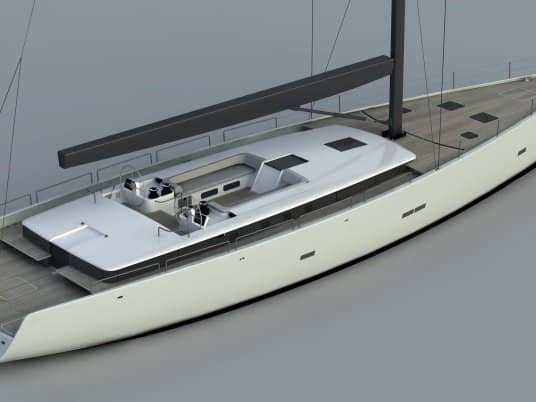
John Rushworth • 08 April 2015
Michael Schmidt Yacht Builders choose Victron Energy equipment
Yacht Builders Michael Schmidt, have teamed up with naval architect Lorenzo Argento of Brenta Designs and eminent architect Sir David Chipperfield CBE RA RDI RIBA to create a sailing superyacht, the Brenta 80 DC . Schmidt is calling the 80-foot yacht an accumulation of his four decades in the sailing industry. “I am building a boat without concession, just beautiful and suiting me. I want it simple, functional and fast. A special blend of old and new”, the experienced sailor explains. It will be launched in Spring 2015, the first in a series of luxury yachts from his new venture Michael Schmidt Yachtbau. The Brenta 80 DC is being built in Greifswald, Germany on the Baltic Sea. Michael Schmidt sailor and ship builder is the former CEO of Hanse. Michael Schmidt has been in the yachting industry for over 40 years. For the on-board power systems of the Brenta 80 DC, the luxury yacht is equipped with Victron Energy batteries and chargers . According to Andreas Bock, Chief Operations Officer at Michael Schmidt Yachtbau, “ Victron Energy products meet the high standards and demands this project requires .” Brenta 80 DC: Victron equipment chosen Item Use Part# Qty Unit Charger 60Hz, shore 1, Centaur 24/60 505*255*130 HBT CCH024060000 1 pce DCDC Converter 24/12V,12A for starting battery charge ORI241212020 1 pce DCDC Converter 24/12V,12A for Navico plotter+network-cockpit switch ORI241212020 4 pce DCDC Converter 24/12V,25A VHF, AIS 1 pce DCDC Converter 24/12V,25A for DCA-lights 15x12V+4x12V 2 pce Charger Centaur 12/20 355x215x110mm for engine start CCH012020000 1 pce DCDC Converter 24/12V,25A VHF, Navi Elctronics, 12V socket ORI241225020 3 pce DCDC Converter 24/12V,40A SSB ORI241240020 1 pce Inverter/Charger Quattro 24/5000/120-100/100 444*328*240 HBT QUA245021010 2 pce Isolation Transformer 3600W Auto 362*258*218 HBT ITR050362040 2 pce Remote Control for Quattro REC020005000 2 pce UTP cable, RJ45 UTP, 10m ASS030065010 2 pce Victron Telekom AGM Batt. 12V 110Ah 508*110x238mm LBH 33kg Engine Start BAT 412105160 1 pce Victron Telekom AGM Batt. 12V 110Ah 508*110x238mm LBH 33kg Generator Start BAT 412105160 1 pce Victron Telekom AGM Batt. 12V 200Ah 546x125x323mm LBH 60kg 24V-Service BAT 412181160 12 pce We’re delighted Michael Schmidt Yachtbau have chosen Victron Energy equipment and look forward to seeing the completed Brenta 80 DC. In the meantime here are few computer renditions of the yacht. Twin wheel helm positions with central cockpit Interior looking aft to the companionway Side deck forward view John Rushworth Image Credits: Michael Schmidt Yachtbau Further Information: http://www.msyachtbau.com/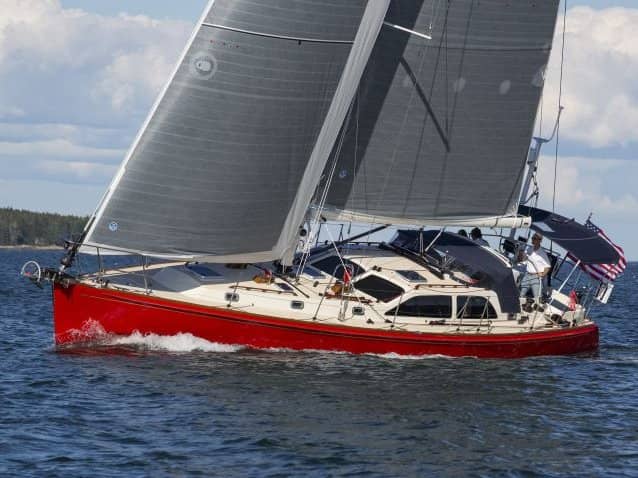
John Rushworth • 25 March 2015
Morris Yachts 48 GT: Electrical Innovation/Systems Award
Victron Energy systems are at the heart of this stunning yacht pictured above. She is a hand crafted, built to order, Morris Yachts Ocean Series 48GT and we’re delighted that SAIL Magazine awarded her the 2015 Best Boat award, for her innovative electrical system design. The 48 GT is an evolved Chuck Paine design , finessed by Morris Yachts. In fact my own (small) yacht is a Chuck Paine design too (based on the Frances 26) and is in part where it all started. Subsequently and for more than 40 years, Morris Yachts have continued to build sailboats by hand, one at a time, using Maine’s finest craftsmen. Started by Tom Morris, and now continued by his son Cuyler, the family’s boatbuilding tradition upholds the same values now as it did then: “Every boat should be stunning, deliver supreme performance, and be crafted with the type of quality, precision, and attention to detail that will turn heads wherever she goes.” Hopefully the photograph above conveys that ethos, but as we go below the hood as it were – What furthermore makes her so special, in terms of her award winning electrical systems? The DC or Hybrid concept Victron Energy was founded in 1975 by Reinout Vader and like Morris Yachts a son (Matthijs) continues the family business. If we were to include C. W. Paine Yacht Design Inc, these three businesses have a combined experience of over 120 years. It’s that experience and pedigree that leads to innovation, ever improving and award winning design. In 2011 Reinout Vader wrote a small book called Energy Unlimited: Electricity on Board (And other off-grid applications). In this book (which is still available as a free download ) Reinout details the benefits of the DC or Hybrid concept, which Morris use to good effect on their 48 GT. Here in Morris Yachts own words is a simple explanation of what in their view makes the DC concept so good. “You won’t need to worry about “charging your batteries” anymore. It’s all automatic. And the batteries charge faster than conventional batteries so you won’t have to listen to your generator run in that peaceful anchorage any longer than necessary. We came up with this outside the box solution by working directly with the owner as well as Victron Energy and Fischer Panda to design an electrical system that, unlike most conventional cruising boat systems, is 100% DC based. This means the boat has an extremely powerful battery bank and charge sources that use inverted DC power to run all AC loads on board. This elegant system incorporates a light yet durable 600 amp hour lithium battery bank, two 3,000 watt inverters, and multiple charge sources that are able to run all AC loads from the batteries. In order to keep the heart of this system charged—the lithium batteries—we installed a 5,000 watt Fischer Panda DC generator as the primary charge source. That means this generator doesn’t produce power to run the AC loads in the boat. It’s sole job is to charge the batteries that offer up to 275 amps of charge. The shore power does not directly run any AC equipment beyond battery chargers. A DC generator is much more efficient than a standard AC generator because it only runs when charge is needed, not whenever AC electrical loads are running. It’s also designed to start and stop automatically when the system senses charge is needed. There is no need for the owner to worry about when to start and stop the generator. The main engine has a 160 amp high output alternator that will charge when the boat is motoring. The charge sources are rounded out with 3 shore power battery chargers available when the boat is plugged in at the dock. Each charger offers 100 amps of charge that can all be run at once if need be.” Additional benefits of the DC concept Reduced, faster charging times with longer cycle life when using Lithium batteries, when compared to lead acid Lighter weight system components using Lithium batteries and a DC generator Reduction in shore power rating From four to ten times less shore power needed with a commensurate reduction in shore power outlet rating Reduced shore power outlet ratings are more common than high output ratings Built-in clean, stable and no-break AC power Whatever goes wrong with shore power, the batteries and inverters are there to guarantee uninterrupted power Built-in frequency and voltage conversion: Battery chargers will operate on a 50 Hz and on a 60 Hz supply. With a wide input range (90 V to 260 V AC) the battery chargers can connect to shore power anywhere in the world, without the need for an expensive and cumbersome shore power converter System Design & Components Owner brief: Design a 12V system that is “world proof”, providing 120VAC on board anywhere in the world. Components used: 3 x Centaur 12/100 Chargers 2 x Phoenix 12/3000 120V inverter ( parallel) 3 x Lithium -ion 12.8V/200 Ah 1 x BMV-700 1 x Color Control GX (CCGX) VE.Bus BMS (Battery Management System and protection) 2 x Cyrix-Li-load/charge 12/24-120 A Photographs of some of the system components aboard the 48 GT: Victron Centaur battery chargers Victron Lithium Batteries Victron Color Control GX N.B. The photograph below was taken pre battery sync and a Color Control GX (CCGX) software upgrade. To keep abreast of software upgrades and enhanced features see the ‘Firmware & Software’ category of this blog: https://www.victronenergy.com/blog/category/firmware-software/ Award accolade for the DC concept What makes winning this award even sweeter is the fact that Nigel Calder, who is considered as having literally written the marine electronics Bible , was part of the judging team. And we couldn’t have said it any better than Nigel when he says, “This is the ideal energy solution for a midsize offshore cruising boat, beautifully executed by Morris Yachts.” Credits Many thanks to Susan James of Morris Yachts for the images used in this blog. We wish Morris Yachts and the lucky owner of this innovative Ocean Series 48GT yacht every success. Grande Touring never looked so good. John Rushworth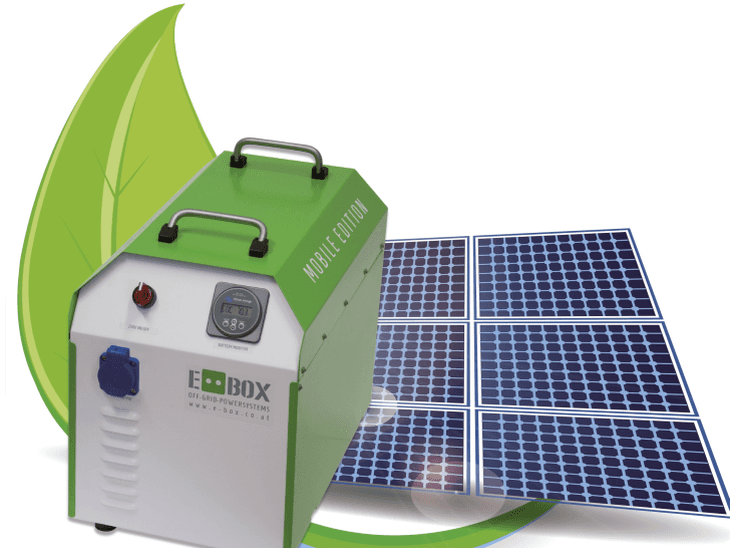
John Rushworth • 18 March 2015
Victron Energy equipment integration: E-BOX Off-Grid Power Systems
It’s great to see Victron Energy equipment being integrated into innovative turnkey solutions. Recently I came across E-BOX Off-Grid Power Systems who cater for a range of markets with their beautifully engineered mobile, home and business range of off-grid power supply products. E-Box are based in Austria and have been official Victron distributors since 2011. E-Box Mobile and Off-Grid editions Their E-Box:Mobile solution, which you can see in the image above, is used in RVs/Motorhomes, Boats, Emergency and Expedition vehicles. There is also an E-Box:Off-Grid, which is designed for garden houses, fishing huts and cabins where there is no grid connection. Depending on the model you choose will dictate which Victron products are integrated into the system. In their mobile range for example E-Box use: Battery Monitor BMV-700 Battery AGM 110Ah or LiFePo4 battery 12.8V/60Ah or 90Ah with BMS MultiPlus C 12/800/35-16 MultiPlus C 12/1600/70-16 Megafuses Larger E-Box systems including the E-Box:System 24h edition Here is an E-Box:System 24h (shown below) which uses the following subject to customer specifications: MultiPlus 24/3000 or 48/5000) Battery Monitor BMV-700 Color Control GX Lithium tower with 7.5kW, 9.2kW or 13.5kW From Austria to Croatia to South Africa such systems are used in farms, leisure centres, marinas and hotels. Quite often solar arrays are integrated too, as are Smartphone applications. In these days of increased power demands for off-grid leisure activities and rolling blackouts or load shedding for larger grid systems, in countries such as South Africa – I’m sure we will see more and more of these type of quality and well engineered power systems. John Rushworth Credits: Thanks to Bianca at E-Box for the images.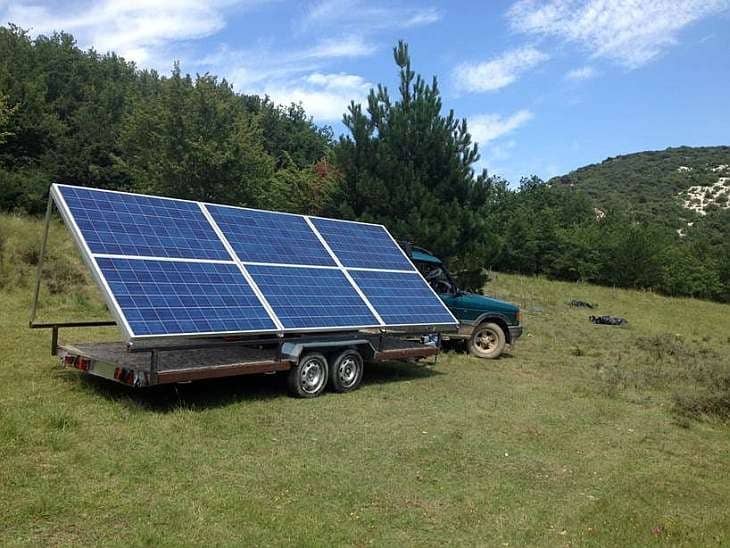
John Rushworth • 26 February 2015
Victron installer Stéphane Bulard: Solar trailer demonstration
Victron installer Stéphane Bulard, who is located in the south of France, recently attended Foire Bio de Couiza. This is an organic fair or green gathering. The majority of Stéphane’s visitors are those whose main interest is in the off-grid energy market. To demonstrate autonomous photovoltaics and to be able to discuss the options with potential clients, Stéphane has built a solar trailer, hooked up to a set of Victron Gel batteries along with a Victron MultiPlus, a Victron MPPT 150/70, a BMV-700 and a Color Control GX to demonstrate energy flow. Color Control GX mounted on portable camera tripod Underside of the trailer solar array showing Victron equipment Bespoke advice and hands on experience Before advising anyone on what is best for their off-grid home or application, Stéphane first carries out an energy audit, taking into account the client’s actual needs. From this he is able to design a tailor-made solution, advise on the likely energy cost savings that a family may gain over time to produce and store only the necessary energy required for their installation. He sees little point in over specifying a system with unnecessary or superfluous costs. Along with this he also advises on heating regulation and housing insulation improvements. By using his solar trailer and associated Victron equipment Stéphane is able to clearly demonstrate how his installations work and of course provide a hands on experience to his potential customers. This mobile solar trailer unit is a great talking point at such fairs and naturally we are delighted Stéphane Bulard has chosen Victron Energy products for this. We wish you many further orders Stéphane! John Rushworth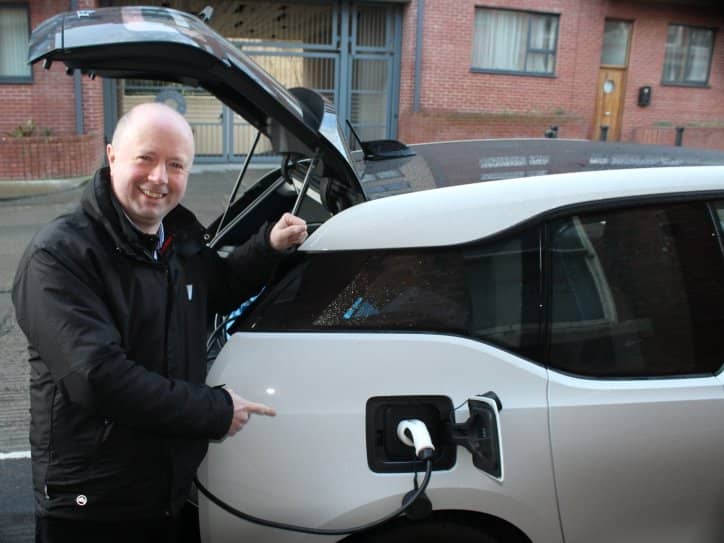
John Rushworth • 03 February 2015
BMW i3 BEV: Supplementary Battery System
It’s good to hear about novel ways of solving problems with Victron Energy products. Ronan (pictured above) is a Telecoms Consultant from Ireland, with a passion for engineering and electric vehicles. For much of the time his BMW i3 Battery Electric Vehicle (BEV) has sufficient range for his daily needs. On occasion though one of his commutes from the Irish countryside to Dublin, involves a trip of around 70 miles. The BMW i3’s official range is 130 to 160 km (80 to 100 miles), but in winter with the heating on, wipers and lights – then the range can be on the limit for that journey. A bit of range security was needed, so Ronan came up with the idea of s upplementary battery system. Turning to Victron Energy supplier Paul Cunningham of Marine Electrics, they put together a charging system consisting of 2 x 12.8V-90Ah Lithium batteries in parallel and 2 x Phoenix C12/2000 Inverters in parallel. Marine Electrics, Dún Laoghaire, County Dublin Pictured below from left to right are Paul, Gavin and Roland of Marine Electrics handing over the system. Ronan’s s upplementary battery system Using the BMW 13A charging lead at 230 VAC, the system can now charge Ronan’s car in an emergency at the side of the road, at a continuous 3,000 Watts. This takes about 45-50 minutes and gives around another 15 km range, which is sufficient to get him to his destination. At work or at home a 30A Victron charger tops up the s upplementary battery system, ready for standby use once again. Postscript from Ronan: ” Since the photo above was taken, I have rearranged and secured the parallel inverters in the boot and placed a battery behind each of the front seats, for neatness, security and safety. The team at Marine Electrics were very helpful and professional, as we worked toward the final configuration of the system.” Many thanks to Paul of Marine Electrics for the photos, information and putting me in touch with Ronan. It was a pleasure to speak to Ronan and share a mutual passion for all forms of electric transport. And typical of Irish hospitality, I now have an invite to Ireland! Thanks all. If you have an interesting way of dealing with a challenge or problem using Victron products, we’d love to hear from you. John Rushworth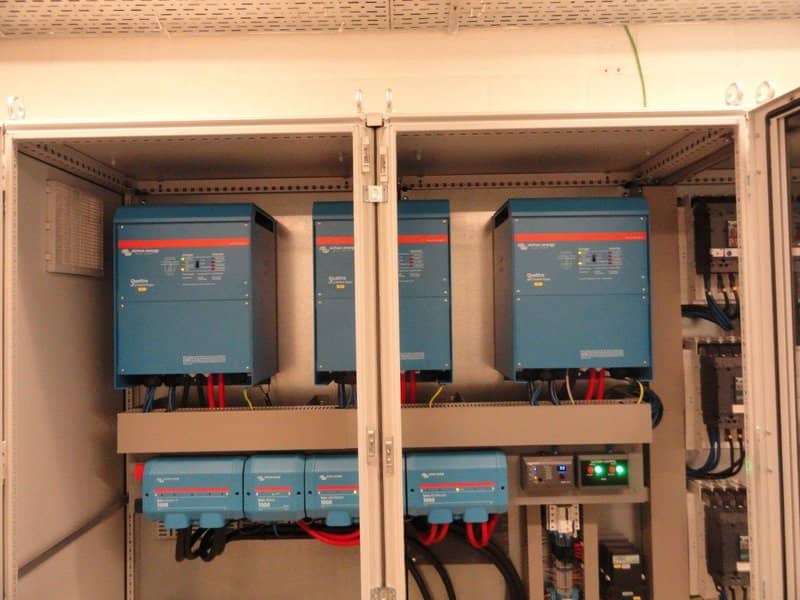
Matthijs Vader • 16 January 2015
Hybrid Back-up System in Belgium
The company Ysebaert, one of our distributors in Belgium, recently installed a Hybrid Back-up System at their company. This system supplies them with electricity during power outages, currently a real problem in Belgium. The system also buffers their solar energy, which they would otherwise feed back into the grid. Nuclear power plant problems in Belgium Belgium has faced a lot of problems with their nuclear power plants in the past few years. On March 2014 they had to shut down their nuclear power plants Doel 3 (1,006MW) and Tihange 2 (1,008MW), because of cracks in their steel reactor casings. In August 2014 Doel 4 (1,039MW) closed automatically after it overheated. Doel 4 was opened again in December 2014. Doel 1 (433MW) and Doel 2 (433MW) were set to close in 2015 after 40 years of use, but the Federal Government decided to extend their lifespan by 10 years. Belgium’s Energy Minister Paul Magnette said: “ If we close the two oldest nuclear plants by 2015 as planned, Belgium will not be able to meet its domestic energy demands, which implies that we will have to buy energy abroad. We will be more dependent on our neighboring countries. ” Because of these issues Belgians are talking about buying their own generators, to be sure of power when the grid fails. Ysebaert decided to invest in their own reliable Hybrid Back-up system. Electrical properties Ysebaert no longer sufers from power outages now they have a Hybrid Back-up System. The system has the following characteristics: Input : 3×400 VAC + N – 3 x 100A Output : 3×400 VAC + N – 3 x 143A Battery storage : 40kW Lithium Power Pack UPS power : 30KVA Maximum power : 100KVA System components Three Quattro inverter/chargers 48/10000/140-100-100 and a Lithium Power Pack of 40kW form the heart of this unique system. The complete installation also has a Lynx DC distribution system and a bypass unit with coupling to the existing electrical installation and solar energy system. The entire installation dat can be seen with the built-in Color Control Display and via the VRM website (Victron Energy Remote Management). Status messages are sent by e-mail via the VRM website and a mobile phone module ensures the necessary SMS messages in case of a power failure. Three in one The system has a threefold set-up: During a power outage there is a converter capacity of 30KVA available and a battery storage of 40kW. This allows Ysebaert to shut down their CNC machines in a controlled manner and continue working for 12 hours. The solar energy that was not consumed and fed back into the grid can now be buffered in the Lithium Power Pack and used at night, during a power outage or to better handle peaks in demand. The maximum peak current is set by the distribution grid manager for one year in the distribution and transport rates. Avoiding such current peaks can generate significant long-term savings. The Smart Hybrid Energy System can offset these current peaks by adding supply via the battery and the converters, when a certain power is met which is set in advance. More information about this system can be found in the News section of the Ysebaert website. With this system the company is assured of Energy. Anytime. Anywhere. Have a nice weekend! Marianka Pranger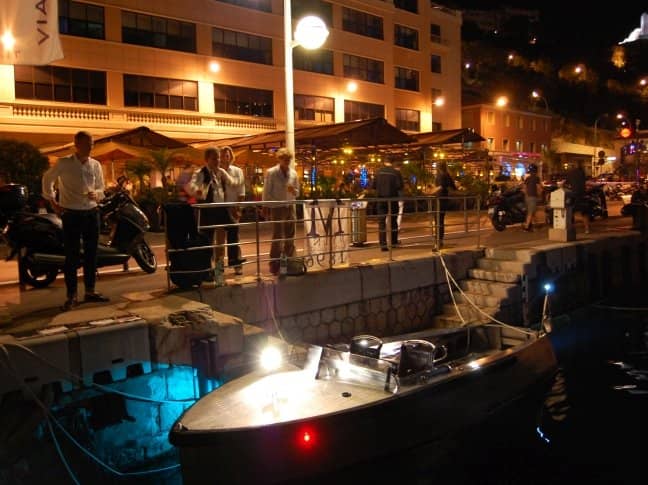
John Rushworth • 06 January 2015
Records & Resolutions: Bolt 18 uses Centaur charger in a novel way
As Marianka said in the first Victron blog of 2015 : “First of all: we wish everyone a very happy New Year! We hope 2015 will be powerful and innovating.” Likewise, I bid you all the same and hope you have been lucky enough to receive one of Marianka’s superb Victron 2015 Calendars. Innovation and Power This is the theme of my first blog for the new year. Over the holiday period I was privileged to meet David Gray C.Eng MRINA SNAME MYDSA, of Mylne Yacht Design. David is also Chief Naval Architect of their sister company Ace Marine Limited. The highlight of the day for me as an an electric sailing yacht owner and sailor, was seeing the Mylne Bolt 18, all electric propulsion Superyacht tender, in the flesh. A photo of this classic looking tender, styled and built in a modern package can be seen in the headline image above, whilst berthed in Monaco. Mylne have a fabulous pedigree going back to 1896 with over 650 original designs, 7,000 original drawings + technical papers and original correspondence books in the Mylne archive, which represents one of the most important historical yachting records in the world. Out with the old and in with the new That may well be the greeting for the new year, but that is certainly not the case with the Mylne boats. Here are a few photos of their classics first, to whet your appetite, before we see how the modern Bolt 18 uses a Victron Centaur charger in a novel and interesting way. Bolt 18 using Centaur 12/20 charger Here in David’s words is how the Centaur has been integrated into the Bolt 18 and the novel way in which it is being used. “The Victron battery charger is a nice piece of kit and gives us 3 usefully powerful 12V sources. The charger not only charges the small 12V motorcycle battery ( top right of photo below ) but also provides the power for the lighting, bilge pumps, search lamp and other current hungry house loads on the boat. It very usefully runs from 220V AC when the boat is plugged into the mains, but also continues to operate on 400V DC from the main 400V boat’s 24 kW Lithium battery, when this is brought online. This changeover is achieved through a dedicated system controlled relay.” “When the system is turned on the little 12V battery first closes the pre-charge contactor. This allows the 400V to flow into the controller through a 50 ohm resister (max 8 amps) to charge up the capacitors in the controller. Once the capacitors have been charged (within a second or two), the main contactor is then allowed to close and the system is live.” The photo above shows the Centaur tucked away in the port/forward side underneath the bow. Here are Bolt’s specs which gives us some idea of the ever increasing power demands in modern systems. Lithium-ion battery 24 kW nominal max stored power 75 kW nominal max power @ 3C 400 V nominal pack voltage Electric Motor Peak Power 134 hp, 100 kW Continuous power 80 hp, 60 kW Peak torque 221 lbf ft, 300 Nm Continuous torque 118 lbf ft, 160 Nm Motor Controller Operating voltage input range 270-425 V DC Minimum voltage limit 270 V DC Nominal voltage 335 V DC Maximum voltage 425 V DC Input current limitation 500 A Records The still shot below is from when the Mylne Bolt was launched in 2012 in St. Tropez. Subsequently she went on to set set the British Water Speed Record at 32.77mph for the National “Unrestricted Electric Runabout” class. To see how she goes at speed, do have a look at her launch video as she blasts along at over 30 + knots , with phenomenal acceleration to boot. Resolutions What about you? Do you make new year resolutions? Personally I don’t but let’s sow a seed here for 2015. If you have interesting designs and dreams like David that come to fruition, we’d love to hear from you, especially if they use Victron Energy products. If you do then I’ll leave you with a thought from an interview by Sail Far Live Free, with noted ocean sailor Andy Schell from 59-North. ” In fact once you announce your dreams to the world, you’re now accountable for them, and they become easier to accomplish. The idea that the universe conspires to help you once you’ve announced your intentions, I believe, is a real thing.” Conclusion Let’s leave you with some more inspiration from Mylne. The Carbon Jet 685 was inspired by and for the new Palmer Johnson SuperSport 48 and her yacht tender is especially designed to meet the owners very exacting requirements of speed, comfort and safety. The new Mylne Carbon Jet 685 will carry guests and crew in exquisite luxury and comfort. This new design from the Mylne drawing board has now been delivered by Patterson Boatworks in Cumbria, England. Mother ship – Palmer Johnson SuperSport 48 The mother ship’s tender being launched – Carbon Jet 685 Wishing you all the best for 2015 and looking forward to seeing how you integrate Victron Energy products into your designs and systems in 2015 and beyond. John Rushworth Credits Thanks to David Gray for his time and the images above, which are courtesy and copyright © Mylne Yacht Design.
John Rushworth • 26 October 2014
TAG Yachts: Freedom to choose
‘Silence’. Maybe you’ve never heard of it. It’s a 1999 club classic, a worldwide hit and has been hailed as one of the greatest trance songs of all time. It still plays in clubs to this day. Whilst watching this video from TAG Yachts recently, I noticed the background music is a remix of that classic . By the nature of the imagery and music in the video, it got me dreaming about luxury yachts. The still picture above is taken from that video and features the TAG 60, which is a high performance cruising catamaran. But what has that got to do with Victron Energy? It’s all well and good having pictures and videos of beautiful women, dreamy music and gorgeous yachts, but someone has to design and build the systems, that make the dream possible. Yacht and system designers have the freedom to choose any supplier they want, but some choose Victron above all others, it seems. Speaking to Peter Bakker, of Bakker Yachting Electronics in South Africa, I soon discovered why it is, that Victron Energy have become the supplier of choice for onboard energy in the new build TAG 50. If the galley of the 60 is anything to go by, then all those integrated background power systems that ensure seamless energy unlimited onboard, should make the new TAG 50 equally special, particularly as TAG Yachts have specified 4 x 4.75 KWh Victron Lithium-ion 24V 180Ah battery systems as standard on the TAG 50 XR. Here then, in Peter’s own words, is why Victron have been chosen. “I have been working with Victron equipment for over 25 years and that in itself is something to celebrate. The reason though for choosing Victron products, for these catamarans, is because we can leave TAG’s basic design principles as they are, due to the flexibility a Quattro inverter/charger offers to a system designer like myself. Quattros are the energy control center in every boat and they are just wonderful, as they shrink the amount of equipment needed into a much denser and compact footprint, then ever before. The Quattros we use vary from: 3 KW to 5KW and up to 8 KW. Having basically identical electrical layouts in every boat makes installation so much easier. All we have to do, to suit the needs of the customer, is install the differing equipment capacity to suit the larger energy demands. The new TAG-50 comes in 3 versions and besides the differing size Quattros, we also fit Victron Lithium Ion batteries, Lynx Ion BMS, CCGX’es, BMVs, Blue Power Chargers, Orion DC/DC converters and Victron Isolation Transformers. Working with one supplier such as Victron, for onboard energy, is so much easier than mixing and trying to match components from many differing suppliers. I also think it is fantastic that TAG have chosen to fit Victron Lithium-ion batteries as standard for all their TAG-50’s. The main reason for TAG choosing this type of battery system is their durability and available capacity in a small footprint, along with their ease of use and reduced maintenance, when compared to AGM or Gel. Also when you take all this into account and compare the cost of Lithium-ion with AGM, Gel or OPzV batteries, Lithium-ion wins with ease. In fact TAG’s system design choices may well prove to be an eye opener for other boat builders too.” Thanks to Peter for the background information above. It seems that whilst TAG Yachts have the freedom to choose any supplier and equipment, we’re naturally glad they chose Victron Energy for their first 5 builds of the TAG-50 (possibly more) and wish them the very best for their new designs. Let’s hope they become as popular as that classic tune. Images courtesy of TAG Yachts , South Africa. John Rushworth
John Rushworth • 19 June 2014
Victron Energy: Diverse applications
In my last blog Sun, Speed & Sponsorship, I mentioned how pleasantly surprised I have been by the diverse projects that use Victron Energy’s products. So who can come up with the most unusual application? We’d love to hear from you…. Here’s one from down under. Whilst an intelligent robot for the vegetable industry may not be to everyone’s taste, it does highlight the strange areas that Victron products crop up in. Enough of the puns I hear you say! Thanks to Victron dealer Patrick Boutonnet of Ynovex Energy , for letting us know that the Australian Centre for Field Robotics are now using Quattro Inverter/Chargers, for the Lithium battery bank in their Ladybird robot project. Here’s the robot taking some of its first steps. So now it is over to you, the Victron distributors, dealers and customers out there, to find us the most diverse applications. You never know, there might even be a prize for the best. John Rushworth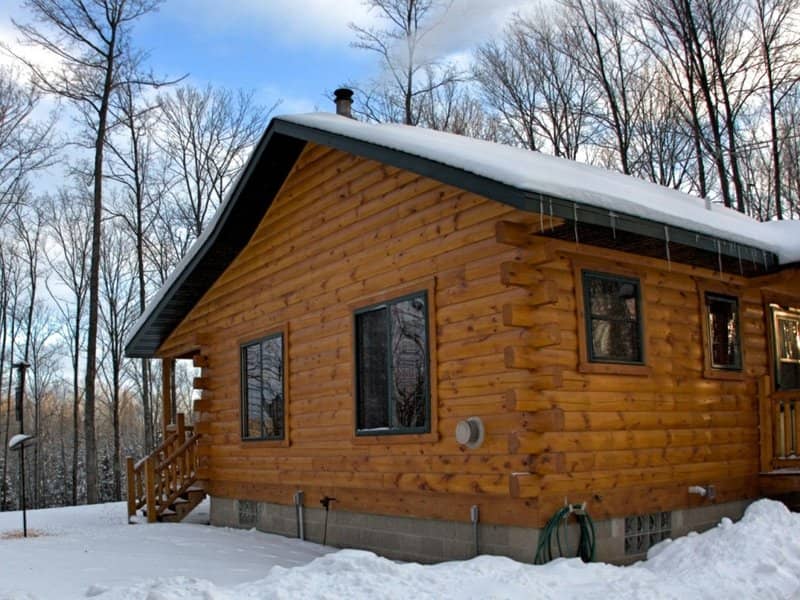
John Rushworth • 09 March 2014
Off-Grid Color Control GX to VRM Portal Connectivity
Update 02 January 2015 One for you Ocean Sailors. If you are planning to visit the London Boat Show at the ExCel Centre, taking place from 9th to 18th January 2015 then MailASail Satellite Communications may be well worth a visit. They will be exhibiting on stand A056 and featuring their new Red Box router as part of an interactive display for the duration of the show. “Discover how to integrate your onboard communications systems & feed your instruments’ NMEA & AIS data into the Red Box to then share this information over Wi-Fi with the plethora of ‘apps’ that are now available to the modern sailor using a smartphone or tablet onboard.” Their teleport-it compression technologies helps keep the cost of Sat comms down. http://www.mailasail.com/Main/Teleport-It The router also takes a 3G dongle. MailASail have the following special offers for the duration of the show: Red Box – normal RRP £449+VAT, London Boat Show price £299+VAT WiFi Bat – normal RRP £299+VAT, London Boat Show price £199+VAT http://www.mailasail.com/Communication/Red-Box Update December 4th 2014 In addition to the May update below, please keep an eye on the comments section, for the connectivity experiences of other users. Following on from the recent METS (Marine Equipment Trade Show) a number of updated combined wireless and mobile broadband solutions have come to light. They are more comprehensive and rugged than the traditional home Wi-Fi/3G/4G routers many of us are using. Whilst more expensive they may well suit boat, RV owners or any harsh environment applications. Here are a few suggestions to check out: http://www.thewirie.com – Pro model released end of 2014 http://wavewifi.eu – Comprehensive range of products Update May 12th 2014: the 3G router solution, as explained in this blogpost, works very well. Many of our customers are using it already. Making the VGR2 or any other USB mobile broadband dongle work 100% stable is a lot of work. We have therefore decided to postpone the ‘support USB mobile broadband dongles’ project. This allows us to focus on other things first, for example Wifi dongle support, Remote VEConfigure and improving the overviews. For the grid connected amongst you , with land based broadband who run a CCGX and use the VRM Portal – it is easy to connect the CCGX, so it talks, to the VRM Portal and uploads your data. It’s simply a question of plugging an ethernet cable into a spare port on your broadband router and then into the CCGX. The router will automatically allocate the CCGX a local IP address on your home/business network. Obviously you need to check on your CCGX, that logging is enabled and that an IP address has been allocated. It will likely be in the 192.168.*.* range. Assuming you have set up a VRM account correctly, then the Victron equipment connected to your CCGX will send and log that data via your broadband router to the VRM site. So what about us off-grid types? As the CCGX runs a fast, lighweight flavour of the Linux operating system, most any USB mobile broadband dongle can be made to work with it. Therein lies the rub as they say. ‘Can’ is the key word here , as USB 3G/4G Modem support is still being worked on for the CCGX, by the Victron team . Personally I wanted to get something up and running now, in my excitement, to get things talking to each other. In that case an equally capable solution (with in fact even more options) is to use an off the shelf 3G/4G router with compatible SIM card or USB mobile broadband dongle. This solution might not be for all, based on feedback received on the blog. This suggests customers, with installations having small battery systems, may want the lowest possible power use and so prefer to fit a USB mobile broadband dongle, that is recognised by and fits direct into the CCGX. Others in poor reception areas might be looking for a router with a detachable 4G LTE / 3G antenna, that can be replaced with a high gain antenna solution. Based on this, these matters are being considered by the developers at Victron with the possibility of a Victron branded solution with much faster speeds than those offered by the current Victron GSM/GPRS, Global/Ethernet Remote products. Personally I’d like to see a USB mobile broadband dongle with MiFi solution, that plugs direct into the CCGX. Having said all that and regardless of speed, off-grid solutions clearly fall into two categories. Those within mobile signal range and those that are not. For those that aren’t – low earth orbit satellite technology such as Thuraya might be a solution or failing that a worldwide geo stationery satellite broadband solution . Coming back to earth however, most of us will be in mobile signal range and will be one of three types of user. Here are a couple of examples of off-grid Victron end users. Off-Grid Land – Sam Wiltzius and his off-grid cabin in Michigan. Off-Grid Motorhome/RV – The virtual RV home of TechNomads Chris Dunphy & Cherie Ve Ard. As I sail mostly around the coast, within mobile phone range, here is my setup. CCGX and Netgear 3G Router Suitable routers. In my research I came across three makes of router, suitable for my needs. Which one or indeed any similar that you may choose will depend on your location and requirements. As I’m familiar with Netgear and D-Link I looked at them first. Unless you need higher speeds than 3G or 3G+ I’d stick with that in terms of cost. Personally I chose an end of line MBRN3000 NETGEAR 3G+ Mobile Broadband Wireless-N Router as the USB dongle I had was listed as a compatible modem. Here is a worldwide list of of currently supported 3G+ USB modem products for that router. Another reason I wanted a Netgear or D-Link is that they generally have built in Dynamic DNS support update clients. This simply means that if you wish to administer the router from a remote location, you don’t need to try and guess the dynamic IP (unlikely) or physically go to the router location to discover it, by logging in locally on site e.g. http://192.168.0.1/ Instead of that you use a fully formed web address, from a remote computer, that stays the same. e.g. http://MyOffGridSolution.dyndns-remote.com and the router automatically updates the dynamic IP on the fly, if it loses a connection and auto reconnects with a different dynamic IP. This Dynamic DNS support solution lets you use a normal URL, with a domain name as indicated, from anywhere. Check the router specs if you require this functionality, before you buy. I also liked the fact the Netgear router accepts a 12V power supply. Out of interest and if concerned about power usage – two BMV monitors with back lights always on at default intensity, the CCGX online, Netgear 3G+ and Wireless router running at 12V with a USB mobile broadband dongle plugged in – the consumption is 13 watts. When the Wi-Fi is turned off and the CCGX backlight goes off, it is slightly less. If you are looking for a mobile broadband SIM free dongle that often works with any provider i.e it is not ISP specific, then these products may suit. Here is an example for Brazil . You’ll note that it refers to a 3G HSPA+ USB Adapter MA260 Try searching on your own country and see if their is a non specific one or indeed a compatible USB modem that you may already have. For those that want more speed, there’s a D-Link 4G LTE Router DWR-921 which simply requires a SIM card without a separate USB modem. It also has two detachable 4G LTE / 3G antennas, so there may well be the possibility of fitting a high gain antenna. Conclusion Doing things this way, not only do you get a reliable off-grid connection from CCGX to VRM but you also have a local wireless network for your other internet needs. For my own needs I simply bought a second SIM, sharing it with my mobile phone data plan. Postscript 2016. I eventually ended up with the D-Link router mentioned above, as it saved messing around with dongles and has a simple SIM card insertion into the router. It accepts 12V too, has been 100% reliable especially with robust auto reconnect. We welcome your comments and any additional or your own experiences suggestions to this post in Disqus below. John Rushworth Credits & Notes Thanks to Sam Wiltzius, for the beautiful lead photograph of his off-grid cabin. Ref http://offgridcabin.wordpress.com/about/ Thanks to Chris Dunphy & Cherie Ve Ard of Technomadia, who are currently installing a CCGX and have written an excellent Mobile Internet Options for RVing guide. See: https://www.rvmobileinternet.com/ That’s motorhomes to those of us on this side of the pond 😉Precisa de aconselhamento? Os nossos distribuidores altamente treinados têm todo o gosto em ajudar com qualquer questão, grande ou pequena.
Encontre um revendedor perto de si
Consulte os nossos recursos de suporte ou contacte o seu distribuidor original para assistência dedicada, reparações ou pedidos de garantia.
Suporte
Leia mais sobre a nossa garantia padrão de 5 anos, líder do setor, e o serviço global de reparação.
Garantia


Política de privacidade
Preferências de cookies
Utilização de cookies
Condições de utilização
Aviso legal
©Victron Energy 2026