Onde comprar
Precisa de aconselhamento? Os nossos distribuidores altamente treinados têm todo o gosto em ajudar com qualquer questão, grande ou pequena.
Encontre um revendedor perto de si
How much does an RV solar system cost?
An overview of system choices and helpful examples
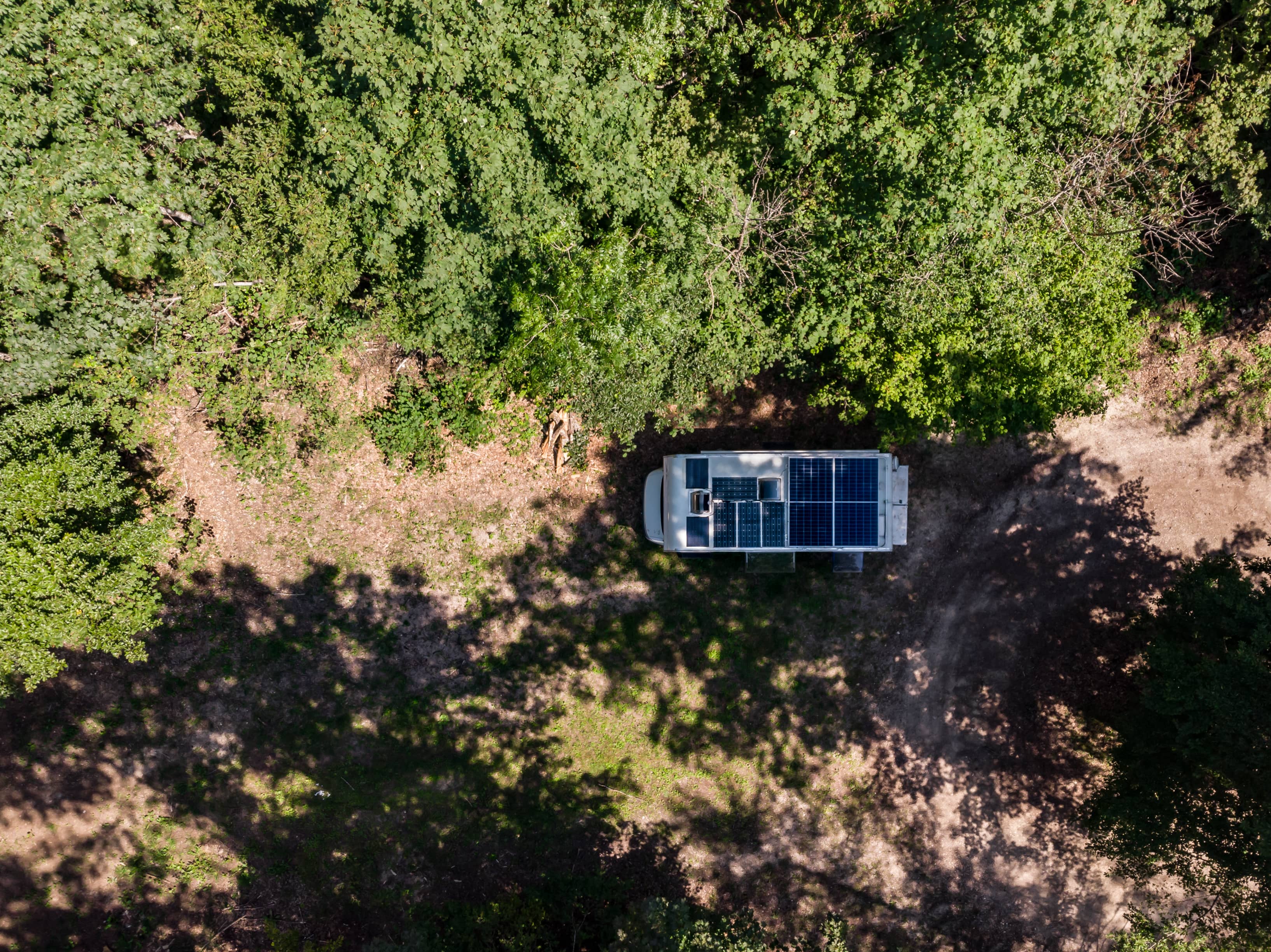
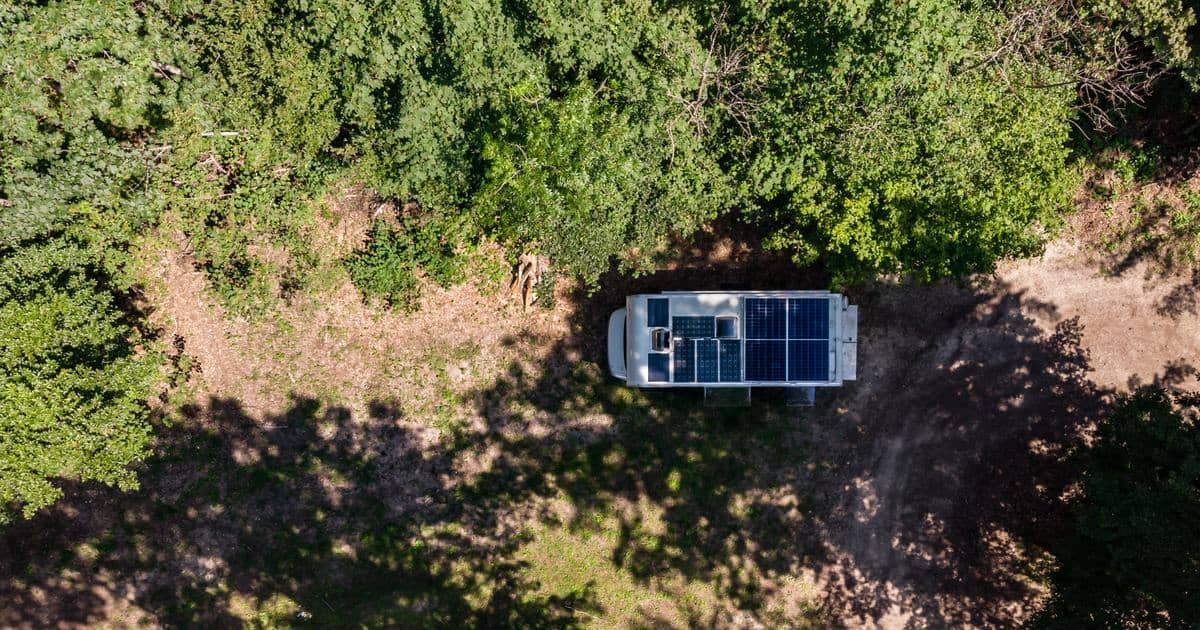
Putting a number on a "standard" Recreational Vehicle (RV) solar system budget is genuinely tricky, and for good reason. The term "RV" stretches from a self-converted city van, think a Citroën Berlingo used for weekend trips, all the way to a fully equipped expedition truck worth over €1,000,000. So instead of throwing out one misleading average, this piece breaks the cost down by component: PV panels, solar charge controllers, batteries, and solar accessories. That way, you can see where the money actually goes and figure out what setup fits your van, your lifestyle, and your budget.
The core components of an RV solar system:
Solar cells are semiconductors that convert incoming solar radiation into electrical energy. Their conversion ratio (efficiency) is what drives their popularity. Most cells are silicon-based, and silicon comes in two main forms. Polycrystalline cells offered lower efficiency and have almost disappeared from the market as a result. Monocrystalline cells are now by far the most common, with the best models exceeding 25% efficiency.
Watt-peak (Wp) is the standard unit for comparing panels: it represents the maximum power a panel delivers under standard test conditions (1000 W/m² irradiance, 25°C cell temperature). A 200 Wp panel won't produce 200 W continuously, for example, but that figure lets you compare cost and size across different products.
Monocrystalline panels come in three types for RV use, each with a different cost profile and installation logic:
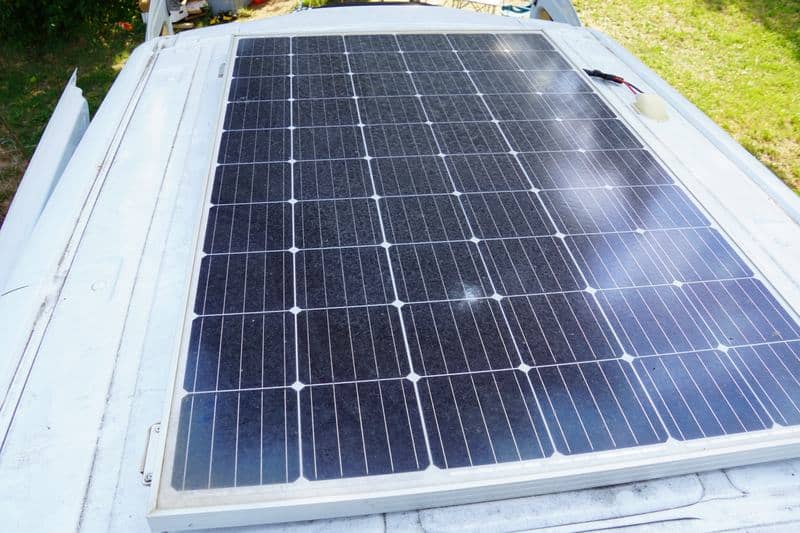
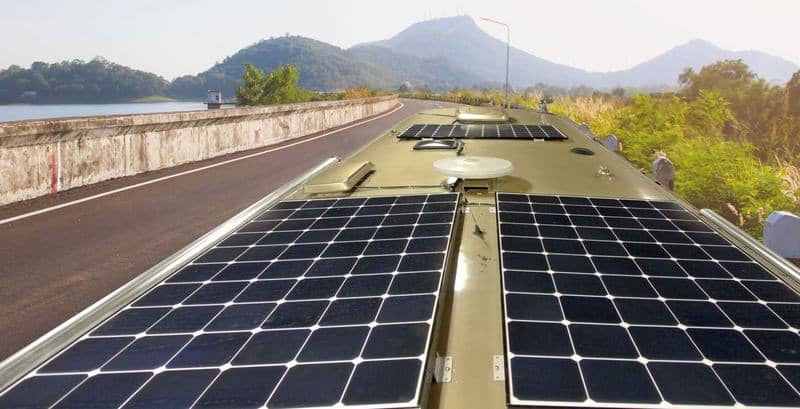
Rigid panels have a glass front face and require a roof rack or mounting structure fixed to the vehicle. They are the most widely available option, and their price per Wp has fallen sharply in recent years. Depending on size and power, expect to pay between €0.50 and €1.00/Wp.
When it makes sense: Rigid panels offer the lowest cost per Wp and the longest lifespan. If your roof is flat and you are comfortable with a rack installation, or willing to hire an installer, they are almost always the most popular choice due to its cost and performance. A 600 Wp array of rigid panels might cost €400-500 in panels alone, but the rack and installation may add a bit more to that.
b. Flexible panels
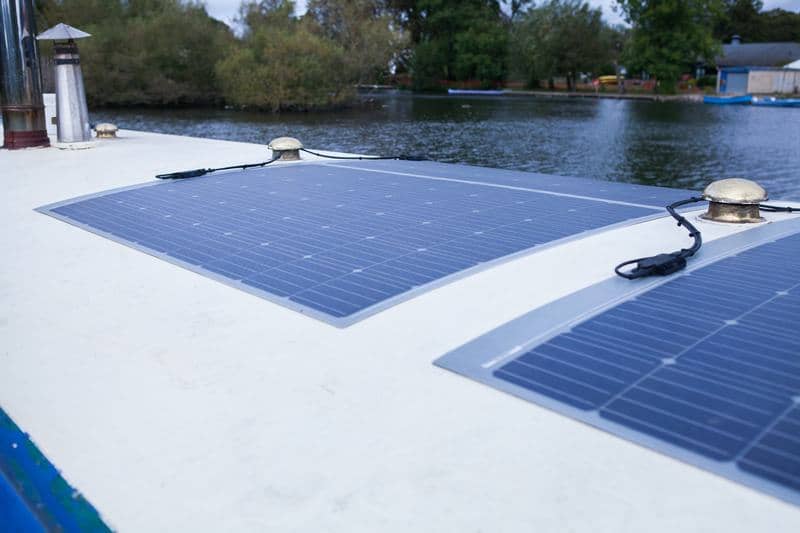
Flexible panels protect their cells with a stack of flexible polymers instead of glass, allowing them to be bonded directly to the roof or body of an RV without any metallic structure. This makes installation simpler and keeps the roofline clean. Lower production volumes make them more expensive, typically around €2.00/Wp.
When it makes sense: Flexible panels are the most preferred choice for curved roofs, low-profile builds, or owners who want to avoid drilling or fabricating a rack, as they are glued to the surface. The trade-off is a shorter lifespan (the polymer laminate degrades faster than glass), lower efficiency due to the limited airflow underneath, and a higher upfront cost per watt. For a 400 Wp system, flexible panels might cost €800 vs. €300–400 for equivalent rigid panels.
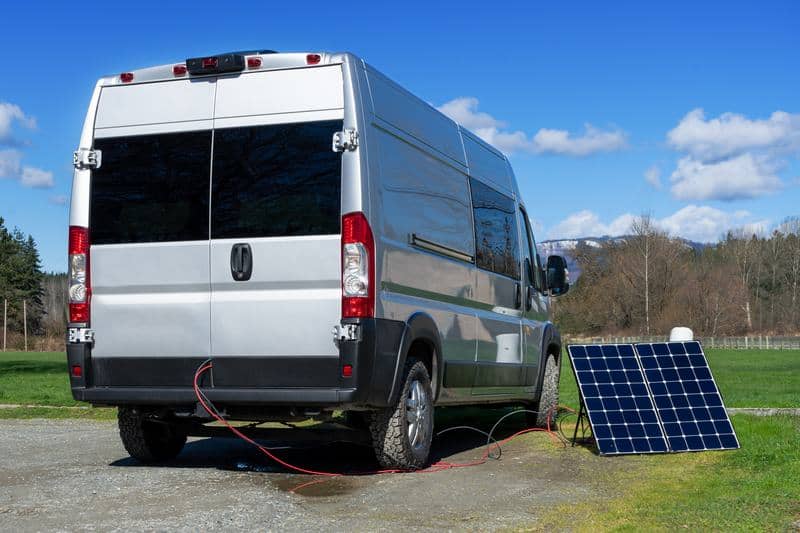
Portable panels (typically folding units with a built-in stand) are not fixed to the vehicle at all. You deploy them at your pitch and connect them to the system. They cost roughly €1.00–1.50/Wp for decent-quality units.
When it makes sense: Portable panels are ideal if you park under trees (you can position the panels in the sun no matter where your van is parked), if you want a low-commitment setup to test solar before committing to a permanent install, or if you want to avoid visible roof modifications and keep a more discreet look.
The limitation: You need somewhere to store the folding panels inside or under the vehicle. Some owners combine a small fixed array with a portable panel to top up capacity when needed (which requires two separate solar charge controllers).
Read much more about the different types of solar panels, including the technologies and architectures you might come across when shopping for your RV solar system, in our comprehensive guide.
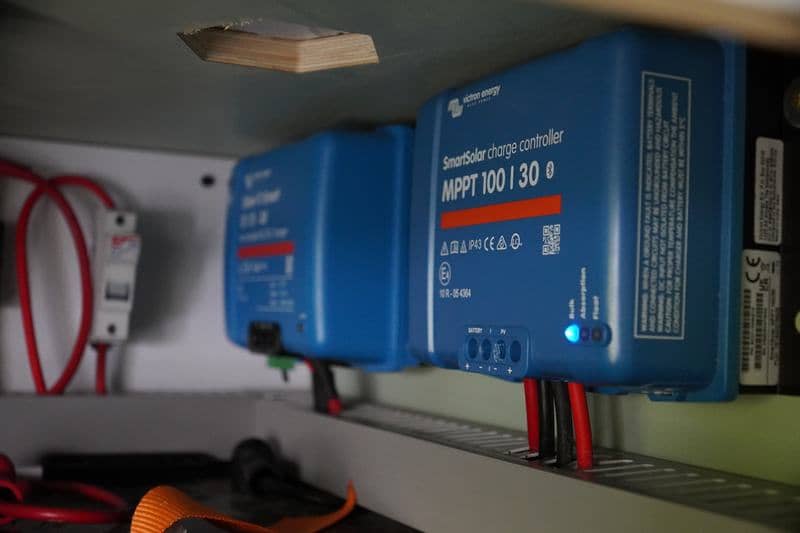
The solar charge controller regulates the flow of energy from your panels, adapting charging voltage and current to match your battery chemistry for optimal charge speed and battery lifespan.
There are two main types:
For most RV installations, MPPT is worth the additional cost, as you can get the most from your solar panels.
Combined solutions: It is worth knowing that some inverter/chargers incorporate a built-in MPPT controller, such as the Victron EasySolar and the Multi RS Solar. These all-in-one units combine the inverter/charger and solar charge controller in a single device, reducing wiring complexity and overall system cost. If you are planning a system with both solar and AC charging, a combined unit is worth considering.

Batteries are where most of the budget goes, and the cost depends on:
For the scope of this article, battery selection will not be covered in further detail. Please refer to our guide on choosing the right battery for your RV for a full breakdown.
This is the section that often surprises first-time builders. The panels and controller are the headline items, but the cabling, protection, and mounting hardware add up to a meaningful share of the total system cost. Skimping here is false economy.
Solar cables and connectors
PV cable (typically 4 mm² or 6 mm²) is rated for outdoor UV exposure and the voltage ranges involved in solar strings. Standard electrical cable is not appropriate. For a typical van install, budget €30–80 for PV cable, depending on run lengths and cable cross-section.
MC4 connectors (the industry-standard plug used to join panels and controller) cost roughly €15–30 for a set of pairs, plus a crimping tool if you are making your own harnesses.
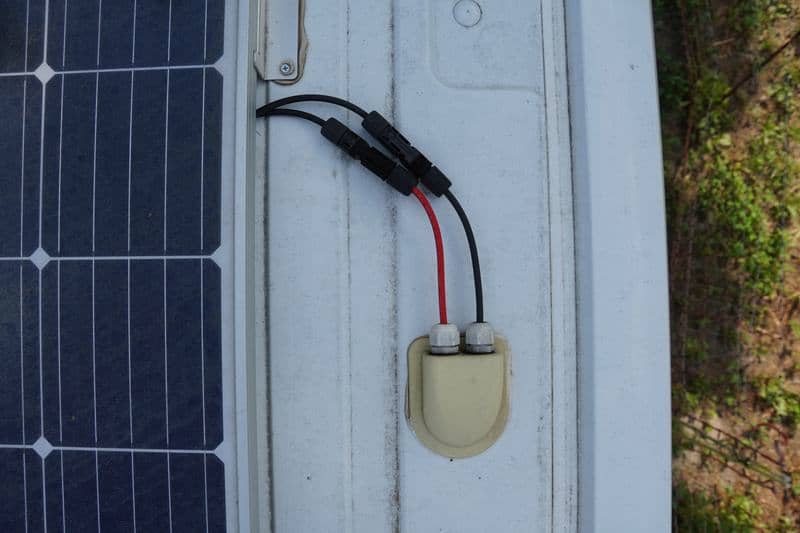
Cable entry housing
If you are running cables from the roof into the vehicle interior, a proper cable entry housing keeps water out and gives the installation a clean finish. A Victron Energy or equivalent cable gland costs €15–30.
DC cabling
The wiring between your solar charge controller and battery bank needs to be correctly sized for the current involved. Budget €20–60 depending on cable thickness and run length.
If you need assistance with cable sizing, our Victron Toolkit App might be a useful free tool to try. Find it in the App Store here, or on Google Play Store here.
Fuses and protection
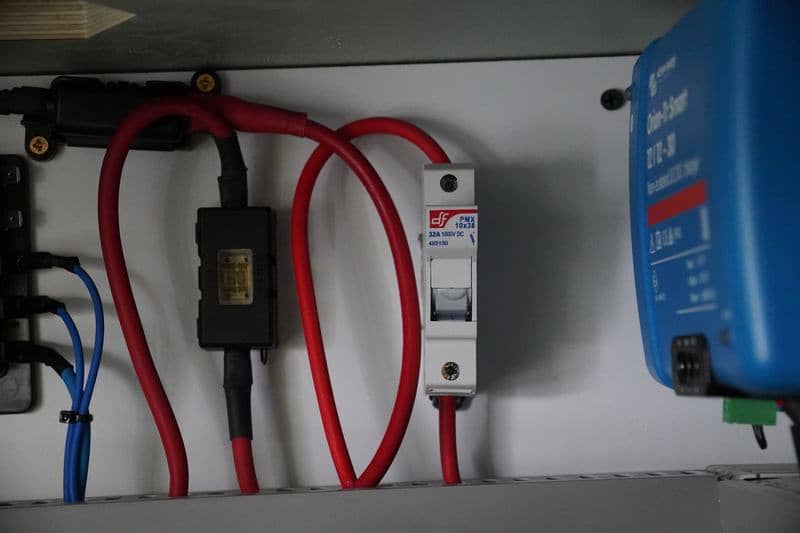
Every DC circuit needs appropriate fusing. For the solar circuit, a PV-rated inline fuse or MCB between the controller and battery is essential. For a complete installation:
PV isolation switch
A DC-rated isolation switch on the solar input allows you to safely disconnect the panels from the controller for maintenance or storage. This is a safety requirement in many professional installations. Budget €20–50.
Roof rack

If you are mounting rigid panels, a roof rack could be a neat option. Pre-fabricated aluminum rail kits for one or two panels start around €100–200. A custom-welded steel rack from a fabricator could also be an option, of course, which would add to the price.
Here are three realistic build scenarios with rough total costs:

Read more about this system here.
Entry-level DIY system
Approximate total: €700–1,000
Suitable for occasional weekend use, phone and laptop charging, a 12V cool-box.
Solar system components:

Read more about this system here.
Mid-range DIY system
Approximate total: €1,800–2,500
Suitable to run all standard 12V loads (fridge, lighting, water pump, device charging) plus high-wattage 230 V loads for shorter periods (a few hours per day) for several days off-grid.
Solar system components:
Read more about this system here.
Approximate total: €3,500–5,000
Suitable for extended off-grid travel covering all standard 12V loads (fridge, lighting, water pump, device charging) plus higher-demand inverter loads such as an air conditioning unit or induction hob. Solar system components:
The cost of an RV solar system ultimately comes down to two things: how much autonomy you need (or how much space you have for solar panels), and what type of panels suit your vehicle and needs. From there, the array and battery sizing follow naturally, and leaving room in the budget for accessories is just the final piece.

Beril Berkem • 04 May 2026
How to size a solar system for your RV
Learn how to size a solar system for your RV. Estimate your energy needs and choose the right components to power your adventures.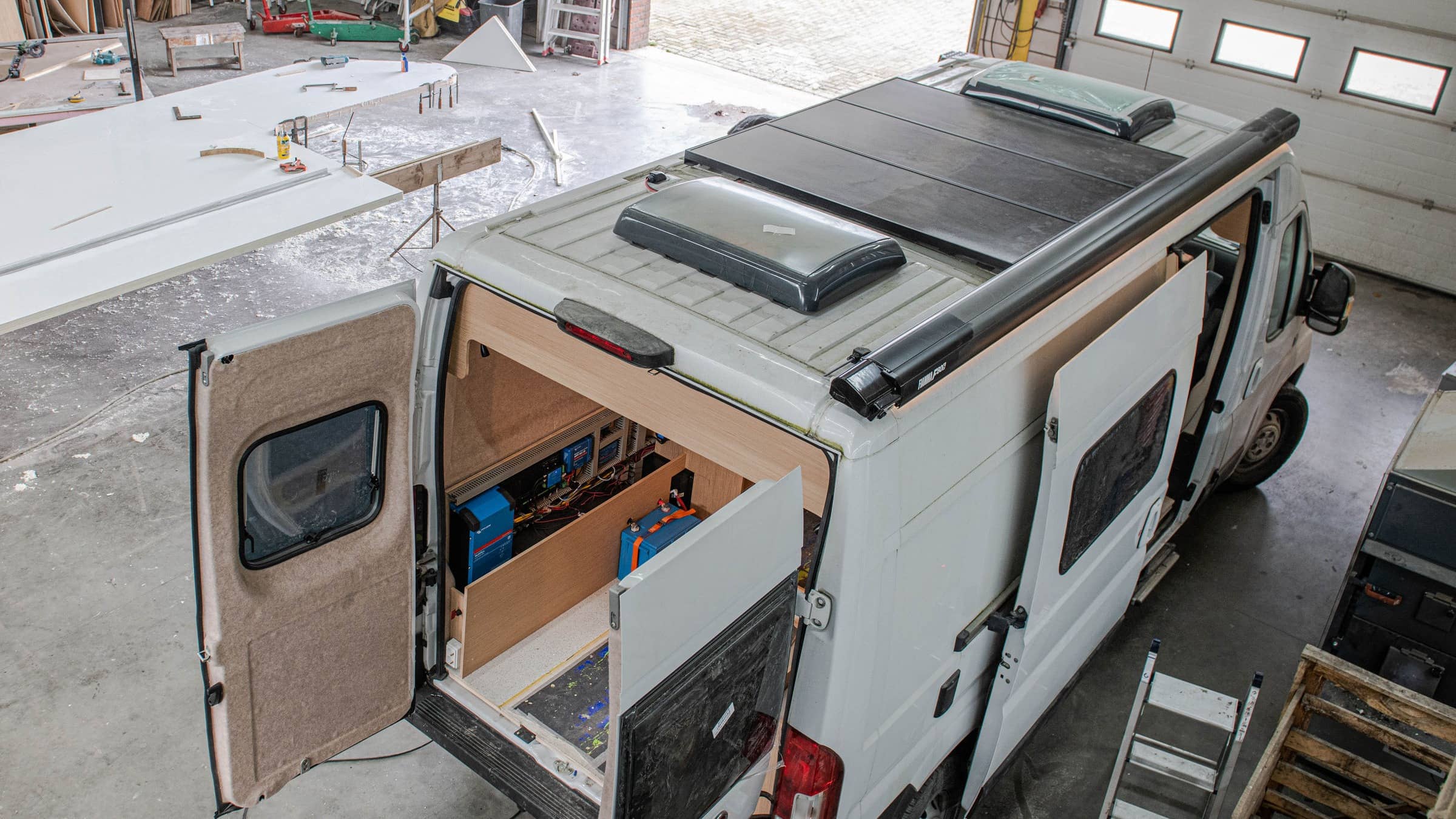
Chris Wallace-Tarry • 30 September 2026
What Type of Solar Panels are Best for an RV? A Comprehensive Guide
Solar panel types, technologies, and architectures explained.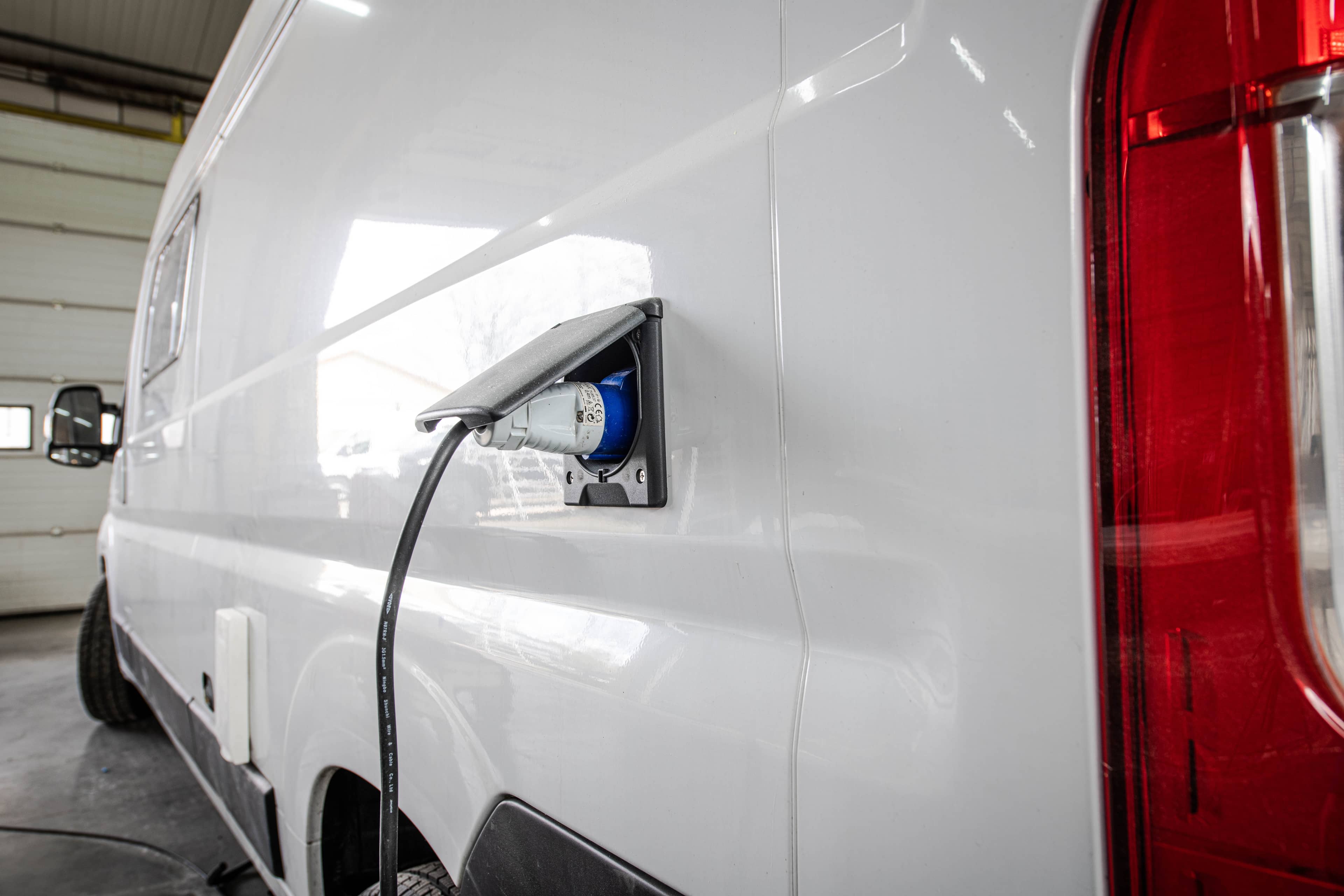
Beril Berkem • 16 June 2026
RV Shore Power: A beginner's guide
Understand the essence of having multiple power sources for your RV's electrical system and learn how to add shore power to yours.Precisa de aconselhamento? Os nossos distribuidores altamente treinados têm todo o gosto em ajudar com qualquer questão, grande ou pequena.
Encontre um revendedor perto de si
Consulte os nossos recursos de suporte ou contacte o seu distribuidor original para assistência dedicada, reparações ou pedidos de garantia.
Suporte
Leia mais sobre a nossa garantia padrão de 5 anos, líder do setor, e o serviço global de reparação.
Garantia


©Victron Energy 2026